What is Optimism (OP)? A Beginner’s Guide to Ethereum Layer 2
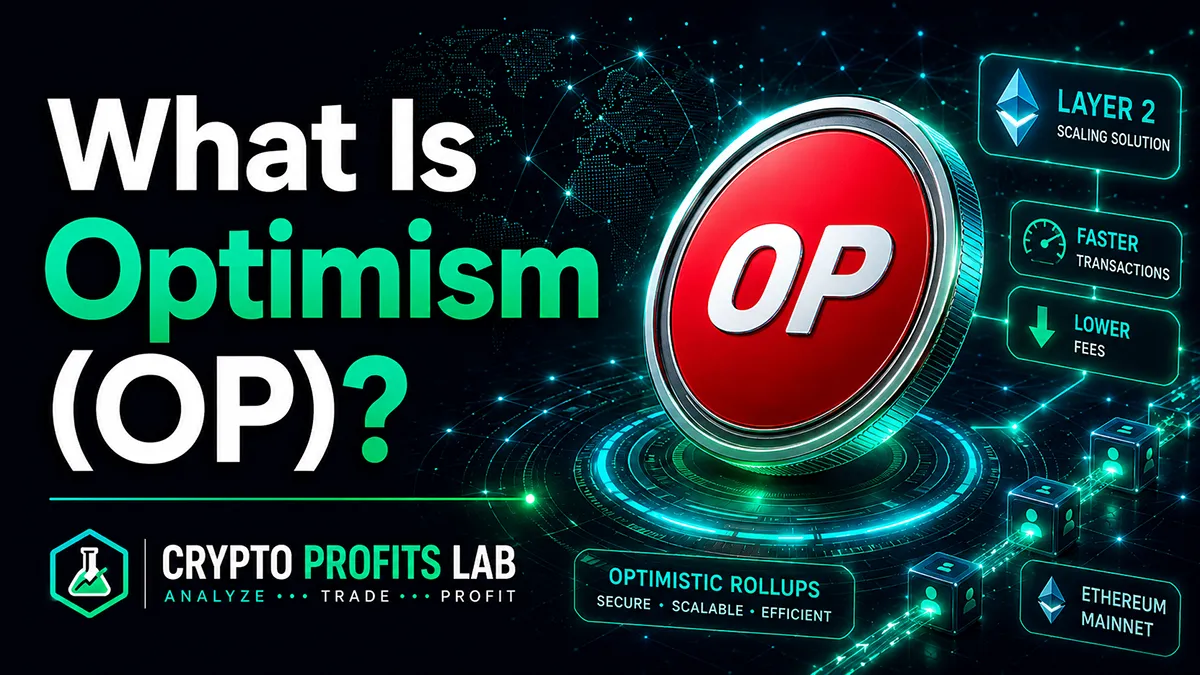
What is Optimism? Optimism is a Layer 2 blockchain network built to help Ethereum become faster, cheaper, and easier to use. Instead of every transaction happening directly on Ethereum’s main network, Optimism processes transactions on a separate Layer 2 network and then connects back to Ethereum for security.
For beginners, Optimism can sound technical because it involves Ethereum, rollups, transaction fees, smart contracts, and the OP token. But the basic idea is simple: Optimism is designed to help Ethereum scale.
In this beginner’s guide, we’ll explain What is Optimism, how it works, what the OP token is used for, why Layer 2 networks matter, and what risks beginners should understand before buying OP.
What is Optimism?
What is Optimism in simple terms? Optimism is an Ethereum Layer 2 scaling network that helps reduce transaction costs and improve transaction speed. It allows users and developers to interact with Ethereum-style applications while avoiding some of the higher fees that can happen directly on Ethereum Mainnet.
Ethereum is powerful, but it can become expensive and congested when many people use it at the same time. Optimism helps by moving much of the transaction activity to a Layer 2 network while still relying on Ethereum for important security and settlement functions.
To understand Optimism better, it helps to first understand Ethereum and blockchain technology. Ethereum is a smart contract platform, while Optimism is designed to make Ethereum-based activity faster and more affordable.
What is Optimism is a common beginner question because Optimism is not trying to replace Ethereum. Instead, it is trying to help Ethereum handle more users, apps, and transactions.
Why Was Optimism Created?
Optimism was created to address one of Ethereum’s biggest challenges: scalability. As more people use Ethereum for decentralized finance, NFTs, trading, gaming, and apps, the network can become expensive to use.
High gas fees can make small transactions difficult. A beginner may want to make a simple swap or test a decentralized app, but Ethereum fees can sometimes make that transaction feel too costly.
Optimism offers a different approach. By processing transactions on Layer 2, Optimism can reduce costs and improve user experience while still staying connected to Ethereum.
Understanding What is Optimism can help beginners see why Layer 2 networks are important. They are part of the broader effort to make crypto easier to use for everyday users, developers, and decentralized applications.
What is a Layer 2 Network?
A Layer 2 network is a blockchain system built on top of or alongside a main blockchain. In this case, Optimism is built to scale Ethereum.
Ethereum is the Layer 1. Optimism is the Layer 2.
The easiest way to understand it is this:
- Ethereum provides the base layer and security.
- Optimism handles many transactions more efficiently.
- Optimism sends important transaction data back to Ethereum.
- Users can often pay lower fees than they would directly on Ethereum.
- Developers can build Ethereum-compatible apps on Optimism.
Layer 2 networks are important because they help blockchains support more activity without forcing every transaction to compete for space on the main network.
This is why Optimism is often compared with Arbitrum, another Ethereum Layer 2 project.
How Does Optimism Work?
Optimism works using a scaling method called an optimistic rollup. A rollup bundles many transactions together and posts the results back to Ethereum. This helps reduce congestion and lower costs.
The word “optimistic” means the system assumes transactions are valid unless someone challenges them. Instead of checking every transaction individually on Ethereum right away, the network uses a challenge system to help detect problems.
Here is the beginner version of how Optimism works:
- Users make transactions on Optimism.
- Optimism processes those transactions on Layer 2.
- Transactions are bundled together.
- Important data is posted back to Ethereum.
- The system assumes transactions are valid unless challenged.
- Users benefit from faster and often cheaper transactions.
This helps Optimism support Ethereum-style apps without putting every piece of activity directly on Ethereum Mainnet.
For a deeper technical explanation, the official Optimism documentation explains how the OP Stack, OP Mainnet, and Optimism ecosystem work.
What is OP Mainnet?
OP Mainnet is the main Layer 2 blockchain network associated with Optimism. It is where users can send transactions, use decentralized apps, bridge assets, and interact with Ethereum-compatible smart contracts.
OP Mainnet is designed to feel familiar to Ethereum users because it is compatible with Ethereum tools and applications. This makes it easier for developers to build on Optimism and easier for users to interact with apps.
For beginners, OP Mainnet is the actual network you may use when interacting with Optimism. The broader Optimism ecosystem includes OP Mainnet, the OP Stack, governance, and other connected chains.
When researching What is Optimism, it is important to understand that Optimism is not just a token. It is also a Layer 2 network and a growing ecosystem of Ethereum scaling technology.
What is the OP Token?
OP is the native governance token of the Optimism ecosystem. It is commonly associated with Optimism governance, ecosystem incentives, and participation in the broader Optimism Collective.
Unlike some coins that are mainly used for paying transaction fees, OP is most important for governance and ecosystem participation. Users who hold OP may be able to participate in decisions related to the direction of the Optimism ecosystem, depending on current governance rules and eligibility.
The OP token may be connected to:
- Governance participation
- Ecosystem incentives
- Community decision-making
- Protocol development discussions
- Support for Optimism-related initiatives
Beginners should understand that buying OP is not the same thing as owning part of Optimism as a company. OP is a crypto token, and its price can move sharply based on market conditions, adoption, competition, and investor sentiment.
Before buying OP, beginners should understand crypto volatility and how quickly crypto prices can rise or fall.
What is the OP Stack?
The OP Stack is open-source software used to build Layer 2 blockchain networks. It is one of the most important parts of the Optimism ecosystem because it allows developers to create Ethereum-compatible chains using Optimism’s technology.
The OP Stack helps make Optimism more than just one Layer 2 network. It supports a broader vision where multiple chains can be built using similar infrastructure and potentially connect into a larger ecosystem.
For beginners, the OP Stack can be simplified like this:
- OP Mainnet is a Layer 2 network.
- The OP Stack is the technology toolkit behind Optimism-style Layer 2 networks.
- Other projects can use the OP Stack to build their own chains.
- This supports Optimism’s broader scaling vision.
This is one reason investors and developers pay attention to Optimism. It is not only a single chain; it is also connected to a larger Ethereum scaling framework.
What is the Superchain?
The Superchain is Optimism’s long-term vision for a network of connected chains built using the OP Stack. Instead of having many isolated Layer 2 networks, the Superchain idea aims to create a more connected ecosystem.
For beginners, think of the Superchain as a group of related Layer 2 networks that share similar technology and are designed to work together more smoothly over time.
The Superchain is still an evolving concept, but it is important because it shows where Optimism is trying to go. Optimism is not only focused on reducing Ethereum fees today. It is also trying to build infrastructure for a larger multi-chain Ethereum ecosystem.
The best way to answer What is Optimism is to think of it as both an Ethereum Layer 2 network and a broader scaling ecosystem.
What Makes Optimism Different?
Optimism is different because it focuses on scaling Ethereum while staying closely aligned with Ethereum’s ecosystem. It does not try to become a completely separate blockchain with a totally different developer environment.
Some of Optimism’s key differences include:
- It is designed to scale Ethereum.
- It uses optimistic rollup technology.
- It supports Ethereum-compatible applications.
- It has the OP token for governance and ecosystem participation.
- It uses the OP Stack as open-source Layer 2 infrastructure.
- It is connected to the Superchain vision.
- It competes with other Layer 2 networks such as Arbitrum.
This makes Optimism an important project for anyone learning about Ethereum, decentralized finance, and blockchain scalability.
Optimism vs Ethereum
Optimism and Ethereum are closely connected, but they are not the same thing.
Ethereum is the base Layer 1 blockchain. Optimism is a Layer 2 network built to help Ethereum scale.
Here is a simple comparison:
| Feature | Ethereum | Optimism |
|---|---|---|
| Type | Layer 1 blockchain | Layer 2 scaling network |
| Main Goal | Smart contracts and decentralized apps | Faster and cheaper Ethereum activity |
| Token | ETH | OP |
| Fees | Can be higher during congestion | Often lower than Ethereum Mainnet |
| Security Connection | Base network | Posts data back to Ethereum |
| Beginner Summary | Main smart contract platform | Ethereum scaling network |
Ethereum remains the foundation. Optimism helps make Ethereum-based activity more practical for users who want lower fees and faster transactions.
Optimism vs Arbitrum
Optimism and Arbitrum are two of the most popular Ethereum Layer 2 networks. Both are designed to reduce costs and improve Ethereum scalability, but they have different technology choices, ecosystems, and development paths.
Here is a beginner-friendly comparison:
| Feature | Optimism | Arbitrum |
|---|---|---|
| Type | Ethereum Layer 2 | Ethereum Layer 2 |
| Scaling Method | Optimistic rollup | Optimistic rollup |
| Token | OP | ARB |
| Main Focus | OP Mainnet, OP Stack, Superchain | Arbitrum ecosystem and Layer 2 scaling |
| User Goal | Lower-cost Ethereum activity | Lower-cost Ethereum activity |
| Beginner Summary | Ethereum scaling with OP Stack vision | Ethereum scaling with large DeFi ecosystem |
Both projects can be useful to study. Optimism may appeal to people interested in Ethereum scaling infrastructure, while Arbitrum may appeal to users focused on DeFi activity and Layer 2 adoption.
You can read more in our beginner guide to Arbitrum.
Why Do People Use Optimism?
People use Optimism because it can make Ethereum-based transactions faster and cheaper. This matters for users who want to interact with decentralized apps without paying high Ethereum Mainnet fees.
Common Optimism use cases include:
- Swapping tokens
- Using decentralized finance apps
- Sending crypto
- Testing Ethereum-compatible apps
- Interacting with smart contracts
- Bridging assets between networks
- Participating in Layer 2 ecosystems
Optimism may be especially useful for people who already understand Ethereum but want a lower-cost way to use decentralized applications.
If you are new to decentralized finance, guides on projects like Uniswap and Aave can help you understand the types of apps that often use smart contract networks.
Why Do People Invest in Optimism?
People invest in OP because they believe Ethereum Layer 2 networks may become more important over time. If more users, developers, and applications move to Layer 2 networks, Optimism could benefit from increased attention and ecosystem growth.
Investors may watch Optimism because:
- It helps scale Ethereum.
- It has a clear Layer 2 use case.
- OP is tied to governance and ecosystem participation.
- The OP Stack may be used by multiple chains.
- The Superchain vision could expand Optimism’s role.
- Layer 2 networks are an important crypto trend.
However, having a strong use case does not guarantee investment returns. OP can still lose value. Crypto prices are influenced by market cycles, token supply, adoption, competition, regulation, and investor sentiment.
Beginners should also understand crypto market cap before comparing OP with other coins.
Risks of Optimism
Optimism has potential, but it also has risks. Every crypto project has uncertainty, and OP is still a volatile digital asset.
Important risks include:
- OP price volatility can be extreme.
- Layer 2 competition is intense.
- Optimism depends heavily on Ethereum’s broader ecosystem.
- Users can make mistakes when bridging assets.
- Smart contract risks can affect apps built on Optimism.
- Governance decisions may not always match every holder’s expectations.
- Regulatory changes could affect the crypto market.
- Beginner users may confuse Ethereum, Optimism, OP Mainnet, and OP token.
Layer 2 networks can reduce fees, but they do not remove all risk. Users still need to protect wallets, verify links, understand bridges, and avoid scams.
Before using Optimism, review basic crypto safety tips and learn how to avoid common crypto mistakes.
Is Optimism Good for Beginners?
Optimism can be useful for beginners who are ready to learn about Ethereum and Layer 2 networks. However, it may not be the best first topic for someone who has never used crypto before.
A complete beginner should first understand what cryptocurrency is, how a crypto wallet works, and why transaction fees matter.
After learning those basics, Optimism becomes easier to understand. It is best viewed as part of the Ethereum ecosystem rather than a totally separate crypto project.
What is Optimism is an important question because Layer 2 networks are becoming a major part of how people use Ethereum.
How to Buy Optimism
Many beginners buy OP through a centralized crypto exchange. The basic process usually involves creating an account, verifying your identity, depositing funds, and purchasing OP if the exchange supports it.
Before choosing a platform, read our guide on the best crypto exchange for beginners. Look for strong security, simple navigation, clear fees, and support for the coins you want to buy.
A basic buying process may look like this:
- Choose a trusted crypto exchange.
- Create your account.
- Enable two-factor authentication.
- Deposit funds.
- Search for OP.
- Review the order carefully.
- Buy only what fits your risk tolerance.
- Decide whether to keep OP on the exchange or move it to a wallet.
Beginners should not buy only because a token is trending. It is better to understand What is Optimism, how OP is used, and why Layer 2 networks matter before investing.
How to Store OP Safely
After buying OP, you need to decide how to store it. Some beginners leave tokens on an exchange for convenience, while others move them to a personal crypto wallet.
A wallet gives you more control, but it also gives you more responsibility. If you lose your private keys or seed phrase, you may lose access to your crypto.
Beginners should learn the difference between hot wallet vs cold wallet. A hot wallet is connected to the internet, while cold storage keeps private keys offline.
For larger balances or long-term holding, many users prefer a hardware wallet or another cold storage crypto method when supported.
You should also protect your crypto seed phrase and use crypto 2FA on exchange accounts.
Using Bridges With Optimism
To move assets between Ethereum and Optimism, users often use a bridge. A bridge allows crypto assets to move from one network to another.
For example, a user may move ETH from Ethereum Mainnet to OP Mainnet so they can use apps on Optimism. This can be useful, but it can also confuse beginners.
Bridge safety matters. Before using any bridge:
- Make sure you are on the official website.
- Double-check the network.
- Confirm the wallet address.
- Start with a small test transaction.
- Watch for fake bridge websites.
- Never share your seed phrase.
Many crypto losses happen because users click fake links or approve dangerous transactions. Review crypto scams to avoid before using bridges or connecting your wallet to new apps.
Optimism and DeFi
Optimism is often used for decentralized finance. DeFi apps allow users to swap tokens, lend, borrow, provide liquidity, and interact with financial tools without a traditional bank.
Because Optimism can offer lower fees than Ethereum Mainnet, it may make DeFi more practical for smaller transactions. This can help users test apps and learn how decentralized finance works without paying the highest possible gas fees.
However, DeFi is risky. Smart contract bugs, token volatility, liquidity problems, and scam projects can all lead to losses. Beginners should move slowly and avoid investing money they cannot afford to lose.
Should You Invest in Optimism?
Whether you should invest in Optimism depends on your goals, risk tolerance, and understanding of the project. OP may appeal to investors who believe Ethereum Layer 2 networks will grow, but it is still a risky crypto asset.
Before buying OP, ask yourself:
- Do I understand What is Optimism?
- Do I understand the difference between Optimism and Ethereum?
- Do I understand how OP is used?
- Am I comfortable with crypto volatility?
- Have I compared Optimism with Arbitrum and other Layer 2 networks?
- Do I know how to store OP safely?
- Am I investing only money I can afford to lose?
Crypto investing should not be based only on hype. Even strong projects can fall sharply during bear markets. Our guide to bull vs bear market crypto can help beginners understand how market cycles affect crypto prices.
Common Beginner Mistakes With Optimism
Beginners often make similar mistakes when learning about Optimism or buying OP. Avoiding these mistakes can help reduce risk.
Common mistakes include:
- Buying OP without understanding what Optimism does
- Confusing OP Mainnet with Ethereum Mainnet
- Sending funds to the wrong network
- Using fake bridge websites
- Ignoring wallet security
- Leaving large balances on exchanges without a plan
- Chasing price pumps
- Assuming lower fees mean no risk
- Investing more than they can afford to lose
Optimism can make Ethereum easier to use, but beginners still need to move carefully. Wallet safety, link verification, and small test transactions are important habits.
Final Thoughts: What is Optimism?
So, What is Optimism? Optimism is an Ethereum Layer 2 network designed to help Ethereum scale by making transactions faster and often cheaper. It uses optimistic rollup technology, supports Ethereum-compatible apps, and is connected to the OP token, OP Stack, and Superchain vision.
Optimism is important because Ethereum needs scaling solutions to support more users and applications. Layer 2 networks like Optimism help make Ethereum more practical for everyday activity.
However, OP is still a volatile crypto asset, and Layer 2 networks come with their own risks. Beginners should understand how Optimism works, compare it with other Layer 2 projects, use secure wallets, and avoid investing based only on hype.
If you are building your crypto knowledge step by step, Optimism is a useful project to study after learning about cryptocurrency, Ethereum, blockchain technology, wallets, Arbitrum, and crypto market cycles.
Optimism FAQ
What is Optimism used for?
Optimism is used to help scale Ethereum. It allows users to send transactions, use decentralized apps, and interact with Ethereum-compatible smart contracts with faster and often cheaper activity than Ethereum Mainnet.
What is OP?
OP is the native governance token of the Optimism ecosystem. It is associated with governance, ecosystem incentives, and participation in Optimism’s broader development.
Is Optimism the same as Ethereum?
No. Ethereum is a Layer 1 blockchain, while Optimism is a Layer 2 network built to help Ethereum scale. Optimism depends on Ethereum but processes many transactions separately to improve speed and reduce costs.
Is Optimism the same as Arbitrum?
No. Optimism and Arbitrum are both Ethereum Layer 2 networks, but they have different ecosystems, technology choices, and development paths. Both are designed to make Ethereum activity cheaper and faster.
What is OP Mainnet?
OP Mainnet is the main Optimism Layer 2 blockchain network. Users can bridge assets, send transactions, and interact with decentralized apps on OP Mainnet.
Is Optimism good for beginners?
Optimism can be useful for beginners who already understand Ethereum and crypto wallets. Complete beginners should first learn cryptocurrency basics, wallet safety, and blockchain technology before using Layer 2 networks.
Is Optimism a good investment?
Optimism may appeal to investors who believe Ethereum Layer 2 networks will grow, but OP is still risky and volatile. Beginners should research carefully and only invest money they can afford to lose.
Where should beginners store OP?
Beginners can store OP on a trusted exchange or in a compatible crypto wallet. For larger balances or long-term holding, many users prefer cold storage or a hardware wallet when supported. Always protect your seed phrase and use strong account security.