What Is DeFi? A Beginner’s Guide to Decentralized Finance
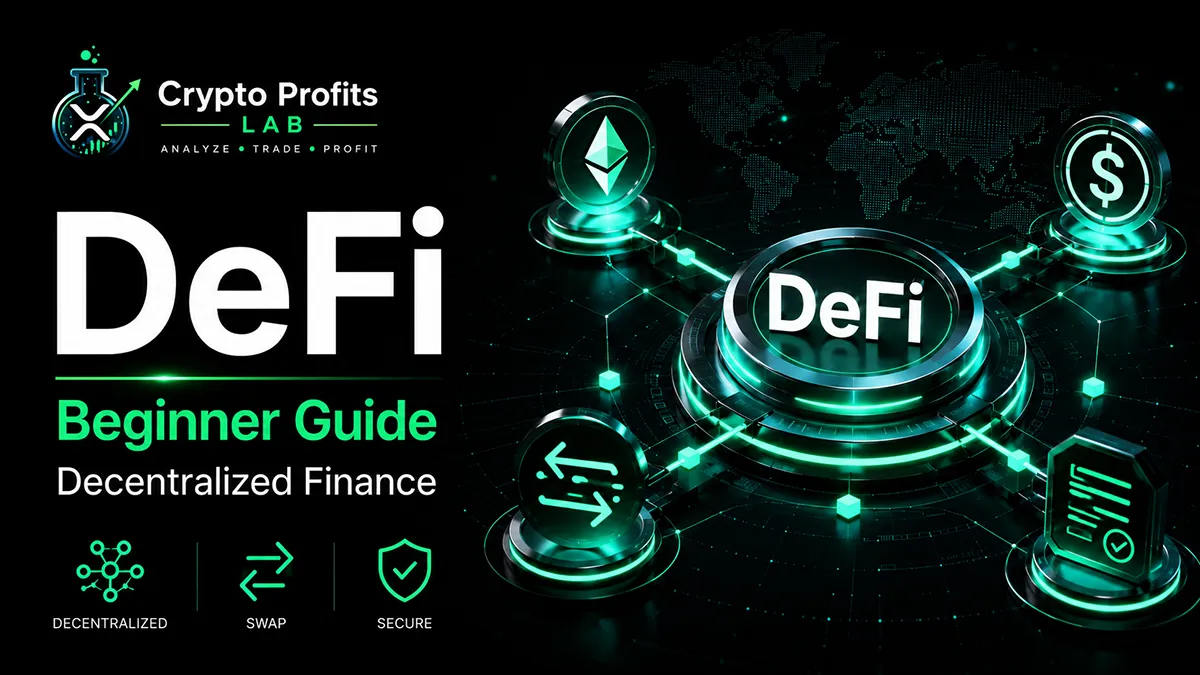
DeFi is one of the most important ideas in crypto, but it can feel confusing when you first see the term. Beginners often hear about lending apps, decentralized exchanges, liquidity pools, staking, yield farming, smart contracts, and crypto wallets all at once. That can make decentralized finance sound more complicated than it really needs to be.
At its core, DeFi means decentralized finance. It is a category of crypto apps that allow people to trade, lend, borrow, earn rewards, and move value using blockchain technology rather than relying solely on banks, brokers, or centralized platforms. These apps usually run through smart contracts, which are programs on a blockchain that follow written rules.
This beginner’s guide explains how DeFi works in plain English. You will learn what sets it apart from traditional finance, why crypto users care about it, how wallets connect to apps, which risks beginners should understand, and how to approach it safely.
This article is for education only. It is not financial, investment, legal, or tax advice.
Quick Answer: What Is DeFi?
DeFi is a system of blockchain-based financial apps that can operate without a traditional middleman. Instead of using a bank, broker, or payment company to approve every action, users connect a crypto wallet to an app and interact with smart contracts.
A simple example is a decentralized exchange. On a centralized exchange, the company manages the order book, user accounts, trading system, and custody options. On a decentralized exchange, users may swap tokens directly from a wallet, while smart contracts enforce the trade rules.
Another example is crypto lending. In traditional finance, a bank may decide whether someone qualifies for a loan. In decentralized finance, a user may deposit crypto collateral and borrow through an app that follows preset blockchain rules.
For a broader overview of authority, Ethereum.org describes decentralized finance as decentralized applications that allow users to lend, borrow, trade, and earn interest on crypto assets.
If you are brand new, read What Is Cryptocurrency? and Blockchain Technology first. Those guides explain the foundation behind this topic.
Why DeFi Matters for Beginners
DeFi matters because it shows what makes crypto different from a normal online bank account. Crypto is not only about buying coins and waiting for the price to move. It also includes open financial tools that can run on public blockchains.
For beginners, this is important for three reasons.
First, it helps explain why smart contract platforms such as Ethereum, Solana, Avalanche, Polygon, and Arbitrum exist. These networks are not just coins. They are platforms for building apps.
Second, it helps beginners understand self-custody. When you use many decentralized apps, you are usually responsible for your own wallet, seed phrase, approvals, and transaction decisions.
Third, it introduces both opportunity and risk. Decentralized finance can make trading and lending more flexible, but mistakes can be costly. There may be no customer support desk that can reverse a bad transaction.
Before using any app, it helps to understand What Is Ethereum? because Ethereum is one of the most important smart contract networks in crypto.
How DeFi Works
DeFi works by combining three main pieces: blockchains, smart contracts, and crypto wallets.
A blockchain is the network that records transactions. Ethereum is a popular example, but other networks also support apps. Smart contracts are pieces of code that run on the blockchain. They define the rules for trading, lending, borrowing, rewards, and other activities. A wallet is the tool users use to connect to these apps and sign transactions.
Here is a simple version of the process:
- A user opens a decentralized app.
- The user connects a crypto wallet.
- The app shows available actions, such as swapping tokens.
- The user reviews the transaction.
- The wallet asks the user to approve and sign.
- The transaction is sent to the blockchain.
- The smart contract completes the action if the rules are met.
This process gives users more direct control but also more responsibility. If you connect to a fake site, approve a risky contract, or send funds to the wrong network, the blockchain will usually not undo the mistake.
For wallet safety, read What Is a Crypto Wallet?, Crypto Seed Phrase, and Crypto 2FA.
DeFi vs Traditional Finance
Traditional finance usually depends on companies and institutions. Banks hold deposits. Brokerages manage trading accounts. Payment processors approve transfers. Lenders review applications. These middlemen can provide convenience, customer support, compliance systems, and consumer protections.
DeFi takes a different approach. It uses blockchain networks and smart contracts to make financial tools available through crypto wallets. Users may not need a bank account to interact with an app, but they do need to understand crypto security.
| Feature | Traditional Finance | Decentralized Finance |
|---|---|---|
| Access | Usually through banks, brokers, or apps | Usually through a crypto wallet |
| Hours | May depend on business days or banking hours | Often available 24/7 |
| Control | Platform or institution controls the account | User controls wallet access |
| Rules | Company policies and legal agreements | Smart contracts and blockchain rules |
| Support | Customer service may help resolve problems | User responsibility is much higher |
| Risk | Bank, broker, fraud, and policy risk | Wallet, smart contract, liquidity, and scam risk |
Neither system is perfect. Traditional finance may be easier for beginners because it has support systems. Decentralized finance can be more open and flexible, but it requires stronger personal responsibility.
Common DeFi Uses
Beginners usually encounter decentralized finance through a few common activities. These include token swaps, lending, borrowing, liquidity pools, yield farming, and stablecoin use.
Token swaps are one of the simplest examples. Instead of placing a trade on a centralized exchange, users can swap one token for another through a decentralized exchange. A popular example is Uniswap. If you want to understand that app category better, read What Is Uniswap?.
Lending and borrowing are also common. Some apps allow users to deposit crypto assets and borrow against collateral. Aave is one of the best-known examples, and you can learn more in What Is Aave?.
Stablecoins are another major part of this ecosystem. These are crypto tokens designed to track assets such as the U.S. dollar. They are often used in lending markets, trading pairs, and liquidity pools. Read What Are Stablecoins? for a full beginner explanation.
What Are Smart Contracts?
Smart contracts are programs that run on a blockchain. In decentralized finance, they can hold funds, follow rules, process trades, manage collateral, distribute rewards, or complete other actions.
A smart contract is not smart in the human sense. It does not understand your goals, protect you from every mistake, or check whether you meant to click a button. It simply follows the instructions written into the code.
This is why smart contract risk matters. If the code has a bug, attackers may exploit it. If the design is weak, a platform may fail under pressure. If a user approves a malicious contract, the contract may drain funds from a wallet.
Beginners should avoid connecting wallets to random links, social media promotions, unknown apps, or sites promising unrealistic returns. When learning, use small amounts and stick to well-known platforms until you understand the risks.
Wallets and Self-Custody
A crypto wallet is how most users interact with decentralized apps. The wallet holds the private keys that allow you to control assets. It also lets you sign transactions.
There are two major ideas beginners must understand: custody and recovery.
Custody means who controls the keys. On a centralized exchange, the platform may hold your assets. In self-custody, you control your own wallet. That gives you more independence, but it also means you must protect your recovery phrase.
Recovery means how you regain access if you lose your phone, computer, or wallet app. A seed phrase is usually the backup. If someone else gets it, they may take your funds. If you lose it, you may lose access permanently.
This is why wallet education comes before app usage. Read Hot Wallet vs Cold Wallet and Hardware Wallet before storing serious funds.
DeFi and Stablecoins
Stablecoins are widely used in decentralized finance because they make it easier to price crypto activity. If every asset moved all the time, lending, borrowing, and trading wildly would be harder to understand.
A dollar-pegged token gives users a familiar unit of value. Someone may lend stablecoins, borrow against crypto collateral, swap stablecoin pairs, or hold temporary buying power during volatile markets.
However, stablecoins are not risk-free. They can involve issuer risk, reserve risk, peg risk, regulatory risk, and smart contract risk when used inside apps. A stablecoin may be designed to track one dollar, but its design can still fail or deviate from its target under stress.
For beginners, the safer approach is to understand the stablecoin itself before using it in another app. Do not chase high yields until you know where the return comes from and what risks are involved.
DeFi and Yield
Yield is one of the main reasons beginners become curious about decentralized finance. Yield refers to the return earned from lending, staking, liquidity provision, or other crypto activities.
This is also where beginners need to be careful. A higher advertised return usually means higher risk. The risk may come from smart contracts, token price changes, low liquidity, unstable incentives, leverage, liquidation, or a platform that has not been tested for long.
Crypto staking and yield farming are related topics, but they are not always the same thing. Staking usually supports a proof-of-stake network or staking-related system. Yield farming often involves moving assets across apps to earn rewards.
Before trying yield strategies, read Crypto Staking and Crypto Yield Farming. Beginners should understand the difference before putting money into any strategy.
Biggest Risks Beginners Should Know
The biggest DeFi risks are not always obvious from the app interface. A platform may look clean and professional while still carrying serious risk.
Common risks include:
- Smart contract bugs
- Fake websites and phishing links
- Malicious wallet approvals
- Liquidity problems
- Stablecoin depegging
- Token price crashes
- Impermanent loss in liquidity pools
- Liquidation from borrowing
- Bridge risk when moving funds across chains
- No easy way to reverse mistakes
The most important beginner rule is this: never connect your wallet or approve a transaction unless you understand what you are approving.
A common mistake is thinking a wallet approval is harmless. Some approvals give a smart contract permission to move certain tokens from your wallet. That may be normal for a real app, but dangerous on a fake or malicious site.
For more safety habits, read Crypto Safety Tips for Beginners and Crypto Scams to Avoid.
DeFi vs Centralized Exchanges
Many beginners should start with centralized exchanges before using decentralized apps. A centralized exchange can be easier to understand because users create an account, deposit money, buy crypto, and use a familiar interface.
Decentralized apps are different. You do not always create a normal username and password. You connect a wallet. You pay network fees. You sign blockchain transactions. You may need to choose the correct network and token contract.
A centralized exchange can be helpful for buying your first crypto. A decentralized exchange may be useful later when you understand wallets and self-custody.
To compare these options, read Centralized vs Decentralized Exchanges and Best Crypto Exchange for Beginners.
Beginner Safety Checklist
Use this checklist before trying any decentralized finance app.
| Safety Step | Why It Matters |
|---|---|
| Confirm the website URL | Fake links are a common scam |
| Use small test amounts | Mistakes cost less while learning |
| Check the network | Tokens must be on the correct chain |
| Read wallet prompts | Approvals can give permissions |
| Avoid unrealistic yield | High returns usually mean high risk |
| Protect your seed phrase | Anyone with it can access your wallet |
| Use a hardware wallet for larger amounts | It can reduce some hot wallet risks |
| Keep tax records | Crypto activity may create tax events |
This checklist will not remove every risk, but it can reduce common beginner mistakes.
Step-by-Step Learning Plan
A beginner does not need to use DeFi immediately. It is better to understand the basics first.
Start with cryptocurrency, blockchain, and wallets. Then learn how exchanges work. After that, study stablecoins, Ethereum, and smart contracts. Once those ideas make sense, you can explore decentralized apps with very small amounts.
A simple learning path looks like this:
- Learn What Cryptocurrency Is?.
- Understand Blockchain Technology.
- Set up basic wallet knowledge with What Is a Crypto Wallet?.
- Learn how exchanges work with How to Buy Crypto for Beginners.
- Study What Stablecoins Are?.
- Read about What Is Ethereum?.
- Explore apps only after you understand wallet approvals and transaction fees.
This path helps beginners avoid jumping into advanced tools too early.
Common Beginner Mistakes
One mistake is chasing yield before understanding where the return comes from. A high number on a screen does not automatically mean a safe opportunity. It may include token rewards, leverage, low liquidity, or unstable incentives.
Another mistake is using the wrong network. A token may exist on Ethereum, Polygon, Arbitrum, Solana, Avalanche, or another chain. The name may look similar, but the network matters.
A third mistake is approving too many contracts from one wallet. Beginners may click “approve” repeatedly without understanding permissions. It is better to keep a separate learning wallet with small amounts.
A fourth mistake is assuming every decentralized app is trustworthy. Anyone can create a website that looks real. Scammers often copy branding, run fake ads, or send links through social media.
The safest mindset is slow, skeptical, and patient.
Final Thoughts
DeFi is one of the most powerful and risky areas of crypto. It gives users access to trading, lending, borrowing, stablecoins, yield opportunities, and blockchain-based financial tools. It also requires careful wallet management, awareness of smart contracts, and strong scam-prevention habits.
Beginners should not rush. Learn the basics first, protect your seed phrase, use small test amounts, avoid unrealistic returns, and do not approve transactions you do not understand. Decentralized finance can be useful, but it rewards people who take the time to learn before taking action.
If you are building your crypto foundation, your next best reads are Crypto Wallet and What Are Stablecoins?.
FAQ: DeFi for Beginners
What is DeFi in simple terms?
DeFi means decentralized finance. It refers to crypto apps that allow users to trade, lend, borrow, or earn rewards through blockchain-based smart contracts rather than relying solely on banks or brokers. Users usually connect a crypto wallet to interact with these apps. It can be flexible and open, but beginners must first understand wallet security, transaction approvals, and smart contract risks.
Is DeFi safe for beginners?
DeFi can be risky for beginners because users are responsible for wallet security, network selection, transaction approvals, and avoiding scams. Smart contracts can have bugs, fake websites can steal funds, and bad approvals can expose tokens. Beginners should learn with small amounts, use trusted resources, avoid unrealistic yields, and never connect a wallet to unknown links or suspicious apps.
Do I need a crypto wallet to use DeFi?
Yes, most decentralized finance apps require a crypto wallet. The wallet lets you connect to apps, hold tokens, and sign blockchain transactions. A hot wallet may be convenient for small learning amounts, while a hardware wallet may be safer for larger holdings. Beginners should understand seed phrases, wallet approvals, and network fees before using any decentralized app.
What is the difference between DeFi and a crypto exchange?
A centralized crypto exchange is run by a company that manages accounts, trading tools, and custody options. DeFi apps usually let users connect wallets directly and interact with smart contracts on a blockchain. Centralized exchanges may be easier for beginners, while decentralized apps offer more direct control. The tradeoff is that decentralized finance requires more personal responsibility and fewer support options.
Can I earn passive income with DeFi?
Some users try to earn income through lending, liquidity pools, staking-related tools, or yield farming. However, these returns are not guaranteed and often come with serious risks. Smart contract bugs, token price drops, liquidation, low liquidity, and platform failure can reduce or eliminate returns. Beginners should understand the source of yield before depositing funds into any app.
What are the biggest DeFi risks?
The biggest risks include smart contract bugs, fake websites, malicious wallet approvals, stablecoin depegging, liquidity problems, bridge failures, impermanent loss, and liquidation from borrowing. User error is also a major risk because blockchain transactions are usually irreversible. Beginners should verify websites, use small test amounts, protect seed phrases, and avoid approving transactions they do not understand.
How does DeFi use stablecoins?
Stablecoins are commonly used in decentralized finance because they provide a dollar-like unit for trading, lending, borrowing, and liquidity pools. Users may deposit stablecoins into lending markets or trade them against other tokens. However, stablecoins still carry issuer, reserve, peg, regulatory, and smart contract risks. A token designed to track the value of one dollar is not the same as risk-free cash.
Should beginners use DeFi right away?
Most beginners should not rush into decentralized finance. It is better to first learn the basics of cryptocurrency, blockchain technology, wallets, seed phrases, exchanges, stablecoins, and security habits. After that, beginners can explore small test transactions with trusted apps. This slow approach reduces the risk of losing funds to phishing, incorrect approvals, the wrong networks, or misunderstood smart contract actions.