What Is Proof of Stake? A Beginner’s Guide
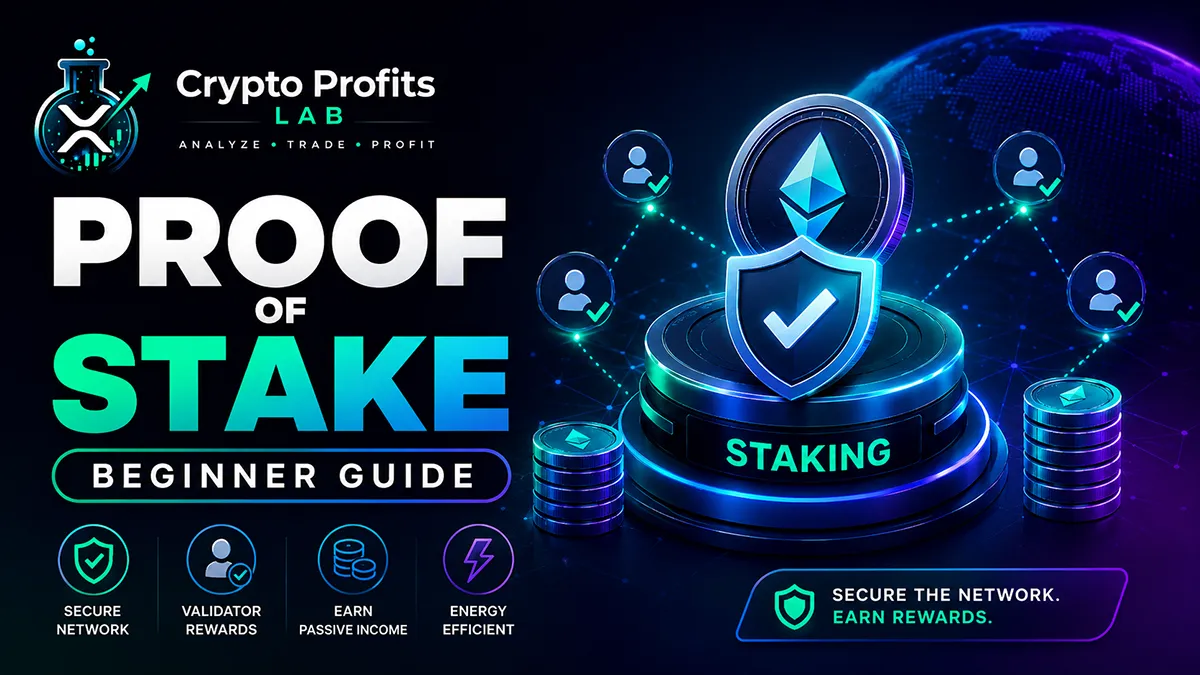
Proof of stake is one of the most important concepts beginners should understand when learning about cryptocurrency and blockchain technology. It helps explain how many modern blockchains confirm transactions, secure their networks, and reward users who help support the system.
If you are new to crypto, the phrase can sound technical. It may seem like something only developers or advanced investors need to know. But the basic idea is simple: proof of stake is a method some blockchains use to agree on which transactions are valid.
Instead of relying on powerful mining computers, as Bitcoin does, proof of stake uses validators. Validators lock up, or “stake,” cryptocurrency to help protect the network. If they follow the rules, they may earn rewards. If they behave dishonestly or fail to perform properly, they may lose some of what they staked.
This guide explains proof of stake in plain English. You will learn how it works, how it compares with mining, why Ethereum uses it, what staking rewards are, and what risks beginners should understand before participating.
This article is for education only. It is not financial, investment, tax, or legal advice.
Quick Answer: What Is Proof of Stake?
Proof of stake is a blockchain consensus method that uses validators instead of miners to help confirm transactions and add new blocks. Validators stake cryptocurrency as collateral. This gives them an incentive to act honestly because bad behavior can lead to penalties.
Consensus means agreement. A blockchain network needs a way for many computers to agree on the correct transaction history. Proof of stake is one way to do that.
A simple way to think about it:
Proof of work uses mining power.
Proof of stake uses staked crypto.
Bitcoin uses proof of work. Ethereum now uses proof of stake. Many other crypto networks also use this model or a variation of it.
Before going deeper, it may help to read What Is Cryptocurrency? and Blockchain Technology.
Key Takeaways
- Proof of stake is a way for blockchains to confirm transactions and secure the network.
- It uses validators instead of miners.
- Validators stake crypto to participate in the network.
- Honest validators may earn staking rewards.
- Bad behavior or technical problems can lead to penalties.
- Ethereum uses proof of stake after moving away from mining.
- Staking is not risk-free, even when the network is legitimate.
- Beginners should understand wallets, lockups, slashing, platform risk, and taxes before staking.
Beginner Facts Table
| Topic | Beginner Explanation |
|---|---|
| Proof of stake | A blockchain method for agreeing on valid transactions |
| Validator | A participant that helps confirm blocks |
| Staking | Locking crypto to help support a network |
| Reward | Crypto earned for helping validate correctly |
| Slashing | Penalty that can reduce staked funds |
| Proof of work | Mining-based blockchain security method |
| Ethereum | Major blockchain that uses proof of stake |
| Main risk | Volatility, lockups, slashing, platform risk, and user mistakes |
Why Blockchains Need Consensus
To understand proof of stake, you first need to understand why blockchains need consensus.
A blockchain is a shared digital record. Many computers may have copies of the same transaction history. The network needs a way to decide which transactions are real, which blocks should be added, and which version of the ledger is correct.
Without consensus, people could disagree about who owns what. One computer might say a transaction happened. Another might say it did not. A reliable blockchain needs rules that help the network agree.
Consensus helps answer questions like:
- Who can add the next block?
- Which transactions are valid?
- How does the network reject dishonest activity?
- How are participants rewarded?
- What happens if someone breaks the rules?
Different blockchains solve these questions in different ways. Bitcoin uses proof of work. Ethereum uses proof of stake. Some newer networks use other models or modified versions.
For a beginner foundation, read What Is Bitcoin? and What Is Ethereum?.
How Proof of Stake Works
Proof of stake works by allowing validators to help secure a blockchain after they stake cryptocurrency. Staking means locking up coins or tokens so the network can use them as a form of economic commitment.
Ethereum.org explains that proof of stake uses validators who stake capital to help check blocks, propose blocks, and keep the network secure.
Here is the beginner version:
- A user stakes the required cryptocurrency.
- The network recognizes the user as a validator or part of a staking system.
- Validators help check transactions and blocks.
- The network chooses validators to propose or confirm blocks.
- Honest participation may earn rewards.
- Dishonest behavior may lead to penalties.
- The blockchain keeps moving forward as validators agree on the correct record.
The main idea is that validators have something at risk. If they try to cheat, their staked crypto can be reduced. This helps protect the network from dishonest behavior.
Beginners do not need to run validator software to understand the concept. You only need to know that proof of stake uses economic incentives instead of mining machines.
Proof of Stake vs Proof of Work
Proof of stake and proof of work are both consensus methods, but they work differently.
Proof of work uses miners. Miners use specialized computers and electricity to compete for the right to add blocks. Bitcoin is the most famous example.
Proof of stake uses validators. Validators stake crypto and are selected by the network to help confirm transactions and create blocks.
| Feature | Proof of Work | Proof of Stake |
|---|---|---|
| Main participants | Miners | Validators |
| Resource used | Computing power and electricity | Staked crypto |
| Famous example | Bitcoin | Ethereum |
| Reward type | Mining rewards and fees | Staking rewards and fees |
| Main beginner issue | Mining equipment and energy use | Staking risk and validator rules |
| Security idea | Costly work makes attacks difficult | Staked value can be penalized |
Neither system is automatically perfect. Proof of work has its own tradeoffs. Proof of stake has its own risks. Beginners should understand the difference before assuming one is always better.
If mining is new to you, read Crypto Mining for Beginners.
Why Ethereum Uses Proof of Stake
Ethereum is one of the most important examples of proof-of-stake because it moved away from mining and now uses validators.
Ethereum is a smart contract blockchain. It supports apps, tokens, DeFi, NFTs, stablecoins, and many crypto tools. Because Ethereum is widely used, its consensus method matters to the broader crypto market.
Under proof-of-stake, Ethereum validators stake ETH to help secure the network. Validators check transactions, help create blocks, and participate in the consensus process.
For beginners, the important point is this: Ethereum no longer uses traditional mining. If someone says they are “mining Ethereum,” they may be using outdated language or referring to something else.
Ethereum’s move to proof of stake also helped make staking a more common topic for beginners. Many people now see staking options on exchanges, wallets, and crypto platforms.
To understand the Ethereum side better, read What Is Ethereum? and Smart Contracts.
What Is Staking?
Staking is the process of locking up cryptocurrency to help support a proof-of-stake network. In return, participants may earn rewards.
The word “staking” can be used in different ways. Sometimes it means running a validator directly. Sometimes it means delegating tokens to a validator. Sometimes it means using an exchange or staking service that handles the technical work.
This can confuse beginners because not all staking is the same.
Common staking types include:
- Solo validating
- Delegated staking
- Exchange staking
- Liquid staking
- Wallet-based staking
- Staking through a third-party platform
The basic idea is similar: crypto is committed to helping support network activity, and rewards may be paid if the process works correctly.
However, staking is not free money. Rewards come with risks. The token price can fall. Funds may be locked. Platforms can fail. Validators can be penalized. Taxes may apply.
For a dedicated beginner’s guide, read Crypto Staking.
Validators Explained
A validator is a participant that helps a proof-of-stake blockchain confirm information. Validators help check whether transactions and blocks follow the network rules.
A validator may be responsible for:
- Checking new blocks
- Proposing new blocks
- Participating in consensus
- Keeping validator software online
- Following network rules
- Helping secure the blockchain
In some networks, a validator must meet technical requirements. That may include running software, maintaining uptime, protecting keys, and staking a minimum amount of crypto.
Many beginners do not run validators themselves. Instead, they may use staking services, exchanges, or delegation systems. This can make staking easier, but it also introduces trust and platform risks.
The beginner lesson is simple: when you stake through someone else, you are not only trusting the blockchain. You are also trusting the platform or validator setup.
Staking Rewards Explained
Staking rewards are payments given to participants who help support a proof-of-stake network. Rewards may come from newly issued tokens, transaction fees, or other network rules.
The reward rate can change. It may depend on:
- Network rules
- Total amount staked
- Validator performance
- Fees
- Inflation
- Demand for staking
- Platform fees
- Lockup periods
- Token price changes
Beginners should be careful with high-reward numbers. A high annual percentage rate can look attractive, but it does not guarantee profit. If the token price falls, the value of your rewards may not offset the loss.
Also, some platforms advertise staking rewards in a simplified way. Always check whether rewards are variable, fees are deducted, assets are locked, and there are withdrawal delays.
To understand supply and reward design, read What Is Tokenomics?.
What Is Slashing?
Slashing is a penalty system used by some proof-of-stake networks. If a validator breaks the rules or behaves badly, the network may reduce the amount of staked crypto.
Slashing is meant to discourage dishonest or careless behavior. It helps protect the blockchain by making attacks or serious mistakes expensive.
Slashing can happen for reasons such as:
- Trying to validate conflicting blocks
- Running validator software incorrectly
- Being offline too often
- Breaking specific network rules
- Using a poorly managed validator setup
Not every staking system works the same way. Some networks have strict slashing rules. Others use different penalties. If you stake through a platform, the platform may explain how slashing risk is handled.
Beginners should not ignore slashing. Even if you are not running a validator directly, validator mistakes may affect the staking service or pool you use.
Step-by-Step: How a Beginner Might Use Proof of Stake
This example is educational, not a recommendation.
Step 1: Learn the network
Before staking any crypto, learn which blockchain uses proof of stake and how its staking system works.
Step 2: Understand the token
Know what the token is used for, how the supply works, and how rewards are paid. Read What Is Tokenomics? before chasing high yields.
Step 3: Choose a staking method
You may see options like exchange staking, wallet staking, delegation, or solo validating. Each has different risks.
Step 4: Check lockup rules
Some staking systems may require waiting before funds can be withdrawn. Others may allow flexible withdrawals. Read the details.
Step 5: Review validator or platform risk
If someone else manages the validator, research their reputation, fees, uptime, and security.
Step 6: Start small
Beginners should not stake large amounts until they understand how withdrawals, rewards, taxes, and penalties work.
Step 7: Keep records
Staking rewards may create tax reporting requirements depending on your location and situation.
Read Crypto Taxes for Beginners before rewards begin piling up.
Proof of Stake and Crypto Wallets
A crypto wallet may be required for staking, depending on the network and method used. Some users stake directly from a wallet. Others stake through an exchange account.
If you use a wallet, you must protect your seed phrase and private keys. If you lose access, you may lose control of the crypto connected to that wallet.
Wallet safety is especially important because staking can create a false sense of security. Beginners may focus on rewards and forget that wallet access still needs protection.
Before staking from a personal wallet, understand:
- Public wallet addresses
- Private keys
- Seed phrases
- Network fees
- Validator selection
- Unstaking rules
- Wallet approvals
- Scam websites
Helpful guides include Crypto Wallet, Crypto Private Key, and Crypto Seed Phrase.
Proof of Stake and Gas Fees
Many proof-of-stake blockchains still charge transaction fees. These fees help fund network operations and reduce spam.
On Ethereum, transaction fees are often called gas fees. Other blockchains may use different names, but the idea is similar: users pay a fee to perform actions on the network.
Gas fees can apply when you:
- Send crypto
- Stake tokens
- Unstake tokens
- Claim rewards
- Use DeFi apps
- Swap tokens
- Approve smart contracts
- Move assets between wallets
Beginners should check fees before staking or unstaking. A transaction may cost more during busy network periods.
Read “What Are Crypto Gas Fees?” for a full beginner’s explanation.
Benefits of Proof of Stake
Proof of stake can offer several potential benefits, depending on the network.
Possible benefits include:
- No need for mining hardware
- Lower energy use compared with mining-based systems
- Faster or more flexible network design for some blockchains
- Staking rewards for participants
- Economic penalties for dishonest validators
- Easier participation through delegation or staking services
- Support for modern smart contract ecosystems
These benefits are why many newer blockchains use proof of stake or a related model.
However, beginners should avoid thinking that every staking network is automatically safe. A blockchain can use proof of stake and still have weak security, poor tokenomics, low liquidity, or scammy apps.
The consensus method is only one part of a project.
Risks of Proof of Stake
Proof of stake comes with real risks.
Common risks include:
- Token price volatility
- Slashing penalties
- Validator downtime
- Lockup periods
- Platform failure
- Exchange custody risk
- Smart contract bugs
- Withdrawal delays
- Tax complexity
- Centralization concerns
- Scams pretending to offer staking rewards
The biggest beginner mistake is thinking staking rewards are guaranteed profit. They are not. If the token’s value drops, your rewards may not protect you from losses.
Also, staking through a centralized exchange means trusting that platform. Staking through a DeFi app may involve smart contract risk. Running a validator yourself involves technical risk.
Before adding any staking asset to a portfolio, read Crypto Portfolio for Beginners and Crypto Volatility.
Proof of Stake and Centralization
One concern with proof of stake is centralization. Centralization means that too much control may be concentrated in a small number of participants.
In staking systems, large holders, exchanges, staking pools, or liquid staking services may control a significant amount of staked tokens. If too much stake is controlled by too few groups, that can create concerns about influence over the network.
This does not mean every staking network is centralized or unsafe. It means beginners should understand that decentralization is not automatic.
Questions to ask include:
- Who controls the largest validators?
- How many validators are active?
- Can regular users participate?
- Are staking services too dominant?
- Are validator rules transparent?
- Is the network dependent on a few major platforms?
These questions are especially useful when researching altcoins and newer networks.
Read “What Are Altcoins?” and “Crypto Liquidity” before buying smaller staking tokens.
Proof of Stake vs Crypto Staking Platforms
Proof of stake is the blockchain consensus method. Staking platforms are services that help users participate.
This difference matters.
A network may be legitimate, but a staking platform may still be risky. For example, an exchange or third-party platform might offer staking, but users are trusting that company to manage funds, validator operations, rewards, and withdrawals.
A staking platform may have:
- Custody risk
- Withdrawal rules
- Platform fees
- Reward changes
- Account restrictions
- Security risks
- Terms of service limits
Beginners should read the platform’s terms carefully. Do not choose a staking service only because it shows the highest reward rate.
If you are choosing where to buy or hold crypto, read Best Crypto Exchange for Beginners and Best Crypto Wallet for Beginners.
Safety and Risk: What Beginners Should Know
Proof of stake can be useful, but it should be approached carefully.
Before staking, ask:
- Do I understand the blockchain?
- Do I understand the token?
- Is the reward rate realistic?
- Are funds locked?
- How do withdrawals work?
- Can slashing happen?
- Who controls the validator?
- Am I using a trusted wallet or platform?
- What fees apply?
- Could the token price fall?
- Are rewards taxable?
- Does this fit my portfolio plan?
Scammers often use fake staking offers to target beginners. They may promise guaranteed returns, pressure users to deposit quickly, or ask for seed phrases.
Never share your seed phrase or private key. No legitimate staking platform, wallet support agent, validator, or exchange employee should need it.
For more protection, read Crypto Scams to Avoid and Crypto Safety Tips.
Common Beginner Mistakes
The first mistake is thinking staking is risk-free income. Rewards can be offset by price drops, lockups, slashing, fees, or platform problems.
The second mistake is choosing the highest advertised reward without research. High rewards may come with high risk.
The third mistake is not understanding lockup periods. Some systems require waiting before funds can be withdrawn.
The fourth mistake is staking on a platform without checking the custody risk. If the platform controls the funds, you are trusting that platform.
The fifth mistake is ignoring taxes. Staking rewards may need to be reported.
The sixth mistake is confusing staking with lending. Some platforms may use the word “earn” loosely, but staking and lending are not the same thing.
The seventh mistake is using scam links. Fake staking websites can steal wallet access.
Beginners should slow down and learn before trying to earn rewards.
How Proof of Stake Fits Into a Crypto Portfolio
Proof-of-stake assets may appear in a beginner crypto portfolio, but they should be understood before buying.
Some people buy staking tokens to gain exposure to a network. Others want potential rewards. Others use staking as part of a long-term holding strategy.
Before adding a staking asset, ask:
- What role does this asset play?
- Do I understand the network?
- Do I understand tokenomics?
- Is the asset liquid?
- Is the reward rate sustainable?
- Could I handle a price drop?
- Where will I store it?
- Am I depending too much on one platform?
- What is my exit plan?
A staking reward does not automatically make an asset a good investment. The underlying token still matters.
Read Market Cap Crypto, What Is Tokenomics?, and Crypto Portfolio for Beginners before making portfolio decisions.
Final Thoughts
Proof of stake is a blockchain consensus method that uses validators and staked crypto instead of mining machines. It helps many modern blockchains confirm transactions, secure the network, and reward honest participants.
For beginners, the main idea is simple: validators put crypto at risk to help the network operate. If they follow the rules, they may earn rewards. If they break rules, they may face penalties.
Proof of stake is important because Ethereum and many other crypto networks use it. But staking is not risk-free. Token prices can fall. Rewards can change. Funds may be locked. Validators can be penalized. Platforms can fail. Scams can target beginners.
Crypto Profits Lab is built to make crypto easier for beginners by explaining one concept at a time. If you want to keep learning, your next best reads are Crypto Staking, What Is Ethereum?, and Crypto Wallet.
FAQ: Proof of Stake for Beginners
What is proof of stake in simple terms?
Proof of stake is a blockchain method for confirming transactions and securing the network. Instead of miners using powerful computers, validators stake cryptocurrency as collateral. Validators help check blocks and may earn rewards for honest participation. If they break rules, they can face penalties. Beginners can think of proof of stake as a system that uses staked crypto to encourage honest network behavior.
How is proof of stake different from mining?
Mining is part of proof-of-work, where computers compete for rewards using processing power and electricity. Proof of stake uses validators who lock up crypto instead. Bitcoin uses mining, while Ethereum uses proof of stake. Both systems help blockchains agree on valid transactions, but they use different resources and incentives. Beginners should understand the difference before comparing Bitcoin, Ethereum, and staking assets.
Does proof of stake mean free income?
No, proof of stake does not mean free income. Staking rewards may be paid, but they come with risks. Token prices can fall, rewards can change, funds may be locked, platforms can fail, and validators can be penalized. A high reward rate does not guarantee profit. Beginners should research the network, tokenomics, lockup rules, and platform risks before staking.
What is a validator in proof of stake?
A validator is a network participant that helps confirm transactions and blocks on a proof-of-stake blockchain. Validators usually need to stake cryptocurrency and run software that follows network rules. If they perform correctly, they may earn rewards. If they behave dishonestly or fail to meet requirements, they may lose part of their stake depending on the network rules.
What is slashing in proof of stake?
Slashing is a penalty that can reduce a validator’s staked crypto if the validator breaks rules or behaves incorrectly. It is designed to discourage dishonest behavior and help protect the network. Slashing rules vary by blockchain. Beginners who stake through exchanges, wallets, or validators should understand whether there is a slashing risk and how the platform handles it.
Is proof of stake safe for beginners?
Proof of stake is safe to learn about, but staking real funds requires caution. Beginners should understand wallets, validators, lockups, reward rates, token volatility, platform risk, slashing, and taxes before participating. It is safer to start with education and small amounts. Avoid guaranteed-return claims, random staking links, and anyone asking for a seed phrase or private key.
Why did Ethereum switch to proof of stake?
Ethereum switched to proof of stake to move away from mining and use validators to secure the network. The change made staking central to Ethereum’s consensus system. Validators now stake ETH to help check transactions and blocks. For beginners, the key point is that Ethereum is no longer mined like Bitcoin. It uses staking-based validation instead.
Do I need 32 ETH to use proof of stake?
You need 32 ETH to run a solo Ethereum validator, but many beginners do not run validators themselves. Some use exchanges, staking pools, or other services that allow smaller amounts. Each option has different risks, fees, and custody rules. Beginners should research carefully before using any staking platform and should never stake money they cannot afford to lose.
Is staking the same as lending?
No, staking and lending are different. Staking helps support a proof-of-stake blockchain by participating in validation or delegation. Lending means providing crypto to borrowers or platforms in exchange for interest. Some platforms use the word “earn” for both, which can confuse beginners. Always read the details to understand whether you are staking, lending, or using another yield product.
Can I lose money with proof of stake?
Yes, you can lose money. Even if staking rewards are paid out, the token price can still fall. You may also face lockups, platform failure, slashing penalties, wallet mistakes, scams, or tax issues. Proof of stake is a network design, not a guarantee of profit. Beginners should research, understand the risks, protect their wallets, and avoid chasing rewards without a clear plan.