Crypto Portfolio for Beginners: How to Build One Safely
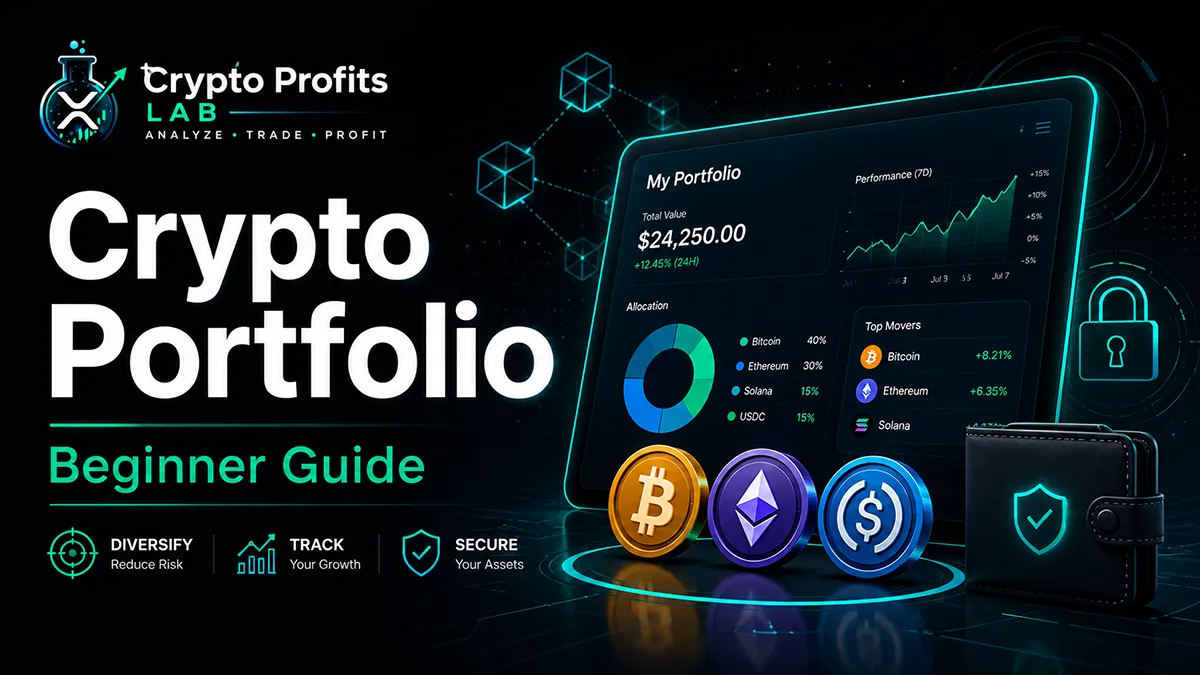
A crypto portfolio is the collection of cryptocurrencies and digital assets you own. For a beginner, that may be as simple as holding Bitcoin and Ethereum. For a more advanced user, it may include stablecoins, altcoins, DeFi tokens, staking assets, and long-term storage wallets.
The problem is that many beginners build a crypto portfolio backward. They hear about a coin on social media, buy it because it is moving fast, and then later wonder how it fits into their overall plan. That approach can lead to confusion, stress, and unnecessary risk.
A better approach is to start with simple goals. What are you trying to learn? How much risk can you handle? Are you buying for the long term, learning with small amounts, or trying to understand different parts of the crypto market?
This beginner’s guide explains how to think about a crypto portfolio in plain English. You will learn what belongs in one, how to manage risk, how to use wallets, and which mistakes to avoid.
This article is for education only. It is not financial, investment, tax, or legal advice.
Quick Answer: What Is a Crypto Portfolio?
A crypto portfolio is a collection of crypto assets owned by a single person, account, or wallet. It may include Bitcoin, Ethereum, stablecoins, altcoins, and other tokens. The purpose is to organize your crypto holdings instead of buying random coins without a plan.
A beginner crypto portfolio does not need to be complicated. In fact, simpler is usually better. Many beginners start by learning about major assets first, then slowly add other categories only after they understand the risks.
The goal is not to own every coin. The goal is to build a clear structure that matches your knowledge, budget, time horizon, and risk tolerance.
Before building anything, it helps to understand the basics. Start with What Is Cryptocurrency?, What Is Bitcoin?, and What Is Ethereum?.
Key Takeaways
- A crypto portfolio is the total group of crypto assets you own.
- Beginners should usually start simple instead of buying too many coins.
- Bitcoin, Ethereum, stablecoins, and selected altcoins can play different roles.
- Risk management matters more than chasing every trending token.
- Wallet security is part of portfolio management.
- Dollar cost averaging can help beginners avoid emotional buying.
- A good plan includes buying, storing, tracking, and eventually cashing out.
- Never build a portfolio based only on hype, influencers, or fear of missing out.
Beginner Facts Table
| Topic | Beginner Explanation |
|---|---|
| Crypto portfolio | Your collection of crypto assets |
| Core holdings | Larger, better-known assets such as Bitcoin or Ethereum |
| Stablecoins | Dollar-pegged tokens used for stability or buying power |
| Altcoins | Crypto assets other than Bitcoin |
| Allocation | How your money is divided across assets |
| Diversification | Spreading risk across different holdings |
| Rebalancing | Adjusting holdings back toward your plan |
| Main risk | Volatility, scams, bad storage, and poor decisions |
Why a Crypto Portfolio Matters
A crypto portfolio matters because crypto markets can move quickly. Without a plan, beginners can easily jump from one coin to another based on headlines, social media posts, or short-term price moves.
A planned portfolio helps you answer important questions before emotions take over.
For example:
- How much am I comfortable investing?
- Which assets do I understand?
- Am I holding for months, years, or only learning?
- How much risk is too much?
- Where will I store my crypto?
- What would make me sell?
- How will I track taxes?
These questions do not guarantee profit. They simply help you make better decisions. Crypto is already volatile, so beginners should avoid adding extra confusion by buying randomly.
If price swings make you nervous, read Crypto Volatility and Bull vs Bear Market Crypto. Those articles explain why crypto can rise and fall so sharply.
Step 1: Decide Your Goal
The first step in building a crypto portfolio is deciding why you are buying crypto in the first place.
A beginner may have one of several goals:
- Learn how crypto works
- Hold Bitcoin for the long term
- Explore Ethereum and smart contracts
- Use stablecoins for dollar-like value
- Study altcoins and blockchain projects
- Practice wallet security
- Understand DeFi later
- Build a small speculative position
Your goal affects everything else. A learning portfolio should be small and simple. A long-term portfolio may focus on larger assets. A speculative portfolio may include more risk, but it should still have limits.
Beginners often skip this step because buying is easier than planning. But planning first can prevent emotional decisions later.
A good rule is simple: do not buy an asset unless you can explain what it is, why you own it, and what risk it adds.
Step 2: Learn the Main Asset Categories
A beginner crypto portfolio may include different asset categories. Each category plays a different role.
Bitcoin
Bitcoin is the first and most well-known cryptocurrency. Many people view it as the core asset of the crypto market because of its history, fixed supply schedule, and broad recognition.
Bitcoin is still volatile, but it is usually easier for beginners to research than tiny new coins. Learn more in What Is Bitcoin?.
Ethereum
Ethereum is a smart contract platform. It supports apps, tokens, DeFi, NFTs, and many blockchain tools. Ethereum is important because much of the crypto ecosystem has been built around programmable blockchain activity.
Learn more in What Is Ethereum?.
Stablecoins
Stablecoins are designed to track another asset, often the U.S. dollar. They can help beginners understand crypto transfers, trading pairs, and DeFi without holding only volatile coins.
Stablecoins are not risk-free, but they can serve a different purpose than Bitcoin or Ethereum. Read What Are Stablecoins?.
Altcoins
Altcoins are cryptocurrencies other than Bitcoin. Some are serious blockchain projects. Others are highly speculative. Beginners should be careful, as smaller coins can move sharply and may have lower liquidity, a weaker track record, or a higher risk of scams.
To understand size and ranking, read Market Cap Crypto.
Step 3: Keep It Simple at First
A beginner does not need 20 different coins. Too many assets can make a crypto portfolio harder to understand, track, and manage.
Simple is usually safer for learning.
A beginner might start by studying only a few categories:
| Portfolio Role | Example Category | Beginner Purpose |
|---|---|---|
| Core crypto asset | Bitcoin | Learn scarcity and proof-of-work basics |
| Smart contract platform | Ethereum | Learn apps, tokens, and DeFi basics |
| Stability tool | Stablecoins | Understand dollar-pegged crypto |
| Learning position | Selected altcoin | Study one project carefully |
| Cash plan | Bank account or exchange cash balance | Avoid being fully exposed all the time |
This table is not a recommendation to buy these assets. It is a way to understand roles. The point is that every holding should have a purpose.
If you cannot explain why an asset belongs in your crypto portfolio, it may not belong there yet.
Step 4: Choose an Allocation
Allocation means how your money is divided. For example, someone might choose a mostly conservative approach with larger assets, while another person may take more speculative risk with altcoins.
Beginners should be careful here. Crypto is risky even when you choose well-known assets. Smaller coins can be even more unpredictable.
Instead of asking, “Which coin will make the most money?” ask:
- What percentage can I afford to lose?
- How much volatility can I handle?
- Do I understand this asset?
- Am I overexposed to one coin?
- Am I buying because of research or hype?
- Do I have cash for real-life needs first?
A crypto portfolio should not replace an emergency fund, bill money, or essential savings. Crypto should be treated as a high-risk asset class, especially for beginners.
Step 5: Use Dollar Cost Averaging
Dollar cost averaging means buying a set amount at regular intervals instead of trying to perfectly time the market. For example, someone might buy a small amount every week or every month.
This strategy can help beginners avoid making one emotional purchase at the worst possible time. It also helps reduce the pressure of guessing whether today is the perfect entry point.
Dollar cost averaging does not guarantee profit. It simply creates a calmer process.
This can be helpful because crypto prices often move fast. A beginner who buys everything at once may panic during a drop. A beginner who uses a planned schedule may feel less pressure.
Learn more in Dollar Cost Averaging Crypto.
Step 6: Choose Where to Buy
Before building a crypto portfolio, beginners need a safe way to buy crypto. Most people start with a centralized exchange because it is easier than using decentralized apps on day one.
A beginner-friendly exchange should have:
- Good security features
- Clear fees
- Easy deposits and withdrawals
- Strong account protection
- Simple user interface
- Good reputation
- Clear supported coins
- Educational resources
- Two-factor authentication
Do not choose an exchange only because an influencer recommends it. Also avoid unknown platforms with unrealistic rewards, pressure tactics, or confusing withdrawal rules.
Read Best Crypto Exchange for Beginners and How to Buy Crypto for Beginners before funding an account.
Step 7: Decide Where to Store Your Crypto
Buying crypto is only one part of the process. Storage is just as important.
A crypto portfolio can be stored in different ways:
- On a centralized exchange
- In a custodial wallet
- In a hot wallet
- In a hardware wallet
- Across multiple wallets
A custodial wallet means a third party manages the private keys. A non-custodial wallet means you control the keys or recovery phrase yourself.
Beginners may start on an exchange, but they should eventually learn self-custody. That does not mean moving everything immediately. It means learning how wallets work before the balance becomes meaningful.
Start with Crypto Wallet, Custodial Wallet vs Non-Custodial Wallet, and Crypto Private Key.
For larger balances, also study Hardware Wallet and Crypto Seed Phrase.
Safety and Risk: What Beginners Should Know
A crypto portfolio has several risks. Price volatility is only one of them.
Other risks include:
- Exchange hacks
- Account takeovers
- Seed phrase loss
- Phishing scams
- Fake wallet apps
- Wrong-network transfers
- Pump-and-dump schemes
- Low-liquidity coins
- Tax mistakes
- Emotional decision-making
The SEC’s Investor.gov crypto assets page is a helpful authority resource for reviewing custody, scams, and investment risk before building a crypto portfolio.
Beginners should also avoid putting all their funds into a single coin just because it is trending. A coin can be popular and still risky. A project can have strong marketing and still fail. A high price increase does not prove long-term value.
For security habits, read Crypto Safety Tips and Crypto Scams to Avoid.
Common Beginner Mistakes
The first mistake is buying too many coins too quickly. A large list of random tokens may feel diversified, but it can actually create more confusion.
The second mistake is chasing pumps. A pump is a fast price increase, often driven by hype. Buying after a coin has already exploded can be dangerous because early buyers may sell into the excitement.
The third mistake is ignoring market cap. A low-priced coin is not automatically cheap. Market cap helps explain the size of a crypto asset. Read Market Cap Crypto before judging a coin by price alone.
The fourth mistake is leaving security for later. A crypto portfolio is only useful if you can protect it. Wallet safety, passwords, two-factor authentication, and seed phrase storage matter from the start.
The fifth mistake is having no exit plan. Beginners often think about buying but not about selling, cashing out, taxes, or recordkeeping.
How to Track a Crypto Portfolio
Tracking helps you understand what you own and how it is performing. You do not need a complex spreadsheet at first, but you should keep clear records.
Track these basics:
- Asset name
- Purchase date
- Amount bought
- Price paid
- Exchange or wallet used
- Fees
- Reason for buying
- Current storage location
- Notes about risk
- Exit or review plan
This is especially important for taxes. Crypto transactions may create taxable events depending on where you live and what you do. Selling, trading, earning rewards, or cashing out may need to be reported.
Read Crypto Taxes for Beginners and How to Cash Out Crypto before you need them. It is easier to keep records from the beginning than to rebuild them later.
When to Review Your Portfolio
A crypto portfolio should not be ignored forever. It should be reviewed on a schedule, not every five minutes.
Beginners may choose to review monthly or quarterly. Looking too often can create stress and emotional decisions. Waiting too long can allow risk to drift without noticing.
During a review, ask:
- Do I still understand every asset I own?
- Has one coin become too large a percentage?
- Did I buy anything because of hype?
- Are my wallets secure?
- Are my records updated?
- Do I need to rebalance?
- Has my risk tolerance changed?
- Am I still following my plan?
Rebalancing means adjusting your holdings back toward your intended structure. For example, if one asset grows much larger than expected, a person might reduce exposure. This is a personal decision and should be made carefully.
Should Beginners Own Altcoins?
Altcoins can be interesting, but they require extra caution. Some altcoins are tied to real blockchain ecosystems. Others may have weak use cases, limited adoption, or high speculation.
A beginner who wants to study altcoins should start with research, not price charts.
Useful questions include:
- What problem does this project try to solve?
- Who uses it?
- Is the token needed?
- What is the market cap?
- How long has it existed?
- Is liquidity strong?
- Is the supply structure understandable?
- Is the community mostly educational or hype-driven?
- Could I explain this project to someone else?
If you are studying individual coins, your sitemap already includes many coin guides, including What Is XRP?, What Is Solana?, What Is Cardano?, and What Is Chainlink?.
Do not buy every coin guide you read. Use guides to learn before making decisions.
Simple Beginner Portfolio Framework
A beginner crypto portfolio can be built around roles instead of random coin picks.
Here is a simple framework:
- Core learning asset: A larger, well-known crypto asset you study deeply.
- Smart contract learning: An asset that helps you understand blockchain apps.
- Stability tool: Stablecoins or cash position for buying power and reduced volatility.
- Small research basket: One or two altcoins you are studying carefully.
- Security setup: Wallet plan, seed phrase backup, and two-factor authentication.
- Exit plan: Rules for taking profits, reducing risk, or cashing out.
This framework keeps the focus on education. You are not trying to predict every winner. You are learning how the market works while keeping risk controlled.
A strong crypto portfolio starts with understanding, not excitement.
Final Thoughts
A crypto portfolio is more than a list of coins. It is a plan for what you own, why you own it, where you store it, and how you manage risk.
Beginners should start simple. Learn Bitcoin, Ethereum, stablecoins, wallets, exchanges, and security before adding too many speculative tokens. Use dollar-cost averaging if it helps reduce emotional decision-making. Track your purchases. Protect your accounts. Avoid hype. Review your plan regularly.
Crypto Profits Lab is built to make crypto easier for beginners, one concept at a time. If you are still building your foundation, your next best reads are What Is Cryptocurrency?, Crypto Wallet, and Crypto Safety Tips.
FAQ: Crypto Portfolio for Beginners
What is a crypto portfolio?
A crypto portfolio is the collection of crypto assets you own. It may include Bitcoin, Ethereum, stablecoins, altcoins, or other tokens. For beginners, a portfolio should be simple and easy to understand. The goal is not to own every coin, but to create a clear plan that matches your risk tolerance, knowledge, budget, and long-term goals.
How many coins should a beginner crypto portfolio have?
A beginner crypto portfolio does not need many coins. In many cases, a few well-researched assets are easier to manage than a long list of random tokens. Too many coins can make tracking, security, and decision-making harder. Beginners should focus on understanding each asset before adding more. If you cannot explain why you own a coin, it may be too early to buy it.
Should Bitcoin be part of a beginner crypto portfolio?
Many beginners study Bitcoin first because it is the oldest and most recognized cryptocurrency. It can help explain scarcity, mining, decentralization, and blockchain security. However, whether to buy Bitcoin depends on your personal risk tolerance and financial situation. Bitcoin is still volatile, so beginners should research it carefully and avoid investing money they cannot afford to lose.
Should I include stablecoins in my crypto portfolio?
Stablecoins can play a useful role because they are designed to track the value of assets such as the U.S. dollar. Some beginners use them for buying power, transfers, or learning how crypto wallets work. However, stablecoins are not risk-free. They can involve issuer risk, reserve risk, regulatory risk, and platform risk. Always understand the specific stablecoin before using it.
What is the safest crypto portfolio for beginners?
There is no completely safe crypto portfolio because crypto itself is risky and volatile. A safer beginner approach is usually simple, diversified within reason, and focused on assets you understand. It should include strong wallet security, small position sizes, clear records, and no money needed for bills or emergencies. Security habits matter just as much as asset selection.
How often should I check my crypto portfolio?
Beginners should avoid constantly checking prices, as it can lead to emotional decisions. A monthly or quarterly review may be more useful than watching every market move. During a review, check whether your allocation still makes sense, whether your wallets are secure, whether your records are up to date, and whether any holdings no longer fit your plan.
What is the biggest mistake beginners make with a crypto portfolio?
The biggest mistake is buying random coins based on hype without understanding them. Beginners often chase fast-moving tokens, ignore market cap, neglect wallet security, or put too much money into a single risky asset. A better approach is to start small, study each asset, protect accounts, track purchases, and avoid pressure from social media or influencers.
Do I need a wallet for my crypto portfolio?
You can hold crypto on an exchange, but learning about wallets is important for long-term security. A non-custodial wallet gives you more control, while a custodial wallet is easier but requires trust in a platform. Beginners should learn wallet basics with small amounts before moving larger balances. Seed phrase protection and private key safety are essential.
Can I build a crypto portfolio with dollar-cost averaging?
Yes, dollar cost averaging can help beginners build a crypto portfolio gradually by buying set amounts on a schedule. This can reduce the pressure of trying to time the market perfectly. It does not guarantee profit or prevent losses, but it can make buying more disciplined. Beginners should still research assets, manage risk, and avoid investing more than they can afford to lose.