What Is Tokenomics? A Beginner’s Guide
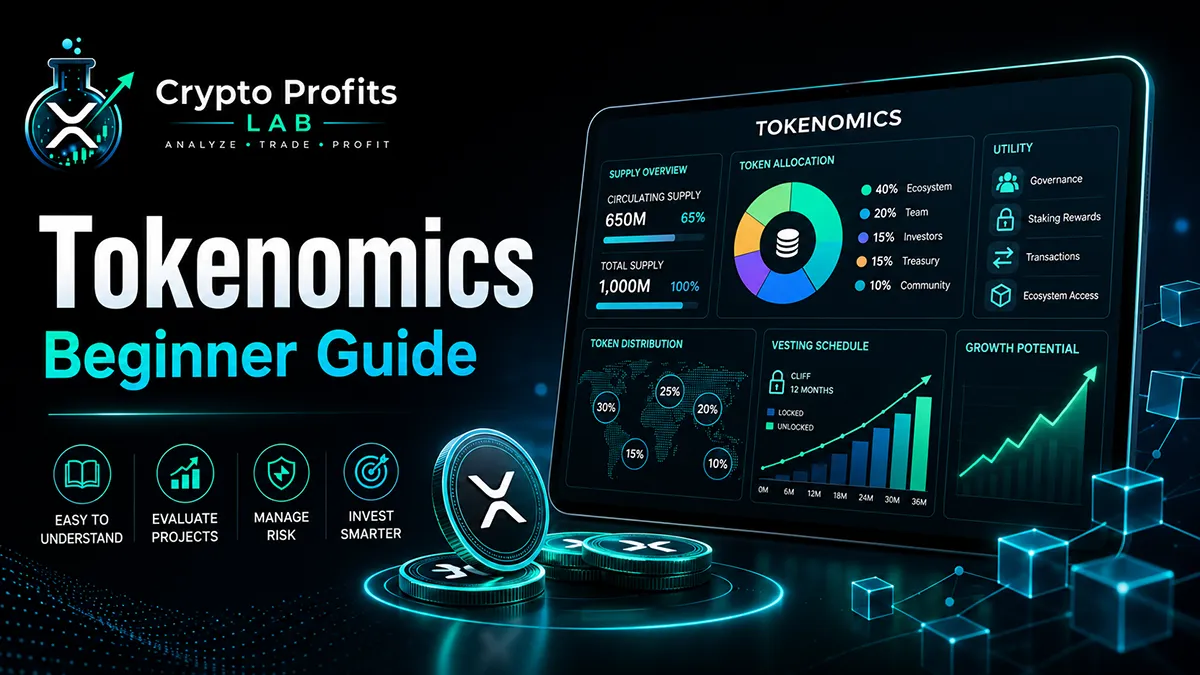
Tokenomics is one of the most important crypto terms beginners should understand before buying altcoins. It sounds complicated, but the basic idea is simple: tokenomics explains how a crypto token is designed, supplied, distributed, used, and rewarded.
In plain English, it helps answer questions like:
Why does this token exist?
How many tokens are there?
Who owns them?
Can more tokens be created?
What gives the token demand?
Are early investors allowed to sell soon?
Does the token have real use, or is it mostly hype?
Many beginners look only at price. They see a coin trading for a few cents and assume it is “cheap.” But price alone can be misleading. A token with a low price can still have a huge supply, weak demand, or risky insider ownership. That is why learning tokenomics can help you make better decisions.
This guide explains tokenomics in simple terms so beginners can evaluate crypto projects more carefully.
This article is for education only. It is not financial, investment, tax, or legal advice.
Quick Answer: What Is Tokenomics?
Tokenomics means the economic design of a crypto token. It includes token supply, distribution, utility, incentives, inflation, burning, vesting schedules, and how the token fits into a project’s ecosystem.
A simple way to think about it:
Tokenomics is the “money rules” behind a crypto token.
If the rules are clear, fair, and useful, the token may be easier to understand. If the rules are confusing, unfair, or designed mostly to benefit insiders, the project may be riskier.
Beginners should study tokenomics before buying smaller altcoins, new projects, meme coins, or DeFi tokens. It does not guarantee success, but it can help you avoid obvious red flags.
Before going deeper, read What Is Cryptocurrency? and Market Cap Crypto to understand the basic relationship between price, supply, and value.
Key Takeaways
- Tokenomics explains how a crypto token is created, distributed, used, and managed.
- Token price alone does not tell you whether a coin is cheap or expensive.
- Supply, demand, utility, and ownership distribution all matter.
- A large token supply can make a low price misleading.
- Vesting schedules show when insiders may be able to sell tokens.
- Burning removes tokens from supply, but it does not automatically make a project valuable.
- Weak token design can increase risk even if the project sounds exciting.
- Beginners should use tokenomics as part of research, not as a guarantee of profit.
Beginner Facts Table
| Term | Beginner Meaning |
|---|---|
| Tokenomics | The economic design of a crypto token |
| Total supply | Maximum or current amount of tokens created |
| Circulating supply | Tokens currently available in the market |
| Market cap | Price multiplied by circulating supply |
| Fully diluted value | Value if all possible tokens were counted |
| Utility | What the token is used for |
| Vesting | Schedule that controls when locked tokens unlock |
| Inflation | New tokens entering supply over time |
| Burn | Tokens permanently removed from supply |
| Distribution | Who received or owns the tokens |
Why Tokenomics Matters
Tokenomics matters because crypto tokens are not all designed the same way. Two tokens can have similar prices but completely different supplies, ownership structures, and risk levels.
For example, imagine two tokens that both trade at $1.
Token A has 10 million tokens in circulation.
Token B has 10 billion tokens in circulation.
Even though the price is the same, Token B has a much larger market value because far more tokens are available. This is why beginners should not judge a project by token price alone.
Tokenomics also helps you understand who may benefit from the project. If most tokens are owned by insiders, early investors, or the team, those groups may have a lot of influence. If many locked tokens are scheduled to unlock soon, selling pressure may increase.
Good research means asking more than, “Can this coin go up?” It means asking, “How is this token designed?”
For a deeper beginner explanation of supply and valuation, read Market Cap Crypto.
Step 1: Understand Token Supply
Supply is one of the first parts of tokenomics to study. It tells you how many tokens exist, how many are circulating, and whether more can be created.
There are several supply terms beginners should know.
Circulating supply means the number of tokens currently available in the market.
Total supply is the number of tokens currently in circulation, including locked tokens.
Maximum supply means the largest number of tokens that can ever exist, if the project has a hard limit.
Fully diluted value means the estimated value of the project if all possible tokens were counted at the current price.
These numbers matter because supply affects scarcity. Bitcoin is famous partly because it has a fixed supply limit. Many other crypto assets have different supply rules. Some have inflation. Some have token burns. Some have large future unlocks.
Learn more about Bitcoin’s supply in What Is Bitcoin?.
Step 2: Look at Market Cap
Market cap is one of the easiest ways to avoid confusion for beginners. It is calculated by multiplying the token price by the circulating supply.
Here is the basic formula:
| Formula | Meaning |
|---|---|
| Token Price × Circulating Supply = Market Cap | Estimated market value of the circulating tokens |
This matters because a low token price can be misleading. A coin trading for $0.01 may not be cheap if it has hundreds of billions of tokens. A coin trading at $100 may not be expensive if supply is very limited.
Tokenomics and market cap work together. Supply tells you how many tokens exist. Market cap helps you compare the size of one crypto asset to another.
Beginners should also compare market cap with fully diluted value. If fully diluted value is much higher than current market cap, it may mean many tokens are still locked and could enter the market later.
That does not automatically make a project bad, but it is something to understand.
Step 3: Study Token Utility
Utility means what the token is actually used for. A token can have strong branding, a loud community, and a rising chart, but still have weak utility.
Common types of utility include:
- Paying network fees
- Staking or validating
- Voting in governance
- Accessing app features
- Providing liquidity
- Receiving rewards
- Using a product or service
- Acting as collateral
- Participating in DeFi
Ethereum is a useful example because ETH is used to pay gas fees on the Ethereum network. You can learn more in What Is Ethereum? and What Are Crypto Gas Fees?.
Strong utility does not guarantee price growth. But weak utility can be a warning sign. If nobody needs the token for anything besides speculation, demand may depend mostly on hype.
A beginner-friendly question is:
Would people still need this token if the price stopped going up?
If the answer is no, the token may be more speculative.
Step 4: Check Token Distribution
Distribution explains who received the tokens and how ownership is spread out. This is a major part of tokenomics because it shows whether a project is widely distributed or controlled by a small group.
A token may be distributed to:
- Founders
- Team members
- Early investors
- Venture capital firms
- Community members
- Staking participants
- Liquidity providers
- Ecosystem funds
- Public sale buyers
- Airdrop users
If insiders own a large percentage, they may have strong influence over the market. If early investors bought at very low prices, they may be able to sell profitably even as regular beginners buy much higher.
This does not automatically mean the project is bad. Many projects need funding and teams need incentives. But beginners should understand who owns what.
A healthy project usually explains distribution clearly. A risky project may hide details or use vague language.
Step 5: Understand Vesting and Unlocks
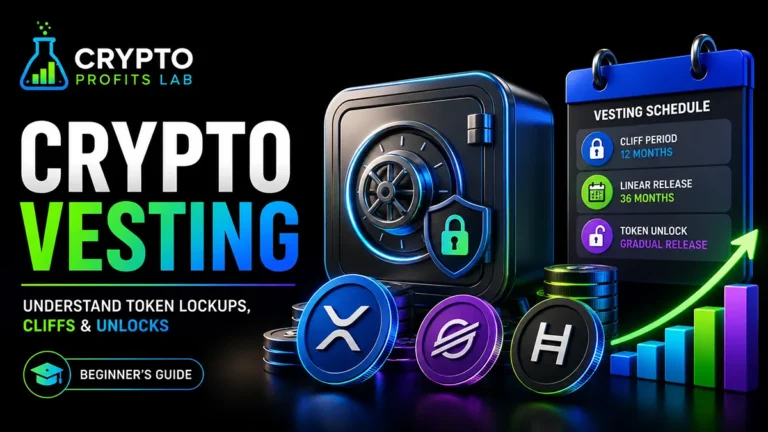
Vesting is a schedule that controls when locked tokens become available. Token unlocks can affect supply because more tokens may enter the market over time.
For example, a project may give tokens to the team but lock them for one year. After that, some tokens may unlock every month. This can help prevent the team from selling everything immediately.
However, unlocks can also create selling pressure. If many tokens unlock at once, early holders may sell. Beginners who do not check unlock schedules may be surprised by price drops.
This is why vesting is an important part of tokenomics. It helps you understand whether supply is stable or whether large amounts may enter circulation later.
Questions to ask:
- How many tokens are locked?
- When do they unlock?
- Who receives them?
- Are unlocks gradual or sudden?
- Is the schedule public?
- Could unlocks increase selling pressure?
Good projects usually make vesting information easier to find.
Step 6: Learn Inflation and Deflation
Inflation means new tokens are created or released into circulation. Deflation means supply decreases over time, usually through burns or other mechanisms.
Some projects use inflation to reward validators, stakers, miners, or users. This can help secure a network or encourage participation. But inflation can also dilute existing holders if demand does not grow.
Token burning means tokens are permanently removed from supply. Some projects burn tokens to reduce supply, create scarcity, or support a specific economic design.
Burns can sound exciting, but beginners should be careful. A burn does not automatically make a token valuable. If demand is weak, burning some supply may not matter much.
Tokenomics is about the full picture. Supply reduction, demand, utility, distribution, and market behavior all work together.
Step 7: Compare Demand Drivers
Demand is what makes people want or need a token. Without demand, supply design matters little.
Demand can come from:
- Real network usage
- App activity
- Staking
- Governance
- Transaction fees
- Community interest
- DeFi use
- Developer activity
- Exchange listings
- Institutional interest
- Speculation
Speculation is common in crypto, but it is not the same as real use. A token may rise because people expect someone else to buy it at a higher price later. That can work for a while, but it can also reverse quickly.
Beginners should ask:
What creates ongoing demand for this token?
If the only answer is “people are talking about it,” the project may be risky.
For broader market behavior, read Crypto Volatility and Bull vs Bear Market Crypto.
Step 8: Compare Tokenomics Across Projects
Tokenomics is more useful when comparing projects in the same category.
For example, if you are comparing smart contract platforms, you might look at Ethereum, Solana, Avalanche, Cardano, and others. Each has different supply rules, network activity, staking design, and fee models.
Your sitemap already includes several coin guides that can support this research:
Do not compare every project by price alone. Compare supply, market cap, use case, ownership, network adoption, and risk.
This is where tokenomics helps beginners slow down and think more clearly.
Safety and Risk: Tokenomics Red Flags
Tokenomics can reveal red flags before you buy. It will not catch every bad project, but it can help you avoid obvious problems.
For a broader investor-risk overview, the SEC’s Investor.gov crypto assets page explains that crypto asset characteristics can vary significantly and that different crypto assets can present different benefits or risks: Investor.gov crypto assets.
Watch for these red flags:
- Team ownership is extremely high
- Token unlocks are unclear
- Supply numbers are hard to verify
- The project has no real use case
- Rewards are too high to seem sustainable
- The whitepaper is vague
- The project avoids explaining the distribution
- Influencers promote it heavily without details
- The token has low liquidity
- The community attacks anyone asking basic questions
A serious project should be able to clearly explain its token design. If beginners cannot find simple answers, that is a warning sign.
For more protection, read Crypto Scams to Avoid and Crypto Safety Tips.
Common Beginner Mistakes
The first mistake is thinking a low price means a coin is cheap. A token priced under one cent can still have a huge market cap if the supply is massive.
The second mistake is ignoring unlocks. A project may look attractive today, but large future unlocks can change supply.
The third mistake is trusting social media hype rather than checking the distribution. If insiders hold most of the tokens, regular buyers may face additional risk.
The fourth mistake is assuming that burns guarantee price increases. Burns can reduce supply, but demand still matters.
The fifth mistake is buying before understanding the utility. A project should have a reason for the token to exist.
The sixth mistake is confusing a good product with a good token. Sometimes a project may have useful software, but the token itself may not capture much value.
Tokenomics helps beginners ask better questions before buying.
How Tokenomics Fits Into a Crypto Portfolio
Tokenomics is useful when building a crypto portfolio. It helps you decide whether an asset is a core holding, a small research position, or something to avoid.
For example, a beginner might treat Bitcoin differently from a new micro-cap token. Bitcoin has a long history and fixed supply rules. A newer token may have uncertain demand, hidden unlocks, and less liquidity.
This does not mean beginners should only study Bitcoin. It means every asset should be judged according to its own design and risk.
Before adding a token to your portfolio, ask:
- What role does it play?
- Do I understand the supply?
- Do I understand demand?
- Are unlocks coming?
- Is the token needed?
- Is the market cap reasonable compared with similar projects?
- How much could I lose?
- Where will I store it safely?
If you cannot answer those questions, keep researching.
Step-by-Step Tokenomics Checklist
Use this simple checklist before buying a token.
- Find the circulating supply.
- Find the total and maximum supply.
- Compare market cap and fully diluted value.
- Read the token distribution.
- Check team and investor allocations.
- Look for vesting and unlock schedules.
- Understand what the token is used for.
- Check whether demand is real or mostly hype.
- Compare similar projects.
- Review wallet and exchange safety.
- Watch for scams and unrealistic rewards.
- Decide whether the token fits your portfolio plan.
This checklist does not guarantee success. It simply gives beginners a more careful process.
If you are ready to learn buying basics, read How to Buy Crypto for Beginners and Best Crypto Exchange for Beginners.
Final Thoughts
Tokenomics is one of the best beginner tools for understanding crypto beyond price charts. It explains how a token is supplied, distributed, used, unlocked, inflated, burned, and valued.
Beginners do not need to become economists. You only need to ask better questions. How many tokens exist? Who owns them? What creates demand? Are unlocks coming? Does the token have real utility? Is the project clearly explaining its design?
A strong crypto education starts with simple, careful thinking. Crypto Profits Lab is built to help beginners avoid hype, understand risk, and learn one concept at a time.
If you want to keep building your foundation, your next best reads are Market Cap Crypto, Crypto Portfolio for Beginners, and Crypto Scams to Avoid.
FAQ: Tokenomics for Beginners
What is tokenomics in crypto?
Tokenomics is the economic design of a crypto token. It explains how many tokens exist, how they are distributed, what they are used for, and how supply changes over time. Beginners can think of tokenomics as the rulebook for a token’s supply, demand, utility, and incentives. It helps investors understand risks beyond the current price.
Why is tokenomics important for beginners?
Tokenomics is important because price alone can be misleading. A cheap-looking token may have a huge supply, weak demand, or risky insider ownership. By studying supply, market cap, distribution, utility, and unlock schedules, beginners can better understand whether a project is designed fairly or carries hidden risks. It helps reduce emotional buying driven solely by hype.
What is good tokenomics?
Good tokenomics is usually clear, understandable, and aligned with the project’s long-term use. It may include reasonable supply rules, transparent distribution, real utility, fair incentives, and public vesting schedules. Good design does not guarantee profit, but it can reduce confusion. Beginners should be cautious if a project hides supply details, gives insiders too much control, or has no clear token purpose.
What is bad tokenomics?
Bad tokenomics may include unclear supply rules, very high insider ownership, confusing unlock schedules, weak utility, unrealistic rewards, or heavy reliance on hype. A project may also be risky if most tokens are controlled by a small group or if large unlocks are coming soon. Beginners should avoid projects that cannot explain their token design in simple terms.
Does tokenomics affect crypto price?
Yes, tokenomics can affect price because supply, demand, utility, and unlocks influence how a token trades. If supply increases faster than demand, price may struggle. If demand grows while supply is limited, the price may benefit. However, many other factors also matter, including market sentiment, liquidity, regulation, exchange listings, and broader crypto cycles.
Is a low token price always a good deal?
No, a low token price does not automatically mean a token is cheap. A coin priced under one cent can still have a large market cap if billions or trillions of tokens exist. Beginners should compare the circulating supply, market cap, and fully diluted value rather than judging solely by price. Supply is one of the most important parts of token research.
What is token burning?
Token burning means permanently removing tokens from circulation, usually by sending them to an address where they cannot be used. Burning can reduce supply, but it does not automatically increase value. Demand still matters. Beginners should be cautious when projects promote burns heavily without explaining real utility, adoption, or why people need the token.
What is a token unlock?
A token unlock happens when previously locked tokens become available to the team, investors, community, or other groups. Unlocks can matter because they may increase circulating supply and create selling pressure. Not every unlock is bad, but beginners should know when large unlocks are scheduled and who receives the tokens before buying a project.
How do I research tokenomics before buying?
Start by checking circulating supply, total supply, market cap, fully diluted value, token utility, distribution, vesting schedule, and unlock dates. Then compare the project with similar crypto assets. Read the whitepaper, official documents, and reputable educational sources. Beginners should avoid buying based solely on social media excitement and should never invest money they cannot afford to lose.