What Are NFTs? A Beginner’s Guide
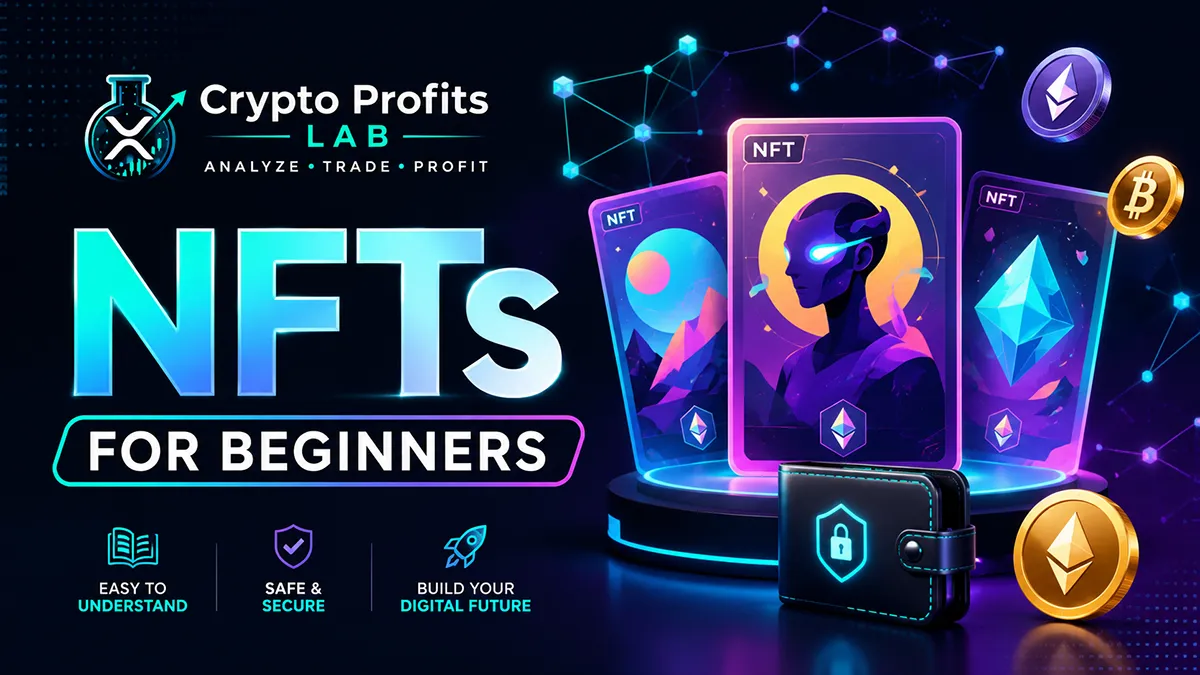
NFTs are among the most talked-about parts of crypto, but they are also among the most misunderstood. Some people think they are only expensive digital pictures. Others think they are useless hype. The truth is more balanced: NFTs are digital tokens that can represent unique ownership, access, collectibles, art, game items, memberships, or other digital assets on a blockchain.
For beginners, the confusing part is that an image isn’t always the whole point. The token is an important part. It is the blockchain record that shows a specific wallet owns a specific unique digital item.
This beginner’s guide explains NFTs in plain English. You will learn how they work, why they became popular, where they are used, what risks beginners should understand, and how to avoid common mistakes before buying or minting one.
This article is for education only. It is not financial, investment, tax, or legal advice.
Quick Answer: What Are NFTs?
NFTs are unique crypto tokens recorded on a blockchain. The letters stand for non-fungible tokens. Non-fungible means each token is different from another one. That makes them different from regular cryptocurrencies like Bitcoin or Ethereum, where one unit is generally interchangeable with another unit of the same asset.
A simple way to think about it:
Bitcoin is like a digital coin. One bitcoin has the same value as another bitcoin. An NFT is more like a unique digital collectible, ticket, certificate, or ownership record.
NFTs can represent digital art, profile pictures, gaming items, music, videos, event passes, membership access, virtual land, or other digital collectibles. The token does not always mean you own copyright or commercial rights. It usually means your wallet holds a specific blockchain token associated with that item.
Before going deeper, read What Is Cryptocurrency? and Blockchain Technology to understand the foundation.
Key Takeaways
- NFTs are unique blockchain tokens that can represent digital ownership or access.
- Non-fungible means each token is different and not perfectly interchangeable.
- They are commonly used for art, collectibles, gaming, memberships, and digital identity.
- Buying one does not automatically mean you own copyright or commercial rights.
- Most beginner mistakes stem from hype, scams, wallet errors, or unclear ownership rights.
- Wallet security, gas fees, smart contracts, and marketplace safety all matter.
- A low-priced collectible is not automatically a good deal.
- Beginners should learn slowly and avoid buying based solely on social media excitement.
Beginner Facts Table
| Topic | Beginner Explanation |
|---|---|
| NFT | A unique token recorded on a blockchain |
| Non-fungible | Not interchangeable one-for-one like regular coins |
| Common use | Art, collectibles, gaming items, memberships, access passes |
| Blockchain role | Records token ownership and transaction history |
| Wallet role | Holds and controls access to the token |
| Main risk | Scams, fake collections, bad links, poor liquidity, hype |
| Buyer caution | Ownership rights vary by project |
| Beginner rule | Research the project before connecting your wallet or buying |
Why NFTs Became Popular
NFTs became popular because they introduced a new way to prove ownership of digital items. Before blockchain collectibles, digital files were easy to copy, screenshot, download, and share. That made digital ownership harder to define.
A blockchain token changes the conversation. Even if an image is copied, the blockchain can still show which wallet owns the official token from a specific collection or contract.
This is similar to how anyone can own a print of a famous artwork, but only one person or institution owns the original. In crypto, the token is the record of ownership. The image, animation, music file, or metadata is usually connected to that token.
They also became popular because they gave creators new ways to sell directly to collectors. Artists, game developers, musicians, brands, and communities started experimenting with digital collectibles, memberships, and token-based access.
However, popularity also brought speculation. Prices rose quickly in some collections, and many beginners bought without understanding the risks. That is why education matters before making a purchase.
How NFTs Work
NFTs work through blockchains and smart contracts. A smart contract is a program on a blockchain that follows written rules. It can create tokens, track ownership, and allow transfers between wallets.
Ethereum.org explains that NFTs are individually unique tokens with different properties, unlike fungible tokens, where each unit is identical.
Here is the basic process:
- A creator or project creates a smart contract.
- The contract defines the token collection and rules.
- A token is minted, which means it is created on the blockchain.
- The token is connected to metadata, such as an image, name, or description.
- A wallet owns the token.
- The token can be transferred, sold, or held.
- The blockchain records ownership changes.
Beginners do not need to code to understand this. The important point is that the blockchain records token ownership, while the wallet controls access.
To understand the technology behind this, read Smart Contracts and What Is Ethereum?.
NFTs vs Cryptocurrency
NFTs are crypto tokens, but they are not the same as regular cryptocurrencies.
Bitcoin, Ethereum, and stablecoins are fungible assets. That means one unit is generally equal to another unit of the same asset. One ETH is one ETH. One USDC is designed to equal another USDC.
NFTs are different because each token can be unique. Even two tokens from the same collection may have different traits, rarities, histories, or market values.
| Feature | Cryptocurrency | NFTs |
|---|---|---|
| Fungibility | Usually interchangeable | Unique or individually different |
| Common use | Payments, investing, fees, transfers | Collectibles, access, gaming, digital ownership |
| Example | Bitcoin, Ethereum, stablecoins | Digital art, game items, membership passes |
| Value driver | Market demand, utility, supply | Rarity, community, utility, creator, history |
| Buyer risk | Price volatility, custody risk | Price volatility, scams, low liquidity, rights confusion |
This difference is important because beginners sometimes treat NFTs like regular coins. They are usually less liquid, harder to price, and more dependent on collection-specific demand.
For more on crypto asset types, read What Are Altcoins? and What Are Stablecoins?.
Common Uses for NFTs
NFTs are often associated with digital art, but that is only one use case.
Common examples include:
- Digital art
- Profile picture collections
- Gaming items
- Virtual land
- Music collectibles
- Event tickets
- Membership passes
- Loyalty rewards
- Digital identity tools
- Brand collectibles
- Token-gated communities
- Certificates or proof of attendance
Some of these use cases are more developed than others. Gaming items and access passes are easy for beginners to understand because they can provide functionality within an ecosystem. Art and collectibles depend more on community, creator reputation, rarity, and buyer demand.
The key question is simple:
What does the token actually do?
If the answer is only “the price might go up,” be careful. That is speculation, not utility.
Step 1: Understand the Collection
Before buying, start by understanding the collection. What is it? Who created it? How many tokens exist? What makes each item different? Does the project have a real community, clear purpose, or useful access?
Beginner questions to ask:
- Who created the collection?
- Is the creator or team known?
- How many tokens exist?
- What blockchain is it on?
- What marketplace lists it?
- What rights come with ownership?
- Is there a roadmap?
- Does the project have real activity?
- Are people buying because of utility or hype?
Do not buy only because something looks cool. Visual style is one part of the decision, but it is not enough. Research matters.
If you are learning how token design affects value, read What Is Tokenomics?.
Step 2: Learn About Wallets First
A crypto wallet is required to hold and control NFTs. Your wallet is the tool that connects to marketplaces, signs transactions, and stores access to your tokens.
This is where beginners need to be careful. If someone gets your seed phrase or private key, they may be able to take your crypto assets. A fake marketplace link can also trick you into signing a dangerous approval.
Before buying or minting anything, learn these wallet basics:
- What wallet are you using
- What blockchain is the token on
- How to protect your seed phrase
- How wallet approvals work
- How to verify website links
- How to avoid fake support messages
- How to use a separate wallet for risky activity
Helpful wallet guides:
Wallet safety comes before collecting.
Step 3: Understand Minting
Minting means creating a token on a blockchain. In simple terms, it is the process of turning a digital item into a blockchain token.
A project may allow users to mint directly from its website. After minting, the token appears in the user’s wallet if the transaction is successful.
Minting can be exciting, but it also carries risk. A fake mint page can drain a wallet. A real mint can still be overpriced. Gas fees may be high. The collection may fail after launch. The token may have no resale demand.
Before minting, check:
- Is the website official?
- Is the mint price clear?
- Are gas fees reasonable?
- Is the contract verified?
- Is the supply limited?
- Does the project explain ownership rights?
- Are people rushing because of fear of missing out?
- Are you using a wallet with limited funds?
Never mint from a link sent in a random direct message.
Step 4: Understand Gas Fees
Gas fees are transaction costs paid to use a blockchain. If you buy, sell, mint, transfer, or approve a token on Ethereum or another network, you may pay a fee.
Gas fees can change depending on network activity. During busy periods, fees may rise. A beginner may think they are only paying for the item, then discover the transaction fee is higher than expected.
This matters because a low-priced collectible can become more expensive after fees. If an item costs $10 but the transaction fee is high, the total cost may not be worth it.
Before taking action, always review:
- Item price
- Network fee
- Marketplace fee
- Creator royalty if shown
- Total transaction cost
- Whether the transaction can fail
- Whether the token has enough liquidity
To learn more, read What Are Crypto Gas Fees?.
Step 5: Understand Marketplace Safety
NFTs are often bought and sold on marketplaces. A marketplace is a website where users can browse collections, make offers, list items, and complete sales.
Marketplaces can be convenient, but beginners should still be careful. Fake collections, fake websites, copied artwork, and phishing links are common.
Before buying, verify:
- The official collection page
- The contract address
- Creator links
- Marketplace verification badges if available
- Trading activity
- Floor price history
- Number of owners
- Recent sales
- Website spelling
- Whether links come from official sources
A floor price is the lowest listed price in a collection. Beginners should not assume that the floor price reflects the true value. Some items may be listed but are not actually selling. Liquidity matters.
If you cannot verify the collection, do not rush.
Safety and Risk: What Beginners Should Know
NFTs can be fun and useful, but they can also be risky. Many beginners lose money because they focus only on potential upside and ignore security, liquidity, and the risk of scams.
Common risks include:
- Fake mint pages
- Fake marketplace links
- Stolen artwork
- Copycat collections
- Wallet-draining approvals
- Low liquidity
- Price crashes
- Hype-driven buying
- Unclear ownership rights
- High gas fees
- Abandoned projects
- Fake celebrity or brand claims
A major risk is believing that buying a token automatically gives you full rights to the artwork. That depends on the project’s terms. Some projects grant commercial rights. Others do not. Some may only give the right to display or resell the token.
For safety, read Crypto Scams to Avoid and Crypto Safety Tips.
NFTs and Copyright
Buying an NFT does not automatically mean you own the copyright to the art, image, music, or media connected to it. This is one of the biggest misunderstandings among beginners.
In many cases, you own the token, but the creator may still own the intellectual property rights. The project may give holders certain usage rights, but those rights can vary.
Before buying, look for:
- License terms
- Commercial rights
- Personal use rights
- Brand restrictions
- Creator statements
- Project documentation
- Marketplace descriptions
If rights are unclear, assume you have limited rights until proven otherwise.
This matters if you plan to use the image on merchandise, in a business, or in public branding. Do not assume ownership rights based only on token ownership.
NFTs and Your Crypto Portfolio
NFTs can be part of a crypto portfolio, but they should be treated carefully. They are usually more speculative and less liquid than major crypto assets.
Unlike Bitcoin or Ethereum, a collectible may not have a constant buyer base. You may own something that looks valuable based on listed prices, but selling it could be difficult if demand is low.
Questions to ask before adding one to your portfolio:
- Would I still want this if the price fell?
- Is the collection liquid?
- Do I understand the creator or project?
- Does it have utility or only hype?
- How much of my portfolio would this represent?
- Could I lose the full amount?
- Where will I store it safely?
- Do I understand the tax impact?
For portfolio planning, read Crypto Portfolio for Beginners and Market Cap Crypto.
Common Beginner Mistakes
The first mistake is buying because of hype. A project trending on social media can still collapse quickly.
The second mistake is clicking fake Mint links. Scammers often impersonate real projects and create urgent claim pages.
The third mistake is using a main wallet for risky activity. A separate wallet with limited funds is safer for experimenting.
The fourth mistake is ignoring gas fees. Fees can make small purchases more expensive than expected.
The fifth mistake is assuming every collection will have resale demand. Many collections become illiquid.
The sixth mistake is misunderstanding ownership rights. Token ownership and copyright ownership are not always the same thing.
The seventh mistake is buying without checking the contract or the official collection page.
Slow research is better than fast regret.
Beginner Checklist Before Buying
Use this checklist before buying or minting:
- Learn what the collection is.
- Verify the official website.
- Confirm the correct collection page.
- Check the blockchain network.
- Review gas fees.
- Understand the mint or purchase price.
- Read the rights or license information.
- Check recent sales and liquidity.
- Avoid links from direct messages.
- Use a separate wallet if testing.
- Never share your seed phrase.
- Decide whether it fits your portfolio.
- Keep records for taxes.
- Be willing to walk away.
This checklist will not remove all risk, but it can help beginners avoid common mistakes.
Final Thoughts
NFTs are unique blockchain tokens that can represent digital collectibles, art, game items, memberships, event access, and other forms of digital ownership. They are not just pictures, but they are also not automatically valuable just because they are on a blockchain.
Beginners should focus on understanding the basics before buying. Learn wallets, smart contracts, gas fees, marketplaces, scams, and ownership rights. Use small amounts while learning. Avoid pressure from social media. Never share your seed phrase. Do not connect your main wallet to unknown mint pages.
Crypto Profits Lab is built to make crypto easier for beginners by explaining one concept at a time. If you want to keep learning, your next best reads are Smart Contracts, Crypto Wallet, and Crypto Scams to Avoid.
FAQ: NFTs for Beginners
What are NFTs in simple terms?
NFTs are unique crypto tokens recorded on a blockchain. They can represent digital art, collectibles, gaming items, memberships, or access passes. Unlike Bitcoin or Ethereum, each token can be different. Beginners can think of them as blockchain ownership records for unique digital items. The token proves wallet ownership, but it does not always include copyright or full commercial rights.
Are NFTs the same as cryptocurrency?
NFTs are crypto tokens, but they are different from regular cryptocurrencies. Bitcoin, Ethereum, and stablecoins are usually fungible, meaning each unit is interchangeable with another unit of the same asset. NFTs are non-fungible, meaning each one can be unique. They are often used for collectibles, digital ownership, gaming items, memberships, and access rather than simple payments.
Do I own the image if I buy an NFT?
Not always. Buying a token usually means you own the blockchain token, not automatically the copyright to the image or media. Ownership rights depend on the project’s terms. Some collections grant commercial rights, while others only allow personal display or resale. Beginners should always read the license or project documentation before assuming they can use the artwork commercially.
Why do people buy NFTs?
People buy them for different reasons, including collecting art, joining communities, accessing memberships, using gaming items, supporting creators, or speculating on future value. Some buyers care about the artwork, while others care about utility or status. Beginners should be careful because hype can push prices higher than real demand supports, and many collections lose value over time.
Are NFTs safe for beginners?
NFTs can be safe to learn about, but buying or minting them requires caution. Beginners must understand wallet security, gas fees, marketplace verification, fake links, and scam risks. Never share your seed phrase or private key. Use official links, verify collections, start with small amounts, and avoid connecting your main wallet to unknown mint pages or suspicious websites.
What does minting an NFT mean?
Minting means creating a new token on a blockchain. When someone mints, the smart contract creates a token and assigns ownership to a wallet. A project may allow public minting through an official website. Beginners should verify the site carefully before minting because fake mint pages are common scams. Minting may incur gas fees and does not guarantee future value.
Can NFTs lose value?
Yes, NFTs can lose most or all of their value. Demand may disappear, the project may fail, the community may move on, or the market may become illiquid. Listed prices do not always mean real buyers exist. Beginners should treat them as risky digital collectibles and never spend money they cannot afford to lose. Research and wallet safety are essential.
What blockchain are NFTs on?
NFTs can exist on many blockchains, including Ethereum, Solana, Polygon, Avalanche, and other networks. Ethereum is one of the most well-known networks for them, but each blockchain has different fees, wallets, marketplaces, and risks. Beginners should learn one network at a time and confirm that their wallet supports the correct chain before buying or transferring tokens.
Do I need a crypto wallet to buy NFTs?
Yes, most NFT purchases require a crypto wallet. The wallet holds access to your tokens and signs transactions. Some marketplaces may offer simpler account-based options, but wallet knowledge is still important. Beginners should learn seed phrase safety, private keys, gas fees, and wallet approvals before buying. A separate wallet for testing can reduce risk.