What Are Crypto Gas Fees? A Beginner’s Guide
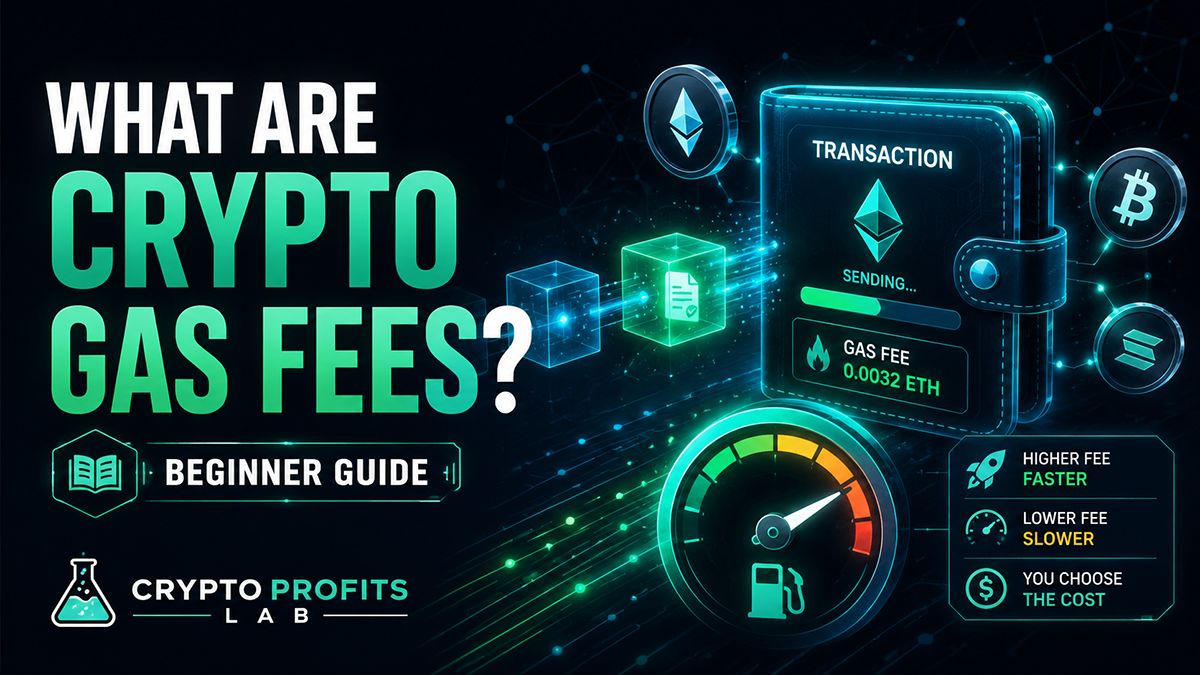
Crypto gas fees are one of the first unexpected costs many beginners encounter after moving cryptocurrency into a wallet. You may have enough tokens for a transfer or swap, yet your wallet says you need another coin to complete it. You may also see the estimated cost change from one minute to the next.
The idea is simple: a blockchain charges users for the computing work required to process transactions and run applications. That cost helps prevent spam, rewards network participants, and manages limited block space.
This guide explains crypto gas fees in plain English, including why they exist, how Ethereum calculates them, why they change, and how beginners can avoid paying more than necessary.
Quick Answer
Crypto gas fees are network charges paid when you perform an action on certain blockchains. You may pay them when sending coins, transferring tokens, swapping assets, using a decentralized application, minting an NFT, or interacting with a smart contract.
The fee depends on how much computing work the action requires and how busy the network is. On Ethereum, the fee is normally paid in ETH even when you are sending a different token. Other blockchains use their own native coins.
Your wallet usually estimates the fee before approval. Always review the estimate, confirm the correct network, and keep enough of the network’s native coin on hand.
Key Takeaways
- Crypto gas fees pay for the computing resources used to process blockchain activity.
- Gas is normally paid with the blockchain’s native coin, not necessarily with the token being transferred.
- Simple transfers generally require less gas than swaps or other smart-contract actions.
- Network congestion can make fees rise even when the transaction amount stays the same.
- A gas limit is a spending allowance for computing work, not always the amount you will pay.
- A failed transaction may still consume gas because the network performed work.
- Layer 2 networks can reduce costs, but you must use the correct network.
- Beginners should usually use the fee estimate suggested by a trusted wallet.
Crypto Gas Fees: Beginner Facts
| Beginner question | Simple answer |
|---|---|
| What do gas fees pay for? | The computing work and block space needed to process a transaction. |
| Which coin pays the fee? | Usually the network’s native coin, such as ETH on Ethereum. |
| Does sending more crypto cost more gas? | Not necessarily. Complexity and network demand often matter more than value. |
| Are exchange fees and gas fees the same? | No. An exchange may add separate trading or withdrawal charges. |
| Can a failed transaction still cost money? | Yes. The network may charge for work completed before failure. |
| Can fees change quickly? | Yes. Demand for block space can rise or fall within minutes. |
| Can I avoid all gas fees? | Usually not for an on-chain action, although some services may subsidize them. |
What Are Crypto Gas Fees?
Crypto gas fees are charges for using a blockchain’s processing capacity. They are most closely associated with Ethereum, but many programmable blockchains use similar fee systems.
When you submit a transaction, network computers must verify your signature, confirm that the request complies with the rules, execute any smart-contract instructions, update the ledger, and record the result in a block. Gas measures the computational work involved.
A simple comparison is postage. The cost covers handling and delivery, not the value inside the package. In the same way, transferring $10 and transferring $10,000 may require similar work if both use the same transaction type.
Gas also discourages spam. Without a cost, someone could flood a public network with endless requests.
Learn more about the record being updated in Blockchain Technology Explained and the movement of assets in What Is a Crypto Transaction?.
Why Blockchains Charge Gas
Public blockchains have limited capacity. A block can contain only a certain amount of data and computational work, so users compete for available space when demand is high.
A fee helps reward network participants, makes spam expensive, prioritizes transactions during congestion, and charges for complex smart-contract actions based on the extra resources they consume.
Crypto gas fees are part of the network’s rules, not an optional charge invented by your wallet. The wallet estimates and displays the cost, but it normally does not create the underlying fee.
Gas, Gas Units, and Gwei
Beginners often see several unfamiliar terms on the same confirmation screen.
Gas
Gas measures computational work. Different actions consume different amounts.
Gas Units
Gas units show how much work a transaction uses. A basic ETH transfer uses fewer units than a complicated token swap.
Gwei
Gwei is a small denomination of ETH commonly used to quote Ethereum’s price per unit of gas. One gwei is one-billionth of one ETH.
Think of gas units as the number of gallons needed and gwei as the price per gallon. The final cost depends on both. Your wallet normally converts the estimate into ETH and an approximate dollar amount.
How Ethereum Calculates Crypto Gas Fees
On Ethereum, the simplified formula is:
Gas used × (base fee + priority fee) = transaction fee
The base fee is set by the protocol according to network demand. The priority fee is a tip that can encourage a validator to include the transaction. Ethereum burns the base-fee portion, while the priority fee generally goes to the validator.
A standard ETH transfer commonly uses 21,000 gas units. More complicated actions can use far more. Your wallet estimates the likely gas usage and suggests fee settings before approval.
You can review the formula in Ethereum’s official gas documentation.
The maximum shown by a wallet is not always the final charge. The wallet may reserve enough ETH for the possible cost and return the unused portion to your available balance.
How a Gas-Paying Transaction Works Step by Step
Step 1: Choose an Action
You decide to send a coin, transfer a token, swap assets, or use an application. Read What Is a Crypto Wallet? for wallet basics.
Step 2: Confirm the Network
The wallet must be connected to the intended blockchain. A token can exist on several networks, but each network has separate balances and fee requirements. See What Is a Crypto Network?.
Step 3: Review the Transaction
The wallet prepares the receiving address, amount, contract instructions, and estimated cost. Check the network, asset, address, fee, and total deduction. The checklist in How to Transfer Crypto can help.
Step 4: Sign and Broadcast
Your wallet signs the request with your private key without revealing that key, then broadcasts it to the network.
Step 5: The Network Processes It
A validator includes the transaction in a block, the network executes the instructions, and the action begins receiving crypto confirmations.
Why Crypto Gas Fees Change
Crypto gas fees change because block space is limited and demand is not constant.
Fees may rise during popular token launches, sharp market moves, NFT mints, or periods of heavy decentralized-application activity. They may fall when fewer users are competing for space.
The amount being transferred is usually not the main factor. A simple high-value transfer can require less work than a small but complicated swap.
Wallet estimates can also differ because each wallet may use a different method to predict the fee required for timely processing.
Why Some Actions Cost More Than Others
A blockchain charges for computational work, not merely for moving value.
A native-coin transfer performs relatively few checks. Sending an ERC-20 token requires a token contract. A decentralized exchange swap may call several contracts, update a liquidity pool, calculate prices, and move multiple assets.
Actions that often require more work include:
- Approving a token
- Swapping tokens
- Adding or removing liquidity
- Bridging assets
- Minting an NFT
- Using a multi-step DeFi strategy
Actual crypto gas fees depend on the contract design and network conditions.
For token basics, read What Is ERC-20?. For decentralized applications, see What Is DeFi?.
Why You Need ETH to Send an Ethereum Token
A common beginner problem is holding an ERC-20 token but having no ETH available to move it.
The token has value, but Ethereum’s fee system uses ETH. You therefore need ETH in the same wallet and on the same network to pay the transaction cost.
Similar rules apply elsewhere:
- Ethereum uses ETH.
- BNB Smart Chain uses BNB.
- Solana uses SOL.
- Avalanche C-Chain uses AVAX.
Always verify the current native fee coin for the network you are using. Holding a stablecoin or another token may not be enough to move it.
Crypto Gas Fees vs. Other Crypto Fees
Several costs may arise during a single activity.
| Fee or cost | What it means |
|---|---|
| Network or gas fee | Charged by the blockchain for processing an on-chain action. |
| Exchange withdrawal fee | Set by a centralized exchange when you withdraw. |
| Trading fee | Charged when you buy, sell, or swap on a platform. |
| Decentralized exchange fee | Charged by a trading protocol or liquidity pool. |
| Slippage or price impact | A possible difference in trade price, not a gas charge. |
Read Crypto Trading Fees for Beginners for a fuller comparison. Centralized vs. Decentralized Exchanges explains why platforms have different fee structures.
How to Check the Fee Before Approving
Your wallet’s confirmation screen is the final checkpoint. Review:
- The blockchain network
- The asset and amount
- The receiving address or application
- The estimated network fee
- The maximum total the wallet may spend
- Any token approval is being requested
- The minimum amount expected from a swap
Do not approve a transaction only because a website tells you to click Confirm. Read the wallet prompt.
If the fee looks unusually high, cancel before signing. You may be able to wait, use another supported network, or choose a lower-cost method.
7 Smart Ways to Reduce Crypto Gas Fees
1. Wait for Lower Demand
Check the estimate again later rather than approving in a sudden rush. There is no guaranteed cheapest hour because crypto activity is global.
2. Use a Reputable Layer 2
Layer 2 networks can make transfers and application use less expensive. The sender, receiver, wallet, exchange, and application must support the same network. Read What Is Layer 2 Crypto?.
3. Avoid Repeated Small Transfers
Several withdrawals can create several fees. Planning fewer transfers may reduce total costs, provided it does not create a custody or security risk.
4. Compare Supported Networks
An exchange may offer several withdrawal networks for the same token. Never choose one based only on the lowest fee. Confirm that the receiving platform supports the exact token and network.
5. Avoid Unnecessary Approvals
Some applications require a separate approval before a swap. Understand permissions and avoid repeatedly approving tokens without a clear reason.
6. Use Advanced Controls Carefully
Some wallets offer slow, standard, and fast settings. Beginners are usually safer using the standard estimate. Setting the fee too low can create a long delay.
7. Estimate the Entire Activity
A DeFi strategy may require approval, deposit, claim, and withdrawal transactions. Consider the full process, not only the first fee.
The lowest crypto gas fees are not always attached to the safest option. Network support and security matter more than saving a small amount.
Layer 2 Networks and Lower Fees
Layer 2 networks process many transactions more efficiently and then post information back to Ethereum. Sharing costs across many users can make activity less expensive.
Examples include Arbitrum, Optimism, and Base. Each is a separate network in your wallet.
Before using one, confirm which network you selected, whether your exchange supports it, which coin pays its fees, and how you will move funds back if needed.
A low fee does not protect you from using the wrong network. Treat network selection as a security decision.
What Happens If You Set the Fee Too Low?
A transaction with an insufficient fee may remain pending because validators prefer other transactions.
Depending on the wallet, you may be able to wait, speed it up with a higher-fee replacement, or cancel it with another replacement transaction. Follow the wallet provider’s instructions rather than submitting random transactions.
A very low setting can create delays and block later transactions from the same wallet. The standard wallet estimate is usually the most beginner-friendly choice.
Why Failed Transactions Can Still Cost Gas
A failed transaction can still incur crypto gas fees because the network performed computational work before discovering it could not be completed.
A swap may fail because the price moved beyond your allowed slippage, a contract condition was not met, or the transaction ran out of gas. The intended swap does not complete, but the network may still record the attempt and charge for the work used.
Before retrying, identify the cause. Repeating the same action may produce another failure and another fee.
Gas Limit vs. Gas Price
The gas limit is the maximum number of gas units a transaction may use. The gas price or fee settings determine how much you are willing to pay per unit.
A higher gas limit does not make a transaction faster. A higher priority fee may help during congestion, but it cannot fix a faulty contract action.
Wallets estimate these values automatically. Beginners should avoid changing them manually unless they understand the transaction and the network.
Do All Blockchains Use Gas Fees?
Most public blockchains charge some form of transaction fee, but they do not all use Ethereum’s gas model or terminology.
Bitcoin uses transaction fees that are influenced in part by transaction size and competition for block space. Solana, XRP Ledger, and other networks have their own systems.
Some applications subsidize or hide fees, but processing still has a cost somewhere. Crypto gas fees are therefore one type of blockchain transaction cost, not a universal formula used identically by every network.
Common Beginner Mistakes
Sending the Entire Native-Coin Balance
If you send every bit of ETH or another native coin, you may have nothing left for the next transaction.
Holding a Token Without the Fee Coin
An ERC-20 token does not remove the need for ETH on Ethereum. Keep enough of the correct native asset for expected actions.
Choosing the Cheapest Network Without Checking Support
A cheap withdrawal can become an expensive mistake if the receiver does not support that network.
Approving Every Wallet Prompt
Some prompts grant a contract permission to spend tokens. Read the approval rather than focusing solely on the fee.
Retrying a Failed Transaction Immediately
Determine why it failed before paying again. The issue may be slippage, a paused contract, an incorrect network, or insufficient balance.
Assuming a High Fee Means the Transaction Is Safe
A fee pays for processing. It does not prove that the recipient, token, website, or contract is legitimate.
Safety and Risk Considerations
Crypto gas fees are normal, but scammers use fee-related language to pressure beginners.
Be cautious when someone tells you to:
- Pay a large “gas fee” directly to a person
- Send crypto to activate or unlock a wallet
- Deposit more money to release guaranteed profits
- Share a seed phrase so support can fix a fee problem
- Install unknown software to reduce fees
- Approve unlimited token access without explanation
A real gas is typically shown in your wallet as part of a transaction. You never need to share your seed phrase, private key, password, or two-factor authentication code to pay with it.
Use official wallet apps, verify websites, and inspect approvals. Review Crypto Safety Tips and Crypto Scams to Avoid before using unfamiliar platforms.
A valid network fee does not make an application trustworthy.
Beginner Gas-Fee Checklist
Before approving an on-chain transaction, ask:
- Am I connected to the correct network?
- Do I have enough of the native coin?
- Is the recipient or application legitimate?
- Does the wallet show the action I intended?
- Is the fee reasonable compared with the amount?
- Am I granting token-spending permission?
- Could I wait for lower demand?
- Is a supported layer 2 appropriate?
- Have I considered every required transaction?
- Do I understand why a previous attempt failed?
A short review can prevent wasted fees and much larger losses.
Crypto Gas Fees Final Thoughts
Crypto gas fees are the cost of asking a blockchain to process work. They help support network operation, discourage spam, and allocate limited block space.
The final cost depends on the action’s complexity, network demand, and the fee system used by that blockchain. A simple transfer may cost less than a swap, bridge, liquidity deposit, or other smart-contract interaction.
Beginners can manage crypto gas fees by keeping a small amount of the native coin, checking the network, reviewing wallet estimates, waiting during congestion, and using supported layer 2 networks when appropriate.
The goal is not always to find the absolute cheapest fee. The safer goal is to understand the complete transaction and avoid taking extra risk to save a small amount.
Crypto Profits Lab explains topics like this in direct, beginner-friendly language so you can understand both the opportunity and the risk before approving a transaction.
Crypto Gas Fees Frequently Asked Questions
What Are Crypto Gas Fees in Simple Terms?
Crypto gas fees are charges paid to a blockchain network for processing a transaction or smart contract action. They cover the computing work and the limited block space used by the request. Your wallet normally estimates the cost before approval. The fee is separate from the amount being transferred and is usually paid with the blockchain’s native coin.
Why Are Crypto Gas Fees So High Sometimes?
Fees rise when many users compete for limited block space. Token launches, market volatility, NFT mints, and heavy application activity can increase demand. Complicated smart contract actions also consume more gas than simple transfers. Waiting for quieter conditions or using a supported layer 2 may reduce the cost, but fees cannot be predicted with certainty.
Do I Need ETH to Send USDC or Another ERC-20 Token?
Yes, when the token is on Ethereum Mainnet, you generally need ETH in the same wallet to pay the network fee. USDC or another ERC-20 token does not normally pay its own gas. If the token is on a different network, you need that network’s designated native fee coin instead.
Can I Pay Crypto Gas Fees With the Token I Am Sending?
Usually not. Most networks require fees in their native coin, such as ETH on Ethereum or SOL on Solana. Some wallets and applications may sponsor or convert fees through special features, but beginners should not assume this is available. Check the confirmation screen and keep enough of the correct native asset before starting.
Will I Lose the Gas Fee If My Transaction Fails?
Often yes. A failed transaction may still consume gas because network computers executed instructions before discovering that the action could not complete. The asset transfer or swap may be reversed, but the processing fee may not be returned. Identify the cause before retrying, so you do not pay for the same error repeatedly.
Are Gas Fees Based on How Much Crypto I Send?
Not usually. Fees are based mainly on computational work and current demand for block space. Sending $100 and $10,000 via the same simple transaction type may require similar gas fees. A small decentralized exchange swap can cost more because it executes multiple smart contract instructions, even when the dollar value is lower.
What Is the Difference Between Gas Limit and Gas Price?
The gas limit is the maximum amount of computational work a transaction may use. The gas price or fee settings determine the amount paid per unit of work. Increasing the limit does not automatically speed up a transaction, and increasing the fee cannot fix a faulty contract. Wallet estimates are usually best for beginners.
How Can Beginners Pay Lower Crypto Gas Fees?
Beginners can wait for quieter conditions, use a reputable supported layer 2, avoid unnecessary repeated transfers, compare exchange withdrawal networks carefully, and review the full cost of multi-step activities. Do not choose an unsupported network or unsafe bridge only to save money. Security and correct network matching matter more than the lowest possible fee.