Token Unlocks in Crypto: A Beginner’s Guide
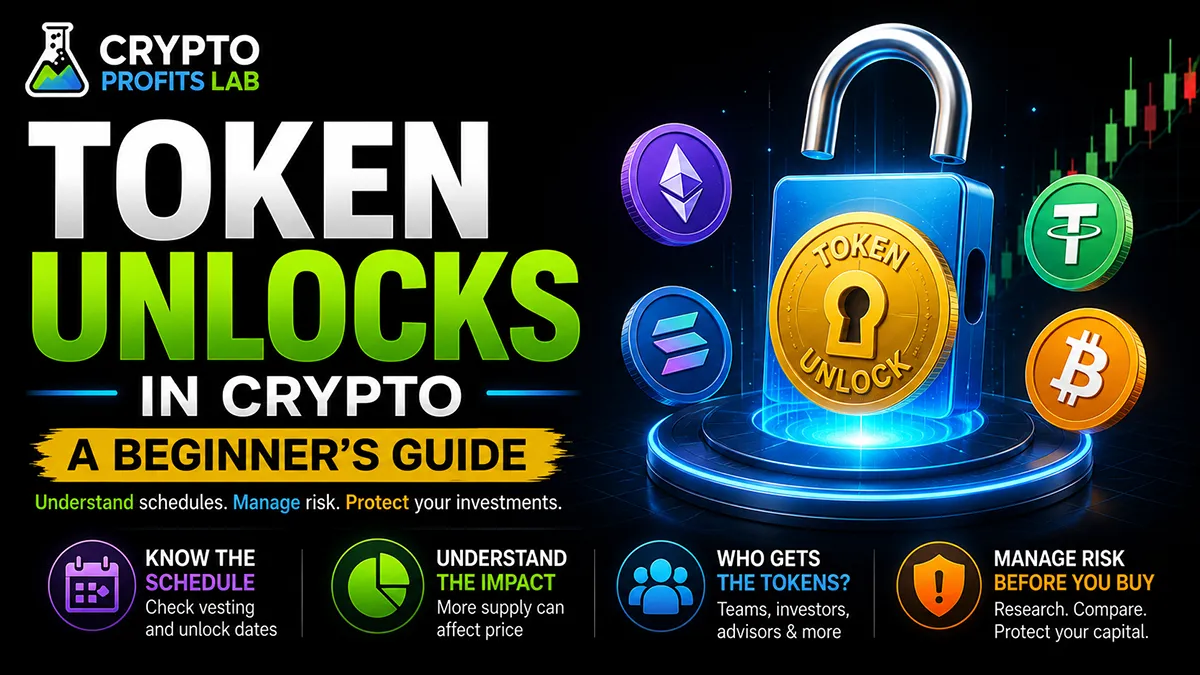
Token Unlocks in Crypto are important because they can affect supply, price pressure, investor confidence, and the way beginners evaluate a crypto project.
At first, token unlocks may sound like an advanced topic. But the basic idea is simple.
A token unlock happens when crypto tokens that were previously locked become available to use, transfer, sell, or claim.
Many crypto projects do not release all tokens at once. Instead, some tokens may be locked for team members, early investors, advisors, foundations, ecosystem rewards, or community incentives. Over time, those tokens may unlock according to a schedule.
For beginners, this matters because new supply entering the market can sometimes create selling pressure. If a large group of insiders suddenly receives unlocked tokens, some may sell. That can affect price, especially if demand is weak.
This guide explains Token Unlocks in Crypto in simple terms, why they happen, what vesting means, how unlock schedules work, common beginner mistakes, and how to research unlock risk before buying a token.
Quick Answer: What Are Token Unlocks in Crypto?
Token Unlocks in Crypto are scheduled events where previously locked tokens become available to holders.
For example, a project may lock tokens for its team or early investors for one year. After that period, some of those tokens may unlock every month. Once unlocked, the holders may be able to sell, transfer, stake, or use them depending on the project rules.
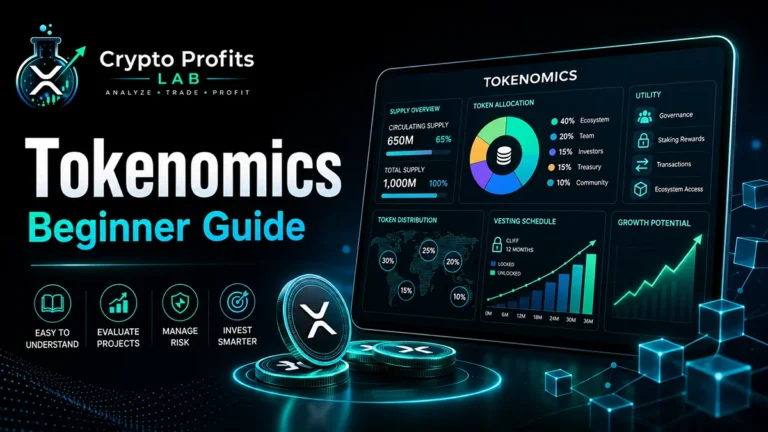
Token unlocks are connected to tokenomics, which means how a token’s supply, distribution, and incentives work.
Token unlocks in Crypto do not automatically mean a token will crash. But they can increase supply and create selling pressure if many unlocked tokens enter the market simultaneously.
For beginners, token unlocks are a research signal. They help you understand whether future supply could affect price.
Key Takeaways
- Token unlocks in Crypto happen when locked tokens become available.
- Locked tokens may belong to teams, investors, advisors, foundations, or reward programs.
- Unlock schedules are part of tokenomics.
- Large unlocks can sometimes create selling pressure.
- Small or gradual unlocks may be easier for the market to absorb.
- Token unlocks do not guarantee a price drop.
- The impact depends on demand, liquidity, market conditions, and who receives the tokens.
- Beginners should check unlock schedules before buying newer tokens.
- A token with a low circulating supply may still have a large future supply.
- Token unlocks in Crypto should be evaluated based on market cap, liquidity, tokenomics, and project trust.
Token Unlocks in Crypto Beginner Facts Table
| Topic | Beginner-Friendly Explanation |
|---|---|
| Main idea | Locked tokens become available over time |
| Related term | Vesting schedule |
| Common recipients | Team, investors, advisors, foundation, ecosystem rewards |
| Main risk | More supply may create selling pressure |
| Always bad? | No, but they require research |
| Important metric | Circulating supply versus total supply |
| Beginner mistake | Ignoring future unlocks |
| Related topics | Tokenomics, market cap, liquidity, volatility |
| Best habit | Check the unlock schedule before buying |
| Safety reminder | Avoid projects with unclear supply rules |
Why Token Unlocks in Crypto Matter
Token unlocks in Crypto matter because supply affects how crypto markets behave.
When more tokens become available, there may be more potential sellers. If demand is strong, the market may handle the unlock without major price damage. If demand is weak, the extra supply can put pressure on prices.
This is similar to any market where more supply can affect the price.
If a project has a small number of tokens currently circulating but a huge number of tokens waiting to unlock later, beginners should pay attention. The price may look attractive today, but future supply can change the situation.
This is why Token Unlocks in Crypto are closely connected to What Is Tokenomics?. Tokenomics helps you understand supply, distribution, incentives, and future risks.
A beginner should not only ask, “What is the token price today?”
A better question is, “How many tokens can enter the market later?”
What Does Locked Mean in Crypto?
Locked tokens are tokens that exist but are not yet freely available.
They may be held in a smart contract, a vesting contract, a treasury wallet, a foundation wallet, or another controlled structure. The project may set rules for when those tokens can be accessed.
Locked tokens are often used to prevent insiders from selling immediately after a token launch.
For example, a project may give tokens to its team but lock them for a period of time. This can help demonstrate that the team is expected to remain involved rather than sell everything on day one.
However, locked tokens can still become future supply.
That is why Token Unlocks in Crypto matter. Locked tokens may not affect the market today, but they may affect the market later.
To understand the basic asset itself, read Crypto Token.
What Is Vesting?
Vesting is the process of releasing tokens over time.
A vesting schedule tells users when locked tokens become available.
For example, a team allocation might vest over four years. That means team tokens unlock gradually instead of all at once.
Vesting can apply to:
- Team members
- Founders
- Early investors
- Advisors
- Private sale buyers
- Ecosystem funds
- Community rewards
- Foundation reserves
Token unlocks in Crypto often happen because of vesting schedules.
A vesting schedule can be helpful if it encourages long-term commitment. But it can also pose a risk if large amounts are unlocked during weak market conditions.
How Token Unlocks Work Step by Step
Here is a simple beginner-friendly explanation.
Step 1: A project creates a token supply
A crypto project decides how many tokens will exist.
This may include a total supply, circulating supply, team allocation, investor allocation, reward allocation, and treasury allocation.
Step 2: Some tokens are locked
The project may lock certain tokens so they cannot be sold or transferred right away.
This may be done to reduce early selling, align incentives, or follow investor agreements.
Step 3: A vesting schedule is created
The vesting schedule explains when tokens unlock.
Some schedules unlock tokens monthly. Others unlock tokens quarterly. Some unlock a large amount at once after a waiting period.
For a simple outside explanation, Coinbase explains crypto vesting as temporarily locking tokens or coins before they can be fully accessed or transferred.
Step 4: Tokens unlock
When the unlock date arrives, locked tokens become available.
The holders may be able to move, claim, sell, stake, or use them depending on the project rules.
Step 5: The market reacts
The market may react before, during, or after the unlock.
Sometimes traders sell before a large unlock because they expect supply pressure. Other times, the unlock has little effect because the market already expected it.
Token unlocks in Crypto are not always predictable, but they are worth tracking.
Common Types of Token Unlocks
Not all unlocks are the same.
Understanding the type of unlock helps beginners evaluate risk.
Cliff Unlock
A cliff unlock happens when tokens stay locked for a set period and then unlock in a larger batch.
For example, early investors may have a one-year cliff. After one year, a large portion of their tokens may unlock at once.
Cliff unlocks can create more short-term attention because a large amount of supply may become available on one date.
Linear Unlock
A linear unlock releases tokens gradually over time.
For example, tokens may unlock daily, weekly, or monthly over several years.
Linear unlocks may be easier for the market to absorb because supply enters more slowly.
Monthly Unlock
Some projects unlock tokens each month.
This can create repeated supply events. Beginners should check whether the monthly unlock amount is small or large compared with trading volume and market demand.
Milestone-Based Unlock
Some tokens unlock only when the project reaches certain goals.
This may include product launches, ecosystem growth, governance decisions, or development milestones.
Milestone unlocks can be harder to evaluate because they depend on project progress.
Ecosystem Unlock
Some tokens unlock for grants, rewards, liquidity incentives, or community programs.
These unlocks are not always bad. They may support growth. But beginners should still ask how the tokens will be used.
Token Unlocks vs Token Inflation
Token unlocks and inflation are related, but they are not always the same.
A token unlock releases existing locked tokens into the available supply.
Inflation usually means new tokens are created over time.
Some projects have both.
For example, a proof-of-stake network may issue new tokens as staking rewards while also unlocking older allocations.
This can make supply analysis more complicated.
If you are researching supply, check:
- Circulating supply
- Total supply
- Maximum supply
- Inflation rate
- Unlock schedule
- Staking rewards
- Burn mechanisms
- Treasury allocations
Token Unlocks in Crypto should be studied together with the project’s full tokenomics, not in isolation.
Token Unlocks and Market Cap
Market cap is the token price multiplied by the circulating supply.
Read Crypto Market Cap for a full beginner’s explanation.
Token unlocks matter because they can increase the circulating supply.
If the token price stays the same while the circulating supply increases, the market cap rises. But if the market does not want to absorb the new supply, the price may fall.
Beginners should also watch the fully diluted valuation, often called FDV.
FDV estimates a token’s value assuming all tokens are in circulation. A project with a low current circulating supply but a very high FDV may have a major future unlock risk.
Token Unlocks in Crypto help explain why a token can look cheap today but still have a large amount of future supply waiting.
Token Unlocks and Liquidity
Liquidity refers to how easily an asset can be bought or sold without causing a significant price change.
Read Crypto Liquidity for a simple explanation.
Token unlocks can be riskier when liquidity is weak.
If a large unlock occurs but there are few buyers, sellers may push the price down quickly. If a token has strong liquidity and high demand, the market may handle the unlock more easily.
Here is a simple comparison:
| Situation | Possible Risk |
|---|---|
| Large unlock with weak liquidity | Higher selling pressure risk |
| Small unlock with strong liquidity | Lower immediate risk |
| Large unlock during hype | Market may absorb it, but risk remains |
| Large unlock during fear | Selling pressure may be stronger |
Token unlocks in Crypto should always be compared with liquidity and trading volume.
Token Unlocks and Crypto Volatility
Crypto prices can move quickly.
A token unlock can add another reason for volatility, especially if traders expect insiders to sell.
Read Crypto Volatility if you want a beginner-friendly explanation of price swings.
A token may drop before an unlock due to market nervousness. It may drop after the unlock if holders sell. It may also rise if the unlock was already expected, and demand remains strong.
There is no simple rule.
Token unlocks in Crypto do not guarantee price movement in one direction. They are a risk factor that should be part of a bigger research process.
Token Unlocks and Meme Coins
Memecoins can be especially risky when supply information is unclear.
Some meme coins have simple supply structures. Others may have large insider holdings, unclear token distribution, or risky liquidity setups.
Read Meme Coins before buying any token because it is trending.
Token unlocks in Crypto matter for meme coins because hype can hide supply risk. A token may look exciting on social media, while insiders, early holders, or large wallets have the ability to sell in the future.
A beginner should ask:
- Who owns the supply?
- Are there locked tokens?
- When do they unlock?
- Is liquidity strong?
- Can large holders dump?
- Is the project transparent?
If the answers are unclear, be careful.
Token Unlocks and Rug Pull Risk
Token unlocks are not the same as rug pulls, but both involve trust and supply risk.
A rug pull is a scam in which insiders take value from investors and then leave the project.
Read Crypto Rug Pulls for a full beginner’s guide.
A project with unclear unlock schedules, anonymous insiders, hidden wallets, or misleading supply information may deserve extra caution.
Token Unlocks in Crypto can become dangerous when combined with:
- Poor tokenomics
- Hidden team wallets
- Weak liquidity
- No clear vesting schedule
- Unrealistic promises
- Fake partnerships
- Heavy influencer promotion
- Pressure to buy quickly
A transparent unlock schedule does not guarantee safety, but lack of transparency is a warning sign.
Token Unlocks and DeFi
DeFi projects often use token incentives to attract users.
A DeFi protocol may offer rewards for liquidity providers, stakers, lenders, or early users. Those reward tokens may have unlock schedules or emissions.
If DeFi is new to you, read What Is DeFi?.
Token Unlocks in Crypto can affect DeFi projects because reward tokens may enter circulation over time. If too many tokens are released without enough real demand, the token price can weaken.
This is especially important for:
- Yield farming rewards
- Governance tokens
- Liquidity mining programs
- DAO treasuries
- Ecosystem incentives
- Team and investor unlocks
High rewards can look attractive, but future supply can reduce value.
Token Unlocks and Airdrops
Airdrops are token distributions to users.
Some airdropped tokens are fully unlocked immediately. Others may unlock over time.
Read Crypto Airdrops for Beginners before claiming or trading airdropped tokens.
Token unlocks in Crypto can affect airdrops because recipients may sell once tokens become claimable. If many users receive tokens at once and sell quickly, the price can drop.
This does not mean all airdrops are bad. Airdrops can reward early users and support decentralization. But beginners should understand whether the token has real demand beyond the giveaway.
Free tokens are not inherently valuable.
How to Research Token Unlocks
Here is a simple beginner checklist.
Step 1: Find the tokenomics page
Look for the project’s official tokenomics page, documentation, whitepaper, or launch announcement.
Read Crypto Whitepaper if you need help understanding project documents.
Step 2: Check circulating supply
Circulating supply is the number of tokens currently available in the market.
Compare this with total supply and maximum supply.
Step 3: Look for locked allocations
Find out how many tokens are allocated to the team, investors, advisors, foundation, treasury, ecosystem rewards, and community incentives.
Step 4: Review the unlock schedule
Look for dates, percentages, cliff periods, linear vesting, and monthly unlocks.
Step 5: Compare unlock size with liquidity
A large unlock may be riskier if the token has low liquidity.
Step 6: Watch market conditions
Unlocks during bear markets may create more pressure than during periods of strong demand.
Read Bull vs Bear Market Crypto for a simple market cycle explanation.
Step 7: Ask who receives the tokens
Team unlocks, investor unlocks, ecosystem unlocks, and community unlocks may have different effects.
Step 8: Decide if the risk makes sense
If the unlock schedule makes you uncomfortable, you do not have to buy.
Token Unlocks in Crypto are useful because they help beginners avoid surprises.
Common Beginner Mistakes
Beginners often ignore supply risk until after the price moves.
Mistake 1: Only looking at the price
A token trading at $0.10 is not automatically cheap.
You need to understand supply, market cap, and future unlocks.
Mistake 2: Ignoring circulating supply
If only a small percentage of supply is circulating, future unlocks may matter a lot.
Mistake 3: Trusting hype over tokenomics
Social media excitement does not erase supply risk.
Mistake 4: Not checking insider allocations
If insiders control a large share of supply, future selling pressure may be possible.
Mistake 5: Assuming all unlocks are bad
Some unlocks support growth, rewards, and ecosystem development.
The key is understanding size, timing, and purpose.
Mistake 6: Buying right before a major unlock without research
A large upcoming unlock can increase uncertainty.
Beginners should know the schedule before buying.
Mistake 7: Ignoring liquidity
A token with weak liquidity may react more sharply to unlock events.
Mistake 8: Treating FDV like market cap
A fully diluted valuation can reflect future supply risk, whereas the current market cap uses only circulating supply.
Both numbers matter.
Safety and Risk Section
Token unlocks in Crypto are part of broader crypto risk research.
A project with transparent unlocks can still be risky. A project with unclear unlocks can be even riskier.
Be careful with projects that show:
- No clear tokenomics
- Hidden insider allocations
- Anonymous team wallets
- Vague vesting schedules
- Large upcoming unlocks with weak liquidity
- Unrealistic price promises
- Heavy influencer hype
- Fake partnerships
- Pressure to buy before “news”
- Confusing supply numbers
Use these safety habits:
- Read the tokenomics page.
- Compare circulating supply with total supply.
- Check unlock dates.
- Watch for large insider allocations.
- Understand liquidity.
- Avoid buying only because of hype.
- Be careful with new tokens.
- Do not trust guaranteed profit claims.
- Use trusted exchanges and wallets.
- Keep records of your research.
- Protect your wallet before using DeFi tools.
For broader protection, read Crypto Safety Tips and Crypto Scams to Avoid.
If you use self-custody, learn Crypto Seed Phrase safety before connecting wallets or claiming tokens.
Are Token Unlocks Always Bad?
No. Token unlocks in Crypto are not always bad.
Many legitimate projects use unlock schedules to organize token distribution responsibly. A well-designed vesting schedule can help align long-term incentives and reduce the chance of immediate insider selling.
Unlocks can support:
- Team compensation
- Ecosystem grants
- Community rewards
- Developer incentives
- Liquidity programs
- DAO treasury use
- Long-term project growth
The problem is not the existence of unlocks.
The problem is when beginners ignore unlocks, misunderstand supply, or buy tokens without knowing when large amounts may enter the market.
A token unlock is a research signal. It is not automatically a buy or sell signal.
Beginner Research Example
Imagine two tokens.
Token A has 80% of its supply already circulating. Future unlocks are small and gradual.
Token B has only 15% of its supply circulating. A large investor unlock is scheduled next month.
Token B may still perform well if demand is strong, but it clearly has more future supply risk.
A beginner should not treat both tokens the same.
Token Unlocks in Crypto help you ask better questions before buying.
The goal is not to predict the market perfectly. The goal is to avoid being surprised by supply events that were visible in advance.
Final Thoughts
Token unlocks in Crypto are an important part of beginner research.
A token unlock happens when previously locked tokens become available. Those tokens may belong to teams, investors, advisors, foundations, reward programs, or ecosystem funds.
Unlocks can affect supply, liquidity, price pressure, and investor confidence.
They do not guarantee a price drop, and they are not always bad. But they should never be ignored.
Before buying a token, beginners should check tokenomics, circulating supply, total supply, fully diluted valuation, liquidity, insider allocations, and unlock schedules.
Crypto Profits Lab is built to make crypto easier and safer for beginners. Token unlocks are a perfect example of why simple education matters. When you understand future supply, you can research tokens more clearly, avoid hype-driven mistakes, and make smarter crypto decisions.
Token Unlocks in Crypto FAQ
What are Token Unlocks in Crypto?
Token unlocks in Crypto are events in which previously locked tokens become available for use, transfer, sale, or claim. These tokens may belong to teams, investors, advisors, foundations, or reward programs. Unlocks are usually part of a vesting schedule and can affect supply, market expectations, and possible selling pressure.
Why do crypto projects lock tokens?
Crypto projects lock tokens to control supply, align long-term incentives, and prevent insiders from selling everything immediately after launch. Locked tokens may belong to the team, early investors, advisors, or ecosystem funds. Lockups can be useful, but beginners should still check when those tokens unlock and who receives them.
Are token unlocks bad for the price?
Token unlocks are not always bad for the price, but they can create selling pressure. If many tokens unlock and holders sell, the price may drop. If demand is strong, the market may absorb the new supply. The effect depends on unlock size, liquidity, market conditions, and investor behavior.
What is a vesting schedule in crypto?
A vesting schedule is a timeline that explains when locked tokens become available. Tokens may unlock after a cliff period, gradually over time, monthly, quarterly, or after certain milestones. Vesting schedules are common for team members, investors, advisors, and ecosystem funds. Beginners should review vesting before buying newer tokens.
What is a cliff unlock?
A cliff unlock happens when tokens remain locked for a set period and then unlock in a larger batch. For example, investor tokens may be locked for one year and then partially released. Cliff unlocks can attract market attention because a large amount of supply may become available at once.
How can beginners check token unlocks?
Beginners can check token unlocks by reading the project’s tokenomics page, whitepaper, documentation, or official announcements. They should compare circulating supply, total supply, insider allocations, and future unlock dates. It also helps to compare unlock size with liquidity and trading volume before buying a token.
What is the difference between circulating supply and total supply?
Circulating supply is the number of tokens currently available in the market. Total supply is the number of tokens that exist or are planned within the project’s token structure. If the circulating supply is much lower than the total supply, future unlocks may increase the available supply over time and affect the price.
Can token unlocks cause volatility?
Yes, token unlocks can contribute to volatility because traders may expect new supply to enter the market. Some holders may sell before or after an unlock. However, price movement is not guaranteed. Market demand, liquidity, project news, and overall crypto conditions also affect how a token reacts.
Should I avoid tokens with upcoming unlocks?
You do not always need to avoid tokens with upcoming unlocks, but you should understand the risk. A small, gradual unlock may be less concerning than a large insider unlock during weak market conditions. Beginners should compare the unlock size, recipient, liquidity, and project fundamentals before deciding.
What is the best rule for Token Unlocks in Crypto?
The best rule for Token Unlocks in Crypto is to check future supply before buying. Do not judge a token only by price or hype. Review tokenomics, circulating supply, total supply, vesting schedules, insider allocations, liquidity, and unlock dates. If the supply structure is unclear, be cautious.