What Is a Crypto Burn? 7 Facts Beginners Should Know
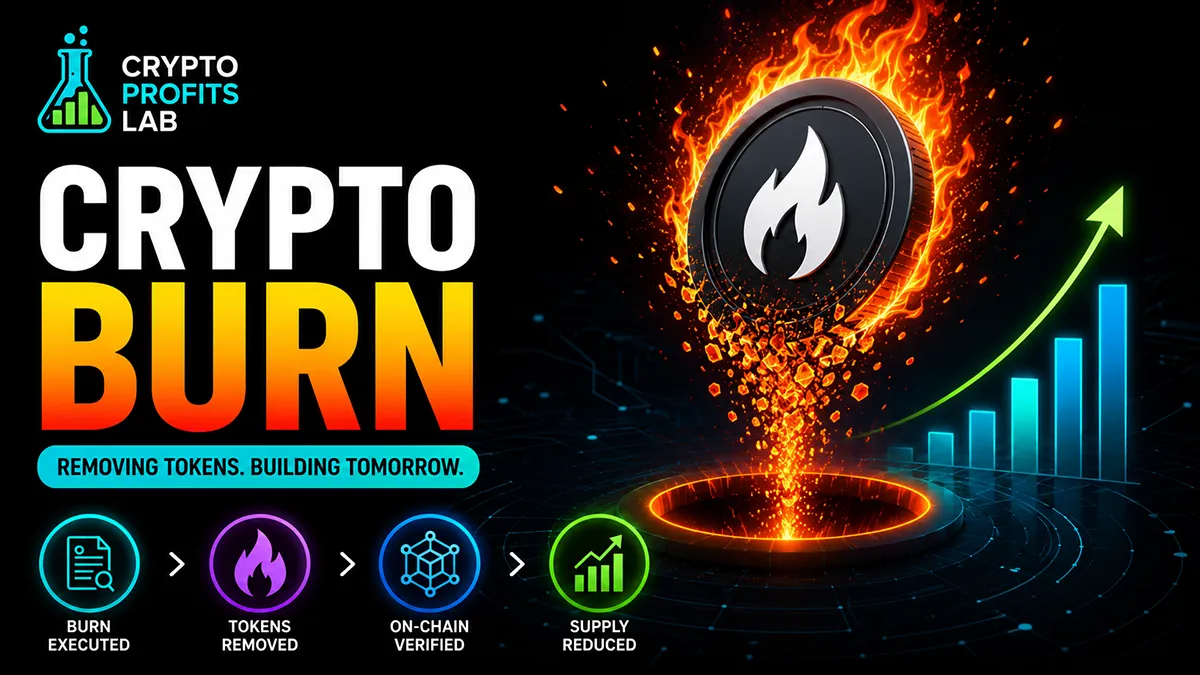
A crypto burn sounds dramatic, but no digital coins are actually burned in a fire. The term describes a process that permanently removes cryptocurrency from usable circulation.
Projects may burn tokens to reduce supply, follow rules written into their software, remove unsold tokens, or support a particular economic design. A crypto burn can be important, but it is often misunderstood. A smaller supply does not automatically create a higher price, and a burn announcement does not prove that a project is trustworthy.
This beginner’s guide explains what happens during a crypto burn, why projects use burns, how to verify them on a blockchain, and what risks to consider before making an investment decision.
Quick Answer
A crypto burn permanently makes coins or tokens unusable. This is commonly done by sending them to a special blockchain address that nobody can spend from, often called a burn address. Some blockchains also destroy tokens automatically through protocol rules or transaction fees.
A crypto burn reduces the amount that can be used or traded, but it does not guarantee that the remaining tokens will rise in value. Price still depends on demand, utility, market conditions, project quality, liquidity, and investor behavior.
Key Takeaways
- A token burn removes cryptocurrency from usable circulation.
- Most burns are permanent and cannot be reversed.
- Tokens are often sent to a public address with no usable private key.
- Some burns happen manually, while others are automatic.
- A lower supply does not guarantee a higher market price.
- Legitimate burns should usually be verifiable on a blockchain explorer.
- Projects may burn tokens for supply management, fee design, or ecosystem rules.
- Investors should examine demand and utility instead of treating a burn as a guaranteed profit.
Beginner Facts About Token Burning
| Question | Beginner Answer |
|---|---|
| What gets burned? | Coins, tokens, NFTs, or a portion of transaction fees |
| Are tokens physically destroyed? | No. They are made permanently inaccessible or removed according to protocol rules |
| Where are tokens sent? | Often to a public burn address that cannot be used to spend them |
| Can burned tokens return? | A genuine permanent burn should not be reversible |
| Does burning always reduce the circulating supply? | Usually, but the effect depends on how supply is measured and whether new tokens are also being created |
| Does a burn guarantee a price increase? | No. Demand and many other factors still affect the price |
| Can beginners verify a burn? | Yes. Public transactions can often be checked with a blockchain explorer |
| Is every burn announcement trustworthy? | No. Verify the transaction and read the project’s supply rules |
What Is a Crypto Burn?
A crypto burn is the permanent removal of cryptocurrency from the amount that can be accessed and spent. In many cases, the project sends tokens to a known address that has no usable private key. Because nobody can authorize a transaction from that address, the tokens become inaccessible.
The blockchain still records those tokens. You may be able to see the balance at the burn address, but the assets are no longer considered part of the practical, spendable supply. Think of it as locking cash in a transparent safe that has no door and no key. Everyone can see it, but nobody can retrieve it.
Understanding the difference between a coin and a token can make this easier. A coin typically belongs to its own blockchain, whereas a crypto token is created on an existing blockchain via a smart contract. Both may use a burn mechanism, although the technical method can differ.
A crypto burn is usually intended to be permanent. If a project can secretly recover the assets, it was not a genuine permanent burn.
How Does a Crypto Burn Work?
The exact crypto burn method depends on the blockchain and the asset. However, most burns follow one of three basic models:
- Tokens are transferred to an inaccessible burn address.
- A smart contract permanently reduces the recorded supply.
- A blockchain protocol automatically destroys part of a fee or a newly created amount.
During a crypto burn, a public blockchain records the transaction. When tokens are sent to a burn address, the network confirms the transfer like any other transaction. The sender relinquishes control, and the recipient cannot resend the tokens.
For tokens controlled by a smart contract, the contract may include a burn function. When used, this function can reduce a wallet’s balance and update the token’s total supply. The precise result depends on the code.
Protocol-level burning is built into a blockchain’s rules. No marketing team needs to initiate each event. The network applies the rule when a qualifying transaction or block occurs.
How a Crypto Burn Happens Step by Step
The following example explains a typical public token burn. Not every project uses this exact process, but the steps show what beginners should look for.
Step 1: The Burn Rules Are Defined
A project decides when, why, and how much cryptocurrency will be removed. The rules may appear in the project’s crypto whitepaper, technical documents, governance proposal, or smart contract.
Good documentation should explain whether burns are scheduled, revenue-based, tied to transaction activity, or controlled by community voting. Vague promises such as “massive burns are coming” provide little useful information.
Step 2: The Tokens Are Identified
The project identifies the tokens that will be destroyed. They may come from the project treasury, transaction fees, unsold inventory, or tokens repurchased from the market.
This source matters. Burning tokens that were never circulating may have less immediate market impact than purchasing tokens from active holders and then removing them. Beginners should ask where the burned assets came from rather than looking only at the headline number.
Step 3: A Burn Transaction Is Created
The project sends the tokens to a verified burn address or calls a burn function in the smart contract. The transaction includes details such as the token, amount, sender, destination, network fee, and transaction ID.
A real on-chain transaction normally creates a permanent public record. A press release by itself is not proof.
Step 4: The Blockchain Confirms the Transaction
Validators or miners process the transaction according to the network’s normal rules. Once it receives enough crypto confirmations, the transfer becomes part of the blockchain’s history.
Step 5: Supply Records Are Updated
A token contract or tracking service may update the total or circulating supply. Some changes appear quickly, while data websites may take longer to reflect them.
Step 6: The Public Verifies the Burn
Users can enter the transaction ID or burn address into a blockchain explorer. They can check the amount, token contract, sending address, receiving address, status, and timestamp.
Verification is especially important when the burn is used in advertising or price promotion.
What Is a Burn Address?
A burn address is a public blockchain address designed or recognized as unusable. It may contain a recognizable pattern such as repeated zeros or the word “dead,” depending on the network.
Do not confuse a burn address with an ordinary crypto wallet address. Sending your own tokens to the wrong address does not automatically create an official burn or provide any benefit. It may simply cause a permanent personal loss.
The Main Types of Crypto Burn Methods
Manual Burns
A team, foundation, company, or decentralized community chooses to remove a specific amount at a specific time. Manual events are often announced publicly and accompanied by transaction records.
Automatic Transaction Burns
A smart contract or blockchain may destroy a small amount whenever users transfer, trade, mint, or interact with the asset. These rules can make the supply change continuously.
Fee Burns
Part of a transaction fee is permanently removed rather than paid entirely to validators, miners, or another party. The amount burned can rise when network activity increases.
Buyback-and-Burn Programs
A project uses revenue or treasury funds to buy tokens and then removes them. This process can reduce the number of tokens available in the market, but beginners should verify the source of funds, purchase records, and the final burn transaction.
Why Do Projects Use a Crypto Burn?
To Reduce Available Supply
The most obvious goal is to reduce the number of tokens available for use or trade. A project may believe that a lower supply creates a more disciplined economic structure.
However, reduced supply matters only in context. A project can burn one million tokens while releasing ten million new tokens through rewards or unlocks. Always examine the net change.
To Offset New Token Creation
Blockchains often issue new coins to reward validators, miners, stakers, or ecosystem participants. Burning can offset part of that issuance.
If more tokens are created than destroyed, supply still grows. If more are destroyed than created, supply may shrink during that period. This relationship is part of the project’s tokenomics.
To Build Fees Into the Economic Model
A fee-burning system can connect network activity with supply. More usage may lead to more fees being destroyed, although the exact relationship depends on the protocol.
To Remove Unsold or Unwanted Tokens
A project may destroy tokens left after a sale, migration, or program. This can prevent those tokens from entering circulation later.
To Support Utility
Some platforms require users to burn one asset to create another, redeem an item, access a feature, or complete an upgrade. In these systems, destruction is part of the product’s operation rather than a one-time publicity event.
Does a Crypto Burn Increase the Price?
A crypto burn can reduce supply, but it cannot guarantee a price increase. Price is formed by buyers and sellers in the market. If demand remains weak or falls faster than supply does, the price can still decline.
A simple example helps. Imagine a project has 100 million spendable tokens and removes 5 million. The usable supply falls to 95 million. That is a real reduction, but buyers still need a reason to want the remaining tokens.
Demand may depend on:
- Whether the project solves a real problem
- How many people use the network or application
- The token’s actual utility
- Developer activity
- Security and reliability
- Market liquidity
- Competition
- Regulation and broader market conditions
- Trust in the team or community
A token’s crypto market cap is generally calculated by multiplying its price by its circulating supply. A supply change can affect this relationship, but it does not mechanically force prices upward.
This is why “burn equals profit” is an unsafe assumption. Token destruction is one factor, not a complete investment thesis.
Circulating Supply, Total Supply, and Maximum Supply
To evaluate a crypto burn, beginners need to know which supply figure changed.
Circulating supply generally refers to tokens available to the public and actively traded in the market. Total supply generally includes existing tokens minus assets that have been permanently removed, although reporting methods can vary. Maximum supply is the upper limit permitted by the rules, if any.
A project may remove treasury tokens that are not circulating. The total supply could decline without immediately reducing what traders can buy and sell.
Future token unlocks in crypto can also increase the circulating supply after a burn. Compare the amount burned with scheduled releases, staking rewards, team allocations, and new issuance.
Real-World Example: Ethereum Fee Burning
Ethereum provides a clear example of a protocol-level fee burn. Under its fee system, each transaction includes a base fee that the protocol removes from circulation. Users may also include a priority fee that rewards the validator.
The official Ethereum gas and fee documentation explains that the base fee is burned when a block is created. The amount varies with network demand, so periods of higher activity can consume more ETH in fees.
At the same time, Ethereum can issue new ETH to validators. Whether the overall supply grows or shrinks during a particular period depends on the balance between issuance and burning.
This example shows why a crypto burn should be examined as one part of a larger system. Fee rules, network use, validator rewards, and issuance all matter.
How to Verify a Token Burn
You do not need to be a blockchain developer to perform a basic check.
1. Find the Official Announcement
Use the project’s official website, verified social account, governance forum, or technical documentation. Be cautious with screenshots and copied posts.
2. Locate the Transaction ID
A credible announcement should often include a transaction hash, a burn address, or an explorer link. Copy the transaction ID rather than trusting an edited image.
3. Open the Correct Blockchain Explorer
Use an explorer made for the blockchain where the token exists. Ethereum-based tokens require an Ethereum explorer, while tokens on other networks require the appropriate tool.
4. Verify the Token Contract
Scammers can create assets with the same name and symbol as legitimate tokens. Compare the contract address with the project’s official documentation.
5. Check the Amount and Destination
Confirm that the amount matches the announcement and that the destination is a recognized burn address or burn function.
6. Review the Transaction Status
Make sure the transaction succeeded. A failed transaction does not remove tokens.
7. Compare the Broader Supply
Review new issuance, treasury balances, and upcoming unlocks. A large headline can appear less meaningful when compared with the full supply.
Following these steps helps beginners separate verifiable blockchain activity from promotional claims.
Common Beginner Mistakes
Assuming Every Burn Raises Price
Scarcity can matter, but only when demand exists. A token with little use can remain weak after a supply reduction.
Looking Only at the Number of Tokens
One billion burned tokens sounds enormous until you learn that the project has a supply measured in quadrillions. Percentages and net supply changes provide better context.
Ignoring New Issuance
Rewards, mining, staking, team allocations, and unlocks may add more tokens than the project destroys.
Trusting an Announcement Without Checking the Blockchain
Logos, videos, and social posts can be faked. Use the transaction ID and official contract address.
Confusing Transfers With Burns
A project may move tokens to another treasury wallet and call attention to the transaction. Movement is not destruction unless the destination is genuinely inaccessible or the contract permanently reduces supply.
Buying During Hype
Burn announcements can attract speculation and crypto volatility. Buying because of fear of missing out can lead to poor entry decisions.
Sending Personal Tokens to a Burn Address
Individuals do not normally receive a financial reward merely for destroying their own assets. Never follow unverified instructions asking you to send tokens away.
Safety and Risk: Evaluating Burn Announcements
A crypto burn can be legitimate while the token remains risky. Supply design cannot repair weak security, poor leadership, low liquidity, limited utility, or dishonest marketing.
Before acting on an announcement, ask:
- Is the transaction visible on a trusted explorer?
- Is the token contract correct?
- Is the receiving address truly inaccessible?
- What percentage of the circulating supply was removed?
- Were the tokens already locked or outside circulation?
- How many new tokens will be issued or unlocked?
- Does the project have real users and useful technology?
- Did insiders buy before the announcement?
- Is the team promising guaranteed price gains?
- Is the event being used to create urgency?
Be especially cautious with unknown tokens that advertise huge burns while hiding ownership concentration or contract controls. A developer may still be able to mint new tokens, change fees, block sales, or remove liquidity.
Read the contract information where possible and review the warning signs in our guides to crypto rug pulls and crypto scams to avoid.
Never connect a wallet, approve a smart contract, or send tokens merely to “claim” benefits from an unexpected burn event. A real supply reduction does not require random users to reveal a seed phrase or transfer assets to a stranger.
A Beginner’s Checklist for Researching a Crypto Burn
Use this checklist before treating a crypto burn as meaningful:
- Confirm the announcement came from an official source.
- Find the transaction ID or the smart contract record.
- Verify the correct blockchain and token contract.
- Confirm that the transaction succeeded.
- Determine whether the destination is genuinely unusable.
- Calculate the burn as a percentage of the circulating supply.
- Check whether the tokens were previously circulating.
- Compare the amount with new issuance and future unlocks.
- Study the project’s utility, adoption, security, and liquidity.
- Ignore promises that burning guarantees profit.
This process takes longer than reading a headline, but it produces a more realistic picture.
Crypto Burn Final Thoughts
A crypto burn is a transparent way to make coins or tokens permanently unusable, but its meaning depends on the full supply system. The amount removed, source of the tokens, new issuance, unlock schedules, project utility, and market demand all influence the result.
The safest approach is to verify the event on a blockchain explorer and compare it with the project’s published rules. Do not assume that a large number or dramatic announcement guarantees scarcity, higher prices, or a trustworthy investment.
Crypto Profits Lab focuses on making topics like token supply and blockchain transactions easier to understand. When you evaluate crypto burn carefully rather than reacting to hype, you can make more informed and responsible decisions.
Crypto Burn: Frequently Asked Questions
What does it mean to burn cryptocurrency?
Burning cryptocurrency means permanently removing coins or tokens from usable circulation. A project may send them to an inaccessible public address, use a smart-contract burn function, or apply protocol rules that destroy part of a fee. The transaction is often visible on the blockchain, even though nobody can spend the removed assets afterward.
Can burned crypto ever be recovered?
A genuine permanent burn should not be recoverable. Tokens sent to an address without a usable private key cannot be moved again, and a properly designed burn function permanently updates the supply records. However, beginners should verify how the project defines its burn. Moving tokens into a controlled wallet or temporarily locking them is not the same as permanently destroying them.
Does a crypto burn make the remaining tokens more valuable?
Not automatically. Removing tokens can reduce supply, but value also depends on demand, utility, adoption, liquidity, security, competition, and market conditions. If demand declines, the token’s price can fall even after a burn. Investors should treat supply reduction as one data point rather than a promise of higher returns.
How can I verify that a token burn really happened?
Find the transaction ID in the project’s official announcement, then open it using the correct blockchain explorer. Confirm the token contract, amount, destination, timestamp, and successful status. Then determine whether the destination is a recognized inaccessible address or whether the smart contract reduced the supply. Do not rely only on social media images or promotional claims.
What is the difference between burning and locking tokens?
Burning permanently removes tokens from use, while locking makes tokens unavailable for a defined or indefinite period. Locked assets may become spendable again when conditions are met or a timer expires. Burned assets should never return. Both can reduce the amount currently available, but they have very different long-term effects on supply.
Who decides when tokens are burned?
The answer depends on the project. A company or foundation may perform manual burns, token holders may approve them through governance, users may trigger them through an application, or protocol software may burn fees automatically. Beginners should read the project’s rules to learn who controls the process and whether those rules can be changed.
Are token burns good or bad for investors?
A crypto burn is neither automatically good nor bad. It may support a transparent supply policy, offset issuance, or serve a useful function. It can also be used as marketing for a weak or risky token. Investors should examine the percentage removed, future supply changes, project fundamentals, wallet concentration, liquidity, and contract permissions.
Why do meme coins burn tokens?
Some meme coins use burns to reduce very large supplies, create community interest, or promote scarcity. The headline numbers can look impressive because the original supply may be enormous. A meme-token burn does not guarantee demand, utility, liquidity, or safety, so beginners should calculate the percentage removed and investigate the project carefully.
Can I burn tokens from my own wallet?
Some token contracts allow holders to call a burn function or send assets to a recognized inaccessible address. Doing so permanently gives up their value and usually cannot be undone. Beginners should not burn personal tokens unless they fully understand a legitimate application requirement. Never follow unsolicited instructions or expect a guaranteed reward for destroying assets.