What Is a Crypto Token? Beginner Guide
Quick Answer
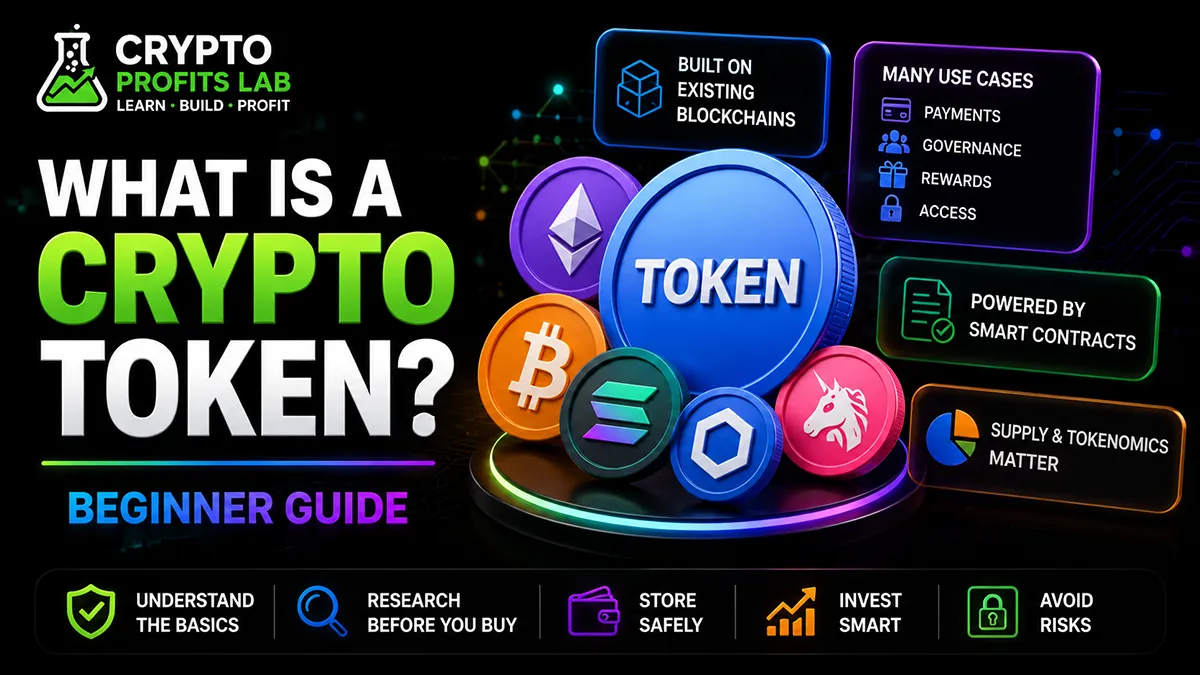
A crypto token is a digital asset that is created on an existing blockchain. It can represent many things, such as a stablecoin, a governance vote, a reward, a gaming item, or access to a crypto app.
The simplest way to understand it is this: a coin usually belongs to its own blockchain, while a token usually runs on top of another blockchain. Bitcoin is a coin because it runs on the Bitcoin blockchain. Many tokens run on Ethereum, Solana, BNB Chain, Polygon, or other networks.
This type of asset can be useful, but beginners should be careful. Some tokens are connected to real products or networks. Others are risky, thinly traded, or created mainly for hype. Before buying any token, learn what it does, who created it, how supply works, and whether the project has real demand.
Key Takeaways
- A crypto token is a digital asset built on an existing blockchain.
- Tokens can represent money-like assets, voting rights, rewards, access, or digital ownership.
- A coin usually has its own blockchain, while a token usually uses another blockchain.
- Token supply, utility, liquidity, and security matter before buying.
- Some tokens are useful, but many are risky or speculative.
- Beginners should research a token before trusting social media hype.
Beginner Facts About Crypto Tokens
| Topic | Simple Meaning | Why It Matters |
|---|---|---|
| Crypto token | A digital asset built on an existing blockchain | Many popular crypto assets are tokens |
| Coin | A crypto asset with its own blockchain | Bitcoin and Ethereum are common examples |
| Token utility | What a token is used for | Helps explain why people may want it |
| Token supply | How many tokens exist or may exist | Supply can affect price pressure |
| Smart contract | Code that runs on a blockchain | Many tokens depend on smart contracts |
| Liquidity | How easy it is to buy or sell | Low liquidity can make trading risky |
| Tokenomics | The design of token supply and incentives | Helps beginners judge risk and value |
What Is a Crypto Token?
A crypto token is a digital asset created using an existing blockchain. It does not need its own separate blockchain to exist. Instead, it follows rules created by smart contracts on a network such as Ethereum, Solana, Polygon, or another blockchain platform.
This is one reason tokens are so common. A project can create a token without building an entire blockchain from scratch. That token can then be used inside an app, community, game, protocol, or financial system.
A crypto token may be used for payments, rewards, voting, access, staking, trading, or digital ownership. Some tokens are designed to stay close to the value of a dollar. These are called stablecoins. Others may represent ownership of digital collectibles, such as NFTs.
For beginners, the key point is simple: not every crypto asset is the same. Some are coins. Some are tokens. Some are useful. Some are risky. Some are mostly speculation.
If you are still learning the bigger picture, start with What Is Cryptocurrency? and What Is Blockchain Technology?. Those guides explain the foundation before you study individual assets.
Crypto Token vs Crypto Coin
The difference between a coin and a token is one of the most common beginner questions.
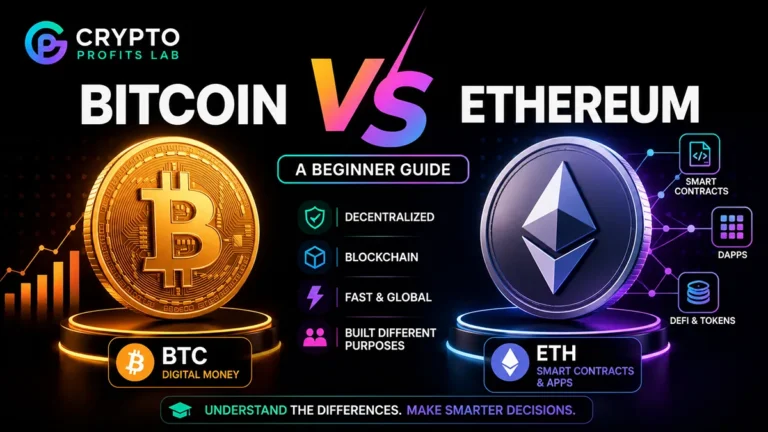
A coin usually belongs to its own blockchain. Bitcoin runs on the Bitcoin blockchain. Ether runs on Ethereum. These coins help power their own networks.
A token usually runs on an existing blockchain. For example, many tokens use Ethereum token standards. They depend on Ethereum for transaction processing, security rules, and network fees.
Here is a simple comparison:
| Feature | Crypto Coin | Crypto Token |
|---|---|---|
| Blockchain | Usually has its own blockchain | Usually uses an existing blockchain |
| Example | Bitcoin, Ether, Solana | Stablecoins, governance tokens, many DeFi tokens |
| Main role | Powers or secures a network | Used inside apps, communities, or protocols |
| Fees | Often paid in the network coin | Often needs the network coin for gas fees |
| Beginner risk | Still risky | Can be even more varied and risky |
The line can feel confusing because people often use “coin,” “token,” and “crypto” casually. That is okay. You do not need perfect technical language on day one. But knowing the difference helps you avoid mistakes when researching, buying, or sending crypto.
How a Crypto Token Works
A crypto token usually works through a smart contract. A smart contract is code that runs on a blockchain. It can set rules for how the token is created, transferred, approved, or burned.
For example, a smart contract may define:
- The token name
- The token symbol
- The total supply
- How transfers work
- Whether more tokens can be created
- Whether tokens can be burned
- Which addresses have special permissions
Beginners do not need to read smart contract code. But it helps to know that the token’s rules are not just a logo or website promise. The real rules often live in code on the blockchain.
Ethereum’s official documentation explains token standards such as ERC-20 tokens, which provide a common interface for fungible tokens used by wallets, exchanges, and apps.
When you send a token, the blockchain records the transaction. You may also need to pay a network fee. On Ethereum and some other networks, these fees are often called gas fees. Learn the basics in What Are Crypto Gas Fees?.
Common Types of Crypto Tokens
A token can have many different purposes. Beginners should understand the major categories before buying random assets.
Utility tokens
A utility token is used inside a product, app, or network. It might unlock features, pay for services, reward users, or give access to certain tools.
Utility sounds good, but do not assume every utility token is valuable. A token can have a use case and still be overpriced, poorly designed, or unnecessary.
Stablecoins
Stablecoins are tokens designed to track a stable asset, usually the U.S. dollar. They are often used for trading, transfers, and holding value between crypto trades.
Stablecoins can be useful, but they still have risks. The company, reserves, smart contracts, and network all matter. Read What Are Stablecoins? before using them.
Governance tokens
A governance token may let holders vote on decisions in a crypto project. This can include fee changes, upgrades, spending plans, or protocol rules.
Voting power does not automatically make a token safe or valuable. Beginners should ask whether people actually use the governance system and whether a few large holders control most of the votes.
DeFi tokens
DeFi means decentralized finance. DeFi tokens are often connected to lending, trading, borrowing, staking, or yield platforms.
These tokens can be more complicated. They may depend on smart contracts, liquidity pools, and market incentives. If you are new, read What Is DeFi? and What Is Crypto Yield Farming? before using DeFi tools.
NFT-related tokens
NFTs are non-fungible tokens. Non-fungible means each item is unique instead of interchangeable. A Bitcoin is interchangeable with another Bitcoin, but an NFT may represent one specific digital item.
NFTs can represent art, memberships, gaming items, tickets, or collectibles. Learn more in What Are NFTs?.
Step-by-Step: How Beginners Can Research a Crypto Token
Research does not guarantee success, but it can help you avoid obvious mistakes. Before buying a crypto token, walk through these steps.
Step 1: Understand what the token does
Start with the basic question: what is this token used for?
If the answer is unclear, that is a warning sign. A beginner should be able to explain the token in simple language before buying it.
Step 2: Check the project behind it
Look for the team, website, documentation, community, and product. Does the project have real users? Is the information easy to find? Are the claims realistic?
Be careful with anonymous teams, fake partnerships, and websites that use big promises without details.
Step 3: Review tokenomics
Tokenomics means the design of the token supply, distribution, and incentives. It answers questions like how many tokens exist, who owns them, and whether more can be created.
This is important because a token can look cheap but still have a huge supply. Read What Is Tokenomics? for a beginner-friendly breakdown.
Step 4: Look at liquidity
Liquidity means how easy it is to buy or sell without moving the price too much. A token with low liquidity can be dangerous because you may not be able to exit easily.
Learn more in What Is Crypto Liquidity?.
Step 5: Check where it trades
Some tokens trade on major exchanges. Others trade only on decentralized exchanges. A crypto token that is hard to find or only trades in tiny markets may carry more risk.
If you are new to exchanges, read What Is a Crypto Exchange? and What Is a DEX?.
Step 6: Study the risks
Ask what could go wrong. Could the smart contract fail? Could insiders sell? Could hype disappear? Could regulation affect the project? Could liquidity dry up?
Good research includes both the upside and the downside.
Step 7: Start small if you decide to buy
Even after research, crypto is risky. Beginners should start small, avoid borrowing money, and never invest money needed for bills, emergencies, or debt payments.
Why Token Supply Matters
Token supply is one of the most important parts of understanding a crypto token. Supply helps explain how many tokens exist now and how many may exist later.
There are several supply terms beginners may see:
- Circulating supply: tokens currently available in the market
- Total supply: tokens created so far, minus any burned tokens
- Max supply: the maximum number that can ever exist, if there is a cap
- Fully diluted valuation: a value estimate based on all possible tokens
A low price per token does not automatically mean the token is cheap. A token priced at one cent may still have a massive supply. A token priced at $100 may have a much smaller supply.
This is why market cap matters. Market cap gives a better quick view of size than price alone. Read What Is Market Cap in Crypto? before comparing tokens.
Where Beginners Buy Crypto Tokens
Beginners usually buy tokens through a crypto exchange. A centralized exchange may be easier because it looks like a normal app. You can deposit money, search for an asset, review the fee, and buy.
Some tokens are not listed on beginner-friendly exchanges. In that case, people may use decentralized exchanges, but that requires more skill. You may need a wallet, network coin for fees, correct contract address, and careful transaction approval.
This is where many beginners make mistakes. They buy the wrong version of a token, use the wrong network, or connect a wallet to a risky website.
If you are buying your first assets, it may be better to stick with simple, well-known platforms and small amounts. You can learn advanced tools later.
How to Store Crypto Tokens
A crypto token can be stored in a wallet that supports the blockchain it runs on. For example, an Ethereum-based token needs a wallet that supports Ethereum tokens.
You may also see tokens inside an exchange account. That is convenient, but it means the platform controls much of the custody process. Custody means who controls access to the asset.
If you move tokens to your own wallet, you become responsible for the seed phrase, private key, wallet address, and network choice. That gives you more control, but also more responsibility.
Before transferring anything, read What Is a Crypto Wallet?, What Is a Crypto Wallet Address?, and What Is a Crypto Private Key?.
For long-term storage, some people use a hardware wallet. A hardware wallet can help keep private keys offline, but beginners must still learn safe backup habits.
Common Beginner Mistakes
Mistake 1: Buying because the price looks cheap
A token priced under one dollar is not automatically a bargain. Supply and market cap matter more than the price of one token.
Mistake 2: Trusting social media hype
Influencers may promote tokens they already own. Some may be paid to promote a project. Do your own research before buying any crypto token.
Mistake 3: Ignoring tokenomics
A project may look exciting, but supply rules can create selling pressure. If large amounts unlock later, the price may be affected.
Mistake 4: Using the wrong contract address
On decentralized exchanges, scammers can create fake tokens with similar names and symbols. Always verify the official contract address from trusted sources.
Mistake 5: Forgetting network fees
You may need the network coin to move or trade a token. For example, Ethereum-based tokens often need ETH for gas fees.
Mistake 6: Holding too many random tokens
Beginners sometimes collect many small assets without understanding them. This can make tracking risk, taxes, and performance harder.
Mistake 7: Skipping security basics
Token investing still requires wallet safety, exchange safety, and scam awareness. Read Crypto Safety Tips and Crypto Scams to Avoid.
Safety and Risk Checklist
Before buying or using a crypto token, review this checklist:
- Do I understand what the token does?
- Can I explain the project in simple words?
- Do I know the token supply and market cap?
- Have I reviewed the tokenomics?
- Is there enough liquidity?
- Am I using the correct contract address?
- Do I understand the network fees?
- Am I avoiding pressure from influencers?
- Have I turned on crypto 2FA for exchange accounts?
- Am I only using money I can afford to lose?
This checklist is not perfect, but it can slow you down in a good way. Many crypto mistakes happen because beginners rush.
Are Crypto Tokens Good Investments?
A crypto token can become valuable if it has real demand, strong design, useful technology, active users, and reasonable supply. But many tokens fail. Some never gain real adoption. Some are poorly designed. Some are scams.
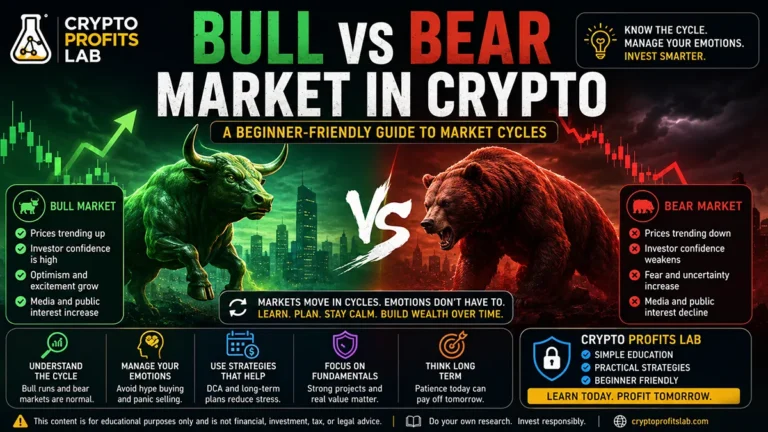
Beginners should not assume that every token will rise because crypto is popular. Tokens can lose value quickly, especially during bear markets. If you are new to market cycles, read Bull vs Bear Market Crypto and Crypto Volatility.
A better beginner approach is to learn first, buy slowly, and avoid chasing every trend. If a token does not make sense after basic research, it may be better to skip it.
Final Thoughts
A crypto token is one of the most common types of digital assets in crypto. It can represent many things, including stable value, voting rights, app access, rewards, collectibles, or DeFi activity.
The main beginner lesson is that tokens are not all equal. A crypto token can be useful, risky, simple, complicated, legitimate, or suspicious depending on the project behind it.
Before buying, understand what it does, how supply works, where it trades, how liquid it is, and what risks come with it. Crypto Profits Lab is designed to make these topics cleaner, simpler, and easier for beginners to understand without hype.
If you learn tokens slowly and carefully, you will be in a much better position than someone who buys only because a chart is moving or a social media post sounds exciting.
Crypto Token FAQ
What is a crypto token in simple terms?
A crypto token is a digital asset created on an existing blockchain. It can represent value, access, voting power, rewards, or digital ownership. Unlike a coin such as Bitcoin, a token usually does not have its own blockchain. Many tokens run on networks like Ethereum, Solana, Polygon, or BNB Chain.
Is a crypto token the same as a coin?
No. A coin usually runs on its own blockchain, while a token usually runs on another blockchain. Bitcoin is a coin because it uses the Bitcoin blockchain. Many stablecoins, governance assets, and DeFi assets are tokens because they are created through smart contracts on existing networks.
Why do crypto tokens have value?
Crypto tokens may have value because people use them, trade them, or believe they will become more useful later. Value can come from utility, supply, demand, community, access, rewards, or speculation. However, not every token has lasting value. Beginners should research the project, tokenomics, and risks before buying.
Are crypto tokens risky for beginners?
Yes. Crypto tokens can be risky because prices move quickly, projects can fail, liquidity can be low, and scams exist. Some tokens also have complicated supply rules or smart contract risks. Beginners should start small, avoid hype, verify contract addresses, and learn basic wallet and exchange safety first.
Where can beginners buy crypto tokens?
Beginners can buy many tokens on centralized crypto exchanges. Some tokens are only available on decentralized exchanges, which require more experience with wallets, networks, gas fees, and contract addresses. New users should usually start with simple platforms and small amounts before trying advanced decentralized tools.
How do I know if a crypto token is real?
Check the project’s official website, documentation, exchange listings, contract address, team information, and community activity. Be careful with fake tokens that copy names or symbols from real projects. On decentralized exchanges, always verify the official contract address before trading. A matching name alone is not enough.
What is tokenomics?
Tokenomics means the economic design of a token. It includes supply, distribution, unlock schedules, incentives, utility, and how the token may be used. Good tokenomics does not guarantee success, but poor tokenomics can create major risk. Beginners should understand tokenomics before buying unfamiliar assets.
Should I store tokens on an exchange or in a wallet?
Keeping small amounts on an exchange may be convenient while learning. For larger amounts or long-term holding, a personal wallet can give more control. A wallet also requires more responsibility because you must protect your seed phrase, private key, and wallet address. Beginners should learn wallet safety before moving funds.