What Is Cosmos (ATOM)? A Complete Beginner’s Guide
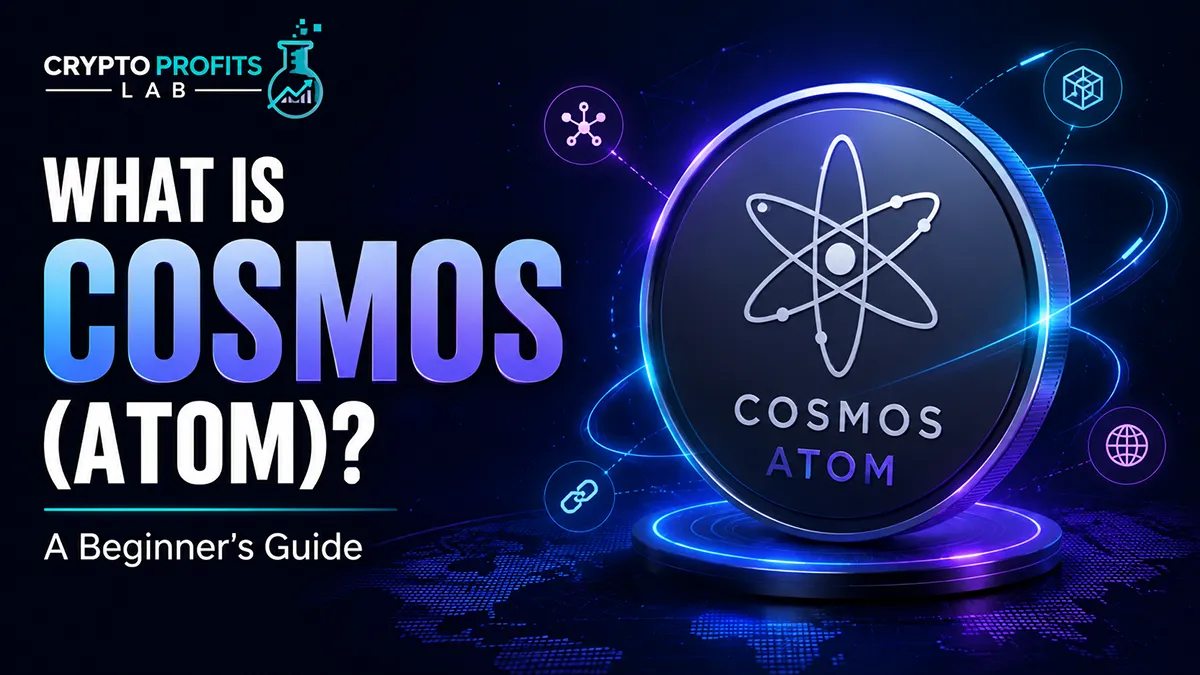
What is Cosmos and why does it matter in crypto? Cosmos is a blockchain ecosystem designed to help different blockchains communicate, transfer value, and operate as part of a larger connected network.
For beginners, Cosmos can feel confusing because it is not just one simple blockchain. It includes the Cosmos Hub, ATOM, app-specific blockchains, the Cosmos SDK, Tendermint-style consensus, and a communication system called IBC. Those terms sound technical, but the main idea is simple: Cosmos wants blockchains to work together instead of staying isolated.
This guide explains What is Cosmos in plain English. You will learn how Cosmos works, what ATOM is used for, why blockchain interoperability matters, how Cosmos compares with Polkadot, Ethereum, Avalanche, Algorand, and Chainlink, and what beginners should know before buying or storing ATOM.
If you are still learning the basics of digital assets, start with this beginner guide to what is cryptocurrency before going deeper into Cosmos.
What is Cosmos?
What is Cosmos? Cosmos is a network of independent blockchains that can connect and communicate with each other. It is often called the “Internet of Blockchains” because its goal is to help separate blockchain networks exchange data and value.
A blockchain is a shared digital record that stores transactions across many computers. Most blockchains operate as separate systems. Bitcoin has its own network. Ethereum has its own ecosystem. Solana, Cardano, Avalanche, Algorand, and other projects also have their own rules and communities.
Cosmos was created to solve a major crypto problem: isolated blockchains. If every blockchain works like a separate island, users and developers may struggle to move assets, share information, or build apps that work across networks.
In simple terms, What is Cosmos? It is a blockchain ecosystem built to connect independent blockchains and make a multi-chain crypto world easier to use.
To understand the foundation behind Cosmos, read this beginner guide to blockchain technology.
Cosmos vs ATOM: What Is the Difference?
A common beginner mistake is thinking Cosmos and ATOM are exactly the same thing. They are closely connected, but they do not mean the same thing.
Cosmos is the broader blockchain ecosystem. ATOM is the native cryptocurrency of the Cosmos Hub.
You can think of Cosmos as the larger network idea and ATOM as the coin connected to the Cosmos Hub. ATOM is used for staking, governance, transaction fees on the Cosmos Hub, and network participation.
| Term | Meaning | Beginner Explanation |
|---|---|---|
| Cosmos | Blockchain ecosystem | A network of connected independent blockchains |
| ATOM | Native token of the Cosmos Hub | Used for staking, fees, and governance |
| Cosmos Hub | Main hub blockchain | One of the key chains in the Cosmos ecosystem |
| IBC | Inter-Blockchain Communication | Lets compatible blockchains communicate |
What is Cosmos from a beginner’s point of view? Cosmos is the ecosystem for connected blockchains, while ATOM is the main token tied to the Cosmos Hub.
Who Created Cosmos?
Cosmos was developed by people and organizations focused on making blockchains more connected and easier to build. The project is closely associated with Tendermint technology, the Cosmos SDK, and the Interchain Foundation.
The idea behind Cosmos was that the future of crypto would not be one blockchain controlling everything. Instead, there could be many specialized blockchains, each built for different purposes.
One blockchain may focus on payments. Another may focus on decentralized finance. Another may focus on gaming, privacy, data, identity, or tokenized assets. Cosmos was designed to help these networks communicate while still allowing each chain to remain independent.
For comparison, you may also want to read What Is Polkadot, because Polkadot and Cosmos are often compared in the blockchain interoperability category.
How Does Cosmos Work?
What is Cosmos from a technical perspective? Cosmos works by giving developers tools to build independent blockchains that can connect with other compatible chains.
Instead of forcing every application to run on one shared blockchain, Cosmos supports app-specific blockchains. These blockchains can be customized for particular use cases while still connecting to the wider Cosmos ecosystem.
Cosmos works through several important parts:
- The Cosmos Hub is one of the central blockchains in the ecosystem.
- ATOM is the native token of the Cosmos Hub.
- The Cosmos SDK helps developers build custom blockchains.
- IBC allows compatible blockchains to communicate.
- Validators help secure proof-of-stake Cosmos chains.
- Governance allows token holders to vote on certain network decisions.
For beginners, the key idea is simple: Cosmos helps developers build custom blockchains and connect them into a larger multi-chain ecosystem.
What Is the Cosmos Hub?
The Cosmos Hub is one of the most important blockchains in the Cosmos ecosystem. It is the chain most closely associated with ATOM.
The Cosmos Hub helps support the broader interchain vision by acting as a hub for connected networks. It is not the only chain in Cosmos, but it is one of the most recognized.
ATOM is used on the Cosmos Hub for staking, governance, and network activity. This is why beginners often hear about ATOM when researching Cosmos.
What is Cosmos without the Cosmos Hub? Cosmos would still refer to the broader ecosystem and technology stack, but the Cosmos Hub is a major part of the project’s identity.
What Is ATOM Used For?
ATOM is the native cryptocurrency of the Cosmos Hub. It has several important uses inside the ecosystem.
First, ATOM can be staked. Cosmos Hub uses proof of stake, which means validators help secure the network and ATOM holders may delegate their tokens to validators.
Second, ATOM is used for governance. ATOM holders can participate in certain network decisions by voting on proposals.
Third, ATOM can be used to pay transaction fees on the Cosmos Hub.
Fourth, ATOM is traded as a crypto asset. Some people buy ATOM because they believe Cosmos interoperability and app-specific blockchains may become more important over time.
What is Cosmos without ATOM? Cosmos is the broader ecosystem, but ATOM is the token that supports staking, governance, and activity on the Cosmos Hub.
If you want to understand staking better, read this beginner guide to crypto staking.
What Is IBC?
IBC stands for Inter-Blockchain Communication. It is one of the most important ideas in Cosmos.
IBC allows compatible blockchains to communicate with each other. This can make it possible to move assets or data between connected chains without relying only on centralized exchanges.
For example, one blockchain in the Cosmos ecosystem may specialize in DeFi while another focuses on payments. IBC can help those networks interact more smoothly.
IBC matters because crypto has many separate blockchains. If those networks cannot communicate, users may need complicated bridges or exchanges to move value around.
What is Cosmos trying to solve with IBC? It is trying to make blockchain communication more native, flexible, and useful for a multi-chain world.
To learn about related cross-chain risks, read what is a crypto bridge.
What Is the Cosmos SDK?
The Cosmos SDK is a toolkit developers can use to build custom blockchains.
Many blockchain apps are built as smart contracts on an existing network like Ethereum. Cosmos takes a different approach by helping developers launch their own blockchains with custom rules.
This can be useful because different applications may need different features. A financial app, gaming platform, identity network, or stablecoin system may not all want the same blockchain design.
The Cosmos SDK can support:
- Custom blockchain development
- App-specific chains
- Governance systems
- Token models
- Validator rules
- Interoperability features
- Modular blockchain design
For beginners, the Cosmos SDK is one reason Cosmos is more than just ATOM. It is also a technology stack for building connected blockchains.
What Makes Cosmos Different?
Cosmos is different from many crypto projects because it focuses on independent blockchains instead of one chain handling everything.
Some networks try to make all apps run on the same base layer. Cosmos supports a model where projects can build their own chains and connect through shared standards.
Cosmos is often discussed for:
- Blockchain interoperability
- App-specific blockchains
- IBC communication
- Cosmos SDK development
- Proof-of-stake networks
- Validator and staking systems
- Multi-chain ecosystem growth
- Custom blockchain design
This does not mean Cosmos is risk-free or guaranteed to succeed. It simply means Cosmos has a different purpose from many single-chain crypto projects.
Why Blockchain Interoperability Matters
Blockchain interoperability means different blockchains can communicate and work together. This matters because crypto is no longer built around only one network.
There are payment networks, smart contract platforms, gaming chains, privacy chains, DeFi ecosystems, enterprise ledgers, and tokenized asset networks. If they cannot communicate, crypto can feel fragmented and difficult to use.
Interoperability may help with:
- Moving assets between chains
- Sharing data across networks
- Improving user experience
- Building cross-chain applications
- Reducing isolated ecosystems
- Supporting specialized blockchain designs
What is Cosmos really about? At its core, it is about making blockchains more connected while still allowing them to remain independent.
Cosmos vs Bitcoin
What is Cosmos compared with Bitcoin? Cosmos and Bitcoin are very different crypto projects.
Bitcoin is mainly focused on decentralized digital money and long-term value storage. Cosmos is focused on connecting blockchains and helping developers build custom blockchain networks.
| Feature | Bitcoin | Cosmos |
|---|---|---|
| Native asset | BTC | ATOM on Cosmos Hub |
| Main purpose | Digital money and store of value | Interoperable blockchain ecosystem |
| Network model | Single blockchain | Many connected blockchains |
| Consensus style | Proof of work | Proof of stake on Cosmos Hub |
| Beginner view | Digital gold | Internet of Blockchains |
Bitcoin is simpler by design. Cosmos is broader and more complex because it supports a multi-chain ecosystem.
For a deeper beginner explanation, read what is Bitcoin.
Cosmos vs Ethereum
Cosmos and Ethereum both support decentralized applications, but they use different models.
Ethereum is a smart contract platform where many apps run on Ethereum or its Layer 2 networks. Cosmos supports app-specific blockchains that can be customized and connected through interoperability tools.
| Feature | Ethereum | Cosmos |
|---|---|---|
| Native asset | ETH | ATOM on Cosmos Hub |
| Main role | Smart contract platform | Interoperable blockchain ecosystem |
| App model | Smart contracts and Layer 2 networks | App-specific blockchains |
| Common uses | DeFi, NFTs, tokens, apps | Custom chains, DeFi, interoperability |
| Beginner challenge | Gas fees and ecosystem complexity | Understanding hubs, zones, and IBC |
What is Cosmos in this comparison? Cosmos is a framework for building connected blockchains, while Ethereum is a large general-purpose smart contract ecosystem.
For more context, read what is Ethereum.
Cosmos vs Polkadot
Cosmos and Polkadot are often compared because both focus on a multi-chain future.
Polkadot uses a Relay Chain and parachains with shared security. Cosmos focuses on independent blockchains that can communicate through IBC.
| Feature | Cosmos | Polkadot |
|---|---|---|
| Native asset | ATOM on Cosmos Hub | DOT |
| Main idea | Internet of Blockchains | Connected parachains |
| Chain model | Independent app-specific chains | Parachains connected to Relay Chain |
| Security model | Chains often manage security separately | Shared security through Relay Chain |
| Beginner focus | IBC and Cosmos SDK | Relay Chain and parachains |
Both projects care about interoperability, but they approach it differently. Cosmos gives chains more independence, while Polkadot is known for shared security through its Relay Chain.
Cosmos vs Avalanche
Cosmos and Avalanche both support custom blockchain development, but they are not the same.
Avalanche is known for fast finality, the C-Chain, and subnets. Cosmos is known for app-specific chains, IBC, and the Cosmos SDK.
| Feature | Cosmos | Avalanche |
|---|---|---|
| Native asset | ATOM on Cosmos Hub | AVAX |
| Custom networks | App-specific chains | Subnets |
| Main focus | Interoperability and independent chains | Fast smart contracts and custom subnets |
| Developer tools | Cosmos SDK | Avalanche subnet tools |
| Beginner concern | Understanding IBC | Understanding chains and subnets |
If you want to compare Avalanche separately, read what is Avalanche AVAX.
Cosmos vs Algorand
Cosmos and Algorand are both important blockchain projects, but their goals are different.
Algorand focuses on fast transactions, low fees, Pure Proof of Stake, smart contracts, and digital assets. Cosmos focuses on building and connecting many independent blockchains.
| Feature | Cosmos | Algorand |
|---|---|---|
| Native asset | ATOM on Cosmos Hub | ALGO |
| Main focus | Blockchain interoperability | Fast and efficient blockchain applications |
| Chain model | Multi-chain ecosystem | Single blockchain network |
| Common uses | Custom chains, DeFi, IBC | Payments, assets, DeFi, governance |
| Beginner topic | ATOM staking and IBC | ALGO, fees, and Pure Proof of Stake |
For more context, read what is Algorand.
Cosmos vs Chainlink
Cosmos and Chainlink are both infrastructure-focused projects, but they solve different problems.
Cosmos helps blockchains connect and gives developers tools to build app-specific chains. Chainlink helps smart contracts access real-world data through oracle networks.
| Feature | Cosmos | Chainlink |
|---|---|---|
| Main role | Interoperable blockchain ecosystem | Oracle network |
| Token | ATOM on Cosmos Hub | LINK |
| Main problem solved | Blockchain communication and custom chains | External data for smart contracts |
| Common uses | IBC, app chains, staking | Price feeds, automation, cross-chain data |
For more context, read what is Chainlink.
What Can Cosmos Be Used For?
What is Cosmos used for in the real crypto world? Cosmos can support many types of blockchain applications because developers can build specialized chains.
Decentralized Finance
Decentralized finance, or DeFi, includes apps that allow users to trade, lend, borrow, provide liquidity, or use financial tools without traditional banks.
Cosmos-based chains can support DeFi applications that benefit from fast transactions and cross-chain communication.
DeFi can be useful, but it carries serious risks. Smart contract bugs, low liquidity, scams, and user mistakes can lead to losses.
App-Specific Blockchains
One of Cosmos’s biggest use cases is app-specific blockchains. Instead of building every app on one chain, a project can create its own blockchain for a specific purpose.
This can allow more control over fees, performance, governance, and token design.
Cross-Chain Transfers
IBC can help users move assets between compatible Cosmos chains. This can make the ecosystem more connected and flexible.
Beginners should still move carefully. Cross-chain activity can be confusing, and mistakes may be difficult to reverse.
Gaming and Web3 Apps
Games and Web3 apps may benefit from custom chains because they can design blockchain rules around their users.
A game may need frequent transactions, special assets, or custom governance. Cosmos-style app chains can support this type of flexibility.
Tokenized Assets
Tokenized assets are digital representations of real-world or digital value. Cosmos-based chains may support tokenized assets, stablecoins, rewards, or application-specific tokens.
Beginners should remember that not every token is safe or legitimate. Research the project, liquidity, team, and risks before buying unknown assets.
Is Cosmos Safe?
Cosmos is a well-known blockchain ecosystem, but using or buying ATOM still requires caution. The biggest beginner risks usually come from scams, price volatility, wallet mistakes, fake websites, exchange problems, and misunderstanding staking or cross-chain transfers.
Common Cosmos risks include:
- Sending ATOM to the wrong wallet address
- Losing your seed phrase
- Using fake wallet apps or fake websites
- Keeping too much crypto on an exchange
- Misunderstanding staking rules
- Making mistakes with cross-chain transfers
- Buying during hype without research
- Assuming interoperability guarantees investment returns
A good beginner rule is to move slowly. Test small transactions first. Use trusted wallets and exchanges. Never share your seed phrase. Double-check addresses and network details before sending ATOM.
For more protection, review crypto safety tips, crypto scams to avoid, crypto 2FA, and crypto seed phrase.
How to Store Cosmos
To hold ATOM, you need a crypto wallet that supports Cosmos Hub. A wallet does not physically store coins. Instead, it stores the private keys or recovery information that let you access your crypto on the network.
There are two main wallet types:
- Hot wallets are connected to the internet and are convenient for regular use.
- Cold wallets are offline hardware wallets and are usually better for long-term storage.
Hot wallets can be useful for smaller ATOM balances, staking, and ecosystem activity. Cold wallets are usually safer for larger long-term balances because they keep private keys offline.
If you are new to wallets, start with this guide to crypto wallets. Then compare hot wallets vs cold wallets and learn why a hardware wallet may be worth considering.
How to Buy Cosmos
What is Cosmos buying like for beginners? Most people buy ATOM through a crypto exchange. An exchange lets you create an account, deposit money, and purchase ATOM.
A simple beginner process looks like this:
- Choose a reputable crypto exchange.
- Create your account.
- Complete identity verification if required.
- Turn on two-factor authentication.
- Deposit funds using an approved payment method.
- Search for ATOM or Cosmos.
- Buy a small amount first.
- Decide whether to keep ATOM on the exchange or move it to your own wallet.
Before withdrawing ATOM, pay attention to wallet addresses, network support, and memo requirements if your exchange displays them. Crypto transfers are usually irreversible.
For step-by-step help, read how to buy crypto for beginners. If you are still choosing a platform, review best crypto exchange for beginners and centralized vs decentralized exchanges.
Cosmos and Market Volatility
Cosmos may be focused on interoperability, but ATOM is still a volatile crypto asset. Its price can rise or fall quickly based on market sentiment, Bitcoin trends, staking participation, ecosystem growth, regulation, liquidity, and investor behavior.
Beginners should not assume ATOM is safe because Cosmos has useful technology. Even strong crypto projects can drop sharply during bear markets.
Before buying ATOM, consider:
- Your risk tolerance
- Your investment timeframe
- Your storage plan
- Your understanding of wallet security
- Your ability to handle price drops
- Whether you are buying for learning, staking, trading, or long-term holding
For more context, read crypto volatility, market cap in crypto, and bull vs bear market crypto.
If you prefer a slower buying strategy, this guide to dollar cost averaging crypto may also help.
Pros and Cons of Cosmos
What is Cosmos’s biggest strength? Its biggest strength is interoperability. Cosmos helps independent blockchains communicate while allowing them to stay customized.
What is Cosmos’s biggest challenge? Its biggest challenge for beginners is complexity. Cosmos includes hubs, zones, app chains, IBC, staking, governance, and many ecosystem projects.
| Pros | Cons |
|---|---|
| Focuses on blockchain interoperability | Can be confusing for beginners |
| Supports app-specific blockchains | ATOM price can be volatile |
| Uses IBC for cross-chain communication | Ecosystem includes many separate chains |
| ATOM can be staked | Staking and transfers require care |
| Strong developer tooling with Cosmos SDK | Adoption is not guaranteed |
Cosmos can be useful to learn about, but it is not risk-free. Beginners should understand both the technology and the investment risks before buying ATOM.
Beginner Checklist Before Using Cosmos
Before buying ATOM or using Cosmos-related tools, go through this checklist:
- Understand the difference between Cosmos and ATOM.
- Learn what the Cosmos Hub does.
- Learn what IBC means.
- Use a reputable crypto exchange.
- Turn on 2FA for exchange accounts.
- Never share your seed phrase.
- Test small transactions first.
- Double-check wallet addresses before sending ATOM.
- Research staking before delegating ATOM.
- Consider a hardware wallet for larger long-term balances.
This checklist may seem simple, but it can prevent many beginner mistakes.
Why Cosmos Matters
Cosmos matters because crypto is becoming more multi-chain. There are many networks, apps, tokens, and ecosystems. If those systems cannot communicate, users and developers may face unnecessary friction.
Cosmos focuses on giving developers tools to build custom blockchains while helping those chains connect through IBC. This approach is different from projects that try to put every application on one network.
This does not mean Cosmos will automatically dominate interoperability or that ATOM will always increase in value. It means Cosmos addresses a real infrastructure challenge that beginners should understand.
For an official resource, visit the official Cosmos website.
Final Thoughts
What is Cosmos? Cosmos is a blockchain ecosystem focused on interoperability, app-specific blockchains, IBC communication, staking, governance, and multi-chain crypto development.
ATOM is the native cryptocurrency of the Cosmos Hub. It is used for staking, governance, fees, and participation in the Cosmos Hub ecosystem.
The best approach for beginners is to learn slowly. Understand the difference between Cosmos and ATOM, protect your wallet, test small transfers first, and research staking before delegating. Once you understand how Cosmos works, you will have a stronger foundation for comparing interoperability-focused crypto projects.
Cosmos Frequently Asked Questions
What is Cosmos in simple terms?
What is Cosmos? Cosmos is a blockchain ecosystem designed to help independent blockchains communicate with each other. It is often called the Internet of Blockchains because it focuses on interoperability. Beginners can think of Cosmos as a system for building custom blockchains and connecting them through shared communication tools like IBC.
Is Cosmos the same as ATOM?
Cosmos and ATOM are related, but they are not the same thing. Cosmos is the broader ecosystem for connected blockchains. ATOM is the native cryptocurrency of the Cosmos Hub. ATOM is used for staking, governance, and fees on the Cosmos Hub. When someone says they bought Cosmos, they usually mean they bought ATOM.
What is Cosmos used for?
Cosmos is used for building app-specific blockchains, connecting networks through IBC, supporting decentralized finance, staking ATOM, governance, cross-chain transfers, and custom blockchain applications. Developers may use the Cosmos SDK to create specialized chains, while users may hold ATOM, stake it, or interact with apps in the Cosmos ecosystem.
What is IBC in Cosmos?
IBC stands for Inter-Blockchain Communication. It is a protocol that allows compatible blockchains to communicate and transfer assets or data. IBC is important because many blockchains operate separately. Cosmos uses IBC to help connected chains work together more smoothly, which supports the broader idea of an interoperable blockchain ecosystem.
Is Cosmos better than Polkadot?
Cosmos is not automatically better than Polkadot. Both projects focus on interoperability, but they use different designs. Cosmos emphasizes independent blockchains connected through IBC, while Polkadot uses parachains connected to a Relay Chain with shared security. Beginners should compare architecture, adoption, staking, wallets, ecosystem activity, and risk before choosing.
Can beginners buy Cosmos safely?
Beginners can buy ATOM through reputable crypto exchanges, but safety depends on good habits. Use strong passwords, turn on 2FA, avoid suspicious links, and learn wallet basics before transferring funds. Start with small amounts until you understand wallet addresses, memo requirements, transaction confirmations, staking rules, and seed phrase protection.
Can you stake Cosmos ATOM?
Yes, ATOM can be staked on the Cosmos Hub by delegating to validators. Staking may allow users to earn rewards, but it also comes with risks such as validator performance, lockup periods, slashing risk, and ATOM price volatility. Beginners should research validators, wallet safety, and staking rules before delegating ATOM.
Is Cosmos a good investment?
Cosmos may have useful interoperability technology, but ATOM is still risky and volatile. Whether it is a good investment depends on your goals, risk tolerance, research, timeframe, and portfolio strategy. Beginners should understand Cosmos, ATOM utility, staking, competition, market cycles, and wallet security before buying. No cryptocurrency offers guaranteed returns.
What is Cosmos’s biggest advantage?
What is Cosmos’s biggest advantage? Its biggest advantage is interoperability through a flexible multi-chain design. Cosmos helps developers build custom blockchains and connect them through IBC. This makes it important for a crypto market with many separate networks, although beginners should still consider ATOM volatility, competition, and adoption risk.