What Is Stellar (XLM)? A Beginner’s Guide
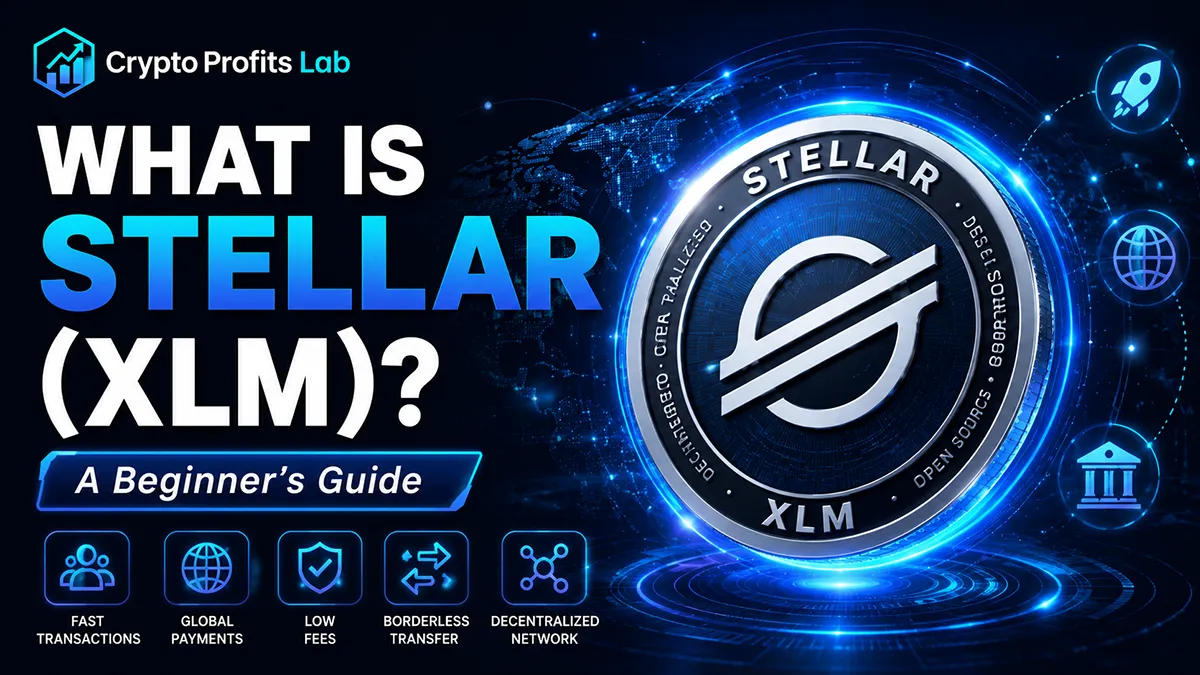
What is Stellar and why does it matter in crypto? Stellar is a public blockchain network designed to make digital payments faster, cheaper, and easier to move across borders.
For beginners, Stellar can feel confusing because people often use the word in different ways. Sometimes they mean the Stellar network. Sometimes they mean XLM, also called Lumens, which is the native cryptocurrency used on the network. Other times they are talking about cross-border payments, stablecoins, tokenized assets, remittances, wallets, or crypto transfers.
This guide explains What is Stellar in plain English. You will learn how Stellar works, what XLM is used for, why low-cost payments matter, how Stellar compares with XRP, Bitcoin, Ethereum, and other crypto networks, and what beginners should know before buying or using XLM.
If you are still learning the basics of digital assets, start with this beginner guide to what is cryptocurrency before going deeper into Stellar.
What is Stellar?
What is Stellar? Stellar is a public blockchain network built to support fast, low-cost digital payments and asset transfers. It allows users, developers, companies, and financial services to move value across the network without relying only on traditional banking rails.
A blockchain is a shared digital record that stores transactions across many computers. Instead of one company controlling the entire system, a blockchain network is maintained by participants that follow the same rules.
Stellar is mainly known for payments. While some blockchains focus heavily on smart contracts, NFTs, gaming, or meme coins, Stellar focuses more on moving money-like assets efficiently. This can include XLM transfers, stablecoin transfers, tokenized assets, and cross-border payments.
In simple terms, What is Stellar? It is a crypto network designed to help people and organizations send value quickly, affordably, and globally.
To understand the technology behind networks like Stellar, read this beginner guide to blockchain technology.
Stellar vs XLM: What Is the Difference?
A common beginner mistake is thinking Stellar and XLM are exactly the same thing. They are closely connected, but they do not mean the same thing.
Stellar is the network. XLM, also called Lumens, is the native cryptocurrency used on the Stellar network.
You can think of Stellar as the payment network and XLM as the asset that helps the network function. XLM can be used for transaction fees, account minimums, transfers, and liquidity inside the Stellar ecosystem.
| Term | Meaning | Beginner Explanation |
|---|---|---|
| Stellar | Public payment network | The platform where transfers and assets move |
| XLM | Native cryptocurrency | The asset used for fees and network activity |
| Lumens | Another name for XLM | The official name of Stellar’s native asset |
| Anchor | Stellar ecosystem service | Can connect real-world assets to the network |
What is Stellar from a beginner’s point of view? Stellar is the network, and XLM is the cryptocurrency used inside that network.
Who Created Stellar?
Stellar was co-founded by Jed McCaleb and launched in 2014. The Stellar Development Foundation helps support the network’s growth, education, ecosystem development, and broader mission.
Stellar was created with a focus on financial access and faster global payments. Its goal was not simply to become another speculative coin. Instead, Stellar was designed to help value move more efficiently between people, businesses, and financial systems.
This is one reason Stellar is often discussed alongside payment-focused crypto projects. It is not trying to replace every blockchain use case. It is mainly focused on payments, tokenized assets, and connecting financial systems.
For comparison, you may also want to read what is XRP, because XRP and Stellar are often compared in the crypto payments category.
How Does Stellar Work?
What is Stellar from a technical perspective? Stellar is a decentralized network of computers that agree on the state of a shared ledger. This ledger records balances, transactions, accounts, and assets issued on the network.
When someone sends XLM or another asset on Stellar, the transaction is submitted to the network. Network participants help validate the transaction and update the ledger. Once confirmed, the transaction becomes part of the network’s shared record.
Stellar works through several important parts:
- Wallets let users hold and send XLM.
- Transactions record transfers and network activity.
- XLM is used for fees and account requirements.
- Assets can be issued on Stellar.
- Anchors can help connect real-world currencies or assets to the network.
- The Stellar Consensus Protocol helps the network agree on transactions.
For beginners, the key idea is simple: Stellar is designed to move value quickly and cheaply, especially for payments and transfers.
What Is XLM Used For?
XLM is the native cryptocurrency of Stellar. It has several important uses inside the network.
First, XLM is used to pay transaction fees. These fees are usually very small, which helps make Stellar useful for frequent payments and transfers.
Second, XLM can be sent between wallets as a digital asset. Some people use it for transfers, while others hold it as part of a crypto portfolio.
Third, XLM helps prevent spam on the network. Stellar requires small balances and transaction fees so bad actors cannot easily flood the network with unlimited activity.
Fourth, XLM may help provide liquidity between different assets on the Stellar network. In some cases, it can act as a bridge asset between currencies or tokens.
What is Stellar without XLM? Stellar is the network, but XLM is the native asset that helps support fees, transfers, liquidity, and basic network activity.
What Makes Stellar Different?
Stellar is different from many crypto projects because it is built mainly around payments and asset movement.
Some networks focus on being a store of value. Others focus on smart contracts, decentralized finance, NFTs, gaming, or enterprise ledgers. Stellar’s main identity is easier to understand when you think about moving money efficiently.
Stellar is often discussed for:
- Fast transactions
- Low transaction fees
- Cross-border payments
- Remittances
- Stablecoin transfers
- Tokenized assets
- Financial access
- Simple payment-focused design
This does not mean Stellar is risk-free or guaranteed to succeed. It simply means Stellar has a clearer payments focus than many general-purpose crypto networks.
What Is the Stellar Consensus Protocol?
The Stellar Consensus Protocol, often shortened to SCP, is the system Stellar uses to help the network agree on transactions.
Bitcoin uses proof of work. Cardano uses proof of stake. Stellar uses a different consensus design that allows trusted groups of participants to help reach agreement without mining.
For beginners, the most important point is that Stellar does not rely on traditional mining. This helps make transactions fast and inexpensive compared with some older systems.
What is Stellar’s consensus approach trying to accomplish? It is designed to support quick finality, low fees, and efficient payment activity without using energy-intensive mining.
If you want to compare different network designs, read what is Bitcoin and what is Cardano.
What Can Stellar Be Used For?
What is Stellar used for in the real crypto world? Stellar can support several payment and asset transfer use cases.
Cross-Border Payments
Cross-border payments are one of Stellar’s biggest use cases. Traditional international payments can be slow, expensive, and complicated. Stellar is designed to make value transfer faster and more efficient.
This can matter for individuals, businesses, remittance services, and financial applications that need to move money across borders.
Remittances
Remittances are payments sent by people to family or friends, often across countries. Many traditional remittance services charge fees or take time to settle.
Stellar’s low fees and fast transfers make it a network often discussed for remittance use cases.
Stablecoin Transfers
Stablecoins are digital assets designed to track the value of another asset, often the U.S. dollar. Stellar can support stablecoin transfers, which may help users move dollar-like digital value more efficiently.
Stablecoins still carry risks, including issuer trust, regulation, reserves, and platform availability.
Tokenized Assets
Tokenization means representing real-world or digital assets on a blockchain network. Stellar can support issued assets that represent currencies, credits, loyalty points, or other forms of value.
Beginners should remember that not every tokenized asset is safe or legitimate. Always research the issuer and understand the risks.
Financial Access
Stellar is often discussed in connection with financial access because its network is designed for low-cost payments. This can be useful in areas where traditional banking access is limited or expensive.
However, adoption depends on wallets, on-ramps, off-ramps, local regulations, businesses, and user education.
Stellar vs Bitcoin
What is Stellar compared with Bitcoin? Stellar and Bitcoin are both crypto networks, but they were designed for different purposes.
Bitcoin is mainly focused on decentralized digital money and long-term value storage. Stellar is focused on fast, low-cost payments and asset transfers.
| Feature | Bitcoin | Stellar |
|---|---|---|
| Native asset | BTC | XLM |
| Main purpose | Digital money and store of value | Payments and asset transfers |
| Transaction design | More focused on security and scarcity | More focused on speed and low fees |
| Mining | Uses proof of work | Does not use traditional mining |
| Beginner view | Digital gold | Global payment network |
Bitcoin is simpler as a store-of-value idea. Stellar is more payment-focused and designed for moving value efficiently.
Stellar vs XRP
Stellar and XRP are often compared because both are associated with payment use cases. They are not the same network, but beginners often research them together.
XRP is the native asset of the XRP Ledger. Stellar uses XLM as its native asset. Both networks are designed for faster and cheaper transfers than many older payment systems.
| Feature | Stellar | XRP |
|---|---|---|
| Native asset | XLM | XRP |
| Main focus | Payments, remittances, tokenized assets | Payments and liquidity |
| Common comparison | Financial access and transfers | Cross-border payment infrastructure |
| Network type | Public payment network | Public ledger network |
| Beginner concern | Adoption and wallet safety | Regulation, adoption, and volatility |
What is Stellar in this comparison? Stellar is a payment-focused network with an emphasis on accessible value transfer, issued assets, and low-cost transactions.
For a deeper explanation, read what is XRP.
Stellar vs Ethereum
Stellar and Ethereum serve different roles in crypto.
Ethereum is a broad smart contract platform where developers build decentralized finance apps, NFTs, tokens, Layer 2 networks, and many types of decentralized applications. Stellar is more focused on payments and asset transfers.
| Feature | Stellar | Ethereum |
|---|---|---|
| Native asset | XLM | ETH |
| Main role | Payment and asset transfer network | Smart contract platform |
| Common uses | Payments, stablecoins, remittances | DeFi, NFTs, tokens, apps |
| Fees | Designed for low-cost transfers | Fees can vary by network demand |
| Beginner challenge | Understanding anchors and issued assets | Gas fees and app complexity |
If your goal is learning smart contracts and DeFi, Ethereum is important. If your goal is learning fast payment networks, Stellar is worth understanding.
For more context, read what is Ethereum.
Stellar vs Solana
Stellar and Solana are both known for fast, low-cost activity, but they have different purposes.
Solana is a high-performance blockchain used for DeFi, NFTs, meme coins, games, payments, and consumer applications. Stellar is more focused on payments, remittances, and issued assets.
| Feature | Stellar | Solana |
|---|---|---|
| Native asset | XLM | SOL |
| Main focus | Payments and asset transfers | Fast apps, DeFi, NFTs, payments |
| Common uses | Transfers, stablecoins, remittances | Apps, token trading, games, NFTs |
| Beginner concern | Adoption and issuer trust | Speculative tokens and wallet risk |
If you want to learn about Solana separately, read what is Solana.
Stellar vs Hedera
Stellar and Hedera both target fast, low-cost digital activity, but they use different designs.
Hedera uses hashgraph technology and focuses on distributed ledger services, token creation, smart contracts, and enterprise applications. Stellar focuses more heavily on payments and asset transfer.
| Feature | Stellar | Hedera |
|---|---|---|
| Native asset | XLM | HBAR |
| Main role | Payment network | Distributed ledger services |
| Technology focus | Stellar Consensus Protocol | Hashgraph consensus |
| Common uses | Payments, stablecoins, remittances | Tokens, smart contracts, enterprise apps |
For more context, read what is Hedera.
Is Stellar Safe?
Stellar is a known crypto network, but using or buying XLM still requires caution. The biggest beginner risks usually come from scams, price volatility, bad wallet habits, fake websites, exchange problems, and misunderstanding how crypto transfers work.
Common Stellar risks include:
- Sending XLM to the wrong wallet address
- Losing your seed phrase
- Using fake wallet apps or fake websites
- Keeping too much crypto on an exchange
- Buying during hype without understanding the project
- Confusing Stellar with a guaranteed investment
- Ignoring memo requirements on some exchange transfers
A good beginner rule is to move slowly. Test small transactions first. Use trusted wallets and exchanges. Never share your seed phrase. Double-check addresses and exchange instructions before sending XLM.
For more protection, review crypto safety tips, crypto scams to avoid, crypto 2FA, and crypto seed phrase.
How to Store Stellar
To hold XLM, you need a crypto wallet that supports Stellar. A wallet does not physically store coins. Instead, it stores the recovery information and private keys that let you access your crypto on the network.
There are two main wallet types:
- Hot wallets are connected to the internet and are convenient for regular use.
- Cold wallets are offline hardware wallets and are usually better for long-term storage.
Hot wallets can be useful for smaller XLM balances or regular transfers. Cold wallets are usually safer for larger long-term balances because they help keep private keys offline.
If you are new to wallets, start with this guide to crypto wallets. Then compare hot wallets vs cold wallets and learn why a hardware wallet may be worth considering.
How to Buy Stellar
What is Stellar buying like for beginners? Most people buy XLM through a crypto exchange. An exchange lets you create an account, deposit money, and purchase XLM.
A simple beginner process looks like this:
- Choose a reputable crypto exchange.
- Create your account.
- Complete identity verification if required.
- Turn on two-factor authentication.
- Deposit funds using an approved payment method.
- Search for XLM or Stellar.
- Buy a small amount first.
- Decide whether to keep XLM on the exchange or move it to your own wallet.
Before withdrawing XLM, pay close attention to exchange instructions. Some exchanges require a memo when receiving XLM. Missing or incorrect memo information can cause delays or loss of access to funds.
For step-by-step help, read how to buy crypto for beginners. If you are still choosing a platform, review best crypto exchange for beginners and centralized vs decentralized exchanges.
Stellar and Market Volatility
Stellar may be payment-focused, but XLM is still a volatile crypto asset. Its price can rise or fall quickly based on market sentiment, Bitcoin trends, regulation, adoption news, liquidity, exchange availability, and investor behavior.
Beginners should not assume XLM is safe just because Stellar is designed for payments. Useful technology does not remove market risk.
Before buying XLM, consider:
- Your risk tolerance
- Your investment timeframe
- Your storage plan
- Your understanding of wallet security
- Your ability to handle price drops
- Whether you are buying for learning, transfers, trading, or long-term holding
For more context, read crypto volatility, market cap in crypto, and bull vs bear market crypto.
If you prefer a slower buying strategy, this guide to dollar cost averaging crypto may also help.
Pros and Cons of Stellar
What is Stellar’s biggest strength? Its biggest strength is its focus on fast, low-cost payments and asset transfers.
What is Stellar’s biggest challenge? Its biggest challenge is adoption. Payment networks need users, wallets, businesses, financial partners, liquidity, and real-world demand to become widely useful.
| Pros | Cons |
|---|---|
| Fast payment-focused network | XLM price can be volatile |
| Low transaction fees | Adoption is not guaranteed |
| Useful for transfers and remittances | Some exchange transfers require memos |
| Supports issued assets | Issuer trust matters for tokenized assets |
| Designed for financial access | Wallet mistakes can still be costly |
Stellar can be useful to learn about, but it is not risk-free. Beginners should understand both the technology and the investment risks before buying XLM.
Beginner Checklist Before Using Stellar
Before buying XLM or using Stellar-related tools, go through this checklist:
- Understand the difference between Stellar and XLM.
- Learn how crypto wallets work.
- Use a reputable crypto exchange.
- Turn on 2FA for exchange accounts.
- Never share your seed phrase.
- Test small transfers first.
- Double-check wallet addresses before sending XLM.
- Review memo requirements for exchange deposits.
- Avoid fake wallet apps and fake support accounts.
- Consider a hardware wallet for larger long-term balances.
This checklist may seem simple, but it can prevent many beginner mistakes.
Why Stellar Matters
Stellar matters because payments remain one of the most understandable use cases for crypto. Many people do not need complicated DeFi tools or NFT marketplaces. They simply want a faster, cheaper way to move value.
Stellar is designed around that idea. It focuses on moving money-like assets, supporting issued assets, enabling low-cost transactions, and helping connect digital value across borders.
This does not mean Stellar will automatically dominate payments or that XLM will always increase in value. It means Stellar addresses a clear use case that beginners can understand when comparing crypto projects.
For an official resource, visit the official Stellar website.
Final Thoughts
What is Stellar? Stellar is a public payment-focused crypto network designed for fast, low-cost transfers, XLM transactions, stablecoins, tokenized assets, remittances, and financial access.
XLM is the native asset used for network fees, transfers, and basic network activity. Stellar is the network itself, while XLM is the cryptocurrency used inside it.
The best approach for beginners is to learn slowly. Understand the difference between Stellar and XLM, protect your wallet, test small transfers first, and watch for exchange memo requirements. Once you understand how Stellar works, you will have a stronger foundation for comparing payment-focused crypto networks.
Stellar Frequently Asked Questions
What is Stellar in simple terms?
What is Stellar? Stellar is a public crypto network designed for fast, low-cost payments and asset transfers. It allows users to send XLM, move issued assets, and support cross-border payment activity. Beginners can think of Stellar as a payment-focused blockchain network built to move digital value efficiently between people, businesses, wallets, and financial services.
Is Stellar the same as XLM?
Stellar and XLM are related, but they are not the same thing. Stellar is the payment network, while XLM, also called Lumens, is the native cryptocurrency used on that network. XLM pays small transaction fees, can be sent between wallets, and helps support network activity. When someone says they bought Stellar, they usually mean they bought XLM.
What is Stellar used for?
Stellar is used for XLM transfers, cross-border payments, remittances, stablecoin transfers, tokenized assets, and low-cost digital payments. Developers and financial services may use Stellar to issue assets or move value efficiently. Users may use XLM for transfers, holding, exchange activity, or learning how payment-focused crypto networks work.
Is Stellar better than XRP?
Stellar is not automatically better than XRP. Both are payment-focused crypto networks, but they have different communities, histories, use cases, and ecosystems. Stellar is often discussed around financial access, issued assets, and low-cost transfers. XRP is often discussed around liquidity and cross-border payments. Beginners should compare adoption, risks, wallets, fees, and regulation before choosing.
Can beginners buy Stellar safely?
Beginners can buy XLM through reputable crypto exchanges, but safety depends on good habits. Use strong passwords, turn on 2FA, avoid suspicious links, and learn wallet basics before transferring funds. Start with small amounts until you understand wallet addresses, exchange withdrawals, memo requirements, transaction confirmations, and seed phrase protection. Crypto transactions are usually irreversible.
Does Stellar require a memo?
Some Stellar transfers require a memo, especially when sending XLM to certain crypto exchanges. A memo helps the exchange identify which customer account should receive the deposit. Sending XLM without a required memo can cause delays or loss of access to funds. Beginners should always read exchange deposit instructions before sending XLM.
Is Stellar safe to hold long term?
Stellar is a known crypto network, but XLM is still a volatile digital asset. Long-term holding requires secure storage, patience, and risk awareness. The biggest beginner risks often come from scams, lost seed phrases, exchange problems, wrong wallet addresses, or missing memo details. A hardware wallet may be worth considering for larger XLM balances.
What is Stellar’s biggest advantage?
What is Stellar’s biggest advantage? Its biggest advantage is fast, low-cost value transfer. Stellar is built for payments, remittances, issued assets, and cross-border movement of digital value. This makes it easier for beginners to understand than some complex smart contract platforms, although users should still consider XLM volatility, adoption risk, and wallet security.
Is Stellar a good investment?
Stellar may have useful payment technology, but XLM is still risky and volatile. Whether it is a good investment depends on your goals, risk tolerance, research, timeframe, and portfolio strategy. Beginners should understand Stellar’s use case, XLM utility, competition, adoption challenges, market volatility, and wallet security before buying. No cryptocurrency offers guaranteed returns.