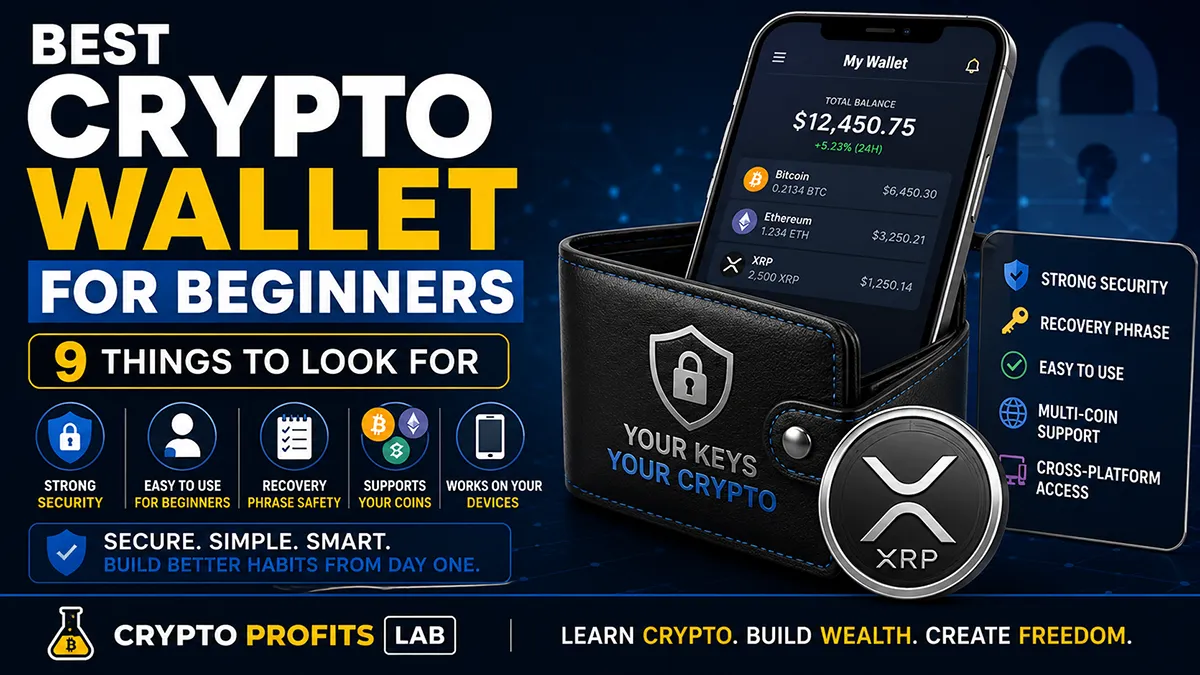
Best Crypto Wallet for Beginners: 9 Things to Look For
Choosing the best crypto wallet for beginners is one of the most important steps in your crypto journey. A wallet is where you manage access to your cryptocurrency, approve transactions, and protect the private keys or recovery phrase connected to your digital assets.
At first, crypto wallets can feel confusing. You may see terms like hot wallet, cold wallet, hardware wallet, seed phrase, private key, self-custody, exchange wallet, and recovery backup. The good news is that beginners do not need to master everything at once. You only need to understand the basics well enough to avoid common mistakes.
The best crypto wallet for beginners should be simple to use, secure enough for your needs, compatible with the coins you plan to hold, and clear about backup responsibilities. It should help you protect your crypto without making every action feel complicated.
If you are brand new to crypto, start with our guides on what is cryptocurrency and blockchain technology. Once you understand the basics, wallet security becomes much easier to understand.
What Is a Crypto Wallet?
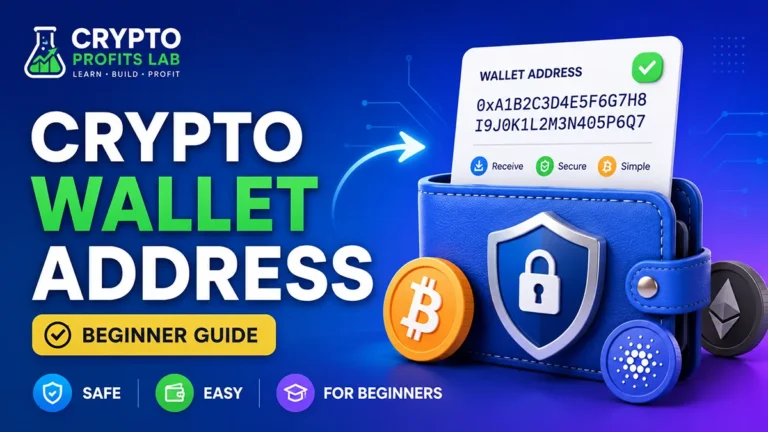
A crypto wallet is a tool that helps you access and manage cryptocurrency on a blockchain. It can be a mobile app, browser extension, desktop program, hardware device, or account-based wallet connected to an exchange.
A wallet does not actually store your crypto like a physical wallet stores cash. Your crypto exists on the blockchain. The wallet stores or manages the keys that allow you to view balances, receive funds, and approve transactions.
For a deeper explanation, read our full beginner guide to crypto wallet.
A beginner should understand one important idea right away: wallet security is not only about the app you install. It is also about how you protect your password, recovery phrase, device, and transaction habits.
Why Choosing the Right Crypto Wallet Matters
Choosing the best crypto wallet for beginners matters because wallet mistakes can be expensive. Crypto transactions are usually irreversible. If you send funds to the wrong address, use the wrong network, lose your recovery phrase, or fall for a fake wallet app, recovery may be difficult or impossible.
A good beginner wallet should reduce confusion. It should make receiving, sending, backing up, and securing crypto easier to understand. It should also provide enough security for your current experience level and balance size.
The wrong wallet can create problems such as:
- Confusing setup steps
- Weak backup instructions
- Poor coin support
- Unclear transaction fees
- Risky browser permissions
- Fake app exposure
- Wrong-network mistakes
- Loss of access after device failure
Investor.gov provides a helpful overview of crypto asset custody basics, including how crypto wallets relate to private keys and access. This is a useful authority resource for beginners learning how storage works.
Best Crypto Wallet for Beginners: What to Look For
The best crypto wallet for beginners is not always the wallet with the most advanced features. Beginners usually need a wallet that balances safety, simplicity, backup clarity, and coin support.
Before choosing a wallet, ask yourself:
- Am I holding a small amount or a larger long-term balance?
- Do I need frequent access or long-term storage?
- Do I understand seed phrase backups?
- Am I comfortable managing my own wallet security?
- Do I need support for Bitcoin, Ethereum, XRP, Solana, or other assets?
- Will I use decentralized apps, staking, or simple storage?
- Do I want convenience, security, or a balance of both?
The right wallet depends on your goals. A beginner who only wants to buy a small amount of Bitcoin may need a different wallet than someone planning to hold multiple coins for years.
If you are still learning how to purchase crypto, read how to buy crypto for beginners before moving funds into a wallet.
Hot Wallet vs Cold Wallet
One of the first wallet decisions beginners face is whether to use a hot wallet or cold wallet.
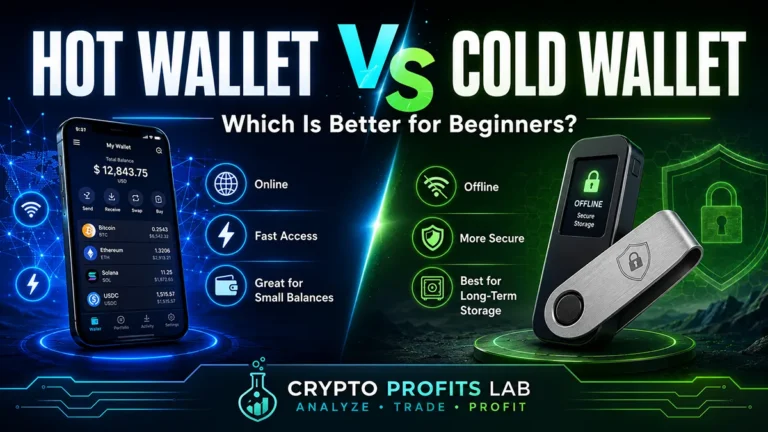
A hot wallet is connected to the internet. It is usually a mobile app, browser extension, or desktop wallet. Hot wallets are convenient and easy to access, but they are more exposed to online threats.
A cold wallet keeps private keys offline. A hardware wallet is the most common example. Cold wallets are usually better for long-term storage and larger balances, but they require more responsibility.
| Wallet Type | Best For | Main Benefit | Main Risk |
|---|---|---|---|
| Hot wallet | Small balances and frequent use | Convenient access | More exposure to online threats |
| Cold wallet | Long-term storage | Offline key protection | Recovery phrase mistakes |
| Exchange wallet | Beginners learning to buy | Easy setup and account recovery | You trust the exchange |
| Hardware wallet | Larger or long-term holdings | Strong private key protection | User setup and backup responsibility |
For a full comparison, read hot wallet vs cold wallet.
1. Strong Security Features
Security should be the first thing beginners look for in a crypto wallet. A wallet should help protect your funds from unauthorized access, phishing, malware, and careless mistakes.
Useful security features may include:
- PIN protection
- Biometric login
- Password protection
- Recovery phrase backup
- Transaction confirmation screens
- Hardware wallet support
- App lock features
- Address verification
- Open-source code or public security reviews
- Clear backup instructions
A wallet does not need every feature to be useful, but it should provide basic protection and clear guidance. If a wallet makes security confusing, that may be a problem for beginners.
You should also secure the accounts connected to crypto activity. Turn on two-factor authentication for your exchange, email, and password manager. Our guide to crypto 2FA explains why this matters.
2. Simple Setup and Beginner-Friendly Design
The best crypto wallet for beginners should be easy to set up and understand. The app should clearly explain how to create a wallet, back up the recovery phrase, receive crypto, send crypto, and check balances.
A beginner-friendly wallet should not hide important security steps behind confusing menus. It should guide users through setup without making them feel rushed.
Look for a wallet with:
- Clear onboarding instructions
- Simple receive and send buttons
- Easy-to-read balances
- Clear transaction previews
- Network fee information
- Helpful warnings before risky actions
- Good educational support
- Easy backup reminders
Beginners should avoid wallets that look powerful but feel confusing. Advanced features are useful only if you understand how to use them safely.
3. Clear Recovery Phrase Instructions
A recovery phrase, also called a seed phrase, is one of the most important parts of a self-custody wallet. It is usually a group of 12 or 24 words that can restore wallet access if your phone, computer, or device is lost.
The best crypto wallet for beginners should explain recovery phrase safety clearly. It should tell you to write the phrase down, store it offline, and never share it.
A good wallet should warn you not to store your recovery phrase in:
- Screenshots
- Cloud storage
- Text messages
- Notes apps
- Online documents
- Social media messages
Anyone who gets your recovery phrase may be able to access your wallet. If you lose the phrase and lose access to the wallet, you may lose your crypto permanently.
Before using a self-custody wallet, read crypto seed phrase. This is one of the most important security topics for beginners.
4. Support for the Coins You Want to Use
Not every wallet supports every cryptocurrency. Before choosing a wallet, make sure it supports the assets you plan to hold.
For example, a wallet may support Bitcoin but not certain Ethereum tokens. Another wallet may support Ethereum, Solana, and Polygon but not XRP. Some wallets are built for one ecosystem, while others support many blockchains.
Before choosing a wallet, check:
- Which coins are supported
- Which networks are supported
- Whether tokens are supported
- Whether NFTs are supported if you need them
- Whether staking is available
- Whether the wallet supports hardware devices
- Whether the wallet has clear network warnings
Network support matters because sending crypto to the wrong network can cause serious problems. Beginners should move slowly and send a small test transaction before transferring larger amounts.
If you are still researching assets, start with beginner guides like what is Bitcoin, what is Ethereum, and what is XRP.
5. Clear Network and Transaction Details
Crypto transfers involve wallet addresses, blockchain networks, and transaction fees. A good beginner wallet should make these details clear before you approve anything.
Before sending crypto, the wallet should help you review:
- The asset being sent
- The recipient address
- The blockchain network
- The amount
- The estimated network fee
- The total transaction
- Any warning about irreversible transfers
This matters because blockchain transactions are usually final. If you send crypto to the wrong address or wrong network, the wallet may not be able to reverse it.
Network fees can also surprise beginners. Some blockchains are inexpensive to use, while others can become costly when demand is high. Ethereum transactions, for example, involve gas fees. Learn more in our guide to crypto gas fees.
6. Good Reputation and Trusted Sources
A beginner should choose a wallet with a strong reputation. Avoid downloading random wallet apps from social media links, direct messages, ads, or unknown websites.
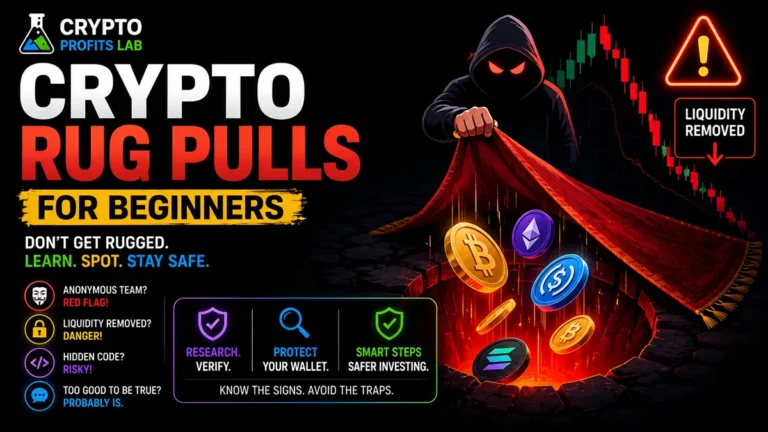
Fake wallet apps are a real risk. Scammers may create apps or websites that look legitimate but are designed to steal seed phrases or private keys.
Before downloading a wallet:
- Use the official website.
- Check the correct app developer.
- Read recent reviews carefully.
- Avoid sponsored links when possible.
- Bookmark trusted wallet websites.
- Be cautious of direct messages.
- Never enter your recovery phrase into a website.
- Avoid wallets promising guaranteed profits.
A wallet should help you store and manage crypto. It should not pressure you into unrealistic investments, secret trading systems, or guaranteed returns.
For more safety guidance, read crypto scams to avoid and crypto safety tips.
7. Backup and Recovery Options
The best crypto wallet for beginners should make backup and recovery simple to understand. If your phone breaks or your laptop is lost, you need to know how recovery works before an emergency happens.
Good wallet backup education should explain:
- What the recovery phrase does
- How to write it down safely
- Why word order matters
- How to restore a wallet
- What happens if the phrase is lost
- What happens if someone else gets the phrase
- How to keep backups offline
Some wallets may offer additional recovery options, but beginners should understand the tradeoffs. More convenience can sometimes mean more trust in a third party.
Do not assume customer support can restore a self-custody wallet for you. If you lose your recovery phrase, the wallet company may not be able to help.
8. Compatibility With Hardware Wallets
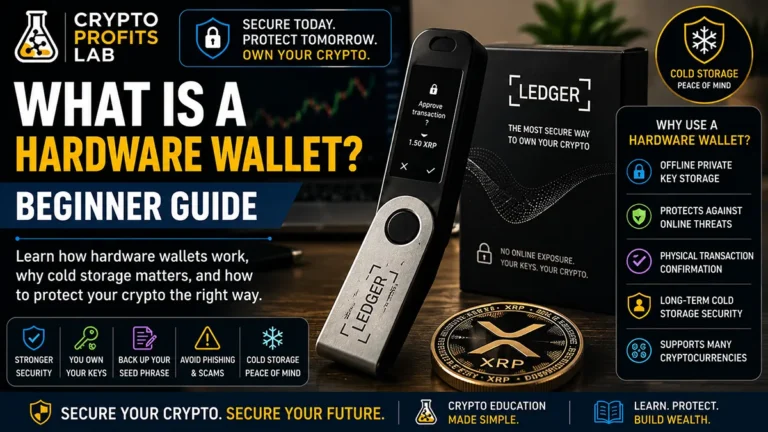
A hardware wallet is a physical device that helps keep private keys offline. For beginners with larger balances or long-term holdings, hardware wallet support can be an important feature.
Not every beginner needs a hardware wallet right away. If you are only buying a small amount while learning, a simple wallet or reputable exchange may be enough. But as your balance grows, cold storage becomes more important.
A wallet with hardware wallet compatibility may allow you to:
- Manage balances through an app
- Approve transactions on a physical device
- Keep private keys offline
- Reduce exposure to malware
- Improve long-term storage security
If you are considering cold storage, read our guide to hardware wallet.
9. Room to Grow as You Learn
The best crypto wallet for beginners should be simple today but still useful as you learn more. You may begin by storing a small amount of Bitcoin or Ethereum, then later explore staking, decentralized apps, hardware wallets, or multiple networks.
A good wallet should not force you into advanced features before you are ready. But it should provide room to grow if your knowledge expands.
Future features you may care about include:
- Multi-chain support
- Hardware wallet integration
- Staking support
- Token management
- NFT support
- Address book features
- Transaction history
- Decentralized app access
- Better fee controls
Beginners should use advanced features slowly. Do not connect your wallet to random websites or approve transactions you do not understand.
If you are interested in earning rewards later, read crypto staking before staking from any wallet.
Exchange Wallet vs Self-Custody Wallet
Many beginners first hold crypto on an exchange. This is common because exchanges make buying easier. However, an exchange wallet is different from a self-custody wallet.
With an exchange wallet, the platform usually manages custody. You log in with an email, password, and 2FA. The exchange controls the private keys.
With a self-custody wallet, you control the recovery phrase and private keys. This gives you more control, but it also gives you more responsibility.
| Wallet Option | Who Controls Access? | Best For | Main Tradeoff |
|---|---|---|---|
| Exchange wallet | Exchange manages custody | Beginners buying small amounts | You trust the platform |
| Mobile wallet | User controls recovery phrase | Convenience and small balances | More online exposure |
| Browser wallet | User controls recovery phrase | Web3 and decentralized apps | Higher phishing risk |
| Hardware wallet | User controls recovery phrase offline | Long-term storage | Setup responsibility |
If you are still choosing an exchange, read best crypto exchange for beginners. The exchange you use to buy crypto and the wallet you use to store crypto do not have to be the same.
Should Beginners Use a Mobile Wallet?
A mobile wallet can be a good starting point for small amounts. It is convenient, easy to access, and often simple to use. Many beginners like mobile wallets because they feel similar to regular finance apps.
However, mobile wallets are connected to the internet. That means your phone security matters. If your phone is infected with malware, stolen, or backed up insecurely, your wallet security may be affected.
Mobile wallet safety tips include:
- Use a strong phone passcode.
- Keep your phone updated.
- Avoid installing unknown apps.
- Write your recovery phrase offline.
- Never take a screenshot of your seed phrase.
- Use small test transactions.
- Do not connect to suspicious websites.
- Keep only small or moderate balances in hot wallets.
A mobile wallet may be beginner-friendly, but it should not be treated casually.
Should Beginners Use a Hardware Wallet?
A hardware wallet may be a smart choice when your balance becomes meaningful or when you plan to hold crypto long term. It adds stronger private key protection because transactions must be physically approved on the device.
However, hardware wallets require careful setup. You must buy from a trusted source, generate your own recovery phrase, store the phrase safely, and understand how to send and receive crypto.
A hardware wallet may be right for you if:
- You plan to hold crypto for years.
- Your balance is too large to leave casually on an exchange.
- You understand recovery phrase safety.
- You are willing to learn cold storage basics.
- You do not need frequent trading access.
Beginners should not rush into hardware wallets without learning how they work. The device improves security only when used correctly.
Common Beginner Wallet Mistakes
Many crypto losses happen because of simple wallet mistakes. Beginners can avoid many problems by moving slowly and verifying every step.
Common mistakes include:
- Downloading fake wallet apps
- Taking screenshots of seed phrases
- Losing recovery phrases
- Sending crypto on the wrong network
- Skipping small test transactions
- Trusting fake support agents
- Connecting wallets to suspicious websites
- Approving transactions without reading them
- Keeping large balances in hot wallets
- Forgetting to secure the email account connected to exchanges
The most dangerous mistake is sharing your recovery phrase. No legitimate wallet company, exchange, support agent, or online helper needs your phrase.
Best Crypto Wallet for Beginners Checklist
Use this checklist before choosing a wallet:
- The wallet supports the coins I want to hold.
- The setup process is easy to understand.
- The wallet explains recovery phrases clearly.
- I can store my seed phrase offline.
- The wallet has a good reputation.
- I downloaded it from the official source.
- Transaction details are easy to review.
- Network fees are clearly displayed.
- The wallet supports my security needs.
- I understand the difference between hot and cold storage.
- I know how to restore access if needed.
- I can start with a small test transaction.
If you cannot check these boxes, slow down before moving larger funds.
Final Thoughts: Choose a Wallet You Understand
Choosing the best crypto wallet for beginners is not about finding the flashiest app. It is about finding a wallet you understand and can use safely.
A beginner-friendly wallet should be simple, secure, clear about backups, and compatible with the crypto assets you plan to hold. It should help you learn good habits instead of pushing you into risky features too soon.
Start small. Learn the difference between exchange wallets, hot wallets, and cold wallets. Protect your recovery phrase. Use two-factor authentication on important accounts. Avoid fake wallet downloads and never share your seed phrase.
The best crypto wallet for beginners is the one that matches your current knowledge, balance size, and security needs. As your experience grows, you can upgrade your wallet setup and build a stronger long-term crypto storage plan.
FAQ: Best Crypto Wallet for Beginners
What is the best crypto wallet for beginners?
The best crypto wallet for beginners is usually one that is easy to use, secure, well-reviewed, and clear about recovery phrase backup. Beginners should look for a wallet that supports the coins they plan to hold, explains transaction details, and provides simple safety instructions. The right choice depends on balance size, experience level, and storage goals.
Should beginners use a hot wallet or cold wallet?
Beginners can use a hot wallet for small amounts and frequent access, but cold wallets are usually better for long-term or larger holdings. A hot wallet is connected to the internet and more convenient. A cold wallet keeps keys offline and may offer stronger protection. Many users eventually use both for different purposes.
Is a hardware wallet best for beginners?
A hardware wallet can be useful for beginners who plan to hold crypto long term or store larger balances. However, it requires careful setup and recovery phrase protection. Beginners with very small balances may start with a reputable exchange or simple mobile wallet while learning. Hardware wallets become more important as security needs increase.
Can I use an exchange as my crypto wallet?
Yes, beginners can leave small amounts on a reputable exchange while learning, but an exchange wallet is not the same as a self-custody wallet. The exchange usually controls the private keys. This can be convenient, but it requires trust in the platform. For long-term storage, many users learn self-custody wallet options.
What should I check before downloading a crypto wallet?
Before downloading a crypto wallet, verify the official website, app developer, supported coins, user reviews, security features, and backup instructions. Avoid links from direct messages, ads, or social media comments. Fake wallet apps can steal recovery phrases or private keys. Always download from trusted sources and start with a small test amount.
Do crypto wallets charge fees?
Crypto wallets may not charge a direct fee for holding crypto, but blockchain network fees usually apply when sending transactions. Some wallets may also include swap fees, service fees, or third-party provider fees. Beginners should always review the transaction preview before confirming a transfer, swap, or purchase inside a wallet.
What happens if I lose my crypto wallet?
If you lose your crypto wallet device or app but still have the correct recovery phrase, you may be able to restore access using a compatible wallet. If you lose both the wallet access and recovery phrase, recovery may be impossible. This is why seed phrase backup is one of the most important wallet safety steps.
Are mobile crypto wallets safe for beginners?
Mobile crypto wallets can be safe for beginners when used carefully with small or moderate balances. Users should protect the phone with a strong passcode, keep software updated, avoid unknown apps, and store the recovery phrase offline. Mobile wallets are convenient, but they are still hot wallets and have more online exposure than cold storage.
How do I know if a crypto wallet is trustworthy?
A trustworthy crypto wallet usually has a clear official website, strong reputation, transparent security practices, consistent updates, and clear backup instructions. Beginners should research the developer, avoid fake apps, read recent reviews, and never trust wallets promoted through suspicious messages. A wallet should never ask you to share your recovery phrase online.