Centralized and Decentralized Exchanges: What’s the Difference?
Centralized and decentralized exchanges are two of the main ways people buy, sell, and trade cryptocurrency. If you are new to crypto, understanding the difference between them can help you choose safer platforms, avoid common mistakes, and decide how much control you want over your assets.
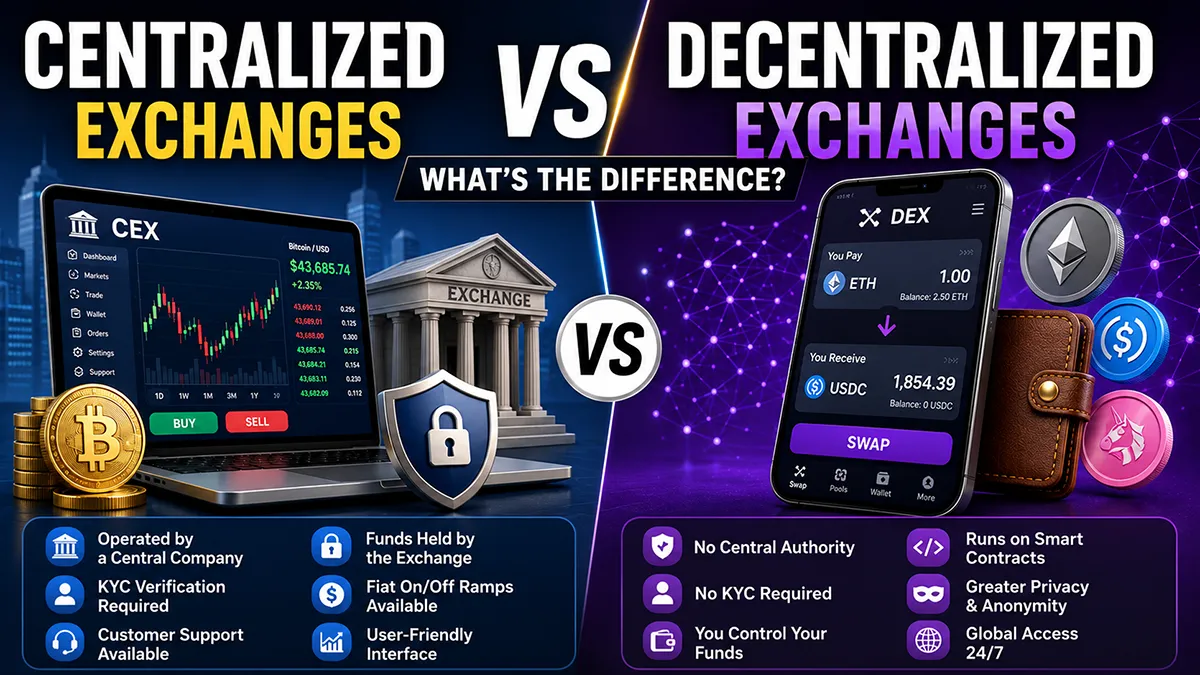
A centralized exchange, often called a CEX, is run by a company. A decentralized exchange, often called a DEX, uses smart contracts and crypto wallets to let users trade without a traditional middleman.
Both types of exchanges can be useful. Centralized exchanges are often easier for beginners. Decentralized exchanges give users more control, but they also require more responsibility. Neither option is perfect, and both come with risks.
In this guide, we’ll explain centralized and decentralized exchanges in simple terms, how each one works, their main advantages, their risks, and how beginners can choose the right option.
What Are Centralized and Decentralized Exchanges?
Centralized and decentralized exchanges are platforms that help people trade cryptocurrency, but they work in very different ways.
A centralized exchange is a company-operated platform where users create accounts, deposit funds, and trade through the exchange’s system. Popular beginner exchanges often feel similar to online brokerage accounts because users log in with an email, password, and account dashboard.
A decentralized exchange allows users to trade directly from a crypto wallet. Instead of depositing funds into a company account, users connect a wallet and trade through blockchain-based smart contracts.
A simple way to think about it:
- Centralized exchange: company-controlled platform
- Decentralized exchange: wallet-based trading protocol
- Centralized exchange: easier for beginners
- Decentralized exchange: more control, more responsibility
Before using either type of exchange, it helps to understand what cryptocurrency is and how blockchain technology works.
What Is a Centralized Exchange?
A centralized exchange is a crypto trading platform managed by a company. The company operates the website or app, handles user accounts, manages order books, provides trading tools, and may offer customer support.
When beginners buy crypto for the first time, they often use a centralized exchange because it is usually the easiest path from regular money into crypto.
A centralized exchange may allow users to:
- Buy crypto with dollars or other fiat currency
- Sell crypto back into fiat currency
- Trade one cryptocurrency for another
- Store crypto inside an exchange account
- Use beginner-friendly charts and dashboards
- Set up recurring purchases
- Transfer crypto to a personal wallet
- Use customer support when available
Centralized exchanges are common because they simplify the buying process. If you are brand new, read how to buy crypto for beginners before making your first purchase.
How Centralized Exchanges Work
Centralized exchanges work by acting as the middleman between buyers and sellers. Users create accounts, deposit money or crypto, and place buy or sell orders.
Here is the basic process:
- You create an exchange account.
- You verify your identity if required.
- You deposit money or crypto.
- You choose the coin you want to buy or trade.
- The exchange matches your order.
- The exchange updates your account balance.
- You can hold, trade, sell, or withdraw your crypto.
The exchange controls the platform infrastructure. It may also custody your crypto while it remains inside your exchange account. This means the exchange is responsible for holding the assets until you withdraw them.
This convenience is useful, but it creates trust risk. If an exchange freezes withdrawals, gets hacked, mismanages funds, or faces regulatory issues, users can be affected.
That is why centralized exchanges can be beginner-friendly but should still be used carefully.
What Is a Decentralized Exchange?
A decentralized exchange is a platform that lets users trade crypto directly from their wallets using smart contracts. Instead of trusting a company to hold your funds during trading, you interact with blockchain code.
Decentralized exchanges are often called DEXs. Many DEXs are used for token swaps, especially on smart contract networks like Ethereum.
A DEX may allow users to:
- Trade directly from a crypto wallet
- Swap tokens without creating a traditional account
- Access DeFi tokens
- Use liquidity pools
- Trade without depositing funds into a company account
- Keep control of wallet assets until a transaction is approved
Coinbase explains that a decentralized exchange is a peer-to-peer marketplace where transactions happen directly between crypto traders. For a beginner-friendly outside explanation, see this Coinbase guide to DEXs.
Decentralized exchanges can be powerful, but they are usually harder for beginners than centralized exchanges.
How Decentralized Exchanges Work
Decentralized exchanges usually rely on smart contracts. A smart contract is blockchain-based code that follows programmed rules.
Instead of matching buyers and sellers through a company-controlled order book, many DEXs use liquidity pools. A liquidity pool is a pool of tokens supplied by users. Traders swap against that pool, and liquidity providers may earn a share of trading fees.
Here is the beginner version:
- You open a compatible crypto wallet.
- You visit the official DEX website.
- You connect your wallet.
- You select the token you want to trade.
- You review the swap details.
- You approve the wallet transaction.
- The smart contract completes the swap.
- The new token appears in your wallet.
This process gives you more control, but it also gives you more responsibility. If you connect to a fake website, approve a malicious transaction, or trade the wrong token, there may be no customer support to reverse the mistake.
Before using a DEX, learn how a crypto wallet works and why your crypto seed phrase must stay private.
Centralized and Decentralized Exchanges: Key Differences
Centralized and decentralized exchanges solve similar problems but use different systems.
Here is a simple comparison:
| Feature | Centralized Exchange | Decentralized Exchange |
|---|---|---|
| Control | Company-operated | Smart contract and wallet-based |
| Account Needed | Usually yes | Usually no traditional account |
| Custody | Exchange may hold funds | User usually keeps wallet control |
| Beginner Friendly | Usually easier | Usually more advanced |
| Fiat Support | Often supports dollars or bank transfers | Usually crypto-to-crypto only |
| Customer Support | Often available | Usually limited or none |
| Main Risk | Platform and custody risk | Wallet, smart contract, and user error risk |
| Common Use | Buying crypto with fiat | Swapping tokens on-chain |
The key difference between centralized and decentralized exchanges is custody. On a centralized exchange, you may rely on the platform to hold funds. On a decentralized exchange, you usually trade directly from your wallet.
Why Beginners Often Start With Centralized Exchanges
Beginners often start with centralized exchanges because they are easier to understand. A centralized exchange usually provides a login, account dashboard, customer support options, and simple buy/sell buttons.
For someone buying crypto for the first time, that matters.
Centralized exchanges may be easier because they can offer:
- Bank transfer support
- Debit card purchases
- Simple account setup
- Clear account balances
- Basic trading screens
- Customer support
- Password recovery
- Tax documents or transaction history
- Easier fiat deposits and withdrawals
This is why many new users start with a CEX before learning wallets and DeFi.
For most new users, centralized and decentralized exchanges should be compared based on ease of use, account security, fees, and how comfortable the user is with crypto wallets.
If you are trying to choose a platform, read our guide to the best crypto exchange for beginners. A good beginner exchange should be easy to use, transparent about fees, and serious about security.
Why Experienced Users Use Decentralized Exchanges
More experienced users often use decentralized exchanges because DEXs offer direct wallet trading and access to a wider range of tokens.
A decentralized exchange can be useful for people who already understand wallets, gas fees, token approvals, and smart contract risks.
Experienced users may use DEXs to:
- Trade directly from self-custody wallets
- Access newer tokens
- Use DeFi protocols
- Avoid keeping funds on a centralized platform
- Participate in liquidity pools
- Swap tokens on Ethereum or Layer 2 networks
- Explore decentralized finance
For example, Uniswap is one of the best-known decentralized exchanges. It allows users to swap tokens through smart contracts and liquidity pools.
As users gain more experience, centralized and decentralized exchanges can both play a role in a broader crypto strategy.
However, access does not mean safety. Many risky or fake tokens can also appear in decentralized markets.
Custody: Who Controls the Crypto?
Custody is one of the biggest differences between centralized and decentralized exchanges.
On a centralized exchange, the platform may control the wallet infrastructure for funds held inside your account. You see a balance on your dashboard, but the exchange is responsible for custody until you withdraw.
On a decentralized exchange, you usually keep control through your own wallet. The DEX does not hold your funds in the same way. You connect your wallet, approve the trade, and the transaction happens on-chain.
A simple phrase many crypto users use is:
Not your keys, not your coins.
That phrase means if you do not control the private keys, you are relying on someone else to protect your crypto.
Still, self-custody is not automatically safer for beginners. If you lose your seed phrase or approve a bad transaction, you may lose funds permanently. Learn hot wallet vs cold wallet before moving large balances.
Fees on Centralized and Decentralized Exchanges
Fees work differently on centralized and decentralized exchanges.
A centralized exchange may charge:
- Trading fees
- Spread fees
- Deposit fees
- Withdrawal fees
- Card purchase fees
- Conversion fees
A decentralized exchange may involve:
- Network gas fees
- Swap fees
- Liquidity provider fees
- Slippage
- Bridge fees if moving between networks
- Failed transaction costs in some cases
Many beginners compare only the visible trading fee and forget the total cost. That can lead to surprises.
For example, a DEX swap may look cheap until you include Ethereum gas fees. A centralized exchange purchase may look simple until you review spread and withdrawal fees.
Before trading on-chain, read our guide on crypto gas fees. Gas fees can make small trades expensive when networks are busy.
Liquidity and Slippage
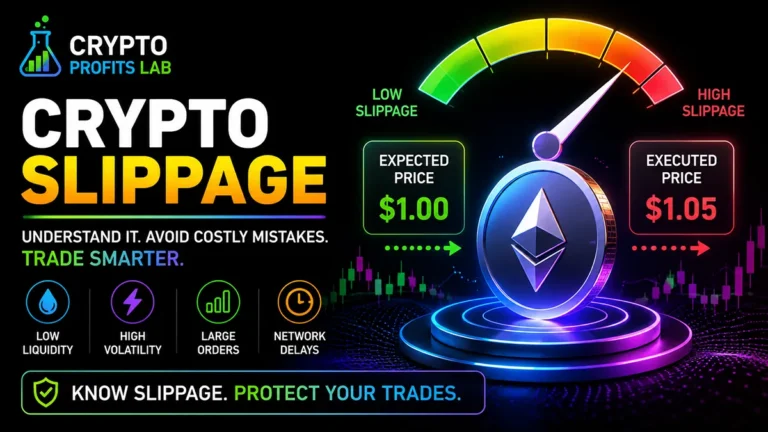
Liquidity means how easily an asset can be bought or sold without causing a large price change. Slippage is the difference between the expected trade price and the actual executed price.
Centralized exchanges often have deep order books for major coins. That can make trades easier for beginners, especially with popular assets like Bitcoin or Ethereum.
Decentralized exchanges depend on liquidity pools. If a pool has low liquidity, a trade may experience higher slippage.
Beginners should be careful with:
- New tokens
- Low-liquidity pairs
- High slippage settings
- Meme coins
- Tokens with unusual trading rules
- Fake tokens copying real names
If you see a token price moving wildly during a swap preview, stop and investigate. Do not approve trades you do not understand.
Security Risks of Centralized Exchanges
Centralized exchanges can be convenient, but they have risks.
Important CEX risks include:
- Account hacks
- Exchange hacks
- Withdrawal freezes
- Platform insolvency
- Regulatory restrictions
- Poor customer support
- Phishing emails
- Fake exchange websites
- Weak passwords
- SIM-swap attacks
You can reduce some account risks by using strong passwords and crypto 2FA. Authenticator apps or hardware security keys are generally safer than relying only on SMS codes.
You should also avoid keeping large amounts on an exchange without a plan. Exchanges are useful for buying and selling, but long-term storage may be better suited for a personal wallet or hardware wallet.
Security Risks of Decentralized Exchanges
Decentralized exchanges also have serious risks.
Important DEX risks include:
- Fake DEX websites
- Malicious token contracts
- Smart contract bugs
- Unsafe token approvals
- High slippage mistakes
- Liquidity pool risks
- Rug pulls
- Scam tokens
- Wallet drain attacks
- Wrong network mistakes
- No customer support
A decentralized exchange gives users control, but control also means mistakes are harder to fix.
Before using any DEX, make sure you are on the official website. Do not click random links from social media, comments, direct messages, or fake support accounts.
Read crypto scams to avoid before connecting your wallet to any unfamiliar site.
Wallets and Decentralized Exchanges
A crypto wallet is required for most DEX activity. Your wallet lets you connect to the DEX, approve trades, and receive tokens.
This means wallet safety becomes extremely important.
Before using a decentralized exchange, you should understand:
- Wallet addresses
- Seed phrases
- Private keys
- Token approvals
- Network selection
- Gas fees
- Test transactions
- Fake wallet apps
A DEX will never need your seed phrase. If a website asks for your seed phrase to trade, it is a scam.
If you are still learning wallets, read our guide on what a crypto wallet is before trying DEX trading.
Centralized Exchanges and Fiat Money
One major advantage of centralized exchanges is fiat support. Fiat money means government-issued currency like U.S. dollars.
Many centralized exchanges allow users to connect a bank account, debit card, or payment method. That makes them useful for beginners who want to buy crypto for the first time.
Decentralized exchanges usually do not handle fiat currency directly. Most DEXs are designed for crypto-to-crypto trading. That means you usually need crypto in a wallet before using them.
A common beginner path looks like this:
- Buy crypto on a centralized exchange.
- Learn wallet basics.
- Withdraw a small amount to a wallet.
- Learn gas fees and network rules.
- Use decentralized tools later if needed.
This step-by-step path is safer than jumping directly into DeFi without understanding the basics.
Decentralized Exchanges and DeFi
Decentralized exchanges are a major part of decentralized finance, also called DeFi.
DeFi includes financial tools built on blockchain networks. It can include trading, lending, borrowing, liquidity pools, staking, and yield strategies.
DEXs connect naturally with topics like:
- Crypto lending
- Crypto yield farming
- Aave
- Uniswap
- Liquidity pools
- Smart contracts
- Wallet approvals
DeFi can be useful, but it is not beginner-proof. High yields and early token access can attract scams. If you are new, focus on safety before chasing returns.
Centralized and Decentralized Exchanges for Bitcoin
Bitcoin is available on many centralized exchanges. For beginners, buying Bitcoin on a centralized exchange is often simpler than trying to use decentralized tools.
Bitcoin does not operate like Ethereum tokens. Many DEXs are built around Ethereum or other smart contract networks, while Bitcoin trading often happens through centralized exchanges, wrapped Bitcoin products, or specialized platforms.
Beginners should keep this simple:
- Use trusted exchanges for basic Bitcoin purchases.
- Learn how Bitcoin wallets work before withdrawing.
- Send a small test transaction first.
- Keep long-term holdings secure.
- Avoid fake Bitcoin giveaway scams.
Bitcoin is important, but it still requires safe storage habits.
Centralized and Decentralized Exchanges for Ethereum
Ethereum is commonly used on both centralized and decentralized exchanges.
A beginner may buy ETH on a centralized exchange. Later, that user may withdraw ETH to a wallet and use it for gas fees, DeFi apps, DEX trading, or Layer 2 networks.
Ethereum connects to many beginner topics:
If you plan to use Ethereum-based decentralized exchanges, make sure you understand gas fees and wallet approvals first.
What About Crypto Bridges?
A crypto bridge helps move assets between blockchain networks. Bridges are often used when someone wants to move funds from Ethereum to a Layer 2 network or another blockchain ecosystem.
Bridges can be useful for accessing decentralized exchanges on lower-fee networks, but they add another layer of risk.
Bridge risks include:
- Fake bridge websites
- Wrong network mistakes
- Wrapped token risk
- Smart contract bugs
- High fees
- Delayed withdrawals
Before bridging funds, read our guide on what a crypto bridge is. Beginners should not bridge large amounts until they understand how networks and wallets work.
Which Is Better for Beginners?
For most beginners, centralized exchanges are usually easier for the first crypto purchase. They provide a simpler path from regular money into crypto and often include basic account recovery tools.
However, centralized exchanges are not perfect. They require trust in the platform, and users should avoid leaving large balances there forever without a plan.
Decentralized exchanges are better for users who already understand:
- Crypto wallets
- Seed phrases
- Gas fees
- Smart contracts
- Token approvals
- DeFi risks
- Slippage
- Network selection
- Scam prevention
The better choice depends on your goal. If you are buying your first Bitcoin or Ethereum, a centralized exchange may be simpler. If you already have a wallet and want to swap tokens on-chain, a decentralized exchange may fit that use case.
How to Choose Between Centralized and Decentralized Exchanges
Choosing between centralized and decentralized exchanges depends on your experience level, security habits, and whether you want convenience or self-custody.
Use a centralized exchange if:
- You are buying crypto for the first time.
- You need to use dollars or a bank account.
- You want a simple app interface.
- You need basic customer support.
- You are not ready for DeFi.
- You want easier tax records and transaction history.
Use a decentralized exchange only if:
- You understand wallets.
- You control your seed phrase safely.
- You know how gas fees work.
- You can verify official websites.
- You understand slippage.
- You know token approvals can be risky.
- You accept there may be no customer support.
Many crypto users eventually use both. A centralized exchange can be useful for buying and selling. A decentralized exchange can be useful for wallet-based token swaps.
Beginner Safety Checklist
Before using centralized and decentralized exchanges, use this safety checklist.
For centralized exchanges:
- Use a trusted platform.
- Enable 2FA.
- Use a strong password.
- Beware of phishing emails.
- Verify the website URL.
- Do not leave large balances without a plan.
- Review fees before buying.
- Withdraw only when you understand wallets.
For decentralized exchanges:
- Use the official website only.
- Never share your seed phrase.
- Start with small test transactions.
- Check the token contract.
- Review gas fees.
- Watch slippage settings.
- Avoid unknown tokens.
- Do not approve transactions you do not understand.
- Consider a separate wallet for DeFi testing.
Security matters more than speed. Rushing is one of the most common ways beginners lose money.
Common Beginner Mistakes
Beginners often make similar mistakes with centralized and decentralized exchanges.
Common mistakes include:
- Choosing an exchange only because of social media hype
- Ignoring fees
- Leaving too much crypto on an exchange
- Not enabling 2FA
- Using a fake exchange website
- Connecting wallets to fake DEXs
- Sharing a seed phrase
- Trading scam tokens
- Using high slippage without understanding it
- Sending funds on the wrong network
- Skipping test transactions
- Chasing high-risk DeFi rewards
The best way to avoid these mistakes is to slow down and learn one step at a time.
Should You Use Both CEXs and DEXs?
Many crypto users use both centralized and decentralized exchanges because each one serves a different purpose.
A centralized exchange can be helpful for:
- Buying crypto with fiat money
- Selling crypto for cash
- Simple beginner trading
- Accessing customer support
- Tracking transaction history
A decentralized exchange can be helpful for:
- Wallet-based token swaps
- Accessing DeFi
- Trading without depositing funds into a company account
- Exploring on-chain ecosystems
- Using smart contract networks
There is no need to rush into both. Beginners can start with one trusted centralized exchange, then learn wallets, security, and DEXs later.
Final Thoughts: Centralized and Decentralized Exchanges
Centralized and decentralized exchanges are both important parts of the crypto market. A centralized exchange is usually easier for beginners because it offers account-based access, fiat support, customer support, and a familiar trading experience.
Understanding centralized and decentralized exchanges can help beginners choose safer platforms, avoid unnecessary risks, and build better crypto habits.
A decentralized exchange gives users more direct control by allowing wallet-based trading through smart contracts. That control can be powerful, but it also requires more knowledge and stronger security habits.
For beginners, the safest path is usually to start simple. Learn cryptocurrency basics, choose a trusted exchange, enable strong security, understand fees, and learn wallet safety before exploring DEXs and DeFi.
Centralized and decentralized exchanges are not enemies. They are different tools. The right one depends on your experience, goals, risk tolerance, and ability to protect your funds.
If you understand both, you will be better prepared to buy, trade, store, and manage crypto safely.
Centralized and Decentralized Exchanges FAQ
What are centralized and decentralized exchanges?
Centralized and decentralized exchanges are platforms used to trade cryptocurrency. A centralized exchange is run by a company, while a decentralized exchange lets users trade directly from crypto wallets through smart contracts.
Is a centralized exchange better for beginners?
A centralized exchange is usually easier for beginners because it supports account logins, fiat deposits, simple buying tools, and customer support. However, users still need strong security habits.
Is a decentralized exchange safer?
A decentralized exchange can reduce custody risk because users trade from their wallets, but it introduces other risks such as smart contract bugs, fake websites, token scams, and user mistakes.
Do I need a wallet to use a decentralized exchange?
Yes. Most decentralized exchanges require a compatible crypto wallet. You connect the wallet, approve the transaction, and trade directly on-chain.
Can I buy crypto with dollars on a decentralized exchange?
Usually no. Most decentralized exchanges are designed for crypto-to-crypto trading. Beginners often use a centralized exchange to buy crypto with dollars first.
What is the biggest risk of centralized exchanges?
The biggest risks include platform failure, account hacks, withdrawal freezes, custody risk, phishing attacks, and trusting a company to hold funds.
What is the biggest risk of decentralized exchanges?
The biggest risks include fake websites, bad token approvals, scam tokens, smart contract exploits, slippage mistakes, and no customer support if something goes wrong.
Should I leave crypto on an exchange?
Small balances may be convenient on an exchange while learning, but long-term or larger holdings are often better protected with a personal wallet or hardware wallet when used correctly.
What is the difference between a CEX and DEX?
A CEX is a centralized exchange run by a company. A DEX is a decentralized exchange that allows wallet-based trading through smart contracts.
Should beginners use centralized and decentralized exchanges?
Beginners should usually start with a trusted centralized exchange, then learn wallets, seed phrases, gas fees, and scams before using decentralized exchanges.