What Is a DEX? Beginner Guide
Quick Answer
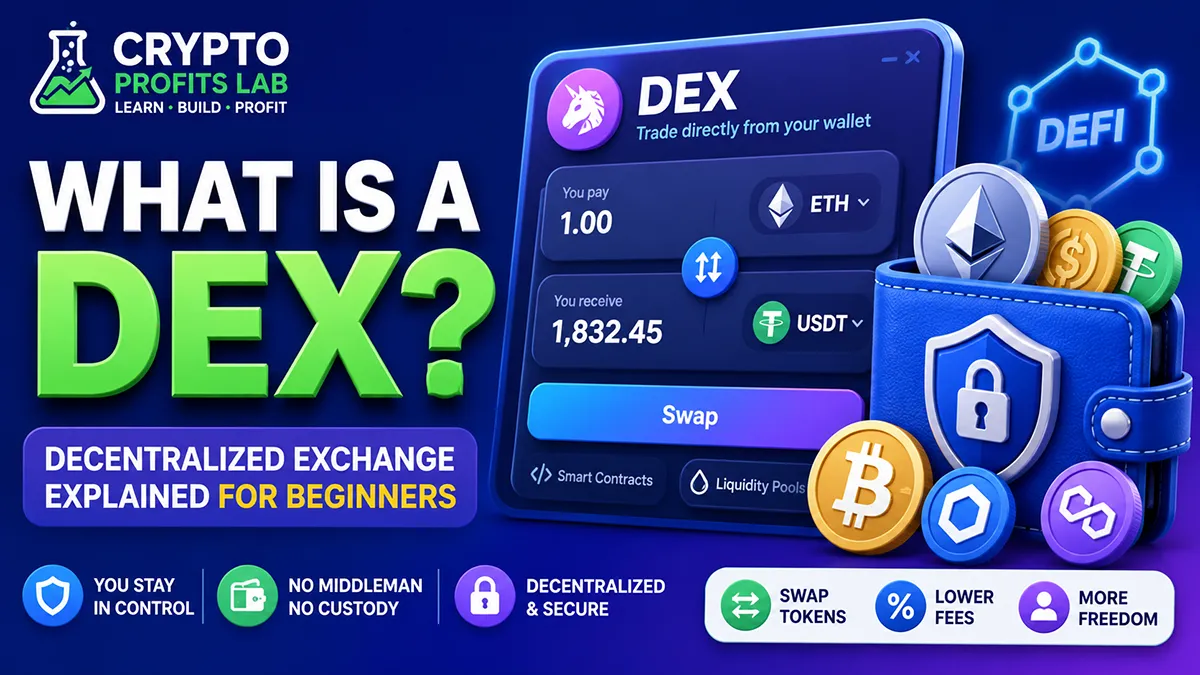
A DEX is a decentralized exchange. It is a crypto trading platform that lets people trade directly from their own crypto wallets instead of creating a normal account with a company-run exchange.
If you are asking what is a DEX, the simplest answer is this: it is a place where you can swap one cryptocurrency for another without handing your crypto to a centralized company first.
A DEX can be powerful, but it is not always beginner-friendly. You usually need a crypto wallet, the correct blockchain network, enough crypto for gas fees, and a clear understanding of what you are approving before you make a trade.
For most beginners, it is smart to learn how a regular crypto exchange works first. Then you can study decentralized exchanges slowly before connecting a wallet or trading real money.
Key Takeaways
- A DEX is a decentralized exchange used to swap crypto from a personal wallet.
- A DEX usually does not require a normal username, password, or account.
- You need a compatible crypto wallet to use most decentralized exchanges.
- DEX trades happen through smart contracts, which are blockchain-based programs.
- Beginners must understand networks, gas fees, wallet approvals, and scam risks.
- A DEX gives users more control, but also more personal responsibility.
- New users should start small and avoid trading tokens they do not understand.
Beginner Facts About DEXs
| Topic | Simple Meaning | Why It Matters |
|---|---|---|
| DEX | A decentralized exchange for swapping crypto | Lets users trade from their own wallets |
| CEX | A centralized exchange run by a company | Usually easier for beginners |
| Crypto wallet | A tool used to manage crypto access | Needed to connect to most DEX platforms |
| Smart contract | Code that runs on a blockchain | Handles trades automatically |
| Liquidity pool | A pool of crypto used for trading | Helps make swaps possible |
| Gas fee | A network fee paid to process transactions | Needed for many DEX trades |
| Slippage | A price change between quote and completed trade | Can affect how much crypto you receive |
| Token approval | Permission for a smart contract to use a token | Must be reviewed carefully for safety |
What Is a DEX?
What is a DEX? A DEX is a decentralized exchange, which means it lets users trade cryptocurrency without relying on a traditional middleman to hold their funds during the trade.
On a regular centralized exchange, you usually create an account, verify your identity, deposit money or crypto, and trade inside the platform. The company controls the platform and often holds the crypto while it is in your exchange account.
A DEX works differently. You connect your own wallet, choose the tokens you want to swap, review the details, and approve the transaction. The trade is handled by smart contracts on the blockchain.
A smart contract is a program that runs on a blockchain. It follows rules automatically. On a DEX, smart contracts can help match trades, manage liquidity pools, and move tokens between users.
The main idea is control. With a DEX, you usually keep control of your wallet until you approve a specific transaction. That can be useful, but it also means there is no simple “forgot password” button if you make a mistake with your wallet.
Before using any decentralized tool, beginners should understand what a crypto wallet is and what a crypto wallet address is.
Why Beginners Search for What Is a DEX
Many beginners search what is a DEX after hearing terms like DeFi, Uniswap, PancakeSwap, liquidity pools, token swaps, and wallet connect.
This usually happens after they have already learned the basics of buying crypto on a centralized exchange. Once they hear that some tokens are only available on decentralized platforms, they want to know how those platforms work.
That curiosity is normal. DEXs are an important part of crypto. They help people trade tokens, access decentralized finance tools, and use blockchain apps directly.
But beginners should slow down. A DEX is not the same as a beginner buy button on a simple exchange app. There are more choices, more warnings, and more chances to make mistakes.
Crypto Profits Lab is designed to make topics like this easier to understand without hype. The goal is not to push you into trading. The goal is to help you understand the tool before using it.
DEX vs Centralized Exchange
A DEX and a centralized exchange both help people trade crypto, but they work in different ways.
A centralized exchange is run by a company. You create an account, log in, deposit funds, and trade inside the platform. Examples include beginner-focused trading apps and large crypto exchanges.
A decentralized exchange runs through blockchain-based smart contracts. You usually connect a wallet and trade directly from that wallet. The platform does not work like a normal bank account or brokerage account.
Here is a simple comparison:
| Feature | Centralized Exchange | DEX |
|---|---|---|
| Account needed | Usually yes | Usually no normal account |
| Wallet required | Not always | Usually yes |
| Company support | Often available | Usually limited or none |
| Beginner difficulty | Easier | Harder |
| Control of funds | Platform may hold funds | User usually controls wallet |
| Common use | Buying crypto with cash | Swapping crypto tokens |
| Main risk | Platform, account, and custody risk | Wallet, smart contract, and user mistake risk |
If you want a deeper comparison, read Centralized vs Decentralized Exchanges. That article explains the difference between company-run platforms and wallet-based trading in simple terms.
How a DEX Works
To understand what is a DEX, it helps to picture a vending machine instead of a normal store.
A centralized exchange is like a store with employees, accounts, and customer service. A DEX is more like a smart vending machine that follows code. You connect your wallet, choose what you want, pay the required cost, and the smart contract completes the swap if the rules are met.
Many decentralized exchanges use liquidity pools. A liquidity pool is a collection of two or more crypto assets locked inside a smart contract. Traders use that pool to swap one asset for another.
For example, a liquidity pool may contain ETH and USDC. If you trade ETH for USDC, the pool sends you USDC and receives ETH. Prices adjust based on how much of each asset is in the pool.
For a broader authority source, Ethereum.org’s decentralized finance guide explains how DeFi apps can let users trade, borrow, lend, and access financial services through blockchain-based systems.
That sounds technical, but the beginner version is simpler:
- A DEX uses smart contracts.
- Users connect wallets.
- Liquidity pools supply tokens for swaps.
- The blockchain records each transaction.
- Users pay network fees to complete trades.
The important lesson is that a DEX does not work like a normal website checkout. You are interacting with blockchain code, so every approval matters.
Step-by-Step: How Beginners Use a DEX
Step 1: Learn the basics first
Before using a DEX, make sure you understand wallets, wallet addresses, gas fees, and crypto scams. Do not start with advanced tools before learning the foundation.
Good starting points include What Is Cryptocurrency?, Crypto Safety Tips, and Crypto Scams to Avoid.
Step 2: Choose the correct wallet
Most DEX platforms require a wallet that works with the blockchain you want to use. For example, Ethereum-based decentralized exchanges need a wallet that supports Ethereum and Ethereum tokens.
If you are unsure about wallet types, read Hot Wallet vs Cold Wallet and Best Crypto Wallet for Beginners.
Step 3: Fund the wallet
You need crypto in your wallet before using a DEX. You may also need the network’s main coin to pay gas fees.
For example, if you are using Ethereum, you often need ETH for network fees. If you are using another blockchain, you may need that network’s native coin.
Step 4: Visit the official DEX website
This step is critical. Fake DEX websites are common. Scammers create lookalike sites to trick people into connecting wallets and approving dangerous transactions.
Always type the official address carefully or use a trusted bookmark. Do not click random links from social media comments, direct messages, or pop-up ads.
Step 5: Connect your wallet
A DEX usually has a connect wallet button. When you connect, you are allowing the site to view your wallet address and prepare transactions. Connecting alone does not always move funds, but it still deserves caution.
Step 6: Choose the tokens
Select the token you want to trade from and the token you want to receive. Check the token symbol, network, and contract address if needed.
This is where beginners can make mistakes. Fake tokens may use similar names or logos. If you are trading a smaller token, verify the official contract address.
Step 7: Review the quote
The DEX will show an estimated amount, price impact, slippage, and fee information. Review these details slowly.
If the trade looks confusing, stop. You do not have to complete it.
Step 8: Approve and confirm
Some DEX trades require a token approval before the swap. A token approval gives the smart contract permission to use a token in your wallet.
After approval, you may need to confirm the swap itself. Read each wallet pop-up carefully before clicking confirm.
Step 9: Check your wallet after the trade
After the blockchain confirms the transaction, your wallet balance should update. Sometimes you may need to manually add a token to see it in your wallet interface.
What You Need Before Using a DEX
When beginners ask what is a DEX, they often expect one simple app. In reality, a DEX usually requires several parts to work together.
You may need:
- A compatible crypto wallet
- Crypto to trade
- The network’s coin for gas fees
- The correct blockchain network selected
- The official DEX website
- The correct token contract address
- Basic knowledge of wallet approvals
- A plan for avoiding scams
This is why a DEX is usually not the best first crypto tool for a complete beginner. It is better as a next step after learning exchanges, wallets, and basic safety.
If you want to buy crypto with cash, a centralized exchange may be simpler. If you want to swap tokens from your own wallet, a DEX may become useful later.
What Are Gas Fees on a DEX?
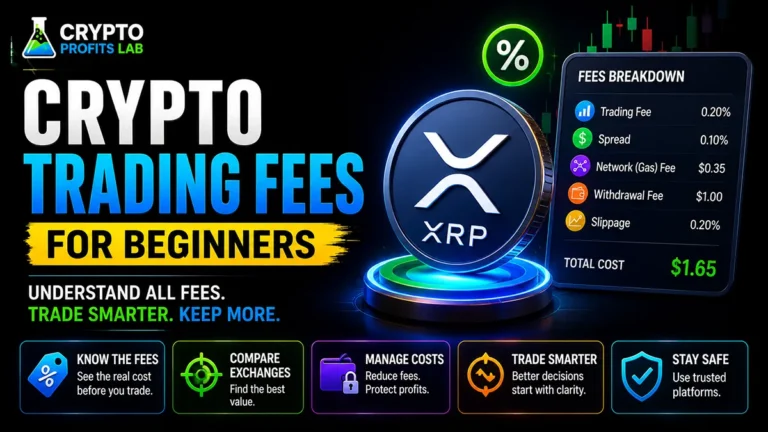
Gas fees are network fees paid to process blockchain transactions. On a DEX, you may pay gas fees when approving a token, swapping tokens, or interacting with a smart contract.
Gas fees do not go to you. They help pay for activity on the blockchain network. Fees can change depending on the network and how busy it is.
Beginners sometimes forget about gas fees. They may try to make a trade but not have enough of the network coin to pay for the transaction.
For example, if your wallet has a token but no ETH on Ethereum, you may not be able to swap or move that token until you add ETH for fees.
Read What Are Crypto Gas Fees? before using a DEX. Gas fees are one of the biggest beginner surprises.
What Is Slippage?
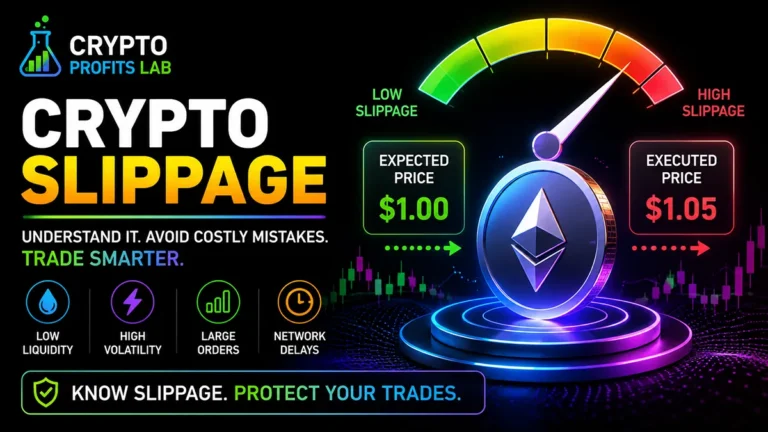
Slippage means the final trade price changes from the price you expected. This can happen because crypto prices move quickly or because the liquidity pool is small.
Here is a simple example. You expect to receive 100 tokens, but by the time your trade confirms, the price changes and you receive 98 tokens. That difference is related to slippage.
Some DEX platforms let you set slippage tolerance. This means the maximum price difference you are willing to accept before the trade fails.
Beginners should be careful with slippage settings. Setting slippage too high can result in a worse trade than expected. Setting it too low can cause trades to fail, especially with smaller tokens.
Slippage is one reason liquidity matters. Learn more in What Is Crypto Liquidity?.
Why Liquidity Pools Matter
Liquidity pools help make many DEX trades possible. Instead of waiting for one specific buyer and one specific seller to match, users trade against a pool of funds.
People who add funds to a liquidity pool are called liquidity providers. They may earn fees from trades, but they also take risks.
For beginners, the key point is this: deeper liquidity usually makes trading smoother. Low liquidity can cause large price changes, high slippage, or failed trades.
A DEX with low liquidity for a token can be dangerous for new users. You may buy easily but struggle to sell later. You may also receive less than expected because the trade moves the price too much.
If a token has very low liquidity, slow down and research carefully.
Benefits of Using a DEX
A DEX can offer several benefits for people who understand how it works.
More wallet control
You usually trade from your own wallet instead of depositing funds into a company account first. This can give users more control over their assets.
Access to more tokens
Some tokens appear on decentralized exchanges before they appear on centralized platforms. This can be useful, but it also increases risk because newer tokens may be unproven.
Open access
Many DEX platforms are open to anyone with a compatible wallet and internet connection. This is part of the broader DeFi idea.
Transparency
DEX transactions happen on public blockchains. This can make activity visible, although it does not remove risk.
DeFi connections
A DEX often connects to other DeFi tools such as lending, borrowing, staking, and yield farming. If you are new to this area, read What Is DeFi?.
Risks of Using a DEX
A DEX also comes with serious risks, especially for beginners.
No simple customer support
If you send funds to the wrong place or approve a bad transaction, there may not be a support team that can reverse it.
Smart contract risk
Smart contracts can have bugs or weaknesses. If the code fails or is attacked, users may lose funds.
Fake tokens
Scammers can create fake tokens with names similar to real projects. Beginners may buy the wrong asset by mistake.
Phishing websites
Fake DEX websites can steal funds through harmful wallet approvals. Always use official links and bookmarks.
High slippage
Low liquidity can create poor trade results. Beginners may receive far less than expected.
Gas fee mistakes
You may pay a gas fee even if a transaction fails. You also need enough network coin to make trades.
Wallet approval risk
Some approvals give smart contracts permission to spend tokens from your wallet. Dangerous approvals can put funds at risk.
A DEX can be useful, but it is not risk-free. Beginners should treat it like an advanced tool, not a casual app.
Common Beginner Mistakes
Mistake 1: Using a fake website
This is one of the most dangerous mistakes. Always confirm you are on the official DEX site before connecting a wallet.
Mistake 2: Trading a fake token
A token name and logo are not enough. Scammers can copy them. Verify the official contract address before trading unfamiliar tokens.
Mistake 3: Ignoring gas fees
A trade may look affordable until you include network fees. Always check the total cost before confirming.
Mistake 4: Setting slippage too high
High slippage settings can lead to bad trade results. Do not increase slippage without understanding why.
Mistake 5: Approving without reading
Wallet pop-ups matter. Do not blindly click approve. Read what permission is being requested.
Mistake 6: Connecting your main wallet everywhere
It may be safer to use a separate wallet for testing decentralized apps. This can limit damage if you make a mistake.
Mistake 7: Buying tokens only because they are new
New tokens can move fast, but they can also crash fast. Learn what a crypto token is before buying assets just because they are trending.
Safety and Risk Checklist
Before using a DEX, go through this checklist:
- Am I on the official website?
- Do I understand what is a DEX and how it works?
- Am I using a wallet I understand?
- Did I choose the correct blockchain network?
- Do I have enough crypto for gas fees?
- Did I verify the token contract address?
- Is there enough liquidity?
- Is the slippage setting reasonable?
- Did I read the wallet approval carefully?
- Am I starting with a small amount?
- Am I avoiding pressure from social media?
- Do I understand that mistakes may not be reversible?
This checklist may feel slow, but slow is good when you are learning. Many crypto losses happen because people rush.
Should Beginners Use a DEX?
Beginners can learn about DEX platforms, but they should not rush into using them with large amounts of money.
If you are brand new to crypto, start with the basics first. Learn what crypto is, how exchanges work, how wallets work, and how scams happen. Then learn what is a DEX and why it matters.
A DEX may make sense when you already understand:
- How to use a wallet
- How to protect a seed phrase
- How gas fees work
- How to verify token addresses
- How to start with small test transactions
- How to avoid suspicious links
A beginner does not need to use every crypto tool right away. It is okay to learn slowly.
Simple Example of a DEX Trade
Imagine you have ETH in your wallet and want to swap a small amount for a stablecoin.
You visit the official DEX website, connect your wallet, choose ETH as the asset you are trading from, and choose the stablecoin as the asset you want to receive. The DEX shows the estimated amount, gas fee, and slippage details.
You review everything carefully. Then your wallet asks you to confirm the transaction. After confirmation, the blockchain processes the swap, and the new token appears in your wallet.
That is the simple version. The details matter, but the basic flow is wallet, token choice, quote, approval, confirmation, and updated balance.
What Is a DEX Final Thoughts
What is a DEX? It is a decentralized exchange that lets people swap crypto directly from their wallets using blockchain-based smart contracts.
A DEX can be useful because it gives users more control, access to more tokens, and a direct connection to DeFi. But it also requires more responsibility. There may be no easy customer support, no simple refund process, and no protection from careless wallet approvals.
For complete beginners, the best path is to learn first and trade later. Understand wallets, networks, gas fees, liquidity, token approvals, and scams before using a DEX with real money.
Crypto Profits Lab keeps crypto education simple because beginners deserve clear explanations without hype. Once you understand the basics, you can make smarter decisions and avoid many of the mistakes that hurt new crypto users.
What Is a DEX FAQ
What is a DEX in crypto?
A DEX is a decentralized exchange that lets users swap cryptocurrency directly from a personal wallet. Instead of creating a normal account and depositing funds into a company-run platform, users connect a wallet and approve blockchain transactions. A DEX can offer more control, but it also requires more responsibility and careful security habits.
Is a DEX safe for beginners?
A DEX can be safe to learn about, but beginners should be careful before using one with real money. The biggest risks include fake websites, fake tokens, smart contract bugs, high slippage, and unsafe wallet approvals. New users should start small, verify official links, and understand wallet safety before trading.
What is the difference between a DEX and a crypto exchange?
A regular crypto exchange is usually run by a company and may hold user funds inside accounts. A DEX is decentralized and lets users trade from their own wallets through smart contracts. Centralized exchanges are usually easier for beginners, while decentralized exchanges offer more control but more personal responsibility.
Do I need a wallet to use a DEX?
Yes, most DEX platforms require a compatible crypto wallet. The wallet connects to the decentralized exchange and lets you approve transactions. You also need the correct blockchain network and enough of the network’s coin to pay gas fees. Beginners should learn wallet basics before connecting to any decentralized app.
What are gas fees on a DEX?
Gas fees are network fees paid to process blockchain transactions. On a DEX, you may pay gas fees when approving a token, making a swap, or interacting with a smart contract. Fees can change based on the blockchain and network traffic. Beginners should check gas costs before confirming a trade.
Can I buy crypto with dollars on a DEX?
Most DEX platforms are mainly used for crypto-to-crypto swaps, not direct dollar purchases. Some decentralized apps may connect to payment services, but beginners usually buy their first crypto through a centralized exchange. After that, they can move crypto to a wallet and learn how decentralized trading works.
What is slippage on a DEX?
Slippage is the difference between the expected trade price and the final completed price. It can happen when prices move quickly or when a token has low liquidity. A DEX may let users set slippage tolerance. Beginners should avoid high slippage settings unless they clearly understand the risk.
Should I use a DEX or centralized exchange first?
Most beginners should learn centralized exchanges first because they are usually simpler, easier to navigate, and more familiar. A DEX can be useful later after you understand wallets, gas fees, token addresses, and crypto scams. Learning slowly is safer than rushing into decentralized tools without the basics.