What is Crypto Lending? A Beginner’s Guide
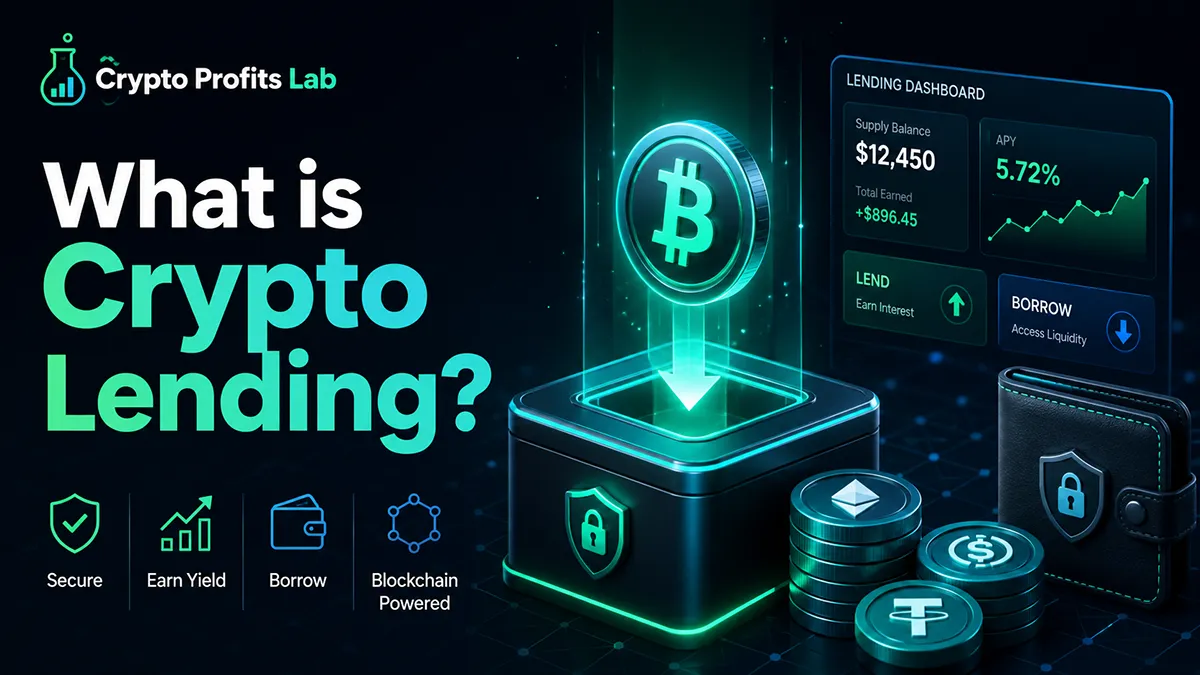
What is crypto lending? Crypto lending is a way to lend out cryptocurrency or supply crypto assets to a platform in exchange for potential interest or rewards. Instead of simply holding crypto in a wallet, users may deposit assets into a lending platform where borrowers can access liquidity.
For beginners, crypto lending can sound like a simple way to earn passive income. However, it is not risk-free. Crypto lending can involve smart contracts, collateral, liquidations, platform risk, token volatility, and sometimes centralized company risk.
In this beginner’s guide, we’ll explain What is crypto lending, how it works, how it compares to staking and yield farming, what rewards may come from, and what risks beginners should understand before lending any crypto.
What is Crypto Lending?
What is crypto lending in simple terms? Crypto lending is the process of supplying crypto assets to a platform or protocol so other users can borrow them. In return, the lender may earn interest or rewards.
A beginner-friendly way to think about it is this: you provide crypto to a lending market, and borrowers pay to access that liquidity. The platform or protocol helps manage deposits, borrowing, collateral, interest rates, and repayments.
Crypto lending is often part of decentralized finance, also known as DeFi. If you are new to the subject, it helps to first understand what cryptocurrency is and how blockchain technology works.
What is crypto lending is a common beginner question because it sounds similar to traditional lending, but the mechanics can be very different. In crypto, lending may happen through decentralized smart contracts, centralized platforms, or exchange-based services.
Why Is Crypto Lending Popular?
Crypto lending became popular because many crypto holders wanted their assets to do more than sit in a wallet. Instead of only hoping a coin increases in price, lending may allow users to earn interest while still maintaining exposure to crypto.
Some people are attracted to crypto lending because:
- It may generate passive income.
- It can allow users to earn interest on idle assets.
- It supports borrowing and lending in DeFi.
- It may offer flexible access to crypto markets.
- It can be used by traders, investors, and DeFi users.
- It gives crypto holders another strategy beyond buying and holding.
However, popularity does not mean safety. Crypto lending has real risks, and some platforms have failed in the past. Beginners should never assume that earning interest on crypto is the same as earning interest in a bank savings account.
Understanding What is crypto lending can help beginners avoid treating every lending opportunity as safe income.
How Does Crypto Lending Work?
Crypto lending works by connecting people who supply assets with people who want to borrow assets. The exact process depends on whether the platform is centralized or decentralized.
In a basic crypto lending setup:
- A user deposits crypto into a lending platform or protocol.
- The platform makes that liquidity available to borrowers.
- Borrowers usually provide collateral.
- Borrowers pay interest to access the funds.
- Lenders may earn a portion of that interest.
- The user can withdraw funds depending on the platform rules and available liquidity.
On a DeFi protocol, this process is usually handled by smart contracts. A smart contract is code that runs on a blockchain and automatically manages activity based on programmed rules.
Many DeFi lending protocols run on Ethereum or Ethereum-compatible networks. Our beginner guide to Ethereum can help you understand why Ethereum is important for DeFi.
For a deeper explanation of decentralized lending, the official Aave documentation explains how suppliers provide liquidity to earn interest while borrowers access liquidity by providing collateral.
What Is DeFi Lending?
DeFi lending is crypto lending that happens through decentralized finance protocols. Instead of a traditional bank or centralized company managing the process, DeFi lending uses smart contracts.
A DeFi lending protocol may allow users to supply assets like ETH, stablecoins, or other supported tokens. Other users can then borrow assets by providing collateral.
For beginners, the main difference is control. In DeFi, users often connect a crypto wallet directly to a protocol. That gives users more control, but it also gives them more responsibility.
DeFi lending can be powerful, but it can also be risky. You must understand wallets, token approvals, smart contracts, gas fees, collateral, and liquidation risk before using these platforms.
If you are new to DeFi, our guides on Aave and Uniswap can help you understand common decentralized finance tools.
What Is Centralized Crypto Lending?
Centralized crypto lending happens through a company, exchange, or platform that manages the lending process for users. In this model, users often deposit crypto into an account, and the company handles lending behind the scenes.
Centralized platforms may feel easier for beginners because they can look similar to normal financial accounts. However, they introduce company risk. If the company mismanages funds, freezes withdrawals, gets hacked, or becomes insolvent, users may lose access to their crypto.
Centralized lending can include:
- Exchange-based earn products
- Custodial lending platforms
- Crypto interest accounts
- Borrowing services backed by crypto collateral
The main risk is that you are trusting a company. This is different from holding your own crypto in a crypto wallet, where you control the private keys.
Beginners should be very cautious with any platform that promises high returns without clearly explaining how those returns are generated.
Where Does Crypto Lending Interest Come From?
Crypto lending interest usually comes from borrowers. Borrowers pay to access liquidity, and lenders may earn a share of that interest.
In some cases, rewards may also come from:
- Borrower interest payments
- Protocol incentives
- Token rewards
- Platform promotions
- Liquidity incentives
- Variable lending rates
The important thing to remember is that yield does not appear from nowhere. If a platform offers very high returns, beginners should ask where the money is coming from.
When researching What is crypto lending, always look for the source of the yield. If the source of the interest is unclear, that is a warning sign.
What Is Collateral in Crypto Lending?
Collateral is an asset a borrower provides to secure a loan. In crypto lending, borrowers often need to deposit more value in collateral than they borrow. This is called overcollateralization.
For example, a borrower might deposit crypto worth more than the amount they want to borrow. If the collateral value falls too much, the protocol or platform may liquidate the position to protect lenders.
Collateral is important because crypto markets are volatile. Prices can move quickly, and lenders need some form of protection if borrowers cannot repay.
This is one reason crypto lending can be complicated. Borrowers must monitor collateral levels, and lenders must understand that collateral does not remove all risk.
What Is Liquidation?
Liquidation happens when a borrower’s collateral falls below the required level. If the value of the collateral drops too much, the platform or protocol may sell some or all of the collateral to repay the loan.
Liquidation protects the lending market, but it can be painful for borrowers. A sudden market crash can trigger liquidations quickly.
For example:
- A borrower deposits crypto as collateral.
- The borrower takes out a loan.
- The collateral asset falls in price.
- The loan becomes undercollateralized.
- The protocol liquidates the collateral.
- The borrower loses part or all of the collateral position.
Even if you are only lending and not borrowing, liquidation risk matters because it shows how fast crypto lending markets can change during volatility.
Our guide to crypto volatility can help beginners understand why price swings are such a major part of crypto lending risk.
Crypto Lending vs Crypto Staking
Crypto lending and crypto staking are often grouped under passive income, but they are not the same thing.
Crypto staking usually involves locking or delegating coins to help support a proof-of-stake blockchain. Crypto lending involves supplying assets so borrowers can access liquidity.
Here is a simple comparison:
| Feature | Crypto Lending | Crypto Staking |
|---|---|---|
| Main Purpose | Supply assets for borrowers | Help support a blockchain network |
| Reward Source | Borrower interest or platform rewards | Network staking rewards |
| Common Risk | Platform risk, smart contract risk, borrower/liquidity risk | Slashing, lockups, validator risk, volatility |
| Beginner Difficulty | Moderate to advanced | Usually easier |
| Common Platforms | Lending protocols, exchanges, DeFi apps | Proof-of-stake networks and validators |
| Passive Income Type | Interest-based | Network reward-based |
If you are new to passive income, start with our guide on crypto staking before trying more advanced lending strategies.
Crypto Lending vs Crypto Yield Farming
Crypto lending and crypto yield farming can overlap, but they are not always the same.
Crypto lending usually focuses on supplying assets to a lending market and earning interest. Crypto yield farming often involves moving assets across DeFi protocols to earn rewards, token incentives, or higher yields.
Here is a beginner-friendly comparison:
| Feature | Crypto Lending | Crypto Yield Farming |
|---|---|---|
| Main Goal | Earn interest by supplying assets | Earn rewards through DeFi strategies |
| Complexity | Moderate | Often higher |
| Common Assets | Stablecoins, ETH, major tokens | LP tokens, reward tokens, DeFi assets |
| Main Risk | Platform, smart contract, liquidity, collateral risk | Impermanent loss, smart contract risk, reward token risk |
| Beginner Summary | Lending crypto for interest | Actively seeking DeFi rewards |
Our guide to crypto yield farming explains how yield farming works and why beginners should be cautious.
What Types of Crypto Can Be Lent?
The assets available for lending depend on the platform or protocol. Some platforms support major cryptocurrencies, stablecoins, or Ethereum-based tokens.
Common lending assets may include:
- Stablecoins
- ETH
- Wrapped assets
- Major DeFi tokens
- Select exchange-supported coins
- Tokens supported by lending protocols
Stablecoins are often popular in lending markets because their prices are designed to stay near a target value, usually the U.S. dollar. However, stablecoins still carry risk. A stablecoin can lose its peg, face regulatory issues, or depend on reserves and issuer management.
Beginners should not assume any crypto lending asset is risk-free.
Why Do People Borrow Crypto?
People borrow crypto for different reasons. Some borrowers want liquidity without selling their existing crypto. Others use borrowed funds for trading, DeFi strategies, or short-term opportunities.
Common reasons people borrow crypto include:
- Accessing liquidity without selling assets
- Using collateral to borrow stablecoins
- Trading or hedging
- Participating in DeFi strategies
- Managing tax or portfolio decisions
- Avoiding the need to sell long-term holdings
Borrowing crypto is risky, especially for beginners. If collateral drops in value, a borrower may be liquidated. Borrowing should not be treated casually.
This article focuses mainly on lending from a beginner passive income perspective, but it is still important to understand what borrowers are doing because borrower activity affects lending markets.
Why Do People Lend Crypto?
People lend crypto because they want to earn interest or rewards on assets they already own. Some users view lending as a way to make idle crypto more productive.
Common reasons people lend crypto include:
- Earning interest
- Putting idle assets to work
- Participating in DeFi lending markets
- Supporting liquidity for borrowers
- Diversifying passive income strategies
- Earning yield on stablecoins or major assets
However, crypto lending should not be viewed as guaranteed income. The value of rewards can change, platforms can fail, and crypto prices can fall.
The best way to answer What is crypto lending is to see it as a possible income strategy with meaningful risk, not a guaranteed return.
What Are the Biggest Crypto Lending Risks?
Crypto lending has several major risks. Beginners should understand these before depositing any funds.
Important risks include:
- Platform failure
- Smart contract bugs
- Hacks and exploits
- Liquidity shortages
- Withdrawal delays
- Token price crashes
- Stablecoin depegging
- Collateral liquidation events
- Regulatory changes
- Fake lending platforms
- Wallet approval risk
- Poor risk management by centralized companies
The biggest mistake is assuming crypto lending is safe just because it pays interest. In reality, higher yield often comes with higher risk.
Before using any lending platform, review crypto safety tips and learn how to avoid crypto scams.
What Is Smart Contract Risk?
Smart contract risk is the risk that the code running a DeFi protocol has a bug, weakness, or vulnerability. Since DeFi lending depends on smart contracts, this is one of the most important risks to understand.
If a smart contract is exploited, users may lose funds. Even audited protocols can still carry risk.
Smart contract risks may include:
- Bugs in the lending protocol
- Oracle failures
- Exploits by attackers
- Poorly designed collateral rules
- Unsafe token integrations
- Admin key risk
- Complex interactions with other protocols
Beginners should be cautious with new DeFi platforms that offer unusually high returns. A high yield may be compensation for very high risk.
What Is Platform Risk?
Platform risk is the risk that a lending platform fails, freezes withdrawals, changes terms, gets hacked, or mismanages user assets.
This risk is especially important with centralized crypto lending. When you deposit crypto into a centralized platform, you may be giving up direct control of your assets.
Platform risk can include:
- Insolvency
- Poor lending practices
- Withdrawal freezes
- Custody failures
- Lack of transparency
- Security breaches
- Regulatory action
- Mismanagement of user funds
This is why beginners should be careful with any service that asks them to deposit crypto in exchange for yield.
Is Crypto Lending Passive Income?
Crypto lending is often described as passive income, but that description can be misleading. Some lending strategies may feel passive after setup, but they still require research and monitoring.
Users may need to watch:
- Interest rates
- Platform health
- Withdrawal rules
- Token prices
- Stablecoin risk
- Smart contract updates
- Market conditions
- Regulation
- Wallet approvals
- Scam warnings
So, while crypto lending can generate interest, it is not the same as risk-free passive income. It is better to think of it as an income strategy that requires ongoing awareness.
What is crypto lending is an important question because beginners need to understand both the reward potential and the responsibility that comes with it.
How to Start Learning Crypto Lending Safely
Beginners should learn slowly before depositing funds into any lending platform. The goal is to understand how lending works before taking real risk.
A safer learning path may look like this:
- Learn cryptocurrency basics.
- Learn how crypto wallets work.
- Learn about Ethereum and DeFi.
- Study staking before lending.
- Learn how Aave works.
- Understand collateral and liquidation.
- Understand smart contract risk.
- Understand platform risk.
- Research stablecoin risks.
- Use only small amounts if you eventually test a platform.
This process may feel slower, but it can help beginners avoid costly mistakes.
What Tools Do You Need for Crypto Lending?
To use crypto lending, you usually need crypto assets, a platform or protocol, and a safe way to access your funds.
Depending on the type of lending, you may need:
- A crypto wallet
- Supported crypto assets
- Funds for transaction fees
- A trusted lending protocol
- A verified exchange account
- A secure internet connection
- A plan for managing risk
- A way to track deposits and rewards
If you use DeFi lending, wallet safety is especially important. You should understand crypto seed phrases and crypto 2FA before connecting wallets to financial apps.
Crypto Lending on Ethereum Layer 2 Networks
Some crypto lending activity happens on Ethereum Layer 2 networks. Layer 2 networks are designed to make Ethereum activity faster and often cheaper.
Projects like Optimism and Arbitrum can reduce fees for certain DeFi activities, depending on the apps and assets involved.
Lower fees can make DeFi easier to test, but Layer 2 networks still come with risk. Users must understand bridges, networks, wallet settings, and transaction approvals.
Never assume that lower fees mean lower risk.
How Market Conditions Affect Crypto Lending
Market conditions can strongly affect crypto lending. During bull markets, demand for borrowing may rise, interest rates may change, and users may take more risk. During bear markets, token prices can fall quickly, collateral can be liquidated, and platforms may face stress.
This is why beginners should understand the difference between a bull vs bear market.
Lending can look attractive when markets are calm, but risks can appear quickly during volatility. Stablecoins, collateral values, liquidity, and borrower behavior can all change during market stress.
Should Beginners Try Crypto Lending?
Most complete beginners should not start with crypto lending right away. It is better to first learn how to buy crypto, store it safely, understand volatility, and avoid scams.
Crypto lending may be better suited for users who already understand:
- Crypto wallets
- DeFi platforms
- Token transfers
- Stablecoins
- Smart contracts
- Collateral
- Liquidation
- Platform risk
- Wallet approvals
- Scam prevention
Beginners who are still learning how to buy crypto should first read how to buy crypto for beginners and the best crypto exchange for beginners.
How to Protect Yourself When Lending Crypto
Safety is extremely important in crypto lending. Whether you use a centralized platform or a DeFi protocol, you need to understand what can go wrong.
Important safety tips include:
- Use official links only.
- Avoid random links from social media.
- Never share your seed phrase.
- Start with small amounts.
- Research the platform carefully.
- Understand withdrawal rules.
- Avoid unknown platforms with extreme yields.
- Check whether a DeFi protocol has audits and a real community.
- Use strong account security.
- Review token approvals.
- Do not deposit money you cannot afford to lose.
For larger holdings, many users prefer a hardware wallet or another cold storage crypto method. However, even hardware wallets cannot protect you from every bad transaction or risky protocol.
Common Beginner Mistakes With Crypto Lending
Beginners often make the same mistakes when learning about crypto lending. Avoiding these mistakes can help reduce risk.
Common mistakes include:
- Lending crypto without understanding the platform
- Chasing the highest interest rate
- Ignoring smart contract risk
- Trusting unknown centralized platforms
- Forgetting about withdrawal restrictions
- Not understanding collateral and liquidation
- Assuming stablecoins are risk-free
- Using fake websites
- Approving unsafe wallet permissions
- Investing more than they can afford to lose
The best way to answer What is crypto lending is not just to define it, but to understand the risks behind the rewards.
Should You Invest in Crypto Lending Tokens?
Some lending platforms have their own tokens. These tokens may be used for governance, rewards, incentives, or protocol participation.
However, buying a lending protocol token is not the same as safely earning lending interest. A token can fall in price even if the protocol is popular.
Before buying any lending-related token, ask:
- What does the token actually do?
- Is the protocol widely used?
- Where does the yield come from?
- Are rewards sustainable?
- How much competition does the protocol have?
- Is the token supply inflationary?
- What happens during a bear market?
- What risks affect the protocol?
Beginners should also understand crypto market cap before comparing lending tokens with other crypto assets.
Final Thoughts: What is Crypto Lending?
So, What is crypto lending? Crypto lending is a way to supply crypto assets to a platform or protocol so borrowers can access liquidity and lenders may earn interest or rewards.
Crypto lending can be useful because it gives holders another way to put assets to work. It is part of the broader passive income and DeFi ecosystem, along with staking and yield farming.
However, crypto lending is not risk-free. Platform failures, smart contract bugs, token volatility, stablecoin risks, liquidity problems, withdrawal freezes, scams, and market crashes can all lead to losses.
For beginners, crypto lending should be studied carefully before it is used. Start with cryptocurrency basics, wallets, Ethereum, staking, DeFi safety, and crypto scams. Once you understand those foundations, you will be in a better position to decide whether lending crypto fits your risk tolerance.
What is crypto lending is one of the most important passive income questions in crypto, but the answer is not just about earning interest. It is about understanding how lending markets work and how to protect yourself before chasing yield.
Crypto Lending FAQ
What is crypto lending?
Crypto lending is the process of supplying cryptocurrency to a platform or protocol so borrowers can access liquidity. In return, lenders may earn interest or rewards.
Is crypto lending passive income?
Crypto lending can generate interest, but it is not completely passive. Users still need to understand platform risk, smart contract risk, withdrawal rules, token volatility, and scam prevention.
Is crypto lending the same as staking?
No. Staking usually helps support a proof-of-stake blockchain, while crypto lending supplies assets to borrowers through a platform or protocol. Lending and staking have different risks and reward sources.
Is crypto lending the same as yield farming?
No. Crypto lending focuses on supplying assets to earn interest. Yield farming often involves more active DeFi strategies, liquidity pools, token incentives, and higher complexity.
Can you lose money lending crypto?
Yes. You can lose money through platform failure, smart contract exploits, token price crashes, stablecoin depegging, withdrawal freezes, scams, and poor risk management.
What is collateral in crypto lending?
Collateral is an asset a borrower provides to secure a loan. In many crypto lending systems, borrowers must provide more collateral value than the amount they borrow.
Is crypto lending safe for beginners?
Crypto lending is usually not the best first step for complete beginners. It is better to first understand wallets, seed phrases, volatility, staking, DeFi basics, and crypto scams.
Where do crypto lending rewards come from?
Crypto lending rewards usually come from borrower interest, platform rewards, protocol incentives, or token-based rewards. Beginners should always understand the source of the yield before depositing funds.
What should beginners learn before crypto lending?
Beginners should learn crypto basics, wallet safety, Ethereum, DeFi, staking, stablecoins, smart contract risk, collateral, liquidation, platform risk, and scam prevention before lending crypto.