What Is VeChain (VET)? A Beginner’s Guide
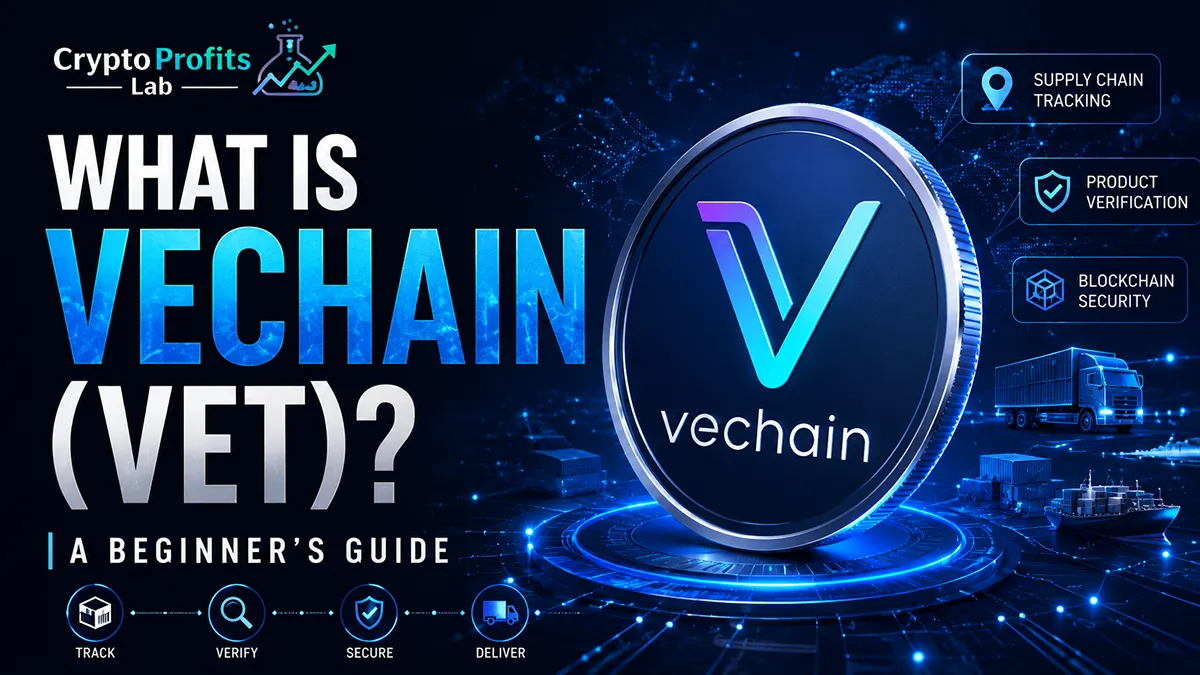
What is VeChain and why does it matter in crypto? VeChain is a blockchain platform designed to help businesses track products, verify data, improve supply chains, and use blockchain technology in real-world industries.
For beginners, VeChain can feel different from coins like Bitcoin, Dogecoin, or Litecoin. Those cryptocurrencies are mostly explained as digital money or payment coins. VeChain is more focused on business use cases, supply chain tracking, product verification, sustainability data, and enterprise blockchain applications.
This guide explains What is VeChain in plain English. You will learn how VeChain works, what VET is used for, what VTHO does, why supply chain tracking matters, how VeChain compares with other crypto projects, and what beginners should know before buying or storing VET.
If you are still learning the basics of digital assets, start with this beginner guide to what is cryptocurrency before going deeper into VeChain.
What is VeChain?
What is VeChain? VeChain is a blockchain platform built to help companies, developers, and organizations use blockchain for real-world data, product tracking, and digital asset applications.
A blockchain is a shared digital record that stores transactions and data across a network. Instead of relying on one private database, blockchain systems can create transparent records that are harder to change after they are recorded.
VeChain is especially known for supply chain use cases. A company may want to track where a product came from, how it moved, whether it stayed at the right temperature, or whether it is authentic. VeChain is designed to help connect physical products with digital blockchain records.
In simple terms, What is VeChain? It is a blockchain ecosystem focused on real-world business applications, especially supply chain tracking, product verification, data transparency, and enterprise adoption.
To understand the foundation behind VeChain, read this beginner guide to blockchain technology.
VeChain vs VET: What Is the Difference?
A common beginner mistake is thinking VeChain and VET are exactly the same thing. They are closely connected, but they do not mean the same thing.
VeChain is the blockchain platform. VET is the main cryptocurrency token associated with the VeChain ecosystem.
VeChain also uses another token called VTHO, which stands for VeThor Token. VTHO is used to pay transaction costs on the network.
| Term | Meaning | Beginner Explanation |
|---|---|---|
| VeChain | Blockchain platform | The ecosystem for enterprise apps, tracking, and data |
| VET | Main token | The asset used for value transfer and network participation |
| VTHO | Fee token | The token used to pay transaction costs |
| VeChainThor | Blockchain network | The public blockchain that powers VeChain activity |
What is VeChain from a beginner’s point of view? VeChain is the platform, VET is the main token, and VTHO is used for transaction fees.
Who Created VeChain?
VeChain was founded by Sunny Lu, a former executive with experience in technology and enterprise systems. The project started with a focus on supply chain management and later developed into a broader blockchain platform for business applications.
Many crypto projects begin by targeting individual investors or developers. VeChain took a different route by focusing heavily on enterprise use cases. Its goal was to help businesses use blockchain for practical problems such as tracking goods, proving authenticity, recording data, and improving transparency.
This business-focused approach is one reason What is VeChain remains a popular beginner question. VeChain is not only about trading a token. It is also about how blockchain can connect to real-world products and business processes.
For comparison, you may also want to read what is Ethereum, because Ethereum is a broad smart contract platform, while VeChain is more focused on enterprise and supply chain use cases.
How Does VeChain Work?
What is VeChain from a technical perspective? VeChain uses a public blockchain called VeChainThor. This blockchain can record transactions, support smart contracts, and help businesses create digital records connected to real-world activity.
A business might use VeChain with technologies such as QR codes, NFC chips, RFID tags, sensors, or other tracking tools. These tools can connect physical products to digital records. Once data is recorded on the blockchain, it can help users verify product history or supply chain information.
VeChain works through several important parts:
- VET is the main token in the ecosystem.
- VTHO is used to pay transaction fees.
- VeChainThor is the blockchain network.
- Smart contracts can support business applications.
- Tracking tools can connect physical products to digital records.
- Enterprises can use the network for data transparency and verification.
For beginners, the key idea is simple: VeChain tries to make blockchain useful for businesses by connecting physical products, digital records, and transparent data.
What Is VET Used For?
VET is the main cryptocurrency token in the VeChain ecosystem. It has several important roles.
First, VET can be held or transferred as a digital asset. Like other cryptocurrencies, it can be bought, sold, stored, and moved between compatible wallets.
Second, VET helps support the VeChain ecosystem. Holding VET can generate VTHO, which is used to pay for transaction costs on the network.
Third, VET is connected to value transfer within VeChain applications. As the ecosystem grows, VET can be part of the network’s economic design.
Fourth, VET is traded on crypto exchanges. Many beginners first encounter VeChain because they see VET listed on an exchange or price chart.
What is VeChain without VET? VeChain is the blockchain platform, but VET is the primary token connected to value and participation in the ecosystem.
What Is VTHO?
VTHO, or VeThor Token, is the token used to pay transaction fees on VeChainThor.
This two-token model is one of the features that makes VeChain different from many beginner-friendly crypto projects. Instead of using only one token for both value and gas fees, VeChain separates the main value token from the fee token.
The basic idea is:
- VET is the main ecosystem token.
- VTHO is used to pay for transactions.
- Holding VET can generate VTHO over time.
- This structure may help businesses estimate transaction costs more clearly.
For beginners, VTHO is important because it helps explain why VeChain does not work exactly like Bitcoin, Ethereum, or Litecoin.
If you want to understand transaction costs more broadly, read this beginner guide to crypto gas fees.
What Makes VeChain Different?
VeChain is different because it focuses on business adoption and real-world data more than many crypto projects.
Some cryptocurrencies are designed mainly for payments. Others focus on smart contracts, meme culture, DeFi, NFTs, or gaming. VeChain is best known for supply chain tracking, authenticity verification, and enterprise blockchain tools.
VeChain is often discussed for:
- Supply chain tracking
- Product authenticity
- Business data verification
- Sustainability reporting
- Enterprise blockchain adoption
- Two-token model with VET and VTHO
- Smart contract support
- Real-world product connections
This does not mean VeChain is risk-free or guaranteed to succeed. It simply means VeChain has a different focus than many crypto networks.
Why Supply Chain Tracking Matters
Supply chains can be complicated. A product may move through manufacturers, shipping companies, warehouses, distributors, retailers, and customers before it reaches the final buyer.
Problems can happen along the way. Products can be counterfeited, mislabeled, delayed, damaged, or handled incorrectly. Companies may also struggle to prove where materials came from or whether products meet certain standards.
Blockchain-based tracking may help by creating records that are easier to verify. When combined with physical tracking tools, a blockchain network can help show product history, movement, and related data.
What is VeChain trying to solve in supply chains? It aims to make product information more transparent, traceable, and trustworthy.
Supply chain use cases may include:
- Food safety
- Luxury goods authentication
- Pharmaceutical tracking
- Automotive parts
- Sustainability records
- Carbon data
- Retail product verification
- Logistics and shipping
These use cases are why VeChain is often described as a real-world blockchain project.
VeChain and Smart Contracts
VeChain supports smart contracts, which are blockchain programs that can automatically follow rules written in code.
Smart contracts can help businesses create applications that record data, manage assets, track products, or automate certain processes.
Examples may include:
- Verifying a product scan
- Recording shipment data
- Triggering a payment condition
- Tracking sustainability metrics
- Managing digital product certificates
- Supporting tokenized assets
If you are new to smart contracts, read what is Ethereum because Ethereum helped popularize smart contract platforms.
What is VeChain in this context? It is a smart contract-capable blockchain with a stronger focus on enterprise and supply chain applications.
What Can VeChain Be Used For?
What is VeChain used for in the real crypto world? VeChain can support several business and blockchain use cases.
Product Authentication
VeChain can help companies verify whether a product is authentic. This can be useful for luxury goods, collectibles, retail products, documents, or high-value items.
A customer may scan a code or tag to check product history. The blockchain record can help confirm whether the product matches the information provided by the issuer.
Supply Chain Management
Supply chain management is one of VeChain’s most recognized use cases. Companies may use VeChain to record product movement, shipping events, storage conditions, or supplier information.
This can help improve transparency across complicated business systems.
Food Safety
Food products often move through many steps before reaching consumers. VeChain-style tracking may help record where food came from, when it was shipped, and whether it was handled properly.
This can matter during recalls, audits, or quality checks.
Sustainability Tracking
Many companies want to track carbon data, recycling activity, material sources, or environmental claims. Blockchain records can help make sustainability data easier to verify.
This area is still developing, but it is one reason enterprise blockchain remains important.
Digital Product Records
VeChain can support digital records connected to real products. These records may include ownership history, maintenance logs, certificates, or product details.
This can be useful for industries where authenticity and traceability matter.
VeChain vs Bitcoin
What is VeChain compared with Bitcoin? VeChain and Bitcoin are very different crypto projects.
Bitcoin is mainly focused on decentralized digital money and long-term value storage. VeChain is focused on enterprise blockchain applications, supply chain tracking, and real-world data verification.
| Feature | Bitcoin | VeChain |
|---|---|---|
| Native asset | BTC | VET |
| Main purpose | Digital money and store of value | Enterprise blockchain and supply chain tools |
| Core focus | Scarcity and value transfer | Tracking, verification, and business data |
| Fee model | BTC transaction fees | VTHO transaction fees |
| Beginner view | Digital gold | Business-focused blockchain platform |
Bitcoin is simpler by design. VeChain is more specialized because it targets business and enterprise use cases.
For a deeper beginner explanation, read what is Bitcoin.
VeChain vs Ethereum
VeChain and Ethereum both support smart contracts, but they have different goals.
Ethereum is a broad smart contract ecosystem used for DeFi, NFTs, stablecoins, tokens, Layer 2 networks, and decentralized apps. VeChain is more focused on enterprise use cases, product tracking, and supply chain data.
| Feature | VeChain | Ethereum |
|---|---|---|
| Main asset | VET | ETH |
| Fee token | VTHO | ETH |
| Main focus | Supply chain and enterprise apps | Broad smart contract ecosystem |
| Common uses | Tracking, authentication, business records | DeFi, NFTs, tokens, apps |
| Beginner challenge | Understanding VET and VTHO | Understanding gas fees and apps |
What is VeChain in this comparison? It is a business-focused blockchain that uses a two-token model, while Ethereum is a larger general-purpose smart contract platform.
VeChain vs Chainlink
VeChain and Chainlink are both connected to real-world data, but they solve different problems.
Chainlink is decentralized oracle infrastructure. It helps smart contracts access outside data such as prices, reserves, randomness, and cross-chain information. VeChain focuses more on recording and verifying product data, supply chain events, and business information.
| Feature | VeChain | Chainlink |
|---|---|---|
| Native token | VET | LINK |
| Main role | Enterprise blockchain platform | Oracle network |
| Main focus | Supply chain and product data | External data for smart contracts |
| Common use | Tracking and verification | Price feeds, automation, cross-chain data |
For more context, read what is Chainlink.
VeChain vs Hedera
VeChain and Hedera are both often discussed in connection with enterprise use cases, but they use different designs.
Hedera is a public distributed ledger that uses hashgraph technology. VeChain is a blockchain platform focused heavily on supply chain and product data.
| Feature | VeChain | Hedera |
|---|---|---|
| Native asset | VET | HBAR |
| Technology | Blockchain | Hashgraph-based distributed ledger |
| Main focus | Supply chain and enterprise tracking | Fast ledger services and enterprise apps |
| Fee model | VTHO | HBAR |
| Beginner focus | Product data and VET/VTHO | Hashgraph and HBAR |
If you want to compare Hedera separately, read what is Hedera.
VeChain vs Solana
VeChain and Solana serve different roles in crypto.
Solana is a high-performance blockchain known for fast apps, low fees, DeFi, NFTs, meme coins, and payments. VeChain is more focused on enterprise adoption, supply chain records, and product verification.
| Feature | VeChain | Solana |
|---|---|---|
| Native asset | VET | SOL |
| Main focus | Enterprise and supply chain data | Fast apps and low fees |
| Common uses | Product tracking, authenticity, business records | DeFi, NFTs, payments, games |
| Beginner concern | Understanding VET and VTHO | Wallet risk and speculative tokens |
For more context, read what is Solana.
Is VeChain Safe?
VeChain is a known crypto project, but using or buying VET still requires caution. The biggest beginner risks usually come from scams, price volatility, fake websites, bad wallet habits, exchange problems, and misunderstanding token utility.
Common VeChain risks include:
- Sending VET to the wrong wallet address
- Losing your seed phrase
- Using fake wallet apps or fake websites
- Keeping too much crypto on an exchange
- Buying during hype without research
- Confusing business use cases with guaranteed returns
- Not understanding the difference between VET and VTHO
A good beginner rule is to move slowly. Test small transactions first. Use trusted wallets and exchanges. Never share your seed phrase. Double-check wallet addresses before sending VET.
For more protection, review crypto safety tips, crypto scams to avoid, crypto 2FA, and crypto seed phrase.
How to Store VeChain
To hold VET, you need a crypto wallet that supports VeChain. A wallet does not physically store coins. Instead, it stores the private keys or recovery information that let you access your crypto on the blockchain.
There are two main wallet types:
- Hot wallets are connected to the internet and are convenient for regular use.
- Cold wallets are offline hardware wallets and are usually better for long-term storage.
Hot wallets can be useful for smaller VET balances or regular transfers. Cold wallets are usually safer for larger long-term balances because they help keep private keys offline.
If you are new to wallets, start with this guide to crypto wallets. Then compare hot wallets vs cold wallets and learn why a hardware wallet may be worth considering.
How to Buy VeChain
What is VeChain buying like for beginners? Most people buy VET through a crypto exchange. An exchange lets you create an account, deposit money, and purchase VET.
A simple beginner process looks like this:
- Choose a reputable crypto exchange.
- Create your account.
- Complete identity verification if required.
- Turn on two-factor authentication.
- Deposit funds using an approved payment method.
- Search for VET or VeChain.
- Buy a small amount first.
- Decide whether to keep VET on the exchange or move it to your own wallet.
Before withdrawing VET, pay close attention to network support and wallet compatibility. Crypto transfers are usually irreversible, and sending funds incorrectly can cause permanent loss.
For step-by-step help, read how to buy crypto for beginners. If you are still choosing a platform, review best crypto exchange for beginners and centralized vs decentralized exchanges.
VeChain and Market Volatility
VeChain may focus on real-world business use cases, but VET is still a volatile crypto asset. Its price can rise or fall quickly based on market sentiment, Bitcoin trends, enterprise adoption news, regulation, liquidity, exchange activity, and investor behavior.
Beginners should not assume VET is safe just because VeChain is tied to practical use cases. Useful technology does not remove market risk.
Before buying VET, consider:
- Your risk tolerance
- Your investment timeframe
- Your storage plan
- Your understanding of wallet security
- Your ability to handle price drops
- Whether you are buying for learning, trading, or long-term holding
For more context, read crypto volatility, market cap in crypto, and bull vs bear market crypto.
If you prefer a slower buying strategy, this guide to dollar cost averaging crypto may also help.
Pros and Cons of VeChain
What is VeChain’s biggest strength? Its biggest strength is its focus on practical business problems, especially supply chain tracking and product verification.
What is VeChain’s biggest challenge? Its biggest challenge is adoption. Enterprise blockchain success depends on real users, business partnerships, data quality, regulatory acceptance, and long-term demand.
| Pros | Cons |
|---|---|
| Focuses on real-world business use cases | VET price can be volatile |
| Known for supply chain tracking | Enterprise adoption is not guaranteed |
| Uses a two-token model | VET and VTHO can confuse beginners |
| Supports smart contracts | Competes with many blockchain platforms |
| Helps connect products to digital records | Wallet mistakes can still be costly |
VeChain can be useful to learn about, but it is not risk-free. Beginners should understand both the technology and the investment risks before buying VET.
Beginner Checklist Before Using VeChain
Before buying VET or using VeChain-related tools, go through this checklist:
- Understand the difference between VeChain, VET, and VTHO.
- Learn how crypto wallets work.
- Use a reputable crypto exchange.
- Turn on 2FA for exchange accounts.
- Never share your seed phrase.
- Test small transactions first.
- Double-check wallet addresses before sending VET.
- Use trusted wallet apps and official links.
- Avoid fake giveaways and fake support accounts.
- Consider a hardware wallet for larger long-term balances.
This checklist may seem simple, but it can prevent many beginner mistakes.
Why VeChain Matters
VeChain matters because it shows how blockchain can be used beyond simple trading or digital payments. Its main focus is practical business data, product tracking, authenticity, and supply chain transparency.
Many industries need better ways to verify information. If a company can prove where a product came from, how it moved, and whether it matches official records, that can create value beyond speculation.
This does not mean VeChain will automatically dominate enterprise blockchain or that VET will always increase in value. It means VeChain addresses a real-world problem that beginners should understand when comparing crypto projects.
For an official resource, visit the official VeChain website.
Final Thoughts
What is VeChain? VeChain is a blockchain platform focused on supply chain tracking, product verification, enterprise applications, smart contracts, and real-world data transparency.
VET is the main token in the VeChain ecosystem, while VTHO is used for transaction fees. VeChain is the platform, VET is the primary asset, and VTHO helps pay for network activity.
The best approach for beginners is to learn slowly. Understand the difference between VeChain, VET, and VTHO, protect your wallet, test small transfers first, and avoid assuming that enterprise use cases guarantee investment returns. Once you understand how VeChain works, you will have a stronger foundation for comparing business-focused crypto projects.
VeChain Frequently Asked Questions
What is VeChain in simple terms?
What is VeChain? VeChain is a blockchain platform designed for supply chain tracking, product verification, business data, and enterprise applications. It helps connect real-world products with digital records on a blockchain. Beginners can think of VeChain as a crypto project focused on making product information more transparent, traceable, and easier to verify.
Is VeChain the same as VET?
VeChain and VET are related, but they are not the same thing. VeChain is the blockchain platform and ecosystem. VET is the main cryptocurrency token associated with that ecosystem. VeChain also uses VTHO, which pays transaction fees. When someone says they bought VeChain, they usually mean they bought VET.
What is VeChain used for?
VeChain is used for supply chain tracking, product authentication, sustainability data, food safety records, business verification, smart contracts, and enterprise blockchain applications. Companies may use VeChain to connect physical products with digital records. Users may hold VET, transfer it, or store it in compatible wallets as part of the VeChain ecosystem.
What is VTHO in VeChain?
VTHO, or VeThor Token, is the token used to pay transaction fees on the VeChainThor blockchain. VeChain uses a two-token model where VET is the main ecosystem token and VTHO is the fee token. This structure separates value transfer from transaction costs, which can make network fee management easier for some business use cases.
Is VeChain better than Ethereum?
VeChain is not automatically better than Ethereum. VeChain focuses more on supply chain tracking, product verification, and enterprise applications. Ethereum has a much larger smart contract ecosystem, deeper liquidity, and more decentralized app activity. Beginners should compare use cases, adoption, fees, wallets, risks, and long-term goals before choosing which project to use or buy.
Can beginners buy VeChain safely?
Beginners can buy VET through reputable crypto exchanges, but safety depends on good habits. Use strong passwords, turn on 2FA, avoid suspicious links, and learn wallet basics before transferring funds. Start with small amounts until you understand wallet addresses, network support, transaction confirmations, and seed phrase protection. Crypto transactions are usually irreversible.
Is VeChain a good investment?
VeChain may have real-world business use cases, but VET is still risky and volatile. Whether it is a good investment depends on your goals, risk tolerance, research, timeframe, and portfolio strategy. Beginners should understand VeChain’s technology, VET utility, VTHO, competition, market volatility, and wallet security before buying. No cryptocurrency offers guaranteed returns.
Does VeChain support smart contracts?
Yes, VeChain supports smart contracts through the VeChainThor blockchain. Smart contracts can help developers and businesses create applications for product tracking, digital records, verification, token systems, and enterprise workflows. However, smart contracts can still carry risks if code is flawed, data inputs are poor, or users interact with unsafe applications.
What is VeChain’s biggest advantage?
What is VeChain’s biggest advantage? Its biggest advantage is its focus on real-world business use cases, especially supply chain tracking and product verification. VeChain is designed to help connect physical products with blockchain-based records. This makes it different from simple payment coins, although beginners should still consider VET volatility, competition, and adoption risk.