Market Order vs Limit Order Crypto: A Beginner’s Guide
If you are learning how to buy and sell digital assets, one of the first trading concepts to understand is market order vs limit order crypto. These two order types affect how fast your trade happens, what price you may receive, and how much control you have over the transaction.
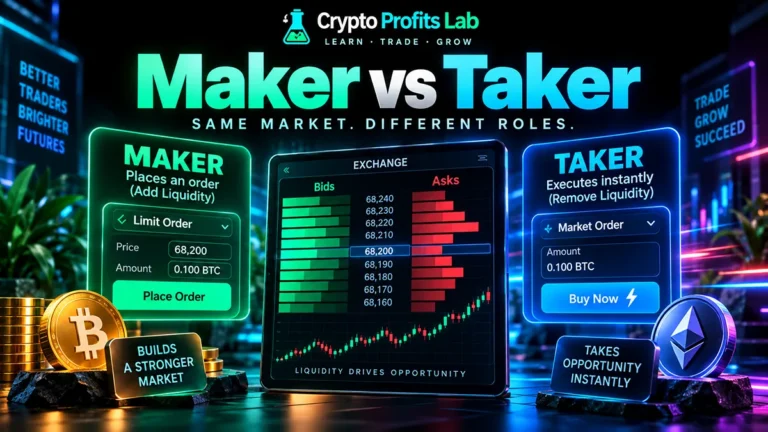
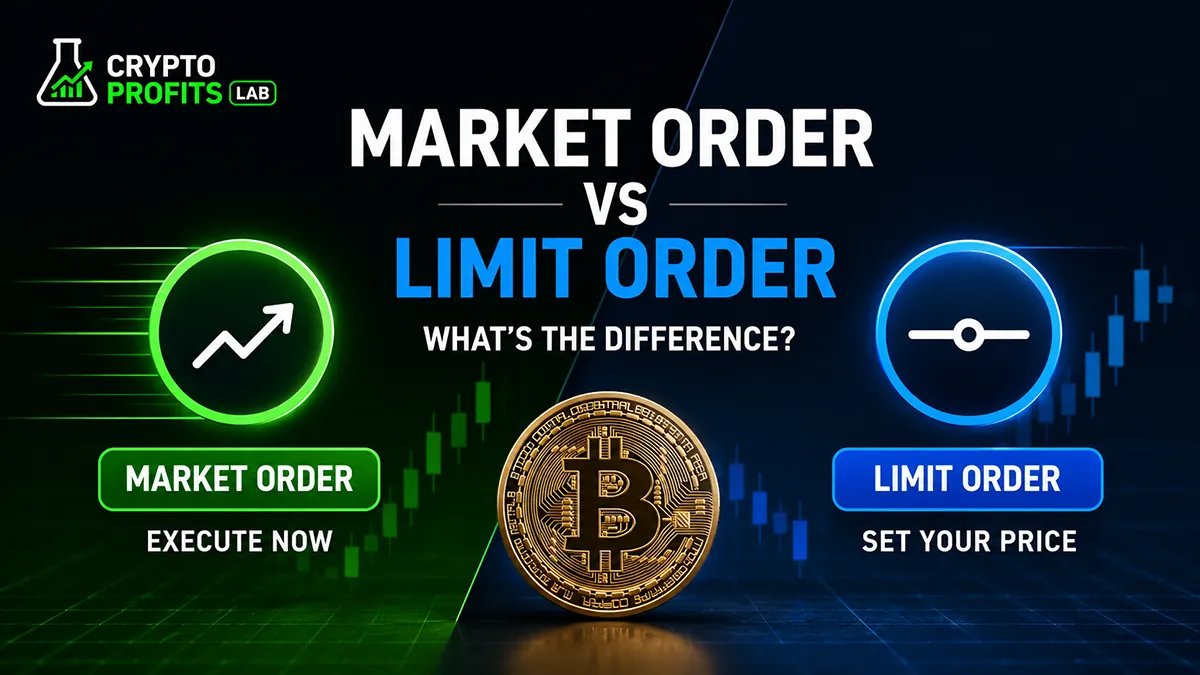
A market order is usually designed for speed. It tells the exchange to buy or sell right away at the best available price. A limit order is designed for price control. It tells the exchange to buy or sell only at a specific price or better.
That difference sounds simple, but it matters a lot in crypto because prices can move quickly. A beginner who does not understand order types may accidentally pay more than expected, sell for less than expected, or place an order that never fills.
Before going deeper into market order vs limit order crypto, it helps to understand how to buy crypto for beginners and how centralized vs decentralized exchanges work. Order types are part of the buying process, but exchange fees, liquidity, spreads, and volatility also matter.
This guide explains market order vs limit order crypto in simple terms, when each order type may be useful, common beginner mistakes, and how to place trades more carefully.
What Is Market Order vs Limit Order Crypto?
Market order vs limit order crypto refers to the difference between buying or selling immediately at the current available price and setting a specific price where you want your trade to happen.
A market order prioritizes execution. It is used when you want the trade completed quickly. A limit order prioritizes price. It is used when you want more control over the price, even if the trade takes longer or does not happen at all.
Here is the simplest breakdown:
| Order Type | Main Goal | Beginner Meaning |
|---|---|---|
| Market order | Fast execution | Buy or sell now at the best available price |
| Limit order | Price control | Buy or sell only at your selected price or better |
For example, if Bitcoin is trading around $60,000 and you place a market order to buy, your exchange will attempt to buy immediately at the available market price. If you place a limit order at $58,000, your order will only execute if the market reaches your limit price or better.
You can also review the Investor.gov guide to order types for a general explanation of market and limit orders in traditional investing. The same basic order type concepts can help crypto beginners understand how trades are executed.
Why Order Types Matter in Crypto
Order types matter because crypto markets can move fast. Prices can change within seconds, especially during news events, high-volume trading, exchange outages, liquidations, or sudden market sentiment shifts.
If you use the wrong order type, you may experience:
- A worse entry price than expected
- Higher slippage
- Unfilled orders
- Unexpected fees
- Emotional trading decisions
- Confusion during volatile markets
- Poor execution on low-liquidity coins
This is why market order vs limit order crypto is such an important beginner topic. Learning the difference can help you avoid common mistakes before you place larger trades.
It is also important to understand crypto volatility. Even a simple buy order can behave differently during calm markets compared with fast-moving markets.
What Is a Market Order in Crypto?
A market order is an instruction to buy or sell a cryptocurrency immediately at the best available price on the exchange.
When you place a market buy order, the exchange looks for sellers who are offering the asset and fills your order using available sell orders. When you place a market sell order, the exchange looks for buyers and fills your order using available buy orders.
Market orders are usually easy for beginners to understand because they feel similar to clicking “buy now” or “sell now.”
A market order may be useful when:
- You want to enter or exit quickly
- The asset has strong liquidity
- You are buying a small amount
- The price spread is tight
- Speed matters more than exact price
- You are using a beginner-friendly exchange interface
However, market orders do not guarantee the exact price you see on the screen. The final price can be different by the time the order is filled. That difference is called slippage.
In the market order vs limit order crypto decision, market orders are usually better for speed, but weaker for price control.
What Is a Limit Order in Crypto?
A limit order is an instruction to buy or sell a cryptocurrency only at a specific price or better.
A buy limit order sets the maximum price you are willing to pay. A sell limit order sets the minimum price you are willing to accept.
For example:
| Trade Goal | Example Limit Order |
|---|---|
| Buy Bitcoin lower | Place a buy limit order below the current price |
| Sell Ethereum higher | Place a sell limit order above the current price |
| Avoid overpaying | Set the highest price you are comfortable paying |
| Avoid selling too low | Set the lowest price you are willing to accept |
Limit orders give you more control, but they do not guarantee execution. If the market never reaches your price, your order may remain open or expire, depending on the exchange settings.
A limit order may be useful when:
- You want a specific entry price
- You want a specific exit price
- You are buying during volatility
- You want to avoid chasing a price spike
- You are trading a coin with a wider spread
- You are planning a trade in advance
In the market order vs limit order crypto decision, limit orders are usually better for price control, but weaker for speed.
Market Order vs Limit Order Crypto: Main Differences
The main difference is priority. A market order prioritizes execution. A limit order prioritizes price.
| Feature | Market Order | Limit Order |
|---|---|---|
| Execution speed | Usually fast | Only executes if price reaches your limit |
| Price control | Lower | Higher |
| Execution guarantee | More likely to fill | Not guaranteed to fill |
| Slippage risk | Higher | Lower if filled at your price |
| Beginner simplicity | Easy | Slightly more advanced |
| Best for | Quick trades | Planned entries and exits |
| Main risk | Unexpected price | Order may not execute |
This table is the core of market order vs limit order crypto. A market order helps you get the trade done. A limit order helps you control the price.
Neither is automatically better. The right choice depends on your goal, market conditions, trade size, coin liquidity, and experience level.
What Is Slippage?
Slippage happens when the final trade price is different from the price you expected.
For example, you may see a crypto asset listed at $1.00 and place a market order. If the market is moving quickly or the order book is thin, your order may fill at $1.01, $1.02, or higher. That difference is slippage.
Slippage can happen because:
- Prices move quickly
- Liquidity is low
- The order size is large
- The spread is wide
- The market is volatile
- The exchange order book changes before your order fills
Slippage is one of the biggest reasons beginners should understand market order vs limit order crypto. Market orders can be convenient, but they may expose you to worse pricing if the market is moving fast.
Limit orders can reduce slippage because you choose the price. However, your trade may not fill if the market does not reach your limit.
What Is the Spread?
The spread is the difference between the highest price buyers are willing to pay and the lowest price sellers are willing to accept.
The highest buyer price is called the bid. The lowest seller price is called the ask.
| Term | Meaning |
|---|---|
| Bid | Highest price buyers are offering |
| Ask | Lowest price sellers are accepting |
| Spread | Difference between bid and ask |
A tight spread usually means there is strong trading activity and liquidity. A wide spread may mean the asset is harder to trade efficiently.
Spreads matter in market order vs limit order crypto because a market order crosses the spread immediately. If the spread is wide, you may pay more to buy or receive less when selling.
For large coins like Bitcoin or Ethereum on major exchanges, spreads are often tighter. For small altcoins or low-volume trading pairs, spreads can be much wider.
What Is Liquidity?
Liquidity means how easily an asset can be bought or sold without causing a major price change.
A highly liquid crypto asset has many buyers and sellers. A low-liquidity crypto asset may have fewer active orders, which can make trades more expensive or harder to execute.
Liquidity matters because it affects:
- Slippage
- Spread size
- Market order execution
- Limit order fill probability
- Price stability
- Trading risk
For beginners, liquidity is especially important when buying smaller altcoins. A coin may look exciting, but if very few people are trading it, a market order could fill at a much worse price than expected.
Before buying any crypto, learn how market cap crypto works. Market cap does not tell you everything, but it helps you compare coin size and risk more realistically.
When a Market Order May Make Sense
A market order may make sense when speed matters more than exact price.
Common examples include:
- Buying a small amount of Bitcoin or Ethereum
- Exiting quickly during a sudden market move
- Using a highly liquid trading pair
- Making a simple beginner purchase
- Buying through a major exchange with a tight spread
- Completing a trade where a small price difference is acceptable
Market orders are often used by beginners because they are simple. Many exchange apps default to quick buy features that function like market orders.
However, simple does not always mean best. If you are buying during a sharp price move, the final price may surprise you.
In the market order vs limit order crypto decision, use market orders carefully when price movement is fast or liquidity is thin.
When a Limit Order May Make Sense
A limit order may make sense when price matters more than speed.
Common examples include:
- You want to buy Bitcoin only if it drops to a target price
- You want to sell an altcoin only if it reaches a higher price
- You want to avoid chasing a pump
- You are trading a coin with a wide spread
- You are planning entries ahead of time
- You want better control over your trade price
Limit orders can help beginners become more disciplined. Instead of reacting emotionally to price movement, you set your price in advance.
For example, if Ethereum is trading at $3,200 but you only want to buy at $3,000, a limit order can help you avoid chasing. The downside is that Ethereum may never fall to $3,000, so your order may not fill.
In the market order vs limit order crypto decision, limit orders are useful for planning, patience, and price control.
Market Order vs Limit Order Crypto for Beginners
For most beginners, the safest approach is to start small and use simple order types only after understanding the trade-offs.
A market order can be easier when buying small amounts of major coins on reputable exchanges. A limit order can be better when you want a specific price, are dealing with volatility, or are buying a less liquid asset.
Here is a simple beginner framework:
| Situation | Order Type to Consider |
|---|---|
| Buying a small amount of BTC on a major exchange | Market order may be acceptable |
| Buying a low-volume altcoin | Limit order may be safer |
| Wanting a specific entry price | Limit order |
| Wanting to exit immediately | Market order |
| Avoiding overpaying during volatility | Limit order |
| Learning with a small test purchase | Either, depending on goal |
This does not mean one order type is always right. It means your order type should match your goal.
Market order vs limit order crypto is not about choosing a permanent favorite. It is about knowing which tool fits the trade.
How to Place a Market Order
The exact steps vary by exchange, but a market order usually follows this process:
- Log in to your exchange account.
- Choose the trading pair, such as BTC/USD or ETH/USD.
- Select market order.
- Enter the amount you want to buy or sell.
- Review the estimated price and fees.
- Confirm the order.
- Check your filled order details.
Before placing any order, make sure your account is secure. Use strong passwords and enable crypto 2FA when available.
Also check the fee preview before confirming. Some beginner buy screens include convenience fees, spread costs, or card fees that may be higher than standard exchange trading fees.
If you are still choosing a platform, start with best crypto exchange for beginners.
How to Place a Limit Order
A limit order requires a little more planning.
The general process looks like this:
- Log in to your exchange account.
- Choose the trading pair.
- Select limit order.
- Enter your desired limit price.
- Enter the amount you want to buy or sell.
- Review fees and order details.
- Confirm the order.
- Monitor whether the order fills, partially fills, expires, or remains open.
A buy limit order should usually be placed at or below the price you are willing to pay. A sell limit order should usually be placed at or above the minimum price you are willing to accept.
For example:
| Goal | Example |
|---|---|
| Buy lower | Current price is $100, limit buy at $95 |
| Sell higher | Current price is $100, limit sell at $110 |
| Avoid overpaying | Set the maximum price you accept |
| Avoid underselling | Set the minimum price you accept |
A common beginner mistake is placing a limit order far away from the current market and then wondering why it does not fill. The order only executes if the market reaches your selected price.
Common Beginner Mistakes
Beginners often make the same mistakes when learning market order vs limit order crypto.
Avoid these errors:
- Placing a market order on a low-liquidity coin
- Ignoring the spread before buying
- Forgetting that a limit order may not fill
- Confusing order price with guaranteed profit
- Buying during a sudden pump without checking volume
- Using large orders before practicing with small amounts
- Ignoring exchange fees
- Leaving funds on an exchange without a security plan
- Clicking fake exchange or wallet links
- Trading emotionally after a price move
These mistakes can be expensive. Crypto markets reward preparation more than speed.
Before trading actively, review crypto safety tips and crypto scams to avoid.
Market Order vs Limit Order Crypto and Fees
Fees can affect your final result. Even if you choose the right order type, fees can reduce your returns.
Crypto exchanges may charge:
- Trading fees
- Spread costs
- Deposit fees
- Withdrawal fees
- Card purchase fees
- Network fees
- Conversion fees
A market order may sometimes be more expensive if it fills across multiple prices or crosses a wide spread. A limit order may offer more control, and on some exchanges, certain limit orders may qualify for lower maker fees. Fee rules vary by platform.
This is why market order vs limit order crypto should not be studied alone. You also need to understand fees and gas costs.
For blockchain network fees, read what are crypto gas fees. For exchange selection, review best crypto exchange for beginners.
Market Orders, Limit Orders, and Dollar-Cost Averaging
Dollar-cost averaging means buying smaller amounts over time instead of investing all at once.
For beginners, this can reduce the pressure of trying to pick the perfect entry price. You can learn the full strategy in dollar-cost averaging crypto.
How does this connect to order types?
Some investors use market orders for recurring purchases because they prioritize consistency and simplicity. Others use limit orders to try to improve entries during pullbacks.
| Strategy | Possible Order Type |
|---|---|
| Simple recurring purchase | Market order |
| Patient entry during pullbacks | Limit order |
| Avoid chasing price spikes | Limit order |
| Small scheduled buys | Market or limit order |
There is no perfect method. The best choice depends on whether your priority is consistency, price control, or speed.
Market order vs limit order crypto becomes easier when you connect it to your broader investing plan.
Should You Use Market Orders or Limit Orders?
Beginners should not think of market orders and limit orders as good or bad. They are tools.
A market order may be better when:
- You are trading a very liquid asset
- You are buying a small amount
- You want immediate execution
- You accept possible price movement
A limit order may be better when:
- You want a specific price
- The market is volatile
- The spread is wide
- You are buying a lower-liquidity coin
- You want more discipline
The main lesson is simple: know what you are giving up.
A market order gives up price control for speed. A limit order gives up guaranteed execution for price control.
That is the heart of market order vs limit order crypto.
Simple Trading Safety Checklist
Before placing a crypto order, use this quick checklist:
| Question | Why It Matters |
|---|---|
| Do I understand the order type? | Prevents execution mistakes |
| Have I checked the spread? | Helps avoid overpaying |
| Is the coin liquid? | Reduces slippage risk |
| Have I reviewed fees? | Shows the true cost |
| Am I using the correct trading pair? | Prevents wrong-asset trades |
| Is my account protected with 2FA? | Reduces account risk |
| Am I trading emotionally? | Helps avoid impulse decisions |
| Do I know where I will store the crypto? | Improves security planning |
After buying, decide whether to keep the asset on an exchange or move it to a wallet. If you need help, read crypto wallet and best crypto wallet for beginners.
Final Thoughts: Market Order vs Limit Order Crypto
Market order vs limit order crypto is one of the most important beginner trading concepts to learn before placing real trades.
A market order is designed for speed. It can help you buy or sell quickly, but the final price may be different from what you expected. A limit order is designed for price control. It lets you set your desired price, but the order may not execute.
Neither order type is perfect. Market orders can create slippage. Limit orders can sit unfilled. The best choice depends on your trade size, liquidity, volatility, fees, and personal strategy.
For beginners, the safest approach is to start small, avoid emotional trades, check fees, and use limit orders when price control matters. If you use market orders, use them carefully on liquid assets and understand that the final fill price is not guaranteed.
The better you understand market order vs limit order crypto, the more confident you can become when buying, selling, or building a long-term crypto strategy.
Market Order vs Limit Order Crypto Frequently Asked Questions
What is market order vs limit order crypto?
Market order vs limit order crypto refers to two ways of buying or selling digital assets. A market order attempts to execute immediately at the best available price. A limit order only executes at your selected price or better. Market orders prioritize speed, while limit orders prioritize price control. Beginners should understand both before placing trades.
Is a market order good for beginners?
A market order can be simple for beginners, especially when buying a small amount of a highly liquid cryptocurrency on a reputable exchange. However, market orders can fill at a worse price than expected during volatility or low liquidity. Beginners should check the spread, fees, and estimated price before confirming any market order.
Is a limit order safer than a market order?
A limit order can be safer for price control because it only executes at your chosen price or better. However, it is not guaranteed to fill. If the market never reaches your limit price, the trade may not happen. Limit orders are useful for patient buyers, planned exits, and avoiding overpaying during fast price movement.
Why did my crypto limit order not fill?
Your crypto limit order may not fill because the market price never reached your selected limit price. It may also remain partially filled if there was not enough liquidity at that price. Limit orders give you price control, but they do not guarantee execution. You may need to adjust your price or wait longer.
Can a market order cause slippage?
Yes, a market order can cause slippage. Slippage happens when the final execution price is different from the price you expected. It is more common during volatile markets, low liquidity, wide spreads, or large orders. This is one reason beginners should use caution with market orders on smaller altcoins.
Which order type is best for buying Bitcoin?
For small Bitcoin purchases on a liquid exchange, a market order may be acceptable if you want quick execution. A limit order may be better if you want to buy only at a specific price. The best choice depends on your goal. If speed matters most, consider a market order. If price control matters most, consider a limit order.
Do limit orders have lower fees?
Some exchanges charge lower maker fees for certain limit orders, but fee rules vary by platform. Not every limit order qualifies for lower fees, and some exchanges use different pricing models. Beginners should check the exchange fee schedule before trading. Fees, spreads, and slippage all affect the true cost of a crypto order.
Should I use market or limit orders for altcoins?
Limit orders are often safer for smaller altcoins because liquidity may be lower and spreads may be wider. A market order on a thinly traded altcoin can fill at a much worse price than expected. Before buying any altcoin, check volume, spread, market cap, fees, and whether the order book has enough liquidity.