Crypto Restaking: What Beginners Need to Know
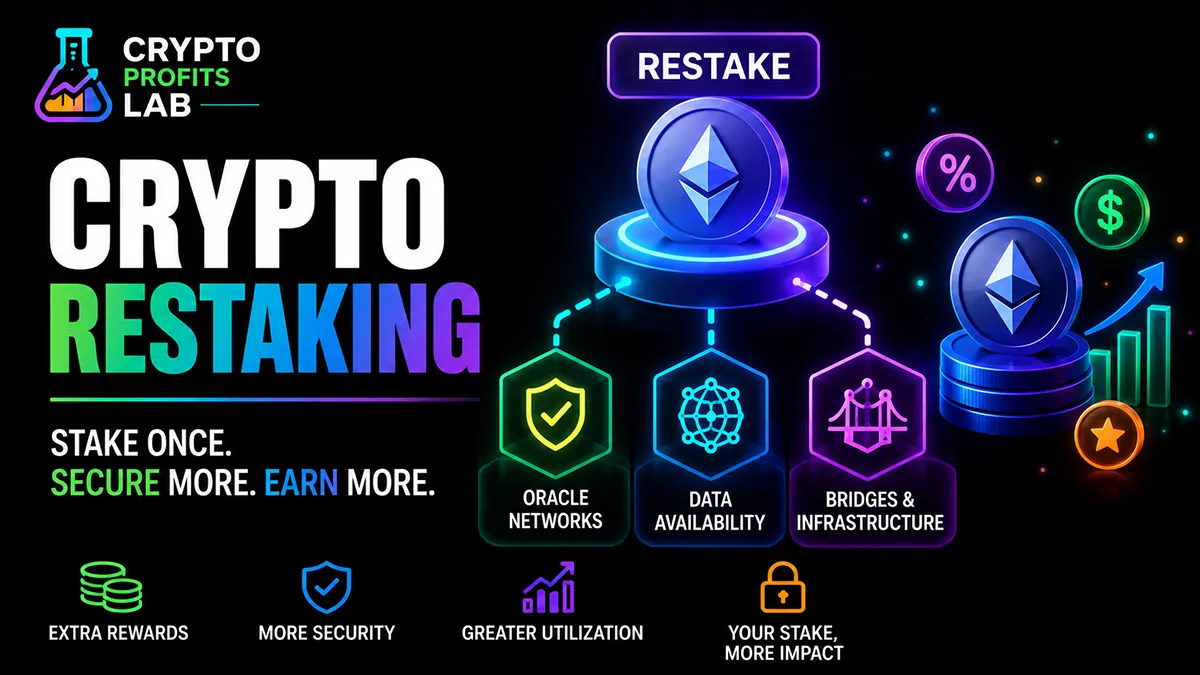
Crypto restaking builds on ordinary staking. Instead of using staked crypto only to help secure its original blockchain, the same economic stake may also support additional networks, applications, or decentralized services.
The possibility of extra rewards comes with extra risk. Beginners should understand what is being secured, who controls the process, how withdrawals work, and what could cause a loss.
This guide explains the strategy without treating possible rewards as guaranteed income.
Quick Answer
Crypto restaking is the practice of using cryptocurrency that is already staked to help secure additional blockchain-based services.
A person may continue earning normal staking rewards while becoming eligible for additional rewards from the extra services being supported. On Ethereum, those services are often called actively validated services, or AVSs.
The trade-off is greater complexity and risk. Restaked assets may face the original staking risks plus added smart contract, operator, slashing, liquidity, token, and withdrawal risks.
Crypto restaking is therefore better viewed as an advanced form of staking than as easy or guaranteed passive income.
Key Takeaways
- Restaking reuses already-staked assets to support additional services.
- It may create more than one possible source of rewards.
- Extra rewards are variable and are never guaranteed.
- Restaking can introduce additional slashing and smart contract risks.
- Native restaking and liquid restaking work differently.
- Liquid restaking tokens can trade above or below the value of their underlying assets.
- Withdrawal rules may include both staking queues and extra unbonding periods.
- Beginners should understand ordinary staking before considering restaking.
- A high advertised return does not automatically mean a better opportunity.
- Never connect a wallet or approve a token through an unverified link.
Crypto Restaking Beginner Facts
| Question | Beginner-Friendly Answer |
|---|---|
| What is being reused? | Cryptocurrency or a token representing crypto that is already staked. |
| What is the goal? | To help secure extra decentralized services and possibly earn additional rewards. |
| Is the income guaranteed? | No. Reward rates can change, stop, or be outweighed by losses. |
| Is restaking the same as staking? | No. It adds another security commitment on top of regular staking. |
| Is it the same as lending? | No. True restaking provides security to additional services rather than simply lending assets. |
| What is an AVS? | An actively validated service that receives security from restakers and operators. |
| What is an LRT? | A liquid restaking token representing a restaked position. |
| Can restaked funds be slashed? | Depending on the system, penalties may apply when required rules are broken. |
| Can withdrawals take time? | Yes. Staking queues and additional unbonding rules may delay access. |
| Is it beginner-friendly? | It is usually more complex and risky than basic staking. |
What Is Crypto Restaking?
To understand crypto restaking, it helps to begin with ordinary staking.
In a proof-of-stake blockchain, participants commit cryptocurrency to support network security. Validators check transactions, help create blocks, and follow the network’s rules. Honest participation may earn rewards, while certain failures or dishonest actions can lead to penalties.
Our beginner guide to proof of stake explains this foundation in more detail.
Restaking extends that idea. Assets already helping to secure one network can also be committed to help secure additional decentralized services. Those services may include data systems, bridges, oracle networks, rollup infrastructure, or other blockchain tools.
In return, restakers may receive extra rewards in addition to their normal staking rewards.
The Ethereum.org guide to restaking explains that already-staked ETH can be used to secure other decentralized services while earning additional rewards. It also warns that the staked ETH is placed at greater risk.
That final point matters. Crypto restaking does not create free money. It creates another agreement in which the same economic value may be exposed to more responsibilities and more ways to lose value.
A Simple Restaking Example
Imagine that you own a security deposit worth $1,000.
First, you place that deposit behind one job. You earn payment for helping protect the first system.
A second service then asks to rely on the same deposit as proof that you will perform another job correctly. It offers an additional payment.
You now have two possible reward sources, but your deposit supports more than one responsibility. A failure connected to either responsibility may create a penalty, depending on the rules.
Real crypto restaking uses software, smart contracts, validators, operators, and tokens. The comparison shows the main trade-off: greater reward potential usually means greater exposure.
How Crypto Restaking Works Step by Step
Restaking can look different across platforms, but the basic process usually follows a similar path.
Step 1: An Asset Is Staked
The process starts with an asset participating in ordinary staking.
On Ethereum, a solo validator normally deposits ETH and operates validator software. Other users may stake smaller amounts through a pool or liquid staking provider.
Read our crypto staking guide before moving to a more advanced strategy.
Step 2: The Staked Position Is Connected to a Restaking System
The staker agrees to let a restaking protocol use the economic security of that position for additional services.
This commitment may happen directly through validator withdrawal credentials or through a token that represents staked assets.
The exact method matters because it affects custody, smart contract exposure, liquidity, and who can make decisions.
Step 3: An Operator Performs Additional Work
An operator runs software for one or more external services.
The operator may verify information, support a bridge, provide data availability, run special infrastructure, or perform another task required by the service.
Many individual users delegate to an operator instead of running this software themselves.
Step 4: Additional Services Receive Security
The extra service relies on the restaked economic value and the operator’s work.
These services are often called actively validated services. Other protocols may use different names.
The purpose is to let a new service access an existing pool of economic security instead of building an entirely separate validator network from the beginning.
Step 5: Rewards May Be Distributed
The original staking position may continue producing normal staking rewards.
The additional service may also pay rewards to restakers and operators. Payments can be made in ETH, another established asset, or a project token.
Reward schedules can change. Some rewards may depend on performance, demand, token emissions, fees, or decisions made by the protocol.
Step 6: The User Eventually Withdraws
Leaving may require more than pressing one button.
The user may face a staking exit queue, a protocol withdrawal request, an unbonding period, token conversion, or several steps across different platforms.
It should not be treated like a normal savings account.
Native Restaking vs Liquid Restaking
The two main approaches are native restaking and liquid restaking.
Native Restaking
Native restaking usually involves a person who already operates a validator.
The validator’s staked assets are connected directly to a restaking protocol. The user can then delegate to an operator or run the extra service software.
Native restaking can reduce dependence on a liquid staking token, but it usually requires substantial capital, validator management, technical knowledge, and careful key security. It is not the simplest route for a complete beginner.
Liquid Restaking
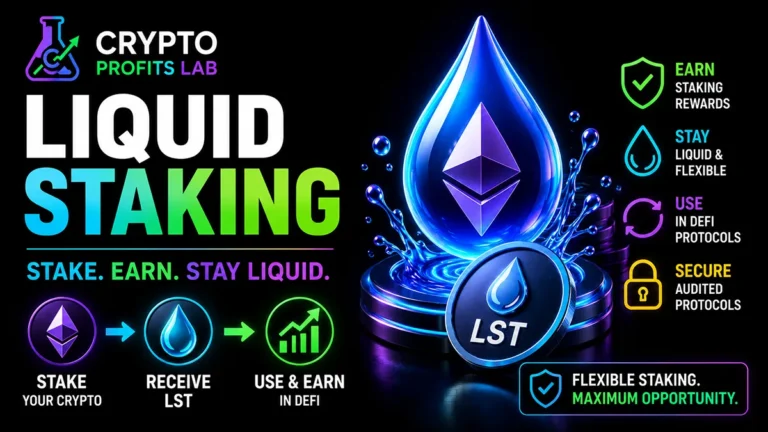
Liquid restaking starts with a liquid staking token, or LST, representing crypto deposited through a liquid staking service. The LST may be restaked directly or deposited into a protocol that issues a liquid restaking token, commonly called an LRT.
This can make crypto restaking easier to access, but it adds more moving parts:
- The original blockchain
- The staking provider
- The LST
- The restaking protocol
- The operator
- The additional service
- The LRT
- Any DeFi platform where the LRT is used
Each extra layer can add another source of failure.
What Is a Liquid Restaking Token?
A liquid restaking token represents a restaked position and may reflect accumulated rewards. Depending on the protocol, it may be held, traded, supplied to a liquidity pool, or used as collateral.
An LRT is not the original asset. Its market price can move away from the value it is intended to represent, a problem called depegging. It may also depend on several smart contracts and service providers.
A liquid token does not make crypto restaking low risk. It mainly makes the position easier to transfer or use.
Restaking vs Staking
| Feature | Staking | Restaking |
|---|---|---|
| Main purpose | Secure the original proof-of-stake blockchain | Extend staked security to additional services |
| Possible rewards | Native staking rewards | Native rewards plus possible extra rewards |
| Complexity | Low to high | Usually higher |
| Risk layers | Network, validator, provider, and custody risks | Staking risks plus restaking, operator, AVS, and smart contract risks |
| Withdrawal process | Depends on network and provider | May include staking queues and added unbonding rules |
| Beginner suitability | Basic pooled staking can be easier to understand | Usually better for experienced users |
Crypto restaking adds more agreements, software, and counterparties to ordinary staking. Beginners should understand basic staking rewards before evaluating it.
Restaking vs Liquid Staking
Liquid staking and restaking are related but not identical.
Liquid staking gives a user a token representing a staked position. The purpose is to maintain some liquidity while the underlying asset remains staked.
Restaking uses an already-staked position to provide economic security to additional services.
A liquid staking token can sometimes be restaked, which connects the two ideas. However, receiving an LST does not automatically mean the asset has been restaked.
Our article on staking vs yield farming can also help beginners separate reward strategies that are often incorrectly grouped together.
Where Do Restaking Rewards Come From?
Restaking rewards should come from the services receiving security.
A service may pay validators, operators, and restakers for performing work or accepting additional risk. Funding may come from protocol fees, token issuance, project reserves, or temporary incentive programs.
These sources are not equally sustainable. Heavy issuance of a new reward token can dilute holders and create selling pressure.
Before using crypto restaking, ask:
- Who pays the rewards?
- What useful service produces the revenue?
- Which asset is used for payment?
- Can the reward rate change?
- Is the displayed rate based on fees, incentives, or both?
- Does the reward token have enough liquidity to sell?
- Are rewards available now, or only expected later?
A displayed annual percentage rate is an estimate, not a promise. Review APR vs APY in crypto to understand how quoted returns can differ.
Is Crypto Restaking Passive Income?
It can produce rewards with less day-to-day work than active trading, so it is often described as passive income.
However, the word passive can be misleading.
Users still need to research protocols, protect wallets, review approvals, monitor operators, understand withdrawals, and keep tax records. Rewards are also paid in assets whose prices can fall. Earning more tokens does not guarantee a profit in dollars.
Crypto restaking is better described as a higher-complexity reward strategy than as effortless income.
Read “Is Crypto Passive Income Safe?” for a broader look at the risks behind passive-income claims.
Major Risks of Crypto Restaking
The extra rewards only make sense when considered beside the extra risks.
Slashing and Penalty Risk
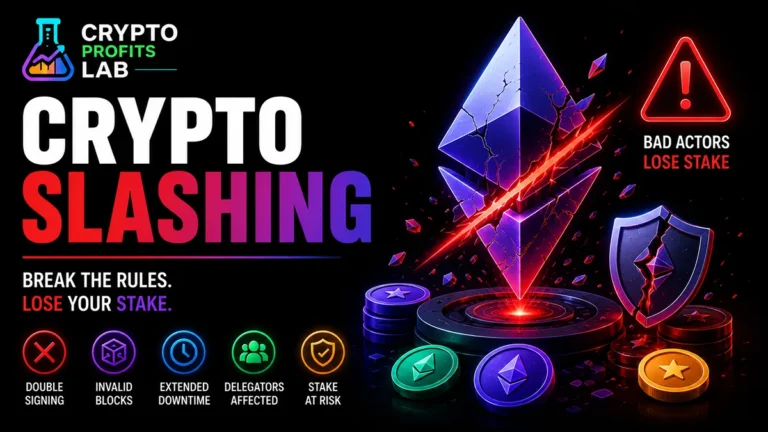
Slashing can remove part of a validator’s stake after serious rule violations. Restaking may introduce added penalty conditions for external services. A delegating user depends on the operator to run software correctly and follow every rule.
Smart Contract Risk
Restaking systems rely heavily on smart contracts.
A programming error, exploit, faulty upgrade, or unexpected interaction may cause losses or block withdrawals. Audits help, but cannot guarantee safety.
Operator Risk
Operators perform the extra validation work.
Downtime, misconfiguration, compromised keys, or dishonest behavior can reduce rewards or create penalties. Review how operators are selected, monitored, and replaced.
Additional Service Risk
Each supported service has its own rules. Users should learn whether a failure or penalty is isolated or could affect a larger portion of their stake.
Liquidity Risk
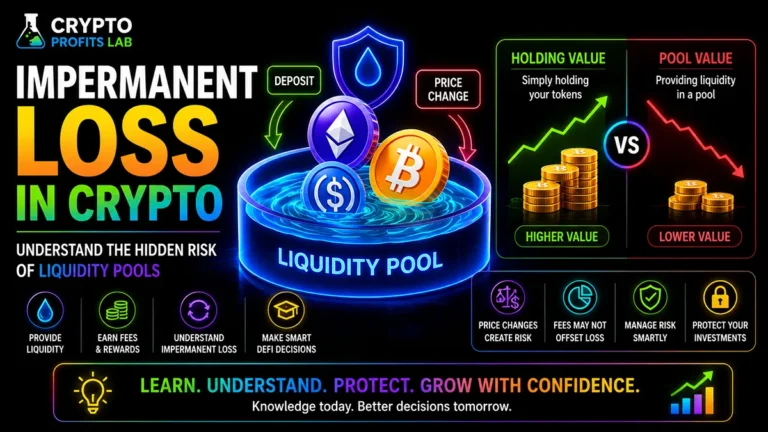
An LRT may have limited buyers or shallow trading pools. Selling can cause crypto slippage, while market stress can push the token below the value of its underlying position.
Withdrawal and Unbonding Risk
Withdrawals may involve the original staking exit process and an added restaking unbonding period. Funds should not be committed when they may be needed for near-term expenses.
Reward Token Risk
Extra rewards may be paid in a volatile token. A high token rate can look impressive while its price falls, and low liquidity can make selling difficult.
Concentration and Systemic Risk
Many positions may depend on the same operators, contracts, tokens, or services. A failure in one widely used layer could affect several connected protocols.
Custody and Counterparty Risk
A centralized provider may fail, freeze withdrawals, face financial trouble, or encounter legal restrictions. Self-custody reduces some counterparty risk but adds personal security responsibility.
Tax and Record-Keeping Risk
Rewards, token swaps, and LRT transactions may create tax events. Our crypto taxes for beginners guide covers record-keeping, but personal advice should come from a qualified tax professional.
How to Evaluate a Restaking Opportunity
A beginner should never choose a platform only because it displays a high reward rate.
Use this step-by-step review instead.
Step 1: Understand the Underlying Asset
Know which asset is staked, why it has value, and how volatile it has been.
Do not buy an unfamiliar token only because it offers a high restaking rate.
Step 2: Identify Every Layer
Write down the full path of the funds.
For example:
Wallet → liquid staking provider → LST → restaking protocol → operator → external service → LRT
If the path is confusing, the risks are probably not understood well enough.
Step 3: Find the Reward Source
Separate normal staking rewards, service fees, temporary incentives, airdrop points, and newly issued tokens.
Expected rewards are not the same as rewards that are already live and claimable.
Step 4: Read the Penalty Rules
Find out what actions can trigger a penalty, who performs the work, and how much could be lost.
Do not accept vague statements such as “institutional-grade security” as a substitute for clear rules.
Step 5: Review Withdrawal Conditions
Check the unbonding period, exit queue, minimum withdrawal, redemption process, and fees.
Also check whether withdrawals can be paused and who has that authority.
Step 6: Research Security and Control
Review audits, bug bounties, upgrade permissions, administrator controls, and incident history. An audit is useful evidence, not insurance.
Step 7: Start Small
Use an amount that would not damage your finances if it were lost.
A small test helps confirm wallet connections, approvals, deposits, and withdrawals.
Common Beginner Mistakes
Chasing the Highest Advertised Yield
A higher yield often reflects higher risk, temporary incentives, or a low-value reward token.
Compare risk-adjusted value rather than the largest number.
Confusing Restaking With Normal Staking
The strategies are not interchangeable because restaking adds commitments beyond the original blockchain.
Ignoring the Token Price
Rewards are usually paid in crypto. The dollar value can fall even while the token balance rises.
Treating an LRT Like Cash
A liquid token may be tradable, but its price and liquidity are not guaranteed.
Skipping the Withdrawal Rules
Users sometimes learn about unbonding periods only after they need their funds.
Read the exit process before depositing.
Using Too Many DeFi Layers
Placing an LRT into lending, liquidity pools, and leveraged strategies can stack risks on top of one another.
More yield sources do not automatically create a safer or better return.
Approving Unlimited Token Access
Some decentralized applications request permission to spend a token from your wallet.
Review every crypto token approval and remove permissions that are no longer needed.
Assuming a Big Protocol Cannot Fail
Large deposits, well-known investors, audits, and popular social accounts do not remove technical or financial risk.
Wallet and Scam Safety
Restaking users often interact with decentralized applications, which creates opportunities for phishing and malicious approvals.
Follow these safety rules:
- Use the official website saved from a verified source.
- Bookmark the correct address instead of relying on search ads.
- Never share a seed phrase or private key.
- Read wallet prompts before signing.
- Verify the network and token contract.
- Keep enough native coin available for network fees.
- Use a separate wallet for experimental DeFi activity.
- Consider a hardware wallet for larger holdings.
- Revoke old approvals when they are no longer required.
- Ignore private messages offering support or guaranteed returns.
A fake restaking website can copy the appearance of a real platform. Connecting a wallet does not always move funds immediately, but signing a malicious approval or transaction can.
Review our crypto safety tips and crypto phishing scam guides before interacting with unfamiliar protocols.
Is Crypto Restaking Suitable for Beginners?
For most complete beginners, basic education should come first.
A sensible learning order is:
- Understand what cryptocurrency and blockchain networks are.
- Learn how a crypto wallet works.
- Practice safe transfers with small amounts.
- Understand proof of stake and ordinary staking.
- Learn the difference between native staking and liquid staking.
- Study smart contract and DeFi risks.
- Evaluate restaking only after the earlier steps make sense.
A beginner does not need every available reward strategy. Avoiding a loss is often more valuable than earning a small additional yield.
Crypto Restaking Frequently Asked Questions
What is crypto restaking in simple terms?
Crypto restaking means using cryptocurrency that is already staked to help secure additional blockchain services. The original stake may continue earning normal staking rewards, while the added services may provide extra rewards. The same value is taking on more responsibilities, so restaking can also add slashing, smart contract, operator, liquidity, and withdrawal risks.
How is restaking different from staking?
Staking normally commits cryptocurrency to help secure its original proof-of-stake blockchain. Restaking extends that security to additional services, networks, or applications. This may create another reward source, but it also creates another layer of rules and risk. A person should understand ordinary staking before evaluating a restaking protocol or liquid restaking token.
Can I lose money through crypto restaking?
Yes. Losses can result from falling token prices, slashing, operator mistakes, smart contract exploits, depegging, poor liquidity, failed services, or compromised wallets. Extra rewards may not be large enough to offset those losses. Restaking should only involve funds that the user can afford to lose and does not need for essential expenses.
Are crypto restaking rewards guaranteed?
No. Reward rates can change based on service demand, token incentives, protocol rules, operator performance, fees, and market conditions. Some platforms advertise estimated rewards or points that are not the same as paid income. Users should identify the reward source, payment token, schedule, and withdrawal rules before depositing any assets.
What is an actively validated service?
An actively validated service, often shortened to AVS, is a decentralized service that receives economic security and operational work from restakers and operators. Examples can include data systems, bridges, oracle-related services, or blockchain infrastructure. Different restaking protocols may use other names, and each service can have its own tasks, reward system, and penalty conditions.
What is a liquid restaking token?
A liquid restaking token, or LRT, represents assets deposited into a liquid restaking system. It may allow the holder to transfer, trade, or use the position while the underlying assets remain committed. An LRT can lose value, trade below its intended price, face limited liquidity, or depend on several smart contracts and service providers.
Is crypto restaking the same as crypto lending?
No. Restaking uses staked assets to provide security to additional decentralized services. Lending supplies assets to borrowers or a lending pool in exchange for interest. Some liquid staking or restaking tokens can also be used in lending platforms, but that adds a separate financial activity and another layer of smart contract, liquidation, and liquidity risk.
How much money do I need to start restaking?
There is no universal minimum. Native validator-based methods can require substantial assets and technical knowledge, while liquid restaking platforms may accept smaller deposits. Minimums, supported tokens, fees, and eligibility differ by provider. A low entry amount does not mean low risk, so beginners should test with a small nonessential amount.
Final Thoughts
Crypto restaking attempts to make staked assets more useful by extending their economic security to additional decentralized services.
The idea may create extra rewards and help new services access established security. However, crypto restaking also adds operators, smart contracts, penalty rules, withdrawal conditions, and token risks.
The most important question is not simply, “How much can this earn?” It is, “What additional risk am I accepting for that possible reward?”
Beginners should understand ordinary staking first, map every layer of a proposed strategy, verify the reward source, review withdrawal rules, and start with a small amount.
Crypto Profits Lab focuses on cleaner, simpler explanations so beginners can make decisions based on how a system actually works rather than on promises of effortless income.
Educational content only. This article does not provide financial, legal, tax, or investment advice.