Hot Wallet vs Cold Wallet: Which Is Better for Beginners?
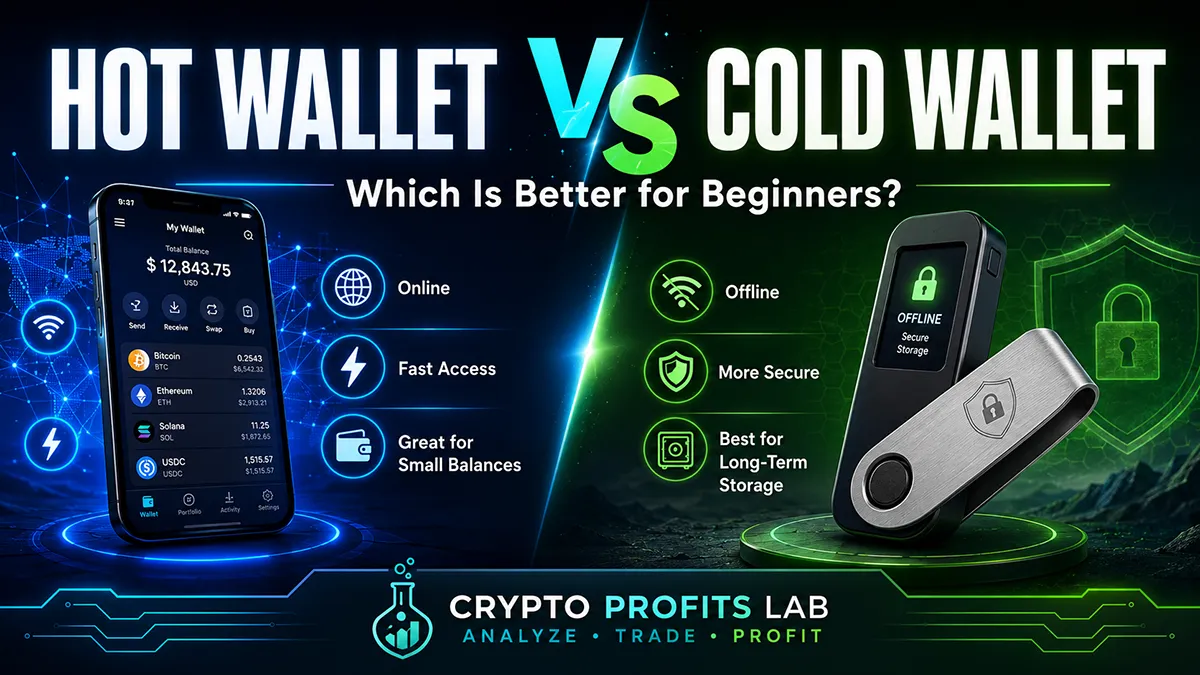
Understanding hot wallet vs cold wallet storage is one of the most important crypto security lessons for beginners. Before you buy Bitcoin, Ethereum, XRP, Solana, or any other cryptocurrency, you should know where your crypto access will be stored and how much responsibility comes with each option.
A crypto wallet does not hold coins the same way a leather wallet holds cash. Your cryptocurrency exists on a blockchain. A wallet helps you manage the private keys, recovery phrase, and transaction approvals connected to your crypto. That is why wallet security matters so much.
The hot wallet vs cold wallet decision usually comes down to convenience versus security. A hot wallet is connected to the internet and is easier to use for frequent activity. A cold wallet keeps private keys offline and is usually better for long-term storage. Both can be useful, but they serve different purposes.
If you are new to crypto, start with our guides on what is cryptocurrency and blockchain technology. Then read our full beginner explanation of crypto wallet before moving larger funds.
What Is a Hot Wallet?
A hot wallet is a crypto wallet connected to the internet. It may be a mobile app, desktop wallet, browser extension, or web-based wallet. Because it is online, a hot wallet is usually convenient for sending, receiving, swapping, staking, or interacting with decentralized apps.
Hot wallets are popular because they are easy to set up. Many beginners like them because the user experience feels similar to normal mobile finance apps. You can open the wallet, check balances, receive crypto, and send transactions quickly.
Common hot wallet examples include:
- Mobile wallet apps
- Desktop wallet apps
- Browser extension wallets
- Web wallets
- Some exchange-connected wallets
- Wallets used for decentralized apps
The main benefit is convenience. The main risk is online exposure. Since a hot wallet is connected to an internet-accessible device, it may be more vulnerable to phishing, malware, fake wallet apps, malicious browser extensions, and unsafe website connections.
A hot wallet can be useful for small balances, learning transactions, or active crypto use. It may not be the best place to store large long-term holdings.
What Is a Cold Wallet?
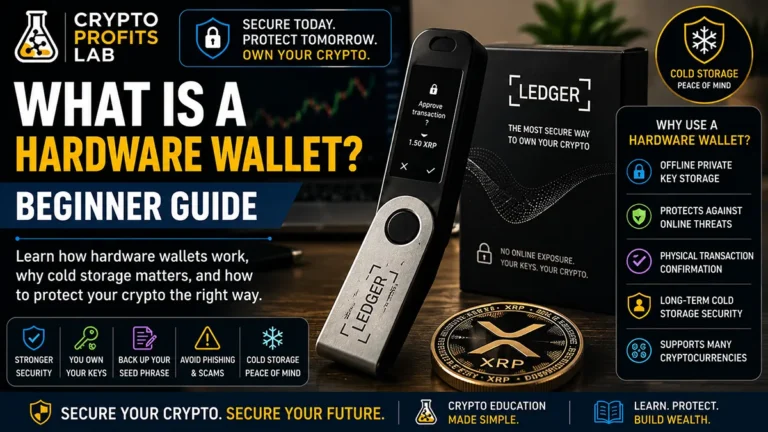
A cold wallet is a crypto wallet that keeps private keys offline. The most common type of cold wallet is a hardware wallet. A hardware wallet is a physical device that helps approve transactions without exposing private keys directly to a normal internet-connected computer or phone.
Cold storage is popular among long-term crypto holders because it reduces online attack exposure. If used correctly, it can be safer for larger balances or assets you do not plan to move often.
Common cold wallet options include:
- Hardware wallets
- Offline paper backups
- Metal seed phrase backups
- Air-gapped wallet setups
- Offline signing devices
For beginners, a hardware wallet is usually the most practical cold wallet option. It is still important to set it up carefully, buy from trusted sources, and protect your recovery phrase offline.
If you want a deeper beginner guide, read hardware wallet.
Hot Wallet vs Cold Wallet: Main Differences
The hot wallet vs cold wallet comparison is not about choosing one perfect answer for every situation. It is about matching the wallet type to your goals, balance size, experience level, and security habits.
| Feature | Hot Wallet | Cold Wallet |
|---|---|---|
| Internet connection | Connected to the internet | Private keys kept offline |
| Convenience | Easier for frequent use | Less convenient for daily activity |
| Security level | Good for small active balances | Stronger for long-term storage |
| Beginner setup | Usually easier | Requires more careful setup |
| Best use case | Small balances, apps, testing, trading | Larger balances and long-term holdings |
| Main risk | Phishing, malware, fake apps | Losing recovery phrase or device setup mistakes |
| Transaction speed | Faster access | Slower but more intentional |
| Cost | Often free | Usually requires buying a device |
This hot wallet vs cold wallet table shows why many crypto users eventually use both. A hot wallet can be useful for activity. A cold wallet can be useful for storage.
Why the Hot Wallet vs Cold Wallet Choice Matters
The hot wallet vs cold wallet choice matters because crypto transactions are usually irreversible. If you make a mistake, there may be no simple refund process. Wallet security is not only about protecting against hackers. It is also about protecting yourself from confusion, wrong-network transfers, fake websites, and poor backup habits.
Investor.gov’s crypto asset custody resource explains that crypto wallets do not store the crypto assets themselves; instead, they store private keys or passcodes used to access those assets. You can review the official Investor.gov page on crypto assets for more background.
Beginners often focus only on which coin to buy. That is understandable, but storage is just as important. If you buy crypto without understanding wallet basics, you may leave yourself exposed to avoidable risks.
Before choosing storage, ask:
- How much crypto am I holding?
- Do I need frequent access?
- Am I comfortable managing a recovery phrase?
- Do I understand wallet addresses and networks?
- Would losing this amount seriously hurt?
- Am I buying for short-term activity or long-term holding?
- Do I already use strong account security?
If you are still learning the purchase process, read how to buy crypto for beginners first.
Pros of Hot Wallets
Hot wallets are popular because they are simple and convenient. For beginners, convenience can be valuable when learning how crypto transactions work.
Benefits of hot wallets include:
- Easy setup
- Fast access from phone or computer
- Convenient for small transactions
- Useful for decentralized apps
- Often free to download
- Good for learning wallet basics
- Simple receive and send functions
- Helpful for testing small transfers
- Easy access to transaction history
A hot wallet may be a good fit if you are learning with a small amount of crypto and want to understand how wallet addresses, network fees, and transactions work.
Hot wallets can also be useful for interacting with decentralized finance, NFTs, staking tools, or blockchain apps. However, beginners should move slowly and avoid connecting wallets to websites they do not understand.
Cons of Hot Wallets
The convenience of a hot wallet comes with tradeoffs. Because hot wallets are connected to internet-accessible devices, they can be more exposed to online attacks.
Common hot wallet risks include:
- Fake wallet apps
- Phishing websites
- Malicious browser extensions
- Malware on your device
- Unsafe wallet connections
- Accidental transaction approvals
- Cloud backup mistakes
- Seed phrase screenshots
- Scam airdrops or fake staking links
A hot wallet is only as safe as your device habits. If your phone or computer is compromised, your wallet security may be affected.
To reduce risk, use a trusted wallet, download only from official sources, keep your device updated, and never store your recovery phrase in screenshots, email, or cloud notes.
For more protection steps, read crypto safety tips and crypto scams to avoid.
Pros of Cold Wallets
Cold wallets are often preferred for long-term storage because they keep private keys offline. This reduces exposure to many common online threats.
Benefits of cold wallets include:
- Stronger private key protection
- Reduced online attack exposure
- Better fit for long-term holdings
- Physical transaction confirmation
- Useful for larger balances
- Less reliance on exchange custody
- More control over self-custody
- Better separation from daily internet activity
A cold wallet can be especially helpful if you plan to hold crypto for months or years. It can also reduce the temptation to trade emotionally because funds are less instantly accessible.
For many beginners, cold storage becomes more important as balances grow. A small learning balance may not require a hardware wallet immediately, but a meaningful long-term balance deserves stronger protection.
Cons of Cold Wallets
Cold wallets are powerful, but they are not perfect. They require responsibility. If you lose your recovery phrase, set up the device incorrectly, or approve a bad transaction, you can still lose funds.
Common cold wallet risks include:
- Losing the recovery phrase
- Buying from an untrusted seller
- Using a device with a prewritten seed phrase
- Storing the recovery phrase digitally
- Forgetting the PIN
- Sending to the wrong network
- Failing to test transactions
- Approving malicious transactions
- Damaging or losing the device
The device itself is not the most important backup. The recovery phrase is. If your hardware wallet breaks but you have the correct recovery phrase, you may be able to restore access. If someone else gets your recovery phrase, they may be able to steal your crypto.
Before using cold storage, read crypto seed phrase.
Hot Wallet vs Cold Wallet for Beginners
For most beginners, the best hot wallet vs cold wallet approach is gradual. You do not need to move every asset into cold storage on day one, but you should learn how both options work before your balance becomes meaningful.
A simple beginner approach may look like this:
- Use a reputable exchange for your first small purchase.
- Learn how balances, fees, and transactions work.
- Use a hot wallet for small test amounts if needed.
- Learn seed phrase safety before self-custody.
- Consider a cold wallet when your balance grows.
- Send a small test transaction before moving larger funds.
This approach lets you learn without taking unnecessary risk. It also helps you avoid jumping into advanced storage before you understand recovery phrases, wallet addresses, and network selection.
If you are comparing beginner-friendly wallet options, read best crypto wallet for beginners.
When Should You Use a Hot Wallet?
A hot wallet can make sense when convenience matters more than maximum storage security. It is not automatically bad. It simply needs to be used for the right purpose.
A hot wallet may be appropriate for:
- Small balances
- Learning transactions
- Testing wallet features
- Using decentralized apps
- Receiving small payments
- Short-term activity
- Swapping small amounts
- Exploring blockchain ecosystems
The key is not to overload a hot wallet with more crypto than you are comfortable risking. If losing the balance would create serious stress, consider moving long-term funds to colder storage.
Hot wallets should also be protected with strong device security, careful app downloads, and safe browsing habits.
When Should You Use a Cold Wallet?
A cold wallet may be better when security matters more than quick access. It is especially useful for long-term holders who do not need to move funds frequently.
A cold wallet may be appropriate for:
- Larger balances
- Long-term holdings
- Bitcoin or Ethereum storage
- Assets you do not trade often
- Users who understand seed phrase backups
- People concerned about exchange risk
- Investors who want offline private key protection
Cold storage can also help separate long-term holdings from daily activity. This reduces the chance that one bad website connection or fake app affects your main crypto stack.
Exchange Wallet vs Hot Wallet vs Cold Wallet
Many beginners confuse exchange wallets with hot wallets and cold wallets. An exchange wallet is the account balance you see on a crypto exchange. The exchange usually manages custody for you.
With an exchange wallet, you log in using email, password, and two-factor authentication. You may not control the private keys directly.
With a self-custody hot wallet or cold wallet, you control the recovery phrase. That gives you more control but also more responsibility.
| Storage Type | Who Controls Access? | Beginner Use Case | Main Tradeoff |
|---|---|---|---|
| Exchange wallet | Exchange manages custody | First purchase and small balances | Trust in the platform |
| Hot wallet | User controls wallet access | Small active balances | More online exposure |
| Cold wallet | User controls offline backup | Long-term storage | More setup responsibility |
If you are choosing an exchange, read best crypto exchange for beginners and centralized vs decentralized exchanges.
Hot Wallet vs Cold Wallet and Seed Phrases
The hot wallet vs cold wallet decision becomes much clearer when you understand seed phrases. A seed phrase is the backup that can restore a self-custody wallet. It is usually a list of 12 or 24 words.
Whether you use a hot wallet or cold wallet, your seed phrase must be protected offline. Do not take screenshots. Do not save it in cloud notes. Do not email it to yourself. Do not type it into websites.
Safe seed phrase habits include:
- Write the phrase clearly in order.
- Store it offline.
- Keep it private.
- Protect it from fire, water, and theft.
- Never share it with support agents.
- Never enter it into a random website.
- Consider a metal backup for larger holdings.
A cold wallet can protect private keys from online exposure, but it cannot protect you if you give away the seed phrase.
Hot Wallet vs Cold Wallet and Two-Factor Authentication
Two-factor authentication is important, but it does not replace wallet security. Crypto 2FA protects online accounts like exchanges, email, and password managers. A self-custody wallet is protected differently, usually through device security, private keys, and a seed phrase.
Use 2FA for:
- Exchange accounts
- Email accounts
- Password managers
- Cloud accounts
- Trading apps
- Mobile carrier accounts
But remember: if someone gets your seed phrase, 2FA may not stop them from restoring your wallet elsewhere.
For a complete guide, read crypto 2FA.
Hot Wallet vs Cold Wallet and Crypto Staking
Some users wonder how staking fits into hot wallet vs cold wallet storage. The answer depends on the asset, wallet, exchange, and staking method.
Some staking happens through exchanges. Some happens through hot wallets. Some hardware wallets can help approve staking or delegation transactions while keeping private keys offline.
Before staking from any wallet, ask:
- Does this asset support staking?
- Is there a lockup period?
- Are there validator fees?
- Is there slashing risk?
- Can I unstake easily?
- Am I using a trusted wallet or platform?
- Do I understand the transaction I am approving?
Staking rewards do not remove wallet risk. If you are new to staking, read crypto staking before locking assets.
Hot Wallet vs Cold Wallet and Transaction Fees
Wallet storage and transaction fees are separate topics, but they often overlap. Sending crypto from one wallet to another may require a network fee. The fee depends on the blockchain network, not just the wallet.
Before moving funds between hot and cold storage, check:
- The asset being sent
- The correct network
- The receiving address
- The estimated fee
- The minimum withdrawal amount
- Whether the receiving wallet supports the network
Ethereum and many token transfers may involve gas fees. During busy periods, those fees can be higher than beginners expect. Learn more in crypto gas fees.
Always send a small test transaction first when using a new address or network.
Common Hot Wallet vs Cold Wallet Mistakes
Beginners often make mistakes because they move too fast. Wallet decisions should be slow and careful.
Common mistakes include:
- Keeping too much crypto in a hot wallet
- Buying a hardware wallet from an untrusted seller
- Taking a screenshot of a seed phrase
- Sending funds on the wrong network
- Skipping test transactions
- Connecting wallets to suspicious websites
- Downloading fake wallet apps
- Thinking cold storage removes all risk
- Forgetting that exchange storage requires trust
- Not securing the email account tied to an exchange
The most dangerous mistake is sharing your recovery phrase. No wallet company, support agent, exchange, or online helper needs it.
Simple Hot Wallet vs Cold Wallet Strategy
A balanced hot wallet vs cold wallet strategy can be simple:
- Keep only small active amounts in a hot wallet.
- Use exchange storage only when it fits your needs.
- Move larger long-term holdings to cold storage.
- Protect every seed phrase offline.
- Use 2FA on exchange and email accounts.
- Send test transactions before moving larger amounts.
- Avoid connecting your main wallet to unknown websites.
- Review every transaction before approval.
This approach gives beginners a practical balance of convenience and security.
Final Thoughts: Choose Based on Risk and Use
The hot wallet vs cold wallet decision is not about which wallet type is always better. It is about using the right tool for the right purpose.
A hot wallet is better for convenience, small balances, testing, and active crypto use. A cold wallet is better for long-term holdings, larger balances, and stronger offline private key protection.
Beginners should start small, learn wallet basics, protect seed phrases, and avoid rushing into complicated setups. As your crypto balance grows, your security should grow with it.
The safest approach is often a combination. Use hot wallets for limited activity and cold wallets for long-term storage. Keep your recovery phrases offline. Use trusted wallets. Verify addresses. Watch for scams. Send test transactions.
When you understand hot wallet vs cold wallet storage, you are better prepared to protect your crypto and make smarter decisions as your experience grows.
FAQ: Hot Wallet vs Cold Wallet
What is the difference between hot wallet vs cold wallet?
The main difference between hot wallet vs cold wallet storage is internet connection. A hot wallet is connected to the internet and is convenient for frequent transactions. A cold wallet keeps private keys offline and is usually better for long-term storage. Hot wallets are easier to use, while cold wallets generally provide stronger protection for larger holdings.
Is a hot wallet safe for beginners?
A hot wallet can be safe for beginners when used carefully with small balances. Beginners should download wallets only from official sources, protect recovery phrases offline, keep devices updated, and avoid suspicious websites. Hot wallets are convenient, but they are more exposed to phishing, malware, fake apps, and unsafe wallet connections than cold storage.
Is a cold wallet better than a hot wallet?
A cold wallet is usually better for long-term storage and larger balances because private keys are kept offline. However, it is less convenient for frequent activity and requires careful seed phrase protection. A hot wallet may be better for small active balances. The best choice depends on how much crypto you hold and how often you need access.
Should beginners use both a hot wallet and a cold wallet?
Many beginners eventually use both. A hot wallet can hold small amounts for learning, testing, or active transactions. A cold wallet can store larger long-term holdings with stronger offline protection. This setup separates daily activity from long-term storage and can reduce risk if one wallet or account is compromised.
Can I lose crypto in a cold wallet?
Yes, you can still lose crypto in a cold wallet if you lose your recovery phrase, approve a malicious transaction, send funds to the wrong address, or use the wrong network. Cold storage reduces online exposure, but it does not remove personal responsibility. The recovery phrase must be stored securely and kept private.
Are exchange wallets hot wallets?
Exchange wallets are typically linked to online platforms, unlike self-custody hot wallets. With an exchange wallet, the exchange typically manages your private keys. With a self-custody hot wallet, you control the recovery phrase. Exchange storage can be convenient, but it requires trust in the platform.
What should I store in a hot wallet?
A hot wallet is best for small balances, testing transactions, receiving small payments, or interacting with decentralized apps. It should not usually hold more crypto than you are comfortable risking. Larger long-term holdings may be better suited for cold storage, especially if you understand recovery phrase safety and hardware wallet setup.
What should I store in a cold wallet?
A cold wallet is best for long-term holdings, larger balances, and crypto you do not need to move often. Many users store Bitcoin, Ethereum, or other long-term assets in cold storage. Before using a cold wallet, make sure you understand seed phrases, test transactions, select a network, and set up a safe hardware wallet.
How do I choose between hot wallet vs cold wallet?
Choose based on your balance size, experience, and access needs. A hot wallet may be better if you need convenience and only hold small amounts. A cold wallet may be better if your balance is meaningful or you plan to hold long-term. Many users combine both for better flexibility and security.