Crypto Scams to Avoid: Beginner Warning Signs
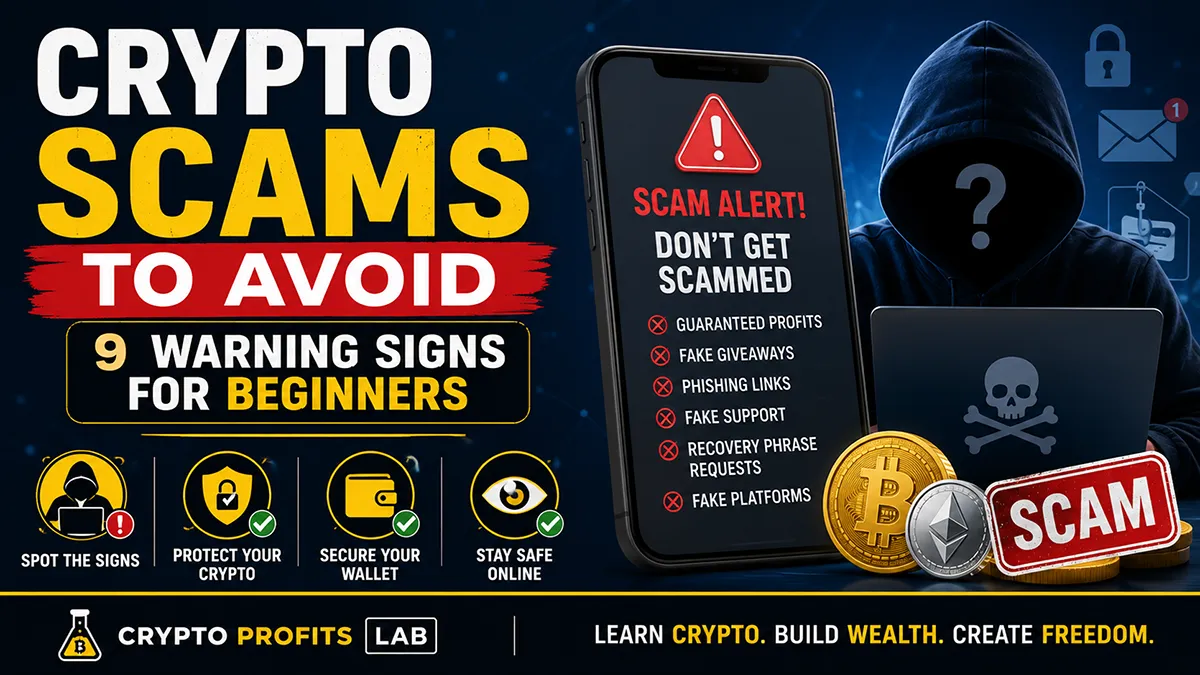
Crypto scams to avoid are one of the most important topics every beginner should understand before buying, storing, or transferring cryptocurrency. Crypto can be exciting, but it also attracts scammers who target new users with fake investments, fake support accounts, phishing links, giveaway promises, romance scams, and wallet recovery tricks.
The challenge for beginners is that many scams look professional. A fake exchange may have a clean website. A phishing email may copy a real company’s branding. A scammer may pretend to be helpful. A fake investment dashboard may show fake profits. By the time a beginner realizes something is wrong, the crypto may already be gone.
This guide explains the most common crypto scams to avoid, how they work, and what warning signs to watch for. You will also learn practical safety habits that can help protect your exchange accounts, wallets, recovery phrases, and long-term crypto holdings.
Understanding the crypto scams to avoid before you buy can help you slow down, verify information, and protect your wallet from common beginner mistakes.
If you are still new to crypto, start with our beginner guides on what is cryptocurrency and blockchain technology. Understanding the basics makes it easier to recognize when something does not feel right.
Why Beginners Are Common Targets for Crypto Scams
Beginners are often targeted because they may not yet understand wallet security, blockchain transactions, private keys, exchange safety, or market risk. Scammers take advantage of confusion and urgency.
Crypto transactions are usually irreversible. If you send crypto to the wrong wallet or to a scammer, there may be no bank dispute process, refund department, or easy way to reverse the transaction. That makes prevention extremely important.
Scammers also know that many beginners are motivated by opportunity. They may want fast profits, passive income, early access to new coins, or a simple way to grow their money. Scam messages often use those emotions to push people into quick decisions.
Common pressure tactics include:
- “Act now before the price explodes”
- “Send crypto to unlock your profits”
- “Connect your wallet to claim rewards”
- “Verify your seed phrase”
- “Pay a fee to withdraw”
- “This opportunity is only available today”
- “Guaranteed returns with no risk”
- “Support needs your recovery phrase”
One of the easiest crypto scams to avoid is any offer that promises guaranteed returns with no risk. Real crypto education encourages patience. Scams create urgency.
Crypto Scams to Avoid: Quick Comparison Table
Use this table as a beginner-friendly reference when reviewing crypto offers, messages, platforms, or wallet requests.
| Scam Type | Common Warning Sign | Safer Response |
|---|---|---|
| Fake investment platform | Guaranteed high returns | Do not deposit; research independently |
| Phishing website | URL looks slightly wrong | Use bookmarked official websites |
| Fake giveaway | Send crypto to receive more crypto | Do not send funds |
| Fake support | Asks for password or seed phrase | Stop communication immediately |
| Romance scam | Relationship becomes investment pitch | Never send crypto to online strangers |
| Fake exchange | Withdrawal blocked unless you pay fees | Do not send more money |
| Pump-and-dump | Group promises a coin will skyrocket | Avoid hype-driven buying |
| Fake wallet app | Requests recovery phrase online | Delete and use official sources |
| Impersonation scam | Claims to be a celebrity, company, or agency | Verify through official channels |
1. Fake Investment Platforms
Fake investment platforms are among the most dangerous crypto scams to avoid. These scams often promise easy profits, automated trading, secret strategies, or guaranteed daily returns.
At first, the platform may look legitimate. You may see a professional dashboard, fake charts, fake account balances, and fake profit numbers. The scammer may encourage you to deposit a small amount first. After showing fake gains, they pressure you to deposit more.
The scam usually becomes obvious when you try to withdraw. The platform may claim you need to pay taxes, verification fees, wallet unlock fees, or account upgrade fees before funds can be released. These extra fees are usually just another attempt to steal more money.
Warning signs include:
- Guaranteed profits
- Unrealistic returns
- No clear company information
- Pressure to deposit more
- Withdrawal delays
- Extra fees required before withdrawal
- Support only through chat apps
- Testimonials that look fake
- No real regulatory information
A real investment carries risk. Any platform promising guaranteed crypto profits should be treated with extreme caution.
If you are still learning how to buy safely, read how to buy crypto for beginners and best crypto exchange for beginners before depositing money anywhere.
2. Phishing Links and Fake Websites
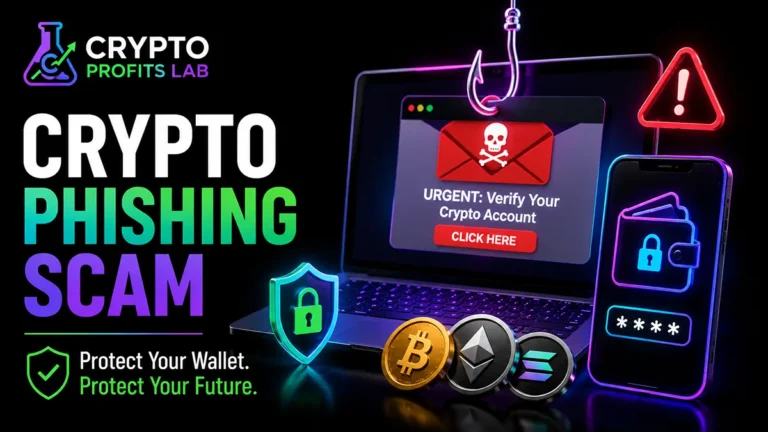
Phishing is one of the most common crypto scams to avoid because it targets logins, passwords, wallet access, and recovery phrases. A phishing site is designed to look like a real exchange, wallet, or crypto platform.
You may receive a phishing link through email, text message, social media, search ads, direct messages, or fake support replies. The message may claim your account is locked, your wallet needs verification, or you must act quickly to prevent a loss.
Once you enter your login information, the scammer may capture it. If you also enter your two-factor authentication code, they may try to access your account immediately.
Protect yourself by following these habits:
- Bookmark official exchange and wallet websites.
- Avoid logging in through email links.
- Check the URL carefully.
- Do not click random social media links.
- Avoid sponsored ads for exchange logins.
- Use two-factor authentication.
- Never enter a recovery phrase into a website.
- Ignore urgent messages from unknown senders.
Phishing often works because people rush. Slow down, verify the website, and use official apps or bookmarks.
Phishing links are crypto scams to avoid because they can steal login details, two-factor authentication codes, or wallet access.
For stronger account protection, read our beginner guide to crypto 2FA.
3. Fake Customer Support
Fake customer support scams are especially dangerous for beginners. Scammers pretend to be exchange support, wallet support, hardware wallet support, or recovery specialists.
They may reply to your social media post, send a direct message, or appear in a search result. They often sound helpful at first. Then they ask you to provide login codes, passwords, private keys, or your recovery phrase.
No legitimate support agent needs your recovery phrase. No real support agent should ask for your password. No trustworthy company will ask you to “sync” your wallet by typing your seed phrase into a website.
Common fake support phrases include:
- “Send your recovery phrase so we can verify”
- “Connect your wallet to fix the issue”
- “You must pay a fee to unlock your account”
- “We can recover stolen crypto for an upfront payment”
- “Download this remote access tool”
- “Do not contact anyone else about this issue”
If you need support, go directly to the official website or app. Never trust someone who contacts you first.
If you use a self-custody wallet, review crypto seed phrase before asking anyone for help. Your recovery phrase should remain private and offline.
4. Fake Crypto Giveaways and Airdrops
Fake giveaways are classic crypto scams to avoid. They often appear on social media, video platforms, hacked accounts, fake livestreams, and impersonation pages.
The scam may claim that a celebrity, exchange, project founder, or company is giving away free crypto. The message usually asks you to send a small amount first to “verify” your wallet or “activate” the reward. Once you send crypto, the funds are gone.
Fake airdrops work in a similar way. A site may ask you to connect your wallet, approve a transaction, or enter your recovery phrase to claim tokens. Some malicious approvals may give scammers access to wallet assets.
Warning signs include:
- “Send 1 ETH and receive 2 ETH back”
- Celebrity or company impersonation
- Urgent countdown timers
- Fake livestreams
- Wallet connection requests from unknown sites
- Airdrops requiring seed phrases
- Claims that everyone is receiving free crypto
- Suspicious token approval requests
Real giveaways do not require you to send crypto first. Real wallet recovery does not require your seed phrase on a website.
Before connecting a wallet to anything, understand basic crypto wallet safety and read crypto safety tips.
5. Romance and Trust-Based Crypto Scams
Romance scams and trust-based investment scams can be emotionally devastating. A scammer builds a relationship over time through dating apps, social media, messaging apps, or online communities. Eventually, the conversation shifts to crypto investing.
The scammer may claim to have inside knowledge, a relative in finance, a special trading platform, or a safe method for earning profits. They may encourage small deposits first, then larger ones after fake profits appear.
These scams often work because they build trust slowly. The scammer may be patient, friendly, and convincing. They may avoid asking for money directly at first and instead suggest that you “try the platform yourself.”
Warning signs include:
- An online relationship quickly turns financial
- They refuse video calls or real-world verification
- They push a specific exchange or trading site
- They claim unusually high success rates
- They discourage you from talking to friends or family
- They say withdrawals require extra payments
- They become emotional when questioned
Never send crypto to someone you only know online. Never invest through a platform recommended by a romantic contact or stranger.
6. Pump-and-Dump Groups
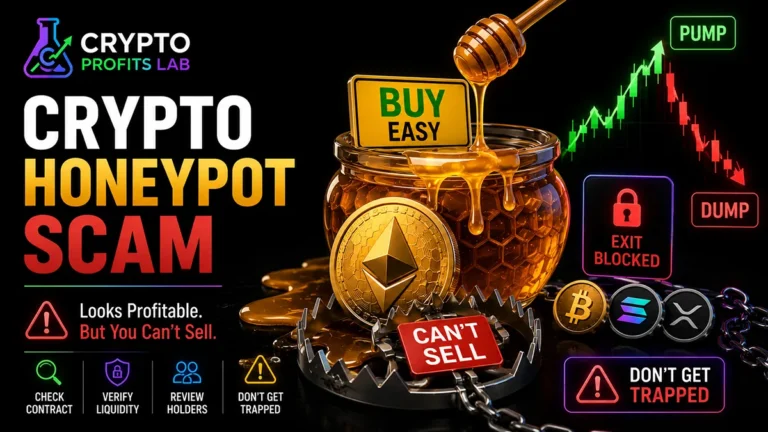
Pump-and-dump schemes are another type of crypto scam beginners should avoid. These groups often appear on messaging apps, social media, or private trading communities.
The group claims it will coordinate buying activity to push a coin’s price higher. Early insiders may buy before announcing the coin. When beginners buy during the hype, insiders sell into the price increase, leaving late buyers with losses.
Pump-and-dump groups often use excitement, countdowns, and fake confidence. They may claim everyone will profit if they act together. In reality, the people running the scheme usually have the advantage.
Warning signs include:
- “Buy at exactly this time”
- “Guaranteed pump”
- “Do not miss this coin”
- “Private insider signal”
- “Next 100x crypto”
- Heavy pressure to buy quickly
- No real research about the project
- Focus only on price hype
A real investment decision should not depend on panic, secrecy, or group pressure.
To understand price risk better, read crypto volatility and bull vs bear market crypto.
7. Fake Wallet Apps and Browser Extensions
Fake wallet apps are dangerous because they may steal recovery phrases, private keys, or wallet permissions. Scammers may create fake apps that look similar to real wallets. They may also create fake browser extensions or fake download pages.
A beginner may search for a wallet, click the wrong result, and download a malicious version. During setup, the fake wallet may ask for a recovery phrase or create a wallet controlled by the scammer.
Protect yourself by using trusted sources:
- Download from the official wallet website.
- Check the exact developer name.
- Avoid links in social media replies.
- Do not trust direct message download links.
- Read recent reviews carefully.
- Watch for spelling errors and fake branding.
- Never enter your seed phrase into a website.
- Test with small amounts first.
Fake wallet apps are crypto scams to avoid because they often target beginners during setup and recovery phrase backup.
If you are comparing storage options, read best crypto wallet for beginners, hot wallet vs cold wallet, and hardware wallet.
8. Recovery Phrase and Private Key Scams
Recovery phrase scams are among the most serious crypto scams to avoid. Your recovery phrase is the backup that can restore access to your wallet. If someone gets it, they may be able to move your funds.
Scammers may ask for your recovery phrase in many ways. They may pretend to be support, offer wallet recovery, claim your wallet needs verification, or create a fake form that asks for your phrase.
Never share:
- Recovery phrase
- Seed phrase
- Private key
- Wallet backup words
- Hardware wallet recovery words
- Login codes
- Remote access to your device
A real wallet provider does not need your seed phrase to help with general support. A real exchange does not need your self-custody wallet phrase. A real recovery expert cannot magically recover funds by asking for your phrase.
The safest rule is simple: if anyone asks for your recovery phrase, assume it is a scam.
9. Fake Exchanges and Withdrawal Traps
Fake exchanges often look like real trading platforms. They may show charts, balances, customer service chat, deposit addresses, and fake trading profits. The scam is usually revealed when the user tries to withdraw.
The platform may claim withdrawals are blocked until you pay:
- Tax fees
- Account upgrade fees
- Verification fees
- Anti-money-laundering fees
- Wallet unlock fees
- Minimum balance fees
- Network release fees
These fees are usually fake. Paying them often leads to more demands.
Before using an exchange, check whether it has a strong reputation, clear fees, real support channels, transparent withdrawal rules, and a trusted history. Avoid platforms promoted through direct messages, romance contacts, or investment groups.
If you are still choosing a platform, read centralized vs decentralized exchanges and best crypto exchange for beginners.
10. Impersonation Scams
Impersonation scams happen when someone pretends to be a trusted person or organization. The scammer may pretend to be a company, exchange, government agency, celebrity, project founder, influencer, recruiter, or support representative.
The goal is to borrow trust from a known name. The scammer may use copied logos, fake profile pictures, fake email addresses, or lookalike usernames.
Impersonation scams may include:
- Fake exchange emails
- Fake government warnings
- Fake tax demands
- Fake celebrity giveaways
- Fake project announcements
- Fake support accounts
- Fake job recruiters
- Fake investment advisors
Always verify through official channels. Do not trust a message just because it uses a familiar logo or name.
How to Check If a Crypto Offer Might Be a Scam
When evaluating any crypto opportunity, slow down and ask direct questions.
| Question | Why It Matters |
|---|---|
| Is someone promising guaranteed profits? | Real crypto investments carry risk. |
| Did a stranger contact me first? | Many scams begin through unsolicited messages. |
| Am I being pressured to act fast? | Urgency is a common manipulation tactic. |
| Do I need to send crypto first? | Advance crypto payment requests are a red flag. |
| Am I being asked for my seed phrase? | This is almost always a scam. |
| Can I independently verify the platform? | Real platforms have public reputation and clear details. |
| Are withdrawals easy to understand? | Fake platforms often block withdrawals. |
| Does the website URL match exactly? | Phishing sites often use lookalike domains. |
If the answer makes you uncomfortable, stop before sending funds.
What to Do If You Think You Were Scammed
If you think you interacted with a scam, act quickly. The right steps depend on what happened.
If you shared a password:
- Change the password immediately.
- Enable two-factor authentication.
- Review active sessions.
- Check withdrawal addresses.
- Secure your email account.
If you shared a seed phrase:
- Stop using that wallet.
- Create a new wallet with a new seed phrase.
- Move funds immediately if they are still there.
- Do not reuse the exposed phrase.
- Check connected apps and permissions.
If you sent crypto:
- Save transaction IDs.
- Take screenshots of messages and websites.
- Report the scam to the platform involved.
- Report to appropriate consumer protection agencies.
- Be cautious of recovery scammers.
Be especially careful after a scam. Recovery scammers often target victims by claiming they can recover lost crypto for a fee.
Beginner Safety Checklist
Use this checklist before buying, sending, staking, or storing crypto:
- I use trusted exchanges and official websites.
- I have enabled crypto 2FA on important accounts.
- I understand my crypto seed phrase.
- I never share recovery phrases or private keys.
- I avoid links from direct messages.
- I verify website URLs before logging in.
- I do not trust guaranteed profit claims.
- I send small test transactions first.
- I avoid unknown wallet apps and extensions.
- I research before buying any coin.
- I ignore pressure to act quickly.
- I understand that crypto transactions are usually irreversible.
This checklist will not remove all risk, but it can help beginners avoid the most common traps.
Final Thoughts: Slow Down Before You Trust
Crypto scams to avoid are not always obvious. Many scams look professional, friendly, urgent, or profitable. That is why beginners need a simple rule: slow down before you trust.
Do not send crypto because someone pressures you. Do not connect your wallet to unknown websites. Do not type your recovery phrase into online forms. Do not trust guaranteed returns. Do not assume a professional-looking website is safe.
The safest beginner approach is patient and simple. Learn the basics. Use reputable platforms. Protect your accounts. Store recovery phrases offline. Verify links. Start small. Ask questions before sending funds.
The most dangerous crypto scams to avoid usually involve urgency, secrecy, fake support, or requests for your seed phrase.
Crypto can offer real opportunities, but scammers thrive when beginners rush. The more you understand the crypto scams to avoid, the better prepared you will be to protect your money, your wallet, and your confidence.
For official consumer guidance, review the FTC page on what to know about cryptocurrency and scams.
FAQ: Crypto Scams to Avoid
What are the most common crypto scams to avoid?
The most common crypto scams to avoid include fake investment platforms, phishing websites, fake giveaways, fake support accounts, romance scams, fake wallet apps, pump-and-dump groups, and withdrawal-fee scams. Beginners should be cautious of guaranteed profits, urgent messages, requests for recovery phrases, and platforms that make deposits easy but withdrawals difficult.
How do I know if a crypto offer is a scam?
A crypto offer may be a scam if it promises guaranteed returns, pressures you to act quickly, asks for crypto upfront, requires your seed phrase, or comes from a stranger online. Be cautious if the platform cannot be independently verified or if withdrawals require extra fees. Real crypto investing involves risk and should not rely on secrecy or pressure.
Can I recover crypto after being scammed?
Recovering crypto after being scammed is often difficult because blockchain transactions are usually irreversible. If you were scammed, save transaction IDs, screenshots, wallet addresses, and messages. Report the incident to the platform involved and relevant authorities. Be careful of recovery scammers who promise to get funds back for an upfront fee.
Are fake crypto exchanges common?
Fake crypto exchanges are a common scam method used to trick beginners into depositing funds. These platforms may show fake balances and fake profits, then block withdrawals unless the user pays extra fees. Beginners should use reputable exchanges, verify official websites, check withdrawal rules, and avoid platforms promoted through direct messages or online relationships.
What should I do if someone asks for my seed phrase?
If someone asks for your seed phrase, stop immediately. A recovery phrase should never be shared with support agents, exchanges, wallet companies, friends, or online helpers. Anyone with your seed phrase may be able to access your wallet and move your funds. If your phrase was exposed, create a new wallet and move funds if possible.
Are crypto giveaways usually scams?
Many crypto giveaways are scams, especially when they ask you to send crypto first to receive more crypto back. Scammers often impersonate celebrities, exchanges, or project founders. A real giveaway should not require your recovery phrase or an upfront crypto payment. Beginners should verify announcements through official websites and avoid social media giveaway links.
How can beginners avoid crypto phishing scams?
Beginners can avoid crypto phishing scams by bookmarking official websites, avoiding login links from emails or direct messages, checking URLs carefully, using two-factor authentication, and never entering seed phrases online. Phishing sites often copy real exchange or wallet branding. Always use official apps and websites instead of links from unknown sources.
What is a romance crypto scam?
A romance crypto scam happens when a scammer builds trust through dating apps, social media, or messaging platforms, then introduces a fake crypto investment opportunity. The victim may see fake profits on a fake platform before being pressured to deposit more. Never invest through a platform recommended by someone you only know online.
What are the biggest red flags of crypto scams?
The biggest red flags of crypto scams include guaranteed profits, pressure to act fast, requests for seed phrases, unknown wallet links, fake support messages, withdrawal fees to unlock funds, and investment advice from strangers. Beginners should slow down, verify independently, and avoid sending crypto when emotions or urgency are being used.