What Is a Crypto Memo Tag? A Beginner’s Guide to Safer Transfers
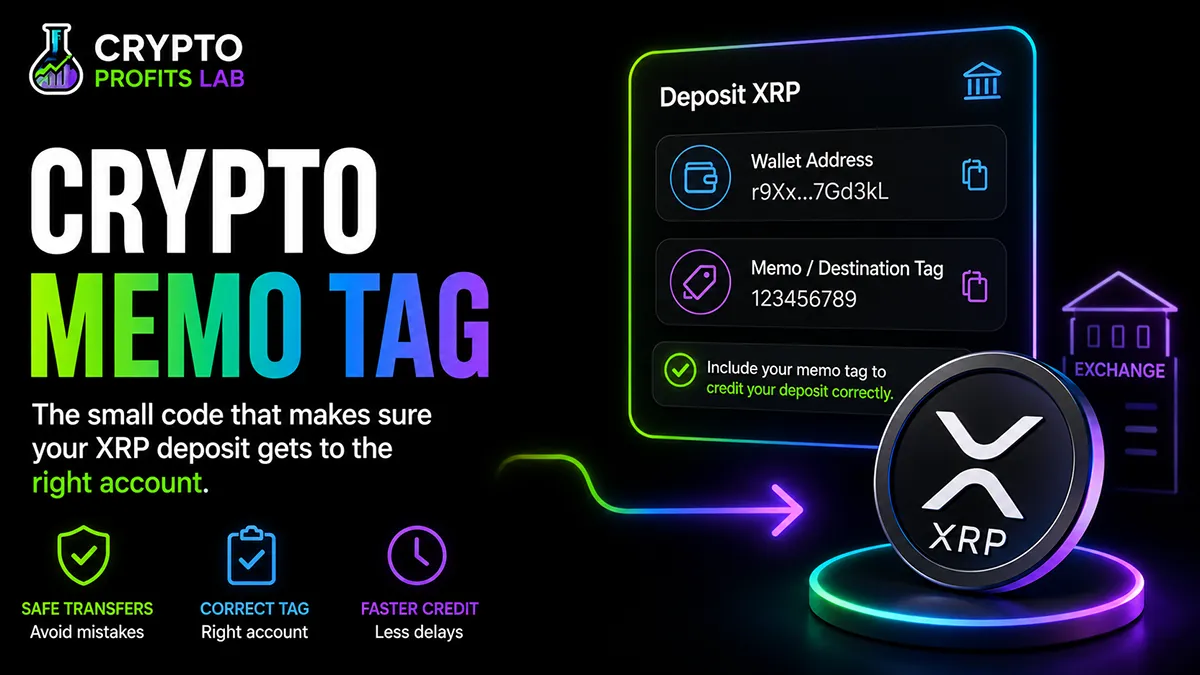
Sending cryptocurrency is usually more involved than sending money through a banking app. You may need the correct wallet address, blockchain network, and sometimes an extra code called a memo or destination tag.
A deposit page may label it as a memo, destination tag, payment ID, message, or reference. Although the wording changes, the purpose is often similar: helping the receiving platform identify who should receive the deposit.
This guide explains why the extra field matters, when it may be required, and what to do if you forget it.
Quick Answer
A crypto memo tag is an additional identifier that may be required with a wallet address when sending certain cryptocurrencies to an exchange or another custodial platform.
The wallet address tells the blockchain which platform should receive the funds. The memo or tag tells that platform which customer account should be credited.
Think of the wallet address as an apartment building and the memo or tag as the apartment number. Not every transfer needs this extra field, so follow the receiving platform’s current instructions and copy every required value exactly.
Key Takeaways
- A crypto memo tag is an extra identifier used with some cryptocurrency transfers.
- Centralized exchanges may use one shared blockchain address for deposits from many customers.
- The memo or tag helps the exchange credit the correct customer account.
- Different platforms may call it a destination tag, memo, payment ID, message, comment, or reference.
- Not every wallet address or cryptocurrency requires one.
- The receiving platform determines whether a memo or tag is needed.
- An incorrect or missing identifier can delay a deposit and may require manual recovery.
- A memo or tag is not a password, private key, seed phrase, or security code.
- Always copy both the wallet address and required identifier directly from the receiving platform.
- A small test transfer can reduce risk, but the test must include the correct memo or tag.
Crypto Memo Tag Beginner Facts
| Question | Beginner-friendly answer |
|---|---|
| What is it? | An extra identifier attached to certain crypto transfers |
| Why is it used? | To help a platform credit a deposit to the correct customer |
| Is it part of the wallet address? | Usually it appears in a separate field, although some address formats can combine information |
| Is it required every time? | No; follow the receiving platform’s instructions |
| Common names | Memo, destination tag, tag, payment ID, message, comment, or reference |
| Who provides it? | The receiving exchange, wallet, merchant, or service |
| Can you invent one? | No, not when a specific value is required |
| What happens if it is missing? | The deposit may be delayed, uncredited, rejected, or require support |
| Is it secret? | Usually no, but it should still be copied accurately |
| Can it replace a wallet address? | No; you may need both the address and the identifier |
What Is a Crypto Memo Tag in Simple Terms?
A crypto memo tag is a piece of extra transaction information. It helps a receiving service connect an incoming blockchain payment to the correct user, invoice, or internal account.
Many centralized exchanges manage funds on behalf of large numbers of customers. Instead of creating a completely separate deposit setup for every person on every supported network, a platform may use one address for many deposits.
When multiple customers send funds to that shared address, the exchange needs another way to tell the deposits apart. The memo or tag acts as that extra clue.
On the XRP Ledger, destination tags can identify payments intended for different customers or purposes at a shared address. The official XRP Ledger documentation notes that receiving a payment without the expected destination tag may require manual investigation to determine which customer should be credited.
The important beginner rule is simple: when the deposit screen gives you both an address and a crypto memo tag, use both.
Why Do Crypto Exchanges Use Memos and Tags?
A cryptocurrency exchange may hold customer funds in shared or managed blockchain accounts. The exchange then keeps an internal record showing how much belongs to each customer.
The public blockchain sees a transfer arriving at the exchange’s address. The exchange’s internal system must then connect that transfer to your personal account.
A memo or destination tag can provide that connection.
For example, destination tags can separate XRP deposits arriving at the same exchange-controlled address. Coinbase explains that some assets require a tag or memo so a shared address can route each deposit to the correct customer account.
Memo, Destination Tag, and Payment ID: Are They the Same?
These terms are often grouped together because they solve similar practical problems, but they are not technically identical on every blockchain.
A platform might call the field a memo, destination tag, payment ID, message, comment, or reference. The label matters less than the receiving instructions, and one network’s rules should never be assumed to apply to another.
A destination tag on the XRP Ledger is commonly a number. A Stellar transaction can include different memo types, including text and numerical identifiers. Stellar’s official documentation describes memos as optional transaction fields whose format depends on the selected memo type.
The crypto memo tag shown by your receiving platform should be copied exactly into the matching field on the sending platform. Do not change its spacing, add words, shorten it, or replace it with your own description.
Wallet Address vs. Crypto Memo Tag
A crypto wallet address identifies the blockchain destination. The additional memo or tag helps the destination platform identify the correct account or purpose.
Here is the easiest comparison:
- Wallet address: the street address of an apartment building
- Memo or destination tag: the apartment number
- Cryptocurrency network: the delivery route used to reach the building
You may need all three details to complete the transfer correctly.
The wallet address and crypto memo tag are not interchangeable. Entering the memo into the address field or the address into the memo field can cause the transfer to fail or become difficult to recover.
Is a Crypto Memo Tag Required for Every Transfer?
No. Whether it is required depends on the cryptocurrency, blockchain, receiving address, and receiving platform.
You are more likely to see one when sending funds to a centralized exchange or another custodial service. A personal self-custody wallet may not require the same routing identifier, but this is not a universal rule.
Do not decide based only on the coin’s name. The same asset may be handled differently by two exchanges. One platform may require an identifier, while another may provide a unique address or use a different deposit design.
Always open the receiving platform first and read its current instructions. If the deposit page does not show a memo or tag, do not invent one unless the platform specifically tells you what to enter.
Which Cryptocurrencies May Use a Memo or Tag?
Beginners commonly encounter these fields with assets such as XRP or Stellar, especially when depositing to centralized exchanges. A fixed list can become outdated, so check the deposit screen for the exact asset and network you plan to use.
For example:
- Choose XRP on the receiving exchange.
- Select the supported XRP Ledger network.
- Read the warning shown beside the deposit details.
- Copy the address.
- Copy the destination tag when one is displayed.
The same process applies to other cryptocurrencies. Your what is XRP and what is Stellar guides can help you understand the networks before moving funds.
How a Crypto Memo Tag Works Step by Step
The process is easier when you separate the blockchain transfer from the exchange’s internal accounting.
Step 1: The Receiving Platform Creates Deposit Instructions
You open the deposit page for a cryptocurrency. The platform shows a wallet address and, when required, a crypto memo tag.
Step 2: You Enter Both Details on the Sending Platform
You paste the wallet address into the destination field. You then paste the memo or tag into its separate field.
Step 3: The Sending Platform Broadcasts the Transaction
After you confirm the transfer, the wallet or exchange sends a signed crypto transaction to the network.
Step 4: The Blockchain Processes the Transfer
The network records the transaction, and you may receive a crypto transaction hash that lets you track it publicly.
Step 5: The Receiving Platform Detects the Deposit
The exchange monitors its address for incoming payments. It sees the asset, amount, sending details, and included memo or tag.
Step 6: The Platform Credits the Correct Account
The platform matches the crypto memo tag to your internal customer record. After the required confirmations or finality checks, it adds the deposit to your exchange balance.
A transfer can therefore succeed on the blockchain while remaining uncredited inside the exchange.
How to Send Crypto With a Memo or Tag
Use this beginner-friendly process whenever a deposit page displays an extra identifier.
1. Start on the Receiving Platform
Open the wallet or exchange where you want the funds to arrive. Choose Deposit or Receive.
2. Select the Exact Asset
Choose the cryptocurrency you plan to send.
3. Select the Correct Network
Confirm that the sending and receiving platforms support the same blockchain network. A correct crypto memo tag cannot fix a wrong-network transfer.
4. Read Every Warning
Read any warning explaining that an extra identifier is required.
5. Copy the Wallet Address
Use the copy button and compare the beginning and ending characters after pasting.
6. Copy the Memo or Tag
Paste the exact value into the matching field without adding spaces, punctuation, or explanatory text.
7. Review the Minimum Deposit
Check the minimum deposit because an undersized test may not be credited.
8. Send a Small Test Amount
When practical, send a small amount first using the same address, network, and identifier.
9. Track the Test
Use the transaction ID and a trusted blockchain explorer to review the status.
10. Confirm the Account Credit
Wait until the receiving platform shows the deposit in your available or pending balance before sending the larger amount.
For a complete transfer checklist, follow the how to transfer crypto guide.
What Happens If You Forget the Memo or Tag?
The outcome depends on the receiving platform and network. The blockchain transfer may succeed, but the exchange may not know which customer should receive it.
Possible outcomes include:
- The deposit remains uncredited
- The platform places the deposit under review
- Customer support asks for proof of ownership
- A recovery fee is charged
- Recovery takes days or weeks
- The transfer cannot be recovered
- The payment is rejected when the address requires a tag
Some XRP Ledger addresses can enable a setting that rejects incoming payments without a destination tag. The official documentation explains that payments missing the required tag are rejected when this setting is active.
Do not resend immediately. Confirm the transaction status and contact the receiving platform through its official support channel.
What to Do After Sending Without a Memo
Step 1: Find the Transaction ID
Copy the complete transaction hash from the sending wallet or exchange.
Step 2: Check the Blockchain Record
Use the correct explorer and confirm the status and destination address.
Step 3: Save the Important Details
Record the asset, amount, network, date, time, sending address, receiving address, and crypto memo tag that should have been used.
Step 4: Contact the Receiving Platform
Use the support link inside the official app or website. Explain that the blockchain transaction succeeded but the required memo or tag was missing or incorrect.
Step 5: Follow the Verification Process
The platform may request transaction details or proof of ownership. Follow instructions only from verified support.
Step 6: Be Patient
Manual recovery takes time and is not guaranteed.
Never give support your seed phrase, private key, password, or two-factor authentication code.
What If You Enter the Wrong Memo or Tag?
An incorrect identifier can be more complicated than a missing one because it might point to another customer account. Contact the receiving platform immediately and provide the transaction hash and complete details.
Do not pay anyone on social media to “reverse” the transfer. Only the receiving platform can review its internal records and decide whether it can correct the credit.
Can You Reuse a Crypto Memo Tag?
A platform may keep the same deposit details, but never assume an old identifier remains valid. View fresh instructions before each transfer because an exchange can update its addresses or routing system. Compare the current information with any saved address-book entry.
Does a Personal Wallet Need a Memo or Tag?
A self-custody wallet usually gives you direct control over a blockchain address, so exchange-style routing may be unnecessary. Some wallets still display an optional memo or message field. Never guess: use a value when the recipient provides one, and otherwise follow the wallet’s official instructions.
Understanding the difference between exchange custody and personal wallet control is easier with the centralized vs decentralized exchanges guide.
Crypto Memo Tag Safety and Risk Tips
The field is normally not secret, but the transfer process still carries serious risks.
Verify the Receiving Platform
Use the official app or a saved website bookmark.
Match the Network
Verify the network, address, and identifier together.
Never Share Wallet Secrets
Legitimate support does not need your seed phrase or private key.
Watch for Fake Recovery Services
Scammers may promise guaranteed recovery in exchange for payment or a wallet connection.
Confirm the Full Identifier
Do not rely on a shortened display. Use the copy button and check the full value before approving the transaction.
Avoid Publicly Posting Account Details
A crypto memo tag may help connect a public blockchain payment to an exchange account. Share transaction information only when necessary.
Use a Test Transfer
A small test can reveal an incorrect network, address, or identifier before you risk a larger amount.
Review the broader crypto safety tips guide before moving valuable assets.
Common Beginner Mistakes
Copying Only the Wallet Address
The address may reach the exchange, but the missing crypto memo tag can prevent automatic account crediting.
Inventing a Memo
Never make up a number because the sending screen marks the field as required. Return to the receiving platform and obtain the correct instructions.
Reusing Old Deposit Details
Addresses and identifiers can change. Check the current deposit screen every time.
Choosing the Wrong Network
A destination tag does not redirect funds between blockchains. Both platforms must use a compatible network.
Confusing a Memo With a Transaction Hash
The memo helps identify the recipient or purpose. The transaction hash identifies the completed or pending blockchain transaction.
Sending Below the Minimum Deposit
A technically successful test may not be credited when it is smaller than the receiving platform’s minimum.
Trusting Unofficial Support
Scammers often respond quickly to public complaints. Contact support only through the official app or website.
Skipping the Final Review
Crypto transfers are often irreversible. Take time to check the asset, network, address, memo or tag, amount, and fee.
A Simple Pre-Transfer Checklist
Before approving a transfer, ask:
- Am I sending the correct cryptocurrency?
- Did I select the correct blockchain network?
- Did I copy the current receiving address?
- Did the deposit screen provide a memo, tag, or payment ID?
- Did I paste the exact crypto memo tag into the correct field?
- Does the pasted address match the first and last characters?
- Is my amount above the minimum deposit?
- Can I send a small test first?
- Did I review the network fee?
- Am I using the official wallet or exchange?
- Do I understand that the transfer may be irreversible?
- Have I saved the transaction hash after sending?
This short pause can prevent a long recovery process.
Final Thoughts
A crypto memo tag is a small detail with an important job. It helps exchanges and other services connect an incoming blockchain payment to the correct customer or purpose.
The safest approach is to treat the memo or tag as part of the destination. Start on the receiving platform, select the exact asset and network, and copy every required field directly from the current deposit screen.
Never guess an identifier, reuse outdated instructions without checking, or assume a successful blockchain transaction guarantees an exchange credit. Verify the address, network, amount, and crypto memo tag before approving the transfer.
Crypto Profits Lab is designed to make details like these easier for beginners to understand. Clean explanations and careful habits can help you use crypto more confidently while respecting the risks of irreversible transactions.
Crypto Memo Tag Frequently Asked Questions
What Is a Crypto Memo Tag?
A crypto memo tag is an additional identifier included with some cryptocurrency transfers. Centralized exchanges may use one blockchain address for deposits from many customers, so the memo or destination tag helps identify which customer account should receive the funds. It does not replace the wallet address. When a receiving platform provides both details, copy both exactly.
Is a Memo Tag the Same as a Wallet Address?
No. A wallet address identifies the blockchain destination, while a memo or tag can identify a customer, invoice, or purpose within that destination. Think of the wallet address as an apartment building and the identifier as an apartment number. Some transfers require only the address, while others require both pieces of information.
How Do I Know Whether I Need a Crypto Memo Tag?
Open the deposit or receive page on the platform where the funds will arrive. Select the exact cryptocurrency and network, then read the displayed instructions. If the platform provides a memo, destination tag, payment ID, or similar value, include it. Do not rely on an old transfer or assume every platform handles the asset the same way.
What Happens If I Send XRP Without a Destination Tag?
The payment may reach the exchange’s XRP Ledger address but remain uncredited because the platform cannot automatically identify your account. Some addresses can reject payments that omit a required destination tag. Contact the receiving platform’s official support team with the transaction hash and transfer details. Recovery may take time, involve a fee, or be unavailable.
Can I Make Up a Memo When the Field Is Required?
No. A random value may point to no account or, in some systems, the wrong account. Return to the receiving platform and copy the exact identifier shown with its deposit address. When your personal wallet truly does not require a specific value, consult the wallet’s official instructions rather than entering a guessed number.
Is It Safe to Share a Crypto Memo Tag?
A memo or destination tag is not a secret like a seed phrase or private key. You may share it with the sender or official support when needed. However, it can connect public transaction information to your account activity, so share it only when useful and never disclose wallet recovery credentials.
Can a Crypto Memo Tag Recover a Wrong-Network Transfer?
No. The identifier helps a receiving platform route a payment after it arrives on a supported blockchain. It cannot move funds from one network to another or repair an incompatible address. Wrong-network recovery depends on whether the receiving platform controls the destination and supports a technical recovery process. Contact official support before taking further action.
Can I Use the Same Memo Tag for Every Deposit?
Do not assume that you can. Some platforms keep deposit details stable, while others may update addresses, tags, or account-routing systems. Open the receiving platform’s deposit page before every transfer and use the current information displayed there. Reusing an outdated identifier can delay the deposit or send it to the wrong internal account.