Crypto Staking: A Beginner’s Guide to Earning Rewards Safely
Crypto staking is one of the most popular ways beginners hear about earning passive income with cryptocurrency. Instead of only buying and holding coins, staking allows certain crypto holders to support a blockchain network and potentially earn rewards over time.
At first, crypto staking can sound complicated. You may see terms like validators, proof of stake, lockup periods, staking rewards, slashing, delegation, liquid staking, and validator nodes. The good news is that beginners do not need to understand every technical detail before learning the basics.
This guide explains crypto staking in plain English. You will learn what staking means, how it works, why rewards exist, which risks to understand, and how to approach staking safely as a beginner.
Before going deeper, it helps to understand the foundation of cryptocurrency and blockchain networks. If you are brand new, start with our guides on what is cryptocurrency and blockchain technology. Those two topics will make crypto staking much easier to understand.
What Is Crypto Staking?
Crypto staking is the process of using certain cryptocurrencies to help support a proof-of-stake blockchain network. In return, participants may earn staking rewards.
A simple way to think about it is this: some blockchains need participants to help verify transactions and keep the network secure. Instead of using miners like Bitcoin does, proof-of-stake networks use validators. These validators lock up, or “stake,” crypto as part of the network’s security system.
When validators do their job correctly, they can receive rewards. When they break rules, act dishonestly, or fail to stay online when required, penalties may apply.
Crypto staking is only available on certain blockchain networks. Not every cryptocurrency can be staked. Bitcoin, for example, does not use proof of stake. It uses proof of work. Other crypto assets, such as Ethereum, Solana, Cardano, and Polkadot, are connected to staking systems in different ways.
If you want to compare major crypto assets before staking, you may also find our guides on what is Ethereum, what is Solana, and what is Cardano helpful.
Why Does Crypto Staking Exist?
Crypto staking exists because some blockchains need a secure way to confirm transactions without using traditional mining. Proof-of-stake networks rely on validators who commit crypto to the network. This gives validators a financial reason to follow the rules.
If validators behave honestly, they help keep the blockchain running and may earn rewards. If they behave badly, they can lose some of the crypto they staked. This penalty system is designed to protect the network.
Staking helps proof-of-stake blockchains:
- Confirm transactions
- Add new blocks
- Support network security
- Encourage honest validator behavior
- Reduce dependence on energy-heavy mining
- Reward participants who help maintain the network
For an authority resource, Ethereum.org explains how Ethereum staking works, including validator responsibilities and staking options.
How Crypto Staking Works
Crypto staking can work differently depending on the blockchain, wallet, exchange, or staking provider. However, the basic idea is similar across many proof-of-stake systems.
A user locks or delegates eligible crypto. That crypto is then connected to validator activity on the network. Validators help confirm transactions and produce new blocks. When the validator performs correctly, rewards may be distributed.
In simple terms, crypto staking usually involves these steps:
- You own a crypto asset that supports staking.
- You choose where or how to stake it.
- Your crypto is locked, delegated, or assigned to a validator.
- The validator helps secure the blockchain network.
- Rewards may be earned based on network rules.
- You may need to wait before unstaking or withdrawing.
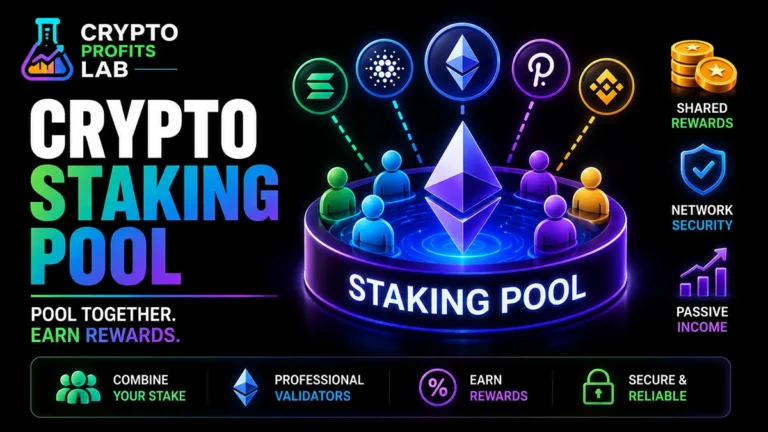
Some beginners stake directly through a crypto exchange. Others stake through a wallet. Advanced users may run their own validator node, but that requires more money, technical knowledge, and ongoing responsibility.
If you have not bought crypto yet, read how to buy crypto for beginners before trying to stake. You should understand the buying process before locking assets into any staking program.
Proof of Stake vs Proof of Work
To understand crypto staking, it helps to compare proof of stake with proof of work.
Proof of work is used by Bitcoin. It relies on miners who use computing power to help secure the network and process transactions. Mining requires specialized equipment, electricity, and technical setup.
Proof of stake uses validators instead of miners. Validators stake crypto as collateral and help confirm transactions. The network uses rules to choose validators and reward honest participation.
The key difference is that proof of work depends on computing power, while proof of stake depends on staked crypto and validator behavior.
For beginners, this distinction matters because staking is not the same as mining. You are not using your home computer to mine coins. You are participating in a blockchain security model that uses staked assets.
Common Ways Beginners Can Stake Crypto
There are several ways to participate in crypto staking. Each option has different levels of difficulty, control, and risk.
1. Staking Through a Crypto Exchange
Many beginners start crypto staking through a centralized exchange because it is simple. The exchange may offer a staking button, show estimated rewards, handle validator selection, and distribute rewards to your account.
This approach can be convenient, but it also means you are trusting the exchange. You may not control the private keys, and platform rules can change. Some exchanges may charge fees or take a percentage of rewards.
If you are choosing a platform, read our guide to the best crypto exchange for beginners. You can also review centralized vs decentralized exchanges to better understand the tradeoffs.
2. Staking Through a Crypto Wallet
Some crypto wallets allow users to stake directly from the wallet. This can give you more control than staking through an exchange, depending on the wallet and network.
Wallet staking may involve choosing a validator, reviewing commission rates, understanding lockup rules, and approving transactions. This requires more attention than clicking a simple exchange staking button.
Before using wallet-based staking, make sure you understand crypto wallet basics. You should also understand the difference between hot wallet vs cold wallet options.
3. Delegated Staking
Delegated staking allows users to assign staking power to a validator without running validator hardware themselves. This is common on some proof-of-stake networks.
The validator does the technical work. The delegator may receive a portion of rewards after validator fees or commissions. However, choosing the wrong validator can create problems, such as lower rewards or possible penalties depending on the network.
When delegating, beginners should look for validators with:
- Strong uptime
- Reasonable commission fees
- Transparent information
- A good track record
- Clear community reputation
- No unrealistic reward promises
4. Liquid Staking
Liquid staking is a more advanced form of crypto staking. It allows users to stake crypto and receive a liquid token that represents their staked position. That token may be used elsewhere in decentralized finance.
This can add flexibility, but it also adds extra risk. Liquid staking may involve smart contract risk, token price differences, protocol risk, and additional complexity.
Beginners should be careful with liquid staking. It may sound attractive because it offers more options, but more options can also mean more ways to make mistakes.
5. Solo Validator Staking
Solo validator staking means running your own validator node. This provides more control and may support network decentralization, but it is not usually the easiest path for beginners.
For example, Ethereum solo staking requires technical setup, validator responsibilities, and a significant amount of ETH. Beginners should not rush into running a validator without deep research and preparation.
Most new users are better off learning through small amounts, simple tools, and safer education before considering advanced validator setups.
Potential Benefits of Crypto Staking
Crypto staking can be attractive because it may allow holders to earn rewards while supporting a blockchain network. For long-term holders, staking can feel more productive than simply leaving coins idle.
Potential benefits include:
- Earning staking rewards
- Supporting proof-of-stake networks
- Participating in blockchain security
- Learning more about crypto ecosystems
- Potentially compounding rewards over time
- Using assets without actively trading
Staking may also encourage patience. Instead of constantly buying and selling, some users stake because they already plan to hold a crypto asset for the long term.
However, rewards should never be viewed as guaranteed profit. The value of the crypto asset can still fall. A user may earn more tokens but still lose money if the token price drops significantly.
This is why understanding crypto volatility is important before staking. Rewards do not remove market risk.
Risks of Crypto Staking
Crypto staking has real risks. Beginners should understand those risks before locking or delegating funds.
Common staking risks include:
- Crypto price volatility
- Lockup or unstaking delays
- Validator penalties
- Platform failure
- Smart contract bugs
- Slashing risk
- Liquidity risk
- Tax complexity
- Scams and fake staking platforms
The biggest risk for many beginners is market volatility. If you stake a coin and its price drops sharply, your staking rewards may not make up for the loss.
Lockup periods can also matter. Some networks or platforms require users to wait before unstaking. If the market drops during that waiting period, you may not be able to sell immediately.
Platform risk is another major concern. If you stake through an exchange or third-party provider, you are trusting that platform to operate correctly and protect customer assets.
Scams are also common. Fake staking platforms may promise unusually high rewards, guaranteed income, or risk-free returns. Beginners should review crypto scams to avoid before using any staking service.
What Is Slashing in Crypto Staking?
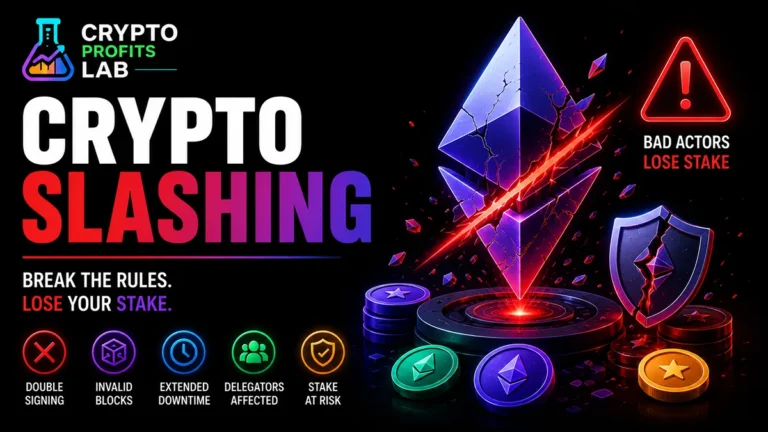
Slashing is a penalty that can happen on some proof-of-stake networks when validators break rules or fail to perform properly. Depending on the network, a validator may lose a portion of staked funds.
Slashing can happen because of issues such as:
- Double-signing blocks
- Validator downtime
- Incorrect validator behavior
- Network rule violations
Not every beginner will directly manage validator operations, but slashing still matters. If you delegate to a validator, poor validator performance could affect your rewards or funds depending on the blockchain’s rules.
Before staking, check whether the network has slashing risk and how that risk applies to your chosen staking method.
Crypto Staking vs Crypto Lending
Crypto staking and crypto lending are often confused, but they are not the same thing.
Crypto staking usually supports a proof-of-stake blockchain network. Rewards are connected to network validation and security.
Crypto lending involves lending digital assets to borrowers or platforms in exchange for interest. Lending depends on borrower repayment, platform management, collateral systems, and market conditions.
In simple terms:
- Crypto staking supports blockchain network operations.
- Crypto lending involves lending assets for potential interest.
- Staking risk is often tied to validators, networks, and lockups.
- Lending risk is often tied to borrowers, platforms, collateral, and liquidity.
If you want to compare the two, read our beginner guide to crypto lending.
Crypto Staking vs Yield Farming
Crypto staking and yield farming can both involve earning rewards, but they are different strategies.
Crypto staking usually involves proof-of-stake networks and validator participation. Yield farming usually happens in decentralized finance, where users move assets through liquidity pools, lending protocols, or reward programs.
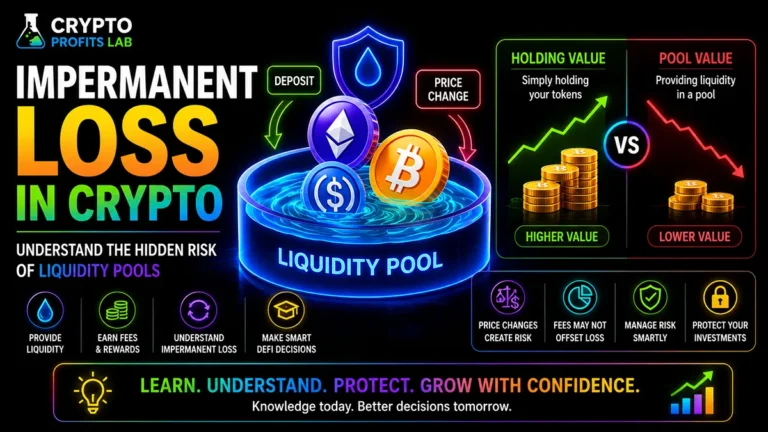
Yield farming can be more complex and may involve higher risk. It often includes smart contract risk, impermanent loss, changing reward rates, and multiple tokens.
Beginners should usually understand crypto staking before exploring yield farming. You can learn more in our guide to crypto yield farming.
How to Choose a Crypto Staking Option
Choosing a staking option should not be based only on the highest advertised reward. High rewards can also come with high risk.
Before staking, ask these questions:
- Does this crypto asset support staking?
- Do I understand the project?
- What is the estimated reward rate?
- Are rewards fixed or variable?
- Is there a lockup period?
- How long does unstaking take?
- Are there platform fees?
- Is there slashing risk?
- Who controls the private keys?
- What happens if the platform fails?
- Can I afford the price risk?
You should also research the crypto asset itself. A high staking reward does not help much if the token loses most of its value.
Our guide to market cap crypto can help you understand how crypto assets are compared by size. Larger market cap assets may still be risky, but they are often easier to research than small, unknown tokens.
Beginner Safety Tips for Crypto Staking
Security matters before, during, and after staking. Beginners should protect their accounts, wallets, passwords, and recovery phrases.
Use these safety tips before staking:
- Start with a small amount.
- Use trusted wallets and exchanges.
- Turn on two-factor authentication.
- Bookmark official websites.
- Avoid links from direct messages.
- Never share your recovery phrase.
- Read lockup and withdrawal rules.
- Understand network fees before moving funds.
- Test transfers with small amounts first.
- Keep records of staking rewards.
Two-factor authentication is especially important if you stake through an exchange. Read our guide to crypto 2FA before depositing funds.
If you use a personal wallet, your recovery phrase is critical. Anyone with your recovery phrase can access your wallet. Learn how to protect it in our guide to crypto seed phrase.
You can also review our complete list of crypto safety tips before using any staking service.
Should Beginners Try Crypto Staking?
Beginners can learn about crypto staking, but they should not rush into it. Staking is best understood after learning basic crypto concepts, wallet safety, exchange security, and market risk.
If you are brand new, focus first on:
- Understanding cryptocurrency
- Learning blockchain basics
- Buying a small amount safely
- Securing your exchange account
- Understanding wallets
- Learning about volatility
- Avoiding scams
Once those basics are clear, crypto staking may be worth researching with a small amount. Do not stake just because a platform advertises high rewards. Staking should fit your risk tolerance, time horizon, and understanding of the asset.
If you are still learning how crypto markets move, read bull vs bear market crypto. Market cycles can affect both the value of your staked assets and your confidence during price drops.
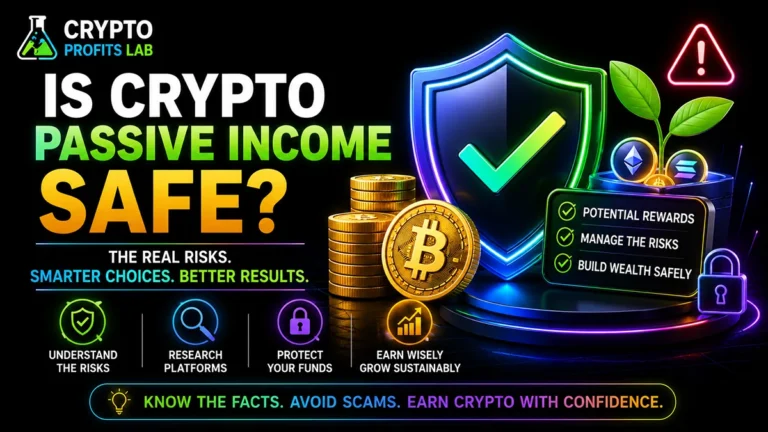
Is Crypto Staking Passive Income?
Crypto staking is often described as passive income, but beginners should be careful with that phrase. Staking rewards may be passive in the sense that you are not actively trading every day. However, staking is not risk-free income.
The value of your staked crypto can fall. Rewards can change. Platforms can fail. Lockup periods can limit flexibility. Validators can perform poorly. Some staking methods require ongoing monitoring.
A better way to think about crypto staking is this: it may generate rewards, but those rewards come with market, platform, technical, and security risks.
If you approach staking as guaranteed income, you may take too much risk. If you approach it as a learning opportunity with potential rewards, you are more likely to make careful decisions.
How Much Crypto Should You Stake?
There is no perfect amount for every beginner. The safest approach is to start small. Your first staking experience should be about learning how the process works, not chasing a large reward.
Only stake an amount you are comfortable having locked, delayed, or exposed to price swings. If you might need the money soon, staking may not be appropriate.
Some users combine staking with dollar-cost averaging. This means they buy small amounts over time and may stake eligible assets gradually. Learn more in our guide to dollar cost averaging crypto.
Before staking larger amounts, make sure you understand:
- How to unstake
- How long withdrawals take
- What fees apply
- Whether rewards are taxable
- What happens during market declines
- Whether your wallet or platform is secure
Final Thoughts: Learn Before You Stake
Crypto staking can be a useful way to participate in proof-of-stake networks and potentially earn rewards. It can help beginners understand how blockchain networks operate beyond simple buying and selling.
However, staking is not free money. It comes with price risk, platform risk, technical risk, lockup risk, and scam risk. Beginners should never choose a staking option based only on a high advertised reward.
The best approach is to learn first. Understand the asset. Review the staking rules. Start small. Protect your accounts. Avoid unrealistic promises. Keep records. Know how to unstake before you stake.
Crypto staking can make sense for some long-term holders, but only when it fits your goals, risk tolerance, and level of understanding. The more you learn before staking, the better prepared you will be to make safe and informed decisions.
FAQ: Crypto Staking
What is crypto staking?
Crypto staking is the process of using eligible cryptocurrency to help support a proof-of-stake blockchain network. Staked crypto may help validators confirm transactions, add blocks, and secure the network. In return, participants may earn staking rewards. Not all cryptocurrencies support staking, and rewards vary by network, validator performance, platform fees, and market conditions.
Is crypto staking safe for beginners?
Crypto staking can be used by beginners, but it is not risk-free. The main risks include price volatility, lockup periods, platform failure, validator penalties, smart contract bugs, and scams. Beginners should start small, use reputable platforms, turn on two-factor authentication, understand unstaking rules, and avoid staking programs that promise guaranteed or unusually high returns.
Can you lose money with crypto staking?
Yes, you can lose money with crypto staking. Even if you earn rewards, the value of the staked cryptocurrency can fall sharply. Some staking methods also involve lockup delays, validator penalties, platform risk, or smart contract risk. Staking rewards do not guarantee profit, so beginners should only stake money they can afford to risk.
Which cryptocurrencies can be staked?
Only certain cryptocurrencies can be staked. Staking is commonly associated with proof-of-stake networks such as Ethereum, Solana, Cardano, Polkadot, and other similar blockchain ecosystems. Each network has its own staking rules, reward structure, validator system, and unstaking period. Beginners should research the specific asset before assuming it can be staked safely.
How much can you earn from crypto staking?
Crypto staking rewards vary by network, validator, platform, fees, participation rate, and market conditions. Reward rates are not guaranteed and can change over time. A high advertised reward may also come with higher risk. Beginners should focus less on the highest yield and more on asset quality, security, lockup rules, and platform reputation.
Do I need a wallet for crypto staking?
You do not always need a personal wallet for crypto staking because some exchanges offer staking directly inside your account. However, wallet-based staking may give you more control, depending on the network. Beginners should understand wallet safety, recovery phrases, private keys, and transfer risks before staking through a personal wallet.
What is the difference between staking and lending crypto?
Crypto staking helps support proof-of-stake blockchain networks and may reward users for participating in network security. Crypto lending involves lending assets to borrowers or platforms in exchange for interest. Staking risk is usually tied to validators, networks, and lockups, while lending risk is tied to borrowers, collateral, platform management, and liquidity.
Is crypto staking passive income?
Crypto staking is often described as passive income because rewards may be earned without active trading. However, it is not risk-free income. Staked assets can lose value, rewards can change, and funds may be locked for a period of time. Beginners should treat staking as a risky crypto strategy, not guaranteed income.
Should beginners stake crypto on an exchange?
Staking through an exchange can be simpler for beginners because the platform handles much of the technical process. However, it also means trusting the exchange with custody, rules, fees, and withdrawals. Beginners should use reputable platforms, read staking terms carefully, understand lockup periods, and avoid keeping more crypto on an exchange than they are comfortable risking.