What Is Avalanche (AVAX)? A Beginner’s Guide
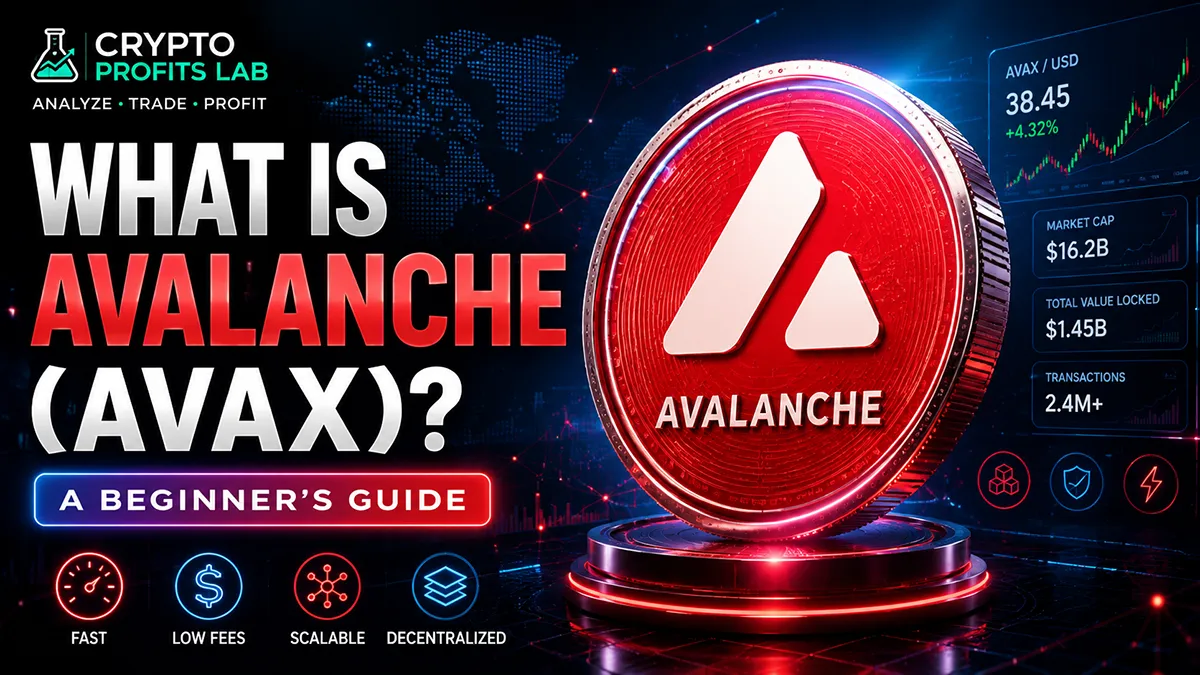
What is Avalanche AVAX and why does it matter in crypto? Avalanche is a smart contract blockchain platform designed for fast transactions, low fees, decentralized applications, custom blockchain networks, and digital asset activity.
For beginners, Avalanche can feel confusing because people often use the word in different ways. Sometimes they mean the Avalanche network. Sometimes they mean AVAX, the native cryptocurrency used on the network. Other times they are talking about staking, DeFi, subnets, smart contracts, wallets, or Avalanche’s C-Chain.
This guide explains What is Avalanche AVAX in plain English. You will learn how Avalanche works, what AVAX is used for, why subnets matter, how Avalanche compares with Ethereum, Solana, Cardano, and other networks, and what beginners should know before buying or using AVAX.
If you are still learning the basics of digital assets, start with this beginner guide to what is cryptocurrency before going deeper into Avalanche.
What is Avalanche AVAX?
What is Avalanche AVAX? Avalanche is a public blockchain platform that supports smart contracts, decentralized applications, token transfers, staking, and custom blockchain networks. AVAX is the native cryptocurrency used to pay fees, secure the network, and participate in Avalanche activity.
A blockchain is a shared digital record that stores transactions across many computers. Instead of one company controlling the entire database, a blockchain network is maintained by participants that follow the same rules.
Avalanche was built to offer fast transaction finality and flexible blockchain development. It aims to support decentralized finance, NFTs, gaming, institutional applications, tokenized assets, and custom networks that can be built for specific use cases.
In simple terms, What is Avalanche AVAX? It is a blockchain ecosystem where developers can build apps and custom networks, while AVAX is the asset used for fees, staking, and network participation.
To understand the foundation behind Avalanche, read this beginner guide to blockchain technology.
Avalanche vs AVAX: What Is the Difference?
A common beginner mistake is thinking Avalanche and AVAX are exactly the same thing. They are closely connected, but they do not mean the same thing.
Avalanche is the blockchain platform. AVAX is the native cryptocurrency used on the Avalanche network.
You can think of Avalanche as the ecosystem and AVAX as the asset used inside that ecosystem. AVAX can be used for transaction fees, staking, transfers, and activity across Avalanche-based applications.
| Term | Meaning | Beginner Explanation |
|---|---|---|
| Avalanche | Blockchain platform | The network where apps, smart contracts, and subnets run |
| AVAX | Native cryptocurrency | The asset used for fees, staking, and transfers |
| C-Chain | Contract Chain | Avalanche chain used for EVM smart contracts |
| Subnet | Custom blockchain network | A customizable network built within the Avalanche ecosystem |
What is Avalanche AVAX from a beginner’s point of view? Avalanche is the network and technology ecosystem. AVAX is the cryptocurrency used inside that ecosystem.
Who Created Avalanche?
Avalanche was developed by Ava Labs, a blockchain technology company co-founded by Emin Gün Sirer, Kevin Sekniqi, and Maofan “Ted” Yin. The project launched with the goal of creating a high-performance blockchain platform for decentralized applications and custom networks.
Avalanche entered the market during a period when many users were looking for faster and cheaper alternatives to congested smart contract networks. Ethereum had already shown that smart contracts and DeFi could become popular, but high gas fees and slower transaction times created demand for competing platforms.
Avalanche positioned itself as a fast, flexible smart contract network that could support both public applications and custom blockchain environments.
For comparison, you may also want to read what is Ethereum, because Ethereum and Avalanche are often compared in the smart contract blockchain market.
How Does Avalanche Work?
What is Avalanche AVAX from a technical perspective? Avalanche uses a network of validators to confirm transactions and secure the platform. Users can send AVAX, interact with applications, stake tokens, and use different Avalanche chains depending on the activity.
Avalanche is known for using multiple built-in chains. This structure can be confusing at first, but it helps separate different network functions.
Avalanche works through several important parts:
- Wallets let users hold AVAX and connect to Avalanche apps.
- Validators help secure the network.
- AVAX is used for transaction fees and staking.
- Smart contracts allow developers to build decentralized applications.
- The C-Chain supports Ethereum-compatible applications.
- Subnets allow custom blockchain networks to be created.
For beginners, the key idea is simple: Avalanche is designed to process transactions quickly and support flexible blockchain applications while using AVAX as the main asset for fees and staking.
What Are Avalanche’s Three Main Chains?
Avalanche is different from many beginner-friendly crypto projects because it uses multiple built-in chains. These chains help organize different types of activity across the network.
Exchange Chain
The Exchange Chain, often called the X-Chain, is used for creating and transferring digital assets.
For beginners, the X-Chain is less commonly discussed than the C-Chain, but it is part of Avalanche’s original design.
Contract Chain
The Contract Chain, often called the C-Chain, is the most familiar chain for many users because it supports Ethereum-compatible smart contracts.
This means developers can build applications on Avalanche using tools that are similar to Ethereum. Many Avalanche DeFi apps and wallet interactions use the C-Chain.
Platform Chain
The Platform Chain, often called the P-Chain, coordinates validators and supports subnet creation.
This chain is important for staking, validation, and custom network activity.
Understanding these chains helps explain What is Avalanche AVAX beyond just buying the token. Avalanche is not only one simple payment network. It is a smart contract and custom blockchain platform with multiple parts.
What Is AVAX Used For?
AVAX is the native cryptocurrency of Avalanche. It has several important uses inside the network.
First, AVAX is used to pay transaction fees. When users send transactions, interact with smart contracts, or use Avalanche apps, fees are paid in AVAX.
Second, AVAX can be sent between wallets as a digital asset. Some people use it for transfers, while others hold it as part of a crypto portfolio.
Third, AVAX can be staked. Staking allows AVAX holders to help secure the network by delegating or validating, depending on their setup and technical knowledge.
Fourth, AVAX may be used across decentralized finance apps, NFT marketplaces, games, tokenized assets, and other Avalanche-based applications.
What is Avalanche AVAX without AVAX? Avalanche is the blockchain platform, but AVAX is the native asset that helps power fees, staking, transfers, and network participation.
What Makes Avalanche Different?
Avalanche is different from many crypto networks because it focuses on fast finality, smart contracts, and customizable blockchain networks.
Some blockchains try to handle every use case on one main network. Avalanche supports a broader design where developers can build applications on the main ecosystem or create custom subnets for specific needs.
Avalanche is often discussed for:
- Fast transaction finality
- Smart contract support
- Ethereum compatibility through the C-Chain
- Custom subnet development
- DeFi applications
- NFT and gaming use cases
- Staking with AVAX
- Low-fee blockchain activity compared with some older networks
This does not mean Avalanche is risk-free or guaranteed to succeed. It simply means Avalanche has a different design and market position than many other crypto projects.
What Are Avalanche Subnets?
Subnets are one of Avalanche’s most important features. A subnet is a custom blockchain network built within the Avalanche ecosystem.
A subnet can be designed for a specific application, company, game, institution, or community. Instead of every project competing for space on the same shared chain, a subnet can have its own rules, validators, token design, and performance goals.
Subnets may be useful for:
- Blockchain games
- Enterprise applications
- Tokenized assets
- Financial platforms
- Regulated environments
- Custom decentralized applications
- High-volume app activity
For beginners, the easiest way to understand subnets is to think of them as customizable blockchain environments. They allow developers to build networks that fit specific needs while still connecting to the broader Avalanche ecosystem.
What is Avalanche AVAX’s main advantage here? Avalanche gives developers flexibility to build beyond one shared chain.
Avalanche and Smart Contracts
Avalanche supports smart contracts, which are programs that run on a blockchain. Smart contracts can automatically process transactions, manage tokens, power apps, and enforce rules written in code.
Smart contracts can be used for:
- Decentralized exchanges
- Lending and borrowing apps
- NFT marketplaces
- Blockchain games
- Token launches
- Stablecoin activity
- Governance tools
Avalanche’s C-Chain is compatible with Ethereum-style smart contracts, which makes it easier for developers familiar with Ethereum tools to build on Avalanche.
If you are new to smart contracts, read what is Ethereum because Ethereum helped popularize smart contract platforms.
What Can Avalanche Be Used For?
What is Avalanche AVAX used for in the real crypto world? Avalanche supports several types of blockchain activity.
Decentralized Finance
Decentralized finance, or DeFi, includes apps that allow users to trade, lend, borrow, provide liquidity, or earn yield without traditional banks.
Avalanche has been used by DeFi protocols because of its speed, smart contract support, and lower transaction costs compared with some congested networks.
DeFi can be useful, but it also carries serious risks. Smart contract bugs, poor liquidity, scams, token volatility, and user mistakes can lead to losses.
To learn more about related DeFi risks, read what is crypto lending and what is crypto yield farming.
NFTs
Avalanche can support NFTs, which are unique digital assets that may represent art, collectibles, gaming items, memberships, tickets, or other digital ownership records.
NFTs can be exciting, but they are also speculative. Many NFT projects lose value quickly, so beginners should avoid buying based only on hype.
Gaming
Gaming is a major potential use case for Avalanche subnets. Games may need fast transactions, custom rules, and the ability to handle large numbers of users.
Subnets can give gaming projects more control over their blockchain environment instead of forcing every game action onto one shared network.
Tokenized Assets
Tokenized assets are digital representations of value on a blockchain. These could include stablecoins, real-world assets, rewards, securities, or other financial instruments.
Avalanche’s custom network design may appeal to projects that need tailored token rules, compliance features, or specific transaction requirements.
Enterprise Applications
Some companies and institutions may want blockchain technology without using a fully open public environment for every process. Avalanche subnets can support more customized setups for business applications.
Enterprise interest does not guarantee investment returns, but it helps explain why Avalanche is often discussed beyond retail crypto trading.
Avalanche vs Bitcoin
What is Avalanche AVAX compared with Bitcoin? Avalanche and Bitcoin are very different types of crypto networks.
Bitcoin is mainly focused on decentralized digital money and long-term value storage. Avalanche is focused on smart contracts, DeFi, custom networks, and decentralized applications.
| Feature | Bitcoin | Avalanche |
|---|---|---|
| Native asset | BTC | AVAX |
| Main purpose | Digital money and store of value | Smart contracts and custom blockchain networks |
| Smart contracts | Limited compared with app platforms | Core feature through the C-Chain |
| Staking | No traditional staking | AVAX can be staked |
| Beginner view | Digital gold | App and subnet blockchain ecosystem |
Bitcoin is simpler by design. Avalanche is broader in function, but that also makes it more complex for beginners.
For a deeper beginner explanation, read what is Bitcoin.
Avalanche vs Ethereum
Avalanche and Ethereum are both smart contract platforms. This means developers can build decentralized applications, tokens, and blockchain-based tools on both networks.
Ethereum has the largest smart contract ecosystem, deeper liquidity, and a longer history of DeFi and NFT activity. Avalanche focuses on faster transactions, lower fees, Ethereum compatibility, and customizable subnets.
| Feature | Avalanche | Ethereum |
|---|---|---|
| Native asset | AVAX | ETH |
| Smart contracts | Yes | Yes |
| Main strength | Speed, C-Chain, and subnets | Large ecosystem and liquidity |
| Common uses | DeFi, NFTs, games, custom networks | DeFi, NFTs, tokens, Layer 2 networks |
| Beginner challenge | Understanding chains and subnets | Gas fees and ecosystem complexity |
What is Avalanche AVAX in this comparison? It is a smart contract blockchain platform that competes for developers and users while offering custom network flexibility.
Avalanche vs Solana
Avalanche and Solana are both known as fast smart contract platforms, but they use different designs.
Solana focuses on high-speed activity on its main network. Avalanche focuses on smart contracts, fast finality, and customizable subnets.
| Feature | Avalanche | Solana |
|---|---|---|
| Native asset | AVAX | SOL |
| Main focus | Smart contracts and subnets | Fast apps and low fees |
| Common uses | DeFi, NFTs, games, custom networks | DeFi, NFTs, payments, meme coins, games |
| Custom networks | Subnets are a major feature | Not the same core model |
| Beginner concern | Complexity of chains and subnets | Speculative tokens and wallet risk |
If you want to learn about Solana separately, read what is Solana.
Avalanche vs Cardano
Avalanche and Cardano are both smart contract blockchain projects, but they have different priorities.
Cardano is known for proof of stake, staking accessibility, research-focused development, and a slower methodical roadmap. Avalanche is known for speed, Ethereum compatibility, DeFi activity, and subnet flexibility.
| Feature | Avalanche | Cardano |
|---|---|---|
| Native asset | AVAX | ADA |
| Smart contracts | Yes | Yes |
| Staking | Yes | Yes |
| Main strength | Fast finality and subnets | Research-focused proof-of-stake design |
| Beginner focus | Apps, DeFi, custom networks | Staking and long-term development |
For more context, read what is Cardano.
Avalanche vs Hedera
Avalanche and Hedera both support fast digital activity, but they use different technologies.
Hedera uses hashgraph technology and focuses on distributed ledger services, token creation, smart contracts, and enterprise applications. Avalanche uses blockchain architecture and focuses heavily on smart contracts, DeFi, and subnets.
| Feature | Avalanche | Hedera |
|---|---|---|
| Native asset | AVAX | HBAR |
| Technology | Blockchain platform | Hashgraph-based distributed ledger |
| Main focus | Smart contracts and subnets | Fast ledger services and enterprise use cases |
| Common uses | DeFi, NFTs, games, custom networks | Tokens, smart contracts, payments, enterprise apps |
If you want to compare Hedera separately, read what is Hedera.
Is Avalanche Safe?
Avalanche is a major crypto network, but using or buying AVAX still requires caution. The biggest beginner risks usually come from scams, price volatility, bad wallet habits, fake websites, risky apps, exchange problems, and misunderstanding networks.
Common Avalanche risks include:
- Sending AVAX to the wrong wallet address
- Using the wrong chain or network
- Losing your seed phrase
- Connecting your wallet to fake apps
- Buying unknown or low-quality tokens
- Keeping too much crypto on an exchange
- Chasing hype during volatile markets
- Approving transactions you do not understand
A good beginner rule is to move slowly. Test small transactions first. Use trusted wallets and exchanges. Never share your seed phrase. Double-check networks before sending AVAX.
For more protection, review crypto safety tips, crypto scams to avoid, crypto 2FA, and crypto seed phrase.
How to Store Avalanche
To hold AVAX, you need a crypto wallet that supports Avalanche. A wallet does not physically store coins. Instead, it stores the private keys or recovery information that let you access your crypto on the network.
There are two main wallet types:
- Hot wallets are connected to the internet and are convenient for regular use.
- Cold wallets are offline hardware wallets and are usually better for long-term storage.
Hot wallets can be useful for smaller AVAX balances or interacting with Avalanche apps. Cold wallets are usually safer for larger long-term balances because they help keep private keys offline.
If you are new to wallets, start with this guide to crypto wallets. Then compare hot wallets vs cold wallets and learn why a hardware wallet may be worth considering.
How to Buy Avalanche
What is Avalanche AVAX buying like for beginners? Most people buy AVAX through a crypto exchange. An exchange lets you create an account, deposit money, and purchase AVAX.
A simple beginner process looks like this:
- Choose a reputable crypto exchange.
- Create your account.
- Complete identity verification if required.
- Turn on two-factor authentication.
- Deposit funds using an approved payment method.
- Search for AVAX or Avalanche.
- Buy a small amount first.
- Decide whether to keep AVAX on the exchange or move it to your own wallet.
Before withdrawing AVAX, pay close attention to the network or chain you are using. Sending funds on the wrong network can cause delays or permanent loss.
For step-by-step help, read how to buy crypto for beginners. If you are still choosing a platform, review best crypto exchange for beginners and centralized vs decentralized exchanges.
Avalanche and Market Volatility
Avalanche may be a strong smart contract platform, but AVAX is still a volatile crypto asset. Its price can rise or fall quickly based on market sentiment, Bitcoin trends, DeFi activity, subnet adoption, regulation, liquidity, token unlocks, and investor behavior.
Beginners should not assume AVAX is safe just because Avalanche has useful technology. Even major crypto assets can drop sharply during bear markets.
Before buying AVAX, consider:
- Your risk tolerance
- Your investment timeframe
- Your storage plan
- Your understanding of wallet security
- Your ability to handle price drops
- Whether you are buying for learning, staking, trading, or long-term holding
For more context, read crypto volatility, market cap in crypto, and bull vs bear market crypto.
If you prefer a slower buying strategy, this guide to dollar cost averaging crypto may also help.
Pros and Cons of Avalanche
What is Avalanche AVAX’s biggest strength? Its biggest strength is flexibility. Avalanche supports smart contracts, fast transactions, and custom blockchain networks through subnets.
What is Avalanche AVAX’s biggest challenge? Its biggest challenge for beginners is complexity. Avalanche includes different chains, subnets, DeFi apps, wallets, and network choices that can confuse new users.
| Pros | Cons |
|---|---|
| Fast transaction finality | AVAX price can be volatile |
| Supports smart contracts | Different chains can confuse beginners |
| Ethereum-compatible C-Chain | DeFi apps carry risk |
| Subnets support custom networks | Competes with many smart contract platforms |
| AVAX can be staked | Wallet and network mistakes can be costly |
Avalanche can be useful to learn about, but it is not risk-free. Beginners should understand both the technology and the risks before buying AVAX.
Beginner Checklist Before Using Avalanche
Before buying AVAX or using Avalanche apps, go through this checklist:
- Understand the difference between Avalanche and AVAX.
- Learn what the Avalanche C-Chain is.
- Use a reputable crypto exchange.
- Turn on 2FA for exchange accounts.
- Never share your seed phrase.
- Test small transactions first.
- Double-check wallet addresses before sending AVAX.
- Confirm the correct network or chain before withdrawals.
- Avoid fake apps, scam tokens, and suspicious links.
- Consider a hardware wallet for larger long-term balances.
This checklist may seem simple, but it can prevent many beginner mistakes.
Why Avalanche Matters
Avalanche matters because it offers a flexible approach to smart contracts and custom blockchain networks. Instead of focusing only on one shared chain, Avalanche allows developers to build applications and subnets for different needs.
This can be important if the future of crypto includes many specialized networks. Games, DeFi platforms, financial institutions, and enterprise applications may not all need the same blockchain design.
Avalanche’s future depends on developer adoption, subnet growth, DeFi activity, user demand, competition, and broader crypto market conditions. It has potential, but beginners should separate real technology from investment hype.
For an official resource, visit the official Avalanche website.
Final Thoughts
What is Avalanche AVAX? Avalanche is a smart contract blockchain platform designed for fast transactions, low fees, decentralized applications, subnets, staking, and custom blockchain networks.
AVAX is the native cryptocurrency used for fees, transfers, staking, and network participation. Avalanche is the platform, while AVAX is the asset used inside that platform.
The best approach for beginners is to learn slowly. Understand the difference between Avalanche and AVAX, protect your wallet, test small transfers first, and be careful with network selection. Once you understand how Avalanche works, you will have a stronger foundation for comparing smart contract blockchain platforms.
Avalanche Frequently Asked Questions
What is Avalanche AVAX in simple terms?
What is Avalanche AVAX? Avalanche is a smart contract blockchain platform designed for fast transactions, decentralized applications, staking, and custom blockchain networks. AVAX is the native cryptocurrency used for fees, transfers, and staking. Beginners can think of Avalanche as the network and AVAX as the coin used inside the Avalanche ecosystem.
Is Avalanche the same as AVAX?
Avalanche and AVAX are related, but they are not the same thing. Avalanche is the blockchain platform, while AVAX is the native cryptocurrency used on the network. AVAX pays transaction fees, can be sent between wallets, and can be staked. When someone says they bought Avalanche, they usually mean they bought AVAX.
What is Avalanche used for?
Avalanche is used for decentralized finance, smart contracts, NFTs, blockchain games, tokenized assets, custom subnets, staking, and crypto transfers. Developers can build applications on Avalanche, while users may send AVAX, use DeFi apps, trade tokens, or interact with Avalanche-based projects. Subnets also allow custom blockchain networks for specific use cases.
What are Avalanche subnets?
Avalanche subnets are custom blockchain networks built within the Avalanche ecosystem. A subnet can have its own rules, validators, token design, and performance goals. Developers may use subnets for games, enterprise applications, DeFi platforms, or specialized financial tools. Subnets are one reason Avalanche is known for flexible blockchain development.
Is Avalanche better than Ethereum?
Avalanche is not automatically better than Ethereum. Avalanche offers fast transactions, lower fees, Ethereum compatibility, and subnet flexibility. Ethereum has a larger ecosystem, deeper liquidity, and a longer history of smart contract activity. Beginners should compare fees, security, adoption, apps, wallets, and risk before choosing which network to use.
Can beginners buy Avalanche safely?
Beginners can buy AVAX through reputable crypto exchanges, but safety depends on good habits. Use strong passwords, turn on 2FA, avoid suspicious links, and learn wallet basics before transferring funds. Start with small amounts until you understand wallet addresses, network selection, transaction confirmations, and seed phrase protection. Crypto transactions are usually irreversible.
Can you stake Avalanche AVAX?
Yes, AVAX can be staked to help secure the Avalanche network. Users may validate directly or delegate depending on their technical ability and available funds. Staking may earn rewards, but it does not remove price risk. Beginners should understand staking rules, lockup periods, wallet safety, and validator selection before staking AVAX.
Is Avalanche safe to hold long term?
Avalanche is a major smart contract platform, but AVAX is still a volatile digital asset. Long-term holding requires secure storage, patience, and risk awareness. The biggest beginner risks often come from scams, wrong network transfers, lost seed phrases, fake apps, or exchange problems. A hardware wallet may be worth considering for larger AVAX balances.
What is Avalanche AVAX’s biggest advantage?
What is Avalanche AVAX’s biggest advantage? Its biggest advantage is flexibility. Avalanche supports smart contracts, fast finality, Ethereum-compatible apps, and custom subnets. This makes it useful for developers building DeFi apps, games, tokenized assets, and specialized blockchain networks. Beginners should still consider AVAX volatility, competition, and wallet security risks.