What is AAVE? A Beginner’s Guide
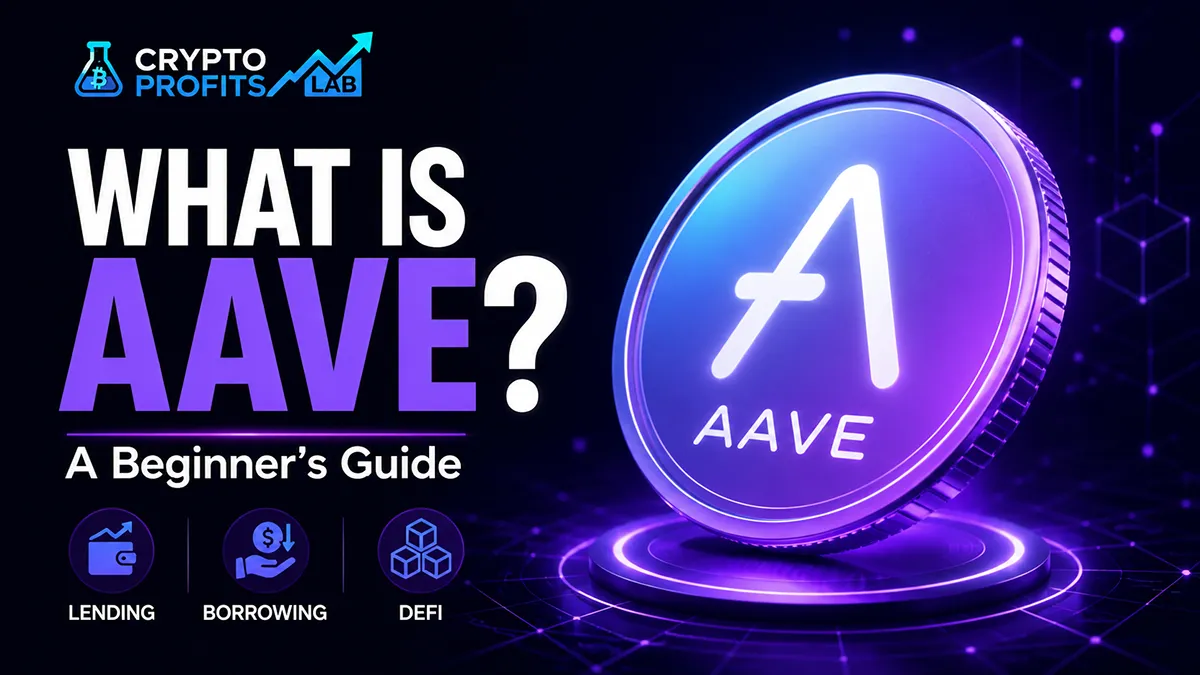
What is AAVE and why does it matter in crypto? AAVE is connected to Aave, one of the best-known decentralized finance protocols for crypto lending and borrowing. Instead of using a traditional bank, Aave lets users interact with smart contracts to lend digital assets, borrow crypto, and explore DeFi markets through self-custody wallets.
For beginners, Aave can feel confusing because people use several terms at once. Sometimes they mean the Aave lending protocol. Sometimes they mean AAVE, the governance token. Other times they are talking about crypto loans, liquidity pools, collateral, interest rates, stablecoins, or DeFi risks.
This guide explains What is AAVE in plain English. You will learn how Aave works, what the AAVE token is used for, why DeFi lending matters, how Aave compares with centralized lending, and what beginners should know before using Aave or buying AAVE.
If you are still learning the basics of digital assets, start with this beginner guide to what is cryptocurrency before going deeper into Aave.
What is AAVE?
What is AAVE? AAVE is the governance token connected to the Aave protocol, a decentralized finance platform that allows users to lend and borrow crypto assets through smart contracts.
Aave is not a bank. It does not operate like a normal loan company where a person applies for credit and waits for approval. Instead, Aave uses blockchain-based markets where users deposit supported crypto assets into liquidity pools. Other users can borrow from those pools by providing collateral.
This makes Aave part of decentralized finance, also called DeFi. DeFi refers to blockchain-based financial tools that try to recreate or improve financial services such as lending, borrowing, trading, and earning yield without relying on traditional banks.
In simple terms, What is AAVE? AAVE is the token connected to Aave, while Aave is a DeFi lending protocol where users can lend and borrow crypto through smart contracts.
To understand the foundation behind Aave, read this beginner guide to blockchain technology.
Aave vs AAVE: What Is the Difference?
A common beginner mistake is thinking Aave and AAVE are exactly the same thing. They are closely connected, but they do not mean the same thing.
Aave is the lending and borrowing protocol. AAVE is the token connected to governance and ecosystem participation.
You can think of Aave as the DeFi application and AAVE as the token linked to that application.
| Term | Meaning | Beginner Explanation |
|---|---|---|
| Aave | DeFi lending protocol | The platform users interact with to lend and borrow crypto |
| AAVE | Governance token | The token connected to protocol governance and ecosystem activity |
| Liquidity pool | Asset pool for lending | Deposits that borrowers can borrow from |
| Collateral | Asset backing a loan | Crypto a borrower supplies to reduce lender risk |
| Smart contract | Blockchain program | Code that manages deposits, borrowing, and repayments |
What is AAVE from a beginner’s point of view? AAVE is not the loan itself. It is the token connected to the Aave protocol.
Who Created Aave?
Aave was founded by Stani Kulechov. The project originally started under the name ETHLend before evolving into Aave. Its purpose was to create a decentralized way for people to borrow and lend crypto assets without relying on a traditional financial company.
Aave became one of the most recognized names in DeFi because it helped make crypto lending more accessible. Users could deposit assets, borrow against collateral, and interact with lending markets through blockchain wallets.
This history matters because Aave helped prove that lending could exist as a smart contract-based system. That does not make it risk-free, but it does explain why many beginners ask What is AAVE when learning about DeFi.
For a broader DeFi background, read this beginner guide to what is crypto lending.
How Does Aave Work?
What is AAVE connected to in practice? It is connected to a protocol where users supply and borrow crypto assets through smart contracts.
Here is the basic process:
- A user connects a compatible crypto wallet.
- The user supplies a supported asset to an Aave market.
- Supplied assets become part of a liquidity pool.
- Borrowers can borrow supported assets from the pool.
- Borrowers must provide collateral.
- Interest rates adjust based on market supply and demand.
- Smart contracts track deposits, loans, collateral, and repayments.
This system removes the need for a traditional loan officer, but it does not remove risk. Smart contracts, price volatility, liquidations, wallet mistakes, and market conditions all matter.
For beginners, the key idea is simple: Aave lets users lend and borrow crypto through automated blockchain-based markets.
What Is DeFi Lending?
DeFi lending is crypto lending that happens through decentralized protocols instead of traditional banks or centralized platforms.
In traditional finance, a bank may review your credit score, income, payment history, and identity before approving a loan. In DeFi, borrowing is usually based on collateral. That means users must deposit crypto assets before borrowing other crypto assets.
DeFi lending can be useful because it gives users access to liquidity without necessarily selling their crypto. However, the risk can be high. If the value of collateral falls too much, a borrower may be liquidated.
What is AAVE’s connection to DeFi lending? AAVE is tied to one of the largest categories of DeFi activity: lending and borrowing crypto assets through smart contracts.
If you want to learn about another DeFi strategy, read what is crypto yield farming.
What Are Liquidity Pools on Aave?
Liquidity pools are collections of crypto assets supplied by users. These assets are available for borrowers, and suppliers may earn interest based on market activity.
For example, a user may supply a stablecoin to an Aave market. Borrowers who need that stablecoin can borrow it if they provide acceptable collateral. The supplier may earn yield, while the borrower pays interest.
Liquidity pools are important because they allow lending and borrowing without matching one lender to one borrower directly. The pool handles the market.
However, liquidity pools still carry risk. Interest rates can change, assets can lose value, and smart contract problems may affect funds.
What Is Collateral in Aave?
Collateral is crypto that a borrower deposits to support a loan. Since Aave does not work like a traditional credit-based lender, collateral helps protect the lending market.
For example, a user might deposit ETH as collateral and borrow a stablecoin. If the value of the ETH falls too much, the loan may become unsafe. In that case, the protocol can liquidate part of the collateral to repay the debt.
Collateral is one of the most important ideas beginners must understand before using Aave.
Common collateral risks include:
- Price drops
- Liquidation
- Borrowing too much
- Using volatile assets
- Not monitoring loan health
- Misunderstanding interest rates
- Network fees during urgent transactions
What is AAVE without understanding collateral? It is incomplete. Anyone learning Aave should understand collateral before borrowing.
What Is the AAVE Token Used For?
The AAVE token is mainly connected to governance and protocol participation. Governance means token holders may vote on certain proposals or protocol decisions depending on the rules in place.
AAVE may be used for:
- Governance voting
- Protocol proposal participation
- Ecosystem alignment
- DeFi portfolio exposure
- Crypto trading and holding
- Certain protocol-related safety or incentive mechanisms
Some people buy AAVE because they believe DeFi lending will continue growing. Others are interested in governance or exposure to Aave’s ecosystem.
However, owning AAVE is not the same as earning guaranteed yield from Aave. AAVE is still a volatile crypto asset, and its price can move sharply.
What Makes Aave Different?
Aave is different from many crypto projects because it is not mainly a payment coin, meme coin, or simple blockchain network. It is a DeFi lending protocol.
Aave is often discussed for:
- Crypto lending and borrowing
- Collateralized DeFi loans
- Liquidity pools
- Smart contract automation
- Multiple supported assets
- Governance through AAVE
- DeFi infrastructure
- Self-custody wallet access
This does not mean Aave is safe for every beginner. Aave can be powerful, but it also requires more knowledge than simply buying Bitcoin, Litecoin, or Dogecoin on an exchange.
If you are still comparing basic coins, read what is Bitcoin, what is Litecoin, and what is Dogecoin.
Aave and Smart Contracts
Aave relies on smart contracts. A smart contract is code that runs on a blockchain and follows rules automatically.
When users deposit assets, borrow funds, repay loans, or withdraw funds, smart contracts help process those actions. This can reduce the need for a traditional middleman, but it also means users must trust the code and understand the risks.
Smart contracts can be useful, but they can also fail or be exploited. Even reputable DeFi protocols require caution.
If you are new to smart contracts, read what is Ethereum, because Ethereum helped popularize smart contract platforms and DeFi applications.
What Can Aave Be Used For?
What is AAVE connected to in real crypto use? Aave is mainly connected to lending, borrowing, and DeFi liquidity.
Lending Crypto
Users can supply supported crypto assets to Aave markets. In return, they may earn interest based on borrowing demand.
This can appeal to users who want to put idle crypto assets to work, but yield is never risk-free.
Borrowing Crypto
Users can borrow supported assets by providing collateral. Borrowing may be useful for liquidity, trading strategies, or avoiding the need to sell a crypto position.
Borrowing can also be dangerous. If collateral drops in value, liquidation can happen.
Stablecoin Liquidity
Many DeFi users borrow or supply stablecoins. Stablecoins are designed to track the value of another asset, often the U.S. dollar.
Stablecoins may reduce some price volatility, but they still carry risks related to issuers, reserves, smart contracts, regulation, and liquidity.
DeFi Strategy
More advanced users may use Aave as part of broader DeFi strategies. These strategies may involve lending, borrowing, swapping, yield farming, or moving assets between protocols.
Beginners should avoid complex strategies until they understand the risks.
Learning DeFi
Aave is also useful as a learning example. It shows how lending can work without a traditional bank, how collateralized loans function, and why wallet security matters.
Aave vs Traditional Banks
What is AAVE’s role compared with traditional banking? Aave is part of DeFi, while banks are centralized financial institutions.
| Feature | Aave | Traditional Bank |
|---|---|---|
| Access | Crypto wallet connection | Bank account and identity approval |
| Loans | Collateral-based crypto borrowing | Credit checks and underwriting |
| Custody | User controls wallet | Bank or platform controls account access |
| Hours | Blockchain-based and always available | Business hours and banking systems |
| Risk | Smart contracts, liquidation, volatility | Bank rules, credit risk, account limits |
Aave offers more direct access, but users also take more responsibility. There is no simple customer service path to reverse a mistaken blockchain transaction.
Aave vs Centralized Crypto Lenders
Aave is different from centralized crypto lending platforms. A centralized lender is controlled by a company. Users often deposit funds into the platform and depend on that company to manage risk.
Aave uses smart contracts and on-chain markets. Users interact through wallets, and the protocol handles lending and borrowing rules.
| Feature | Aave | Centralized Crypto Lender |
|---|---|---|
| Control | Smart contract protocol | Company-managed platform |
| Custody style | Self-custody interaction | Platform may hold funds |
| Transparency | On-chain activity | Depends on company reporting |
| User responsibility | High | Medium to high |
| Main risk | Smart contract and liquidation risk | Platform failure and counterparty risk |
Both approaches carry risk. Beginners should understand the differences before depositing funds anywhere.
Aave vs Uniswap
Aave and Uniswap are both major DeFi protocols, but they serve different purposes.
Aave is mainly for lending and borrowing. Uniswap is mainly for token swaps through liquidity pools.
| Feature | Aave | Uniswap |
|---|---|---|
| Token | AAVE | UNI |
| Main use | Lending and borrowing | Decentralized token swaps |
| User activity | Supply assets, borrow assets, manage collateral | Swap tokens, provide liquidity |
| Main beginner risk | Liquidation and loan management | Scam tokens, slippage, gas fees |
| DeFi category | Lending protocol | Decentralized exchange |
For more context, read what is Uniswap.
Aave vs Compound
Aave and Compound are both DeFi lending protocols. Both allow users to supply and borrow crypto assets through smart contracts.
The differences may include supported markets, risk parameters, governance structure, interest rate models, user experience, and protocol design.
| Feature | Aave | Compound |
|---|---|---|
| Main use | DeFi lending and borrowing | DeFi lending and borrowing |
| Token | AAVE | COMP |
| Loan model | Overcollateralized borrowing | Overcollateralized borrowing |
| Users | Lenders and borrowers | Lenders and borrowers |
| Beginner focus | Collateral, rates, liquidation | Collateral, rates, liquidation |
Beginners should compare protocols carefully and avoid assuming that all DeFi lending platforms carry the same risks.
Aave vs Ethereum
Aave and Ethereum are closely connected, but they are not the same thing.
Ethereum is a smart contract blockchain. Aave is a DeFi lending protocol that can run on smart contract networks.
| Feature | Ethereum | Aave |
|---|---|---|
| Native asset | ETH | AAVE token |
| Main role | Smart contract platform | Lending and borrowing protocol |
| Common use | Apps, tokens, DeFi, NFTs | Crypto lending and borrowing |
| Fees | ETH is used for gas on Ethereum | Users pay network gas fees when interacting |
| Beginner focus | Blockchain ecosystem | DeFi lending protocol |
What is AAVE in this comparison? It is the token connected to a DeFi lending protocol, while Ethereum is the blockchain ecosystem that helped DeFi grow.
Aave and Gas Fees
Using Aave may require paying blockchain network fees, often called gas fees. These fees depend on the network being used and how busy it is.
Gas fees are not the same as loan interest. Gas fees are paid to process transactions on the blockchain. Interest is related to borrowing and lending activity inside the protocol.
Before using Aave, beginners should understand:
- Which network they are using
- What token is needed for gas
- How much the transaction may cost
- Whether the action is worth the fee
- Whether urgent transactions may become expensive during volatility
To learn more, read what are crypto gas fees.
Is Aave Safe?
Aave is a well-known DeFi protocol, but using it still requires caution. The biggest beginner risks usually come from liquidation, smart contract risk, wallet mistakes, fake websites, price volatility, and misunderstanding loan health.
Common Aave risks include:
- Borrowing too much against collateral
- Getting liquidated during price drops
- Connecting to a fake Aave website
- Approving unsafe wallet permissions
- Losing your seed phrase
- Paying high gas fees during urgent transactions
- Using volatile collateral without a plan
- Assuming DeFi yield is risk-free
A good beginner rule is to move slowly. Use official links, test small transactions, understand collateral rules, and never share your seed phrase.
For more protection, review crypto safety tips, crypto scams to avoid, crypto 2FA, and crypto seed phrase.
How to Store AAVE
To hold AAVE, you need a crypto wallet that supports the network version of AAVE you are using. Many beginners buy AAVE on a centralized exchange first, then decide whether to keep it there or move it to a personal wallet.
A wallet does not physically store tokens. Instead, it stores the private keys or recovery information that lets you access your crypto on the blockchain.
There are two main wallet types:
- Hot wallets are connected to the internet and are convenient for regular use.
- Cold wallets are offline hardware wallets and are usually better for long-term storage.
Hot wallets can be useful for smaller AAVE balances or DeFi activity. Cold wallets are usually safer for larger long-term balances because they help keep private keys offline.
If you are new to wallets, start with this guide to crypto wallets. Then compare hot wallets vs cold wallets and learn why a hardware wallet may be worth considering.
How to Buy AAVE
What is AAVE buying like for beginners? Most people buy AAVE through a crypto exchange. An exchange lets you create an account, deposit money, and purchase AAVE.
A simple beginner process looks like this:
- Choose a reputable crypto exchange.
- Create your account.
- Complete identity verification if required.
- Turn on two-factor authentication.
- Deposit funds using an approved payment method.
- Search for AAVE or Aave.
- Buy a small amount first.
- Decide whether to keep AAVE on the exchange or move it to your own wallet.
Some users may also buy AAVE through decentralized exchanges, but beginners should be careful with wallet setup, gas fees, token approvals, and fake websites.
For step-by-step help, read how to buy crypto for beginners. If you are still choosing a platform, review best crypto exchange for beginners and centralized vs decentralized exchanges.
AAVE and Market Volatility
Aave may be an important DeFi protocol, but AAVE is still a volatile crypto asset. Its price can rise or fall quickly based on market sentiment, DeFi activity, regulation, governance news, liquidity, token demand, and broader crypto cycles.
Beginners should not assume AAVE is safe just because Aave is a well-known protocol. Useful technology does not remove market risk.
Before buying AAVE, consider:
- Your risk tolerance
- Your investment timeframe
- Your storage plan
- Your understanding of wallet security
- Your ability to handle price drops
- Whether you are buying for learning, governance, trading, or long-term holding
For more context, read crypto volatility, market cap in crypto, and bull vs bear market crypto.
If you prefer a slower buying strategy, this guide to dollar cost averaging crypto may also help.
Pros and Cons of Aave
What is AAVE’s biggest strength? Its biggest strength is exposure to one of the most important DeFi categories: crypto lending and borrowing.
What is AAVE’s biggest challenge? Its biggest challenge for beginners is complexity. DeFi loans, collateral, liquidations, smart contracts, gas fees, and wallet approvals can be difficult at first.
| Pros | Cons |
|---|---|
| Connected to a major DeFi lending protocol | Can be confusing for beginners |
| Supports lending and borrowing markets | Liquidation risk can be serious |
| Uses smart contracts for automation | Smart contract risk still exists |
| AAVE supports governance participation | AAVE price can be volatile |
| Useful for learning DeFi lending | Wallet mistakes can be costly |
Aave can be useful to learn about, but it is not risk-free. Beginners should understand both the technology and the risks before using Aave or buying AAVE.
Beginner Checklist Before Using Aave
Before using Aave or buying AAVE, go through this checklist:
- Understand the difference between Aave and AAVE.
- Learn how DeFi lending works.
- Learn what collateral means.
- Use the official Aave website.
- Never share your seed phrase.
- Test small transactions first.
- Review gas fees before confirming actions.
- Avoid borrowing too much against collateral.
- Watch liquidation risk carefully.
- Consider a hardware wallet for larger long-term balances.
This checklist may seem simple, but it can prevent many beginner mistakes.
Why Aave Matters
Aave matters because lending is one of the core use cases of decentralized finance. It shows how crypto users can supply assets, borrow assets, and access liquidity without using a traditional bank.
Aave also matters because it helps beginners understand the difference between simply holding crypto and using crypto inside DeFi protocols. That difference is important. Holding AAVE in a wallet is not the same as depositing assets into Aave lending markets.
This does not mean Aave is perfect or risk-free. It means Aave is an important DeFi protocol that beginners should understand before exploring advanced crypto strategies.
For an official resource, visit the official Aave website.
Final Thoughts
What is AAVE? AAVE is the governance token connected to Aave, a decentralized finance protocol for crypto lending and borrowing.
Aave lets users supply supported assets, borrow against collateral, and interact with DeFi lending markets through smart contracts. AAVE is the token connected to governance and ecosystem participation.
The best approach for beginners is to learn slowly. Understand collateral, liquidation, wallets, gas fees, and smart contract risk before using any DeFi lending protocol. Once you understand how Aave works, you will have a stronger foundation for exploring decentralized finance safely.
Aave Frequently Asked Questions
What is AAVE in simple terms?
What is AAVE? AAVE is the governance token connected to Aave, a decentralized finance lending protocol. Aave lets users lend and borrow supported crypto assets through smart contracts instead of traditional banks. Beginners can think of Aave as the lending platform and AAVE as the token connected to protocol governance and ecosystem participation.
Is Aave the same as AAVE?
Aave and AAVE are related, but they are not the same thing. Aave is the DeFi lending and borrowing protocol. AAVE is the governance token connected to the protocol. When someone says they bought Aave, they usually mean they bought AAVE. Users can use the protocol without thinking of AAVE as the loan itself.
What is Aave used for?
Aave is used for crypto lending, borrowing, supplying liquidity, borrowing against collateral, and participating in DeFi markets. Users can deposit supported assets into lending pools or borrow assets by providing collateral. Aave can be useful for liquidity and DeFi strategies, but beginners must understand liquidation, wallet safety, smart contract risk, and gas fees.
Is Aave safe for beginners?
Aave can be used by beginners, but it requires caution. The biggest risks include liquidation, smart contract problems, fake websites, unsafe wallet approvals, volatile collateral, and high gas fees. Beginners should avoid borrowing until they understand collateral ratios, liquidation rules, and loan health. Starting with education is safer than rushing into DeFi lending.
What is collateral on Aave?
Collateral on Aave is crypto that a borrower deposits to support a loan. Because DeFi loans usually do not rely on credit scores, collateral helps protect lending markets. If the collateral value falls too much, part of it may be liquidated to repay debt. Understanding collateral is essential before borrowing on Aave.
Can you earn yield on Aave?
Users may earn yield by supplying supported crypto assets to Aave lending markets. The yield depends on market supply, borrowing demand, asset type, and protocol conditions. Yield is not risk-free. Smart contract risk, asset volatility, liquidity conditions, and platform changes can affect outcomes. Beginners should research carefully before depositing funds.
Can you buy AAVE on crypto exchanges?
Yes, AAVE is available on many crypto exchanges. Beginners usually create an account, verify identity if required, turn on 2FA, deposit funds, and search for AAVE. After buying, users can keep AAVE on the exchange or move it to a compatible wallet. Wallet transfers require careful attention to networks and addresses.
Is AAVE a good investment?
AAVE may be connected to an important DeFi protocol, but it is still risky and volatile. Whether it is a good investment depends on your goals, risk tolerance, research, timeframe, and portfolio strategy. Beginners should understand Aave’s lending model, AAVE token utility, competition, regulation, market cycles, and wallet security before buying.
What is AAVE’s biggest advantage?
What is AAVE’s biggest advantage? Its biggest advantage is exposure to a major DeFi lending protocol. Aave is known for crypto lending, borrowing, collateralized loans, and smart contract-based financial markets. This makes AAVE important to understand, although beginners should still consider token volatility, protocol risk, liquidations, and wallet security.