How to Cash Out Crypto: A Beginner’s Guide
If you own digital assets for the first time, one of the most practical questions you may ask is how to cash out crypto safely. Buying crypto is only one side of the process. At some point, many beginners want to sell, withdraw money to a bank account, take profits, reduce risk, or move funds back into regular currency.
The process can feel confusing at first because crypto uses wallets, exchanges, networks, trading pairs, fees, taxes, and bank withdrawals. If you rush, you may choose the wrong network, sell at a bad price, trigger unnecessary fees, or fall for a scam.
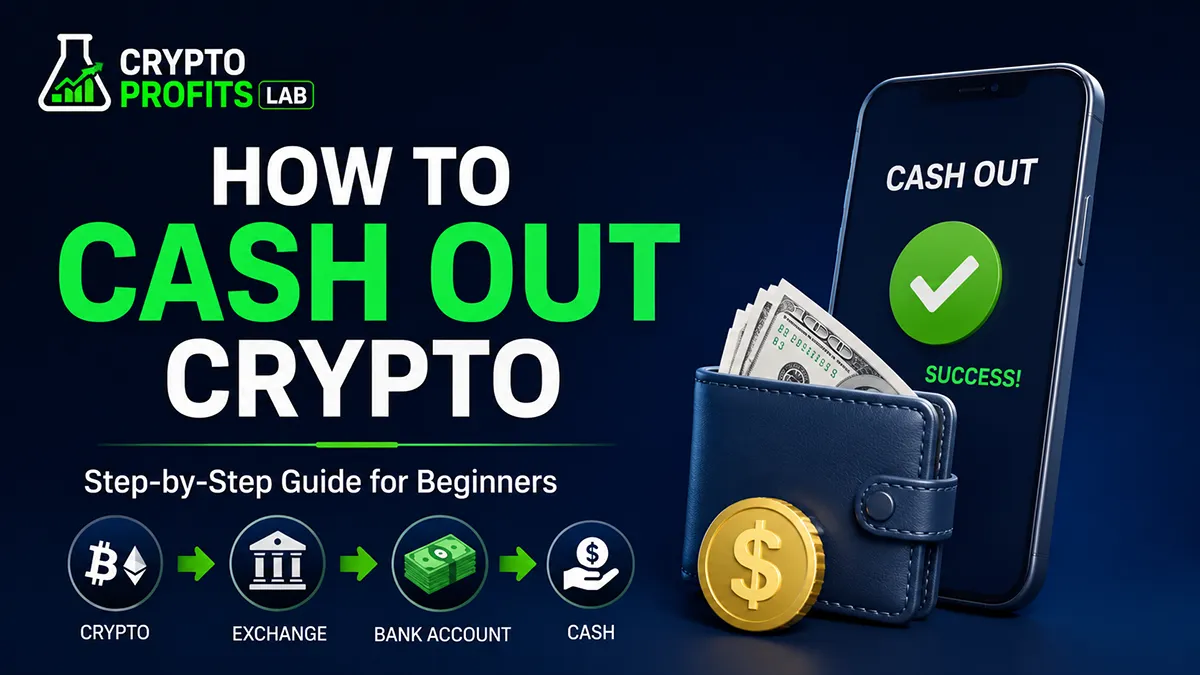
The simple version is this: cashing out crypto usually means selling your cryptocurrency for cash or stablecoins, then withdrawing the money through a trusted exchange or payment method.
Before learning how to cash out crypto, it helps to understand how to buy crypto for beginners, crypto wallet, and centralized vs decentralized exchanges. Those guides explain the tools you may use before selling or withdrawing.
This beginner’s guide explains how to cash out crypto step by step, what fees to watch for, how taxes may apply, how to avoid scams, and what safer withdrawal habits new investors should use.
What Does It Mean to Cash Out Crypto?
How to cash out crypto means converting your digital assets into a form you can spend, save, or withdraw outside the crypto market. For most beginners, this usually means selling crypto for U.S. dollars or another local currency and transferring the money to a bank account.
Cashing out can involve several different actions:
- Selling Bitcoin or Ethereum for dollars
- Converting an altcoin to a stablecoin
- Sending crypto from a wallet to an exchange
- Using an exchange withdrawal to move money to a bank
- Selling through a peer-to-peer platform
- Using a crypto debit card
- Swapping one asset before selling another
- Taking profits after a price increase
- Reducing exposure during market volatility
The exact process depends on where your crypto is stored. If your crypto is already on an exchange, cashing out may be simple. If your crypto is in a personal wallet, you may need to send it to an exchange first.
Quick Cash Out Overview
| Method | Best For | Main Risk |
|---|---|---|
| Centralized exchange | Most beginners | Account, fees, and bank withdrawal limits |
| Crypto wallet to exchange | Self-custody users | Wrong address or wrong network |
| Stablecoin conversion | Waiting before withdrawal | Stablecoin and platform risk |
| Peer-to-peer sale | Users with limited exchange access | Counterparty and scam risk |
| Crypto debit card | Spending smaller amounts | Fees, limits, and tax tracking |
How to cash out crypto is not only about clicking a sell button. It is about choosing the right method, checking fees, protecting your wallet, and understanding the tax impact.
Why Beginners Cash Out Crypto
Beginners cash out crypto for many reasons. Some want to lock in gains. Others need cash for bills, emergencies, or a planned purchase. Some want to reduce risk after a big market move.
Common reasons include:
- Taking profits
- Reducing exposure to volatility
- Moving money back to a bank
- Paying expenses
- Rebalancing a portfolio
- Avoiding emotional trading
- Preparing for taxes
- Exiting a risky altcoin
- Simplifying finances
There is nothing wrong with taking profits. A common beginner mistake is assuming that holding forever is always the best strategy. Crypto can be volatile, and having a plan can reduce emotional decisions.
If you are unsure whether you are reacting to market fear, review crypto volatility and bull vs bear market crypto before making a rushed decision.
How to Cash Out Crypto Through an Exchange
The most beginner-friendly way to cash out is usually through a centralized exchange. Examples include major platforms that support bank withdrawals, identity verification, and fiat currency trading.
A basic process looks like this:
- Log in to a reputable exchange.
- Transfer crypto to the exchange if needed.
- Sell the crypto for your local currency.
- Review trading fees and withdrawal fees.
- Withdraw the cash to your linked bank account.
- Save transaction records for taxes.
This is the most common path because centralized exchanges connect crypto markets to the banking system. They may support ACH transfers, wire transfers, debit card withdrawals, or other payment methods depending on your country.
If you still need help choosing a platform, read best crypto exchange for beginners.
How to cash out crypto through an exchange is usually easier than peer-to-peer selling, but beginners should still verify every step before moving funds.
Step 1: Decide What You Want to Sell
Before selling, decide which crypto asset you want to cash out. This sounds obvious, but beginners often hold multiple coins across wallets and exchanges.
You may hold:
- Bitcoin
- Ethereum
- Solana
- XRP
- Stablecoins
- Meme coins
- Layer 1 tokens
- DeFi tokens
- Exchange tokens
- Smaller altcoins
Not every exchange supports every coin. If your coin is not supported by your exchange, you may need to swap it into a supported asset first. That can create extra fees, price movement, and possible tax events.
For example, if you own a small altcoin in a personal wallet, you may need to swap it into Ethereum or a stablecoin before sending it to an exchange. This is why planning matters.
Step 2: Check Where Your Crypto Is Stored
How to cash out crypto depends heavily on where your assets are located.
Your crypto may be stored in:
- A centralized exchange account
- A hot wallet
- A cold wallet
- A hardware wallet
- A DeFi app
- A staking platform
- A lending platform
- A decentralized exchange wallet
If the crypto is already on a centralized exchange, you may be able to sell it directly. If it is in a personal wallet, you need to transfer it carefully.
Wallet transfers are one of the biggest beginner risk areas. Sending crypto to the wrong address or wrong network can lead to permanent loss. Before moving funds, review crypto seed phrase, hardware wallet, and crypto safety tips.
Step 3: Send Crypto to an Exchange Carefully
If your crypto is in a wallet, you may need to send it to an exchange before selling.
Use this safer transfer process:
- Confirm the exchange supports the crypto you are sending.
- Select the correct deposit network.
- Copy the deposit address from the exchange.
- Match the address and network in your wallet.
- Send a small test transaction first.
- Wait for confirmation.
- Send the remaining amount only after the test arrives.
The network matters. For example, sending a token on the wrong blockchain network may cause serious problems. Some exchanges support several networks for the same asset, while others support only one.
If you do not understand network fees yet, read what are crypto gas fees.
How to cash out crypto safely often comes down to patience. A small test transaction may cost a little extra, but it can prevent a much larger mistake.
Step 4: Choose a Sell Order Type
After your crypto reaches an exchange, you may need to choose how to sell it.
The two basic order types are market orders and limit orders.
| Order Type | What It Does | Beginner Use |
|---|---|---|
| Market order | Sells immediately at the best available price | Speed |
| Limit order | Sells only at your selected price or better | Price control |
A market order can be faster, but the final price may be different from what you expected. A limit order gives more control, but it may not fill if the market never reaches your price.
If you want a deeper explanation, read market order vs limit order crypto.
How to cash out crypto is not just about selling. It is about selling in a way that matches your goal. If you need cash immediately, speed may matter more. If you are trying to hit a target price, a limit order may be better.
Step 5: Convert to Cash or Stablecoins
After selling, you may receive cash or a stablecoin depending on the trading pair.
For example:
| You Sell | You May Receive |
|---|---|
| BTC/USD | U.S. dollars |
| ETH/USD | U.S. dollars |
| SOL/USDC | USDC stablecoin |
| ARB/USDT | USDT stablecoin |
| XRP/USD | U.S. dollars |
If your goal is a bank withdrawal, you usually need your exchange balance in local currency. If you sell into a stablecoin, you may still need to convert the stablecoin into dollars before withdrawing.
Stablecoins can be useful, but they are not risk-free. They depend on issuer reserves, platform support, market confidence, and regulatory conditions. Beginners should not assume stablecoins are identical to cash in a bank.
Step 6: Withdraw to Your Bank
Once your exchange balance is in cash, you can usually withdraw it to a linked bank account.
Common withdrawal methods include:
- ACH transfer
- Bank wire
- Debit card withdrawal
- PayPal or payment app support
- Regional bank transfer methods
Each method may have different fees, speed, and limits.
| Withdrawal Method | Typical Use | Main Consideration |
|---|---|---|
| ACH | Standard bank withdrawal | May take several business days |
| Wire transfer | Larger or faster withdrawals | May have higher fees |
| Debit card withdrawal | Faster access | May include higher fees |
| Payment app | Convenience | Availability varies by platform |
Before withdrawing, check your exchange limits. New accounts may have lower limits, and large withdrawals may require extra verification.
How to cash out crypto successfully means checking not only the sell price, but also the withdrawal method, timing, and fees.
How Long Does It Take to Cash Out Crypto?
The time needed to cash out depends on several factors.
Cashing out can take minutes, hours, or several business days depending on:
- Where the crypto is stored
- Blockchain confirmation time
- Exchange deposit processing
- Trading liquidity
- Bank withdrawal method
- Account verification status
- Withdrawal limits
- Security reviews
If your crypto is already on an exchange and your bank account is verified, the selling part may happen quickly. The bank withdrawal may still take time.
If your crypto is in a personal wallet, you need to account for blockchain network confirmations before selling.
Beginners should avoid waiting until the last minute if they need cash by a specific date.
What Fees Apply When Cashing Out Crypto?
Fees can reduce the amount you actually receive.
Common fees include:
- Blockchain network fees
- Exchange trading fees
- Spread costs
- Withdrawal fees
- Wire transfer fees
- Debit card cash-out fees
- Conversion fees
- DeFi swap fees
A simple cash-out may include multiple costs. For example, you might pay a network fee to send crypto to an exchange, a trading fee to sell it, and a withdrawal fee to move cash to your bank.
Before confirming any transaction, review the final amount you expect to receive.
How to cash out crypto without losing too much to fees often means using a reputable exchange, avoiding rushed trades, checking spreads, and choosing the right withdrawal method.
Is Cashing Out Crypto Taxable?
Cashing out crypto may create tax consequences. In many cases, selling crypto for cash is considered a taxable event. Swapping one crypto for another may also create a taxable event.
The IRS has a helpful digital assets page explaining that digital asset income may need to be reported and that taxpayers may need to answer digital asset questions on tax returns.
Common taxable situations may include:
- Selling crypto for cash
- Trading one crypto for another
- Spending crypto
- Receiving staking rewards
- Receiving crypto as payment
- Earning yield or rewards
This article is not tax advice. Crypto tax rules can be complicated and may change. If you are cashing out a large amount, consider speaking with a qualified tax professional.
How to cash out crypto responsibly includes keeping records of your purchase price, sale price, dates, fees, and exchange statements.
Records to Keep When Cashing Out
Good records make tax reporting and personal tracking easier.
Keep records of:
- Date purchased
- Amount purchased
- Purchase price
- Exchange or wallet used
- Transaction ID
- Date sold
- Sale price
- Fees paid
- Bank withdrawal amount
- Stablecoin conversions
- Wallet transfers
- Exchange statements
Do not assume your exchange will make everything easy later. If you used multiple wallets, swaps, bridges, or DeFi apps, your records may be more complicated.
A basic spreadsheet can help beginners track buys, sells, and transfers. For active traders, crypto tax software may be useful.
Can You Cash Out From a Wallet Directly?
Most personal wallets do not directly connect to your bank account. A wallet gives you control over crypto, but it usually does not provide traditional banking services by itself.
To cash out from a wallet, you usually need one of these options:
- Send crypto to a centralized exchange
- Use a wallet service with sell features
- Use a peer-to-peer marketplace
- Use a crypto debit card
- Swap into a supported asset first
Wallet sell features may be convenient, but always check fees and provider details. Some wallet apps use third-party services that may charge higher fees than an exchange.
If you are unsure how wallets work, review best crypto wallet for beginners before moving funds.
Should You Use a Centralized or Decentralized Exchange?
A centralized exchange is usually easier for beginners who want to withdraw to a bank. It can support identity verification, customer support, and fiat withdrawals.
A decentralized exchange gives users more control, but it usually does not connect directly to a bank account. You may use a DEX to swap assets before sending funds to a centralized exchange.
| Exchange Type | Best For | Main Limitation |
|---|---|---|
| Centralized exchange | Selling crypto for cash and bank withdrawals | Custody and account risk |
| Decentralized exchange | Swapping tokens from a wallet | No direct bank withdrawal |
| Peer-to-peer platform | Selling directly to another person | Counterparty risk |
For most beginners learning how to cash out crypto, a reputable centralized exchange is usually the simplest route.
Common Beginner Mistakes When Cashing Out
Beginners often make similar mistakes when trying to cash out.
Avoid these errors:
- Sending crypto to the wrong network
- Forgetting to use a memo or tag when required
- Selling with a market order during extreme volatility
- Ignoring trading fees and spreads
- Withdrawing to an unverified bank account
- Not keeping tax records
- Clicking fake exchange links
- Trusting strangers in direct sales
- Moving large amounts without a test transaction
- Forgetting that cashing out may be taxable
Crypto transactions can be unforgiving. A bank may reverse a mistaken transfer, but crypto transfers usually cannot be undone.
Before moving large amounts, slow down and verify every detail.
How to Avoid Cash-Out Scams
Scammers know beginners often feel nervous when moving money out of crypto. They use that confusion to steal funds.
Common cash-out scams include:
- Fake exchange websites
- Fake customer support accounts
- “Withdrawal unlock” fees
- Fake tax payment requests
- Peer-to-peer payment scams
- Fake wallet verification pages
- Fake bridge links
- Social media recovery scams
- Phishing emails pretending to be exchanges
No real exchange support agent needs your seed phrase. No legitimate wallet needs you to type your recovery phrase into a random website to unlock a withdrawal.
If you are unsure, stop and verify. Read crypto scams to avoid before responding to any suspicious message.
How Much Crypto Should You Cash Out?
There is no one-size-fits-all answer. The right amount depends on your goals, risk tolerance, taxes, emergency needs, and investing plan.
You might cash out to:
- Recover your initial investment
- Take partial profits
- Pay a planned expense
- Reduce risk
- Rebalance your portfolio
- Build a cash emergency fund
- Move away from a risky altcoin
Some investors sell everything. Others sell only a portion. Some use dollar-cost averaging crypto in reverse by selling small amounts over time instead of cashing out all at once.
How to cash out crypto wisely often means deciding before emotions take over. A written plan can help.
Cashing Out During Bull and Bear Markets
Market conditions matter.
During a bull market, beginners may feel pressure to hold forever because prices keep rising. During a bear market, they may panic sell because prices keep falling. Both emotions can lead to poor decisions.
A cash-out plan can help you decide:
- What price levels matter
- How much profit you want to take
- Whether you will sell in portions
- How much cash you want to keep
- Whether you are prepared for taxes
- What you will do if prices keep rising after you sell
- What you will do if prices fall after you sell
If you are new to market cycles, read bull vs bear market crypto.
How to Cash Out Crypto Safely: Checklist
Use this checklist before selling or withdrawing.
| Question | Why It Matters |
|---|---|
| Do I know where my crypto is stored? | Determines the cash-out path |
| Does my exchange support this asset? | Prevents deposit mistakes |
| Did I check the network? | Reduces transfer risk |
| Did I send a test transaction? | Helps avoid large losses |
| Did I review order type? | Prevents bad execution |
| Did I check fees and spread? | Shows the true cash-out amount |
| Is my bank account verified? | Avoids withdrawal delays |
| Did I save records? | Helps with tax reporting |
| Did I avoid suspicious links? | Reduces scam risk |
| Do I understand tax impact? | Prevents surprises later |
This checklist will not remove every risk, but it can help beginners slow down and make better decisions.
Final Thoughts: How to Cash Out Crypto
How to cash out crypto is one of the most important beginner skills because buying is only half the journey. You also need to know how to sell, withdraw, protect your account, track fees, and keep records.
For most beginners, the easiest method is using a reputable centralized exchange that supports your crypto asset and bank withdrawals. If your crypto is in a personal wallet, send a small test transaction first, verify the network, and never rush.
Cashing out may also create tax responsibilities, so keep records and understand that selling crypto can be different from simply moving funds between wallets.
The safest approach is simple: plan before you sell, use trusted platforms, protect your accounts with 2FA, avoid fake links, and never share your seed phrase.
Once you understand how to cash out crypto, you can make more confident decisions about taking profits, reducing risk, and managing your crypto portfolio.
How to Cash Out Crypto Frequently Asked Questions
What is the easiest way to cash out crypto?
The easiest way to cash out crypto for most beginners is through a reputable centralized exchange. You send or hold crypto on the exchange, sell it for your local currency, and withdraw the money to a linked bank account. Before selling, check fees, withdrawal limits, bank verification, and whether the exchange supports your specific crypto asset.
Is cashing out crypto taxable?
Cashing out crypto may be taxable because selling digital assets for cash can create a capital gain or loss. Trading one crypto for another may also be taxable in some situations. Tax rules depend on your location and personal circumstances. Beginners should keep detailed records and consider speaking with a qualified tax professional before large withdrawals.
How long does it take to cash out crypto?
The time required to cash out crypto depends on the exchange, blockchain confirmations, bank withdrawal method, and account verification status. Selling on an exchange may happen quickly, but bank withdrawals can take minutes, hours, or several business days. If your crypto is in a wallet, you also need time for the transfer to reach the exchange.
Can I cash out crypto without an exchange?
You may be able to cash out crypto without a traditional exchange by using peer-to-peer platforms, crypto debit cards, or wallet sell features. However, these methods can involve higher fees, lower limits, or more scam risk. For most beginners, a reputable centralized exchange is usually the safest and simplest way to withdraw cash.
What fees do I pay when cashing out crypto?
Cash-out fees may include blockchain network fees, exchange trading fees, spread costs, withdrawal fees, wire fees, debit card fees, and conversion fees. The total depends on your platform, asset, network, and withdrawal method. Beginners should review the final received amount before confirming a sale or bank transfer.
Should I sell crypto with a market order or limit order?
A market order sells quickly at the best available price, while a limit order sells only at your chosen price or better. Market orders are faster but can create slippage during volatility. Limit orders offer more price control but may not fill. Beginners should understand both order types before selling large amounts of crypto.
Is it safe to transfer crypto from a wallet to an exchange?
It can be safe if you verify every detail, but mistakes can be costly. Always confirm the exchange supports the asset, choose the correct network, copy the deposit address carefully, and send a small test transaction first. Never type your seed phrase into an exchange website or respond to fake support messages.
How much crypto should I cash out?
The amount to cash out depends on your goals, risk tolerance, taxes, and financial needs. Some beginners cash out enough to recover their initial investment, while others sell portions over time. Avoid making decisions based only on fear or hype. A written plan can help you take profits more calmly.