What Is Crypto Mining? A Beginner’s Guide
Crypto mining is one of the oldest and most searched topics in cryptocurrency. Many beginners hear that Bitcoin is “mined,” but the word can be confusing at first. It sounds like people are digging digital coins out of the ground, but that is not really what happens.
Crypto mining is the process some blockchain networks use to confirm transactions, secure the network, and release new coins into circulation. Instead of a bank approving payments, computers around the world compete to solve difficult mathematical problems. The winning computer earns the right to add a new block of transactions to the blockchain and may receive a reward.
This beginner’s guide explains how mining works, why it matters, what equipment is used, and why it is not as simple as turning on a laptop and printing money. You will also learn the biggest risks, common mistakes, and how mining compares with staking.
This article is for education only. It is not financial, investment, tax, or legal advice.
Quick Answer: What Is Crypto Mining?
Crypto mining is a blockchain process in which powerful computers help verify transactions and secure the network. In return, miners may earn newly issued coins and transaction fees. Bitcoin is the most famous example of a cryptocurrency that uses mining.
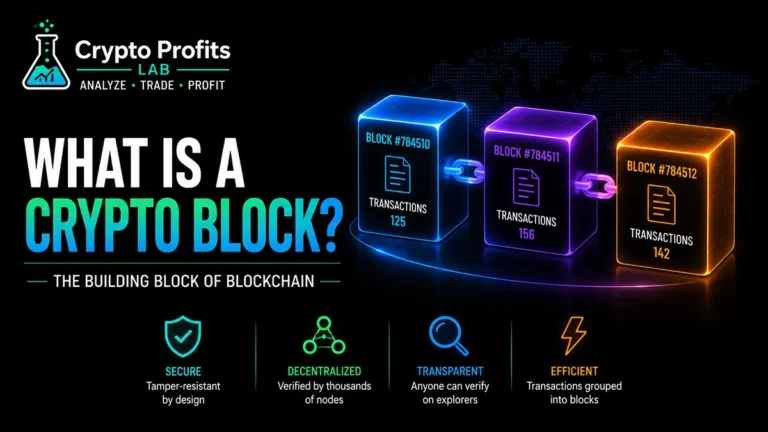
The easiest way to understand it is this: miners compete to add the next page of transaction history to the blockchain. That page is called a block. Once the block is accepted by the network, the transactions become part of the public record.
Bitcoin.org explains that mining helps keep the network secure by making it difficult for anyone to rewrite transaction history: Bitcoin mining overview.
If you are completely new to crypto, read What Is Cryptocurrency? and Blockchain Technology first. Those guides explain the basic ideas behind coins, blockchains, and decentralized networks.
Why Crypto Mining Exists
Crypto mining exists because some blockchains need a way to stay secure without a central company in charge. Traditional payment systems often rely on banks, card networks, or payment processors. Bitcoin was designed differently. It uses a decentralized network where participants follow shared rules.
Mining helps solve three major problems.
First, it confirms transactions. When people send Bitcoin, miners help include those transactions in blocks.
Second, it protects the network from fraud. Because mining requires real computing power and electricity, attacking the network becomes expensive.
Third, it releases new coins according to the protocol’s rules. In Bitcoin, new coins are created through block rewards. Over time, these rewards are reduced through events called halvings.
This system is called proof of work. It is one of the main reasons Bitcoin can operate without a central bank or company approving every transaction.
How Crypto Mining Works
Crypto mining uses specialized computers to compete for the next block. These computers try to solve a difficult puzzle by quickly testing many possible answers. The first miner to find a valid answer can propose the next block to the network.
Here is the simplified process:
- Users send transactions on the network.
- Transactions wait to be included in a block.
- Miners gather transactions into a possible block.
- Mining machines search for a valid solution.
- The winning miner broadcasts the block.
- Other network participants verify the block.
- The block becomes part of the blockchain.
- The miner receives a reward if the block is accepted.
The puzzle is not like a school math problem. It is more like a massive guessing contest. Mining machines test huge numbers of possible solutions until one fits the network’s rules.
This process uses energy because the computers are constantly working. That is why electricity costs are among the most important factors in mining profitability.
Proof of Work Explained
Proof of work is the consensus method used by Bitcoin and some other cryptocurrencies. Consensus means agreement. The network needs a way for many participants to agree on the correct version of transaction history.
In proof of work, miners prove they spent computing power by finding a valid solution. That work helps secure the chain because changing old blocks would require an attacker to redo a huge amount of computational work.
This is why Bitcoin is often described as secure and hard to manipulate. The network does not depend on a single company’s database. It depends on many participants following the same rules and miners competing to add valid blocks.
Not every cryptocurrency uses proof of work. Ethereum used to rely on mining, but it later moved to proof of stake. That is one reason beginners should understand the difference between mining and staking. You can learn more about staking in Crypto Staking.
What Equipment Do Miners Use?
In the early days of Bitcoin, people could mine with normal computers. That changed as the network grew more competitive. Today, Bitcoin miners usually use specialized machines called ASIC miners.
ASIC stands for application-specific integrated circuit. These machines are built for one job: mining a specific algorithm as efficiently as possible. They are much more powerful than regular laptops or desktop computers for this purpose.
Some other coins use graphics cards, also called GPUs. GPU mining became popular because graphics cards can handle certain types of computing tasks well. However, mining conditions change over time. A coin that is profitable for GPU miners today may not stay profitable later.
Beginners should not assume they can buy random hardware and make money. Mining equipment can be expensive, loud, hot, and difficult to resell. It also requires technical setup, proper ventilation, and reliable electricity.
Can You Mine Crypto on a Laptop?
Most beginners should not try to mine serious cryptocurrencies on a laptop. A normal laptop is not designed for continuous high-intensity mining. It may overheat, wear out quickly, use more electricity than expected, and earn very little.
Some websites and apps claim to offer easy mining from a phone or laptop. Be careful. Many of these offers are not real mining. Some are reward apps, cloud mining promotions, referral systems, or scams.
Real crypto mining usually requires dedicated hardware, power planning, cooling, and a clear understanding of costs. If a site promises guaranteed mining profits with no effort, treat it as suspicious.
Before connecting wallets, downloading software, or sending money to mining platforms, read Crypto Scams to Avoid and Crypto Safety Tips.
Mining Rewards and Transaction Fees
Miners are usually paid through block rewards and transaction fees. A block reward is the new cryptocurrency created when a valid block is added. Transaction fees are paid by users who want their transactions included.
Bitcoin’s block reward decreases over time. This reduction is called a halving. The idea is to limit the supply of new Bitcoin entering circulation. That is one reason Bitcoin has a fixed supply schedule.
Transaction fees become more important when network demand rises. If many people want to send transactions at the same time, fees may increase. Miners may prioritize higher-fee transactions to maximize earnings.
This connects to another beginner topic: gas fees. Different networks charge fees in different ways. You can learn more in What Are Crypto Gas Fees?.
Crypto Mining Profitability
Crypto mining profitability depends on several moving parts. The biggest factors are hardware cost, electricity cost, coin price, mining difficulty, pool fees, maintenance, and taxes.
A miner may earn coins, but those coins can change in value. If the market falls, revenue can drop quickly. If electricity is expensive, a mining setup may lose money even when it earns coins. If mining difficulty rises, the same machine may earn less than before.
Important profitability factors include:
- Cost of mining equipment
- Electricity rate per kilowatt-hour
- Hardware efficiency
- Cooling and ventilation needs
- Network mining difficulty
- Coin price volatility
- Pool fees
- Repair and replacement costs
- Tax reporting obligations
For most beginners, buying crypto directly may be simpler than mining it. Before making any investment decision, compare mining costs with basic buying strategies like Dollar Cost Averaging Crypto and How to Buy Crypto for Beginners.
Mining Pools Explained
A mining pool is a group of miners who combine their computing power. Instead of each miner trying to win a full block on their own, the pool works together and shares rewards based on contribution.
Mining pools exist because solo mining is very difficult for small participants. A single small miner may wait a long time without finding a block. A pool can provide more regular, smaller payouts.
However, pools also have tradeoffs. They may charge fees, set payout rules, require specific software, and introduce platform risk. A beginner should research any pool before joining.
Mining pools also raise decentralization questions. If too much mining power becomes concentrated in a small number of pools, the network may become less decentralized. This is one reason mining distribution matters.
Cloud Mining: Be Very Careful
Cloud mining means paying a company to mine cryptocurrency for you. Instead of owning hardware, you rent mining power from a provider. It sounds easy, but beginners should be extremely careful.
Some cloud mining companies may be legitimate, but the space has also attracted many scams. A fake platform may promise guaranteed daily profits, show fake dashboard earnings, and then block withdrawals unless users deposit more money.
Warning signs include:
- Guaranteed profits
- No clear company information
- Pressure to deposit quickly
- Referral-heavy promotions
- Unrealistic returns
- Fake testimonials
- Withdrawal fees that keep increasing
- No transparent mining operation
If you cannot verify the company, hardware, fees, and payout structure, avoid it. It is better to miss a possible opportunity than to send money into a scam.
Crypto Mining vs Crypto Staking
Crypto mining and staking both help secure blockchain networks, but they work differently.
Mining uses proof of work. Miners compete with computing power. Staking uses proof of stake. Validators lock or stake coins to help secure the network and may earn rewards for participating correctly.
| Feature | Crypto Mining | Crypto Staking |
|---|---|---|
| Consensus type | Proof of work | Proof of stake |
| Main resource | Computing power and electricity | Staked coins |
| Equipment | ASICs, GPUs, power setup | Wallet, validator setup, or staking platform |
| Energy use | Usually higher | Usually lower |
| Beginner difficulty | Often technical and expensive | Can be simpler, depending on method |
| Main risk | Hardware cost, electricity, difficulty, scams | Slashing, lockups, platform risk, coin volatility |
Staking is not automatically safer, but it may be easier for some beginners to understand. Read Crypto Staking before comparing it with mining.
Environmental Concerns
Crypto mining can use a lot of electricity, especially on large proof-of-work networks. Critics argue that high energy use can create environmental concerns, especially when mining relies on fossil fuels.
Supporters argue that mining can use stranded energy, renewable power, or energy that might otherwise be wasted. Some mining operations seek low-cost electricity from hydropower, solar, wind, or other excess energy sources.
Beginners do not need to take a side immediately, but they should understand that energy use is part of the mining debate. Mining is not just a software activity. It is a physical operation involving machines, electricity, heat, cooling, and infrastructure.
This is also why location matters. Miners often look for areas with cheap power, cool climates, and favorable regulations.
Legal and Tax Considerations
Crypto mining may create tax obligations. In many places, mining rewards can be treated as income when received. If the mined coins are later sold, traded, or spent, that may create another taxable event.
Rules can vary by country, state, and individual situation. Beginners should keep records of mining income, dates, coin values, expenses, and transactions. A tax professional who understands cryptocurrency can help explain reporting requirements.
If you are still learning crypto tax basics, read Crypto Taxes for Beginners. You should also understand how selling or converting mined coins works by reading How to Cash Out Crypto.
Should Beginners Try Mining?
Most beginners should learn about crypto mining before spending money on hardware. Mining can be interesting, but it is not always beginner-friendly. The upfront costs can be high, profits are uncertain, and the technical details can be frustrating.
Mining may make sense for people who have cheap electricity, technical skills, proper space, cooling, and a realistic plan. It may not make sense for people who expect quick passive income with no maintenance.
A beginner-friendly approach is to study the topic first. Learn how Bitcoin works. Learn how wallets work. Understand market volatility. Compare mining with simply buying crypto. Then decide whether the costs and risks make sense.
If your goal is long-term learning, you may benefit more from understanding mining as a concept than from trying to run a machine right away.
Beginner Mistakes to Avoid
The first mistake is buying mining equipment without calculating electricity costs. A machine that looks profitable online may lose money at your local power rate.
The second mistake is believing guaranteed-profit claims. Real mining returns change with market price, difficulty, hardware performance, and expenses.
The third mistake is ignoring heat and noise. Mining machines can be loud and hot. They may not be suitable for an apartment, bedroom, or small office.
The fourth mistake is using untrusted mining software. Fake downloads can steal wallet information or install malware. Always verify sources before installing anything.
The fifth mistake is sending money to a cloud mining site without proof that real mining is happening. Many beginners have lost funds this way.
Simple Learning Plan
Here is a safer way to learn about crypto mining:
- Understand What Is Bitcoin?.
- Learn Blockchain Technology.
- Study proof of work and mining rewards.
- Learn wallet basics with What Is a Crypto Wallet?.
- Review scam warning signs.
- Calculate electricity and hardware costs.
- Compare mining with buying crypto directly.
- Start small only if you fully understand the risks.
This approach helps you avoid rushing into expensive equipment or fake platforms.
Final Thoughts
Crypto mining is the process by which some blockchains confirm transactions, secure the network, and issue new coins. It is most closely associated with Bitcoin, but the concept applies to other proof-of-work networks too.
Mining can be fascinating, but it is not a guaranteed path to easy profit. It involves hardware, electricity, competition, market volatility, maintenance, taxes, and the risk of scams. For many beginners, the smartest first step is learning how mining works before spending money.
If you want to keep building your foundation, continue with What Is Bitcoin?, Crypto Volatility, and Best Crypto Wallet for Beginners.
FAQ: Crypto Mining for Beginners
What is crypto mining in simple terms?
Crypto mining is the process some blockchains use to verify transactions, add new blocks, and secure the network. Miners use specialized computers to compete for the right to add the next block. If a miner wins, they may receive newly issued coins and transaction fees. Bitcoin is the most well-known cryptocurrency that uses mining.
Can beginners make money with crypto mining?
Beginners can make money with crypto mining, but it is not guaranteed. Profit depends on equipment cost, electricity rates, coin price, mining difficulty, pool fees, cooling, maintenance, and taxes. Many beginners underestimate expenses and overestimate rewards. Before buying hardware, calculate realistic costs and compare mining with simpler strategies, such as buying crypto directly.
Is crypto mining the same as staking?
No, mining and staking are different. Mining uses proof-of-work, in which computers compete for rewards by using processing power and electricity. Staking uses proof of stake, in which participants lock coins to help secure the network and validate transactions. Mining usually requires specialized hardware, while staking often requires coins, a wallet, and sometimes a validator or staking platform.
Can I mine Bitcoin on my laptop?
Mining Bitcoin on a normal laptop is not practical today. Bitcoin mining is dominated by specialized ASIC machines that are far more powerful and efficient than consumer laptops. A laptop may overheat, wear out, and earn almost nothing. Beginners should be cautious of apps or websites claiming easy laptop or phone mining profits.
What is a mining pool?
A mining pool is a group of miners who combine computing power and share rewards. Pools help smaller miners receive more regular payouts instead of waiting to find a full block on their own. The pool distributes rewards based on each participant’s contribution. However, pools may charge fees, set payout rules, and introduce platform risk.
Is cloud mining safe?
Cloud mining can be risky, especially for beginners. Some services may be real, but many scams use fake dashboards, guaranteed-profit claims, and withdrawal traps. A beginner should avoid any platform that promises easy daily returns, hides company information, or pressures users to deposit quickly. If you cannot verify the operation, it is safer to stay away.
Why does crypto mining use electricity?
Crypto mining uses electricity because mining machines perform constant calculations to compete for blocks. This process is part of proof of work. The energy cost helps make attacks expensive and protects the network from easy manipulation. However, it also creates environmental and profitability concerns, especially when electricity prices are high or mining relies on inefficient hardware.
Do I need a wallet for crypto mining?
Yes, miners need a wallet address to receive mining rewards. The wallet should support the specific coin being mined. Beginners should protect seed phrases carefully and avoid storing recovery information online. If rewards become meaningful, a hardware wallet may offer better protection than a hot wallet. Wallet mistakes can lead to permanent loss of funds.
What are the biggest risks of crypto mining?
The biggest risks include expensive hardware, high electricity bills, falling coin prices, rising mining difficulty, scams, fake cloud mining sites, malware, heat, noise, and tax obligations. Mining also requires technical setup and ongoing maintenance. Beginners should calculate costs carefully and avoid assuming that earning coins automatically means earning profit.