Staking vs Yield Farming: A Beginner’s Guide
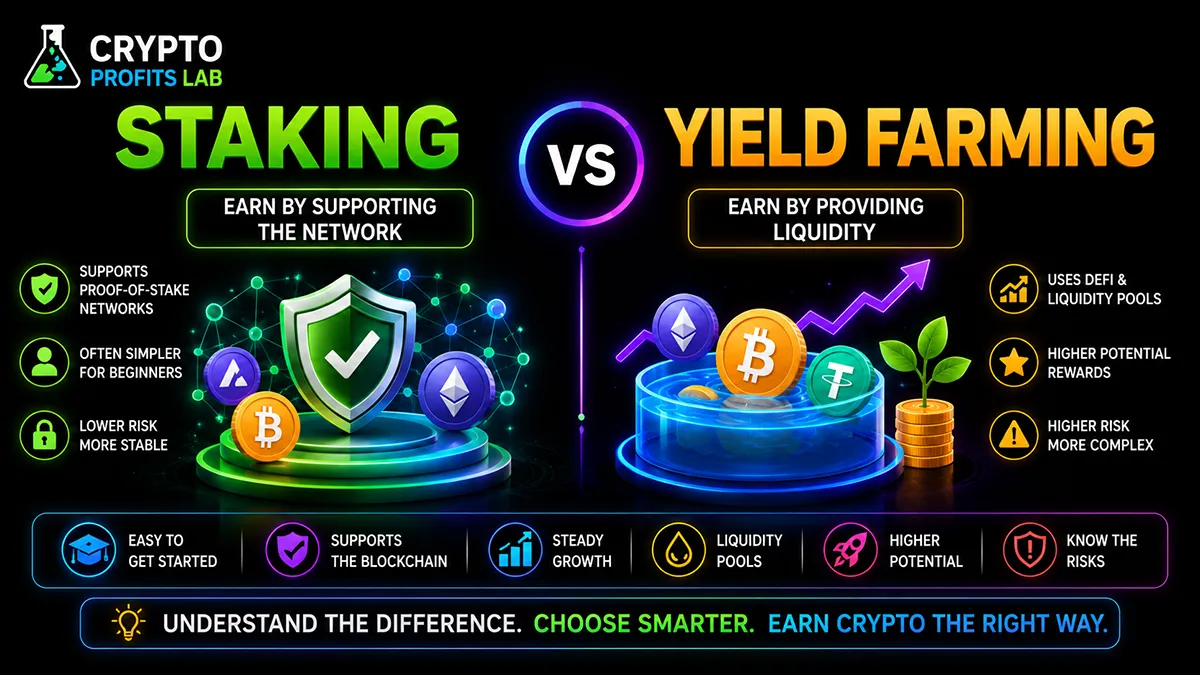
Staking vs Yield Farming is one of the most important comparisons for beginners who want to earn crypto rewards.
At first, both ideas can sound similar. You put crypto somewhere, wait, and hope to earn more crypto. But the way they work is different. The risks are different, too.
Staking is usually associated with helping to secure a proof-of-stake blockchain. Yield farming is usually connected to DeFi, liquidity pools, lending, borrowing, and reward strategies.
For complete beginners, staking is often easier to understand. Yield farming can offer more flexibility and sometimes higher advertised rewards, but it can also be more complex and risky.
This guide explains Staking vs Yield Farming in simple terms so you can understand the difference before using either strategy.
Quick Answer: Staking vs Yield Farming
Staking vs Yield Farming compares two ways people earn crypto rewards.
Staking usually means locking or delegating crypto to help support a proof-of-stake blockchain. In return, users may earn staking rewards.
Yield farming typically involves using DeFi apps to earn rewards by providing liquidity, lending crypto, or moving assets between earning opportunities.
The beginner-friendly difference is simple: staking is usually more straightforward, while yield farming is usually more complex.
Both can involve risk. Neither one guarantees profit. Crypto prices can fall, reward rates can change, platforms can fail, and scams often use reward language to attract beginners.
Key Takeaways
- Staking vs Yield Farming compares two different crypto reward methods.
- Staking usually supports proof-of-stake blockchains.
- Yield farming usually uses DeFi protocols, liquidity pools, or lending systems.
- Staking is often easier for beginners to understand.
- Yield farming can be more flexible but usually has more moving parts.
- Higher rewards often come with higher risk.
- Token price drops can erase reward gains.
- Fees, lockups, liquidity, taxes, and platform safety all matter.
- Beginners should understand the source of rewards before joining.
- The safest option is not always the one with the highest advertised percentage.
Staking vs Yield Farming Beginner Facts Table
| Topic | Staking | Yield Farming |
|---|---|---|
| Basic idea | Earn rewards by supporting a proof-of-stake network | Earn rewards through DeFi strategies |
| Beginner difficulty | Lower to medium | Medium to high |
| Common reward source | Blockchain network rewards | Trading fees, lending interest, token incentives |
| Main tools | Exchange staking, wallet staking, validators | DeFi apps, liquidity pools, lending protocols |
| Common risk | Token price loss, lockups, validator risk | Smart contract risk, impermanent loss, token risk |
| Complexity | Usually simpler | Usually more complex |
| Fees | Platform or network fees | Gas fees, swap fees, claim fees |
| Best for beginners? | Often easier to start with | Better after learning DeFi basics |
| Guaranteed income? | No | No |
Why Staking vs Yield Farming Matters
Staking vs Yield Farming matters because many beginners want to earn crypto but do not understand what they are agreeing to.
A platform may show a reward rate, but that rate does not explain the full risk. A staking offer may include lockups or validator rules. A yield farming offer may include liquidity pools, token rewards, and smart contract risk.
Crypto rewards can be useful, but they are not free money.
If you are new to earning crypto, start with Crypto Rewards for Beginners. That article explains the bigger picture before comparing specific strategies.
The goal is not to chase the highest reward. The goal is to understand the reward, the risk, and whether the strategy is appropriate for your experience level.
What Is Staking?
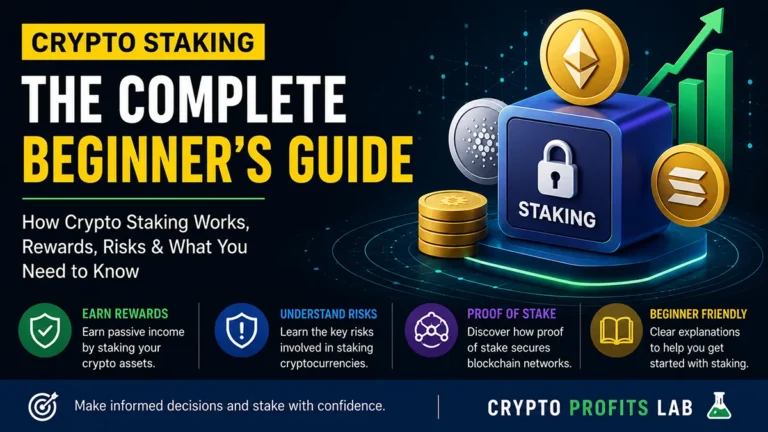
Staking means using crypto to help support a proof-of-stake blockchain.
A proof-of-stake blockchain uses validators to help confirm transactions and secure the network. Validators may need to lock or “stake” crypto as part of the process. If they follow the rules, they can earn rewards. If they break rules, penalties may apply.
Beginners do not always run validators themselves. Many people stake through an exchange, a wallet, or a staking pool.
If you want a deeper beginner’s guide, read Crypto Staking. You can also read What Is Proof of Stake? to understand the network system behind staking.
In simple terms, staking is like helping a blockchain operate and earning possible rewards for participating.
Staking vs Yield Farming starts here: staking is usually tied to blockchain security, while yield farming is usually tied to DeFi activity.
How Staking Works Step by Step
Here is a simple step-by-step explanation of staking.
Step 1: You choose a proof-of-stake crypto
Not every crypto can be staked.
Bitcoin does not use staking. Many other blockchains do. Before staking, you need to know whether the asset supports proof-of-stake.
Step 2: You choose a staking method
Beginners may stake through:
- A centralized exchange
- A crypto wallet
- A staking pool
- A validator
- A self-custody staking tool
Each method has different trade-offs. Exchange staking may be easier. Wallet staking may give you more control. Running your own validator is usually more advanced.
Step 3: Your crypto is staked or delegated
Your crypto may be locked, delegated, or assigned to a validator depending on the network.
This does not always mean you send your crypto away, but it does mean your funds may be subject to network rules or platform rules.
Step 4: The network pays rewards
If the validator performs properly and the network pays rewards, you may earn crypto over time.
Ethereum.org has a helpful Ethereum.org staking overview that explains how staking helps secure Ethereum and how validators support the network.
Step 5: You monitor risk
Staking is not something to ignore completely.
Reward rates can change. Token prices can fall. Lockups can delay withdrawals. Validators can have performance issues. Platforms can change rules.
This is why beginners should understand the full setup before staking.
What Is Yield Farming?
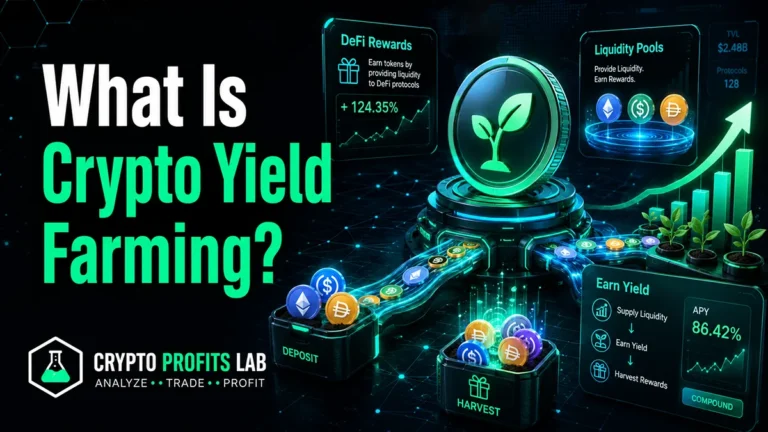
Yield farming is a DeFi strategy in which users earn rewards by depositing crypto into decentralized finance protocols.
DeFi stands for decentralized finance. It includes blockchain-based apps for trading, lending, borrowing, staking, swapping, and providing liquidity.
If DeFi is new to you, read What Is DeFi?.
Yield farming can involve several activities, such as:
- Providing liquidity to a trading pool
- Lending crypto through a DeFi protocol
- Staking liquidity pool tokens
- Claiming reward tokens
- Moving funds between different protocols
A simple yield farming example might involve depositing two tokens into a liquidity pool so that other users can trade them. In return, you may earn a share of fees or extra reward tokens.
For a full beginner’s guide, read What Is Crypto Yield Farming?.
Staking vs Yield Farming becomes clearer when you see that yield farming is usually more active and more complex.
How Yield Farming Works Step by Step
Here is a simple beginner explanation.
Step 1: You choose a DeFi protocol
A DeFi protocol is a blockchain-based app that enables users to conduct financial activities without a traditional bank or broker.
Examples include decentralized exchanges, lending apps, and liquidity platforms.
Step 2: You connect a crypto wallet
Most DeFi platforms require a self-custody wallet.
A self-custody wallet means you control your private keys. That gives you more control, but it also means you are responsible for mistakes.
Learn the basics with What Is a Crypto Wallet? and Crypto Private Key.
Step 3: You deposit crypto into a DeFi strategy
This may involve lending one asset or providing two assets to a liquidity pool.
A liquidity pool is a collection of crypto that helps users trade on a decentralized exchange. If you need a simple explanation, read Crypto Liquidity and What Is a DEX?.
Step 4: You earn possible rewards
Rewards may come from trading fees, interest, or new tokens issued by the protocol.
These rewards can change quickly. A high yield today may be lower tomorrow.
Step 5: You withdraw or move funds
Yield farmers may withdraw, claim rewards, restake rewards, or move funds to another opportunity.
Each action may involve gas fees or smart contract risk.
This is why Staking vs Yield Farming is not just about reward percentages. It is also about complexity and responsibility.
Staking vs Yield Farming: Main Differences
Staking vs Yield Farming can be compared across several important areas.
Purpose
Staking usually helps secure a blockchain.
Yield farming usually helps DeFi protocols by providing liquidity, lending assets, or participating in financial activity.
Complexity
Staking is often simpler. You choose an asset, choose a staking method, and earn possible rewards.
Yield farming can involve multiple steps, multiple tokens, changing reward rates, liquidity pools, and wallet approvals.
Risk
Staking risk often includes token price risk, lockups, validator risk, and platform risk.
Yield farming risk can include all of those plus smart contract bugs, impermanent loss, low liquidity, scam tokens, and high gas fees.
Reward source
Staking rewards usually come from the blockchain network.
Yield farming rewards may come from fees, borrowers, protocol incentives, or new token emissions.
Beginner friendliness
Staking is usually more beginner-friendly when done carefully.
Yield farming can be useful later, but beginners should learn the basics of DeFi before trying it.
Staking vs Yield Farming and APR vs APY
Crypto reward offers often show APR or APY.
APR usually refers to the simple annual rate. APY includes compounding.
This matters because Staking vs Yield Farming opportunities may show rates differently.
A staking platform may advertise 5% APR. A yield farming dashboard may advertise 25% APY. At first, the higher number may look better. But the yield farming option may involve more risk, changing rewards, token volatility, and gas fees.
Before comparing numbers, read APR vs APY in Crypto.
A lower reward with clear rules may be better than a higher reward that you do not understand.
Staking vs Yield Farming and Stablecoins
Some yield farming strategies use stablecoins.
Stablecoins are crypto assets designed to track the value of another asset, often the U.S. dollar.
Stablecoin yield farming may look less risky because the tokens are designed to stay near $1. But stablecoins still have risks. A stablecoin can lose its peg. A platform can fail. A DeFi contract can have a bug. Liquidity can dry up.
Read What Are Stablecoins? before assuming stablecoin rewards are safe.
Staking vs Yield Farming is not always about volatile coins versus stablecoins. It is about understanding how the reward is generated and what can go wrong.
Staking vs Yield Farming and Fees
Fees can reduce or even erase rewards.
With staking, fees may include platform fees, validator commissions, or withdrawal fees.
With yield farming, fees may include:
- Gas fees
- Swap fees
- Deposit fees
- Withdrawal fees
- Claim fees
- Bridge fees
Gas fees are blockchain transaction costs. They can rise when a network is busy.
Read What Are Crypto Gas Fees? before using DeFi apps. A small yield farming position can become unprofitable if gas fees are too high.
Staking vs Yield Farming should always include fee comparison. The advertised reward is not the same as the amount you actually keep.
Common Beginner Mistakes With Staking vs Yield Farming
Beginners often make mistakes because reward offers can look simple on the surface.
Mistake 1: Choosing the highest reward rate
The highest rate is not always the best choice.
A high yield may involve a risky token, low liquidity, temporary incentives, or a protocol that beginners do not understand.
Mistake 2: Ignoring token price risk
If the token falls sharply, rewards may not help much.
Earning 10% does not protect you from a 50% price drop.
Mistake 3: Not understanding lockups
Some staking programs lock funds for a set time.
If prices fall during the lockup, you may not be able to exit quickly.
Mistake 4: Using DeFi before learning wallet safety
Yield farming usually requires wallet connections and smart contract approvals.
If you approve the wrong contract or connect to a fake site, your funds may be at risk.
Mistake 5: Ignoring impermanent loss
Impermanent loss can happen when you provide liquidity to a pool and the prices of the deposited tokens change compared to simply holding them.
This is one of the biggest risks in yield farming that beginners often overlook.
Mistake 6: Forgetting taxes
Staking rewards and yield farming rewards may create tax records.
Read Crypto Taxes for Beginners before assuming rewards are simple.
Mistake 7: Treating rewards like guaranteed income
Neither staking nor yield farming guarantees profit.
Both involve crypto market risk.
Safety and Risk Section
Staking vs Yield Farming should always include safety.
Crypto reward scams are common. Scammers know that beginners are attracted to passive-income language, high-yield numbers, and “easy rewards.”
Be careful with offers that say:
- Guaranteed profit
- No risk
- Double your crypto
- Secret staking pool
- Daily guaranteed rewards
- Connect your wallet now
- Send crypto first to unlock rewards
- Limited-time private yield farm
These are warning signs.
Use these safety habits:
- Use official websites only.
- Do not click random links from social media.
- Never share your seed phrase.
- Start with small amounts.
- Research the platform.
- Check whether funds are locked.
- Understand fees before confirming.
- Avoid extremely high yields that you cannot explain.
- Turn on two-factor authentication for Exchange accounts.
- Use a separate wallet for testing DeFi when appropriate.
- Keep records for taxes.
For more beginner protection, read Crypto Safety Tips and Crypto Scams to Avoid.
If you plan to hold larger amounts long term, read Hardware Wallet.
Which Is Better for Beginners?
Staking is usually better for beginners than yield farming because it is often easier to understand.
That does not mean staking is risk-free. It only means the process can be simpler.
A beginner-friendly path may look like this:
- Learn what crypto rewards are.
- Understand staking basics.
- Learn proof of stake.
- Study APR and APY.
- Learn wallet safety.
- Understand DeFi.
- Learn liquidity pools.
- Study yield farming risks.
- Start very small if testing anything.
- Avoid high-yield offers you do not understand.
Staking vs Yield Farming is not about picking one forever. It is about matching the strategy to your knowledge level and risk tolerance.
For most beginners, staking education should come before yield farming.
Simple Example: Staking
Imagine you own $500 worth of a proof-of-stake coin.
You decide to stake it through a reputable wallet or exchange. The estimated reward rate is 5% per year.
If the rate stays the same and the token price does not change, you might earn about $25 worth of rewards before fees and taxes.
But if the token falls 40%, your position may lose value even after rewards.
This example shows why staking rewards are not a guaranteed profit.
Simple Example: Yield Farming
Imagine you deposit $500 of Token A and $500 of Token B into a liquidity pool.
Other users trade through that pool. You may earn a portion of the trading fees and possibly extra reward tokens.
But several things can happen:
- Token A can fall.
- Token B can fall.
- The pool can lose liquidity.
- Reward rates can drop.
- Gas fees can reduce returns.
- Impermanent loss can occur.
- The DeFi protocol can have a bug.
This example shows why yield farming is more complicated.
Staking vs Yield Farming becomes easier when you compare the full risk, not just the potential reward.
Beginner Checklist Before Choosing
Before using either strategy, ask these questions:
- Do I understand how the reward is created?
- Is this staking or yield farming?
- What asset am I risking?
- Is the reward paid in the same asset or another token?
- Is there a lockup?
- What fees apply?
- Can I withdraw easily?
- Who controls the funds?
- Is there smart contract risk?
- Could token price losses erase the rewards?
- Are taxes involved?
- Is the platform reputable?
- Would I still hold this asset without the reward?
This checklist helps beginners slow down.
Staking vs Yield Farming decisions should be made with research, not pressure.
Final Thoughts
Staking vs Yield Farming is a key topic for anyone exploring crypto rewards.
Staking usually means using crypto to help support a proof-of-stake blockchain. It is often simpler and more beginner-friendly, but it still includes price risk, lockups, validator risk, and platform risk.
Yield farming usually means using DeFi strategies to earn rewards through liquidity pools, lending, or other protocols. It can be more flexible and may show higher advertised rewards, but it usually comes with more complexity.
Neither option is a guaranteed income.
Beginners should focus on understanding before earning. Learn the asset. Learn the platform. Learn the fees. Learn the risks. Avoid unrealistic promises.
Crypto Profits Lab is built to make crypto education cleaner and simpler, and Staking vs Yield Farming is a perfect example. The smartest beginner decision is not chasing the highest number. It is choosing only what you understand well enough to use safely.
FAQ
What is the difference between staking and yield farming?
Staking usually means locking or delegating crypto to help secure a proof-of-stake blockchain and earn possible rewards. Yield farming usually means using DeFi protocols to earn rewards through liquidity pools, lending, or other strategies. Staking is often simpler for beginners, while yield farming is usually more complex and may include additional risks.
Is staking safer than yield farming?
Staking is often considered easier to understand than yield farming, but it is not risk-free. Staking can involve token price losses, lockups, validator issues, and platform risk. Yield farming can add smart contract risk, liquidity risk, impermanent loss, and changing rewards. Beginners should compare the full risk, not just the advertised reward rate.
Can beginners use yield farming?
Beginners can learn about yield farming, but they should be careful before using it. Yield farming often requires knowledge of DeFi, wallet security, liquidity pools, gas fees, and smart contract approvals. A beginner should understand crypto wallets, DeFi, liquidity, and scams before depositing funds into any yield farming strategy.
Does staking guarantee crypto income?
No, staking does not guarantee income or profit. Staking may pay rewards, but token prices can fall, reward rates can change, and some staking programs involve lockups or validator risks. Even if you earn more tokens, the total value of your position can still go down if the market drops.
Why are yield farming rewards sometimes higher?
Yield farming rewards can be higher because the risks are often higher. Rewards may come from trading fees, token incentives, lending activity, or new protocol emissions. High yields may also be temporary or paid in volatile tokens. Beginners should ask why the reward is high before assuming it is a good opportunity.
What is impermanent loss in yield farming?
Impermanent loss can happen when you provide crypto to a liquidity pool and the prices of the deposited tokens change compared to simply holding them. Even if you earn fees or rewards, price changes inside the pool can reduce your final value. This is one reason yield farming is more complex than basic staking.
Do staking and yield farming have fees?
Yes, both can have fees. Staking may include validator commissions, platform fees, or withdrawal fees. Yield farming may incur gas, swap, deposit, withdrawal, and claim fees. Fees matter because they reduce the amount you actually keep, especially when using small amounts.
Should I choose staking or yield farming?
Beginners usually should learn staking first because it is often easier to understand. Yield farming may be better suited for users who already understand wallets, DeFi, gas fees, liquidity pools, and smart contract risk. The best choice depends on your experience level, risk tolerance, and understanding of the strategy.
Are staking rewards and yield farming rewards taxable?
Staking and yield farming rewards may be taxable depending on your country and personal situation. Rewards may be treated as income when received, and selling or swapping them later may result in gains or losses. Beginners should keep clear records and consider speaking with a qualified tax professional.
What is the best rule for Staking vs Yield Farming?
The best rule is to understand the risk before chasing the reward. Staking vs Yield Farming should not be decided by the highest advertised percentage. Beginners should check the asset, platform, lockups, fees, reward source, wallet safety, and tax impact before using either strategy.