What Is a Crypto Validator? A Beginner’s Guide
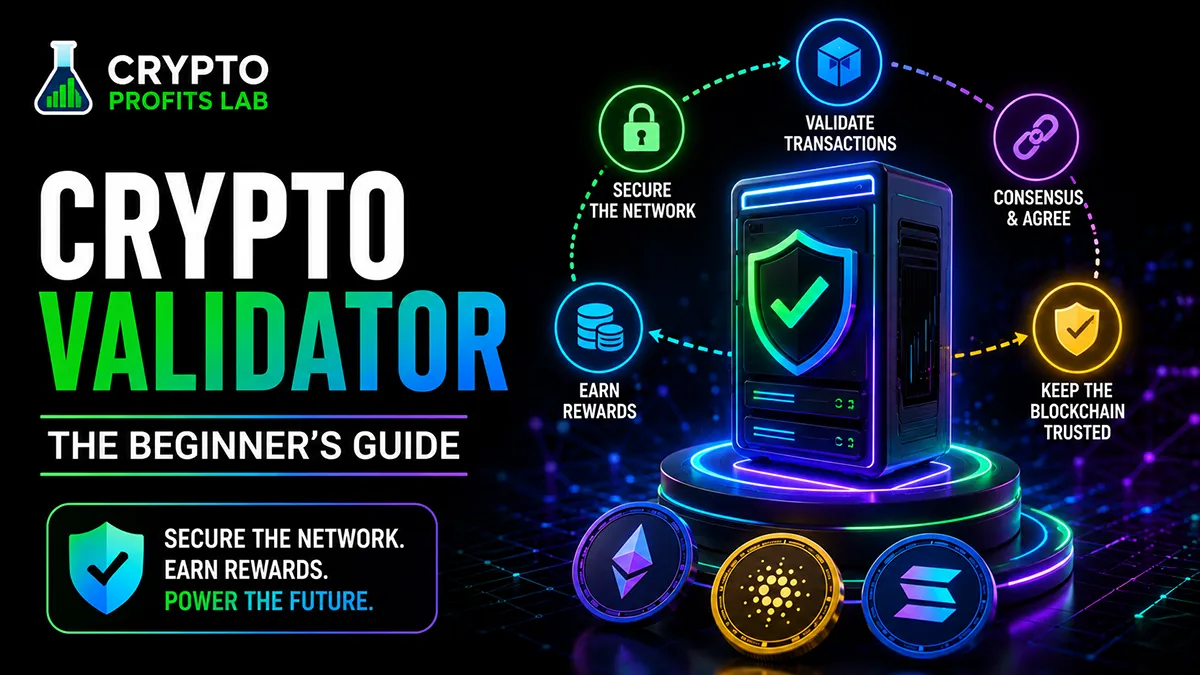
A crypto validator is a participant that helps a proof-of-stake blockchain check transactions, create or confirm blocks, and keep the network’s shared record accurate. Validators perform much of the work miners do on proof-of-work networks.
The basic idea is straightforward: a participant commits cryptocurrency under the network’s rules, operates validator software, and performs assigned duties. Honest and reliable participation may earn rewards. Serious rule violations can lead to penalties, including the possible loss of some staked assets on certain networks.
This guide explains what a crypto validator does, how validation works, where rewards come from, and which technical and financial risks beginners should understand.
Quick Answer
A crypto validator is a computer operator or validator account that helps a proof-of-stake blockchain reach agreement about valid transactions and new blocks.
Depending on the network, validators may propose blocks, vote on blocks proposed by others, check digital signatures, confirm that users have sufficient funds, and reject activity that breaks the rules. Validators commonly stake cryptocurrency as an economic commitment to honest behavior.
You do not always need to operate a validator to participate in staking. Some networks allow token holders to delegate to a validator, while exchanges and staking services may offer alternative arrangements. Each method has different controls, fees, custody, and risks.
Key Takeaways
- A crypto validator helps a proof-of-stake blockchain process and confirm valid activity.
- Validators use software and network rules rather than solving proof-of-work mining puzzles.
- Most proof-of-stake systems require validators or their supporters to commit cryptocurrency.
- Validators may propose blocks, vote on blocks, and help the network reach consensus.
- Honest participation can earn rewards, but rewards are never guaranteed.
- Downtime, improper operation, or serious violations can result in penalties.
- Running a validator is different from delegating tokens to one.
- Validator requirements and risks vary significantly between blockchains.
- A large amount of stake does not automatically make a validator trustworthy.
- Beginners should understand custody, fees, lockups, slashing, and withdrawal rules before staking.
Crypto Validator Beginner Facts
| Beginner question | Simple answer |
|---|---|
| What does a validator do? | It checks blockchain activity and helps confirm or create new blocks. |
| Which networks use validators? | Proof-of-stake and related networks use validators or similar participants. |
| Is a validator the same as a miner? | No. Miners compete with computing power, while validators follow a staking-based process. |
| Must I run special software? | Yes, if you operate your own validator. Delegators usually do not run the equipment. |
| Are rewards guaranteed? | No. Rewards depend on network rules, performance, fees, and other factors. |
| Can validators lose money? | Yes. Penalties, slashing, equipment costs, token price changes, and service failures can cause losses. |
| Do all validators require the same stake? | No. Minimums and selection methods differ by network. |
| Can I stake through an exchange? | Often, the exchange may control the assets and validator decisions. |
Why Blockchains Need Validators
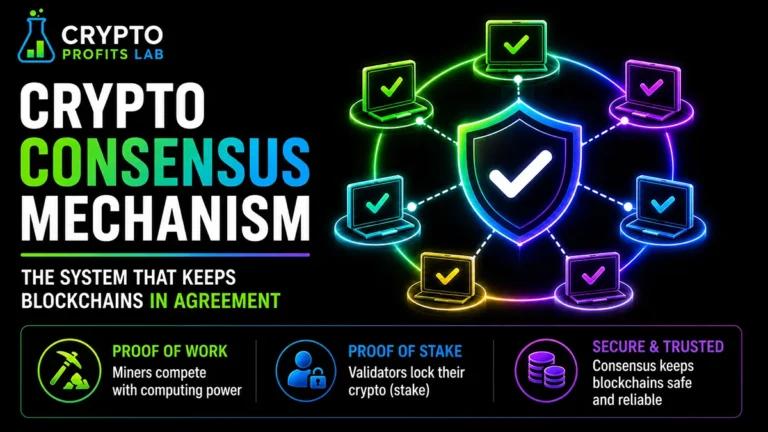
A blockchain is a shared digital record maintained across many computers. Those computers need a method for agreeing on which transactions are valid and which block should become the next accepted part of the history.
This agreement process is called consensus.
On a traditional payment network, a central company can update its own database. A decentralized blockchain distributes parts of that responsibility among independent participants. A crypto validator helps enforce the common rules without needing a bank to approve every transfer.
Validators help answer questions such as:
- Was the transaction properly signed?
- Does the sender control the funds?
- Were the same funds already spent?
- Does the proposed block follow the protocol?
- Which valid block should the network accept?
- Has enough support accumulated to treat the block as final?
The exact duties depend on the blockchain. The shared goal is to maintain one reliable record while rejecting invalid or conflicting activity.
Read Blockchain Technology Explained for the foundation and What Is a Crypto Network? for an explanation of how separate blockchain systems operate.
How a Crypto Validator Works Step by Step
The process differs across networks, but the following example shows the basic pattern used by many proof-of-stake blockchains.
Step 1: Cryptocurrency Is Committed
A validator operator deposits, bonds, or otherwise commits the network’s native cryptocurrency. On some networks, other holders can delegate their stake to an operator.
Stake acts as an economic commitment. The protocol can reward proper participation and may penalize certain failures or dishonest actions.
Staking rules are not identical everywhere. Some networks lock tokens, while others permit more flexible delegation. Some apply slashing, while others use different penalties.
Read What Is Proof of Stake? before comparing individual networks.
Step 2: Validator Software Connects to the Network
The operator runs the software required by that blockchain. It communicates with peers, receives transactions and blocks, follows consensus messages, and keeps the necessary network data synchronized.
Ethereum, for example, requires solo validators to operate execution, consensus, and validator software. Its official proof-of-stake documentation explains the Ethereum-specific process and requirements.
Step 3: Users Broadcast Transactions
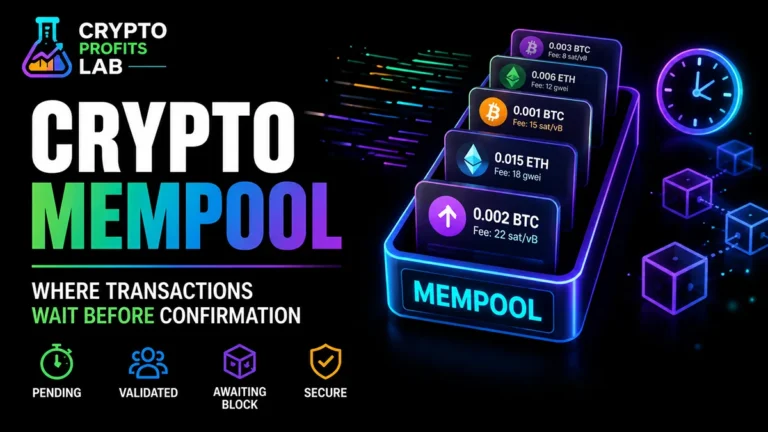
A user’s wallet signs and broadcasts a transaction. Network participants receive it and check whether it follows the blockchain’s rules.
A valid digital signature shows that the correct private key authorized the request. It does not prove that the user made a wise decision or avoided a scam.
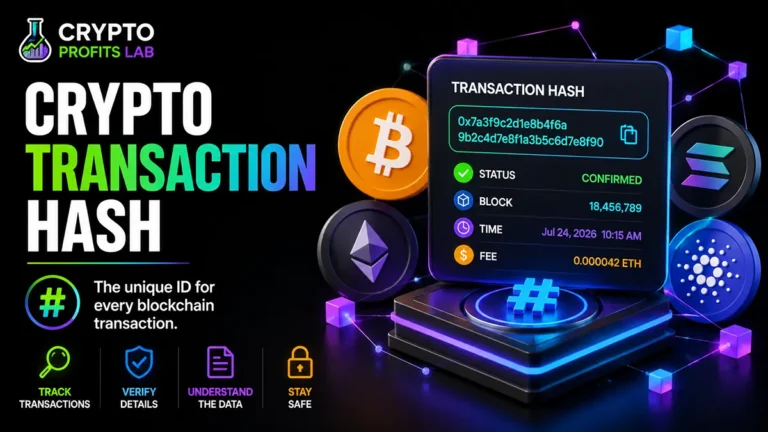
See What is a Crypto Transaction? for the full transaction process.
Step 4: A Validator Is Selected to Propose a Block
The protocol selects a participant to propose a block. Selection may consider stake, randomness, past performance, or other network-specific factors.
A proposed block groups valid transactions and refers to the previously accepted history. Being selected does not give the operator permission to ignore the rules.
Step 5: Other Validators Check the Proposal
Other validators examine the proposed block. They may vote, attest, certify, or otherwise signal whether it is valid.
The terminology varies, but the purpose is similar: independent participants check that the proposal follows the protocol before the network treats it as accepted.
Step 6: The Network Reaches Agreement
When the required support and protocol conditions are met, the block is added to the accepted chain. The network updates balances and other stored information.
A transaction may gain additional certainty as later blocks or consensus votes accumulate. Crypto Confirmations Explained describes why platforms may wait before treating a transfer as complete.
Step 7: Rewards and Penalties Are Calculated
A crypto validator that completes assigned duties correctly may receive protocol rewards and, on some networks, a share of transaction fees.
An operator that remains offline, submits late messages, or violates important rules may lose rewards or receive penalties. Severe or provably conflicting behavior can trigger slashing on networks that use it.
Crypto Validator vs. Crypto Miner
Validators and miners both help blockchains agree on valid activity, but they use different security models.
| Feature | Crypto validator | Crypto miner |
|---|---|---|
| Common network type | Proof of stake | Proof of work |
| Main committed resource | Cryptocurrency stake and reliable operation | Computing equipment and electricity |
| Block participation | Selected under staking and consensus rules | Competes to find a valid proof-of-work result |
| Specialized hardware | Depends on the network, but often standard servers | Competitive mining commonly uses specialized hardware |
| Main economic risk | Penalties, slashing, downtime, token price, and operating costs | Electricity, equipment, difficulty, token price, and downtime |
| Examples | Ethereum, Cardano, Solana, and other proof-of-stake networks | Bitcoin, Litecoin, and other proof-of-work networks |
Neither method guarantees that a cryptocurrency is useful, decentralized, secure, or valuable. The quality of the protocol and distribution of control still matter.
Read What Is Proof of Work? and Crypto Mining for Beginners for the alternative model.
Crypto Validator vs. Crypto Node
The words node and validator are sometimes used as though they mean the same thing, but they are not always interchangeable.
A node is a computer that runs blockchain software and communicates with the network. Depending on the setup, a node may store data, relay transactions, verify blocks, and enforce protocol rules without being selected to propose blocks or earn staking rewards.
A crypto validator has an active consensus role under a proof-of-stake system. It usually performs validator duties in addition to relying on node software.
A simple way to remember the distinction is:
- A node participates in the network and checks information.
- A validator participates directly in proof-of-stake consensus.
- Every validator setup needs the appropriate node functions, but not every node is a validator.
Learn more in What Is a Crypto Node?.
Crypto Validator vs. Delegator
A validator operator runs the required software, maintains the equipment, protects the keys, monitors performance, and responds to technical problems.
A delegator assigns or associates a stake with a chosen operator without running the validator infrastructure. The delegator may receive a portion of the rewards after the operator or protocol deducts fees.
Delegation does not work the same way on every network. Important differences include:
- Whether tokens remain in the delegator’s wallet
- Whether assets are locked
- Whether the operator takes custody
- How rewards are calculated
- Whether slashing can affect delegated stake
- How long does the undelegation take
- Whether rewards compound automatically
- How operator fees can change
Delegating is usually simpler than operating a crypto validator, but it still creates financial and platform risk.
How Validators Earn Rewards
Proof-of-stake networks use incentives to encourage reliable participation.
Possible reward sources include:
- Newly issued cryptocurrency
- Transaction fees
- Protocol-defined consensus rewards
- Additional network-specific payments
The displayed reward rate does not match the guaranteed profit. Actual results can be affected by:
- Validator performance
- Total stake participating
- Operator commission
- Service fees
- Token inflation
- Lockup and withdrawal periods
- Compounding frequency
- Token price changes
- Taxes
- Hardware and internet expenses
A 5% token reward does not guarantee a 5% dollar profit. If the token price falls sharply, the value of the position can decline even while the token balance increases.
Review Crypto Rewards for Beginners, APR vs. APY in Crypto, and Is Crypto Passive Income Safe? before focusing only on an advertised percentage.
What Is Slashing?
Slashing is a protocol penalty used by some proof-of-stake blockchains for serious validator violations.
The exact triggers vary. Examples can include signing conflicting blocks or participating in behavior that threatens consensus. A slashed crypto validator may lose part of its committed stake and may be removed from active participation.
Ordinary downtime is not always treated the same as slashing. A validator that briefly goes offline may simply miss rewards or receive a smaller penalty, depending on the network. Serious coordinated failures may be treated more harshly.
Beginners should never assume that every staking product protects them from slashing. Ask:
- Can the network slash validators?
- Can delegated users share the loss?
- Does the provider offer any reimbursement policy?
- Who decides whether reimbursement applies?
- Is that promise legally and financially reliable?
A service may advertise protection, but the user still depends on the provider’s terms and ability to pay.
What Equipment Does a Validator Need?
Requirements vary, but an operator may need a dedicated computer or server, sufficient memory and storage, stable internet access, reliable electricity, secure key management, monitoring tools, and up-to-date blockchain software.
Some networks are accessible to home operators, while others require demanding hardware or bandwidth. Cloud hosting can simplify maintenance but adds reliance on another company.
Running a crypto validator is an active technical responsibility, not effortless passive income.
Minimum Stake and Ways to Participate
There is no universal minimum. Ethereum has specific requirements for solo validation, while Cardano commonly uses stake pools and delegation. Other networks use different stakes, hardware, and selection rules.
Beginners may encounter several participation methods:
- Solo validation: You supply the stake, equipment, software, and maintenance.
- Delegation: You assign stake to an operator without running the infrastructure.
- Staking pools: Participants combine resources through a native or third-party system.
- Staking services: A company operates the infrastructure, sometimes while the user retains limited control over the keys.
- Exchange staking: The exchange holds the assets and manages participation.
- Liquid staking: A protocol issues a token representing a staked position.
Convenience usually adds another dependency. Pools, exchanges, services, and liquid-staking protocols can introduce custody, contract, liquidity, operator, or fee risks.
Requirements can change through network upgrades. Check current official documentation for the specific blockchain rather than applying one network’s rules to another.
Read “Crypto Staking for Beginners” and “Custodial vs. Non-Custodial Wallets” before choosing a method.
How to Evaluate a Crypto Validator
Delegators should look beyond the largest reward percentage.
Performance and Uptime
Reliable operation helps a validator complete assigned duties. Review a meaningful period rather than one unusually good day.
Commission and Fee Policy
A lower commission can improve rewards, but price alone does not prove quality. Check whether the operator can change the fee and how changes are communicated.
Stake Concentration
Delegating only to the largest operators can concentrate control. A healthy network benefits when stake is not controlled by a few entities.
Operator Transparency
Look for clear documentation, contact methods, infrastructure information, fee policies, and a consistent operating history.
Security Practices
Operators should protect validator keys, update software, monitor systems, and avoid configurations that can cause conflicting signatures.
Network-Specific Rules
Understand saturation limits, minimum stake, lockups, slashing, reward schedules, and withdrawal procedures for the chosen network.
Custody
Determine whether your tokens remain under your control or are transferred to an exchange, a company, a contract, or a pooled wallet.
A crypto validator with a professional website may still be poorly operated. Verify information through network explorers and official resources when possible.
Why Validator Decentralization Matters
Proof of stake is stronger when consensus power is distributed among independent participants. If a single exchange, company, or coordinated group controls too large a stake, it may gain excessive influence over block production and network decisions.
The number of validator accounts can be misleading because a single organization may operate multiple accounts. Operators may also depend on the same hosting provider, software client, or location.
Consider how much stake the largest providers control, whether operators are independently owned, and how easily delegators can move. Supporting a reliable smaller operator may improve distribution, but it does not remove financial risk.
Common Beginner Mistakes
Confusing Staking With a Guaranteed Savings Account
Staking rewards can change, token prices can fall, and withdrawals can be delayed. Crypto does not receive government deposit insurance simply because a service displays an annual rate.
Choosing Only the Highest Reward
An unusually high rate may reflect token inflation, added risk, temporary incentives, or misleading advertising.
Ignoring Validator Commission
Operator fees reduce the amount received. Check whether the commission can change after delegation.
Overlooking Lockups and Exit Queues
Unstaking may not be immediate. A market decline can occur while assets are still awaiting transferability.
Assuming Delegation Has No Risk
Delegated assets may face slashing, protocol, operator, custody, liquidity, or smart-contract risks depending on the method used.
Sending Tokens Instead of Delegating
A legitimate delegation process does not always require transferring ownership to the operator. Follow the official instructions for the specific network.
Sharing a Seed Phrase
No crypto validator or staking provider needs your seed phrase, private key, or two-factor authentication code.
Forgetting Token Price Risk
More tokens do not guarantee more purchasing power. Reward calculations should include possible price losses and taxes.
Safety and Risk Considerations
A crypto validator supports network security, but staking with validators introduces several risks.
Technical Risk
Software bugs, outages, configuration errors, or lost keys can reduce rewards and cause penalties.
Slashing Risk
Some networks deduct stakes for serious violations. Delegators may share the loss.
Custody Risk
An exchange or service may freeze withdrawals, fail financially, or lose assets.
Smart-Contract Risk
Pools and liquid-staking protocols may rely on contracts that contain bugs or unsafe permissions.
Liquidity Risk
A staking token may trade below the value it is intended to represent, especially during market stress.
Lockup Risk
Assets may be unavailable while waiting for activation, unstaking, or withdrawal.
Centralization Risk
Large providers can accumulate excessive influence within consensus.
Market Risk
The native token can lose value faster than staking rewards accumulate.
Scam Risk
Fake staking sites may promise guaranteed returns, request recovery phrases, or instruct users to send funds to an unknown wallet.
Follow Crypto Safety Tips and review Crypto Scams to Avoid before using an unfamiliar service.
Beginner Crypto Validator Checklist
Before running a validator or delegating stake, confirm:
- I understand the blockchain’s proof-of-stake rules.
- I know whether I am operating, delegating, pooling, or exchanging.
- I know who controls the private keys.
- I understand the minimum stake and hardware requirements.
- I checked commission, service fees, and reward calculations.
- I understand lockups, activation delays, and withdrawal times.
- I checked whether slashing can affect my assets.
- I know whether the operator can change its fees.
- I reviewed performance over a meaningful period.
- I considered the concentrations of validators and providers.
- I understand tax and recordkeeping responsibilities.
- I can afford a complete loss of the amount involved.
- Nobody has requested my seed phrase or private key.
Do not proceed until the responsibilities and exit process are clear.
Crypto Validator Final Thoughts
A crypto validator helps a proof-of-stake blockchain verify activity, propose or confirm blocks, and maintain agreement about the shared transaction history. In return for reliable participation, validators may receive rewards. Poor performance or serious violations can lead to missed rewards, penalties, or slashing.
Running one requires a stake, software, secure keys, dependable equipment, and ongoing technical work. Delegation and staking services make participation easier, but they add operator, custody, smart-contract, fee, and concentration risks.
Beginners should compare the entire arrangement rather than choosing the highest advertised return. Understand who controls the assets, how rewards are calculated, whether funds can be slashed, and how long withdrawals take.
Crypto Profits Lab explains these systems in straightforward language so beginners can understand both the opportunity and the risk before committing funds.
Crypto Validator Frequently Asked Questions
What Is a Crypto Validator in Simple Terms?
A crypto validator is a participant that helps a proof-of-stake blockchain check transactions and agree on new blocks. The validator runs network software and performs assigned consensus duties. It commonly has cryptocurrency committed in accordance with the protocol’s rules. Reliable participation may earn rewards, while downtime or serious violations may result in reduced rewards or penalties.
Is a Crypto Validator the Same as a Miner?
No. A miner participates in a proof-of-work network by using computing equipment to search for valid cryptographic results. A validator participates in a proof-of-stake network through committed stake and consensus messages. Both can help add blocks and secure a blockchain, but their equipment, incentives, selection processes, energy use, and financial risks are different.
How Much Crypto Do You Need to Become a Validator?
The required amount depends entirely on the network. Some blockchains set a fixed minimum for solo validation, while others use stake pools, nominations, delegation, or different economic requirements. Hardware and ongoing operating costs may also matter. Check current official documentation for the specific network rather than relying on a requirement quoted for another cryptocurrency.
Can You Lose Crypto by Running a Validator?
Yes. A validator may lose rewards or incur penalties due to downtime, configuration errors, conflicting signatures, or other rule violations. Networks that use slashing can deduct part of the committed stake for serious behavior. Operators also face hardware costs, token price losses, and key-management risk. The exact consequences depend on the blockchain.
Can I Earn Staking Rewards Without Running a Validator?
Often, yes. Many networks allow delegation to an existing validator or stake pool. Exchanges, staking services, pooled systems, and liquid-staking protocols may provide other options. These methods reduce technical work but introduce fees and additional risks related to custody, providers, smart contracts, liquidity, or slashing. Review who controls the assets and how withdrawals work.
What Is the Difference Between a Validator and a Delegator?
A validator operator maintains the software, equipment, keys, and network connection used for consensus duties. A delegator assigns or associates a stake with an operator but does not run that infrastructure. The operator may collect a commission before rewards are distributed. Delegation rules, custody, lockups, slashing exposure, and reward calculations vary between networks.
Are Crypto Validator Rewards Guaranteed?
No. Rewards depend on protocol rules, validator performance, total network participation, fees, operator commission, and other factors. The value of the cryptocurrency can also decline. An operator may earn more tokens even as the dollar value of the position declines. Taxes, lockups, hardware costs, and withdrawal delays can further reduce the actual return.
How Do I Choose a Crypto Validator for Delegation?
Review long-term performance, uptime, commission, fee-change policies, operator history, security practices, and stake concentration. Confirm the validator through the blockchain’s official wallet or explorer. Understand the network’s slashing and withdrawal rules. Do not choose solely because an operator advertises the highest reward, and never provide a seed phrase or private key.