Crypto Transaction: A Complete Beginner’s Guide
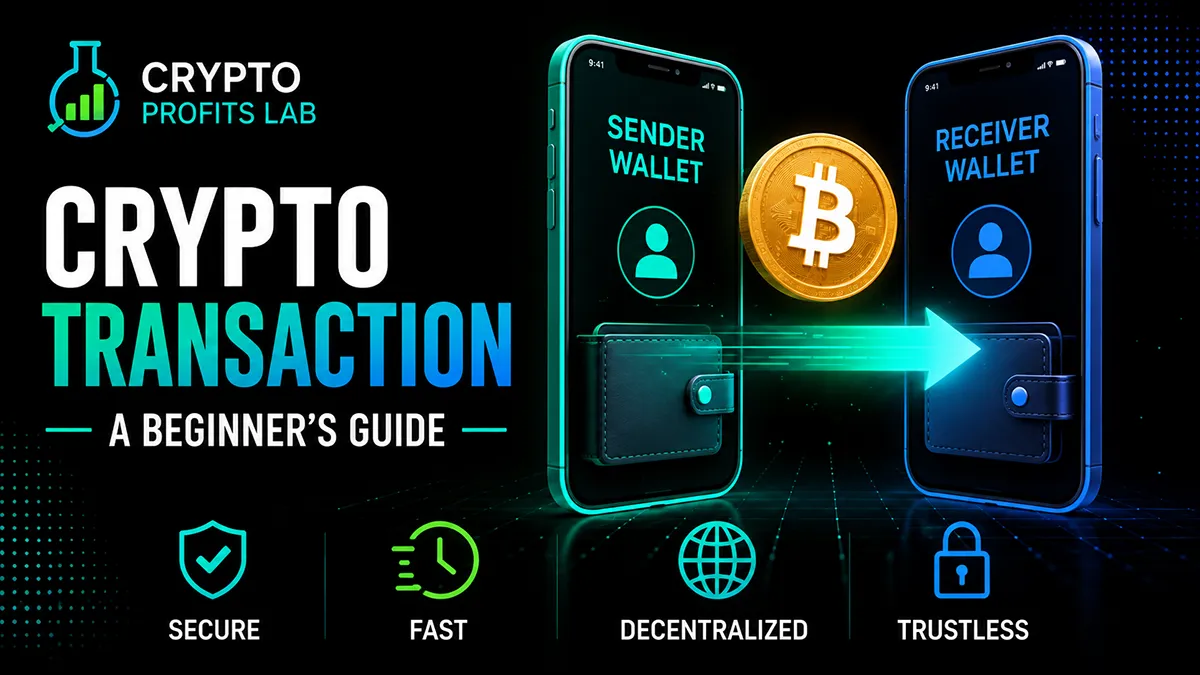
A crypto transaction is the process of sending cryptocurrency or a digital token from one address to another. It may look similar to sending money through a banking app, but the technology behind it works differently.
Instead of asking a bank to update its private records, a blockchain network checks the transaction, records it on a shared ledger, and makes the result visible to anyone who searches the blockchain. The process can take seconds, minutes, or longer depending on the network, the fee, and current demand.
This guide explains the process in plain English. You will learn what happens after you press “Send,” why fees and confirmations matter, how to track a transfer, and how to avoid the mistakes that cost beginners money.
Quick Answer: What Is a Crypto Transaction?
A crypto transaction is a digitally signed instruction that moves cryptocurrency or tokens between blockchain addresses. Your wallet creates the instruction, your private key authorizes it, network participants verify it, and a miner or validator usually adds it to a block.
Once the network confirms the transfer, the recipient can see the funds in the receiving address. Most confirmed blockchain transfers cannot be canceled, reversed, or edited, so checking every detail before sending is essential.
Key Takeaways
- A crypto transaction sends value or data between blockchain addresses.
- Your wallet signs the transfer without revealing your private key.
- Blockchain nodes check whether the transfer follows the network’s rules.
- Miners or validators add valid transfers to blocks.
- Network fees cover processing costs and help prioritize transactions.
- A transaction ID lets you track the transfer with a blockchain explorer.
- Crypto transfers are usually irreversible after confirmation.
- Sending a small test amount can prevent an expensive mistake.
Crypto Transaction Facts for Beginners
| Term | Simple meaning |
|---|---|
| Sender address | The blockchain address sending the asset |
| Recipient address | The destination blockchain address |
| Amount | The quantity of cryptocurrency or tokens being sent |
| Network | The blockchain used to process the transfer |
| Network fee | The charge paid to process the transfer |
| Transaction ID | A unique code used to track the transfer |
| Confirmation | Evidence that the transfer was added to the blockchain |
| Pending | Broadcast to the network but not fully confirmed |
| Failed | Rejected or not completed under the network’s rules |
| Memo or destination tag | Extra information some exchanges require |
How a Crypto Transaction Works Step by Step
The details vary slightly between blockchains, but the basic process is similar. Understanding these steps makes wallet screens, pending transfers, and blockchain explorers much easier to understand.
Step 1: You Enter the Recipient’s Address
The process begins when you paste, scan, or select a crypto wallet address. The address tells the network where the asset should go.
A wallet address is usually a long group of letters and numbers. Some networks also support readable names, but the underlying destination is still a blockchain address.
The sender must use an address that supports both the asset and the network. For example, an ERC-20 token sent on Ethereum should normally go to an Ethereum-compatible address. A valid-looking address on the wrong network can still result in lost funds.
Step 2: You Choose the Asset and Amount
Next, you select the cryptocurrency or token and enter how much to send. The wallet may show the amount in both crypto units and your local currency.
At this point, confirm that you selected the correct asset. Tokens with similar names or symbols may be completely different. Scammers sometimes create imitation tokens that resemble legitimate projects.
Your available balance may also need to cover the network fee. On some blockchains, the fee is paid in the network’s native coin rather than in the token being transferred.
Step 3: Your Wallet Builds the Transaction
Your wallet organizes the required information into a format the blockchain understands. A typical transfer includes the sender, recipient, amount, fee information, and other details required by that network.
Smart-contract networks may include additional data when the transfer interacts with an application, swaps a token, or approves a contract.
Step 4: Your Wallet Signs the Transaction
Before the network accepts the instruction, the wallet must prove that the sender is authorized to use the funds. It does this by creating a digital signature using the crypto private key associated with the sending address.
The signature authorizes the transfer without exposing the private key itself. This is one of the most important security features in cryptocurrency.
A software wallet signs inside the app or on the device. A hardware wallet keeps the private key in a separate physical device and asks you to approve the details on its screen.
Step 5: The Transaction Is Broadcast
After signing, the wallet sends the crypto transaction to the blockchain network. This step is called broadcasting.
The transfer reaches one or more crypto nodes, which share blockchain information and enforce network rules.
Before block inclusion, the transfer may appear as pending in a temporary holding area commonly called a mempool.
Step 6: Nodes Check the Details
Nodes independently verify whether the transfer complies with the blockchain’s rules. They may verify the digital signature, confirm that the sender has sufficient funds, check that those funds were not already spent, and review the fee or gas settings.
Invalid transfers are rejected. Valid transfers are shared with other nodes and become candidates for inclusion in a block.
This verification process is one reason people can transfer value without relying on a single bank or payment processor to approve every payment.
Step 7: A Miner or Validator Adds It to a Block
The next step depends on the blockchain’s consensus system. Bitcoin miners compete to add blocks through proof-of-work. Many other networks use validators through proof of stake.
A miner or validator selects valid transactions, creates a proposed block, and helps add that block to the blockchain. Transfers offering competitive fees may be processed sooner when the network is busy.
Once the transfer appears in a block, it receives its first confirmation.
Step 8: More Confirmations Are Added
Every new block built after the block containing your transfer adds another confirmation. More confirmations generally make it increasingly difficult for the recorded history to change.
Different services require different numbers of confirmations. A wallet might display funds quickly, while an exchange may wait for several confirmations before allowing you to trade or withdraw them.
A confirmation requirement is not necessarily a sign that something is wrong. It is often a risk-control policy used by the receiving service.
What Information Does a Crypto Transaction Contain?
A basic transfer contains enough information for the network to understand and verify the instruction. The exact fields differ by blockchain.
Common information includes:
- The sending address or spending source
- The recipient’s address
- The amount being transferred
- The network fee or gas limit
- A digital signature
- A sequence number, nonce, or similar anti-replay value
- Optional smart-contract data
- A transaction ID created from the transaction data
Public blockchains usually show addresses, amounts, fees, timestamps, and confirmation status. They do not normally display a legal name, although addresses can sometimes be connected to people through outside information.
What Is a Transaction ID?
A transaction ID, also called a transaction hash or TXID, is a unique string that identifies a blockchain transfer. It works somewhat like a tracking number.
You can paste the ID into a blockchain explorer to review the transfer. The explorer may show:
- Whether the transfer is pending, confirmed, or failed
- The sender and recipient addresses
- The asset and amount
- The fee paid
- The block number
- The confirmation count
- Smart-contract activity, when relevant
A transaction ID does not provide wallet control, but it can reveal public financial activity.
Why Do Crypto Transactions Have Fees?
A network fee pays the miners, validators, or network resources that process the activity. It also discourages spam by making it costly to flood the blockchain with an unlimited number of requests.
The fee is not always based on the dollar value being sent. A $10 transfer can sometimes cost as much as a $10,000 transfer because the fee may depend more on data size, network demand, or computational effort.
On Ethereum and similar networks, the processing charge is commonly called gas. Our beginner’s guide to crypto gas fees explains how gas prices, limits, and network congestion affect costs.
The wallet usually estimates a fee automatically. A higher fee may improve processing speed when demand is high, while a very low fee may leave the transfer pending longer.
Why Is My Crypto Transaction Pending?
A pending status means the transfer has been broadcast but has not yet received enough confirmation.
Common reasons include:
- Heavy network traffic
- A fee that is too low for current demand
- A temporary wallet, node, or explorer delay
- An exchange reviewing the withdrawal
- A replacement or conflicting transaction
- A blockchain that produces blocks slowly
First, search for the transaction ID on the correct explorer. If it appears there, the blockchain has received it even if your wallet display has not updated.
Avoid repeatedly sending the same payment unless you understand the wallet’s replacement features. You could accidentally create a second transfer.
Can a Crypto Transaction Fail?
Yes. A transfer can fail when the network rejects it or when a smart contract operation encounters an issue.
A transfer may fail due to an invalid signature, insufficient funds, incorrect fee settings, price changes, or a smart contract rejecting the request.
A failed smart-contract action may still use a network fee because the network performed work before the failure. Read the error message before trying again.
On-Chain Transfers Versus Exchange Transfers
Not every crypto movement is immediately recorded as a separate blockchain event.
An on-chain transfer moves assets through the blockchain and creates a public transaction ID. You usually pay a network fee, and the transfer must receive confirmations.
An internal exchange transfer may only update the company’s private records. It can be faster and may not create a public transaction ID.
A withdrawal from a crypto exchange to a self-custody wallet normally creates an on-chain transfer. The exchange’s withdrawal charge may differ from the network fee.
Coin Transfers, Token Transfers, and Smart-Contract Transactions
A native coin belongs to its own blockchain, while a token is created on an existing smart-contract platform. For example, an ERC-20 token uses a common Ethereum token standard.
Sending a token may call its smart contract and require more processing than sending a native coin. Smart-contract activity can also involve swapping tokens, depositing funds, minting an NFT, or approving an application. Read the requested action before approving it.
What Networks Can Process a Crypto Transaction?
Many assets are available on more than one network. Some networks are separate blockchains, while a Layer 2 crypto network may process activity more cheaply before settling information on a base blockchain.
The sender and recipient must use the same asset and supported network. An asset name alone may not be enough because tokens such as USDC exist on multiple networks.
How Long Does a Crypto Transaction Take?
Processing time depends on the blockchain, fee, network traffic, and the receiving service’s confirmation policy.
Some networks produce blocks within seconds, while others take longer and may require several confirmations. Exchanges can also add review time before broadcasting a withdrawal or crediting a deposit.
Use the transaction ID to separate blockchain processing delays from exchange or wallet display delays.
Can You Cancel or Reverse a Crypto Transaction?
A confirmed crypto transaction is usually irreversible. There is no universal customer service department with the authority to refund funds.
Some wallets can replace or cancel a pending transfer by broadcasting another instruction with a higher fee. This is network-specific and does not guarantee success.
A transfer sent to the wrong person can only be returned if the recipient cooperates. Funds sent through an unsupported network may be difficult or impossible to recover, so prevention matters more than recovery.
How to Send a Crypto Transaction More Safely
Use this checklist before pressing the final confirmation button.
1. Confirm the Exact Network
Check both the sending wallet and the receiving platform. The network names must match.
An exchange may support an asset without supporting every network on which it exists.
2. Verify the Address Carefully
Compare the beginning and end of the destination address. For larger transfers, compare more characters or use a trusted address-book entry.
Clipboard malware can replace a copied address, so verify what appears after pasting.
3. Check for a Memo or Destination Tag
Some exchanges use a single deposit address for multiple customers and require a memo, destination tag, or payment ID to identify the correct account.
An accurate address may still result in a delayed deposit if the required memo is missing.
4. Send a Small Test Amount
A small test transfer confirms that the address, network, and receiving platform work together. Wait for the test deposit to arrive before sending the remaining balance.
The extra fee may be worthwhile for a large or first-time transfer.
5. Review the Amount and Fee
Confirm the asset, amount, fee, and total deduction. Make sure you leave enough native coin for future network fees if the wallet requires it.
Check the unit as well; confusing dollars and coin amounts can create a serious error.
6. Read Hardware-Wallet Screens
When using a hardware wallet, verify the recipient address and amount on the physical device. The device screen is more trustworthy than a potentially compromised computer display.
Cancel and investigate any approval or spending permission you do not understand.
7. Save the Transaction ID
Keep the transaction ID until the recipient confirms arrival. It gives you evidence that the transfer was broadcast and helps support teams investigate a delayed deposit.
For more practical precautions, review our crypto safety tips before moving valuable assets.
Common Crypto Transaction Mistakes
Using the Wrong Network
This is one of the most serious beginner errors. The asset name may appear on several networks, but the receiving wallet or exchange may support only one of them.
Always select the network shown on the recipient’s deposit page.
Sending to the Wrong Address
Blockchain addresses are difficult to read, and a single incorrect character can change the destination or make the address invalid.
Use a QR code, trusted address book, or carefully verified copy-and-paste process. Never rely only on the first few characters.
Forgetting a Memo or Tag
Assets such as XRP, XLM, and others may require extra identifying information when sent to an exchange. The exchange may receive the funds but not know which customer account to credit.
Sending the Entire Balance
The wallet may need to leave some native coin to pay future fees. Sending all available ETH, SOL, or another native asset can prevent you from moving the remaining tokens later.
Choosing the Cheapest Fee During Congestion
An unusually low fee can leave a transfer pending. Use the wallet’s recommended setting unless you understand the network’s fee market.
Trusting a Fake Support Agent
Scammers often contact people who publicly report a delayed transfer. Legitimate support should not need your seed phrase or private key.
Anyone asking for those secrets is trying to take control of your wallet.
Approving Without Reading
A smart-contract approval may authorize more than a one-time payment. It can grant an application permission to spend tokens later.
Review the asset, amount, website, and requested permission before signing.
Crypto Transaction Safety and Risk
Crypto gives users more direct control, but direct control creates responsibility.
The biggest risk is irreversibility. Banks and card companies sometimes reverse unauthorized payments. Most blockchain networks cannot simply undo a valid confirmed transfer.
Public visibility is another consideration. A blockchain address does not automatically show your name, but transaction history is often public. Reusing a single address can make it easier for observers to estimate balances and link activities.
Smart contracts create additional risk. A transfer to a malicious or defective contract may produce an unwanted result even when the blockchain processes it correctly.
Protect yourself by using trusted wallet software, securing your recovery phrase offline, enabling account security, testing unfamiliar destinations, and slowing down before approving high-value transfers.
How to Track a Crypto Transaction
Tracking usually takes less than a minute:
- Open the sending wallet or exchange history.
- Select the withdrawal or transfer.
- Copy the transaction ID.
- Open an explorer for the correct blockchain.
- Paste the ID into the search field.
- Review the status, recipient, amount, fee, and confirmations.
For readers who want to understand Bitcoin’s underlying structure in more technical detail, the Bitcoin developer guide to transactions explains inputs, outputs, signatures, and how Bitcoin transfers are constructed.
Never connect your wallet or enter a recovery phrase merely to view a public transaction. A legitimate explorer can search a transaction ID without wallet access.
When Should You Contact Support?
Contact the sending or receiving platform when:
- The exchange has not broadcast the withdrawal
- The blockchain shows confirmed, but the deposit is not credited
- You included the correct address, but forgot a required memo
- The platform paused deposits or withdrawals
- The transaction ID shown by the platform appears invalid
- The wallet balance does not update after the explorer confirms the transfer
Provide the transaction ID, asset, network, amount, and time. Never provide a seed phrase, private key, password, or two-factor authentication code.
Final Thoughts
A crypto transaction is a signed instruction checked by a distributed network and recorded on a blockchain. The process becomes easier to understand once you know the path: enter the destination, sign, broadcast, verify, and wait for confirmation.
The most important beginner habit is to pause before sending. Match the network, verify the address, include any required memo, review the fee, and use a small test transfer when the amount matters.
Cryptocurrency transactions can be efficient and transparent, but they leave little room for careless errors. Careful verification is the simplest way to use them with greater confidence.
Crypto Transaction Frequently Asked Questions
What is the difference between a wallet transfer and a crypto transaction?
A wallet transfer may be a crypto transaction, but the terms are not always identical. A transfer between two blockchain addresses creates an on-chain record and transaction ID. A transfer between users of the same exchange may only update the exchange’s internal database. Internal transfers can be faster, but they rely on the company rather than direct blockchain confirmation.
How do I know whether a crypto transaction was successful?
Copy the transaction ID from your wallet or exchange and search it on an explorer for the correct blockchain. A successful result usually shows a confirmed status, recipient address, amount, fee, block number, and confirmation count. If the explorer shows success but an exchange has not credited the deposit, contact the receiving exchange with the transaction ID.
Why did my crypto transaction fee cost so much?
Fees can rise when many users compete for limited block space. Smart-contract actions may also cost more than simple coin transfers because they require additional computation. The amount being sent is often less important than network demand and transaction complexity. You may reduce costs by waiting for lower demand or using a supported lower-cost network.
What happens if I send crypto to the wrong address?
A confirmed transfer to the wrong address normally cannot be reversed by the blockchain. You can ask the recipient to return it if you know who controls the address, but they are not forced to cooperate. If the funds went to an exchange-controlled address or an unsupported network, contact that exchange promptly. Recovery may be unavailable or may require a fee.
Can a pending crypto transaction disappear?
A pending transfer can be dropped from a network’s mempool if it remains unconfirmed, conflicts with another transfer, or uses an inadequate fee. Depending on the blockchain and wallet, the funds may become spendable again, or the sender may replace the transfer. Check the transaction ID and use wallet-specific guidance before creating another payment.
Is it safe to share a transaction ID?
Sharing a transaction ID does not reveal your private key or let another person spend your funds. It is commonly used when requesting support. However, the ID reveals public details such as addresses, amounts, and timing. Those details can compromise privacy or link several wallet activities, so share them only when there is a valid reason.
Do all crypto transactions appear on a blockchain?
No. On-chain transfers appear on the blockchain, whereas internal exchange transfers may exist only in a company’s private records. Some payment systems and scaling networks also process activity away from a base chain before settling summarized information later. Check whether the service provides a public transaction ID to determine whether the transfer was recorded on-chain.
How many confirmations does a crypto transaction need?
There is no single confirmation number for every network or service. The required amount depends on the blockchain, transaction value, and recipient’s risk policy. A wallet may display an incoming transfer after 1 confirmation, while an exchange may require several confirmations. The receiving platform typically lists its confirmation requirements on the deposit or transaction status page.