Maker vs Taker Fees: A Beginner’s Guide to Crypto Trading Costs
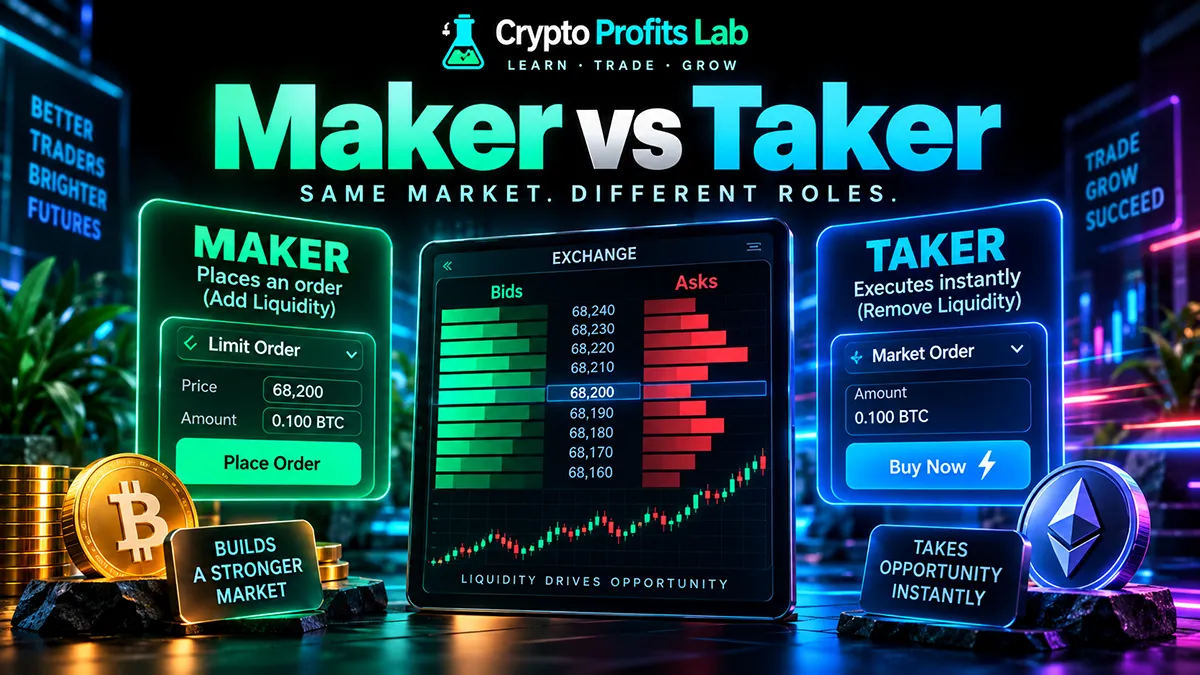
Crypto exchanges often show two trading rates: a maker fee and a taker fee. The names sound technical, but maker vs taker fees are based on one simple question: did your order add liquidity to the exchange, or did it immediately use liquidity that was already there?
A maker usually places an order that waits on the exchange’s order book. A taker places an order that matches an existing order right away.
Understanding maker vs taker fees helps beginners read exchange fee schedules, choose order types more carefully, and recognize why two trades of the same size can have different costs.
Quick Answer: What Are Maker vs Taker Fees?
Maker vs taker fees are trading fees based on how your order interacts with an exchange’s order book.
A maker order generally adds liquidity. It waits on the order book until another trader matches it.
A taker order generally removes liquidity. It matches an order that is already available and usually executes immediately.
Many exchanges charge makers less than takers because resting orders help create a deeper, more useful market. However, fee schedules vary by exchange, trading pair, account tier, and trading volume.
Maker and taker do not mean buyer and seller. A buyer or seller can be either one.
Key Takeaways
- Maker vs taker fees depend on liquidity, not whether you buy or sell.
- A maker order usually rests on the order book before it fills.
- A taker order usually matches an existing order immediately.
- Market orders are commonly taker orders.
- Limit orders can be maker or taker orders.
- Maker fees are often lower, but the lowest fee is not always the best trade.
- Spread, slippage, execution price, and whether the order fills also matter.
- Always check the current fee schedule for the exchange you use.
Beginner Facts About Maker vs Taker Fees
| Question | Beginner Answer |
|---|---|
| What is a maker? | A trader whose order adds liquidity to the order book. |
| What is a taker? | A trader whose order immediately uses liquidity already on the book. |
| Are makers always sellers? | No. Buyers and sellers can both be makers. |
| Are takers always buyers? | No. Both buyers and sellers can be takers. |
| Are market orders usually takers? | Yes, because they normally execute immediately. |
| Are limit orders always makers? | No. A limit order can execute immediately and become a taker trade. |
| Are maker fees always lower? | No. Exchange fee structures vary. |
| Can one order be partly maker and partly taker? | Yes, depending on how different portions of the order fill. |
Why Exchanges Use Maker vs Taker Fees
A crypto exchange needs buyers and sellers to trade with each other. On an order-book exchange, traders submit orders showing the amount they want to buy or sell and the prices they are willing to accept.
Orders that remain available create crypto liquidity. Liquidity makes it easier for another trader to complete a trade without causing a large change in price.
Exchanges generally want many buy and sell orders available. That creates a deeper order book and can make trading smoother.
This is why many platforms use maker vs taker fees. Traders who add liquidity may receive a lower rate, while traders who use existing liquidity may pay a higher rate.
The Order Book Is the Key
The easiest way to understand maker vs taker fees is to connect them to a crypto order book.
An order book is a live list of buy and sell orders. Buy orders are often called bids, while sell orders are often called asks.
Imagine XRP is trading near $3.00. Buyers are waiting at $2.99, while sellers are asking $3.01.
If you place a limit buy order at $2.98, it may not fill immediately. Your order can sit on the book, giving another trader an additional price to trade against. If someone later sells you XRP at $2.98, your execution may be treated as maker activity.
If you place a market buy order instead, the exchange may immediately match you with an available seller. You used liquidity already on the book, so the trade is normally treated as taker activity.
That difference is the foundation of the maker-taker system.
Maker vs Taker Fees Step by Step
Step 1: Choose a Trading Pair
A crypto trading pair indicates the two assets being exchanged, such as XRP/USD or BTC/USDT.
Each pair has its own order book and its own level of liquidity.
Step 2: Choose an Order Type
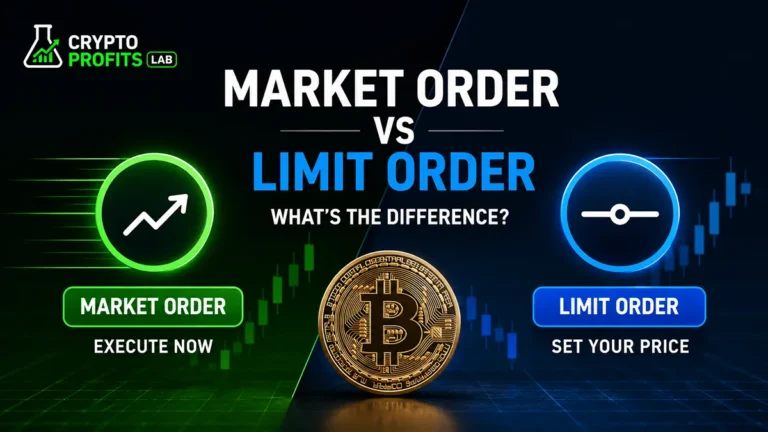
The two order types beginners see most often are market orders and limit orders.
A market order prioritizes quick execution at the best available prices.
A limit order lets you set the highest price you will pay when buying or the lowest price you will accept when selling.
Our guide to market orders vs limit orders in crypto explains the difference in more detail.
Step 3: The Exchange Checks Existing Orders
The exchange compares your order with the order book.
If your order can be matched immediately, it uses existing liquidity. That execution is normally a taker activity.
If your order cannot be matched immediately and is allowed to remain open, it may be added to the book. If another trader later matches it, that execution is normally maker activity.
Step 4: The Trade Executes
When a compatible buyer and seller are matched, the trade is completed. The exchange records the quantity, execution price, fee, and other details.
Step 5: The Fee Is Applied
The exchange applies its fee schedule to the completed trade.
Maker vs taker fees can vary according to trading volume, account level, product, or promotional pricing. Fee schedules can also change, so use the exchange’s current information rather than an old screenshot.
For a real-world example, Coinbase’s official explanation of maker and taker orders states that an immediately filled order is treated as taker activity, while an order placed on the book and filled later can receive maker treatment.
What Is a Maker Order?
A maker order adds liquidity to the order book.
Suppose the lowest seller is asking $3.01 for XRP. You place a limit buy order at $2.98.
Because your price does not match the seller’s, your order can wait on the book. You have added another available bid.
If a seller later accepts your $2.98 bid, your side of the trade can be classified as maker activity.
One important detail: selecting “limit order” does not guarantee a maker fee. The order generally must avoid immediate execution and actually rest on the order book.
Some exchanges also offer a “post-only” setting intended to keep an order from immediately taking liquidity. This is an advanced feature, so beginners should read the exchange’s instructions before using it.
What Is a Taker Order?
A taker order uses liquidity already available on the order book.
Suppose the lowest seller is asking $3.01 for XRP, and you submit a market order to buy. The exchange tries to match your order immediately with available sellers, making your trade a taker activity.
A limit order can also become a taker.
If the lowest seller is asking $3.01 and you enter a buy limit order at $3.02, the order can immediately match the $3.01 seller. Even though you chose a limit order, you still used existing liquidity.
This is one of the most important points about maker vs taker fees: the classification depends on what the order does, not just the order name.
Maker and Taker Are Not the Same as Buyer and Seller
A common beginner mistake is thinking the maker is the seller and the taker is the buyer.
That is incorrect.
A buyer can be a maker by placing a bid that waits. A seller can be a maker by placing an ask that waits.
A buyer can be a taker by immediately accepting an existing sell order. A seller can be a taker by immediately selling into an existing bid.
A simple way to remember it is:
- Maker = adds an available order.
- Taker = uses an available order.
Can One Order Pay Both Maker and Taker Fees?
Yes. One order can sometimes have different portions filled in different ways.
Imagine you submit a large limit buy order. Part of it immediately matches sellers at acceptable prices. That portion takes liquidity.
If the rest remains open on the order book and another trader later matches it, the remaining portion may provide liquidity.
Different fills can therefore receive different fee treatment.
If you want to know exactly what happened, review the trade or fill history in your exchange account rather than judging the fee only by the original order type.
Why Maker Fees Are Often Lower
Resting orders can improve market liquidity. More liquidity can make it easier for buyers and sellers to find each other and can help reduce large gaps between available prices.
For that reason, many exchanges use lower maker fees to encourage traders to leave orders on the book.
Takers receive a different benefit: speed. They can access existing liquidity immediately instead of waiting.
That trade-off helps explain why maker vs taker fees often favor makers, but there is no universal rule. Always review the specific fee schedule for the market you are trading.
Maker vs Taker Fees and the Crypto Spread
Trading fees are only one part of the cost of a trade.
The crypto spread is the difference between the best available bid and ask.
Suppose the highest bid is $2.99 and the lowest ask is $3.01. The spread is $0.02.
A trader who buys immediately may pay the ask. A trader who sells immediately may receive the bid.
A maker may try to place an order at a preferred price and wait.
This is why maker vs taker fees should not be considered alone. A lower trading fee does not automatically mean a better overall result if the market moves while you wait.
How Slippage Fits In
Crypto slippage is the difference between the price you expect and the price you actually receive.
It can become more noticeable when the market is moving quickly or when liquidity is limited.
A large market order may fill across several price levels. For example, part could fill at $3.01, another part at $3.02, and the rest at $3.03.
A limit order gives you more price control, but the trade-off is that it may never fill.
For beginners, execution quality can matter more than saving a small amount on maker vs taker fees.
A Simple Fee Example
Assume a fictional exchange charges:
- Maker fee: 0.20%
- Taker fee: 0.40%
These numbers are only examples.
On a $1,000 trade, the maker fee would be:
$1,000 × 0.20% = $2.00
The taker fee would be:
$1,000 × 0.40% = $4.00
The difference is $2.00.
That may seem small, but repeated trading costs can add up. Still, saving $2 is not worth it if waiting for a maker fill results in a much worse overall outcome.
For a broader explanation of exchange costs, see crypto trading fees for beginners.
7 Smart Ways Beginners Can Handle Maker vs Taker Fees
1. Read the Exchange Fee Schedule
Do not assume every platform charges the same rates.
Check the current maker rate, taker rate, volume tiers, and any special rules that apply to the trading pair or product you plan to use.
2. Understand Market Orders Before Using Them
Market orders prioritize execution and normally consume existing liquidity.
That commonly makes them taker trades. If you are new to spot trading in crypto, learn the order types before trying to optimize fees.
3. Do Not Assume Every Limit Order Is a Maker
A limit order can execute immediately if your chosen price crosses an available order.
When that happens, the filled portion can be classified as taker activity.
4. Check the Order Book
The order book shows current bids and asks. Looking at it can help you understand whether your limit price is likely to rest on the book or execute immediately.
5. Consider Spread and Slippage
A lower fee is not the only goal. A widespread or poor execution can cost more than the difference between maker and taker rates.
6. Do Not Overtrade to Reach a Lower Fee Tier
Some platforms lower fees at higher trading-volume levels.
That does not mean beginners should trade more just to qualify. Extra trading can lead to higher fees, greater market risk, and more opportunities for mistakes.
7. Review Completed Fills
After a trade, check the execution price, quantity, fee, and, if the exchange displays it, the maker/taker classification.
Real trade history is one of the easiest ways to understand how maker vs taker fees work in practice.
Common Beginner Mistakes
Assuming Maker Means Seller
Makers can be buyers or sellers. The term only describes whether the order provided liquidity.
Assuming Taker Means Buyer
Takers can also be buyers or sellers. A seller who immediately matches an existing bid is taking liquidity.
Assuming Every Limit Order Gets the Maker Rate
A limit order that executes immediately may be treated as a taker order.
Focusing Only on the Lowest Fee
A maker order can save on fees but fail to execute. Price, timing, spread, and slippage also matter.
Using Old Fee Information
Maker vs taker fees can change. A comparison page, video, or screenshot may show rates that are no longer current.
Ignoring Other Trading Costs
Exchange fees are not the only cost. Spread, slippage, withdrawal fees, network fees, and conversion costs can also matter.
Safety and Risk: Lower Fees Do Not Mean Lower Risk
Maker vs taker fees affect trading costs, not the underlying risk of owning or trading crypto.
Crypto prices can move quickly. A market order can execute just before a sharp move in the opposite direction. A resting limit order can fill during a fast decline or rally and leave you with an asset at a price you no longer like.
Never choose an order only because its fee is lower.
Before placing a trade:
- Confirm the trading pair.
- Double-check whether you are buying or selling.
- Review the amount and price.
- Check the estimated fee.
- Understand whether the order can be filled immediately.
- Avoid using money you cannot afford to lose.
- Be especially cautious with crypto leverage, which can magnify losses.
For a beginner, careful order entry and sensible risk management are more important than trying to save every possible fraction of a percent.
How to Check Which Fee You Paid
Menu names vary by exchange, but the process is usually similar:
- Open your order or trade history.
- Select the completed order.
- View individual fills if they are shown separately.
- Look for the trading fee and a maker or taker label.
- Compare the result with the exchange’s current fee schedule.
If an order is filled in several pieces, review each fill. Different portions can potentially receive different treatment.
Final Thoughts
Maker vs taker fees sound more complicated than they really are.
A maker adds liquidity by placing an order that waits on the order book. A taker uses existing liquidity by matching an available order.
That difference can affect the fee you pay.
For beginners, the most useful lesson is not to chase the lowest fee at all costs. The price you receive, the spread, slippage, timing, and whether your order fills can matter just as much.
Crypto Profits Lab is designed to make concepts like maker vs taker fees easier to understand without unnecessary jargon. Learn the mechanics first, check your exchange’s current rules, and make deliberate trading decisions rather than rushing because a fee looks small.
Frequently Asked Questions
What are maker vs taker fees in crypto?
Maker vs taker fees are exchange trading fees based on whether an order adds liquidity or removes it. A maker order generally rests on the order book, waiting to be matched. A taker order generally executes immediately against an existing order. The exchange may charge different rates for each type, so the fee can depend on how the order is executed rather than whether you are buying or selling.
Is a maker fee always cheaper than a taker fee?
No. Maker fees are often lower because makers provide liquidity, but there is no rule requiring every exchange to price them that way. Rates can vary by exchange, market, trading product, account tier, and recent trading volume. Beginners should check the current fee schedule on the specific platform they use, rather than assuming the maker fee will always be lower.
Is a limit order always a maker order?
No. A limit order can be maker or taker. If the price does not immediately match an existing order, it may rest on the book and later receive maker treatment. If the limit price immediately crosses an available order, the trade can execute as a taker. The classification depends on how the order interacts with liquidity, not simply on selecting “limit order.”
Is a market order always a taker order?
A standard market order is typically a taker, as it is designed to execute immediately against the best available orders. That means it generally consumes liquidity already on the order book. Exchange behavior can vary in unusual cases, so the platform’s rules control. For beginners, the practical assumption is that a normal market order will typically be treated as a taker.
Can one crypto order be both a maker and a taker?
Yes. An order can sometimes be partially filled immediately, leaving the remainder on the order book. The immediately filled portion can receive taker treatment, while the remaining portion may later receive maker treatment if another trader matches it. Check the fill history after execution, as individual parts of the same original order may have different fee classifications.
Why do exchanges charge different maker and taker fees?
Many exchanges use different rates to encourage liquidity. Resting maker orders provide other traders with more prices and quantities to trade against, helping to create a deeper order book. Takers benefit from immediate access to that liquidity. Different fees can balance those behaviors. Exact pricing is determined by each exchange, so fee schedules and volume tiers can differ significantly between platforms.
Should beginners always try to pay maker fees?
No. A lower maker fee does not guarantee a better trade. A resting limit order may never fill, or the market may move away while you wait. Sometimes immediate execution is more important than saving a small fee. Beginners should consider execution price, spread, slippage, timing, and risk, as well as maker vs taker fees, rather than optimizing for a single cost.