Crypto Liquidation Explained: A Beginner’s Guide
If you are learning about leverage, futures, or margin trading, crypto liquidation is one of the most important risks to understand before placing a trade.
The basic idea is simple: when a leveraged trade loses too much money, the trading platform may automatically close the position because there is no longer enough margin or collateral to keep it open safely.
This is different from spot trading, where you generally buy the asset and can continue holding it even if its market price drops. This beginner’s guide explains why forced liquidation happens, what a liquidation price means, and how leverage affects risk.
Quick Answer: What Is Crypto Liquidation?
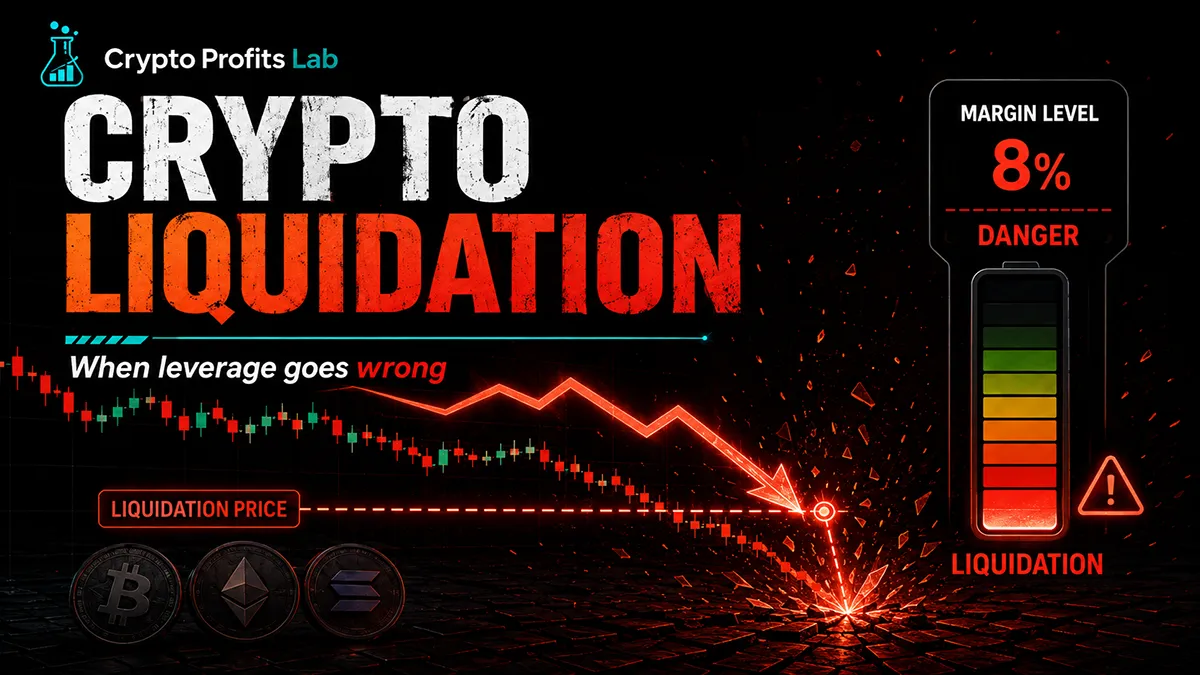
Crypto liquidation is the forced closing of a leveraged trading position when the trader’s margin falls below the minimum level required by the trading platform.
For example, suppose you use leverage to control a $1,000 position with only $200 of your own money. If the market moves far enough against you, your available margin can shrink rapidly. Before the losses become too large for the position to support, the exchange may automatically close it.
That forced closure is liquidation.
The exact rules vary by exchange and product. Platforms may use different maintenance-margin requirements, mark prices, fees, and liquidation systems. This is why beginners should never assume that the liquidation price on one platform will work exactly the same way on another.
Key Takeaways
- Crypto liquidation occurs when a leveraged position no longer has sufficient margin to remain open.
- Higher leverage generally leaves less room for the market to move against a trader.
- Long and short positions can both be liquidated.
- A liquidation price is the approximate price level where a platform may begin closing a position.
- Many derivatives platforms use a mark price rather than the latest traded price to determine liquidation.
- Liquidation can result in the loss of most or all margin assigned to a trade, depending on the product and platform.
- Spot traders normally do not face forced liquidation simply because the market price falls.
- Lower leverage, smaller position sizes, and careful risk limits can reduce liquidation risk, but they cannot remove trading risk.
Crypto Liquidation Beginner Facts
| Term | Beginner Meaning |
|---|---|
| Liquidation | A platform automatically closes a position because the required margin is too low |
| Leverage | Using a smaller amount of your own capital to control a larger position |
| Margin | Funds or collateral supporting a leveraged trade |
| Initial margin | The amount needed to open a leveraged position |
| Maintenance margin | The minimum amount of margin needed to keep the position open |
| Liquidation price | The approximate price at which forced closure may begin |
| Long position | A trade that benefits if the asset price rises |
| Short position | A trade that benefits if the asset price falls |
| Mark price | A reference price that some platforms use for risk calculations |
| Isolated margin | Margin assigned mainly to one specific position |
| Cross margin | Available account margin may be shared across multiple positions |
Why Does Crypto Liquidation Happen?
Crypto liquidation exists because leveraged trading allows traders to control a position larger than the capital they directly commit.
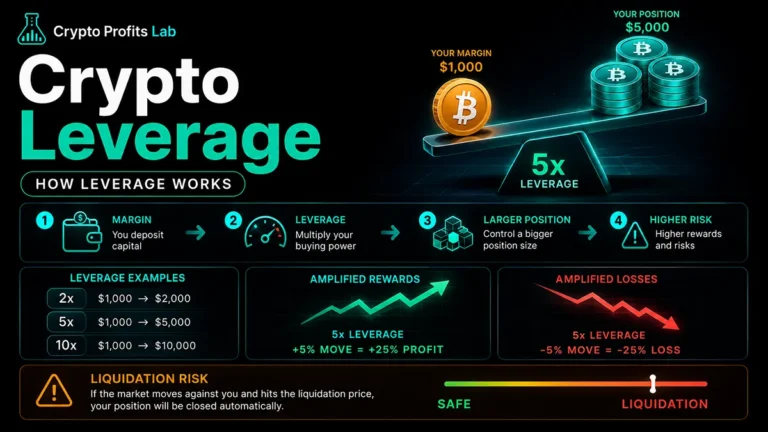
To understand why that matters, first understand crypto leverage. If you use 5x leverage, for example, $200 of margin may control a position worth about $1,000. That larger position also means price movements affect your margin more strongly.
If the market moves in your favor, leverage can magnify gains. If the market moves against you, it can magnify losses.
A trading platform does not normally allow those losses to grow without limit. It requires the account or position to maintain a certain amount of collateral. This minimum is commonly called the maintenance margin.
When the remaining margin falls below the platform’s requirement, the platform’s risk system can begin closing the trade. That is the core liquidation mechanism.
The purpose is not to punish the trader. It is a risk-control process designed to prevent a losing leveraged position from creating an even larger uncovered loss.
Step-by-Step: How Crypto Liquidation Works
Here is a simplified example.
Step 1: A Trader Deposits Margin
Imagine a trader assigns $200 as margin. That capital supports the leveraged position but is smaller than the total position size.
Step 2: The Trader Uses Leverage
At 5x leverage, $200 of margin may control roughly $1,000 of market exposure, ignoring fees and platform-specific calculations.
Step 3: The Market Moves Against the Position
Assume the trader opens a long position expecting the asset to rise, but the price falls. Because the trade is leveraged, the loss consumes available margin more quickly.
Step 4: Available Margin Shrinks
As the unrealized loss grows, the platform checks whether the position still meets its maintenance-margin requirement.
Step 5: The Liquidation Threshold Is Reached
If the adverse move becomes large enough, the remaining margin may fall below the required level. This threshold is associated with the liquidation price shown by many exchanges.
Step 6: The Platform Closes the Position
The exchange automatically closes some or all of the trade according to its rules. The trader does not need to press a button. That is crypto liquidation in its simplest form.
Actual calculations can include maintenance margin, fees, funding costs, position size, account equity, mark price, and other factors.
What Is a Crypto Liquidation Price?
A liquidation price is the estimated market level at which a leveraged position becomes vulnerable to forced closure.
For a long position, the liquidation price is usually below the entry price. If the asset falls far enough, losses reduce the margin supporting the trade.
For a short position, the opposite is generally true. The liquidation price is usually above the entry price because a rising market works against the short.
The important beginner lesson is that the liquidation price should not be treated as a guaranteed stop price.
A displayed crypto liquidation price can change when you adjust position size, add or remove margin, change leverage, incur certain fees or funding costs, or alter other parts of the position. Platform rules also matter.
Before opening a leveraged trade, read the exchange’s own liquidation documentation and understand which price it uses to trigger the process.
Mark Price vs. Last Price
One confusing part of crypto liquidation is that some derivatives platforms do not use the last traded price as the liquidation trigger.
Instead, they may use a mark price.
The last price is the most recent trade. A mark price is a reference value calculated using the platform’s methodology, often designed to provide a more stable input for risk calculations.
As a result, the latest chart price may not always be the exact number used by the liquidation engine.
Beginners should check three items before trading a leveraged product:
- What price determines liquidation?
- Where is the current mark price displayed?
- How does the platform calculate its liquidation price?
Understanding the difference is especially important during periods of high crypto volatility.
Long Liquidation vs. Short Liquidation
Both long and short leveraged trades can be liquidated.
Long Liquidation
A long trader expects the asset price to rise.
If the price falls instead, the position loses value. If the loss becomes large enough relative to the available margin, the long position may be liquidated.
A wave of forced long closures can add selling pressure to an already falling market, depending on how the positions are closed.
Short Liquidation
A short trader expects the asset price to fall.
If the price rises sharply, the short position loses money. Once the margin falls below the required level, the short can be liquidated.
Closing a short position can require buying back exposure. During a fast rally, many short liquidations can add upward pressure.
This is one reason leveraged markets can sometimes move extremely quickly in either direction.
How Leverage Changes Liquidation Risk
The connection between leverage and liquidation is direct: higher leverage generally gives a trader less room for adverse price movement.
Consider two traders who each have the same amount of capital.
One uses low leverage. The other uses very high leverage.
The high-leverage trader controls a much larger position relative to the margin supporting it. As a result, a smaller unfavorable price move can consume a larger percentage of that margin.
This does not mean that low leverage makes a trade safe. The market can still move dramatically, and losses are always possible.
It does mean that increasing leverage can make liquidation much easier to reach.
For beginners, the biggest mistake is often focusing on the maximum potential profit while ignoring how close the trade may be to forced closure.
Crypto Liquidation vs. a Stop-Loss
A stop-loss and a liquidation are not the same thing.
A stop-loss is an order or instruction intended to close a trade if the price reaches a level chosen by the trader. Traders often use stop-losses to limit how much they are willing to lose on a position.
Liquidation is imposed by the platform because the position no longer meets the required margin conditions.
Ideally, a risk-conscious trader does not plan to use liquidation as a substitute for an exit strategy.
A stop order can also have limitations. In fast-moving markets, the final execution price may differ from the trigger price due to crypto slippage. Liquidity and the state of the crypto order book can also affect execution.
That is why risk management involves more than simply placing one order and forgetting about the trade.
Isolated Margin vs. Cross Margin
Many derivatives platforms offer multiple ways to assign margin. Two common systems are the isolated margin and the cross margin.
Isolated Margin
With an isolated margin, a specific amount of margin is assigned to one position. Subject to the platform’s rules, the risk is generally more contained to that allocated margin.
Cross Margin
With cross margin, available account equity can be shared across positions. A losing position may require a larger portion of the account balance to remain open, exposing more funds if losses continue. Exact behavior varies by platform.
Beginners should never select a margin mode simply because one appears to provide a more distant liquidation price. First, understand how much of the account can actually be exposed.
What Is a Liquidation Cascade?
A liquidation cascade occurs when many leveraged positions are forced to close in a short period, and those closures contribute to further market movement.
Imagine a market falling quickly. Highly leveraged long positions are beginning to reach liquidation levels. Forced closures can add selling pressure, pushing the price lower and triggering another group of positions.
The process can repeat rapidly.
The same concept can work in the opposite direction when short positions are liquidated during a sharp rally.
Liquidation cascades can help explain why some price moves look unusually fast or violent. They do not cause every major market move, but leverage can amplify volatility when many positions are crowded around similar risk levels.
Market depth and crypto liquidity also matter. A market with weaker liquidity may have more difficulty absorbing a sudden wave of forced orders without larger price changes.
Does Crypto Liquidation Happen in Spot Trading?
Normal spot trading usually does not have the same forced-liquidation mechanism because the trader is buying an asset rather than borrowing or using a leveraged derivatives position.
If you buy $500 of a cryptocurrency in a standard spot account and its value falls to $300, you still generally own the asset. The exchange does not automatically sell it simply because the price dropped.
That is an important difference between spot trading and leveraged trading.
However, a spot account can still face other risks, including market losses, exchange risk, scams, account compromise, and mistakes when transferring assets.
Forced liquidation becomes relevant when borrowing, margin, futures, perpetual contracts, or other collateralized structures are involved.
Can Liquidation Happen in DeFi?
Yes. Liquidation is not limited to centralized derivatives exchanges.
In decentralized finance, a user may deposit crypto as collateral and borrow another asset against it. If the collateral falls too far below the loan amount, the protocol may allow some or all of that collateral to be sold or claimed under its rules.
The purpose is similar: the system needs enough collateral to support the debt.
This DeFi process differs from a futures position being force-closed, but both involve collateral falling below a required threshold.
If you are new to borrowing against digital assets, learn the basics of crypto lending before using a collateralized loan.
7 Ways Beginners Can Reduce Crypto Liquidation Risk
There is no method that makes leveraged trading risk-free. These steps can, however, help beginners understand and limit unnecessary exposure.
1. Use Less Leverage
Higher leverage usually means less room for the market to move against you.
Reducing leverage can give a position more breathing room, although it does not eliminate losses.
2. Keep Position Sizes Small
A smaller position can make it easier to control the dollar amount at risk.
Do not choose position size based only on the maximum amount an exchange allows you to borrow or control.
3. Know the Liquidation Price Before Entering
Check the estimated liquidation level before confirming a trade.
If you do not understand why the number is where it is, do not assume the position is safe.
4. Understand the Platform’s Mark Price
Know whether the exchange uses the last price, index price, mark price, or another reference for liquidation.
This can prevent confusion when the chart and liquidation engine appear to show different values.
5. Plan an Exit Before the Trade
Decide in advance what would prove your trade idea wrong and how much you are prepared to lose.
A planned exit is very different from simply hoping the market reverses before liquidation.
6. Leave Room for Fees and Volatility
Trading fees, funding costs, slippage, and sudden price moves can all affect the outcome.
A position that appears comfortably funded in a calm market may behave differently when volatility surges.
7. Avoid Trading Products You Do Not Understand
Leveraged futures and margin products are more complicated than ordinary spot purchases.
If the terms maintenance margin, mark price, funding, leverage, and liquidation price are still confusing, additional learning is more valuable than rushing into a trade.
Common Beginner Mistakes
Liquidation is often made more likely by a few repeatable mistakes.
Using the Maximum Leverage Available
An exchange offering very high leverage does not mean that using it is sensible. Maximum leverage can leave very little room for normal market movement.
Treating the Liquidation Price Like a Stop-Loss
Liquidation is a platform risk-control mechanism, not a personal trading plan.
Waiting until the position is force-closed can mean giving up most or all of the margin assigned to the trade.
Ignoring Fees and Funding
Small costs can add up, especially when a leveraged position stays open for a long time or is traded frequently.
Adding Margin Without Reassessing the Trade
Adding collateral may move the liquidation level, but it also puts more capital at risk. More margin is not automatically better risk management.
Confusing Spot Risk With Leverage Risk
A 10% price decline in a normal spot holding is not the same as a 10% move against a highly leveraged position.
Leverage changes how strongly the move affects your committed capital.
Failing to Read Exchange Rules
Different platforms use different formulas, margin tiers, mark-price calculations, and liquidation procedures.
A formula learned from one exchange may not match another.
Safety and Risk: Why Beginners Should Be Careful
Liquidation can happen quickly because cryptocurrency markets trade around the clock and can move sharply.
For additional official guidance about leverage and virtual-currency trading risk, see the U.S. Commodity Futures Trading Commission’s Customer Advisory: Understand the Risks of Virtual Currency Trading.
A sensible beginner approach is to treat leveraged trading as an advanced activity rather than a shortcut to larger profits.
Before using leverage:
- Learn how spot trading works first.
- Understand exactly how the exchange calculates margin and liquidation.
- Use money you can afford to lose.
- Protect your account with strong security practices.
- Be skeptical of social-media traders promising easy leveraged profits.
- Never assume that a stop-loss or liquidation system guarantees a specific execution price during periods of extreme volatility.
For broader protection basics, review our crypto safety tips.
At Crypto Profits Lab, the goal is to make topics like this easier to understand before beginners put real money at risk. A simple explanation is more useful than complicated trading language if it helps you recognize what can actually go wrong.
Final Thoughts
Liquidation is one of the clearest examples of why leverage changes the risk of cryptocurrency trading.
In a normal spot purchase, a falling market price reduces the value of what you own, but the asset is not normally force-sold just because the price declined. In a leveraged position, the platform requires enough margin to keep the trade open. When that margin falls below the required level, the position may be closed automatically.
The key lesson is the relationship between position size, leverage, margin, volatility, and forced closure.
If you are still learning, start with the basics, understand market orders vs. limit orders, learn how leverage works, and make sure you can explain the risk in plain English before using a leveraged product.
It is not an unusual technical detail. Forced liquidation is a central risk of leveraged crypto trading, and every beginner should understand it before putting capital into a margin or derivatives position.
Frequently Asked Questions About Crypto Liquidation
What does crypto liquidation mean?
Crypto liquidation means a trading platform automatically closes a leveraged position because the trader no longer has enough margin to satisfy the platform’s requirements. It usually happens after the market moves far enough against the position. The process prevents the trading system from allowing losses to exceed the supported collateral. The exact trigger, fees, and closing method depend on the exchange and product being used.
Can you lose all your money in a crypto liquidation?
A trader can lose most or all of the margin assigned to a leveraged position, depending on the platform, margin mode, fees, and market conditions. With cross margin, more of the account may be used to support a losing position, exposing additional funds. Some products may also create risks beyond the initially assigned margin. Beginners should read the exchange’s rules carefully before opening any leveraged trade.
Does higher leverage increase liquidation risk?
Yes. Higher leverage generally increases crypto liquidation risk because a larger position is being supported by a smaller amount of trader capital. This usually means a smaller adverse market move can reduce the margin to the maintenance requirement. Lower leverage does not make trading safe, but it generally provides more distance between the entry price and the forced-liquidation level than very high leverage under otherwise similar conditions.
What is the difference between liquidation price and stop-loss price?
A liquidation price is the approximate level at which a platform’s risk system may force-close a leveraged position due to insufficient margin. A stop-loss price is chosen by the trader as part of a risk-management plan. A stop-loss is intended to exit before losses grow further, while liquidation is imposed by the platform. Neither guarantees a specific execution price during fast or illiquid markets.
Can a short position be liquidated?
Yes. Crypto liquidation can happen to both long and short positions. A long position is at risk when the market falls far enough against it, while a short position is at risk when the market rises far enough. In either case, losses reduce the margin supporting the trade. Once the platform’s maintenance requirement is breached, it may automatically close some or all of the positions.
Why can liquidation happen before the chart reaches my liquidation price?
Some exchanges use a mark price rather than the last traded price to trigger liquidation. The mark price is a reference value calculated under the platform’s own methodology and may differ from the latest trade shown on a chart. Fees, funding, margin changes, and other position details can also change the estimated crypto liquidation level. Always check the platform’s current rules and live position information.
Is crypto liquidation the same as losing money in spot trading?
No. In ordinary spot trading, you generally own the cryptocurrency you purchased, so a price decline reduces its value but does not automatically force the sale. Crypto liquidation is mainly associated with leveraged positions, margin products, futures, perpetual contracts, and some collateralized loans. A spot investment can still lose substantial value, but the mechanics are different because there is typically no maintenance margin threshold that forces the position to close.
Can adding margin prevent liquidation?
Adding margin can sometimes move the liquidation price farther from the current market price because more collateral is supporting the position. However, it also puts more capital at risk and does not guarantee the market will reverse. Adding funds to a losing trade without a clear plan can turn a limited loss into a larger one. Traders should understand the platform’s margin system before changing collateral.