What Is ERC-20? A Beginner’s Guide to Ethereum Tokens
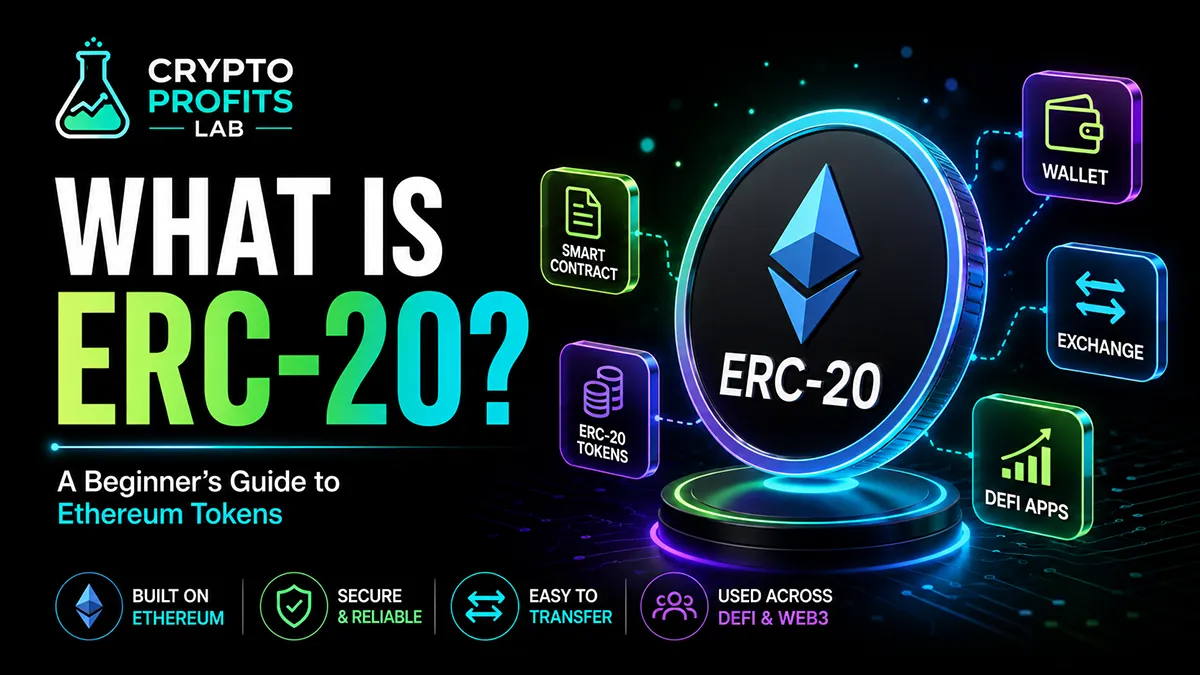
If you are new to crypto, you may see the term ERC-20 when buying tokens, moving crypto to a wallet, using decentralized apps, or reading about Ethereum projects.
What is ERC-20? ERC-20 is a common token standard used on Ethereum. It is a set of rules that helps tokens function predictably across wallets, exchanges, and decentralized apps.
Think of it like a shared format. When tokens use the same format, wallets and apps do not need separate setups for each token.
This guide from Crypto Profits Lab explains what ERC-20 means, why it matters, how ERC-20 tokens work, and what beginners should watch out for.
Quick Answer: What Is ERC-20?
What is ERC-20? ERC-20 is a technical standard for tokens built on Ethereum. A token standard is a set of rules that specify how a token should behave for wallets, exchanges, and apps.
ERC-20 tokens are fungible. Fungible means each unit is equal to another unit of the same token. For example, one token unit should work like another token unit from the same project, just like one dollar is meant to work like another dollar.
ERC-20 does not mean a token is safe, valuable, or approved by Ethereum. It only means the token follows a common Ethereum token format.
That distinction is important. A token can follow ERC-20 rules and still be risky, useless, or part of a scam. The standard helps with compatibility, not investment quality.
Key Takeaways
- ERC-20 is a token standard used on Ethereum.
- ERC-20 tokens differ from ETH, Ethereum’s native coin.
- Many wallets, exchanges, and apps support ERC-20 tokens because they follow a shared format.
- You usually need ETH to pay Ethereum gas fees when sending ERC-20 tokens on Ethereum.
- Token approvals can create risk if you connect your wallet to unsafe apps.
- ERC-20 compatibility does not prove that a project is trustworthy.
- Beginners should verify the token contract address before buying or sending tokens.
ERC-20 Beginner Facts Table
| Beginner Question | Simple Answer |
|---|---|
| What is ERC-20? | A common token standard for Ethereum tokens. |
| Is ERC-20 a coin? | No. It is a token format, not a separate coin. |
| Is ETH an ERC-20 token? | No. ETH is Ethereum’s native coin. |
| Do ERC-20 tokens use gas fees? | Yes, transactions on Ethereum usually require ETH for gas. |
| Can ERC-20 tokens be stored in wallets? | Yes, if the wallet supports Ethereum tokens. |
| Are all ERC-20 tokens safe? | No. The standard does not guarantee safety or value. |
| What should beginners verify? | The contract address, network, wallet, and fees. |
Why Beginners See ERC-20 So Often
Beginners usually run into ERC-20 when they start moving beyond only Bitcoin or Ethereum.
You may see ERC-20 listed on an exchange withdrawal screen. You may see it when adding a token to a wallet. You may also see it when using a decentralized exchange, a lending app, or a blockchain explorer.
What is ERC-20 in that situation? It usually indicates that the token runs on Ethereum and follows Ethereum’s ERC-20 token rules.
This matters because crypto networks are not all the same. A token may exist on more than one network. For example, a token might have an Ethereum version, a Polygon version, and a version on another blockchain.
Before sending any token, check three things:
- The token name and ticker.
- The network you are using.
- The receiving wallet address and supported network.
For a beginner’s explanation, read the crypto wallet address.
What Does ERC-20 Stand For?
ERC stands for Ethereum Request for Comments. In simple terms, it helps suggest and define standards in the Ethereum ecosystem.
The number 20 refers to the specific token standard. ERC-20 became one of the most widely used standards for fungible tokens on Ethereum.
What is ERC-20 in plain language? It is a shared rulebook.
That rulebook helps tokens answer basic questions in a way that wallets and apps can understand. For example:
- What is the token’s total supply?
- How many tokens does a wallet hold?
- Can tokens be transferred from one wallet to another?
- Can a user approve an app to spend tokens?
- How many tokens is an app allowed to spend?
To understand the base network behind these tokens, read what is Ethereum.
ERC-20 Tokens vs ETH
A common beginner question is whether ETH is an ERC-20 token.
ETH is not an ERC-20 token. ETH is the native coin of Ethereum. It is used to pay transaction fees, also called gas fees, on the Ethereum network.
ERC-20 tokens are assets created by smart contracts on Ethereum. A smart contract is code that runs on a blockchain. It can hold rules for how a token is created, transferred, approved, and tracked.
Here is the simple difference:
| Asset Type | Simple Meaning | Example Use |
|---|---|---|
| ETH | Native coin of Ethereum | Paying gas fees and using Ethereum |
| ERC-20 token | Token built using Ethereum rules | Trading, DeFi, governance, rewards, utility |
What is ERC-20 compared with ETH? ERC-20 is the token format. ETH is the fuel of the Ethereum network.
This is why you might hold an ERC-20 token in your wallet but still need ETH to move it. The token is the asset you are sending, while ETH pays the network fee.
For a beginner’s explanation of fees, read what are crypto gas fees.
How ERC-20 Tokens Work Step by Step
What is ERC-20 in action? The easiest way to understand it is to walk through what happens behind the scenes.
Step 1: A Project Creates a Token Contract
A crypto project can create a smart contract on Ethereum. That smart contract contains the token’s rules.
The rules may include the token name, ticker symbol, supply, decimal places, transfer functions, and approval functions.
Step 2: The Token Follows Shared ERC-20 Rules
The ERC-20 standard specifies which basic functions a token should include.
For example, wallets need a way to check balances, exchanges need a way to transfer tokens, and apps need a way to ask for approval. The official Ethereum’s ERC-20 token standard explains the developer-side rules in more technical detail.
Step 3: Wallets Can Recognize the Token
When a token follows the ERC-20 standard, many Ethereum wallets can recognize and display it.
Sometimes the token appears automatically. Other times, you may need to add the token manually using the token contract address.
The contract address is not the same as your wallet address. Your wallet address belongs to you. The token contract address belongs to the token’s smart contract.
For a wallet overview, read best crypto wallet for beginners.
Step 4: Users Can Send and Receive the Token
When you send an ERC-20 token, the Ethereum network processes the transaction.
Your wallet tells the token contract to move tokens from your address to another address. The blockchain records the change.
Blockchain transactions are usually irreversible, so always check the address before sending.
Step 5: Gas Fees Are Paid in ETH
Even if you are sending an ERC-20 token, the network fee is usually paid in ETH on the Ethereum mainnet.
This catches many beginners by surprise. They may have the token they want to send, but not enough ETH to pay the gas fee.
Before moving tokens, check whether you have enough ETH in the same wallet on the same network.
Step 6: Apps May Ask for Token Approval
Decentralized apps often need permission to interact with tokens in your wallet.
For example, if you use a decentralized exchange, the app may ask you to approve a token before trading it. This approval specifies how much of that token the smart contract can access.
Approvals can be useful, but they can also be risky if you approve a malicious or poorly designed app.
Step 7: You Can Track Transactions on a Block Explorer
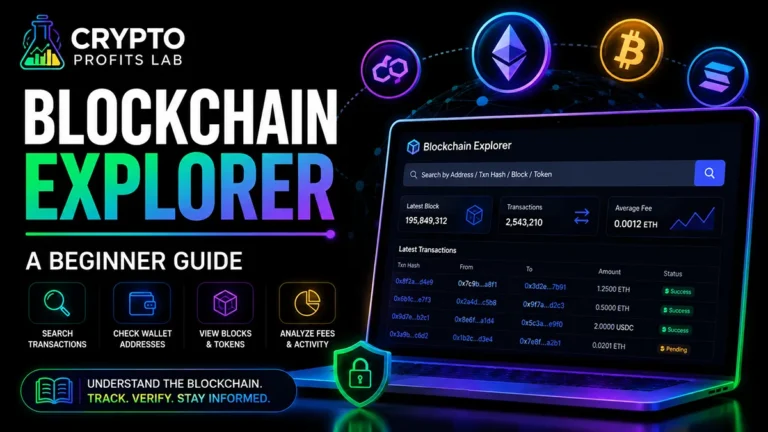
A block explorer lets you look up wallet addresses, token contracts, and transactions on a blockchain.
For ERC-20 tokens, a block explorer can help you confirm whether a transfer happened, which wallet received it, and what contract address was used.
For a beginner’s guide, read a blockchain explorer.
Why ERC-20 Became Important
Before shared standards, every token could behave differently. That would make life harder for wallets, exchanges, developers, and users.
What is ERC-20 useful for? It gives Ethereum tokens a common structure.
That common structure helps create interoperability. Interoperability means different tools can work together more easily.
For beginners asking What is ERC-20, this is why the same Ethereum wallet can often hold many different tokens. It is also why decentralized exchanges can list many tokens without building a custom system for each one.
ERC-20 helped support major areas of crypto, including:
- Stablecoins
- Governance tokens
- Utility tokens
- DeFi tokens
- Exchange-related tokens
- Reward tokens
To learn what tokens are in general, read about crypto tokens.
ERC-20 and DeFi
ERC-20 tokens are closely connected to DeFi, which stands for decentralized finance.
DeFi apps are crypto apps that try to provide financial services without a traditional bank in the middle. Examples include decentralized exchanges, lending platforms, liquidity pools, and yield tools.
What is ERC-20 doing inside DeFi? It gives many tokens a shared format, making it easier for DeFi apps to support them.
For example, a decentralized exchange can let users trade ERC-20 tokens. A lending app can let users deposit supported tokens. A liquidity pool can use ERC-20 tokens as part of a trading pair.
This does not remove risk. DeFi can include smart contract risk, market risk, scam risk, and user error risk.
For a beginner’s overview, read what is DeFi. You can also learn about specific DeFi examples in what is Uniswap and what is Aave.
ERC-20 Token Approvals Explained Simply
Token approvals are among the most important ERC-20 concepts for beginners to understand. What is ERC-20 without approvals? It would be much less useful for many apps.
When you hold tokens in your own wallet, an app cannot automatically take them. You usually need to approve access first.
That approval can be limited or broad. Some apps ask for approval to spend a specific amount. Other apps may ask for a very large allowance, sometimes called unlimited approval.
What is ERC-20 approval risk? The risk is that a bad app, a hacked app, or a malicious smart contract could use approval to move tokens you did not intend to lose.
This is why you should avoid connecting your wallet to random websites. It is also why you should read wallet prompts carefully before clicking approve.
A simple safety habit is to use a separate wallet for testing new apps. Keep larger holdings in a more secure wallet that you do not connect to unknown websites.
For wallet safety basics, read crypto safety tips.
ERC-20 Contract Addresses
Every ERC-20 token has a contract address on Ethereum.
This address identifies the token contract. It helps wallets and explorers know which token you are talking about.
Beginners should not rely only on a token name or ticker. Scammers can create fake tokens with similar names and symbols.
For example, two tokens can have the same ticker, but they cannot have the exact same contract address on the same network.
Before buying or adding a token, verify the contract address using trusted sources. These may include the project’s official website, official social channels, reputable data sites, or a blockchain explorer.
What is ERC-20 research without checking the contract address? It is incomplete. The contract address is one of the clearest ways to reduce confusion between real tokens and copycat tokens.
ERC-20 on Different Networks
Here is where beginners can get confused.
ERC-20 is an Ethereum token standard, but many tokens also exist on other networks through bridges, wrapped versions, or separate deployments.
That means a token can have an Ethereum version and another version on a different blockchain.
When withdrawing from an exchange, you might see network choices such as Ethereum, Polygon, Arbitrum, or others. These choices matter.
What is ERC-20 on an exchange withdrawal page? It usually means you are choosing the Ethereum network version of that token.
When in doubt, send a small test transaction first. A test transaction costs extra in fees, but it can prevent a much bigger mistake.
For more on moving assets between networks, read what is a crypto bridge.
Common Beginner Mistakes With ERC-20 Tokens
ERC-20 tokens are common, but beginners still make expensive mistakes.
Mistake 1: Sending Tokens on the Wrong Network
A wallet address may look compatible across multiple Ethereum-style networks, but that does not mean every platform supports every network.
Always match the sending network with the receiving network.
Mistake 2: Forgetting ETH for Gas Fees
If your ERC-20 token is on Ethereum, you generally need ETH to move it.
Beginners sometimes buy a token and then realize they cannot send it because they have no ETH for gas.
Mistake 3: Trusting a Token Because It Is ERC-20
What is ERC-20 not telling you? It is not telling you whether the project is honest, profitable, secure, or useful.
ERC-20 is a format. It is not a seal of approval.
Mistake 4: Approving Unsafe Apps
Do not approve token access on websites you do not trust.
Read wallet popups carefully. Avoid rushing. Be careful with links shared in comments, direct messages, or fake support chats.
Mistake 5: Adding Fake Tokens to a Wallet
Scammers can create tokens with familiar names.
Only add tokens using the correct contract address from trusted sources.
Mistake 6: Ignoring Small Test Transactions
A small test transaction can confirm that the address, token, and network are correct.
Safety and Risk Section
ERC-20 tokens can be useful, but they come with real risks. What is ERC-20 safety for beginners? It means understanding both compatibility and danger.
The first risk is smart contract risk. A token or app may have bugs in its code. A bug can lead to lost funds, frozen tokens, or unexpected behavior.
The second risk is market risk. Token prices can rise and fall quickly. Many tokens lose value, even if they are popular for a while.
The third risk is scam risk. Fake tokens, fake websites, fake airdrops, and fake support accounts are common in crypto.
The fourth risk is user error. Sending tokens to the wrong address or the wrong network can be difficult to fix.
The fifth risk is approval risk. If you approve a harmful app, your tokens may be exposed.
A beginner-friendly safety checklist:
- Verify the token contract address.
- Confirm the correct network before sending.
- Keep enough ETH for gas when using Ethereum.
- Use trusted wallets and official websites.
- Avoid links from strangers.
- Read wallet approval prompts carefully.
- Test with a small amount first.
- Do not invest money you cannot afford to lose.
Crypto Profits Lab teaches beginners to slow down, verify details, and understand the basics before chasing profits.
How to Research an ERC-20 Token Before Buying
What is ERC-20 research for beginners? It is a simple process for checking whether a token deserves more attention.
Start with the project’s official website. Look for clear explanations, documentation, token utility, and warnings.
Next, verify the contract address and check the token on a blockchain explorer. Look at holders, transfers, and whether the contract looks like the correct token.
Also look for red flags:
- Promises of guaranteed returns
- Anonymous links from direct messages
- Pressure to buy quickly
- No clear use case
- Confusing token names
- Fake celebrity endorsements
No checklist can remove all risk. The goal is to reduce obvious mistakes before you put money at risk.
ERC-20 vs Other Token Standards
ERC-20 is not the only Ethereum token standard.
Other standards exist for different purposes. ERC-721 is commonly used for NFTs. ERC-1155 can support multiple token types, including fungible and non-fungible assets.
What is ERC-20 best known for? Fungible tokens.
Fungible tokens are designed so units are interchangeable. NFTs are different because each token is unique or individually identifiable.
| Standard | Beginner Meaning | Common Use |
|---|---|---|
| ERC-20 | Fungible token standard | Tokens with interchangeable units |
| ERC-721 | Non-fungible token standard | NFTs and unique digital items |
| ERC-1155 | Multi-token standard | Collections with multiple asset types |
What is ERC-20 compared with those standards? It is the beginner-friendly label you will most often see with fungible Ethereum tokens.
You do not need to memorize every standard as a beginner. Just remember that ERC-20 usually points to Ethereum-based fungible tokens.
Should Beginners Use ERC-20 Tokens?
Beginners can use ERC-20 tokens, but they should start carefully.
What is ERC-20 best used for by beginners? It is best used as a learning point for understanding Ethereum tokens, wallet activity, gas fees, approvals, and DeFi basics.
Before using ERC-20 tokens with real money, beginners should understand addresses, gas fees, contract addresses, wallet approvals, test transactions, and fake website risks.
You do not need to become a developer. You only need enough knowledge to avoid common mistakes. A good beginner approach is to learn with small amounts, use trusted platforms, and build confidence slowly.
Final Thoughts
What is ERC-20? ERC-20 is one of the most important token standards in crypto because it gives Ethereum tokens a common set of rules.
For beginners, the simple takeaway is this: ERC-20 helps tokens work across wallets, exchanges, and apps, but it does not make a token safe or valuable by itself.
Understanding ERC-20 can help you avoid confusion when choosing networks, sending tokens, using wallets, checking contract addresses, and approving decentralized apps.
The safest beginner mindset is to move slowly. Verify the token. Verify the network. Keep ETH for gas. Read wallet prompts. Use test transactions when needed.
Crypto does not have to feel overwhelming. When you learn one simple concept at a time, terms like ERC-20 become much easier to understand.
FAQ: What Is ERC-20?
What is ERC-20 in simple terms?
What is ERC-20? ERC-20 is a common set of rules for tokens built on Ethereum. It helps wallets, exchanges, and apps understand how a token should work. The standard covers basic actions such as checking balances, transferring tokens, and approving token spending. It does not prove that a token is safe, valuable, or trustworthy.
Is ERC-20 the same as Ethereum?
No. ERC-20 is not the same as Ethereum. Ethereum is a blockchain network. ETH is the native coin used to pay gas fees on that network. ERC-20 is a token standard used by many tokens created on Ethereum. You can hold ERC-20 tokens in an Ethereum wallet, but you usually need ETH to move them.
Do I need ETH to send ERC-20 tokens?
Yes, if your ERC-20 token is on Ethereum mainnet, you usually need ETH in the same wallet to pay gas fees. The token you are sending does not normally cover the network fee on its own. Beginners should check gas costs before sending tokens so they do not get stuck with tokens they cannot move.
Are ERC-20 tokens safe for beginners?
ERC-20 tokens are usable for beginners, but they are not inherently safe. The ERC-20 standard only helps tokens follow a common format. It does not check whether the project is honest, whether the code is secure, or whether the price will rise. Beginners should verify contract addresses, avoid links from unknown sources, and start with small test transactions.
What is the difference between ERC-20 and ERC-721?
ERC-20 is mainly used for fungible tokens, where each unit is meant to be equal to another unit of the same token. ERC-721 is commonly used for NFTs, where each token is unique. A beginner can think of ERC-20 as a standard for regular interchangeable tokens and ERC-721 as a standard for unique digital items.
Can I send ERC-20 tokens to any wallet?
You should only send ERC-20 tokens to a wallet that supports Ethereum and the specific token. Many wallets support ERC-20 tokens, but you still need to confirm the receiving address, token, and network. Sending tokens to an unsupported platform or the wrong network can make recovery difficult or impossible.
Why do ERC-20 tokens need approvals?
ERC-20 approvals let a decentralized app interact with tokens in your wallet. For example, a trading app may need approval before it can swap a token. Approvals are useful, but they can be risky if you approve a malicious app. Beginners should read approval prompts carefully and avoid connecting wallets to unknown websites.
How do I know if a token is really an ERC-20 token?
You can check the token contract address on an Ethereum block explorer or through trusted project sources. Do not rely solely on a token name or ticker, as fake tokens can mimic familiar branding. The contract address is the key identifier for a token on Ethereum.