What is Layer 2 Crypto? A Beginner’s Guide to Faster Blockchains
Crypto can feel slow and expensive when a popular blockchain gets crowded. You may try to send a token, swap on a decentralized exchange, or buy an NFT, only to see a fee that seems too high for a small transaction.
That is where Layer 2 networks come in.
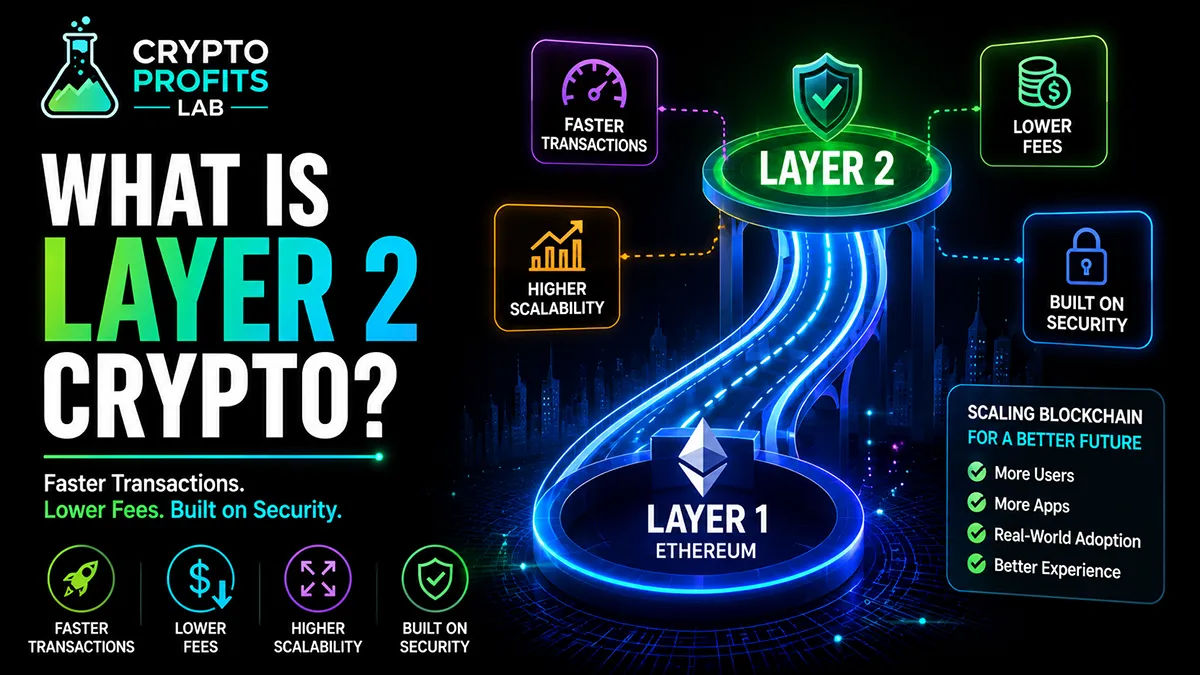
What is Layer 2 crypto? Layer 2 crypto is a way to make a main blockchain faster and cheaper by moving some activity to a separate network that still connects back to it.
For beginners, the easiest example is Ethereum. Ethereum is powerful, but it can become expensive when many people use it simultaneously. Layer 2 networks help Ethereum handle more transactions without forcing every small action to happen directly on Ethereum mainnet.
This guide explains Layer 2 in simple language, how it works, why it matters, and what beginners should check before using it.
Quick Answer: What is Layer 2 Crypto?
What is Layer 2 crypto? It is a group of scaling networks built to help a main blockchain process transactions faster and often at lower cost.
The main blockchain is usually called Layer 1. Ethereum, Bitcoin, and Solana are examples of Layer 1 blockchains because they are base networks with their own security systems.
Layer 2 is built on top of or alongside Layer 1. It handles transactions off-chain, then sends important data or proofs back to Layer 1.
In simple terms, Layer 1 is the foundation. Layer 2 is an extra road built to reduce traffic.
Layer 2 does not automatically mean safe, cheap, or risk-free. It only describes a type of blockchain scaling setup. Beginners still need to check the network, wallet, fees, bridges, and app safety.
Key Takeaways
- Layer 2 networks are designed to help blockchains scale.
- Ethereum Layer 2 networks are often used to lower fees and speed up transactions.
- Layer 1 is the base blockchain, while Layer 2 adds extra transaction capacity.
- Many Layer 2 networks use rollups, which bundle transactions and send data back to Ethereum.
- You must choose the correct network when sending crypto.
- Bridging between networks can add risk.
- What is Layer 2 crypto is an important beginner topic because many wallets, exchanges, and DeFi apps now support Layer 2 networks.
- The best beginner answer to What is Layer 2 crypto is simple: it helps reduce blockchain traffic without replacing the main blockchain.
Layer 2 Beginner Facts Table
| Beginner Question | Simple Answer |
|---|---|
| What is Layer 2 crypto? | A scaling network that helps a main blockchain handle more activity. |
| What is Layer 1? | The base blockchain, such as Ethereum or Bitcoin. |
| Why use Layer 2? | Lower fees, faster transactions, and less congestion. |
| Is Layer 2 only for Ethereum? | No, but Ethereum Layer 2 networks are the most commonly discussed. |
| Do Layer 2 networks have fees? | Yes, but they are often lower than Layer 1 fees. |
| Is Layer 2 risk-free? | No. Bridges, apps, contracts, and user mistakes can create risk. |
| What should beginners verify? | Network, wallet support, token version, fees, and bridge safety. |
Why Layer 2 Exists
To understand What is Layer 2 crypto, it helps to understand why blockchains need scaling.
A public blockchain must keep track of transactions. When many people want to use the same network at once, the network can become crowded. Crowding can lead to slower transactions and higher fees.
Ethereum is a good example. It supports tokens, wallets, smart contracts, decentralized exchanges, lending apps, and many other tools. That demand is one reason Ethereum became important, but it also created pressure on the network.
A blockchain has to balance three goals:
- Security
- Decentralization
- Scalability
Security means the network is hard to attack. Decentralization means the network is not controlled by one company or a small group. Scalability means the network can handle many users and transactions.
Layer 2 networks try to improve scalability while still connecting to the security of a Layer 1 blockchain.
For a beginner’s overview of the base technology, read about blockchain technology.
Layer 1 vs Layer 2
A Layer 1 blockchain is the base network. It has its own rules, validators or miners, transaction history, and native coin.
Ethereum is a Layer 1. Bitcoin is a Layer 1. Solana is a Layer 1. Each one is its own foundation.
A Layer 2 is different. It is designed to help a Layer 1 by processing transactions in another environment.
What is Layer 2 crypto compared with Layer 1? Layer 1 is the settlement layer. Layer 2 is the scaling layer.
Settlement means the final record of important transaction data. Scaling means making the system capable of handling more activity.
Here is a simple comparison:
| Feature | Layer 1 | Layer 2 |
|---|---|---|
| Main role | Base blockchain | Scaling network |
| Examples | Ethereum, Bitcoin, Solana | Optimism, Arbitrum, Base, zkSync |
| Main goal | Security and settlement | Faster and cheaper activity |
| Fees | Often higher when busy | Often lower |
| Risk level | Depends on the chain | Depends on the chain, bridge, and design |
To learn about Ethereum as a base network, read what is Ethereum.
A Simple Layer 2 Example
Imagine one busy highway going into a city. If every driver uses that same highway at the same time, traffic builds up and the trip slows.
Now imagine an express lane that handles many shorter trips more efficiently, then reconnects to the main road when needed.
That is not a perfect technical explanation, but it helps beginners understand the idea.
What is Layer 2 crypto in this example? It is the express lane. The main blockchain is still important, but the Layer 2 gives users another way to move activity more efficiently.
This is why Layer 2 is often discussed when people talk about faster blockchain payments, cheaper DeFi transactions, and better user experience.
How Layer 2 Works Step by Step
What is Layer 2 crypto in real life? The process can sound technical, but the beginner version is simple.
Step 1: A User Makes a Transaction on Layer 2
You might send tokens, swap on a decentralized exchange, or use an app on a Layer 2 network.
Instead of doing everything directly on Ethereum mainnet, your transaction happens on the Layer 2.
Step 2: The Layer 2 Processes Many Transactions
Layer 2 collects many user transactions and processes them in bulk.
Ethereum’s official Layer 2 learning guide explains that Layer 2 networks extend Ethereum and are designed to help it scale.
Step 3: Data or Proofs Go Back to Layer 1
The Layer 2 sends important information back to the Layer 1.
This is one reason many Ethereum Layer 2 networks are called rollups. They roll up many transactions and post information back to Ethereum.
Step 4: Users Get Lower Fees and Faster Activity
Because the Layer 2 handles many transactions more efficiently, users often pay lower fees than they would on Ethereum mainnet.
This does not mean fees are always tiny. Fees can change based on the network, congestion, token, wallet, and app.
Step 5: The Transaction Can Be Tracked
You can often view Layer 2 transactions on the network’s block explorer.
A block explorer is like a search engine for blockchain activity. It can show transaction status, wallet activity, token transfers, and contract details.
For a beginner’s explanation, read blockchain explorer.
Rollups Explained Simply
Rollups are one of the most common types of Layer 2 scaling.
What is Layer 2 crypto rollup technology? A rollup bundles many transactions together, processes them off-chain, and sends key data back to the main blockchain.
There are two common types:
| Rollup Type | Simple Meaning | Beginner Note |
|---|---|---|
| Optimistic rollup | Assumes transactions are valid unless challenged | Can have withdrawal waiting periods in some cases |
| Zero-knowledge rollup | Uses cryptographic proofs to show transactions are valid | Often called ZK rollups |
You do not need to understand the math behind rollups as a beginner. The important idea is that rollups help process more transactions while still connecting back to Ethereum.
This is why many people talk about Layer 2 when discussing Ethereum’s future.
Common Layer 2 Examples
Many beginners first hear about Layer 2 networks through names like Optimism, Arbitrum, Base, Polygon, and zkSync.
Some are rollups. Some have different designs or histories. The details can get complicated, but beginners can start with the main idea: these networks aim to make blockchain activity faster and cheaper.
What is Layer 2 crypto when you see it inside a wallet? It may appear as a network option. Instead of choosing Ethereum mainnet, you might choose Optimism, Arbitrum, Base, or another supported network.
Crypto Profits Lab already has beginner guides on related networks. You can read what is Optimism and what is Polygon to learn how specific scaling networks work.
Why Layer 2 Can Lower Gas Fees
Gas fees are transaction fees paid to use a blockchain network.
On Ethereum mainnet, gas fees can become expensive when many people compete for block space. Layer 2 networks can reduce load by routing many transactions off the main chain.
What is Layer 2 crypto doing for fees? It spreads activity across scaling networks so users are not always competing directly on the base chain.
This can make simple actions more affordable, such as:
- Sending tokens
- Swapping small amounts
- Testing decentralized apps
- Using blockchain games
- Interacting with DeFi tools
Lower fees are helpful, but they should not make beginners careless. A cheap transaction can still be a bad transaction if the app is risky or the token is fake.
For a deeper fee explanation, read what are crypto gas fees.
Layer 2 and DeFi
DeFi means decentralized finance. It includes apps for trading, lending, borrowing, yield tools, and liquidity pools.
Layer 2 networks are useful in DeFi because high fees can make small transactions impractical. If it costs too much to swap, lend, or test an app, many beginners will avoid using the network.
What is Layer 2 crypto in DeFi? It is often the network layer that makes DeFi easier to use by lowering costs and improving speed.
For example, a decentralized exchange on a Layer 2 may allow users to swap tokens at lower fees than on the Ethereum mainnet. A lending app on Layer 2 may make smaller deposits more practical.
However, DeFi still carries risk. Smart contracts can have bugs. Tokens can lose value. Liquidity can dry up. Fake apps can copy real apps.
For more beginner context, read what is DeFi and what is a DEX.
Layer 2 and Crypto Bridges
A crypto bridge helps move assets between networks.
For example, you might move ETH from Ethereum mainnet to a Layer 2 network. You might also move tokens from one Layer 2 to another.
What is Layer 2 crypto without bridges? It would be harder for users to move funds between the base chain and scaling networks.
Bridges are useful, but they are one of the most important risk areas for beginners. A bridge may involve smart contracts, different token versions, waiting periods, and network-specific rules.
Before bridging, check:
- The official bridge website.
- The sending network.
- The receiving network.
- The token version.
- The estimated fee.
- The estimated arrival time.
- Whether your wallet supports the destination network.
For a full beginner’s guide, read what is a crypto bridge.
Using Layer 2 in a Wallet
Many crypto wallets let you switch networks.
You may see Ethereum mainnet, Polygon, Optimism, Arbitrum, Base, or other networks in the same wallet. This can be helpful, but it can also confuse beginners.
What is Layer 2 crypto from a wallet user’s view? It is often a network you select before sending, receiving, swapping, or using an app.
The key is to match the network on both sides of the transaction.
If an exchange says it is sending funds on Optimism, your wallet must support Optimism. If a wallet address is compatible but the receiving platform does not support that network, your funds may be hard to recover.
Before sending a large amount, consider sending a small test transaction first.
For wallet basics, read crypto wallet address and best crypto wallet for beginners.
Common Beginner Mistakes With Layer 2
Mistake 1: Thinking Layer 2 Means No Fees
Layer 2 fees are often lower, but they are not always zero. Fees can rise when a network gets busy.
Mistake 2: Choosing the Wrong Network
Beginners sometimes send tokens on one network, while the receiving platform expects a different one. Always match the network exactly.
Mistake 3: Using a Fake Bridge
Scammers create fake bridge websites that look real. Always use official links from trusted sources.
Mistake 4: Assuming Every Token Is the Same on Every Network
A token can exist on multiple networks. The Ethereum, Polygon, and Optimism versions may not be treated the same by every platform.
Mistake 5: Ignoring Withdrawal Times
Some Layer 2 designs may have special withdrawal rules. Depending on the network and bridge, moving funds back to Layer 1 can take longer than expected.
Mistake 6: Connecting to Random Apps
Cheap fees can make people click around too quickly. Always check the website, wallet prompt, and token approval before interacting.
Safety and Risk Section
What is Layer 2 crypto safety for beginners? It is the habit of checking the network, wallet, app, bridge, and token before every transaction.
Layer 2 networks can make crypto easier to use, but they do not remove risk.
Main risks include:
- Bridge risk
- Smart contract risk
- Fake website risk
- Wrong network risk
- Token approval risk
- Liquidity risk
- Market volatility
Bridge risk matters because bridges enable the movement of assets between chains. If a bridge is unsafe, hacked, or fake, funds can be lost.
Smart contract risk matters because apps are built with code. Code can contain bugs or design flaws.
Wrong network risk matters because crypto transactions are usually difficult to reverse.
Token approval risk matters because some apps require permission to spend tokens from your wallet.
A beginner-friendly Layer 2 checklist:
- Use official websites and bookmarks.
- Confirm the correct network before sending.
- Keep a small amount of the network’s gas token for fees.
- Use a small test transaction for new networks.
- Avoid random links in comments or direct messages.
- Read wallet prompts before approving.
- Keep long-term holdings away from risky apps.
- Never invest money you cannot afford to lose.
For broader protection habits, read crypto safety tips.
Should Beginners Use Layer 2?
Beginners can use Layer 2 networks, but they should start slowly.
What is Layer 2 crypto best for? It is useful for learning how blockchain apps work without paying high fees for every small action.
Layer 2 may be helpful if you want to:
- Try small DeFi transactions
- Send tokens with lower fees
- Explore Ethereum apps more affordably
- Learn how networks and bridges work
- Use crypto games or NFT apps with smaller costs
But beginners do not need to rush. It is better to understand one network first than to jump across many networks and make mistakes.
A simple path is:
- Learn what Ethereum is.
- Understand gas fees.
- Set up a wallet carefully.
- Practice with a small amount.
- Use one trusted Layer 2 before trying several.
- Keep records of what network your assets are on.
Final Thoughts
What is Layer 2 crypto? It is one of the most important ideas in modern crypto because it helps blockchains handle more users, lower fees, and faster transactions.
Layer 2 networks are especially important for Ethereum because they enable more activity without putting every transaction directly on the Ethereum mainnet.
For beginners, the simple takeaway is this: Layer 2 can make crypto easier and cheaper to use, but you still need to pay attention.
Choose the correct network. Use official bridges. Check wallet prompts. Keep gas tokens for fees. Send small test transactions before moving larger amounts.
Crypto Profits Lab keeps this topic simple because beginners do not need hype. They need clear explanations, practical steps, and safe habits.
Once you understand Layer 1, Layer 2, gas fees, wallets, bridges, and block explorers, the crypto world becomes much easier to navigate.
FAQ: What is Layer 2 crypto?
What is Layer 2 crypto in simple terms?
What is Layer 2 crypto? It is a scaling network that helps the main blockchain process more activity. Instead of every transaction occurring directly on the base chain, a Layer 2 processes many transactions separately and relays important information back to the main chain. This can make transactions faster and often cheaper for users.
Is Layer 2 the same as Ethereum?
No. Ethereum is a Layer 1 blockchain. Layer 2 networks are built to help Ethereum and other base chains scale. A Layer 2 can connect back to Ethereum and use Ethereum for security or settlement, but it remains a separate network experience for users. You often need to select the Layer 2 network inside your wallet.
Why are Layer 2 fees cheaper?
Layer 2 fees are often cheaper because many transactions can be processed off-chain and bundled more efficiently. This reduces direct competition for space on the base chain. Fees are not always zero and can vary with network activity, but Layer 2 networks are commonly used to reduce transaction costs.
Are Layer 2 networks safe?
Layer 2 networks can be useful, but they are not risk-free. Safety depends on the network design, bridges, wallets, apps, smart contracts, and user behavior. Beginners should use official websites, verify networks, avoid links from unknown sources, and test with small transactions first. A lower fee does not automatically mean a safer transaction.
What is the difference between Layer 1 and Layer 2?
Layer 1 is the base blockchain, such as Ethereum or Bitcoin. It provides the main security and settlement layer. Layer 2 is a scaling network that helps the base chain handle more activity. Beginners can think of Layer 1 as the foundation and Layer 2 as an extra road that reduces traffic.
Do I need a different wallet for Layer 2?
Not always. Many popular wallets support multiple networks, including Ethereum mainnet and several Layer 2 networks. You may need to add or switch networks inside your wallet. The important step is making sure the wallet, token, app, and receiving platform all support the same Layer 2 network before sending funds.
Can I send crypto from Layer 2 to an exchange?
Yes, but only if the exchange supports that specific Layer 2 network for the asset you are sending. Do not assume that a wallet address alone is enough. Check the exchange deposit screen carefully, confirm the network, and consider a small test transaction first. Sending on an unsupported network can create recovery problems.
Is Polygon a Layer 2?
Polygon is often discussed in the scaling category, but its ecosystem includes different technologies and designs. Some Polygon solutions are closer to Ethereum Layer 2 scaling, while others have separate chain features. For beginners, the important point is to check the exact network, token version, wallet support, and exchange support before moving funds.
Should beginners use Layer 2 crypto?
Beginners can use Layer 2 crypto, but they should start with small amounts and trusted apps. Layer 2 can make learning cheaper because fees are often lower than on Ethereum mainnet. However, beginners still need to understand bridges, gas tokens, network selection, token approvals, and basic wallet safety before using Layer 2 regularly.