Crypto Staking Pool: How Pooled Staking Works
Staking can sound simple: hold an eligible cryptocurrency, help support its blockchain, and receive possible rewards.
The difficult part is that running a validator can require technical knowledge, reliable equipment, minimum deposits, and ongoing maintenance. A crypto staking pool gives smaller holders a way to combine their staking power and participate without operating the entire setup alone.
That convenience comes with trade-offs. Pool fees, operator performance, custody, smart contracts, withdrawal rules, and token price changes can all affect the result.
This beginner guide explains how pooled staking works, where rewards come from, and what to check before committing any crypto.
Quick Answer
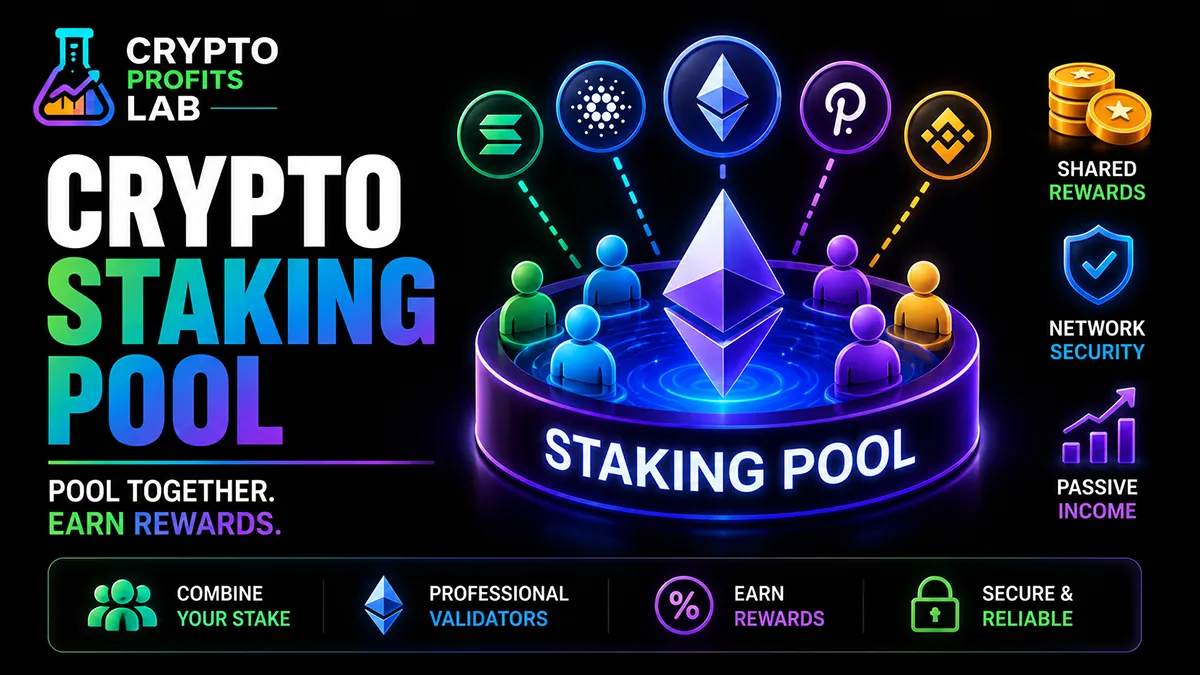
A crypto staking pool combines cryptocurrency from multiple participants so it can be staked together on a proof-of-stake blockchain.
A pool operator or group of operators usually runs the validator infrastructure. When the pool earns staking rewards, those rewards are distributed among participants according to the amount they contributed, after any fees or protocol rules are applied.
Pools lower the entry barrier for people who lack the crypto, technical skill, or equipment to run a validator. However, pooled staking adds operator, smart contract, custody, liquidity, and withdrawal risks. Rewards are variable and never guaranteed.
Key Takeaways
- A crypto staking pool combines assets from many participants.
- The pooled stake supports validators on a proof-of-stake network.
- Participants may receive a share of rewards after fees.
- Pools can make staking accessible with smaller amounts.
- Some pools keep custody of user assets, while others use smart contracts or delegation.
- Pool fees and validator performance can reduce rewards.
- Certain networks can penalize or slash validators for serious rule violations.
- Liquid staking pools may issue a token representing the staked position.
- Withdrawal times and procedures differ by network and provider.
- Higher advertised rewards can signal higher risk rather than a better opportunity.
Crypto Staking Pool Beginner Facts
| Question | Beginner-Friendly Answer |
|---|---|
| What does a pool do? | It combines staking power from multiple users. |
| Who runs the validator? | Usually a pool operator, provider, or distributed group of operators. |
| Do I need to run equipment? | Usually not when joining an existing pool. |
| Is there always a minimum? | Minimums vary, but pools often accept less than solo validation requires. |
| Are rewards fixed? | No. Rewards change with network rules, performance, fees, and participation. |
| Does the pool charge a fee? | Many pools deduct an operator or service fee. |
| Can staked crypto lose value? | Yes. The asset’s market price can fall while it is staked. |
| Can funds be locked? | Yes. Some networks or providers impose waiting periods. |
| Is pooled staking risk-free? | No. It adds platform, operator, smart contract, and other risks. |
| Is every staking service a pool? | No. Exchanges, staking-as-a-service providers, and liquid staking protocols can use different structures. |
What Is a Crypto Staking Pool?
A crypto staking pool is a shared arrangement in which multiple holders combine their eligible cryptocurrency to participate in a proof-of-stake network.
Proof of stake is a system some blockchains use to confirm transactions and agree on the network’s records. Validators commit cryptocurrency as stake, run specialized software, and perform duties such as proposing or checking blocks.
You can learn the foundation in our guide to proof of stake.
Running a validator independently may require a minimum deposit and continuous technical operation. Pools reduce that barrier by grouping many smaller contributions and assigning the validator work to an operator.
The Ethereum.org pooled staking guide explains that pooled solutions allow users to deposit smaller amounts while node operators run validators and distribute rewards after taking an operating fee.
The exact structure differs by blockchain. Some networks support delegation directly in the protocol. Other arrangements rely on a company, smart contract, or tokenized staking service.
A Simple Pooled Staking Example
Imagine that operating one validator requires 1,000 tokens.
You own 100 tokens, so you cannot meet the requirement by yourself. Nine other people also contribute 100 tokens. The combined 1,000 tokens can now support the validator.
The validator earns 60 tokens over a period of time. The operator deducts a stated fee, and the remaining rewards are divided according to each participant’s share.
Real rewards depend on network rules, validator performance, total stake, fees, and other factors. The main idea is that a crypto staking pool gives smaller participants access to a process that might otherwise be difficult or unavailable.
How a Crypto Staking Pool Works Step by Step
The exact buttons and rules vary, but most pooled staking follows a similar process.
Step 1: Choose an Eligible Proof-of-Stake Asset
Only cryptocurrencies supported by a proof-of-stake or related staking system can provide native staking rewards.
Bitcoin does not use proof of stake, so depositing Bitcoin into a website that advertises “Bitcoin staking” may actually involve lending, wrapped tokens, DeFi activity, or another financial arrangement.
Start by understanding the asset, its network, and why staking exists.
Step 2: Choose a Pool or Staking Method
Possible choices may include:
- Delegating through a self-custody wallet
- Joining a decentralized staking protocol
- Using a liquid staking service
- Staking through a centralized exchange
- Using a staking-as-a-service provider
- Operating a validator with pooled funds
These options can look similar but use different custody and technical arrangements.
Step 3: Deposit or Delegate the Crypto
Some networks let users delegate staking power while the assets remain in their own wallet. Other services require users to transfer assets into a smart contract or custodial account.
Delegation does not always transfer spending control, but the rules are network-specific.
Step 4: The Operator Runs Validator Infrastructure
The operator keeps validator software online, maintains keys and servers, installs updates, and performs network duties.
This is a main benefit of a crypto staking pool, but it also makes participants dependent on the operator’s skill, honesty, security, and uptime.
Step 5: The Network Calculates Rewards and Penalties
Validators may earn rewards for correctly performing required duties.
A validator that is offline may miss rewards or receive smaller penalties. On some networks, serious violations can cause slashing, which destroys or removes part of the staked assets.
The pool’s reward rate can therefore change over time.
Step 6: The Pool Distributes Rewards
The provider calculates each participant’s share according to its published method.
Common factors include:
- Amount contributed
- Length of participation
- Operator commission
- Validator performance
- Protocol fees
- Pool-specific rules
- Whether rewards are automatically compounded
The displayed annual rate is an estimate rather than a guaranteed return.
Step 7: The User Unstakes or Withdraws
Leaving a pool may involve an unstaking request, network exit queue, waiting period, redemption process, or token swap.
A user should understand this process before joining. Crypto needed for bills or emergencies should not be placed into an arrangement with uncertain access.
Where Do Staking Pool Rewards Come From?
Native staking rewards generally come from the blockchain’s protocol.
A proof-of-stake network can reward validators for helping process and confirm network activity. Rewards may include newly issued coins, transaction fees, or a combination of both.
The pool then passes a portion of those rewards to participants.
A crypto staking pool does not create value simply by combining deposits. It provides access to validator participation and distributes the resulting rewards.
Some platforms add promotional incentives on top of native staking rewards. Those extra tokens may be temporary, highly volatile, or subject to different rules.
Before joining, separate these numbers:
- Native network reward
- Provider bonus
- Promotional token incentive
- Referral payment
- Estimated annual rate
- Actual reward after fees
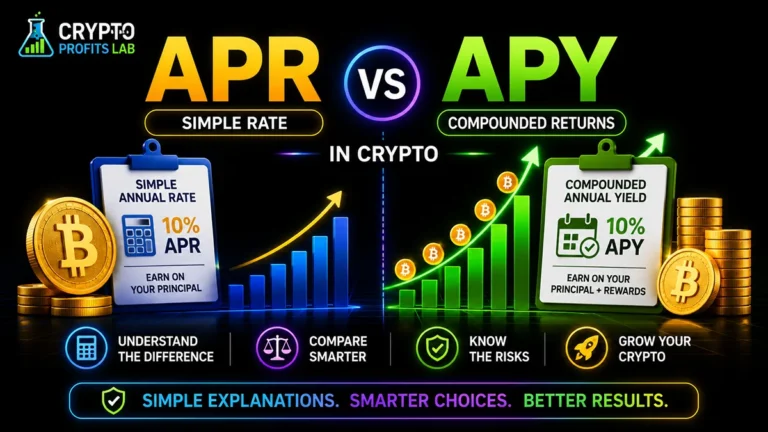
Our guide to APR vs APY in crypto explains why compounding and quoted percentages can make two offers look more similar than they really are.
Staking Pools vs Solo Staking
| Feature | Crypto Staking Pool | Solo Staking |
|---|---|---|
| Capital requirement | Often lower | May require a large protocol minimum |
| Technical work | Usually handled by an operator | Handled by the individual validator |
| Hardware | Usually not required for participants | Often requires dedicated equipment |
| Control | Shared with or delegated to a provider | Greater direct control |
| Fees | Pool or operator fees may apply | No pool fee, but operating costs apply |
| Reward share | Shared according to contribution and rules | Validator receives its own rewards |
| Main risks | Operator, custody, smart contract, fee, and liquidity risks | Technical, key-management, uptime, and slashing risks |
| Beginner difficulty | Usually easier | Usually more advanced |
Solo staking offers more control but more responsibility. Pooled staking lowers the practical barrier but adds trust in other people or software.
Read our crypto validator guide to understand what the operator is doing behind the scenes.
Staking Pools vs Exchange Staking
A centralized exchange may combine customer assets and stake them through validators. This can function like a pool, but the user usually gives custody of the crypto to the exchange.
The exchange controls withdrawals, reward calculations, and the validator relationship. A decentralized crypto staking pool may instead use smart contracts or a token representing the position. Neither structure is automatically safer. Compare custody, transparency, fees, withdrawal conditions, and operator concentration.
Our guide to custodial vs non-custodial wallets explains the control difference.
Staking Pools vs Liquid Staking
Traditional pooled staking and liquid staking overlap, but they are not always the same.
A basic pool combines deposits and later distributes rewards. The participant may have to wait for an unstaking process before accessing the original asset.
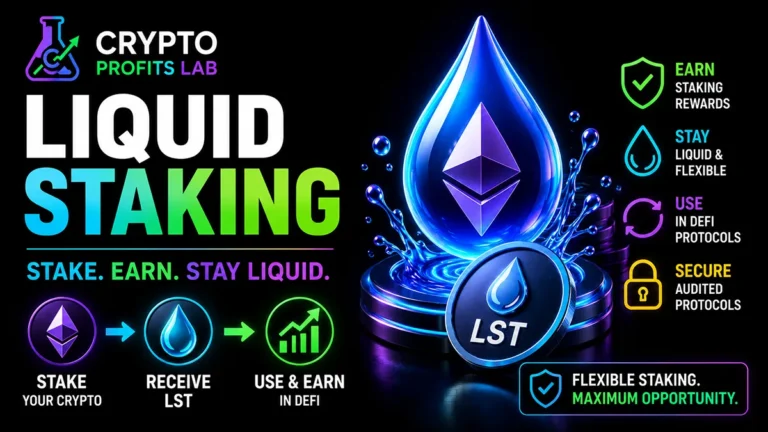
A liquid staking service issues a liquid staking token, or LST, representing the position. It may be transferable or usable in decentralized finance, but it can lose liquidity, trade below the underlying value, or be affected by a smart contract failure.
Read our full liquid staking guide before using a tokenized pool.
How Staking Pool Fees Work
Most pool operators need income to pay for equipment, development, security, and maintenance.
A crypto staking pool may charge:
- A percentage of staking rewards
- A fixed validator or service fee
- Deposit or withdrawal fees
- Token conversion fees
- Network transaction fees
- Performance fees
- A spread between the network reward and the user rate
A fee is not automatically bad when it pays for reliable infrastructure. Compare the net reward after every cost, not the largest advertised percentage. Also remember that token price changes can outweigh a small difference in staking rates.
Major Risks of a Crypto Staking Pool
Pooled staking can be convenient, but convenience does not remove risk.
Market Price Risk
The staked asset can lose value.
Earning 5% more tokens does not help if the token’s market price falls 50%. Rewards should be measured alongside the value and quality of the underlying asset.
Slashing and Validator Risk
Some networks punish serious validator violations by removing part of the stake.
The operator’s mistakes or misconduct can affect participants. Check how penalties are allocated and whether any promised protection has clear limits.
Downtime and Performance Risk
Validators that go offline can miss duties and rewards.
A pool with unreliable infrastructure may produce lower returns than expected even when no major penalty occurs.
Custody Risk
A custodial provider controls the deposited assets.
A hack, bankruptcy, freeze, or withdrawal pause could block access to the crypto.
Smart Contract Risk
Decentralized pools may depend on smart contracts.
A coding flaw, exploit, faulty upgrade, or compromised administrator can put funds at risk. Audits reduce uncertainty but do not guarantee safety.
Liquidity Risk
A staking token may be difficult to sell during market stress.
Limited liquidity can create large price discounts or crypto slippage.
Lockup and Withdrawal Risk
A network or provider may require an unbonding period before assets become transferable.
Withdrawal demand can also create queues. A platform may apply additional processing rules beyond the blockchain’s normal timeline.
Reward Rate Risk
Staking rates are variable.
Network participation, validator performance, issuance, fees, and provider policies can all reduce rewards.
Centralization Risk
When too much stake gathers under a small number of operators, the network can become less decentralized.
Participants should consider whether a provider spreads validators across independent operators and infrastructure rather than focusing only on yield.
Tax and Record-Keeping Risk
Staking rewards and token conversions may have tax consequences.
Keep records of deposits, rewards, fees, token receipts, sales, and withdrawals. Review our crypto taxes for beginners guide and consult a qualified tax professional for personal advice.
How to Evaluate a Crypto Staking Pool
A high reward rate should never be the only deciding factor.
Step 1: Confirm It Is Real Staking
Find out whether the service is participating in the asset’s proof-of-stake network.
Some products use the word staking for lending, DeFi deposits, or promotional rewards. Those activities have different risks and reward sources.
Step 2: Identify Who Controls the Assets
Ask whether you retain custody, delegate from your wallet, deposit into a smart contract, or transfer funds to a company.
Know which private keys control withdrawals.
Step 3: Research the Operator
Look for:
- Operating history
- Validator performance
- Security practices
- Team transparency
- Incident history
- Independent operators
- Public documentation
- Clear support channels
A polished website is not proof of safety.
Step 4: Understand Every Fee
Read the reward fee, service fee, withdrawal cost, conversion spread, and network charges.
Calculate the expected net reward rather than relying on the headline rate.
Step 5: Read the Slashing Policy
Find out whether participants absorb penalties, whether the operator shares losses, and whether any protection fund has clear limits.
Avoid vague claims that staking is completely risk-free.
Step 6: Review Withdrawal Rules
Check:
- Unstaking period
- Exit queue
- Minimum withdrawal
- Processing time
- Withdrawal fees
- Conditions for paused withdrawals
- LST redemption rules, when applicable
Step 7: Check Concentration and Decentralization
A pool can be convenient while still contributing to validator concentration.
A smaller operator may support decentralization, but smaller does not automatically mean safer. Balance performance, security, and concentration.
Step 8: Start With a Small Test
Use a small amount to confirm the deposit, reward display, unstaking process, and withdrawal destination.
Never test with money needed for essential expenses.
Common Beginner Mistakes
Choosing the Highest APY
A very high rate may come from a risky token, temporary promotion, hidden leverage, or an activity that is not native staking.
Ask where the rewards come from.
Assuming Delegation Is Identical on Every Network
Some networks let users delegate without transferring spending control. Others require deposits into contracts or accounts.
Follow instructions written for the exact blockchain and wallet.
Ignoring Pool Fees
A high gross reward can become average after operator fees and conversion costs.
Compare net results.
Forgetting About Token Price Volatility
Staking produces more units of an asset, not guaranteed profit in dollars.
The token’s price can rise or fall during the staking period.
Treating an Exchange Balance Like Self-Custody
A balance shown in an exchange account is a claim on the platform.
The exchange controls the underlying wallets and withdrawal process.
Using an Unverified Link
Fake staking websites and search advertisements can imitate real platforms.
Use official sources, bookmark the correct page, and verify wallet prompts.
Committing All Available Crypto
A crypto staking pool can experience withdrawal delays or technical problems.
Keep emergency funds and near-term spending money outside staking arrangements.
Failing to Test the Exit Process
Beginners often research how to deposit but not how to withdraw.
Understand the complete exit path before sending funds.
Staking Pool Safety Checklist
Before joining, confirm that you can answer these questions:
- Which blockchain is involved?
- Is the reward native staking or another activity?
- Who runs the validators?
- Who controls the crypto?
- What fees are deducted?
- What can cause slashing or penalties?
- How long does unstaking take?
- Can withdrawals be paused?
- Is a liquid staking token issued?
- What happens if the token loses its peg?
- Has the provider experienced an exploit?
- Are administrator powers clearly disclosed?
- How will rewards be recorded for taxes?
Protect the wallet as carefully as the staking decision.
Use a hardware wallet when it is compatible and appropriate, enable strong account security, and never share a recovery phrase. Our crypto safety tips guide covers the basic protections every beginner should follow.
Is a Crypto Staking Pool Good for Beginners?
A reputable pool can be easier than operating a validator, but easy access should not be confused with low risk.
A beginner should first understand:
- What proof of stake does
- Why the selected asset has value
- How the wallet works
- Whether the arrangement is custodial
- Where rewards come from
- How fees are calculated
- What can cause losses
- How to unstake and withdraw
Starting small provides experience without placing a large balance at risk. A carefully selected crypto staking pool should still be monitored after the deposit.
Our main crypto staking guide is the best starting point for readers who have not yet learned the basic staking process.
Frequently Asked Questions
What is a crypto staking pool in simple terms?
A crypto staking pool combines cryptocurrency from multiple people so the assets can participate in a proof-of-stake network together. An operator usually runs the validator equipment and software. When rewards are earned, the pool distributes them according to each participant’s contribution and its published rules, after deducting any operator or service fees.
How does a staking pool make money?
A staking pool can earn native rewards when its validators correctly perform work for a proof-of-stake blockchain. The operator may keep a stated percentage or fee and distribute the remainder to participants. Some providers also earn money from withdrawal fees, token conversion spreads, or related services. Users should identify every charge before depositing crypto.
Is joining a crypto staking pool safe?
Joining a crypto staking pool is not risk-free. Possible risks include token price declines, validator penalties, operator mistakes, custody failures, smart contract exploits, withdrawal delays, and staking-token depegging. Safety depends on the blockchain, pool structure, operator, and user’s wallet practices. Research the provider and begin with a small nonessential amount.
Can I lose my crypto in a staking pool?
Yes. Losses can occur through a provider failure, hack, malicious smart contract, slashing event, stolen wallet credentials, or sharp decline in the asset’s price. Some delegation systems let users retain spending control, but this varies by network. Never assume that a pool guarantees the return of the original deposit or a profit.
Do staking pools guarantee passive income?
No. A crypto staking pool may distribute variable rewards, but it cannot guarantee profit. Reward rates change, fees reduce the payout, and the staked asset can lose market value. Withdrawal restrictions may also limit access. Treat staking rewards as compensation for participating in a risky blockchain system rather than guaranteed interest from a savings account.
What is the minimum amount needed for pooled staking?
There is no universal minimum. One purpose of a crypto staking pool is to let users participate with less than the amount required to run a validator independently. The actual minimum depends on the blockchain, wallet, provider, smart contract, and transaction fees. Check the current rules and test with a small amount first.
Is a staking pool the same as liquid staking?
Not always. Both can combine user deposits, but liquid staking normally issues a transferable token representing the staked position. A traditional pool may simply track each participant’s balance and require an unstaking process. Liquid staking adds flexibility but also introduces token price, liquidity, smart contract, and redemption risks.
How do I choose a good staking pool?
Evaluate the operator’s history, validator performance, fees, security, custody model, decentralization, slashing policy, and withdrawal rules. Confirm that rewards come from real network staking rather than an unrelated lending or promotional program. Avoid choosing solely by the highest advertised APY, and make a small test deposit before committing more crypto.
Final Thoughts
A crypto staking pool can make proof-of-stake participation more accessible by combining assets and placing the technical validator work in the hands of an operator.
That can lower minimums and simplify the experience. It also introduces dependence on the pool’s software, people, fees, custody model, and withdrawal process.
The safest beginner approach is to slow down. Confirm that the activity is genuine staking, understand who controls the assets, compare net rewards after fees, review slashing and exit rules, and begin with a small amount.
Crypto Profits Lab focuses on cleaner, simpler explanations so beginners can understand both the possible rewards and the risks hidden behind a convenient staking button.
Educational content only. This article does not provide financial, legal, tax, or investment advice.