Crypto Fear and Greed Index: What It Means for Beginners
Crypto prices can move quickly, but price is only part of the story. The crypto market is also heavily influenced by emotion. When prices rise, investors may become excited and chase gains. When prices fall, fear can spread just as quickly.
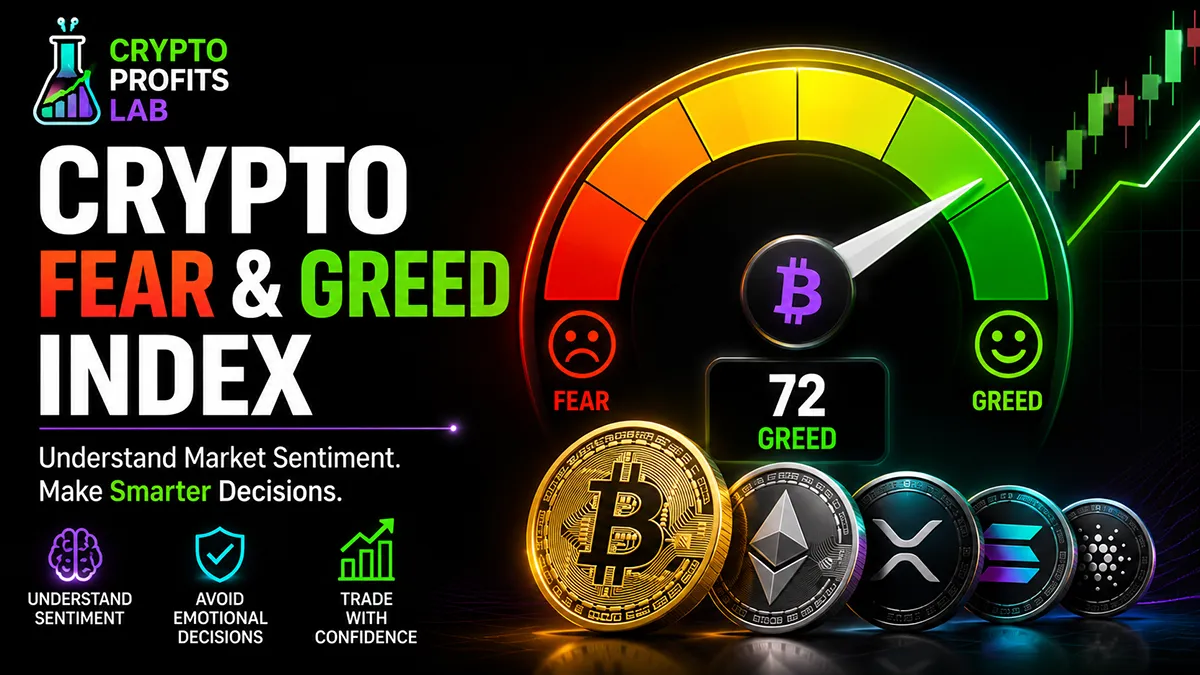
The crypto fear and greed index is a simple tool designed to summarize that market mood in one number. It can help beginners understand whether traders appear unusually fearful, neutral, or overly optimistic.
That does not mean the index can predict the next Bitcoin move. It cannot tell you exactly when to buy or sell. Its real value is simpler: it gives you another way to understand the emotional environment around the market.
This beginner guide explains what the index measures, how to read it, what can move it, where it can be useful, and why you should never rely on it by itself.
Quick Answer
The crypto fear and greed index is a market-sentiment indicator that turns several measures of investor behavior into a score from 0 to 100. Lower readings suggest fear is dominating the market, while higher readings suggest greed or strong optimism is dominating.
Think of it as a market mood meter.
A low score does not guarantee that crypto prices are about to rise. A high score does not guarantee that prices are about to fall. The index is best used as context alongside price trends, trading volume, market conditions, and your own risk plan.
For complete beginners, the biggest benefit is that the index can make an emotional market easier to understand without requiring advanced chart-reading skills.
Key Takeaways
- The crypto fear and greed index measures broad crypto market sentiment on a 0-to-100 scale.
- Lower numbers indicate more fear; higher numbers indicate more greed.
- The index combines several types of market and behavior data rather than looking only at price.
- Extreme readings can show when emotions are unusually strong, but they are not automatic buy or sell signals.
- Market sentiment can change quickly, especially during periods of high crypto volatility.
- Beginners should compare sentiment with price action, volume, market trends, and their personal risk tolerance.
- The index is most useful as one piece of a larger decision-making process.
Beginner Facts About the Crypto Fear and Greed Index
| Beginner Question | Simple Answer |
|---|---|
| What does it measure? | Broad crypto market sentiment |
| What is the score range? | 0 to 100 |
| What do low scores mean? | Fear is stronger |
| What do high scores mean? | Greed or optimism is stronger |
| Is it a price prediction tool? | No |
| Can the score change daily? | Yes |
| Is it mainly tied to Bitcoin? | The widely followed Alternative.me version is currently centered on Bitcoin |
| Should beginners use it alone? | No, it should be combined with other information |
What Is Market Sentiment in Crypto?
Market sentiment means the general mood or attitude of investors.
If many people feel confident, they may be more willing to buy riskier assets. If people are worried, they may sell, hold cash, or move toward assets they view as safer.
Crypto is especially sensitive to sentiment because the market trades around the clock, news spreads quickly, and many participants react emotionally to short-term price moves.
You can see this behavior during both bull and bear markets. In a strong bull market, rising prices may create excitement and encourage more buying. In a sharp downturn, falling prices may create panic and lead people to sell after prices have already dropped.
The index tries to compress some of that emotional behavior into a single score.
This is useful because beginners often see price changes without understanding the mood behind them. A sentiment indicator provides another layer of context.
How Does the Crypto Fear and Greed Index Work?
The basic idea is straightforward.
The index gathers information from several market and behavior signals, compares current conditions with recent conditions, and converts the result into a single number.
The exact formula is controlled by the index provider, and the methodology can change over time. The widely followed Alternative.me Crypto Fear & Greed Index currently explains that it uses factors including Bitcoin volatility, market momentum and volume, social-media activity, Bitcoin dominance, and Google search trends.
The result is a score between 0 and 100.
A number near the lower end represents stronger fear. A number near the upper end represents stronger greed.
The important point for beginners is not memorizing a formula. It is understanding what the crypto fear and greed index is trying to capture: whether the market appears unusually nervous or unusually enthusiastic.
What Do the Scores Mean?
Different providers may use slightly different labels or cutoffs, so it is better to understand the scale as a range rather than treat one exact number as magical.
Very Low Scores: Extreme Fear
Very low readings suggest investors are highly nervous.
This can happen during sharp price declines, major negative news, liquidations, security concerns, regulatory uncertainty, or a broad move away from risky assets.
Extreme fear does not automatically mean the market has reached a bottom. Prices can keep falling even when sentiment already looks terrible.
However, a very low sentiment reading can remind you that emotion may be influencing decisions.
Low Scores: Fear
Fear readings suggest the market is cautious or pessimistic.
Investors may be less willing to take risks, trading activity may be defensive, and negative headlines may receive more attention.
Fear can last for days, weeks, or longer. Beginners should avoid assuming that a fearful market must immediately reverse.
Middle Scores: Neutral
A middle reading suggests neither fear nor greed is dominating strongly.
Markets may still move sharply during neutral sentiment, but the emotional backdrop is less extreme.
Neutral conditions can be useful for beginners because they make it easier to study price and market structure without being distracted by extreme excitement or panic.
High Scores: Greed
A high reading suggests optimism is strong.
Investors may be more willing to buy after prices have already risen. Social-media excitement may increase. Riskier altcoins may attract more attention.
Greed can continue for a long time during a strong market. It should not be treated as proof that a top is near.
Very High Scores: Extreme Greed
Very high readings suggest enthusiasm is unusually strong.
This is when beginners are especially vulnerable to crypto FOMO, or fear of missing out. A fast-rising market can make people feel that they must buy immediately before prices go even higher.
The crypto fear and greed index can be useful here because it provides a visual reminder that crowd emotion may be elevated.
What Can Move the Crypto Fear and Greed Index?
Several types of market behavior can influence sentiment indicators.
1. Volatility
Volatility measures how sharply prices move.
A sudden increase in Bitcoin volatility can make the market feel more uncertain, particularly when the move is downward. The index provider compares current volatility with recent historical periods to help judge whether fear may be increasing.
If volatility is new to you, read our beginner guide to crypto volatility.
2. Trading Volume and Momentum
Trading volume shows how much of an asset is changing hands over a period of time.
Momentum describes the strength and direction of recent price movement.
Strong buying activity during a rising market may indicate increasing optimism. Heavy selling during a falling market may reflect fear.
Volume does not tell you why people are trading, but it helps show how much participation is behind a market move.
3. Social-Media Activity
Crypto conversations often spread quickly across social platforms.
A sudden increase in posts, engagement, and attention can be a sign that public interest is rising. That excitement may contribute to greedy sentiment, especially during rapid price increases.
However, social media can also contain misinformation, paid promotions, fake engagement, and scams. Sentiment should never replace independent research.
4. Bitcoin Dominance
Bitcoin dominance compares Bitcoin’s market value with the total value of the broader crypto market.
When more market value is concentrated in Bitcoin, some analysts interpret that as investors becoming more cautious about smaller cryptocurrencies. When capital moves more aggressively into altcoins, risk appetite may be increasing.
This relationship is not perfect, but it helps explain why Bitcoin’s position in the market can influence the overall sentiment score.
5. Search Trends
Search behavior can reveal what people are worried about or excited about.
A sudden increase in searches related to Bitcoin crashes, hacks, or price manipulation may reflect concern. Rapid growth in searches about buying crypto or finding the next high-growth coin may point toward stronger speculation.
Search trends are only one signal, but they can help show shifts in public attention.
Step-by-Step: How Beginners Can Read the Index
You do not need to become a trader to use a sentiment indicator. A simple process is enough.
Step 1: Look at the Current Score
Start with the number and its label.
Is the market fearful, neutral, or greedy?
Do not make a decision yet. Your first goal is only to understand the mood.
Step 2: Compare It With Recent Readings
One day’s score can be noisy.
Look at whether sentiment has been rising, falling, or staying near the same level over several days or weeks.
A change from extreme fear toward neutral may tell a different story than a single fearful reading. The direction of sentiment can be as useful as the level itself.
Step 3: Check the Price Trend
Next, compare sentiment with actual market prices.
If Bitcoin has fallen sharply and the crypto fear and greed index is also very low, fear may be confirming what you can already see in the market.
If prices are rising strongly while sentiment is extremely greedy, enthusiasm may be reinforcing the rally.
For help reading basic price movement, see our guide to crypto charts for beginners.
Step 4: Check Market Cap and Broader Conditions
Do not focus on one coin alone.
Look at whether the total crypto market is expanding or shrinking and whether Bitcoin, Ethereum, and major altcoins are moving together.
Understanding market cap in crypto can help you interpret the size of different assets and the market as a whole.
Step 5: Ask What Is Driving the Mood
Look for a reason behind the move.
Did a major market event happen? Did prices break sharply higher or lower? Is there unusual volatility? Are investors reacting to rumors or verified information?
This step helps separate emotional noise from meaningful market changes.
Step 6: Compare the Mood With Your Plan
Your investment plan should matter more than the index.
If you use a long-term approach such as dollar-cost averaging in crypto, a single day of extreme fear or greed may not justify changing your strategy.
The crypto fear and greed index should provide context, not control your decisions.
Step 7: Record What Happens Next
Beginners can learn a lot by keeping a simple market journal.
Write down the score, Bitcoin price, major market news, and your own emotional reaction. Then review the entry later.
Over time, this can teach you how sentiment behaves during different market conditions without risking money based on guesses.
7 Smart Ways to Use the Crypto Fear and Greed Index
1. Use It as an Emotion Check
Before buying or selling, ask whether fear or excitement is influencing you.
If the index is at an extreme and you feel the same emotion strongly, that is a good reason to slow down and review your plan.
2. Use It With Price, Not Instead of Price
Sentiment is only useful when placed beside actual market behavior.
A fearful reading during a strong long-term trend is different from fear during a major market breakdown.
3. Watch Changes Over Time
A trend in sentiment may be more informative than one isolated score.
Look for whether fear is easing, greed is increasing, or the market is moving back toward neutral.
4. Use It to Reduce FOMO
When the market is extremely greedy and social media is full of rapid-profit stories, the crypto fear and greed index can help remind you that excitement is already widespread.
That does not mean prices must fall. It means you should be especially careful about chasing.
5. Use It to Put Bad Days in Context
During a sharp selloff, it can feel as though your crypto alone is collapsing.
A fearful market-wide reading can help show that the stress may be broader than one asset.
6. Compare It With Your Risk Tolerance
Some people can handle large price swings. Others cannot.
Sentiment tools are most useful when they help you understand your own behavior, not when they push you toward someone else’s strategy.
7. Use It as a Research Starting Point
If sentiment suddenly changes, ask why.
The index can prompt you to check market news, volume, Bitcoin price action, broader risk markets, and project-specific developments before making conclusions.
What the Crypto Fear and Greed Index Cannot Tell You
The index has important limits.
It cannot tell you:
- The exact future price of Bitcoin.
- Whether an altcoin is undervalued or overvalued.
- When a market top or bottom will occur.
- Whether a project is legitimate.
- Whether a token’s fundamentals are improving.
- Whether a trade will be profitable.
- How much money you should invest.
A common beginner mistake is turning an indicator into a prediction system.
For example, someone may see extreme fear and think, “This must be the bottom.” But fear can remain extreme while prices continue falling.
The opposite can also happen. Extreme greed can persist while a strong bull market continues rising.
The crypto fear and greed index describes current sentiment. It does not know the future.
Common Beginner Mistakes
Mistake 1: Buying Only Because the Index Shows Fear
Fear may create opportunities, but it can also reflect real problems.
Before buying, understand what caused the decline and whether the asset still fits your plan.
Mistake 2: Selling Only Because the Index Shows Greed
A greedy market can become even greedier.
Selling solely because of one sentiment reading may cause you to abandon a long-term strategy without a clear reason.
Mistake 3: Checking the Score Too Often
Watching the index constantly can make beginners more emotional rather than less emotional.
If your strategy is long-term, you may not need to monitor daily changes closely.
Mistake 4: Assuming All Crypto Assets Follow the Same Mood
Different coins can behave very differently.
Bitcoin may be strong while smaller tokens are weak, or one project may move because of project-specific news.
Mistake 5: Ignoring Risk Management
No sentiment score removes crypto risk.
Position size, diversification, secure storage, research, and knowing what you own are still more important than a single indicator.
Mistake 6: Treating Social Media as Confirmation
If a sentiment reading agrees with a popular influencer, that still does not prove a trade is safe.
Crowd agreement can increase confidence without increasing accuracy.
Safety and Risk: What Beginners Should Remember
Crypto can be highly volatile, and sentiment can change much faster than many beginners expect.
The safest way to use the crypto fear and greed index is as an educational tool rather than a command.
Never invest money simply because the score looks fearful or greedy. Do not borrow money to chase a market move. Do not assume a low score makes an unknown token safe.
If you are building a beginner portfolio, focus first on understanding what you own, how much risk you can tolerate, and how your assets fit together. Our guide to creating a crypto portfolio for beginners explains those basics in simple terms.
Security matters too. Market excitement often attracts scams because people are more likely to act quickly when they feel FOMO. Review our crypto safety tips before connecting wallets, clicking links, or sending funds.
A sentiment indicator should help you become calmer and more informed, not more impulsive.
Frequently Asked Questions
What is the crypto fear and greed index?
The crypto fear and greed index is a market-sentiment indicator that summarizes whether crypto investors appear fearful or greedy. It uses several types of market and behavior data and converts them into a score from 0 to 100. Lower scores represent stronger fear, while higher scores represent stronger greed. It is best used for context, not as a stand-alone signal for buying or selling crypto.
Is a low crypto fear and greed index good?
A low reading means fear is strong, but that is not automatically good or bad. Fear can sometimes appear after prices have fallen sharply, yet prices may continue falling. Beginners should treat a low score as information about market mood rather than proof of a buying opportunity. Check price trends, market conditions, risk, and the reason for the fear before making any financial decision.
Is a high crypto fear and greed index bad?
A high reading means optimism or greed is elevated, but it does not guarantee that the market will fall. Strong bull markets can remain greedy for extended periods. The useful lesson is that excitement may be influencing investor behavior. Beginners should be especially careful about FOMO, oversized positions, and buying unfamiliar coins simply because prices have recently risen.
Can the crypto fear and greed index predict Bitcoin’s price?
No. The crypto fear and greed index measures current sentiment rather than future price. It may help explain whether the market is nervous or optimistic, but it cannot identify exact tops, bottoms, or future returns. Bitcoin can continue falling during extreme fear and continue rising during extreme greed. Use the index with other research instead of treating it as a prediction tool.
How often does the crypto fear and greed index change?
The widely followed Alternative.me index is updated regularly and presents current and historical sentiment readings. The score can change as volatility, market momentum, trading volume, social activity, Bitcoin dominance, and search behavior change. Beginners should focus more on the direction and broader trend of sentiment than on small day-to-day movements in a single number.
Should beginners buy crypto during extreme fear?
Extreme fear alone is not a reason to buy. A fearful market may offer lower prices, but it may also reflect serious risks or worsening conditions. Before investing, understand the asset, evaluate why the market is falling, consider your time horizon, and use a position size you can afford to lose. Sentiment should support research, not replace it.
What is the best way to use the crypto fear and greed index?
The best beginner use is to treat the crypto fear and greed index as an emotional context tool. Compare the score with price trends, volatility, volume, and broader market conditions. Then compare that environment with your own feelings and investment plan. If the market is extremely emotional and you feel pressure to act quickly, slowing down and reviewing your research can be more valuable than reacting immediately.
Is the crypto fear and greed index only about Bitcoin?
The most widely followed version from Alternative.me currently says its live index is centered on Bitcoin, although crypto sentiment is often discussed more broadly. Because Bitcoin has a major influence on the overall crypto market, its volatility, momentum, and market share can affect how investors view other assets. Always check the methodology of the specific sentiment index you are using.
Final Thoughts
The crypto market is driven by technology, adoption, liquidity, economics, news, and investor behavior. Emotion is only one part of that picture, but it can be powerful.
The crypto fear and greed index gives beginners a simple way to see when market emotion may be unusually negative or unusually positive.
Its greatest value is not predicting tomorrow’s price. It is helping you recognize the environment you are making decisions in.
When fear is extreme, avoid assuming everything is doomed. When greed is extreme, avoid assuming prices can only go higher.
Use the index as one piece of context, combine it with reliable research, understand the risks, and follow a plan that makes sense for your goals.
Crypto Profits Lab is built to make concepts like these cleaner, simpler, and easier for beginners to understand without hype. The goal is not to tell you what to buy. It is to help you learn how crypto works so you can make more informed decisions.