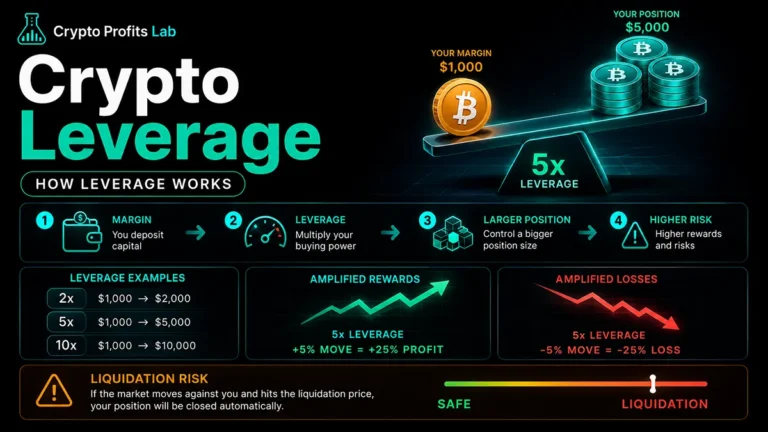
Crypto Trading Fees for Beginners: A Simple Guide
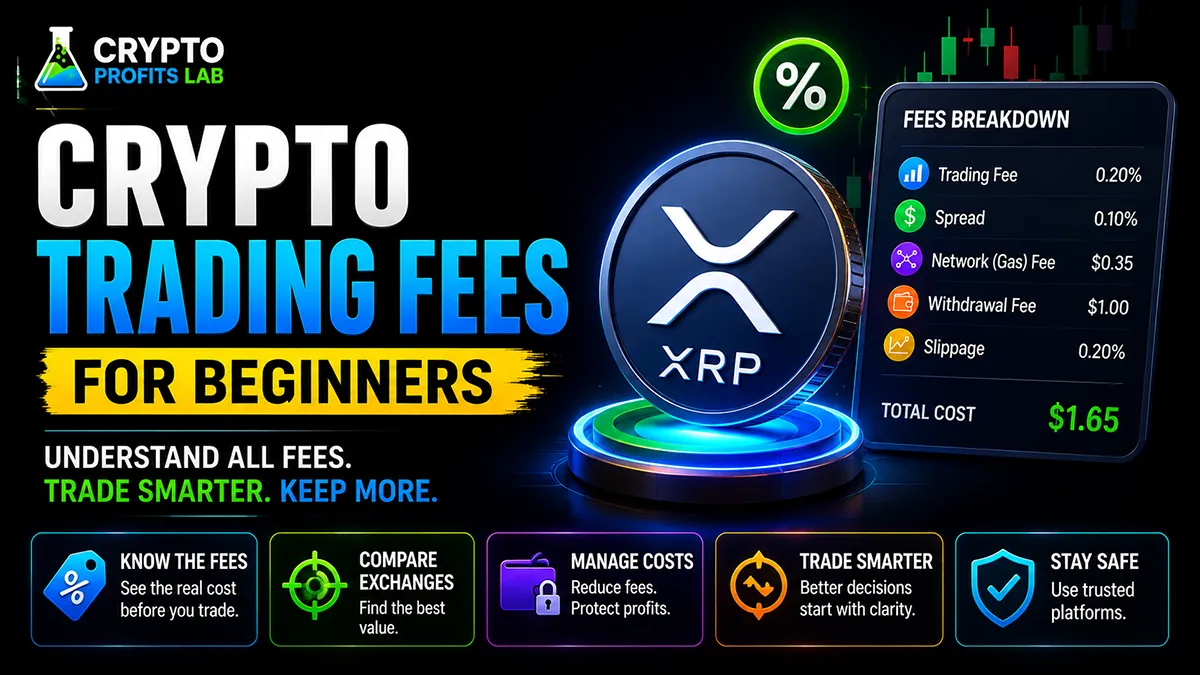
Crypto Trading Fees for Beginners is an important topic because fees can quietly reduce your returns.
When someone is new to crypto, they usually focus on the coin price. They look at Bitcoin, Ethereum, Solana, or another token and ask, “Is this a good time to buy?” That question matters, but it is not the full picture.
Every trade can include costs.
Some fees are obvious. Others are hidden in the final price. Some come from the exchange. Some come from the blockchain network. Some occur due to slippage, meaning the final trade price differs from what you expected.
For beginners, this can be confusing.
You may buy $100 of crypto and receive less than expected. You may swap tokens and pay a network fee. You may move crypto from an exchange to a wallet and see a withdrawal cost. You may use a market order and get a slightly different price than the one shown on screen.
This guide explains Crypto Trading Fees for Beginners in simple terms, including exchange fees, spreads, maker fees, taker fees, gas fees, withdrawal fees, slippage, and safer ways to compare the real cost of buying crypto.
Quick Answer: What Are Crypto Trading Fees?
Crypto Trading Fees for Beginners means understanding the costs you may pay when buying, selling, swapping, or moving crypto.
A crypto trading fee is a cost charged when you complete a crypto transaction. It may come from a centralized exchange, a decentralized exchange, a blockchain network, a wallet service, or the price difference between buying and selling.
Common crypto trading fees include:
- Exchange trading fees
- Maker fees
- Taker fees
- Spread costs
- Deposit fees
- Withdrawal fees
- Network fees
- Gas fees
- Swap fees
- Slippage costs
The most important beginner lesson is simple: the price shown on screen is not always the final cost. Always review the full trade preview before confirming.
Key Takeaways
- Crypto trading fees are the costs of buying, selling, swapping, or moving crypto.
- Fees can come from exchanges, wallets, networks, or DeFi platforms.
- A spread is the difference between the buy price and the sell price.
- Maker and taker fees depend on how your order interacts with the market.
- Market orders can be convenient but may incur higher fees or slippage.
- Gas fees are blockchain network fees, not exchange trading fees.
- Withdrawal fees can apply when moving crypto off an exchange.
- DEX swaps may involve trading fees, gas fees, and slippage.
- Beginners should compare total cost, not just the advertised fee.
- The cheapest option is not always the safest or easiest option.
Crypto Trading Fees Beginner Facts Table
| Fee Type | Beginner-Friendly Meaning |
|---|---|
| Trading fee | Fee charged when buying or selling crypto |
| Spread | Difference between the buy price and sell price |
| Maker fee | Fee for an order that adds liquidity to the order book |
| Taker fee | Fee for an order that fills immediately |
| Gas fee | Blockchain network fee for processing a transaction |
| Withdrawal fee | Cost to move crypto off a platform |
| Deposit fee | Cost that may apply when adding funds |
| Swap fee | Fee charged when swapping one token for another |
| Slippage | Difference between expected price and final price |
| Total cost | All fees and price differences combined |
Why Crypto Trading Fees Matter
Crypto Trading Fees for Beginners matter because small costs can add up.
A single fee may not seem like much. But if you buy, sell, swap, withdraw, and move crypto often, the total cost can grow quickly.
Fees matter even more for small accounts.
For example, if you buy $25 of crypto and pay a $2 fee, that is a large percentage of the purchase. If you then withdraw the crypto and pay another fee, your cost becomes even higher.
This is why beginners should avoid unnecessary trading.
Crypto can already be volatile. Prices can move sharply in both directions. Fees add another challenge by reducing the amount you keep.
If you are new to crypto price movement, read Crypto Volatility.
A smart beginner does not just ask, “What coin should I buy?”
A smart beginner also asks, “What will this trade actually cost me?”
Step-by-Step: How Crypto Trading Fees Work
Here is a simple step-by-step example.
Step 1: You choose a crypto exchange
A crypto exchange is a platform where you can buy, sell, or trade crypto.
Some exchanges are beginner-friendly. Others are more advanced. Fees can differ depending on the platform, payment method, order type, and trading volume.
If you are still choosing a platform, read Best Crypto Exchange for Beginners.
Step 2: You choose how to fund your account
You may fund your account with a bank transfer, debit card, wire transfer, or another payment method.
Different payment methods may have different costs.
A bank transfer may be cheaper but slower. A debit card may be faster but more expensive. A wire transfer may have its own fee.
Step 3: You place a trade
You decide to buy Bitcoin, Ethereum, or another crypto asset.
The platform may charge a trading fee, include a spread, or show a final quote that already includes certain costs.
If you are still learning how buying works, read How to Buy Crypto for Beginners.
Step 4: The trade executes
Your order is completed.
The final amount of crypto you receive may depend on the fee, spread, order type, and market movement.
Step 5: You may move the crypto
If you leave the crypto on the exchange, there may be no withdrawal fee at that moment. If you move it to your own wallet, you may pay a withdrawal or network fee.
Wallet safety matters, so read What Is a Crypto Wallet? before moving funds.
Exchange Trading Fees
Exchange trading fees are fees charged by a crypto exchange when you buy or sell.
These fees can be shown in different ways. Some platforms show a clear percentage. Some show a flat fee. Some show a spread. Some show a final quote where the cost is built into the price.
Crypto Trading Fees for Beginners can feel confusing because platforms do not always display fees the same way.
A beginner-friendly exchange may be easier to use but not always the cheapest. An advanced trading screen may offer lower fees but may be harder for beginners to understand.
That does not mean every beginner should immediately use advanced tools. A mistake on an advanced screen can cost more than a small fee.
The best choice depends on your comfort level, trade size, and knowledge.
Spread Costs
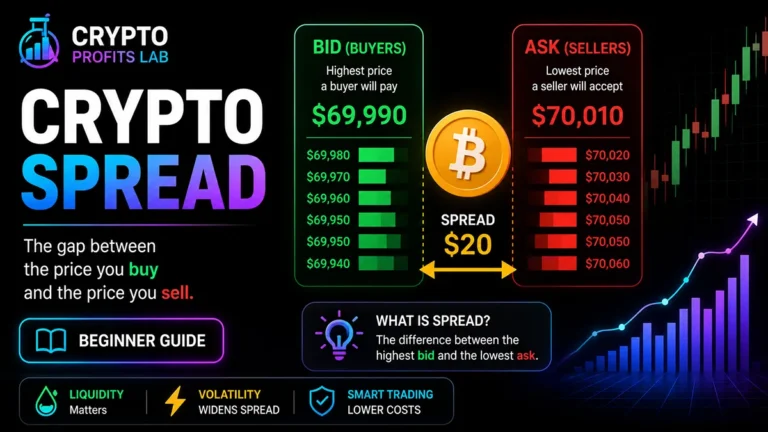
A spread is the difference between the price at which someone can buy and the price at which someone can sell.
For example, a platform may show Bitcoin at one price for buyers and a slightly different price for sellers. That difference is the spread.
The spread may not look like a normal fee, but it still affects the cost of your trade.
Here is a simple example:
| Displayed Buy Price | Displayed Sell Price | Spread |
|---|---|---|
| $50,100 | $50,000 | $100 |
If you buy and then immediately sell, the spread can create a loss even if the market price barely moved.
Crypto Trading Fees for Beginners should include spreads, as they are easy to overlook.
A platform may advertise simple buying, but the final quote may include a spread that affects how much crypto you receive.
Maker Fees and Taker Fees
Many crypto exchanges use maker and taker fees.
A maker order adds liquidity to the order book. An order book is a list of buy and sell orders on an exchange.
A taker order removes liquidity because it fills immediately against an existing order.
In simple terms:
| Order Type | Beginner-Friendly Meaning |
|---|---|
| Maker | Your order waits on the order book |
| Taker | Your order fills right away |
Taker fees are often higher because immediate trades remove liquidity from the market. Maker fees may be lower because they help add liquidity to the exchange.
Coinbase explains maker and taker fee concepts in its Coinbase Advanced fees guide.
This is why order type matters.
If you use a market order, you are usually taking the current available price. If you use a limit order that does not fill immediately, you may end up acting more like a maker.
For a full beginner comparison, read Market Order vs Limit Order Crypto.
Market Orders and Fees
A market order tells the exchange to buy or sell immediately at the best available price.
Market orders are easy to use, which is why beginners like them. But they can come with trade-offs.
A market order may:
- Fill quickly
- Use available prices immediately
- Involve taker fees
- Create more slippage in fast markets
- Be less controlled than a limit order
Market orders can be fine for simple trades on liquid assets, but beginners should understand the cost.
For example, buying a popular asset on a major exchange may have a small difference between the expected and final price. Buying a low-liquidity token during a fast market may cost more than expected.
Crypto Trading Fees for Beginners is not only about visible fees. It is also about execution quality.
Limit Orders and Fees
A limit order lets you choose the price you are willing to pay or accept.
For example, if Bitcoin is trading around $50,000, you might place a limit buy order at $49,500. The trade will only happen if the market reaches your price.
Limit orders can give beginners more control, but they do not guarantee the trade will happen.
A limit order may:
- Help control your price
- Avoid buying higher than planned
- Sit on the order book
- Possibly qualify for maker fees
- Remain unfilled if the price never reaches your limit
Limit orders can be helpful for beginners who want to slow down and avoid emotional buying.
However, they require patience and a basic understanding of order types.
Gas Fees
Gas fees are blockchain network fees.
They are not the same as exchange trading fees.
When you send crypto, swap tokens, use DeFi, or interact with a smart contract, the blockchain may charge a network fee. On some networks, this fee is often called gas.
Gas fees can rise when a network is busy. They can also vary by blockchain.
Read What Are Crypto Gas Fees? for a full beginner’s guide.
Crypto Trading Fees for Beginners should include gas fees because many users only notice them after they start using wallets, DEXs, bridges, or DeFi apps.
A trade may look profitable until gas fees are included.
Withdrawal Fees
A withdrawal fee may apply when you move crypto from an exchange to an outside wallet.
This can happen because the exchange passes along network costs or charges its own withdrawal cost.
Withdrawal fees matter because they can be large compared with small balances.
For example, if you buy $40 worth of crypto and the withdrawal fee is $8, that is a major cost.
Before withdrawing, beginners should check:
- The asset being withdrawn
- The network being used
- The withdrawal fee
- The wallet address
- Whether the receiving wallet supports that network
Sending crypto to the wrong address or the wrong network can lead to permanent loss.
For wallet basics, read Best Crypto Wallet for Beginners.
Deposit Fees
Some platforms charge fees when you add money or crypto.
Deposit fees may depend on the payment method.
A bank transfer may incur no platform fee, whereas a card payment may cost more. A wire transfer may involve bank fees. Crypto deposits may require network fees from the sending wallet.
Beginners should check deposit costs before choosing a platform.
A lower trading fee does not help much if funding the account is expensive.
Crypto Trading Fees for Beginners should consider the full process: deposit, trade, hold, withdraw, and eventually sell.
DEX Swap Fees
A decentralized exchange, or DEX, lets users swap crypto directly through blockchain-based tools.
If you are new to DEXs, read What Is a DEX?.
DEX swaps can involve several costs:
- Swap fee
- Gas fee
- Slippage
- Price impact
- Bridge fee if moving across networks
- Approval transaction fee
This is why DEX trading can be more expensive and more confusing for beginners.
A DEX may be useful, but it requires more responsibility. There may be no customer support, no password reset, and no easy way to reverse a mistake.
If you are still new, start by learning how wallets and transactions work before swapping tokens.
Crypto Slippage
Slippage is the difference between the price you expected and the price you actually received.
Slippage is not always shown as a normal fee, but it can still cost money.
For example, you may expect to buy a token at $1.00, but your trade completes at $1.03. That difference is slippage.
Read Crypto Slippage for a full beginner’s explanation.
Slippage is more common when:
- Markets move quickly
- Liquidity is low
- The trade is large
- You use a market order
- You trade on a DEX
- The token is volatile
Crypto Trading Fees for Beginners should include slippage, as it can make the final trade cost more than expected.
Liquidity and Price Impact
Liquidity refers to how easily you can buy or sell crypto without moving the price too much.
A coin with high liquidity is usually easier to trade. A coin with low liquidity may have wider spreads, more slippage, and worse execution.
Read Crypto Liquidity before trading small tokens.
Price impact happens when your trade is large enough to move the market price.
This is common in low-liquidity tokens and small DEX pools.
A small Bitcoin trade on a major exchange may have low price impact. A larger trade on a small token can move the price sharply.
This is why beginners should be careful with meme coins, small tokens, and social media hype.
Read about Meme Coins before buying anything because they are trending.
Crypto Trading Fees vs Crypto Taxes
Trading fees and taxes are different.
Fees are costs you pay to trade, transfer, or use crypto networks.
Taxes are reporting obligations that may apply when you sell, swap, earn, or spend crypto.
Read Crypto Taxes for Beginners before assuming crypto records are simple.
Crypto Trading Fees for Beginners should include recordkeeping, as fees may affect your cost basis or records under your tax rules.
A beginner should track:
- Date of trade
- Asset bought or sold
- Amount spent
- Amount received
- Fees paid
- Exchange used
- Wallet address if relevant
- Transaction ID if available
Good records make tax time much easier.
How to Compare Crypto Trading Fees Step by Step
Here is a simple process for beginners.
Step 1: Check the trading fee
Look for the basic fee charged when buying or selling.
Is it a flat fee, a percentage fee, a maker fee, a taker fee, or built into the quote?
Step 2: Check the spread
Compare the buy price and sell price.
If the spread is wide, the trade may cost more than it first appears.
Step 3: Check the payment method fee
Debit card, bank transfer, wire transfer, and crypto deposit methods may have different costs.
Step 4: Check withdrawal fees
If you plan to move crypto to your own wallet, check the withdrawal cost first.
Step 5: Check network fees
If you are using a wallet, DEX, bridge, or DeFi app, network fees matter.
Step 6: Check slippage
If trading on a DEX or low-liquidity token, review slippage tolerance and the final estimated amount.
Step 7: Compare total cost
Do not compare only one fee.
Compare the full cost of buying, holding, moving, and selling.
Common Beginner Mistakes With Crypto Trading Fees
Beginners often lose money to avoidable fee mistakes.
Mistake 1: Only looking at the coin price
The coin price is not the final cost.
Fees, spreads, and slippage also matter.
Mistake 2: Buying too often
Frequent trading can lead to higher fees and more tax records.
Beginners often do better by slowing down.
Mistake 3: Using expensive payment methods
Fast payment methods may cost more.
Check costs before using a debit card or instant purchase option.
Mistake 4: Ignoring withdrawal fees
Small balances can be hit hard by withdrawal costs.
Always check the fee before moving crypto.
Mistake 5: Using market orders without understanding them
Market orders are convenient but can lead to taker fees and slippage.
Mistake 6: Swapping small amounts on expensive networks
A small DeFi swap can become expensive if gas fees are high.
Mistake 7: Chasing low fees on unsafe platforms
Low fees are not worth it if the platform is risky, confusing, or untrustworthy.
Mistake 8: Forgetting records
Fees and transactions should be tracked for tax and portfolio purposes.
Safety and Risk Section
Crypto Trading Fees for Beginners should also include safety.
Scammers know that beginners want cheap trades, free tokens, and easy profits. They may advertise fake exchanges, fake DEX links, fake airdrops, or fake wallet tools.
Be careful with:
- Unknown exchange links
- Fake customer support messages
- “Zero fee” platforms with no reputation
- Airdrops that ask for seed phrases
- DEX links from random social media posts
- Tokens that require strange approvals
- Sites that pressure you to connect your wallet
- Offers that promise guaranteed profits
Use these safety habits:
- Use official exchange websites.
- Turn on two-factor authentication.
- Never share your seed phrase.
- Check wallet addresses carefully.
- Avoid unknown wallet approvals.
- Start with small test transactions when appropriate.
- Do not chase low fees at the expense of safety.
- Use trusted wallets and platforms.
- Keep records of trades and fees.
For more protection, read Crypto Safety Tips, Crypto Scams to Avoid, and Crypto Rug Pulls.
Are Lower Fees Always Better?
Lower fees are good, but they are not the only thing that matters.
A platform with slightly higher fees may be easier to use, safer for beginners, or more transparent. A platform with very low fees may be confusing, risky, or unsuitable for your needs.
Beginners should compare:
- Security
- Ease of use
- Customer support
- Available coins
- Withdrawal rules
- Fee transparency
- Wallet support
- Reputation
- Regulation and compliance
- Educational tools
A cheap trade is not helpful if you make a mistake or use an unsafe platform.
Crypto Trading Fees for Beginners should focus on smart cost awareness, not just on finding the lowest number.
Simple Fee Example
Imagine you want to buy $100 of crypto.
Your final result may be affected by:
| Cost | Example |
|---|---|
| Purchase amount | $100 |
| Trading fee | $1.49 |
| Spread impact | $0.75 |
| Withdrawal fee | $3.00 |
| Total estimated cost | $5.24 |
In this example, the total cost is more than just the trading fee.
That is why you need to review the full transaction, not just one line item.
If you keep the crypto on the platform, you may not pay the withdrawal fee yet. If you move it later, that cost may appear later.
Best Beginner Habits for Managing Fees
Here are practical habits that can help.
- Review every trade preview.
- Compare fees before choosing an exchange.
- Use cheaper funding methods when practical.
- Avoid unnecessary trading.
- Learn market orders and limit orders.
- Watch for spreads.
- Check withdrawal fees before moving funds.
- Avoid small DeFi swaps on expensive networks.
- Track fees for records.
- Do not use unsafe platforms just to save money.
Fees are part of crypto, but they should not surprise you.
The more you understand them, the better decisions you can make.
Final Thoughts
Crypto Trading Fees for Beginners is not just about learning a few definitions.
It is about understanding the real cost of buying, selling, swapping, and moving crypto.
Fees can come from exchanges, payment methods, spreads, networks, wallets, DEXs, and slippage. Some fees are easy to see. Others are built into the price or appear only when you move funds.
Beginners should slow down, review the full cost, and avoid trading too often.
The goal is not always to find the cheapest platform. The goal is to find a safe, understandable, transparent way to buy and manage crypto.
Crypto Profits Lab is built to make crypto easier for beginners. Understanding fees is one of the simplest ways to make smarter decisions, avoid surprises, and protect more of your money over time.
Crypto Trading Fees for Beginners FAQ
What are crypto trading fees?
Crypto trading fees are costs you may pay when buying, selling, swapping, or moving crypto. They can include exchange fees, spreads, maker fees, taker fees, gas fees, withdrawal fees, and slippage. Beginners should review the full transaction preview before confirming because the final cost may be higher than the price shown on screen.
Why do crypto exchanges charge fees?
Crypto exchanges charge fees because they provide trading platforms, order matching, security tools, customer support, and access to crypto markets. Fees may also help cover payment processing, custody, and operational costs. Different exchanges use different fee structures, so beginners should compare trading fees, spreads, funding fees, and withdrawal costs before choosing a platform.
What is the difference between maker and taker fees?
Maker fees apply when your order adds liquidity to an exchange order book, usually by waiting to be matched. Taker fees apply when your order fills immediately against an existing order. Taker fees are often higher because they remove available liquidity. Beginners usually encounter taker fees when using market orders or when immediately-filled limit orders are executed.
What is a spread in crypto trading?
A spread is the difference between the buy price and sell price of a crypto asset. It may not appear like a normal fee, but it can still affect your final cost. A widespread means you may pay more to buy or receive less when selling. Spreads are especially important on beginner platforms and low-liquidity assets.
Are gas fees the same as trading fees?
No, gas fees and trading fees are different. Trading fees are charged by an exchange or platform when you buy or sell. Gas fees are blockchain network fees paid to process transactions, swaps, or smart contract actions. A DEX swap can include both a swap fee and a gas fee, plus possible slippage.
How can beginners reduce crypto trading fees?
Beginners can reduce crypto trading fees by comparing platforms, using cheaper funding methods, avoiding unnecessary trades, learning limit orders, checking spreads, and reviewing withdrawal fees before moving funds. It also helps to avoid small swaps on expensive networks. However, beginners should not choose unsafe platforms only because they advertise low fees.
Do crypto fees matter for small purchases?
Yes, crypto fees can matter a lot for small purchases. A $2 fee on a $25 trade is a large percentage of the amount invested. Withdrawal fees and gas fees can make small transactions even more expensive. Beginners should check whether the total cost makes sense before buying or moving small amounts of crypto.
What is slippage in crypto trading?
Slippage is the difference between the price you expected and the price you actually received when a trade is completed. It can happen because prices move quickly, liquidity is low, or the trade is large. Slippage is not always reflected in the quoted price, but it can increase the actual cost of a crypto trade.
Are low-fee crypto exchanges always better?
Low-fee crypto exchanges are not always better. Fees matter, but beginners should also consider security, reputation, ease of use, withdrawal rules, customer support, and transparency. A platform with very low fees may still be risky or confusing. The best beginner choice balances reasonable costs with safety and clarity.
What is the best rule for Crypto Trading Fees for Beginners?
The best rule for Crypto Trading Fees for Beginners is to compare the total cost, not just the advertised fee. Look at trading fees, spreads, payment method fees, withdrawal fees, network fees, and slippage. Always review the final amount before confirming a trade and avoid rushing into transactions you do not fully understand.