What Is Crypto Arbitrage? 7 Smart Facts for Beginners
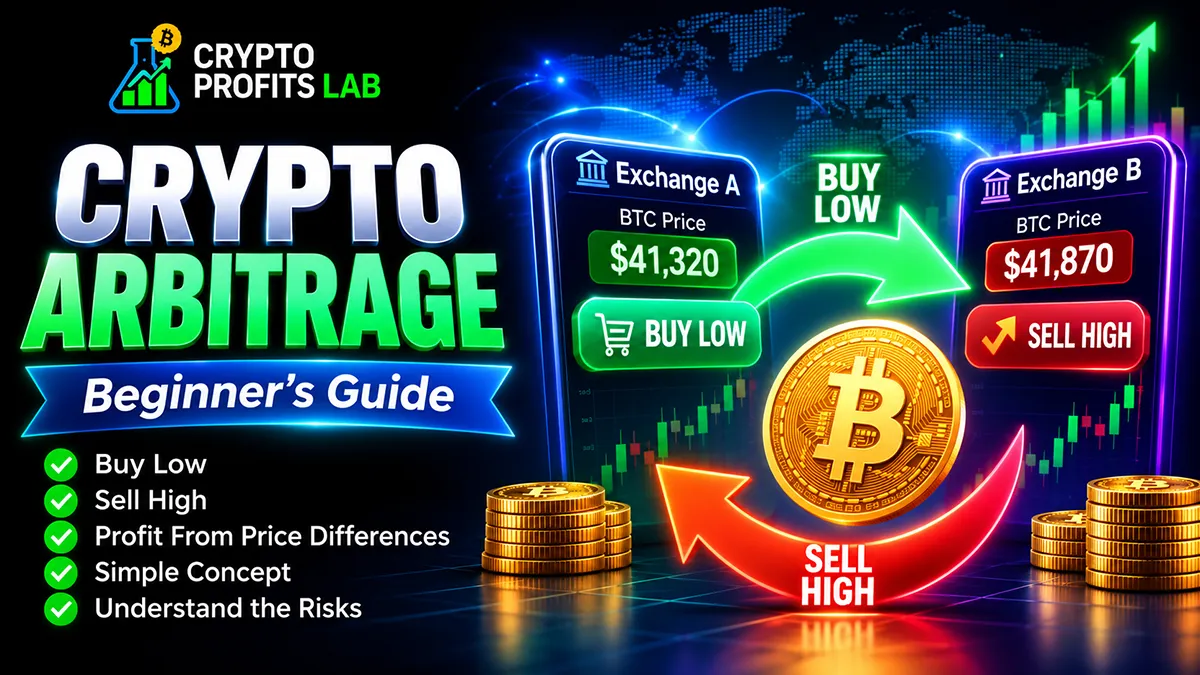
Cryptocurrency prices are not always identical across all markets. Bitcoin may briefly cost a little less on one exchange than it does on another. That difference can create a trading opportunity known as crypto arbitrage.
The idea sounds simple: buy at the lower price and sell at the higher price. In practice, the opportunity may disappear quickly, and trading fees, withdrawal costs, transfer delays, slippage, taxes, and exchange limits can turn an expected profit into a loss.
This beginner’s guide explains how crypto arbitrage works, why price differences appear, how traders calculate possible returns, and why it should never be treated as guaranteed or risk-free income.
Quick Answer
Crypto arbitrage is a strategy that attempts to profit from temporary price differences for the same cryptocurrency across different markets or trading pairs.
For example, a trader might buy a coin for $99 on one exchange and sell it for $100 on another. The apparent difference is $1, but the actual result must include every trading fee, withdrawal fee, network fee, price movement, and tax consequence.
Crypto arbitrage does not require a trader to predict that the entire market will rise. However, it still carries meaningful risks because prices can change before both trades are completed.
Key Takeaways
- Cryptocurrency prices can vary slightly between exchanges and trading pairs.
- A price difference is not the same as a guaranteed profit.
- Fees, slippage, transfer time, and withdrawal limits can erase the opportunity.
- Experienced traders often keep funds on multiple exchanges to avoid waiting for transfers.
- Market orders provide speed but may produce a worse price than expected.
- Automated bots can fail, be poorly designed, or be used as bait in scams.
- Every purchase, sale, or exchange may create records needed for tax reporting.
- Beginners should understand ordinary trading and wallet safety before attempting crypto arbitrage.
Crypto Arbitrage Facts for Beginners
| Question | Beginner Answer |
|---|---|
| What is the basic goal? | Buy the same asset where it is cheaper and sell it where it is more expensive |
| Is profit guaranteed? | No. Costs, delays, price changes, and failed orders can produce a loss |
| Why do prices differ? | Exchanges have different buyers, sellers, liquidity, fees, and regional demand |
| How long do opportunities last? | Some last-minute, while competitive opportunities may disappear in seconds |
| Is special software required? | Not always, but manual traders are usually slower than automated systems |
| Do you need more than one exchange? | Cross-exchange strategies normally require accounts and funds on multiple platforms |
| Are there tax consequences? | Potentially. Rules depend on location and the type of transaction |
| Is it beginner-friendly? | The idea is easy to understand, but safe execution can be difficult |
What Is Crypto Arbitrage?
Crypto arbitrage is the practice of exploiting price differences between two related cryptocurrency markets.
The simplest example uses two exchanges. Imagine that one crypto exchange lists a coin at $1,000 while another lists it at $1,015. A trader may try to buy on the first platform and sell on the second.
The $15 difference is called a spread. It represents the gap between the two displayed prices, not the trader’s final profit. The trader must subtract all costs and account for any price changes that occur before the sale is completed.
Price differences are usually temporary. When traders buy on the cheaper market, their purchases can push that price upward. When they sell on the more expensive market, their sales can push that price downward. The two prices may move closer together.
This activity can help markets become more consistent, but it does not make each trade safe. A trader can identify a real price difference and still lose money during execution.
Why Can the Same Cryptocurrency Have Different Prices?
There is no single worldwide order book that sets one official price for every cryptocurrency.
An order book is a list of current buy and sell offers on a trading platform. Each exchange has its own users, available assets, deposits, withdrawals, trading pairs, and level of activity. Those differences can create slightly different prices.
Different Buyers and Sellers
One platform may have more buyers than sellers at a particular moment. Strong buying pressure can push its price above the price shown elsewhere.
Another platform may have more sellers, causing its price to trade slightly lower.
Different Levels of Liquidity
Crypto liquidity describes how easily an asset can be bought or sold without causing a large price change.
A highly liquid exchange usually has many orders near the current market price. A smaller or less active exchange may have gaps between orders, causing wider price differences.
Regional Demand and Payment Access
Exchanges serving different countries may have different local demand, banking access, currency pairs, and regulations. These conditions can affect how quickly money enters or leaves a market.
Deposits and Withdrawals
A temporary wallet suspension can prevent traders from moving a particular coin onto or off an exchange. When normal movement is restricted, price differences can widen because traders cannot easily balance the market.
Market Volatility
During periods of high crypto volatility, prices may change faster than exchanges and traders can respond. Wider gaps may appear, but the risk of losing the opportunity also increases.
A Simple Crypto Arbitrage Example
Suppose Coin A is available on two exchanges:
| Detail | Exchange One | Exchange Two |
|---|---|---|
| Displayed price | $100.00 | $102.00 |
| Intended action | Buy | Sell |
| Amount | 10 coins | 10 coins |
At first glance, the calculation looks like this:
- Cost to buy: 10 × $100 = $1,000
- Amount received from selling: 10 × $102 = $1,020
- Apparent gross difference: $20
Now add realistic costs:
- Buy trading fee: $4
- Withdrawal fee: $5
- Network fee: $2
- Sell trading fee: $4
- Price movement before the sale: $3 against the trader
The expected $20 difference is reduced to only $2. Additional slippage or a delay could turn it negative.
This example shows why crypto arbitrage calculations must use the price a trader can actually receive, not only the large number displayed at the top of an exchange screen.
How Crypto Arbitrage Works Step by Step
The following example describes a basic cross-exchange process. It is educational, not a recommendation to perform the trade.
Step 1: Compare the Same Asset and Trading Pair
A trader compares the price of the same cryptocurrency on two exchanges.
The assets must truly match. A wrapped token, bridged asset, or token issued on a different blockchain may use a similar name without being identical.
The quote currency also matters. Comparing BTC/USD with BTC/USDT may introduce a difference caused by the value of the stablecoin rather than Bitcoin itself. Learn how dollar-linked assets work in our guide to stablecoins.
Step 2: Check the Tradable Prices
The displayed market price may represent the last completed trade. It does not necessarily show what is available for the desired order size.
The trader checks the order book for:
- The lowest price currently available to buyers
- The highest price currently available to sellers
- The amount available at each price
- The depth of the orders beyond the first level
A large order may span several price levels, resulting in a higher average price.
Step 3: Calculate Every Cost
Before placing an order, the trader estimates:
- Buy-side trading fees
- Sell-side trading fees
- Withdrawal charges
- Blockchain network fees
- Deposit or conversion fees
- Currency conversion costs
- Expected slippage
- Possible tax obligations
Our guide to crypto trading fees for beginners explains the charges that can appear before, during, and after a trade.
Step 4: Confirm That Transfers Are Available
The trader verifies that deposits and withdrawals are open for the exact coin and network.
A matching crypto wallet address is essential. Choosing an unsupported network or forgetting a required memo can delay or permanently complicate the transfer.
Review how to transfer crypto before moving funds between platforms.
Step 5: Place the Buy and Sell Orders
The trader buys on the lower-priced market and sells on the higher-priced market.
Speed matters because the price difference may disappear. However, moving too quickly can lead to address, network, or order-entry errors.
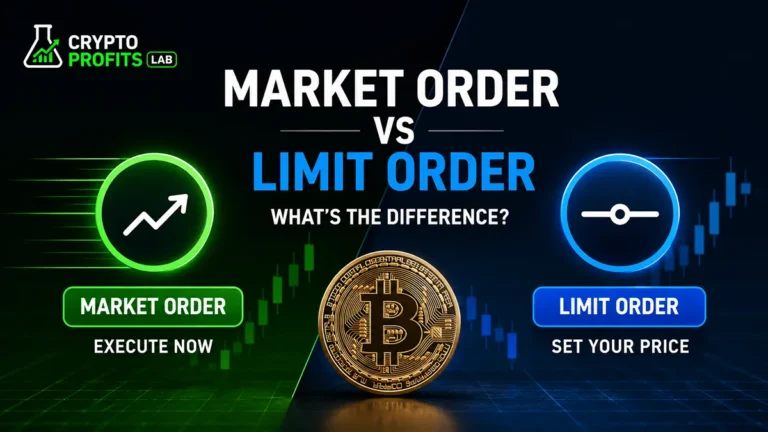
A market order vs limit order creates an important trade-off. A market order prioritizes immediate execution, while a limit order controls the price but may not fill.
Step 6: Verify Both Transactions
The trader confirms that both orders were completed at the expected average prices.
If cryptocurrency is transferred on-chain, the transaction can usually be reviewed with a blockchain explorer. An exchange may also require several confirmations before crediting the deposit.
Step 7: Rebalance the Accounts
After repeated trades, one exchange may hold most of the cash or stablecoins while the other holds most of the cryptocurrency.
Funds must eventually be rebalanced so another trade can be made. Rebalancing creates additional fees, transfer delays, and exposure to price movement.
Main Types of Crypto Arbitrage
Not every strategy requires moving the same coin between two exchanges. Some versions operate within one exchange or use decentralized markets.
Cross-Exchange Arbitrage
Cross-exchange arbitrage compares the same asset on two separate platforms.
A beginner may imagine buying first, transferring the coin, and then selling it. That process can be too slow when the price difference closes before the transfer arrives.
More experienced participants may keep cryptocurrency on one exchange and cash or stablecoins on another. They place the buy and sell orders nearly simultaneously, then rebalance later. This reduces transfer delay during the trade but requires more capital and exposes funds to multiple platforms.
Triangular Arbitrage
Triangular arbitrage uses three trading pairs on one exchange.
For example, a trader might move from a stablecoin to Bitcoin, from Bitcoin to another cryptocurrency, and then back to the stablecoin. If the three exchange rates are briefly inconsistent, the final amount may exceed the starting amount.
Three trades also mean three opportunities for fees, slippage, or incomplete orders. The difference is often small and may disappear before a person can complete the sequence manually.
Decentralized Exchange Arbitrage
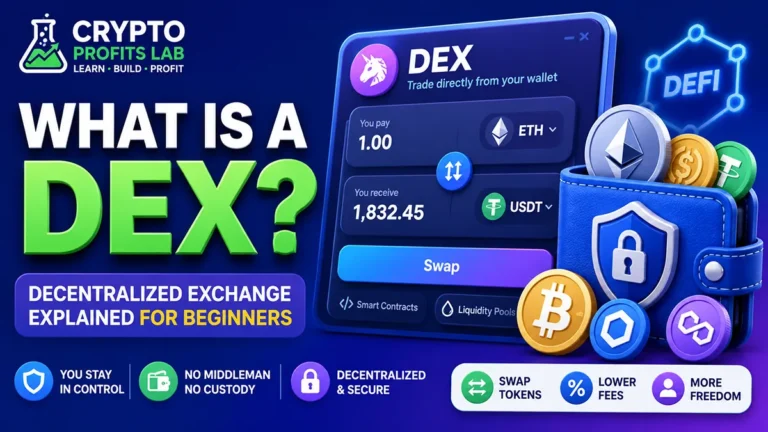
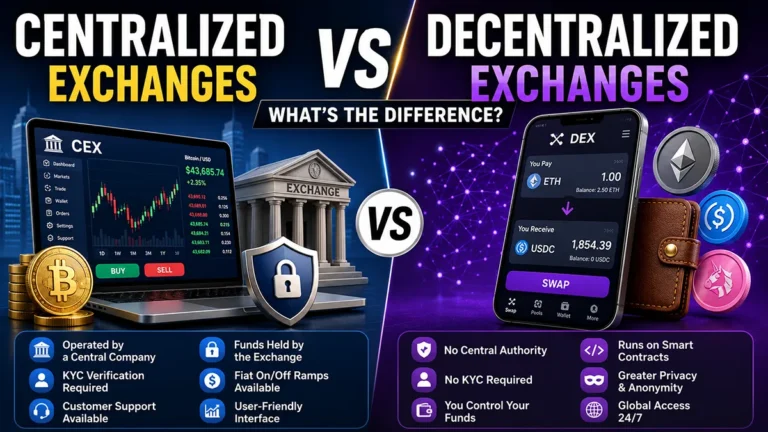
A decentralized exchange (DEX) allows users to trade via blockchain-based smart contracts rather than a traditional company-managed order book.
Prices can differ between decentralized exchanges or between a decentralized and centralized exchange. Traders may attempt to capture those differences.
This approach introduces network fees, smart contract risk, failed transactions, and competition from automated bots. On some blockchains, transaction ordering can also affect whether a trade succeeds at the expected price.
Statistical Arbitrage
Statistical strategies use models to estimate how related prices may behave. They may involve many assets, historical relationships, and automated trading rules.
This is more complex than buying the same coin in one place and selling it in another. The expected relationship can break down, so the strategy includes market risk and should not be presented as a simple guaranteed arbitrage.
Why Crypto Arbitrage Is Harder Than It Looks
Opportunities Disappear Quickly
Many traders and automated systems watch the same markets. When a useful price difference appears, competing orders can close it rapidly.
Displayed Prices Can Be Misleading
The last traded price may involve a tiny order. A trader trying to buy or sell a larger amount may receive several less favorable prices.
Transfers Can Be Slow
A blockchain may be congested, an exchange may delay withdrawals, or the receiving platform may require additional confirmations.
Fees Can Change
Network charges and exchange fees can vary. Some exchanges also use account tiers based on trading volume.
Orders Can Fill Partially
One side of the transaction may be completed while the other is only partially filled. The trader is then exposed to the market direction of the remaining amount.
Funds Are Spread Across Platforms
Maintaining balances across multiple exchanges increases exposure to account freezes, platform outages, hacking, withdrawal restrictions, and company failures.
Taxes and Records Add Complexity
Buying, selling, and exchanging cryptocurrency may result in reportable transactions, depending on the trader’s country. Frequent activity can produce a large number of records.
Our guide to crypto taxes for beginners explains why transaction history, fees, dates, and cost basis should be saved.
Crypto Arbitrage Fees That Beginners Often Miss
A successful calculation must include more than the visible trading commission.
Trading Fees
Most exchanges charge a percentage when an order executes. The fee may differ for market makers and market takers.
Withdrawal Fees
A platform may charge a fixed amount to withdraw a coin. A fixed fee can consume a large percentage of a small trade.
Blockchain Network Fees
On-chain transfers require a network fee. The amount can change with demand and blockchain design.
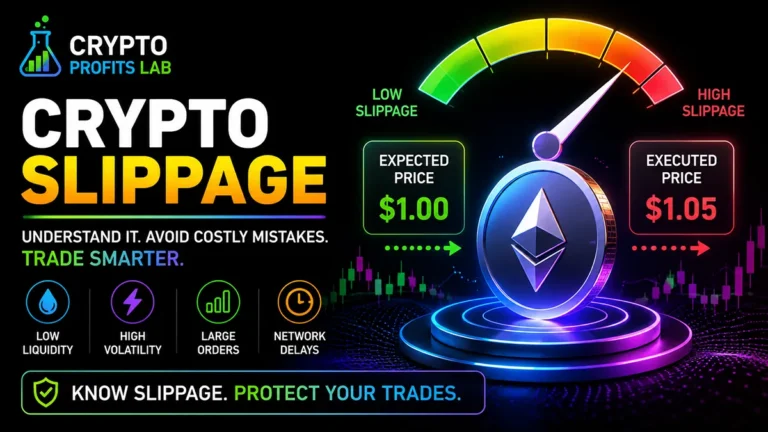
Slippage
Crypto slippage is the difference between the expected price and the average price actually received. It can increase when liquidity is low or markets move quickly.
Stablecoin and Currency Conversion Costs
A trader may need to convert between dollars, euros, and stablecoins. The conversion itself can include a spread and a fee.
Rebalancing Costs
Even when both trade orders occur without a transfer, balances eventually need to be moved back into useful positions.
Can Beginners Make Money With Crypto Arbitrage?
It is possible for a well-executed trade to produce a positive result, but the strategy is not easy money.
Professional participants may use automated software, direct market data, large balances, low-fee account tiers, and fast execution. A beginner working manually may see the opportunity after faster traders have already acted.
Crypto arbitrage may be useful to study because it teaches how order books, spreads, liquidity, fees, and exchange transfers work. Practicing calculations without risking money can be more valuable than immediately placing trades.
A beginner should be able to explain the full cost, the execution sequence, the worst-case result, and the exit plan before considering a real trade.
Common Crypto Arbitrage Beginner Mistakes
Treating the Price Gap as Profit
The difference between the two displayed prices is only a starting point. Fees and execution determine the final result.
Transferring Before Confirming Deposit Support
A coin deposit may be paused or available only through a particular network. Sending first can delay or make funds inaccessible.
Using the Wrong Trading Pair
BTC/USD, BTC/USDT, and BTC/USDC are related but not identical markets. The quote asset can contribute to the apparent difference.
Ignoring Order-Book Depth
A good price may be available for only a small amount. A larger order can move into worse price levels.
Relying on Market Orders Without Estimating Slippage
Market orders can execute quickly, but the final average price may be worse than expected.
Forgetting Withdrawal Minimums and Limits
An exchange may impose minimum withdrawal amounts, daily limits, identity-verification requirements, or temporary holds.
Using Unfamiliar Exchanges for a Larger Spread
An unusually large price gap can signal low liquidity, withdrawal problems, limited trust, or a market that is difficult to access.
Trusting a Guaranteed Arbitrage Bot
No bot can eliminate exchange failures, software errors, rapid market changes, or fraud. Guaranteed-return language is a major warning sign.
Safety and Risk: How to Approach Crypto Arbitrage Carefully
Crypto arbitrage carries trading, custody, transfer, operational, and scam risks.
Use strong, unique passwords and two-factor authentication on every exchange account. Confirm withdrawal addresses carefully and never share a seed phrase or private key with a trading service.
Research each platform before depositing funds. Check whether withdrawals are functioning, whether the exchange serves your location, and whether it has clear fee and verification policies.
Treat every promise of guaranteed, effortless, or risk-free trading income as a warning. The CFTC guidance on virtual currency trading risks explains that there is no guaranteed trading strategy and that people should understand how losses can occur before speculating.
Be cautious with websites that ask you to send cryptocurrency to activate a bot, unlock profits, pay a withdrawal tax, or join a private arbitrage pool. Fake dashboards can display profits that do not exist. Review our guide to crypto scams to avoid before trusting an unfamiliar trading platform.
Never risk money needed for bills, debt payments, emergency savings, or near-term goals. Follow basic crypto safety tips even when an opportunity appears time-sensitive.
Beginner Crypto Arbitrage Checklist
Before considering a trade, confirm:
- The cryptocurrency and network are identical on both platforms.
- Deposits and withdrawals are operating normally.
- Both exchanges are available and appropriate for your location.
- You reviewed the actual order-book depth.
- You calculated buy and sell trading fees.
- You included withdrawal and blockchain fees.
- You estimated slippage on both sides.
- You understand the deposit confirmation time.
- You checked minimums and account limits.
- You know what happens if only one order fills.
- You can document the transactions for taxes.
- You are not relying on guaranteed-return claims.
- You can afford to lose the full amount.
If any part of the process is unclear, the trade is not ready.
Crypto Arbitrage Final Thoughts
Crypto arbitrage is easy to describe but difficult to execute consistently. The visible opportunity is only the difference between the two prices. The real result depends on fees, available liquidity, order timing, transfer speed, account limits, and market movement.
For beginners, the most valuable lesson may be learning how exchanges, order books, spreads, wallets, and transaction costs work together. That knowledge can improve decision-making even when no arbitrage trade is placed.
Crypto Profits Lab aims to make these concepts cleaner and easier to understand without presenting trading as effortless income. Study the numbers, protect your accounts, question guaranteed-return claims, and never let urgency replace careful verification.
Crypto Arbitrage Frequently Asked Questions
Is crypto arbitrage legal?
Crypto arbitrage is generally a trading strategy rather than a distinct asset class, but the laws, exchange rules, licensing requirements, and tax treatment vary by country. Traders must use platforms that lawfully serve their location and follow identity-verification and reporting rules. Regulatory or banking restrictions can also affect whether funds can move between markets.
Is crypto arbitrage risk-free?
No. Although the strategy attempts to capture an existing price difference, the final result depends on execution. Prices can change, orders can be filled partially, transfers can be delayed, and fees can exceed the spread. Exchange outages, withdrawal restrictions, account reviews, software failures, and scams create additional risks. No cryptocurrency trading strategy should be described as guaranteed.
How much money do you need for crypto arbitrage?
There is no universal minimum. A small balance may be enough to study the process, but fixed withdrawal and network fees can make small trades uneconomical. Larger balances may reduce the percentage impact of fixed costs while increasing the dollar amount at risk. The required capital also depends on the exchanges, assets, order sizes, and strategy.
Why not transfer the coin after finding a price difference?
The price difference may disappear while the transaction waits for blockchain confirmations or exchange processing. The receiving exchange could also pause deposits. Experienced traders may keep funds on both platforms and place orders close together, but that approach requires more capital and exposes funds to two exchanges simultaneously.
What is triangular arbitrage in crypto?
Triangular arbitrage attempts to profit from misaligned exchange rates among three currencies on a single platform. A trader starts with one asset, trades it for a second, exchanges the second for a third, and converts the third back to the starting asset. The sequence is profitable only when the final amount exceeds all three trading fees and slippage.
Are crypto arbitrage bots profitable?
Some automated systems may complete profitable trades, but a bot cannot guarantee returns. Performance depends on fees, speed, liquidity, coding quality, market access, and competition. Results shown in advertisements may be simulated or misleading. A malicious bot can also steal funds or API credentials, so beginners should treat guaranteed-income claims as a serious red flag for scams.
Do you pay taxes on crypto arbitrage profits?
Tax treatment depends on the country and the trader’s circumstances. Purchases, sales, conversions, fees, gains, and losses may need to be recorded. Frequent trading can create many taxable or reportable events. Keep complete exchange statements and transaction histories, and consult a qualified tax professional for guidance that applies to your location.
What is the biggest crypto arbitrage risk for beginners?
The biggest risk is assuming the visible price gap equals guaranteed profit. A beginner may overlook order-book depth, slippage, fees, transfer delays, withdrawal restrictions, or an unreliable exchange. The trade can fail even when the original price difference was real. Careful calculations and a plan for incomplete execution are essential before risking money.
Can you practice crypto arbitrage without money?
Yes. You can compare live order books, record realistic buy and sell prices, subtract all known fees, estimate transfer time and slippage, and track the result in a spreadsheet. Repeating this exercise helps reveal how quickly opportunities disappear. Paper calculations do not reproduce every execution problem, but they are safer than learning with a large deposit.