What is KYC in crypto? A Beginner’s Guide to Safer Verification
If you are new to crypto, you may open an exchange account and suddenly see a request for your legal name, address, photo ID, or even a selfie. That can feel confusing at first.
So, what is KYC in crypto?
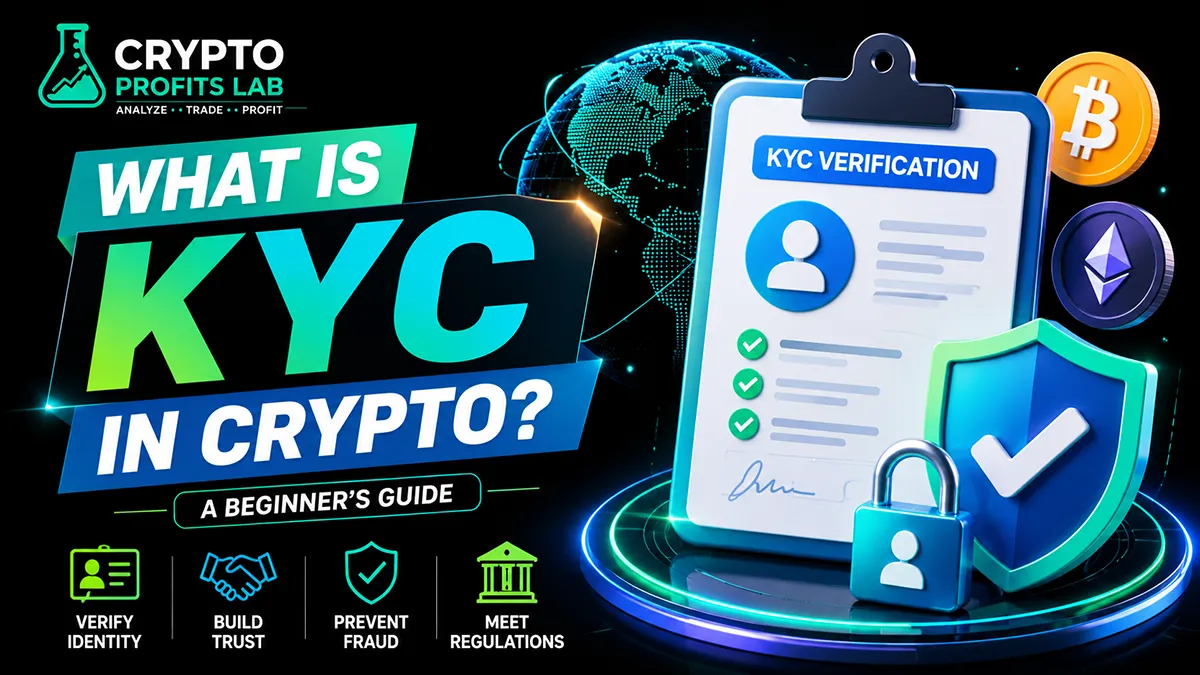
KYC stands for “Know Your Customer.” In simple terms, it is the identity check many crypto exchanges use before they let you buy, sell, trade, or withdraw larger amounts of crypto. It helps the platform confirm that you are a real person and that the account is not being used for fraud, money laundering, stolen funds, or other illegal activity.
For beginners, KYC is not something to fear but something to understand. You should know why an exchange asks for it, what information it may require, how to protect your personal data, and when a KYC request may be a red flag.
This guide explains what is KYC in crypto in plain English so you can make safer decisions before using an exchange.
Quick Answer: What is KYC in crypto?
What is KYC in crypto? KYC is the process a crypto exchange uses to verify your identity. A platform may ask for your name, date of birth, home address, government ID, and sometimes a selfie or proof of address.
Most large centralized exchanges use KYC because they handle money, connect with banks, and must comply with financial regulations in many countries. KYC does not make crypto risk-free, but it can help reduce fake accounts, fraud, account abuse, and illegal financial activity.
A simple way to think about it:
KYC is like showing your ID before opening a bank account, but it happens online through a crypto platform.
If you are still learning how exchanges work, read our beginner’s guide to a crypto exchange before choosing where to sign up.
Key Takeaways
- KYC means “Know Your Customer,” which is an identity verification process.
- The main reason exchanges use KYC is to confirm who is using the account.
- The question “What is KYC in crypto?” often comes up when beginners try to buy crypto with a bank account, debit card, or credit card.
- KYC is most common on centralized exchanges, not private wallets.
- You should submit KYC documents only to trusted platforms you reach through the official website or app.
- KYC may help reduce fraud, but it does not remove all crypto risks.
- Never share your private key or seed phrase for KYC. A real exchange does not need that information.
- Rules vary by country, platform, and account type.
Beginner Facts Table
| Beginner Question | Simple Answer |
|---|---|
| What does KYC stand for? | Know Your Customer |
| What is KYC in crypto used for? | Verifying the identity of exchange users |
| Who usually asks for KYC? | Centralized exchanges and some crypto services |
| Do wallets require KYC? | Most self-custody wallets do not |
| Does KYC mean crypto is safe? | No. It is only one safety and compliance step |
| Should you share a seed phrase for KYC? | No. Never share your seed phrase or private key |
| Can KYC take time? | Yes. It may be instant or take hours or days |
| Is every KYC request legitimate? | No. Scammers can fake verification pages |
What is KYC in crypto in Simple Terms
KYC is an identity check.
When a crypto exchange asks for KYC, it is usually trying to confirm that the person opening the account matches the information being submitted. That may include your legal name, date of birth, address, and ID document.
What is KYC in crypto compared with signing up for a normal website? A normal website may only require an email address and a password. A crypto exchange may need more because it can involve money movement, bank transfers, card purchases, crypto withdrawals, and tax records.
This is one reason choosing a trusted exchange matters. Beginners often focus only on fees or coin selection, but identity security is just as important. Our guide to the best crypto exchange for beginners explains what to look for before opening an account.
KYC is also different from a password or two-factor authentication. A password helps you log in. Two-factor authentication helps protect your account from unauthorized access. KYC helps the platform verify who owns the account.
For extra account protection, learn how crypto 2FA works before you deposit money.
Why Crypto Exchanges Use KYC
Most beginners ask what is KYC in crypto because the request appears right when they are ready to buy. It can feel like an extra step, but exchanges usually require it for several reasons.
First, KYC helps reduce the number of fake accounts. Without identity checks, a single person could create multiple accounts to abuse promotions, circumvent limits, or hide suspicious activity.
Second, KYC helps exchanges follow anti-money-laundering rules. Anti-money laundering, often shortened to AML, refers to systems designed to detect and prevent the movement of illegally obtained money. You do not need to be a legal expert to understand the basic idea: financial platforms are expected to watch for activity that may involve stolen funds, fraud, sanctions violations, or criminal finance.
Third, KYC helps exchanges connect with banks and payment processors. If an exchange lets users deposit dollars, cash out to a bank account, or buy crypto with a card, it often needs identity controls.
For an authoritative source, you can read FinCEN’s official overview of customer due diligence requirements for financial institutions. In beginner language, customer due diligence is the process of learning enough about customers to understand and monitor financial risk.
Finally, KYC can help with account recovery. If your account is locked or hacked, verified identity information may help the exchange confirm that you are the real owner.
What is KYC in crypto Step-by-Step?
The exact process can differ, but most exchanges follow a similar pattern. Here is a beginner-friendly step-by-step explanation.
Step 1: Create an account
You usually start with an email address and password. Choose a strong password that you do not use anywhere else.
Before moving forward, make sure you are on the real exchange website or official mobile app. Fake exchange pages are one of the most common crypto scams to avoid.
Step 2: Enter basic personal information
The exchange may ask for your legal name, birth date, country, address, and phone number. This information should match your ID.
What is KYC in crypto at this stage? It is the platform that collects basic identity details so it can compare them with your documents.
Step 3: Upload an ID document
Common ID documents include a driver’s license, passport, national ID card, or other government-issued identification. The exchange may ask for a clear photo of the front and back.
Make sure the image is readable. Blurry photos are a common reason verification fails.
Step 4: Complete a face check
Some exchanges ask for a selfie or live face scan. This is used to help confirm that the person submitting the ID is present and not only uploading a stolen document.
Step 5: Wait for approval
Some checks are approved quickly. Others take longer if the photo is unclear, your information does not match, or the platform needs manual review.
Step 6: Set up security before buying
After approval, turn on two-factor authentication, review withdrawal settings, and learn basic crypto safety tips before making your first purchase.
If you are ready to buy after verification, our step-by-step guide on how to buy crypto for beginners can help you avoid rushing.
What is KYC in crypto likely to ask for?
What is KYC in crypto likely to include? It depends on the exchange and your country, but common requests include:
- Full legal name
- Date of birth
- Home address
- Phone number
- Email address
- Government-issued ID
- Selfie or live face scan
- Proof of address, such as a utility bill or bank statement
- Tax identification number in some regions
- Source of funds questions for higher account levels
“Source of funds” simply means where your money comes from. For example, salary, savings, business income, or investment proceeds.
What is KYC in crypto vs AML?
KYC and AML are related, but they are not the same thing.
KYC is about identifying the customer.
AML is about preventing and detecting money laundering.
Here is the simple difference:
| Term | Plain-English Meaning | Beginner Example |
|---|---|---|
| KYC | The exchange checks who you are | Uploading your ID |
| AML | The exchange monitors suspicious financial activity | Reviewing unusual deposits or withdrawals |
| Compliance | The platform follows required financial rules | Setting limits or requesting extra review |
What is KYC in crypto without AML? It would only be an ID check. In real life, exchanges often combine KYC with transaction monitoring, risk checks, and account limits.
What is KYC in crypto on no-KYC platforms?
No. Not every crypto tool requires KYC.
Centralized exchanges usually require it because they are companies that hold customer accounts and often connect to banks. Examples include platforms where you create a username, deposit cash, and trade inside an account.
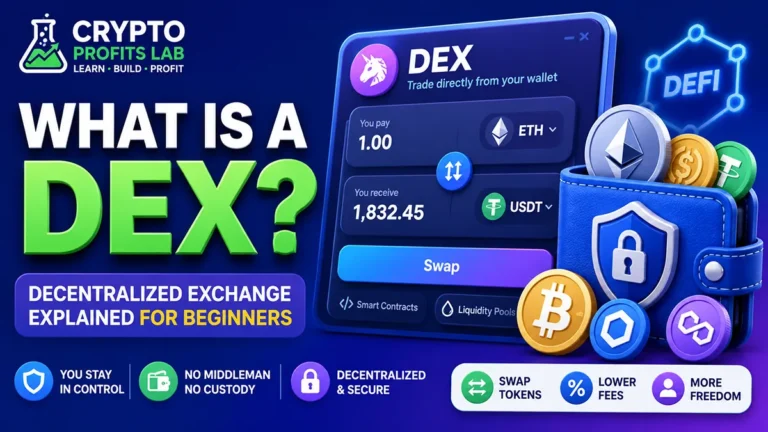
A decentralized exchange, also called a DEX, may not ask for the same identity documents because users connect their own wallets and trade directly through blockchain-based software. You can learn more in our beginner’s guide: what is a DEX.
However, “no KYC” does not automatically mean better. It may mean more privacy, but it can also mean fewer customer support options, fewer recovery options, and more responsibility for you.
What is KYC in crypto for a self-custody wallet? In most cases, a wallet itself does not need KYC because it is a tool for storing and sending crypto, not a full exchange account. But if the wallet app includes a built-in buying service, that third-party service may ask for verification.
For storage basics, read our guide to the best crypto wallet for beginners.
Benefits of KYC for Beginners
KYC is not perfect, but it can have practical benefits for new crypto users.
One benefit is easier access to bank transfers. If you want to buy crypto with dollars or cash out to your bank, a verified account may be required.
Another benefit is higher limits. Exchanges may limit unverified accounts or block certain features until KYC is complete.
KYC may also make account recovery easier. If you lose access, the exchange may use your verified identity to help confirm ownership.
What is KYC in crypto from a beginner safety angle? It is not a guarantee, but it can be one sign that an exchange is trying to operate as a real financial platform rather than an anonymous website.
Risks and Safety Tips Before Submitting KYC
KYC involves personal information, so you should treat it carefully.
The biggest risk is giving sensitive documents to the wrong website. Scammers can create fake exchange pages, fake verification emails, and fake support accounts. If you upload your ID to a scam site, the information could be misused.
Another risk is data exposure. Even real companies can suffer data breaches. That is why you should use only reputable platforms and avoid submitting documents to random apps or links on social media.
Use this safety checklist before completing KYC:
- Type the exchange website directly or use the official app store listing.
- Check the domain carefully before uploading documents.
- Avoid links from direct messages, group chats, or ads that feel suspicious.
- Turn on two-factor authentication after creating the account.
- Use a unique password.
- Do not send KYC documents through email or chat support unless you are certain it is an official process.
- Never share your seed phrase, private key, or wallet recovery words.
- Keep screenshots and records of important account notices.
- Use small test transactions when learning.
This point is very important: KYC may ask who you are, but it should not ask for control of your wallet.
A crypto private key or seed phrase gives access to your crypto. No legitimate KYC process should need it.
Common Beginner Mistakes With KYC
Mistake 1: Uploading documents to a fake website
This is one of the most dangerous mistakes. A fake exchange page may look professional, but it can steal your ID, login, and money. Always verify the website address.
Mistake 2: Using information that does not match your ID
If your name, address, or birth date does not match your documents, verification may fail. Use accurate information from the start.
Mistake 3: Ignoring account security after approval
Some beginners think KYC means the exchange account is fully protected. It does not. You still need a strong password, 2FA, and safe withdrawal habits.
Mistake 4: Confusing KYC with wallet ownership
What is KYC in crypto not designed to do? It does not prove that you safely control a wallet. Wallet safety depends on protecting your private key, seed phrase, and device.
Mistake 5: Leaving too much crypto on an exchange
An exchange account can be useful for buying and selling, but long-term storage is a separate decision. Many beginners eventually learn about self-custody wallets after they understand the basics.
Mistake 6: Falling for “verification fee” scams
Be careful if someone says you must pay a separate fee to verify your account, unlock profits, or release withdrawals. That can be a scam tactic.
What is KYC in crypto for Wallets?
A crypto wallet and a crypto exchange are not the same thing.
An exchange is a platform where you can buy, sell, or trade crypto.
A wallet is a tool that lets you store and control crypto on a blockchain.
What is KYC in crypto when wallets are involved? Usually, KYC belongs to the exchange or payment provider, not the wallet address itself.
A crypto wallet address is like a public receiving address. You can share it to receive crypto. But your private key or seed phrase must stay secret.
Some beginners complete KYC on an exchange, buy crypto, and then transfer a small amount to a wallet. That can be a smart learning step, but only after you understand network fees, wallet addresses, and test transactions.
What is KYC in crypto when cashing out?
KYC often becomes important when you want to turn crypto back into cash.
If you sell crypto on an exchange and withdraw money to a bank account, the platform usually needs to know who owns the account. This is one reason KYC is common on exchanges that support cash withdrawals.
What is KYC in crypto during cash-out? It is the exchange confirming your identity before allowing certain withdrawal methods or higher limits.
Cashing out may also have tax consequences. KYC is not the same as tax reporting, but verified exchanges may keep records of your trades, deposits, and withdrawals. For a beginner-friendly overview, read crypto taxes for beginners and our guide on how to cash out crypto.
When a KYC Request Might Be a Red Flag
A KYC request from a real exchange can be normal. A KYC request from a random person online is not.
Be careful if:
- Someone in a Telegram, Discord, WhatsApp, or social media group sends you a verification link.
- A platform promises guaranteed returns but asks for ID first.
- Support asks for your seed phrase or private key.
- You are told to pay a fee before withdrawals are released.
- The website has spelling mistakes, strange URLs, or no clear company information.
- The platform pressures you to act immediately.
- A “recovery agent” claims they can recover your lost crypto if you verify with them.
Pressure is a common scam signal. If you feel rushed, stop and research.
Crypto Profits Lab is built for beginners because crypto can be confusing enough without hype, fear, or complicated language. The safer path is to slow down, verify the platform, and learn each step before sending money.
Should Beginners Use KYC Exchanges?
For many beginners, a reputable KYC exchange is the simplest way to buy crypto for the first time. It may offer bank transfers, card purchases, customer support, account history, and a familiar login experience.
That does not mean every beginner must use the same exchange or keep all funds there forever. It means a trusted, regulated, beginner-friendly platform can be easier to understand than jumping straight into advanced tools.
What is KYC in crypto as part of your learning journey? It is one step in understanding how crypto connects to the traditional financial system.
As you learn more, you may explore wallets, decentralized exchanges, stablecoins, DeFi, and long-term security. Start slowly. Use small amounts. Keep records. Never invest money you cannot afford to lose.
Final Thoughts
What is KYC in crypto? It is the identity verification process many exchanges use before allowing full access to buying, selling, trading, or withdrawing crypto.
For beginners, the goal is not just to “get through” verification. The goal is to understand why it exists, what information is normal, what information is dangerous to share, and how to protect yourself.
KYC can help exchanges reduce fraud and comply with financial regulations, but it does not eliminate the risks of crypto. You still need strong account security, scam awareness, careful platform selection, and a plan for storing your assets.
Keep it simple: use trusted platforms, protect your private information, never share your seed phrase, and take time to learn before rushing into trades.
What is KYC in Crypto? Frequently Asked Questions
What is KYC in crypto?
What is KYC in crypto? It is the identity verification process used by many crypto exchanges and financial platforms. KYC usually asks for information such as your legal name, date of birth, address, government ID, and sometimes a selfie. The goal is to confirm that you are a real person and to help the platform reduce fraud, fake accounts, and illegal financial activity.
Why do crypto exchanges ask for KYC?
Crypto exchanges ask for KYC because they often handle money, bank transfers, card payments, and withdrawals. Identity checks help them comply with financial regulations, reduce fraud, and monitor suspicious activity. KYC may also help with account recovery if you lose access. It does not make crypto risk-free, but it is a common step on many centralized platforms.
Is KYC safe in crypto?
KYC can be safe when completed through a reputable exchange’s official website or app, but it requires caution because you are sharing sensitive personal information. The main risk is uploading documents to a fake platform or scam link. Always verify the website, use strong account security, and never share your private key, seed phrase, or wallet recovery words for KYC.
Can I buy crypto without KYC?
In some cases, yes. Some decentralized exchanges, peer-to-peer tools, or wallet-based services may not require the same identity checks. However, no-KYC options can carry additional risks, including reduced support, lower consumer protection, greater technical responsibility, and potential legal limits depending on your location. Beginners should understand the tradeoffs before choosing a no-KYC method.
Does KYC mean the exchange reports my taxes to the authorities?
KYC and taxes are related but not the same thing. KYC verifies your identity. Tax reporting depends on your country, the platform, and the type of activity. Some exchanges may provide tax forms or transaction history. Beginners should keep their own records of buys, sells, swaps, and withdrawals and speak with a tax professional when needed.
How long does crypto KYC take?
Crypto KYC can be approved in minutes, but it may also take hours or days. Timing depends on the exchange, document quality, account volume, and whether manual review is needed. Clear photos, matching personal information, and using the correct document type can help prevent delays. Creating duplicate accounts usually makes the process harder, not faster.
What should I never share during KYC?
Never share your seed phrase, private key, wallet recovery words, or remote access to your device. KYC may ask for identity documents, but it should not ask for control of your crypto wallet. Anyone requesting your seed phrase for verification is likely trying to steal your funds. Treat wallet recovery words like the master key to your crypto.
Is KYC required for crypto wallets?
Most self-custody crypto wallets do not require KYC because they are tools for storing and sending crypto, not full financial accounts. However, if a wallet app includes a built-in buying feature through a third-party provider, that provider may require KYC. Beginners should separate wallet security from exchange verification and understand which company is requesting information.