What Is a Crypto Node? A Beginner’s Guide to Blockchain Networks
If you are learning crypto, you will eventually come across the term “node”.
It may sound technical, but the basic idea is not too hard. Nodes are one of the main reasons blockchains can operate without a traditional bank, payment company, or central recordkeeper.
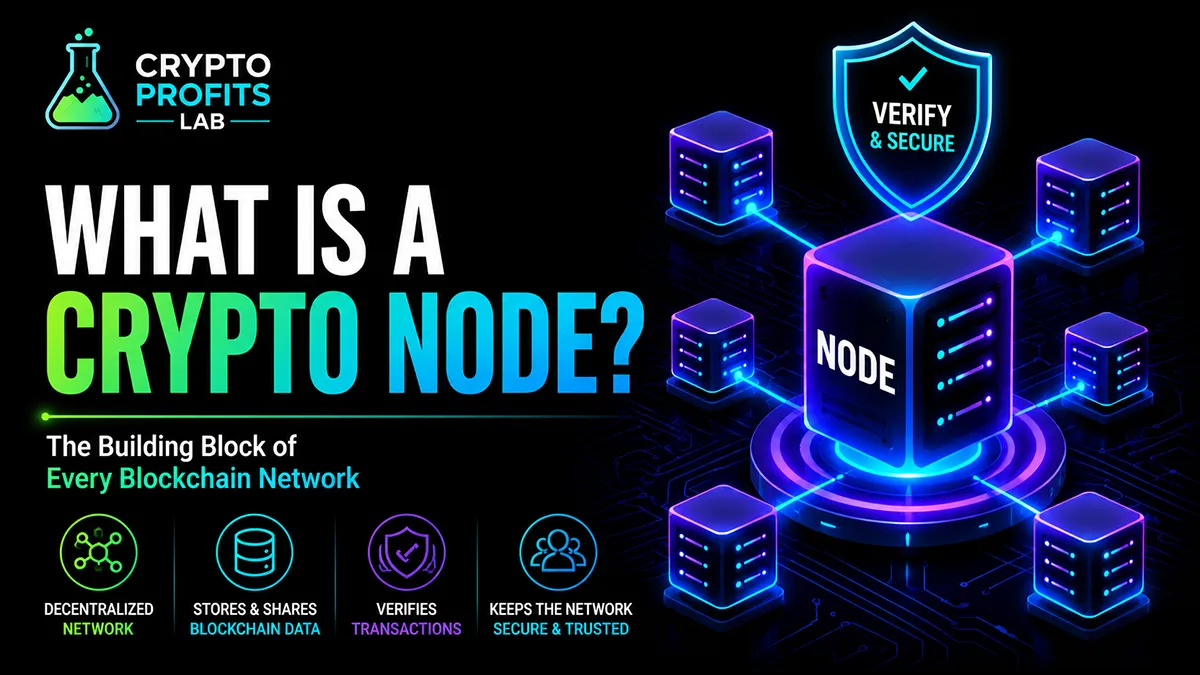
What is a crypto node? A crypto node is a computer or device that connects to a blockchain network and helps store, check, share, or validate blockchain data.
In simple terms, nodes help keep a blockchain running.
Some nodes store a full copy of the blockchain. Some help verify transactions. Some help wallets and apps read blockchain data. Others help secure proof-of-stake networks.
This beginner guide from Crypto Profits Lab explains what nodes do, why they matter, the different types of crypto nodes, and what beginners should know before trying to run one.
Quick Answer: What is a crypto node?
What is a crypto node? A crypto node is a computer connected to a blockchain network. It helps the network share information, check rules, and keep a record of transactions.
A blockchain is not stored in a single office or company database. Instead, many computers around the world keep and share copies of the network’s data.
Those computers are called nodes.
For example, a Bitcoin node can help verify Bitcoin transactions and blocks. An Ethereum node can help read Ethereum data, support wallets, and interact with smart contracts.
Not every node does the same job. Some nodes are simple. Some are advanced. Some are used by regular users. Some are used by validators, exchanges, developers, and crypto apps.
The beginner takeaway is simple: nodes help blockchains stay open, transparent, and harder to control by one central party.
Key Takeaways
- A crypto node is a computer or device connected to a blockchain network.
- Nodes help share, store, and verify blockchain data.
- Some nodes keep a full copy of the blockchain.
- Some nodes help wallets, exchanges, and apps communicate with a blockchain.
- Nodes are important for decentralization because they spread network data across many participants.
- A node is not always the same thing as a miner or validator.
- Running a node can improve privacy and control, but it may require storage, internet bandwidth, and technical setup.
- What is a crypto node is an important beginner topic because nodes are part of how blockchains work behind the scenes.
Crypto Node Beginner Facts Table
| Beginner Question | Simple Answer |
|---|---|
| What is a crypto node? | A computer connected to a blockchain network. |
| Does every blockchain use nodes? | Most public blockchains rely on nodes in some form. |
| Is a node the same as a wallet? | No. A wallet manages keys and addresses; a node connects to blockchain data. |
| Is a node the same as a miner? | Not always. Miners may run nodes, but many nodes do not mine. |
| Is a node the same as a validator? | Not always. Validators may use nodes, but a node can exist without validating. |
| Can beginners run a node? | Yes, but it depends on the blockchain and technical requirements. |
| Do nodes make money? | Some validator nodes may earn rewards, but many regular nodes do not. |
| Why do nodes matter? | They help keep blockchain records shared, checked, and decentralized. |
Why Crypto Nodes Matter
To understand What is a crypto node, it helps to understand the problem blockchains are trying to solve.
Traditional financial systems usually depend on central databases. A bank, card company, payment app, or financial institution keeps records and updates balances.
Crypto works differently.
A public blockchain is designed so that many participants can agree on a shared transaction history without needing one central company to control the records.
That is where nodes come in.
Nodes help spread blockchain data across the network. They can check whether transactions follow the rules. They can reject invalid data. They can help users and apps read what is happening on-chain.
Without nodes, a blockchain would not be very decentralized. If only one company controlled the records, the system would start to look more like a regular database.
For a beginner’s explanation of the technology behind this, read about blockchain technology.
A Simple Crypto Node Example
Imagine a classroom where every student has a copy of the same notebook.
When a new event occurs, the students compare notes and update their notebooks only if the event complies with the rules.
If one student writes something false, the others can reject it because their copies do not match.
That is not a perfect technical example, but it helps explain the basic idea.
What is a crypto node in this example? It is like one of the students keeping and checking a copy of the shared notebook.
In crypto, the notebook is the blockchain. The students are nodes. The rules are the network rules.
When many nodes maintain copies and verify data, it becomes harder for a single bad actor to rewrite history.
Crypto Node vs Crypto Wallet
A crypto wallet and a crypto node are not the same thing.
A crypto wallet helps you manage your private keys, wallet addresses, and transactions. It lets you send, receive, and view crypto.
A crypto node connects to the blockchain network and helps read, share, or verify blockchain data.
Some wallets connect to nodes in the background. When you open a wallet and check your balance, the wallet usually needs blockchain data from somewhere. That data may come from a node run by the wallet company, a third-party service, or your own node if you set one up.
Here is the simple difference:
| Tool | Main Purpose | Beginner Meaning |
|---|---|---|
| Crypto wallet | Manages keys and transactions | Helps you control and use crypto |
| Crypto node | Connects to blockchain data | Helps read, share, or verify network information |
What is a crypto node compared with a wallet? A wallet is for managing access to your crypto. A node is for connecting to and checking blockchain data.
For wallet basics, read crypto wallet.
Crypto Node vs Miner
A miner is not the same as a node, although miners often use nodes.
Mining is part of proof-of-work blockchains such as Bitcoin. Miners compete to add new blocks by using computing power.
A node can check whether the new block follows the rules. A mining setup may include a full node so the miner can build and broadcast valid blocks.
But many people run nodes without mining at all.
What is a crypto node compared with a miner? A node checks and shares blockchain data. A miner tries to create new blocks in a proof-of-work system.
This distinction matters because beginners often think every node earns rewards. That is not true. A regular full node usually helps the network but does not automatically earn coins.
For more context on Bitcoin, read what is Bitcoin.
Crypto Node vs Validator
A validator is common in proof-of-stake networks.
In proof-of-stake, validators help propose or confirm blocks by locking up, or staking, crypto according to the network’s rules.
A validator often runs node software, but not every node is a validator.
What is a crypto node compared with a validator? A node is the network-connected software or device that reads and shares blockchain data. A validator is a participant with a specific role in securing a proof-of-stake blockchain.
Some blockchains require validators to meet technical and financial requirements. For example, a validator may need reliable uptime, proper setup, and a certain amount of staked crypto.
For a beginner’s explanation, read what is proof of stake.
How Crypto Nodes Work Step by Step
What is a crypto node in action? The easiest way to understand it is to walk through a simple blockchain transaction.
Step 1: Someone Creates a Transaction
A user sends crypto from one wallet address to another.
The wallet creates a transaction message. This message includes details such as the sending and receiving addresses, the amount, and the required network information.
The wallet signs the transaction using the user’s private key. This signature proves the user has permission to spend from that address.
Step 2: The Transaction Is Shared With the Network
After the transaction is signed, it is broadcast to the blockchain network.
Nodes receive the transaction and share it with other nodes. This helps the transaction spread across the network.
The transaction does not need to pass through one central company. It moves through connected network participants.
Step 3: Nodes Check the Rules
Nodes check whether the transaction follows the network’s rules.
For example, a node may verify that the signature is valid, that the funds have not already been spent, and that the transaction format is correct. Ethereum’s official nodes and clients guide explains how nodes and client software help connect to Ethereum and verify blockchain data.
This is one reason nodes matter. They help reject invalid or dishonest information.
Step 4: A Block Is Proposed
Depending on the blockchain, a miner or validator proposes a new block.
A block is a group of transactions added to the blockchain.
The exact process depends on the network. Bitcoin uses proof of work. Ethereum uses proof of stake. Other blockchains may use different systems.
Step 5: Nodes Verify the Block
Nodes check the proposed block.
They make sure the block follows the network’s rules. If the block is valid, nodes accept it and update their copy of the blockchain.
If the block is invalid, honest nodes can reject it.
Step 6: The Blockchain Record Updates
Once a valid block is accepted, the blockchain history updates.
The transaction becomes part of the public record. Depending on the chain, additional blocks may make the transaction more final over time.
Step 7: Users Can View the Transaction
After the transaction is included on-chain, users can often view it through a block explorer.
A block explorer shows blockchain activity, including transaction status, wallet addresses, blocks, and fees.
For a beginner’s guide, read blockchain explorer.
Main Types of Crypto Nodes
Not all crypto nodes are the same. The type of node depends on the blockchain and the job it performs.
Here are the main types beginners may see.
Full Node
A full node stores and verifies blockchain data.
In many networks, a full node downloads a large amount of blockchain history and checks that blocks and transactions follow the rules.
What is a crypto node when people talk about decentralization? They often mean a full node because it can independently verify the blockchain rather than trusting another service.
Full nodes can improve transparency and network strength, but they may require storage space, bandwidth, and regular maintenance.
Light Node
A light node, sometimes called a lightweight node, does not store the full blockchain.
Instead, it relies on other nodes for some information. This can make it easier to use on phones, wallets, and smaller devices.
Light nodes are convenient, but they usually require more trust in other sources compared with full nodes.
Archive Node
An archive node stores more historical blockchain data than a standard full node.
Archive nodes are often used by developers, analytics tools, block explorers, and advanced services that need deep historical records.
Most beginners do not need an archive node.
Validator Node
A validator node helps secure a proof-of-stake blockchain.
Validators may propose blocks, confirm blocks, or participate in consensus. Consensus means the process a blockchain uses to agree on the correct transaction history.
Validator nodes can earn rewards on some networks, but they also come with responsibility and risk.
Mining Node
A mining node is connected to proof-of-work mining activity.
In Bitcoin, miners often use node software to help create and broadcast valid blocks. However, a regular Bitcoin full node can exist without mining.
RPC Node
RPC stands for remote procedure call. Beginners do not need to memorize that phrase.
In simple terms, an RPC node helps wallets, apps, and websites communicate with a blockchain.
When a decentralized app loads your token balance or sends a transaction request, it often uses an RPC connection in the background.
What is a crypto node for apps? In many cases, it is the connection point that lets the app read blockchain data and send transaction requests.
Do Nodes Help Make Crypto Decentralized?
Yes, nodes are among the main components of decentralization.
Decentralization means that control is spread out rather than held by a single central authority.
If many independent people and organizations run nodes, the network becomes harder to control, censor, or secretly change.
What is a crypto node in a decentralized system? It is one independent participant helping keep the network honest.
This does not mean every blockchain is equally decentralized. Some networks have more nodes than others. Some nodes are hosted by large infrastructure companies. Some blockchains have higher hardware requirements, which may limit who can participate.
Decentralization is not just a slogan. It depends on real network design, real participants, and real incentives.
Can Beginners Run a Crypto Node?
Yes, beginners can run a crypto node, but it depends on the network and your comfort level.
Some nodes are easier to run than others. Some require a normal computer and patience. Others require advanced hardware, constant uptime, or technical knowledge.
Before running a node, ask:
- Which blockchain do I want to support?
- How much storage does it require?
- How much internet bandwidth will it use?
- Does it need to be online all the time?
- Will I earn rewards, or is it only for privacy and network support?
- What are the setup and security requirements?
What is a crypto node for a beginner who is not technical? It may be something to understand first, not something to run immediately.
You do not need to run a node to own crypto. You can learn the concept first, then decide later whether running one makes sense.
Why Someone Might Run a Node
People run crypto nodes for different reasons.
Some want more privacy. If you use your own node, you may not need to rely as much on third-party services to check balances or broadcast transactions.
Some want more control. Running a node can let you verify blockchain data directly.
Some want to support decentralization. More independent nodes can make a network stronger.
Some run nodes for business reasons. Exchanges, wallets, block explorers, analytics platforms, and DeFi apps often need reliable blockchain data.
Some run validator nodes to help secure proof-of-stake networks and potentially earn rewards.
What is a crypto node from a practical viewpoint? It can be a tool for verification, infrastructure, privacy, or network participation.
Do Crypto Nodes Earn Money?
Sometimes, but not always.
This is one of the biggest misunderstandings among beginners.
A regular full node usually does not automatically earn crypto. It helps verify and share blockchain data, but it may not receive rewards.
Validator nodes on proof-of-stake networks may earn rewards if they meet the network’s requirements. Mining nodes in proof-of-work systems may be connected to mining rewards. Some networks may offer incentives for special node roles.
But beginners should be careful. Many scams use phrases like node income, guaranteed rewards, or passive crypto node profits to make risky offers sound safe.
What is a crypto node income opportunity? It depends completely on the network, role, costs, token economics, and risks. Never assume a node makes money just because someone calls it a node.
For safer passive income basics, read crypto staking.
Common Beginner Mistakes With Crypto Nodes
Mistake 1: Thinking Every Node Earns Rewards
Many regular nodes do not earn rewards.
Some nodes help the network without paying the operator. Reward systems depend on the blockchain and node role.
Mistake 2: Confusing Nodes With Wallets
A wallet helps manage your crypto. A node helps connect to blockchain data.
They can work together, but they are not the same thing.
Mistake 3: Confusing Nodes With Validators
Validators usually run node software, but not every node is a validator.
A validator has a specific role in proof-of-stake consensus.
Mistake 4: Ignoring Hardware and Storage Requirements
Some blockchains require a lot of storage and bandwidth.
Before running a node, check the current requirements for that specific network.
Mistake 5: Trusting Node Profit Claims
Be careful with websites or videos promising easy node income.
If rewards sound guaranteed, risk-free, or unusually high, slow down and research carefully.
Mistake 6: Running a Node Without Security Basics
A poorly secured computer, server, or wallet can create risk.
Node setup should include updates, secure passwords, safe backups, and careful key management if staking or validating is involved.
Safety and Risk Section
What is a crypto node risk for beginners? The main risk is misunderstanding what a node does and trusting the wrong setup, service, or income claim.
Running a simple full node may not expose your funds directly if you are only verifying data. But validator nodes, hosted nodes, staking setups, and third-party node services can involve more risk.
Here are important safety points:
- Do not enter your seed phrase into node websites.
- Do not trust claims of guaranteed node income.
- Use official documentation for setup.
- Keep node software updated.
- Understand whether private keys are involved.
- Check hardware, storage, and bandwidth needs.
- Be careful with cloud-hosted servers.
- Avoid downloading Node.js software from random links.
- Keep long-term crypto holdings in secure wallets.
- Never invest money you cannot afford to lose.
If a node setup requires staking funds, the risk level is higher. You may face slashing risk on some proof-of-stake networks. Slashing means a validator can lose part of its staked crypto for breaking network rules or behaving incorrectly.
For broader beginner protection habits, read crypto safety tips.
How Nodes Connect to Gas Fees and Transactions
Nodes also help explain why crypto transactions have fees.
When you send crypto or use a smart contract, the network must process that transaction. Nodes help share and verify data, while miners or validators add transactions to blocks, depending on the blockchain.
Gas fees are most commonly discussed on Ethereum and similar smart contract networks. These fees help pay for network activity and discourage spam.
What is a crypto node in relation to gas fees? A node does not simply collect all fees on its own. The fee system depends on the blockchain. But nodes are part of the network infrastructure that enables transaction processing.
For a simple fee guide, read what are crypto gas fees.
How to Think About Nodes as a Beginner
You do not need to become a developer to understand nodes.
The beginner’s mindset is simple:
A blockchain is a shared record.
Nodes help keep that shared record available, up to date, and verified.
Wallets help users interact with the record.
Miners or validators help add new blocks, depending on the network.
Block explorers help people view the record.
What is a crypto node in this bigger picture? It is one of the computers that help keep the blockchain network alive and trustworthy.
Once you understand that, many crypto topics become easier. Bitcoin, Ethereum, proof of stake, gas fees, wallets, validators, and block explorers all connect back to the same basic idea: blockchains need network participants to function.
Final Thoughts
What is a crypto node? A crypto node is a computer or device connected to a blockchain network that helps store, share, read, or verify blockchain data.
Nodes are part of what makes public blockchains different from traditional databases. Instead of a single company controlling all records, many nodes can help maintain the network.
For beginners, the most important point is not whether you should run a node today. The most important point is understanding why nodes matter.
Nodes support decentralization. They help check rules. They help wallets and apps communicate with blockchains. They help make blockchain data more transparent and available.
Crypto Profits Lab keeps this simple because beginners do not need hype. They need clear explanations that make crypto easier to understand one step at a time.
If you can understand what nodes do, you are building a stronger foundation for learning Bitcoin, Ethereum, wallets, validators, staking, gas fees, and blockchain security.
FAQ: What is a crypto node?
What is a crypto node in simple terms?
What is a crypto node? A crypto node is a computer connected to a blockchain network. It helps store, share, check, or read blockchain data. Nodes are important because public blockchains do not rely on a single central company to maintain the records. Many nodes work together to help the network stay open and reliable.
Is a crypto node the same as a wallet?
No. A crypto wallet helps you manage private keys, wallet addresses, and transactions. A crypto node connects to a blockchain network and helps read, share, or verify blockchain data. Wallets often use nodes in the background to check balances and send transactions, but the wallet and the node have different jobs.
Do crypto nodes make money?
Some crypto nodes can earn rewards, but many do not. A regular full node may support the network without earning income. Validator nodes on proof-of-stake networks may earn rewards if they meet the requirements. Beginners should be careful with any service that promises guaranteed node income, because node rewards always depend on network rules and risk.
Can I use crypto without running a node?
Yes. Most beginners use crypto without running their own node. Wallets, exchanges, and apps usually connect to nodes in the background. Running your own node can give more control and privacy, but it is optional. Beginners should first understand wallets, addresses, fees, and safety basics before worrying about running node software.
What is the difference between a node and a validator?
A node connects to a blockchain network and helps handle blockchain data. A validator is a participant in a proof-of-stake network that helps confirm or propose blocks. Validators often run node software, but not every node is a validator. A regular node may verify or share data without staking crypto or earning validator rewards.
Why are nodes important for Bitcoin?
Nodes are important for Bitcoin because they help verify transactions and blocks according to Bitcoin’s rules. A Bitcoin full node can independently check the blockchain instead of trusting a central party. This helps support decentralization and makes it harder for invalid transactions or rule changes to be accepted by honest network participants.
Is running a crypto node safe?
Running a basic crypto node can be safe if you use official software and follow security best practices. However, risks increase if private keys, staking funds, cloud servers, or validator duties are involved. Beginners should avoid random downloads, keep software updated, protect passwords, and never enter a seed phrase into unknown node-related websites.
What type of crypto node should beginners learn first?
Beginners should first learn about full nodes because they are the easiest way to understand why nodes matter. A full node stores and verifies blockchain data according to network rules. After that, beginners can learn about light nodes, validator nodes, archive nodes, and RPC nodes as they become more comfortable with blockchain basics.
Do all blockchains have the same kind of nodes?
No. Different blockchains can use different node designs, requirements, and roles. Bitcoin nodes, Ethereum nodes, validator nodes, archive nodes, and RPC nodes may work differently. The basic idea is similar: nodes connect to a blockchain network. The exact responsibilities depend on the blockchain’s rules and technical structure.