Crypto Stop Loss: A Beginner’s Guide to Protecting Trades
Crypto markets can move quickly. A coin that looks stable one moment can fall sharply a few minutes later, especially during periods of high volatility.
That is why traders often use a crypto stop loss.
A stop-loss order can automatically trigger an exit when the price reaches a level you choose. The purpose is not to guarantee that you will never lose money. Instead, it gives you a predefined point at which you are willing to exit a trade rather than hoping the market eventually turns around.
For beginners, this is one of the most useful trading tools to understand because it combines order types, risk management, volatility, liquidity, and emotional discipline.
This guide explains how a crypto stop loss works, the difference between stop-market and stop-limit orders, why execution prices can vary, and how beginners can avoid the most common mistakes.
Quick Answer: What Is a Crypto Stop Loss?
A crypto stop loss is an order designed to automatically trigger when a cryptocurrency reaches a specified price called the stop price or trigger price.
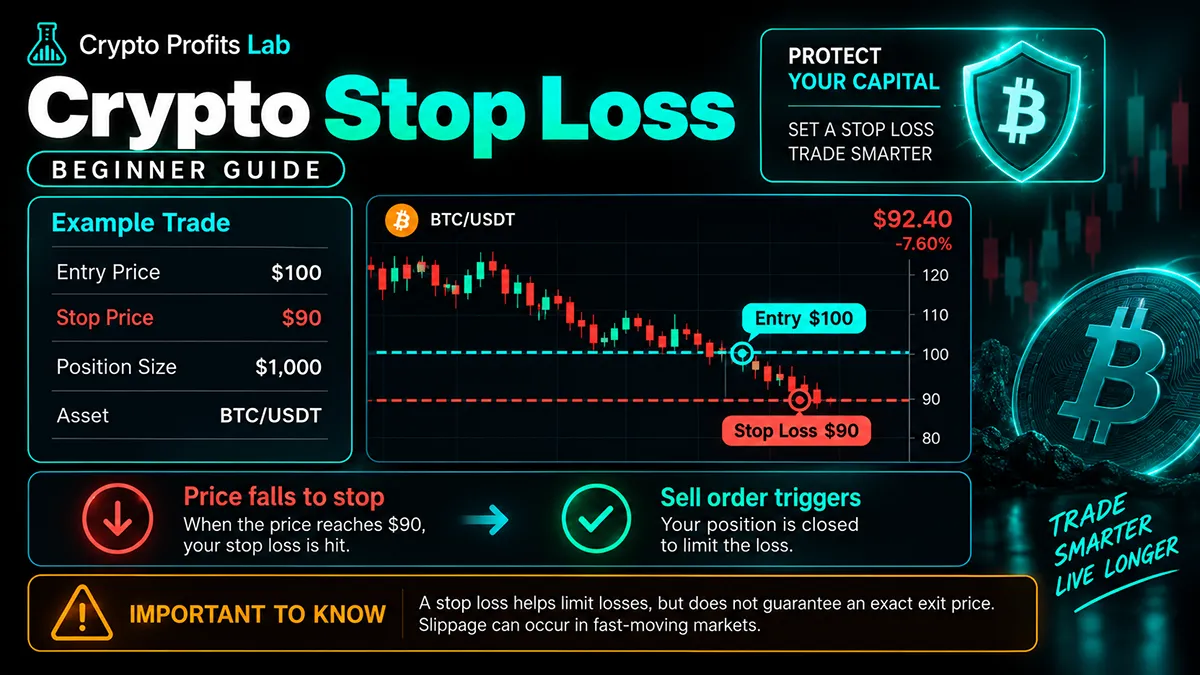
For example, imagine you buy a cryptocurrency at $100 and decide you do not want to remain in the trade if the price falls to $90.
You could set a sell stop at $90.
If the market reaches the trigger level, the exchange attempts to execute the order according to the type of stop order you selected.
A stop loss can help limit downside risk, but it does not guarantee that your exact stop price will be the final execution price.
That distinction is extremely important.
Key Takeaways
- A crypto stop loss helps create a predefined exit point before a trade moves too far against you.
- The stop price is generally the price that activates the order, not necessarily the exact price at which the trade executes.
- A stop-market order prioritizes getting out of the position after the trigger is reached.
- A stop-limit order gives you more control over price but may fail to execute.
- Crypto volatility and low liquidity can cause slippage after a stop is triggered.
- Stops placed too close to the current price can be triggered by normal market movement.
- A stop loss should be part of a larger risk-management plan, not treated as a guarantee against losses.
- Beginners should understand spot trading in crypto and basic order types before using advanced stop features.
Crypto Stop Loss Beginner Facts
| Beginner Question | Simple Answer |
|---|---|
| What does a stop loss do? | Triggers an order when the price reaches a chosen level |
| What is the stop price? | The price that activates the order |
| Is the stop price guaranteed? | No |
| What is a stop-market order? | A stop that becomes a market order after triggering |
| What is a stop-limit order? | A stop that becomes a limit order after triggering |
| Can a stop fail to fill? | Yes, especially a stop-limit order |
| Can the fill price be worse than the stop price? | Yes |
| Does a stop eliminate trading risk? | No |
| Can beginners use stop orders? | Yes, after understanding how they work |
| Do all exchanges use the same rules? | No |
How Does a Crypto Stop Loss Work?
The easiest way to understand a crypto stop loss is to separate it into two stages.
First, you choose a trigger.
Second, the exchange follows the instruction attached to that trigger.
Suppose you buy XRP at $3.00 and decide you want to exit if the price falls to $2.70.
You might set a stop price at $2.70.
Nothing happens while XRP stays above that level.
If XRP reaches the trigger price according to the exchange’s rules, the stop activates.
What happens next depends on whether you selected a stop-market order, stop-limit order, or another variation offered by the platform.
That is why simply seeing the words “stop loss” on a trading screen is not enough.
You need to understand what type of order will be created after the stop is triggered.
Step-by-Step: How to Use a Crypto Stop Loss
The exact buttons and terminology vary by exchange, but the general process usually works like this.
Step 1: Decide Your Entry Before Setting the Stop
Before choosing a stop price, know approximately where you are entering the trade.
For example, suppose you plan to buy an asset near $50.
Your stop should make sense relative to that entry.
Setting a stop without knowing the entry price makes it difficult to calculate how much money is actually at risk.
If you are still learning how orders are executed, review our guide to market order vs limit order in crypto.
Step 2: Decide How Much You Are Willing to Lose
A crypto stop loss works best when it is connected to a predefined risk amount.
Suppose you invest $500.
If you decide that a 10% price decline is your maximum acceptable loss for that particular trade, the approximate dollar risk would be $50 before fees and slippage.
That does not automatically mean 10% is the correct stop level.
It simply demonstrates that stop placement and position size are connected.
A trader using a larger position may risk much more money, even if the percentage stop is identical.
Step 3: Choose the Trigger Price
Next, choose the price that will activate the order.
If you buy at $100 and set the trigger at $90, the stop is 10% below your entry.
Some traders choose stop levels using:
- A fixed percentage
- Support levels
- Recent price lows
- Volatility
- A predefined dollar loss
- A broader trading plan
Beginners should avoid assuming that a single percentage works for every cryptocurrency.
A 3% move may be significant for one market and completely normal for another.
Step 4: Choose Stop-Market or Stop-Limit
This decision is critical.
A stop-market order generally becomes a market order when the stop price is reached.
A stop-limit order generally becomes a limit order.
These two choices solve different problems.
Stop-market prioritizes execution.
Stop-limit prioritizes price control.
Neither is perfect.
We will look at the difference more closely below.
Step 5: Enter the Amount
Choose how much of the cryptocurrency you want the order to cover.
If you own 1,000 XRP but place a stop order for only 500 XRP, only the amount specified in the order may be sold when the stop activates.
Always double-check the quantity.
A crypto stop loss cannot protect an amount that is not included in the order.
Step 6: Review the Order Carefully
Before submitting, confirm:
- The correct cryptocurrency
- The correct trading pair
- Buy or sell direction
- Stop price
- Limit price, if applicable
- Quantity
- Order type
- Estimated fees
- Whether the order applies to the intended position
This final review can prevent simple but expensive mistakes.
Step 7: Monitor the Order
Do not assume that placing a stop means you never need to look at the trade again.
Check whether the stop remains active.
If you manually sell the cryptocurrency, review whether the old stop order still needs to be canceled.
Platforms handle linked and independent orders differently.
Understanding your exchange’s specific behavior matters.
Stop-Market vs. Stop-Limit Orders
The biggest decision for many beginners is whether to use a stop-market or stop-limit order.
Stop-Market Order
A stop-market order activates when the trigger price is reached and then attempts to execute at the best available market prices.
Suppose Bitcoin is trading at $70,000 and you set a stop at $67,000.
If Bitcoin reaches $67,000, the stop activates.
The resulting market order might execute close to $67,000.
But if the market is dropping rapidly, it could execute lower.
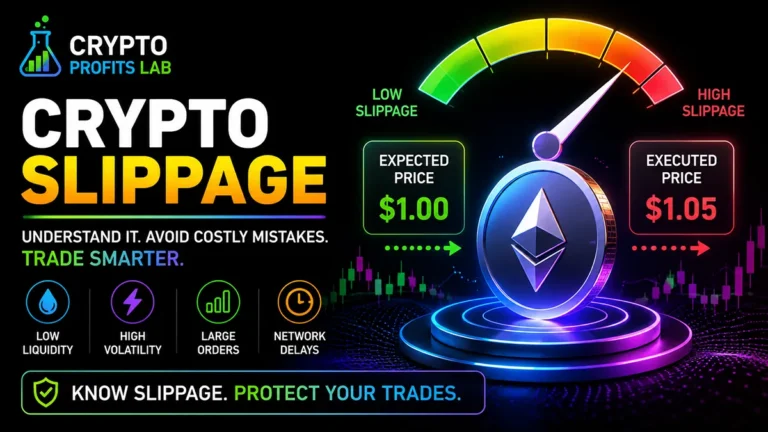
This is related to crypto slippage, where the actual execution price differs from the expected price.
The main advantage of a stop-market order is that execution is generally prioritized after the trigger.
The disadvantage is price uncertainty.
Stop-Limit Order
A stop-limit order uses two important prices:
- Stop price
- Limit price
The stop price activates the order.
The limit price controls the worst price you are willing to accept according to the order instructions.
Suppose you set:
Stop price: $67,000
Limit price: $66,800
If the stop activates, the exchange places a limit order around the price conditions you specified.
The advantage is greater price control.
The disadvantage is that the order might not fill.
If Bitcoin drops directly from $67,000 to $66,000 and never trades at an acceptable price for your limit order, you could remain in the position while the market keeps falling.
That trade-off is central to understanding a crypto stop loss.
Stop-Market vs. Stop-Limit at a Glance
| Feature | Stop-Market | Stop-Limit |
|---|---|---|
| Trigger price required | Yes | Yes |
| Becomes | Market order | Limit order |
| Priority | Execution | Price control |
| Exact price guaranteed | No | Limit controls acceptable price |
| Can fill worse than stop price | Yes | Limited by order conditions |
| Can fail to execute | Less likely, but possible issues exist | Yes |
| Main beginner concern | Slippage | No fill |
Neither choice is automatically better.
The right order depends on the market, liquidity, volatility, and your reason for leaving the trade.
Why a Stop Price Does Not Guarantee Your Exit Price
One of the biggest beginner misunderstandings is believing that a stop price guarantees the exact selling price.
It does not.
With a typical stop-market setup, the stop price is simply the trigger that releases a market order.
Imagine your crypto stop loss is set at $100.
During a sudden market decline, available buyers near $100 may disappear quickly.
Your order could trigger at $100 but receive fills at $99.50, $98.75, or another available price.
This becomes more important when markets are moving rapidly or have limited liquidity.
The SEC’s Investor.gov bulletin explains the same fundamental order behavior in traditional securities markets: a stop price is a trigger and the final market-order execution price can differ significantly during fast-moving conditions.
Investor.gov stop, stop-limit and trailing stop bulletin
Crypto markets can be particularly volatile, which makes this concept worth understanding before relying on stop orders.
How Liquidity Affects Stop-Loss Execution
Crypto liquidity describes how easily an asset can be bought or sold without causing a large change in price.
A highly liquid trading pair normally has many buyers and sellers.
That can make it easier for a triggered order to execute near the expected area.
An illiquid market can have gaps between available orders.
Suppose your stop activates and you need to sell 10,000 tokens.
If only a small number of buyers are available near your trigger price, portions of the order may execute progressively lower.
This is why looking only at the last traded price can be misleading.
The crypto order book provides a clearer view of current bids and asks.
How the Spread Affects a Crypto Stop Loss
The crypto spread is the difference between the best current bid and ask prices.
A highly liquid market may have a very narrow spread.
A smaller or less active token may have a much wider one.
A wide spread can affect the practical result of a crypto stop loss because the price available to someone selling may already be meaningfully below the last displayed trade.
This is another reason stop placement should consider market quality, not just a percentage on a chart.
Why Crypto Volatility Matters
Crypto volatility refers to how dramatically cryptocurrency prices can change over time.
Crypto can experience sharp moves in both directions.
That creates a challenge when setting stops.
If your stop is extremely close to your entry, normal volatility may trigger it even though the broader trend has not changed.
If the stop is extremely far away, the potential loss could become much larger than you intended.
A crypto stop loss therefore requires balance.
The goal is not to find a magical price that guarantees success.
The goal is to decide in advance where the original reason for staying in the trade no longer makes sense or where the financial risk becomes unacceptable.
Stop Loss and Position Size Work Together
Suppose two traders both use a stop 10% below their entry.
Trader A puts $100 into the trade.
Trader B puts $10,000 into the trade.
Their percentage stop is identical.
Their dollar risk is very different.
Ignoring fees and slippage:
- Trader A risks roughly $10.
- Trader B risks roughly $1,000.
This is why a crypto stop loss should never be considered separately from position size.
A carefully chosen stop cannot compensate for putting too much money into one trade.
Beginners can learn more about spreading exposure in our crypto portfolio for beginners guide.
Crypto Stop Loss and Leverage
Stops become even more important to understand when leverage is involved.
Crypto leverage increases market exposure relative to the amount of capital supporting a position.
That means relatively small market movements can produce much larger gains or losses.
A leveraged trade may also face crypto liquidation if margin falls below the platform’s requirements.
A stop order and liquidation are not the same thing.
A stop is an instruction created by the trader.
Liquidation is generally a forced closure performed by the platform because the position can no longer meet margin requirements.
Waiting for liquidation instead of planning risk can lead to substantially larger losses.
What Is a Trailing Stop?
A trailing stop is a variation that can move as the market moves in your favor.
Suppose a cryptocurrency trades at $100 and you use a trailing stop set 10% below the market.
If the asset rises to $120, the trailing stop can move upward along with it according to the platform’s rules.
If the market later reverses, the stop remains at its adjusted level rather than moving downward again.
This can help traders attempt to protect some gains while allowing a profitable position room to continue rising.
However, trailing stops can still be triggered by normal volatility.
They are not guaranteed-profit tools.
Not every crypto exchange offers the same trailing-stop features, so always check the platform’s documentation.
What Is a Take-Profit Order?
A take-profit order works on the other side of the trade.
Instead of trying to limit a loss, it attempts to exit when the market reaches a predetermined profit target.
For example:
Entry: $100
Stop loss: $90
Take profit: $120
In this simplified example, the trader has defined both a downside exit and an upside target before entering.
Some exchanges allow these orders to be connected so that when one executes, the other is canceled.
You may see terms such as:
- Take Profit/Stop Loss
- TP/SL
- Bracket order
- OCO, meaning one-cancels-the-other
Features vary by exchange.
Do not assume the same order behavior exists everywhere.
7 Smart Rules for Using a Crypto Stop Loss
1. Decide Your Risk Before Entering
Do not wait until the price starts falling to decide how much you can tolerate losing.
Emotions become stronger when money is already at risk.
Choose your exit plan before entering whenever possible.
2. Do Not Place Stops Randomly
A stop should have a reason.
Avoid choosing 5%, 10%, or another number simply because someone online said that percentage always works.
Different cryptocurrencies have different levels of volatility.
3. Understand the Order Type
Know whether your stop becomes a market order or limit order after triggering.
This single detail can completely change the outcome.
4. Consider Liquidity
Thin markets can produce wider spreads and more slippage.
A crypto stop loss on a low-liquidity token may behave very differently from the same type of order on a major trading pair.
5. Keep Position Size Reasonable
A stop does not make an oversized position safe.
Calculate how much money you would lose if the stop were triggered.
6. Do Not Constantly Move the Stop Lower
Suppose you originally decided to exit at $90.
Price falls to $92.
You become nervous and move the stop to $85.
Then $80.
Then $75.
At that point, the stop is no longer enforcing the original plan.
You are repeatedly increasing the acceptable loss because you do not want to admit the trade moved against you.
7. Remember That Stops Are Not Guarantees
A crypto stop loss is a risk-management tool.
It cannot guarantee:
- A specific execution price
- A profitable trade
- Protection during every market event
- Protection from exchange outages
- Protection from extreme gaps
- Protection from poor position sizing
Use stops as part of a plan, not as a substitute for one.
Common Beginner Mistakes
Setting the Stop Too Close
Crypto markets frequently move several percentage points without changing the broader trend.
An extremely tight stop can be triggered by normal price noise.
Setting the Stop Too Far Away
The opposite mistake is giving the trade so much room that the loss becomes financially painful.
A stop should reflect both market conditions and what you can afford to lose.
Forgetting About Slippage
A trigger at $100 does not necessarily mean a fill at $100.
Fast-moving markets can produce worse prices.
Using Stop-Limit Without Understanding No-Fill Risk
Beginners sometimes choose stop-limit because they want price certainty.
But a limit order that does not execute leaves you exposed to further losses.
Trading Because of FOMO
Crypto FOMO can cause traders to enter after a sharp price increase without planning where they will exit.
A stop created after panic begins is often less disciplined than one planned beforehand.
Ignoring Fees
Each exit may involve trading costs.
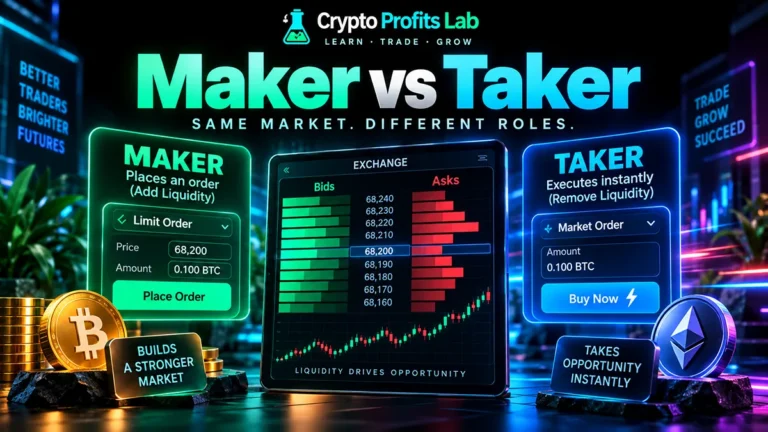
Depending on the platform and order type, maker vs taker fees in crypto can affect the final result.
Assuming a Stop Makes a Trade Safe
No order type can make a volatile asset safe.
A bad investment can still lose money.
Safety and Risk Considerations
A crypto stop loss deals with market risk, but beginners must also think about account and platform risk.
Protect your exchange account with:
- A strong unique password
- Crypto two-factor authentication
- Official apps and websites
- Careful verification of emails and links
- Withdrawal protections when available
Be cautious around people claiming that a particular stop strategy guarantees profits.
Guaranteed-profit claims are a major warning sign.
A legitimate risk-management approach recognizes that losses are always possible.
Also remember that cryptocurrency trades can have tax consequences. If you sell cryptocurrency when a stop triggers, that transaction may create a taxable event depending on your location and circumstances.
Our crypto taxes for beginners guide explains the basic concepts.
Should Beginners Use Stop-Loss Orders?
Beginners can benefit from understanding stop orders even if they are not active traders.
The concept teaches an important lesson: decide how much risk you are willing to accept before emotions take over.
However, a complete beginner should first understand:
- What cryptocurrency is
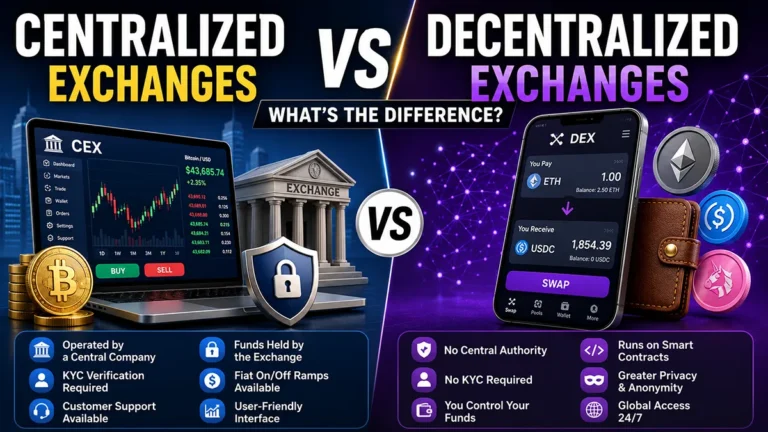
- How a crypto exchange works
- How spot trading in crypto works
- Market and limit orders
- Trading pairs
- Liquidity
- Volatility
- Slippage
- Trading fees
Once those concepts are clear, a crypto stop loss becomes much easier to understand.
A Simple Beginner Example
Imagine you buy $500 worth of a cryptocurrency at $10 per token.
You receive 50 tokens before fees.
You decide before entering that you want to exit if the price reaches $9.
Your planned decline is approximately 10%.
If your stop activates near $9 and the entire position sells around that level, the approximate loss would be $50 before trading fees and slippage.
Now imagine the market falls extremely quickly.
Your stop activates at $9, but the best available buyers are at $8.85.
The market order may execute around that lower price.
This example shows why a crypto stop loss can help control risk without guaranteeing the precise final result.
When a Stop Loss May Not Work as Expected
Several situations can produce unexpected outcomes.
Rapid Price Gaps
The market may move past your trigger faster than orders can fill near that price.
Low Liquidity
There may not be enough buyers available near the stop level.
Exchange Outages
A platform may experience technical problems during extreme volatility.
Stop-Limit No Fill
The limit price may prevent execution if the market moves too far too quickly.
Incorrect Order Settings
A user can accidentally choose the wrong side, amount, trigger price, or trading pair.
These possibilities reinforce why a crypto stop loss should be viewed as one layer of risk control rather than absolute protection.
Final Thoughts
A crypto stop loss is one of the most useful order concepts for beginner traders to understand.
Its purpose is simple: define a price where an automated instruction attempts to reduce or close exposure when a trade moves against you.
But the details matter.
A stop price is a trigger, not necessarily the final execution price.
A stop-market order may experience slippage.
A stop-limit order may not fill.
Volatility can trigger stops quickly.
Low liquidity can make execution worse.
And an oversized position can still create a painful loss even when the stop works exactly as designed.
The strongest approach is to think about risk before entering a trade.
Choose a reasonable position size. Understand the market. Know the order type. Review the stop conditions. Protect your account. Never assume an automated order removes uncertainty.
Crypto Profits Lab is built around making concepts like these easier to understand without unnecessary complexity.
The goal is not to teach beginners how to trade more aggressively.
It is to help them understand what the tools on the screen actually do before putting money at risk.
Frequently Asked Questions
What is a crypto stop loss?
A crypto stop loss is an order that activates when a cryptocurrency reaches a predetermined trigger price. Traders commonly use it to attempt to limit losses or protect gains. Depending on the order type, the trigger may create a market order or limit order. The stop price itself does not necessarily guarantee the exact price at which the cryptocurrency will ultimately be sold.
Does a stop loss guarantee my selling price?
No. A stop price normally determines when an order is activated, not the exact execution price. A stop-market order can fill at a worse price if the cryptocurrency is moving quickly or there is limited liquidity. A stop-limit order offers more price control, but it may fail to execute if the market moves beyond the acceptable limit price before buyers are available.
What is the difference between stop-market and stop-limit?
A stop-market order becomes a market order after the trigger price is reached and generally prioritizes execution. A stop-limit order becomes a limit order and prioritizes price control. Stop-market orders can experience slippage, while stop-limit orders can remain unfilled. Neither option eliminates risk, so beginners should understand the trade-off before selecting an order type.
What percentage should I use for a crypto stop loss?
There is no single stop-loss percentage that works for every cryptocurrency or trading strategy. A suitable level depends on the asset’s volatility, your entry price, position size, market structure, and the amount you are willing to lose. A stop placed too close may trigger during normal volatility, while one placed too far away may expose you to a larger loss than intended.
Can a stop loss be triggered and then the price recover?
Yes. Cryptocurrency prices can briefly fall to a trigger level, activate a stop order, and then recover shortly afterward. This is sometimes described informally as being “stopped out.” It does not necessarily mean the order failed. It means the stop behaved according to its instructions while the market subsequently reversed. This is one reason stop placement should consider normal volatility.
Does a crypto stop loss prevent liquidation?
Not necessarily. A stop order and liquidation are different mechanisms. A trader may place a stop in an attempt to close a leveraged position before liquidation occurs, but fast price movements, slippage, or order failures can interfere. Liquidation is initiated by the trading platform when margin requirements are no longer met, while a stop order is an instruction placed by the trader.
Can I use a stop loss in spot trading?
Many crypto exchanges offer stop or conditional order features for spot markets, although availability and terminology vary by platform and trading pair. In spot trading, a sell stop can be used to attempt to exit cryptocurrency you already own if the market falls to a chosen trigger level. Always confirm how the specific exchange handles stop activation, execution, fees, and order cancellation.
Is a crypto stop loss good for beginners?
Understanding stop-loss orders is valuable for beginners because it teaches predefined risk management. However, beginners should first understand market orders, limit orders, liquidity, volatility, spreads, slippage, and position sizing. A stop loss should not be treated as automatic protection or a guarantee against losses. It works best as one part of a broader trading plan.