Is Crypto Passive Income Safe? A Beginner’s Guide
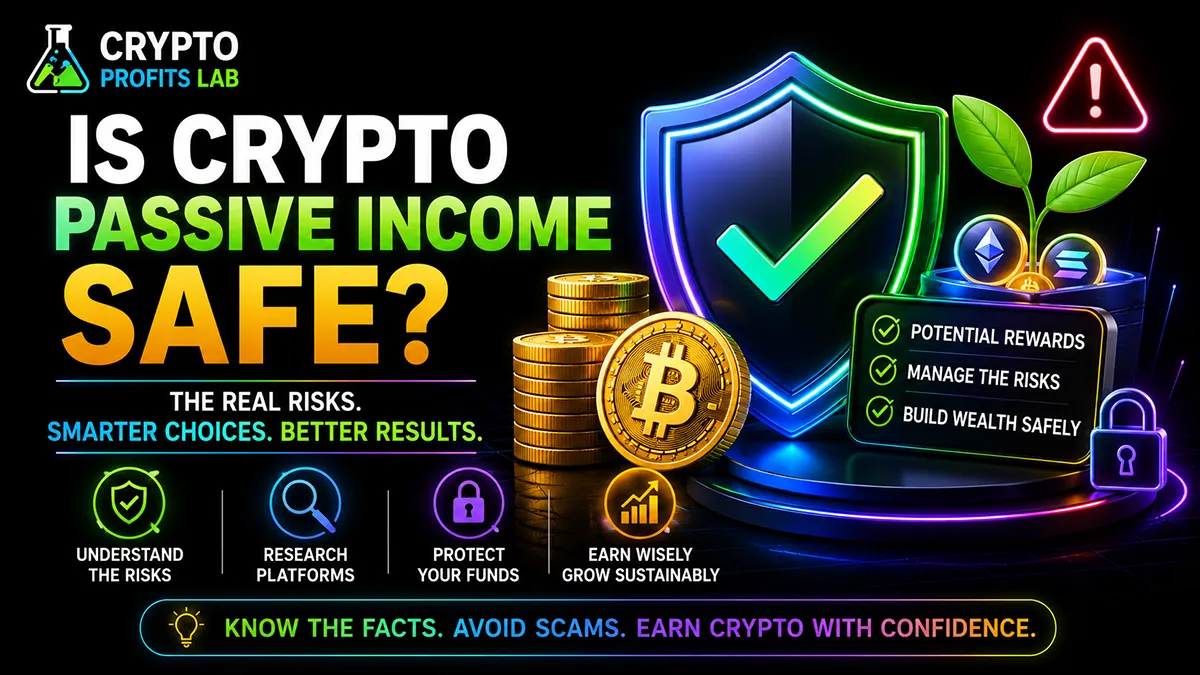
Is Crypto Passive Income Safe? That is one of the smartest questions a beginner can ask before chasing rewards.
Crypto passive income sounds exciting. You may see offers for staking rewards, lending rewards, stablecoin yield, DeFi pools, crypto cards, airdrops, and “earn while you sleep” platforms.
But crypto passive income is not the same as a savings account, paycheck, or guaranteed investment.
Some crypto reward methods can be useful when handled carefully. Others can be risky, confusing, or even scams. The hard part for beginners is that many risky offers are advertised using simple words like “passive,” “safe,” “guaranteed,” or “daily rewards.”
This guide explains the real answer to the question “Is Crypto Passive Income Safe?” in plain English. You will learn what crypto passive income means, how common reward methods work, what can go wrong, and how beginners can evaluate opportunities more carefully.
Quick Answer: Is Crypto Passive Income Safe?
Is Crypto Passive Income Safe? Not always.
Crypto passive income can be safer or riskier depending on the method, platform, asset, lockup rules, fees, and your personal security habits. Staking a well-known proof-of-stake asset through a reputable platform may be easier to understand than using a complicated DeFi yield farm, but neither option is risk-free.
The biggest beginner mistake is thinking “passive income” means guaranteed income.
Crypto rewards can disappear if token prices fall, platforms fail, smart contracts break, stablecoins lose their peg, or scammers trick users into sending funds. Beginners should treat crypto passive income as a risk-based reward strategy, not free money.
Key Takeaways
- Crypto passive income is not guaranteed income.
- Different methods have different risk levels.
- Staking is often easier for beginners than complex DeFi strategies.
- Yield farming, lending, and liquidity pools can be much riskier.
- High reward rates usually come with higher risk.
- Token price drops can quickly erase rewards.
- Lockups can stop you from selling during market crashes.
- Scams often use passive income language to attract beginners.
- Wallet safety and platform research are essential.
- Beginners should start with education before depositing money.
Crypto Passive Income Safety Facts Table
| Topic | Beginner-Friendly Explanation |
|---|---|
| Main question | Is Crypto Passive Income Safe? |
| Simple answer | Sometimes, but never risk-free |
| Lower-complexity method | Staking through a reputable platform |
| Higher-complexity method | Yield farming or DeFi liquidity pools |
| Biggest risk | Losing money while chasing rewards |
| Common scam phrase | Guaranteed daily profit |
| Main safety habit | Understand where rewards come from |
| Important risk | Token prices can fall more than rewards earned |
| Best beginner approach | Learn first, start small, avoid hype |
| Guaranteed income? | No |
What Is Crypto Passive Income?
Crypto passive income usually means earning crypto rewards without actively trading every day.
In simple terms, you put crypto into a method or platform that may generate rewards over time.
Common examples include:
- Staking crypto
- Lending crypto
- Holding eligible assets on an exchange
- Using DeFi protocols
- Providing liquidity
- Earning stablecoin rewards
- Using crypto card rewards
- Receiving learn-and-earn rewards
- Participating in certain airdrops
If you want a broader overview, read Crypto Rewards for Beginners.
The phrase “passive income” can be misleading. Some methods are more hands-off than others, but they still require research, monitoring, tax records, wallet safety, and risk management.
That is why Is Crypto Passive Income Safe? is not a yes-or-no question. It depends on what you are doing and how much risk you understand.
Why Beginners Are Attracted to Crypto Passive Income
Crypto passive income is attractive because it sounds simple.
Many beginners like the idea of earning rewards without trading charts, timing the market, or constantly watching prices. If someone already holds crypto, earning extra rewards can feel like a bonus.
The idea is understandable.
If you plan to hold a crypto asset long term, earning rewards on that asset may seem better than doing nothing. However, beginners must be careful. Rewards can make a risky asset look safer than it really is.
A 10% reward does little to offset a 50% drop in the asset.
Crypto is also known for volatility. Prices can rise and fall quickly. If you are not familiar with that risk, read Crypto Volatility.
The safer mindset is this: rewards are only one part of the decision. The asset, platform, fees, lockups, and risks matter more than the advertised percentage.
Is Crypto Passive Income Safe? Step-by-Step Evaluation
Before using any crypto passive income method, follow this simple process.
Step 1: Identify the method
First, figure out what kind of passive income offer it is.
Is it staking? Lending? Stablecoin rewards? Yield farming? A crypto card? A promotional bonus? An airdrop?
Each method has different risks.
Do not join anything until you can explain the method in one simple sentence.
Step 2: Understand where the rewards come from
Rewards must come from somewhere.
They may come from blockchain network rewards, lending interest, trading fees, platform promotions, token incentives, or new token emissions.
If you cannot understand where the reward comes from, be careful.
This is one of the most important parts of answering the question “Is Crypto Passive Income Safe?” for any opportunity.
Step 3: Check the asset
Ask what crypto you are risking and what crypto you are earning.
A reward paid in a weak or unknown token may lose value quickly. A high yield on a risky asset can be worse than a lower yield on an asset you actually understand.
Read Crypto Token if you are still learning how tokens work.
Step 4: Review the platform
Ask who controls the platform.
Is it a major exchange? A decentralized protocol? A new app? An unknown website? A link sent by a stranger?
A platform can fail, freeze withdrawals, change rules, or disappear.
Step 5: Check lockups and withdrawals
Some programs allow quick withdrawals. Others lock funds for days, weeks, or months.
Lockups can be risky because you may not be able to sell if the market drops.
Step 6: Calculate fees
Fees can reduce rewards.
Crypto fees may include trading fees, network fees, withdrawal fees, claim fees, platform fees, and gas fees.
Read What Are Crypto Gas Fees? before using DeFi apps.
Step 7: Decide if the risk is worth it
Finally, ask whether the reward is worth the risk.
A good beginner rule is simple: do not use a passive income strategy unless you understand how you could lose money.
Common Types of Crypto Passive Income
There are several ways people try to earn crypto rewards. Some are easier to understand than others.
Staking
Staking is one of the most common methods for passive crypto income.
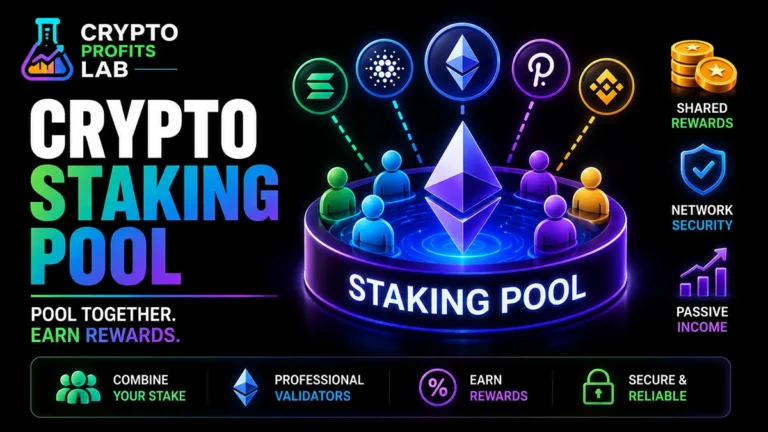
Staking usually means locking or delegating crypto to help support a proof-of-stake blockchain. In return, users may earn rewards.
If you are new to staking, read Crypto Staking and What Is Proof of Stake?.
Staking can be more beginner-friendly than many DeFi strategies, but it still has risk. The token can fall in value. The reward rate can change. Some staking may involve lockups. Some validators may perform poorly.
Is Crypto Passive Income Safe? With staking, the answer is: it can be easier to understand, but it is not risk-free.
Lending
Crypto lending means allowing a platform or protocol to lend your crypto in exchange for possible rewards.
This can sound simple, but lending can be risky. Borrowers can default. Platforms can fail. Liquidity can dry up. Collateral can fall in value.
Before considering lending, read What Is Crypto Lending?.
Beginners should be cautious with lending products that offer unusually high returns. High rewards often mean extra risk.
Yield Farming
Yield farming is a DeFi strategy in which users earn rewards by using liquidity pools, lending protocols, or other decentralized apps.
It can involve multiple tokens, wallet approvals, smart contracts, and changing reward rates.
Read What Is Crypto Yield Farming? before trying any yield farm.
Yield farming can be exciting, but it is usually not the best first step for complete beginners. It requires more knowledge than simple staking.
Stablecoin Rewards
Stablecoins are crypto assets designed to track the value of another asset, often the U.S. dollar.
Some platforms offer rewards for holding or lending stablecoins. This can sound safer because stablecoins are designed to stay near $1.
But stablecoins are not risk-free. A stablecoin can lose its peg. A platform can fail. Lending can go wrong. Regulations can change.
Read What Are Stablecoins? before assuming stablecoin rewards are safe.
DeFi Liquidity Pools
A liquidity pool is a group of crypto assets used to help people trade on a decentralized exchange.
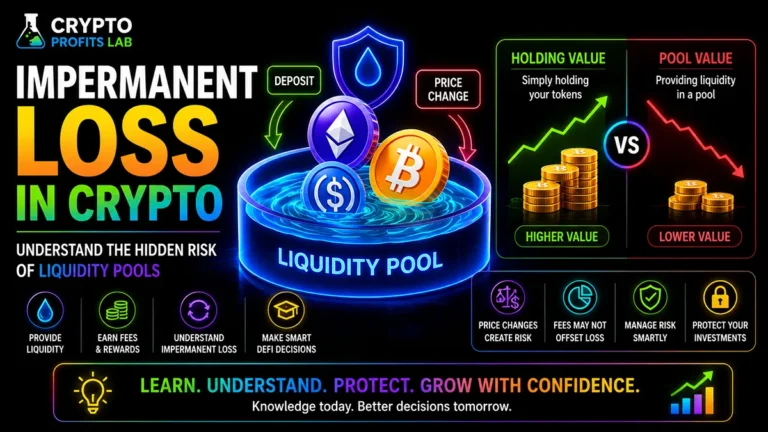
Users who provide liquidity may earn a share of trading fees or token rewards. But they may also face impermanent loss, smart contract risk, and token volatility.
Learn the basics with Crypto Liquidity and What Is a DEX?.
Liquidity pools are powerful tools, but they are not beginner-proof.
Crypto Card Rewards
Some crypto cards offer rewards when you spend money.
These can feel similar to regular cash-back rewards, but the reward may be paid in crypto. That means the value can change after you receive it.
A crypto card reward is usually less complicated than yield farming, but you still need to check fees, reward rules, and tax effects.
Airdrops
Airdrops are token distributions that projects may use to reward users or promote a network.
Some airdrops are legitimate. Many fake airdrop links are scams.
If an airdrop asks for your seed phrase, asks you to send crypto first, or pushes you to connect your wallet to a suspicious site, avoid it.
Read Crypto Airdrop if you want to understand this topic before participating.
Is Crypto Passive Income Safe Compared to a Bank Account?
Crypto passive income is not the same as a bank account.
A normal bank savings account may have deposit insurance depending on the country and account type. Crypto platforms usually do not offer the same protections.
Crypto rewards can also depend on volatile assets, blockchain rules, private keys, platforms, DeFi protocols, and market conditions.
Here is a simple comparison:
| Feature | Bank Savings Account | Crypto Passive Income |
|---|---|---|
| Value stability | Usually stable in local currency | Can change quickly |
| Insurance | May have government-backed insurance | Often no comparable protection |
| Reward source | Bank interest model | Staking, lending, DeFi, incentives |
| Risk level | Usually lower | Varies from moderate to very high |
| Complexity | Usually simple | Can be complex |
| Scams | Possible but less technical | Common and often technical |
| Private key risk | No | Yes, with self-custody |
This comparison does not mean crypto rewards are always bad. It means beginners should not treat them like insured savings.
APR, APY, and Passive Income Confusion
Crypto passive income platforms often advertise APR or APY.
APR usually means annual percentage rate. APY usually includes compounding.
Compounding means rewards may earn more rewards over time.
To understand the difference, read APR vs APY in Crypto.
Beginners should know that these numbers are often estimates. A platform showing 20% APY is not promising that you will safely earn 20% profit.
Actual results may be affected by:
- Token price changes
- Fees
- Lockups
- Changing reward rates
- Platform risk
- Taxes
- Smart contract issues
A high APY should make you ask more questions, not fewer.
Staking vs Yield Farming for Safety
Staking and yield farming are two popular passive income methods, but they are not the same.
Staking is usually easier to understand because it supports proof-of-stake networks.
Yield farming is usually more complex because it uses DeFi strategies, liquidity pools, and smart contracts.
Read Staking vs Yield Farming for a full comparison.
For many beginners, staking may be a better starting point than yield farming. But staking still requires research.
Is Crypto Passive Income Safe? If you are choosing between staking and yield farming, staking is often simpler, while yield farming usually carries more moving parts and more ways to make mistakes.
Common Beginner Mistakes With Crypto Passive Income
Crypto passive income mistakes often occur because beginners focus on rewards rather than risk.
Mistake 1: Chasing the highest APY
The highest number is not always the best opportunity.
A very high reward rate may come from a risky token, an unstable platform, or an unsustainable incentive program.
Mistake 2: Thinking rewards cancel out price drops
If a token falls sharply, rewards may not protect you.
For example, earning 8% does not help much if the asset drops 40%.
Mistake 3: Ignoring lockup periods
Some earning products lock your crypto.
If the market falls, you may be unable to sell until the lockup ends.
Mistake 4: Trusting unknown links
Scammers often create fake staking sites, fake airdrops, and fake DeFi apps.
Always use official links and double-check URLs.
Mistake 5: Sharing a seed phrase
Your seed phrase is the backup phrase that controls your wallet.
No legitimate reward program needs your seed phrase.
Read Crypto Seed Phrase before using self-custody wallets.
Mistake 6: Not understanding wallet approvals
DeFi apps often ask for wallet approvals.
A bad approval can put funds at risk. Beginners should avoid approving unknown contracts.
Mistake 7: Forgetting taxes
Crypto rewards may create taxable events.
Read Crypto Taxes for Beginners and keep records from the beginning.
Safety and Risk Section
Is Crypto Passive Income Safe? It depends heavily on your safety habits.
Scammers often use passive income language because it sounds easy. They may promise guaranteed returns, daily payouts, secret staking pools, or special access to a limited-time opportunity.
The FTC warns that scammers often promise big payouts or guaranteed returns, and that nobody can guarantee those profits in crypto. Read the official FTC cryptocurrency scam guidance before trusting any crypto-earning offer.
Watch for these red flags:
- Guaranteed daily returns
- No-risk crypto income
- Double your crypto offers
- Secret staking pools
- Airdrops that ask for a seed phrase
- Unknown wallet connection links
- Pressure to act now
- Private messages from strangers
- Celebrity endorsement claims
- Platforms with no clear company information
- Reward rates that seem too good to be true
Use these safety habits:
- Start with small amounts.
- Use official websites only.
- Turn on two-factor authentication.
- Do not share your seed phrase.
- Avoid unknown wallet approvals.
- Research the platform.
- Understand withdrawal rules.
- Keep tax records.
- Avoid unrealistic yields.
- Use a separate wallet for testing DeFi when appropriate.
- Consider a hardware wallet for long-term storage.
For more protection, read Crypto Safety Tips and Crypto Scams to Avoid.
If you plan to hold larger amounts, learn about Hardware Wallet security.
Beginner Checklist Before Trying Crypto Passive Income
Before using any passive income method, ask these questions:
- Is Crypto Passive Income Safe? in this specific situation?
- Do I understand how the reward is created?
- What asset am I risking?
- What asset am I earning?
- Is the reward rate fixed or variable?
- Is there a lockup?
- Can I withdraw anytime?
- What fees apply?
- Who controls the funds?
- Is there smart contract risk?
- Is the platform reputable?
- Could the token price fall more than the rewards earned?
- Are taxes involved?
- Is the offer using pressure or guarantees?
- Would I hold this asset without the reward?
That last question is powerful.
If you would not hold the asset without the reward, the reward may be distracting you from the real risk.
A Simple Example
Imagine you buy $1,000 worth of a token because it offers 12% yearly staking rewards.
If everything stayed the same, 12% sounds attractive.
But crypto does not stay the same.
If the token falls 50%, your $1,000 becomes $500 before considering rewards. Even if you earn some extra tokens, you may still be far below your starting value.
Now imagine the platform also has a lockup period. You may not be able to sell while the price is falling.
This example shows why the answer to Is Crypto Passive Income Safe? must include market risk.
The reward percentage alone does not tell the full story.
A Safer Beginner Approach
A safer approach for beginners is slow and careful.
Start by learning, not depositing. Understand crypto wallets, exchanges, staking, DeFi, taxes, and scams before chasing rewards.
A beginner path could look like this:
- Learn what crypto rewards are.
- Understand staking basics.
- Learn APR vs APY.
- Study wallet safety.
- Understand scams.
- Compare staking and yield farming.
- Research one platform carefully.
- Start small if you decide to test.
- Track every reward.
- Recheck your risk regularly.
Crypto passive income should be treated as an advanced part of your crypto education, not a shortcut.
Who Should Avoid Crypto Passive Income?
Some people should avoid crypto passive income, at least for now.
You may want to wait if:
- You do not understand crypto wallets.
- You have no emergency savings.
- You are using borrowed money.
- You cannot afford to lose the funds.
- You feel pressured by social media.
- You do not understand the platform.
- You are chasing a high APY.
- You do not know how withdrawals work.
- You have not learned about scams.
- You are unwilling to track taxes.
There is no shame in waiting.
One of the smartest choices for beginners is to say no to something you do not understand.
Final Thoughts
Is Crypto Passive Income Safe? Sometimes it can be reasonable, but it is never risk-free.
Crypto passive income can include staking, lending, stablecoin rewards, DeFi, liquidity pools, airdrops, and card rewards. Some methods are simple enough for beginners to study. Others are complex and risky.
The biggest mistake is assuming rewards are free money.
Every reward has a source. Every platform has risk. Every token can move in price. Every wallet action matters.
Beginners should focus on safety, education, and clear thinking. Do not chase the highest APY. Do not trust guarantees. Do not connect your wallet to unknown sites. Do not risk money you cannot afford to lose.
Crypto Profits Lab is built to make crypto easier and safer for beginners. The best answer to Is Crypto Passive Income Safe? is not a blind yes or no. The best answer is: only when you understand the method, accept the risk, protect your wallet, and avoid offers that sound too good to be true.
Is Crypto Passive Income Safe? FAQ
Is Crypto Passive Income Safe?
Is Crypto Passive Income Safe? It depends on the method, asset, platform, and your security habits. Some staking options may be easier to understand, while lending, DeFi, and yield farming can be more complex. No crypto passive income method is risk-free. Beginners should research the reward source, fees, lockups, platform reputation, and token price risk before depositing funds.
Can you lose money with crypto passive income?
Yes, you can lose money with crypto passive income. Rewards may not make up for token price drops, platform failures, lockups, smart contract bugs, or scams. A high reward rate does not guarantee profit. If the asset falls sharply or withdrawals are restricted, your total value can decline even while you earn rewards.
What is the safest passive income method in crypto?
There is no completely safe crypto passive income method. For beginners, simple staking through a reputable platform may be easier to understand than complex DeFi yield farming. However, staking still carries token price risk, platform risk, lockup risk, and possible tax obligations. The safest approach is to learn first and start small.
Is staking safer than yield farming?
Staking is often simpler than yield farming, making it more beginner-friendly. Staking usually supports proof-of-stake networks, while yield farming often involves DeFi protocols, liquidity pools, and smart contracts. Yield farming may offer higher rewards, but it can also introduce risks such as impermanent loss, gas fees, and contract bugs.
Are stablecoin rewards safe?
Stablecoin rewards may seem safer because stablecoins are designed to stay near a stable value, often $1. However, stablecoins can lose their peg, platforms can fail, lending programs can freeze withdrawals, and regulations can change. Beginners should not assume stablecoin rewards are risk-free just because the price is designed to be stable.
Why are some crypto passive income rates so high?
Some rates are high because the opportunity is risky, temporary, or paid in a volatile token. High rates may come from token incentives, low liquidity, lending risk, or aggressive platform promotions. Beginners should ask where the reward comes from and whether the rate is sustainable before trusting a high APY.
Is crypto passive income taxable?
Crypto passive income may be taxable depending on your location and personal situation. Staking rewards, lending rewards, airdrops, and DeFi rewards may create income when received. Selling or swapping those rewards later may create gains or losses. Beginners should keep clear records and consider speaking with a qualified tax professional.
How do I avoid crypto passive income scams?
Avoid offers that promise guaranteed returns, daily profits, or risk-free crypto income. Do not send crypto to strangers, share your seed phrase, or connect your wallet to unknown websites. Use official links, research the platform, start small, and read scam warnings before participating in any reward opportunity.
Should beginners try crypto passive income?
Beginners can learn about passive income in crypto, but they should not rush into it. It is better to understand wallets, exchanges, staking, DeFi, taxes, and scams first. If a beginner tries a reward method, they should start small, use reputable platforms, avoid high-risk offers, and risk only money they can afford to lose.
What is the best rule for passive income in crypto?
The best rule is to understand the risk before chasing the reward. Do not buy a token only because it offers passive income. Check the asset, platform, lockups, fees, withdrawal rules, reward source, tax impact, and scam risks. If you cannot explain how the reward works, do not use it yet.