How to Buy Crypto for Beginners: Step-by-Step Guide
Learning how to buy crypto for beginners can feel overwhelming at first. There are exchanges, wallets, passwords, fees, apps, networks, charts, and thousands of coins competing for attention. The good news is that buying your first crypto does not need to be complicated when you follow a simple process.
This guide explains how to buy crypto for beginners in a practical, beginner-friendly way. You will learn how to choose a crypto exchange, protect your account, fund your purchase, place your first order, understand basic fees, avoid common mistakes, and decide where to store your crypto after buying.
Before you buy anything, it helps to understand what cryptocurrency actually is. If you are completely new, start with our beginner guide to what is cryptocurrency and our explanation of blockchain technology. Those two topics make the buying process much easier to understand.
Crypto can be exciting, but it also comes with real risk. Prices can move quickly, scams are common, and mistakes with wallets or transfers can be difficult to reverse. The goal is not to rush into the market. The goal is to learn the basics, start small, protect your account, and build smart habits from the beginning.
Before You Buy Crypto, Understand What You Are Buying
Before learning how to buy crypto for beginners, it is important to understand what crypto represents. A cryptocurrency is a digital asset that usually runs on a blockchain network. Some cryptocurrencies are designed to act like digital money. Others power smart contracts, decentralized apps, payment systems, gaming platforms, or financial tools.
Bitcoin is the most well-known cryptocurrency and is often viewed as the starting point for many beginners. Ethereum is another major crypto network that supports smart contracts and many decentralized applications. If you want to learn more before buying, read our guides on what is Bitcoin and what is Ethereum.
Buying crypto is not the same as putting money into a savings account. Crypto prices can rise and fall sharply. Some coins may lose most of their value. Some projects fail. Some platforms get hacked. Some investors lose money because they chase hype instead of learning first.
That does not mean beginners should avoid crypto completely. It means beginners should move carefully. Start with education, use reputable platforms, protect your login information, and never invest money you cannot afford to lose.
For an additional investor-protection resource, review the SEC Investor.gov page on crypto assets before making financial decisions.
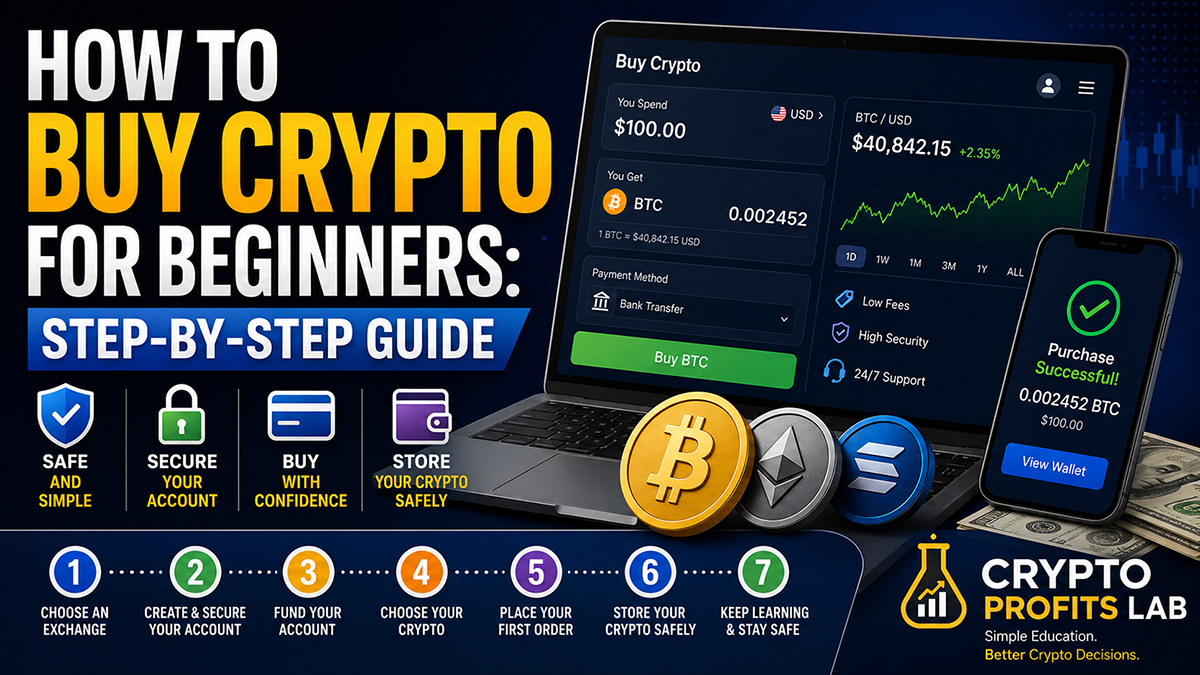
How to Buy Crypto for Beginners in 7 Steps
The easiest way to understand how to buy crypto for beginners is to follow a simple checklist. Each step reduces confusion and helps you avoid common mistakes.
1. Choose a Beginner-Friendly Crypto Exchange
A crypto exchange is a platform where you can buy, sell, and trade cryptocurrency. For most beginners, a centralized crypto exchange is the easiest place to start. These platforms usually offer simple apps, bank transfers, debit card purchases, account recovery options, and customer support.
When choosing an exchange, look for a platform with a strong reputation, clear fees, strong security features, and support for the crypto assets you want to buy. Avoid unknown platforms, social media links, private messages, or websites that promise guaranteed profits.
Beginners should also understand the difference between centralized and decentralized exchanges. A centralized exchange is usually easier for a beginner because the company helps manage the buying process. A decentralized exchange gives users more control but requires more technical knowledge. You can learn more in our guide to centralized vs decentralized exchanges.
If you are still comparing platforms, read our guide to the best crypto exchange for beginners. Choosing the right exchange can make your first crypto purchase much easier and safer.
2. Create Your Account and Verify Your Identity
After choosing an exchange, the next step is creating your account. Most major exchanges ask for your name, email address, password, phone number, and identity verification. This process may include uploading a photo ID or confirming your address.
Identity verification can feel inconvenient, but it is common on regulated crypto platforms. It helps exchanges follow financial rules and reduce fraud. It may also increase your account limits and give you access to more payment methods.
Use a strong, unique password for your exchange account. Do not reuse a password from email, banking, social media, or another crypto account. If one account gets compromised, reused passwords can put your other accounts at risk.
A password manager can help you create and store strong passwords. This is especially useful if you plan to use multiple crypto-related accounts over time.
3. Turn On Two-Factor Authentication
Two-factor authentication, also called 2FA, adds a second layer of security to your account. Instead of logging in with only a password, you also need a temporary code from an authenticator app or security device.
This step is extremely important for beginners. If someone steals your password, 2FA can help stop them from accessing your account. Whenever possible, use an authenticator app instead of SMS text messages. Text-message codes can be vulnerable to SIM swap attacks.
Before depositing money, turn on 2FA and save any backup codes in a safe place. Do not store backup codes in the same email account connected to your exchange.
For a deeper walkthrough, read our beginner guide to crypto 2FA. Security should come before your first purchase, not after.
4. Fund Your Account Carefully
Once your account is verified and secured, you need to add money. Most beginner-friendly exchanges allow bank transfers, debit card purchases, wire transfers, or payment service deposits.
Each funding method can have different fees and processing times. A bank transfer may be cheaper but slower. A debit card may be faster but more expensive. A wire transfer may work for larger amounts but could involve extra bank fees.
Before confirming a deposit or purchase, always review the fee screen. Many beginners focus only on the amount of crypto they are buying and ignore fees. Over time, fees can reduce your returns, especially if you make frequent small purchases.
For your first purchase, start small. The first transaction should be about learning the process, not making a big investment. A small test purchase lets you see how the exchange works, how your balance appears, and how fees are displayed.
5. Choose Which Crypto to Buy
One of the most common beginner questions is, “Which crypto should I buy first?” There is no perfect answer, but beginners are usually better off starting with major, well-known assets before exploring smaller and riskier coins.
Bitcoin and Ethereum are common first choices because they have longer histories, large market caps, broad educational coverage, and strong liquidity. That does not make them risk-free, but they are easier for beginners to research than many smaller coins.
Before buying any crypto, learn what the project does, how long it has existed, why people use it, and what risks it carries. Do not buy only because a coin is trending online. Do not buy because someone says it is “about to explode.” Do not buy because you are afraid of missing out.
A helpful concept to understand is market capitalization. Market cap can help beginners compare the size of different crypto assets. Our guide to market cap crypto explains why larger and smaller crypto assets can behave differently.
Learning how to buy crypto for beginners is not just about clicking the buy button. It is about understanding what you are buying and why.
6. Place a Small First Order
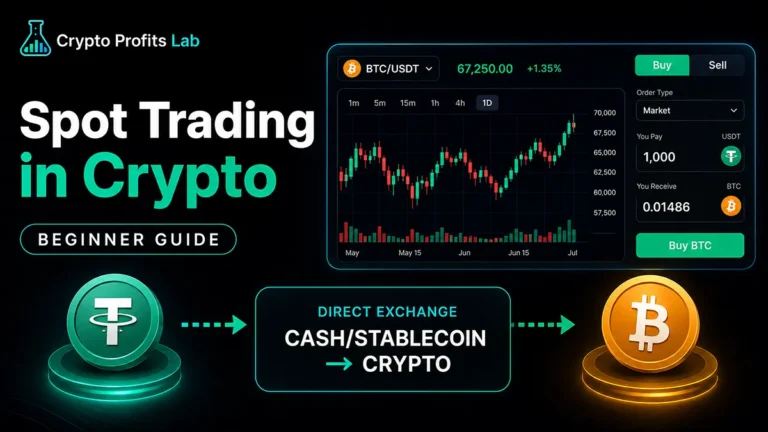
After choosing a crypto asset, you can place your first order. Most beginner-friendly exchanges have a simple buy screen. You select the crypto, enter the dollar amount, choose the payment method, review the fee, and confirm the purchase.
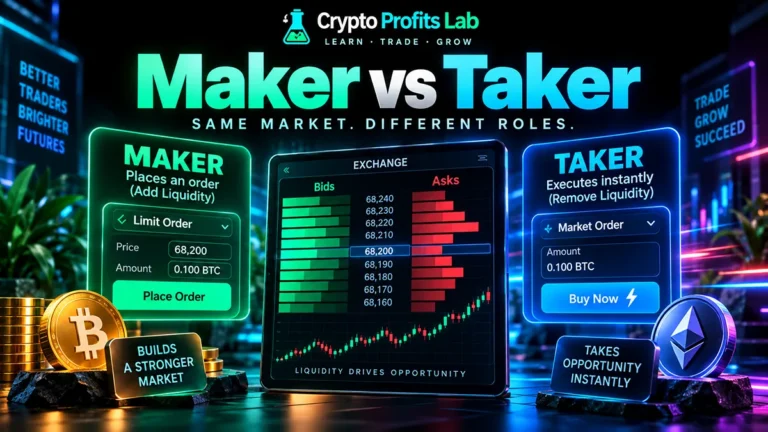
Beginners should usually avoid advanced trading tools at first. A simple buy order is easier to understand than limit orders, stop orders, leverage, futures, or margin trading. Advanced tools can be useful later, but they can also create bigger losses if used without experience.
Before confirming your order, check everything carefully. Review the crypto name, ticker symbol, purchase amount, fee, payment method, and total cost. Some crypto names and symbols can look similar, so make sure you are buying the correct asset.
Once the order is complete, your crypto balance should appear in your exchange account. At this point, you own crypto. The next major decision is whether to leave it on the exchange or move it to a wallet.
7. Decide Where to Store Your Crypto
Storage is one of the most important parts of how to buy crypto for beginners. After buying crypto, you can usually leave it on the exchange or move it to a personal wallet. Both options have pros and cons.
Leaving crypto on an exchange is convenient. It may be easier to sell, trade, or access from your phone. For very small beginner purchases, this may be the simplest option while you learn.
However, when crypto is left on an exchange, the platform controls the private keys. That means you are trusting the exchange to protect your assets. If the platform has problems, your access could be affected.
A personal crypto wallet gives you more control, but it also gives you more responsibility. If you lose your recovery phrase, send crypto to the wrong address, or use the wrong network, you may not be able to recover your funds.
Before moving crypto, read our guide on what is a crypto wallet. Then compare hot wallet vs cold wallet options. If you plan to hold larger amounts over time, you may also want to learn about using a hardware wallet.
Common Crypto Fees Beginners Should Understand
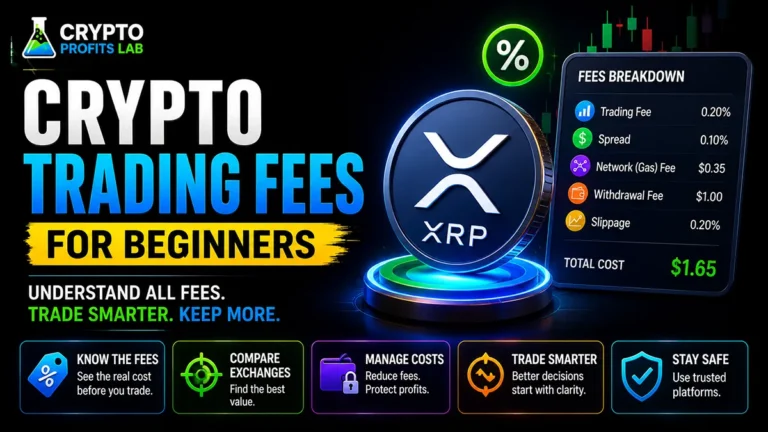
Crypto fees can be confusing because there are several types. You may pay a trading fee when you buy or sell. You may pay a deposit or withdrawal fee depending on your payment method. You may also incur network fees when moving crypto between wallets.
Trading fees are charged by the exchange. These fees are usually shown before you confirm your purchase. Some platforms charge higher fees for simple buy buttons and lower fees for advanced trading screens. Beginners should understand the fee before clicking buy.
Network fees are different. They are paid to process transactions on a blockchain. Some networks are inexpensive, while others can become expensive when demand is high. Ethereum, for example, uses gas fees to process transactions. You can learn more in our beginner guide to crypto gas fees.
Always review the transaction preview. A smart beginner knows the purchase amount, fees, total cost, and the expected crypto to be received before confirming.
How Much Crypto Should a Beginner Buy?
There is no single amount that works for everyone. A beginner should start with an amount small enough that a price drop would not create stress. Your first purchase should help you learn the process, not test your emotions.
For many beginners, a small dollar amount is enough. You can learn how the app works, how fees appear, how balances update, and how price changes affect your account.
Avoid going all in. Crypto can move quickly, and beginners often underestimate volatility. If your first purchase drops in value, you should be able to stay calm and continue learning.
Some beginners use dollar-cost averaging. This means buying a fixed amount on a schedule instead of trying to guess the perfect time to buy. Dollar-cost averaging does not remove risk, but it can reduce emotional decision-making. Learn more in our guide to dollar cost averaging crypto.
Risks to Know Before Buying Crypto
Crypto has real risks, and beginners should understand them before buying. Prices can rise quickly, but they can also fall quickly. A crypto asset can lose value due to regulation, weak demand, security issues, poor project development, exchange issues, or broader market fear.
Volatility is one of the biggest challenges. A coin may rise sharply one week and fall sharply the next. Our guide to crypto volatility explains why these price swings happen and how beginners can think about risk.
Market cycles also matter. During a bull market, prices may rise quickly, making investors feel confident. During a bear market, prices may fall for months, testing patience. Read our guide to bull vs bear market crypto to understand how market conditions can affect your decisions.
Scams are another major risk. Beginners are often targeted by fake exchanges, phishing emails, fake wallet apps, social media giveaways, romance scams, and investment groups. No legitimate support agent needs your recovery phrase. No real investment is guaranteed. No stranger online should be trusted with your funds.
Before buying, review our guide to crypto scams to avoid and our checklist of crypto safety tips.
Should You Move Crypto Off the Exchange?
Whether you should move crypto off an exchange depends on your goals, balance size, and experience level. If you are buying a very small amount while learning, leaving it on a reputable exchange may be simpler at first.
If you plan to hold crypto long-term or your balance becomes meaningful, learning self-custody becomes more important. Self-custody means you control the wallet and recovery phrase. This gives you more independence, but it also means you are responsible for protecting access.
Your recovery phrase is the backup for your wallet. If someone gets it, they can steal your crypto. If you lose it, you may lose access permanently. Read our guide to crypto seed phrase before moving funds to a wallet.
If you are comparing beginner wallet options, our guide to the best crypto wallet for beginners can help you understand which type of wallet may fit your needs.
Mistakes to Avoid When Buying Crypto for the First Time
The first major mistake is buying too much too soon. Many beginners get excited and invest more than they planned. If the price drops, they panic. Starting small helps you learn without unnecessary pressure.
The second mistake is ignoring security. Many beginners focus only on which coin to buy. Account security matters just as much. Use strong passwords, 2FA, trusted websites, and secure devices.
The third mistake is clicking random links. Scammers create fake exchange pages, fake support accounts, and fake wallet downloads. Bookmark the official websites you use and avoid clicking ads or links from unknown sources.
The fourth mistake is sending crypto before understanding networks. Some assets can exist on multiple networks. Sending crypto to the wrong address or network may result in permanent loss. Always test with a small amount before transferring larger balances.
The fifth mistake is chasing hype. If a coin is trending everywhere, that does not mean it is safe. Learn what the project does, check its history, understand the risks, and avoid emotional buying.
Beginner Checklist Before You Buy Crypto
Use this simple checklist before making your first crypto purchase:
- Choose a reputable beginner-friendly exchange.
- Create a strong, unique password.
- Turn on two-factor authentication.
- Verify your identity if required.
- Start with a small amount.
- Review fees before buying.
- Buy a crypto asset you understand.
- Avoid hype and guaranteed-profit claims.
- Learn wallet basics before transferring funds.
- Keep records for taxes and tracking.
This checklist can help you stay calm and organized. The more consistent your process is, the less likely you are to make careless mistakes.
Final Thoughts: Learn First, Buy Carefully
Learning how to buy crypto for beginners is about more than making your first purchase. It is about building a foundation. You need to understand exchanges, wallets, fees, security, volatility, scams, and long-term risk.
The safest beginner approach is simple. Learn the basics. Choose a reputable exchange. Secure your account. Start small. Review every transaction before confirming it. Avoid hype. Keep improving your knowledge over time.
Crypto can offer interesting opportunities, but it rewards patience and preparation. Beginners who take time to learn are usually better positioned than beginners who rush in without a plan.
If you are ready to continue your education, start with what is cryptocurrency, crypto wallet, and crypto safety tips. These guides will help you build a safer foundation before making bigger decisions.
FAQ: How to Buy Crypto for Beginners
What is the easiest way to buy crypto for beginners?
The easiest way for beginners to buy crypto is to use a reputable centralized crypto exchange. These platforms usually provide simple buy buttons, bank transfer options, debit card support, account recovery, and basic security tools. Beginners should start with a small amount, review all fees, turn on two-factor authentication, and avoid advanced trading features until they understand the basics.
How much money should I start with when buying crypto?
A beginner should start with a small amount they can afford to lose without stress. The first purchase should be treated as a learning experience, not a major investment. Starting small helps you understand how exchanges work, how fees are shown, and how price changes affect your balance. You can increase your knowledge before deciding whether to buy more.
Is it safe to buy crypto online?
Buying crypto online can be safe when you use reputable exchanges, strong passwords, two-factor authentication, and trusted websites. However, crypto also carries risks such as scams, phishing, market volatility, and platform failures. Beginners should avoid unknown links, guaranteed-profit claims, fake support accounts, and anyone asking for passwords or recovery phrases.
What crypto should a beginner buy first?
Many beginners start by researching major crypto assets such as Bitcoin and Ethereum because they have longer histories, larger market caps, and more educational resources. That does not make them risk-free. Beginners should understand what a crypto asset does, why people use it, how volatile it is, and whether it fits their personal risk tolerance before buying.
Do I need a crypto wallet before buying crypto?
You do not always need a personal crypto wallet before buying crypto because many exchanges let you store small balances on the platform. However, learning about wallets is important if you plan to hold crypto long term. A wallet gives you more control, but it also requires careful protection of your recovery phrase and private access.
What fees do beginners pay when buying crypto?
Beginners may pay trading fees, deposit fees, withdrawal fees, debit card fees, and blockchain network fees. Fees vary by exchange, payment method, and crypto network. Before confirming any purchase, always review the transaction preview. It should show the purchase amount, total cost, platform fee, and how much crypto you will receive.
Should I move my crypto off the exchange after buying?
It depends on your experience, balance size, and goals. For very small beginner purchases, leaving crypto on a reputable exchange may be convenient while you learn. For larger or long-term holdings, many users prefer a personal wallet. Before transferring funds, understand wallet addresses, recovery phrases, network selection, and the risk of irreversible mistakes.
Can I lose money buying crypto?
Yes, you can lose money buying crypto. Prices can move sharply, projects can fail, platforms can have problems, and scams can target beginners. Crypto should be treated as a high-risk asset class. Beginners should start small, avoid emotional buying, learn the basics of security, and never invest money needed for bills, emergencies, or short-term obligations.