What Are Altcoins? A Beginner’s Guide
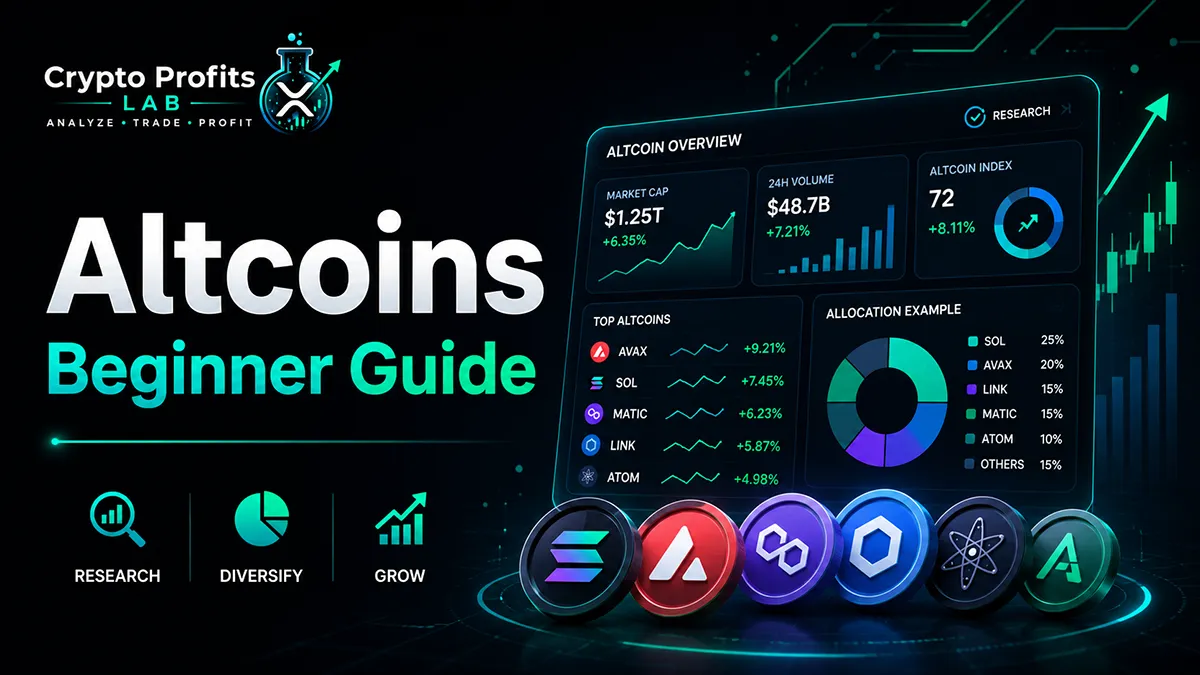
Altcoins are one of the first crypto terms beginners hear after learning about Bitcoin. You may see people talk about Ethereum, Solana, XRP, Cardano, Dogecoin, Chainlink, and thousands of other coins. All of them can feel exciting, but they can also feel overwhelming if you are new.
The crypto market is not just Bitcoin. There are many other digital assets with different goals, designs, risks, communities, and use cases. Some are serious blockchain projects. Some are experimental. Some are meme coins. Some may become useful over time, while others may disappear.
That is why beginners need a simple way to understand altcoins before buying them. The goal is not to chase every trending coin. The goal is to learn what different crypto assets are, why they exist, and how to research them safely.
This guide explains altcoins in plain English, including common types, examples, risks, research steps, and beginner mistakes to avoid.
This article is for education only. It is not financial, investment, tax, or legal advice.
Quick Answer: What Are Altcoins?
Altcoins are cryptocurrencies other than Bitcoin. The word is short for “alternative coins.” In simple terms, altcoins are most crypto assets other than BTC.
Some altcoins are designed for smart contracts, payments, stable value, gaming, decentralized finance, data storage, artificial intelligence, or meme-based communities. Ethereum is the largest and most widely known example, but there are thousands of others.
The important beginner lesson is this: not all altcoins are the same. Some have real technology and active users. Others are mostly speculation. Before buying any coin, beginners should understand the project, supply, use case, market cap, security risks, and the token’s purpose.
If you are still learning the foundation, start with What Is Cryptocurrency? and What Is Bitcoin? first.
Key Takeaways
- Altcoins are cryptocurrencies other than Bitcoin.
- Ethereum, Solana, XRP, Cardano, Dogecoin, and Chainlink are examples.
- Some projects have serious use cases, while others are mostly hype.
- Tokenomics, market cap, utility, liquidity, and security all matter.
- Lower-priced coins are not automatically cheaper or better.
- Smaller crypto assets can be more volatile than Bitcoin.
- Beginners should research before buying and avoid social media pressure.
- A simple portfolio is usually easier to manage than owning too many coins.
Beginner Facts Table
| Topic | Beginner Explanation |
|---|---|
| Altcoins | Crypto assets other than Bitcoin |
| Main reason they exist | To offer different features, networks, or use cases |
| Biggest example | Ethereum |
| Common types | Smart contract coins, stablecoins, meme coins, DeFi tokens, utility tokens |
| Main risk | High volatility, scams, weak projects, low liquidity |
| Research tools | Market cap, tokenomics, whitepaper, team, use case, exchange listings |
| Beginner rule | Understand the asset before buying it |
Why Altcoins Exist
Altcoins exist because Bitcoin was only the beginning of crypto. Bitcoin introduced decentralized digital money, but other developers wanted to build various blockchain tools.
Some projects were created to improve transaction speed. Some were designed for smart contracts, which are programs that run on a blockchain. Others were created for privacy, payments, games, supply chains, decentralized finance, storage, or online communities.
Ethereum is a major example because it expanded crypto beyond simple payments. It enabled developers to build decentralized apps, launch tokens, and create DeFi tools. You can learn more in What Is Ethereum? and What Is DeFi?.
Other projects try to solve different problems. Solana focuses on high-speed blockchain activity. Chainlink connects blockchains with outside data. XRP is designed around fast value transfer. Dogecoin started as a meme but became widely recognized because of its community.
This variety is what makes the market interesting, but it also creates risk. More choices mean more chances for confusion.
Altcoins vs Bitcoin
Bitcoin is the original cryptocurrency and is often viewed as the most established crypto asset. It has a fixed supply schedule, a long operating history, and a clear identity as decentralized digital money.
Altcoins are different because they can have many designs. Some have fixed supplies. Some create new tokens over time. Some depend on a company, foundation, or development team. Some are decentralized, while others are more centralized than beginners realize.
Here is a simple comparison:
| Feature | Bitcoin | Altcoins |
|---|---|---|
| First launched | 2009 | After Bitcoin |
| Main purpose | Decentralized digital money | Many different purposes |
| Supply design | Fixed maximum supply | Varies by project |
| Risk level | Still risky and volatile | Often higher risk, especially smaller coins |
| Examples | BTC | ETH, SOL, XRP, ADA, DOGE, LINK |
| Beginner challenge | Understanding Bitcoin basics | Comparing many different designs |
Bitcoin may be easier to study because it has one main identity. Other crypto assets require more research because each project has its own rules, technology, and risk profile.
Common Types of Altcoins
Altcoins can be grouped into categories. These categories help beginners understand what a project is trying to do.
Smart contract coins
Smart contract coins power blockchain platforms that support apps. Ethereum, Solana, Cardano, Avalanche, and Sui are examples. These networks let developers build tokens, DeFi apps, games, and other blockchain tools.
You can learn more from guides like What Is Solana?, What Is Cardano?, and What Is Sui?.
Payment coins
Some crypto assets focus on sending value quickly or cheaply. XRP, Stellar, Litecoin, and Bitcoin Cash are examples that beginners may see.
Stablecoins
Stablecoins are designed to track another asset, often the U.S. dollar. They are not usually bought because people expect their prices to rise. They are used for trading, transfers, and dollar-like value inside crypto. Read What Are Stablecoins?.
Meme coins
Meme coins are driven heavily by community, internet culture, and speculation. Dogecoin is the best-known example. Meme coins can move sharply, but they are risky because hype can fade quickly.
DeFi tokens
DeFi tokens are connected to decentralized finance apps. Some are used for governance, rewards, lending, swaps, or liquidity. Examples include Uniswap and Aave. Read What Is Uniswap? and What Is Aave?.
Utility tokens
Utility tokens are designed to be used inside a product, app, or ecosystem. The key question is whether people actually need the token or whether it mainly exists for speculation.
Step 1: Start With the Project’s Purpose
Before buying altcoins, beginners should ask what the project is trying to accomplish.
A simple research question is:
What problem does this crypto project solve?
If the answer is unclear, be careful. A serious project should explain its purpose in simple terms. It should not require endless hype, confusing buzzwords, or promises of guaranteed returns.
Look for a basic explanation of:
- What the project does
- Who uses it
- Why does the token exist
- What makes it different
- Whether the blockchain or app has real activity
- Whether the project has been around long enough to evaluate
Do not buy only because the chart is moving up. A rising price does not automatically mean a strong project. Crypto prices can rise quickly because of hype, low liquidity, or short-term speculation.
Step 2: Check Market Cap
Market cap is one of the most important tools for beginners when comparing altcoins. It helps explain the size of a crypto asset.
The formula is simple:
| Formula | Meaning |
|---|---|
| Price × Circulating Supply = Market Cap | Estimated value of circulating tokens |
This matters because a low-priced coin is not automatically cheap. A token priced at one cent can still have a huge market cap if there are billions or trillions of tokens.
Beginners often make the mistake of thinking, “If this coin reaches $1, I will make a fortune.” But that may be unrealistic if the supply is massive.
Market cap helps you compare one project to another more fairly. It also helps you understand whether a coin is large, mid-sized, or highly speculative.
Read Market Cap Crypto before judging any crypto asset by price alone.
Step 3: Study Tokenomics
Tokenomics explains how a token is supplied, distributed, unlocked, burned, and used. It is one of the best tools for researching altcoins.
Beginners should look at:
- Circulating supply
- Total supply
- Maximum supply
- Fully diluted value
- Token unlock schedule
- Team and investor allocations
- Utility
- Inflation or burn mechanisms
- Distribution across holders
This may sound technical, but the beginner idea is simple: tokenomics shows the rules behind the token.
If insiders own a large amount, that can increase risk. If many tokens unlock soon, selling pressure may increase. If the token has no real use, demand may depend mainly on speculation.
Read What Is Tokenomics? before buying smaller or newer crypto assets.
Step 4: Understand Volatility
Altcoins can move faster than Bitcoin. That can feel exciting when prices rise, but painful when they fall.
Smaller coins may have lower liquidity, less history, smaller communities, weaker exchange support, and more emotional trading. This can make price swings much larger.
A beginner may buy a coin after seeing it rise 50% in a week, only to watch it fall sharply later. That does not always mean the project is dead. It may simply mean the asset is volatile. But some projects do fail, and some never recover.
Understanding volatility helps beginners avoid panic. It also helps prevent overinvesting in risky assets.
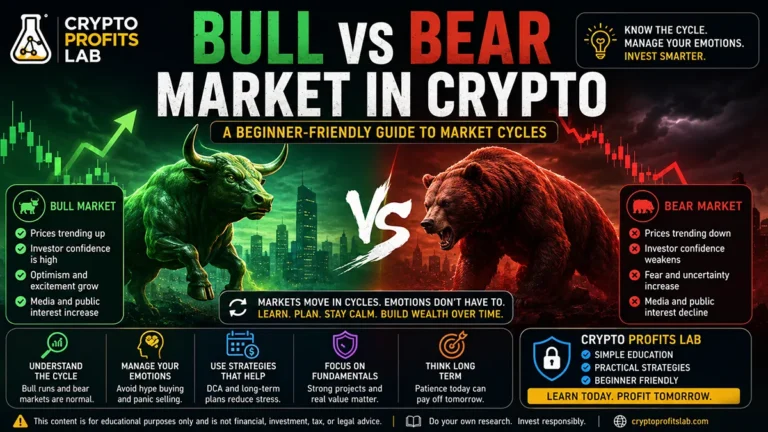
Read Crypto Volatility and Bull vs Bear Market Crypto to understand how market cycles affect crypto prices.
Step 5: Avoid Hype-Only Buying
Social media can make altcoins feel urgent. You may see posts saying a coin is “about to explode” or that beginners will miss the next big move. This creates fear of missing out.
Fear of missing out is dangerous because it pushes people to buy before they understand what they are buying.
Warning signs include:
- Guaranteed profit claims
- Pressure to buy immediately
- Influencers using referral links without explaining the risk
- Anonymous teams with no clear product
- Fake partnerships
- Confusing tokenomics
- No real users
- Very low liquidity
- Aggressive community behavior toward basic questions
A good project should survive simple research questions. If asking questions makes the community angry, that is a warning sign.
For safety habits, read Crypto Scams to Avoid and Crypto Safety Tips.
Safety and Risk: What Beginners Should Watch For
Altcoins can be risky because many projects are new, experimental, or highly speculative. Even legitimate projects can lose value. Some projects may fail because they never gain users. Others may suffer from hacks, poor token design, weak liquidity, or regulatory problems.
For broader investor education, Investor.gov has a helpful crypto assets resource page that covers custody, scams, and other crypto risk topics.
Beginners should treat smaller coins with extra caution. A project may look professional and still be risky. A website, logo, roadmap, and an active social media account are not enough to prove that a token is worth buying.
Before buying, ask:
- Can I explain this project in simple terms?
- Is the token actually needed?
- Is the market cap reasonable?
- Are token unlocks coming?
- Is liquidity strong enough?
- Is the team transparent?
- Is the community educational or mostly hype?
- Could I handle a large price drop?
- Do I know where I will store it safely?
If you cannot answer these questions, keep researching.
How Altcoins Fit Into a Crypto Portfolio
Altcoins can play a role in a crypto portfolio, but beginners should be careful about position size and risk.
A simple portfolio might focus first on learning major assets, then add smaller research positions later. The goal is not to own everything. The goal is to understand what you own.
For example, a beginner might treat Bitcoin as a core learning asset, Ethereum as a smart contract platform to study, stablecoins as a dollar-like tool, and one or two smaller coins as research positions.
This does not mean those are recommendations. It means every asset should have a role.
Read Crypto Portfolio for Beginners and Dollar Cost Averaging Crypto before building a plan.
Where Beginners Can Buy Altcoins
Most beginners buy altcoins on centralized exchanges. These platforms are usually easier to use because they allow account logins, bank deposits, basic charts, and customer support.
However, not every exchange lists the same coins. Smaller assets may only be available on certain platforms or decentralized exchanges. Beginners should be careful with unknown platforms, fake apps, and risky swaps.
Before buying, compare:
- Exchange reputation
- Security features
- Available coins
- Fees
- Withdrawal options
- Liquidity
- Customer support
- Supported countries or states
- Two-factor authentication
- Clear account recovery options
Start with Best Crypto Exchange for Beginners and How to Buy Crypto for Beginners before using a new platform.
Where to Store Altcoins Safely
Buying a coin is only one part of the process. Storage matters too.
Some beginners leave assets on an exchange because it is convenient. Others move coins to a wallet for self-custody. Each option has tradeoffs.
An exchange may be easier, but you are trusting the platform. A personal wallet gives more control, but you must protect your seed phrase, private keys, devices, and transaction approvals.
Some altcoins may require specific wallets or networks. Sending a coin on the wrong network can create serious problems. Always verify the asset, network, and address before transferring.
Helpful wallet guides include:
- Crypto Wallet
- Custodial Wallet vs Non-Custodial Wallet
- Crypto Private Key
- Hardware Wallet
- Crypto Seed Phrase
For larger balances, hardware wallets may reduce some risks, but beginners still need safe backup habits.
Common Beginner Mistakes
The first mistake is buying a coin only because the price is low. Token supply and market cap matter more than price alone.
The second mistake is owning too many coins. A long list can feel diversified, but it may simply mean you do not understand what you own.
The third mistake is ignoring tokenomics. Unlocks, insider allocations, and inflation can affect price over time.
The fourth mistake is chasing social media hype. If you only hear about a coin after it has already gone viral, you may be late to the game.
The fifth mistake is forgetting wallet safety. A good investment can still become a loss if you send it to the wrong address, use a fake app, or expose your seed phrase.
The sixth mistake is having no exit plan. Beginners often think about buying but not about selling, cashing out, taxes, or reducing risk.
Read How to Cash Out Crypto and Crypto Taxes for Beginners before you need them.
Step-by-Step Research Checklist
Use this checklist before buying altcoins:
- Read a simple beginner’s guide about the project.
- Check what problem the project claims to solve.
- Review the market cap.
- Study tokenomics.
- Look for real utility and users.
- Check whether the token is needed.
- Review exchange listings and liquidity.
- Look for upcoming token unlocks.
- Compare similar projects.
- Watch for scam warning signs.
- Decide where you will store the asset.
- Start small if you are still learning.
- Keep records for taxes.
- Review your portfolio regularly.
This checklist will not guarantee profit. It simply helps you slow down and avoid the most obvious beginner mistakes.
Final Thoughts
Altcoins are crypto assets other than Bitcoin. They can include smart contract platforms, stablecoins, payment coins, meme coins, DeFi tokens, and utility tokens. Some are important parts of the crypto ecosystem. Others are risky experiments or hype-driven projects.
Beginners should not avoid learning about altcoins, but they should avoid rushing into them. Start with the basics. Understand market cap. Study tokenomics. Learn wallet safety. Avoid pressure from influencers. Keep your portfolio simple. Use small amounts while learning.
Crypto Profits Lab is built to make crypto easier for beginners by explaining one concept at a time. If you want to continue learning, your next best reads are What Is Tokenomics?, Market Cap Crypto, and Crypto Portfolio for Beginners.
FAQ: Altcoins for Beginners
What are altcoins in crypto?
Altcoins are cryptocurrencies other than Bitcoin. The term comes from “alternative coins.” They can include Ethereum, Solana, XRP, Cardano, Dogecoin, stablecoins, DeFi tokens, meme coins, and many other crypto assets. Each project can have a different purpose, supply design, and risk level. Beginners should research the use case, market cap, tokenomics, and security before buying.
Are altcoins riskier than Bitcoin?
Altcoins are often riskier than Bitcoin because many are newer, smaller, less liquid, or more experimental. Some projects have strong technology and active users, while others rely mostly on hype. Smaller coins can rise quickly, but they can also fall sharply. Beginners should treat them as high-risk assets and avoid investing money they cannot afford to lose.
Why do people buy altcoins?
People buy altcoins for different reasons. Some want exposure to smart contract platforms, DeFi projects, payment networks, gaming ecosystems, or new blockchain technology. Others buy because they expect price growth. Beginners should be careful with speculation. A coin should have a clear purpose, understandable tokenomics, and a role in a broader plan before being added to a portfolio.
What is the best altcoin for beginners?
There is no single best altcoin for every beginner. A better approach is to study larger, more established projects first because they usually have more information available. Ethereum is often one of the first projects beginners research because it supports smart contracts and many crypto apps. However, every asset carries risk, and beginners should research before buying.
How many altcoins should a beginner own?
Beginners usually do not need many coins. Owning too many can make research, tracking, wallet storage, and risk management harder. A smaller number of well-understood assets is usually easier to manage than a long list of random tokens. If you cannot explain what a coin does and why you own it, it may be too early to buy it.
Are stablecoins considered altcoins?
Yes, stablecoins are usually considered altcoins because they are cryptocurrencies other than Bitcoin. However, they differ from most speculative coins in that they are designed to track another asset, often the U.S. dollar. Stablecoins can be useful for trading, transfers, or temporary buying power, but they still carry issuer, reserve, regulatory, custody, and platform risks.
Can altcoins go to zero?
Yes, altcoins can go to zero or lose most of their value. A project may fail due to weak demand, poor technology, hacks, poor tokenomics, low liquidity, regulatory issues, or a loss of community interest. Some coins never recover after major crashes. Beginners should diversify carefully, avoid hype, and never assume that a popular coin is automatically safe.
How do I research altcoins before buying?
Start by checking the project’s purpose, market cap, tokenomics, circulating supply, unlock schedule, utility, team transparency, exchange listings, liquidity, and community quality. Compare similar projects and look for real usage. Avoid coins promoted mainly through hype or guaranteed-profit claims. Beginners should also decide where they will store the asset and how much risk they can handle.
Should altcoins be part of a crypto portfolio?
Altcoins can be part of a crypto portfolio, but beginners should use caution. They may offer exposure to different crypto sectors, but they can also add significant risk. A beginner portfolio should usually start simple and focus on assets the user understands. Position size, wallet security, tax records, and an exit plan all matter when adding smaller crypto assets.