Crypto Coin vs Token: What Is the Difference?
Crypto beginners often hear “coin” and “token” used as though they mean the same thing. Exchanges, social posts, and project websites may use the terms loosely.
However, there is a useful technical difference.
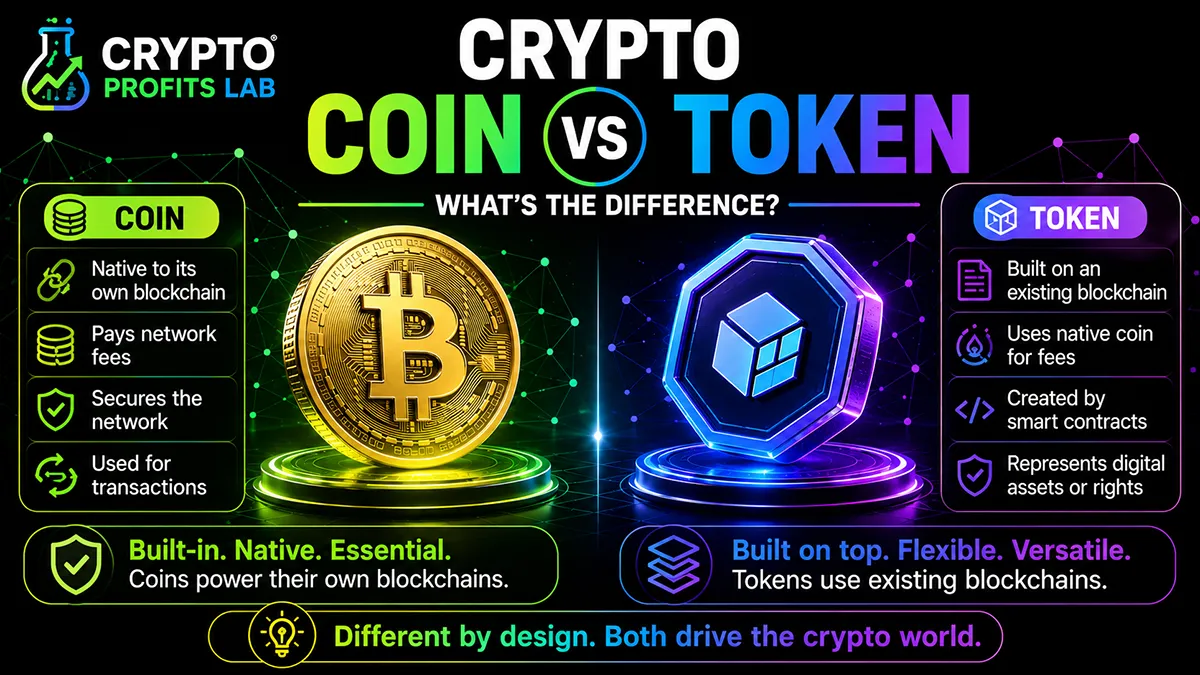
A crypto coin is normally the native digital asset of its own blockchain. A crypto token is usually created on an existing blockchain through a smart contract or another built-in token system.
Understanding crypto coin vs token terminology can help you identify which network an asset uses, which fees you must pay, how it is stored, and what risks to check before buying or transferring it.
This guide explains the difference in plain language and shows why it matters for wallets, fees, approvals, transfers, and research.
Quick Answer
The simplest crypto coin vs token explanation is this:
- A coin is native to its own blockchain.
- A token is created and managed on an existing blockchain.
Bitcoin is a coin because BTC is the native asset of the Bitcoin blockchain. Ether is a coin because ETH is the native asset used by the Ethereum network.
An ERC-20 asset is a token because it is created through a smart contract on Ethereum. The token depends on Ethereum for transaction processing and normally requires ETH to pay network fees.
The words are still used loosely in everyday conversation. Calling every digital asset a “coin” is common, but checking whether an asset has its own blockchain provides a more accurate answer.
Key Takeaways
- Coins are normally native assets of their own blockchains.
- Tokens are usually created on top of existing blockchains.
- A coin often pays the network’s transaction fees.
- A token usually requires the host blockchain’s native coin for fees.
- Tokens can represent payments, voting rights, rewards, stable value, game items, or other digital rights.
- The same asset can exist on multiple networks through wrapped or bridged versions.
- Knowing the crypto coin vs token difference helps prevent wrong-network transfers and fake-token purchases.
- Neither label tells you whether an asset is safe, valuable, decentralized, or a good investment.
Crypto Coin vs Token Beginner Facts
| Question | Beginner-Friendly Answer |
|---|---|
| What is a crypto coin? | The native digital asset built into a blockchain’s core system. |
| What is a crypto token? | A digital asset created on an existing blockchain, often through a smart contract. |
| Does a token have its own blockchain? | Usually no. It relies on a host network. |
| What pays network fees? | Usually the blockchain’s native coin, although some services may simplify or sponsor fees. |
| Is Bitcoin a coin or token? | Bitcoin is a coin because BTC is native to the Bitcoin blockchain. |
| Is ETH a coin or token? | ETH is the native coin of Ethereum, even though people sometimes casually call it a token. |
| Is an ERC-20 asset a token? | Yes. ERC-20 is a common Ethereum standard for fungible tokens. |
| Is one type automatically safer? | No. Coins and tokens can both carry technical, market, custody, and scam risks. |
Why the Terminology Feels Confusing
Crypto language developed quickly, and the industry does not always use words consistently.
“Cryptocurrency” is often used as a broad label for nearly every blockchain-based asset. “Coin” may also be used casually for any asset that has a market price. Meanwhile, some blockchain projects call their native asset a token even when it technically functions like a coin.
For beginners, the most practical crypto coin vs token test is not the project’s marketing language. Ask whether the asset is native to its own blockchain or created on another network.
This distinction is useful, but it is not a perfect legal or investment classification. Regulators, exchanges, developers, and tax authorities may classify digital assets using different rules.
Start with the technical difference, then research the specific asset.
What Is a Crypto Coin?
A crypto coin is generally the native asset of a blockchain.
The coin is built into the network’s main rules. It may be used to transfer value, reward miners or validators, pay transaction fees, secure the network, or interact with applications operating on that blockchain.
Examples include:
- BTC on the Bitcoin blockchain
- ETH on the Ethereum blockchain
- XRP on the XRP Ledger
- SOL on Solana
- ADA on Cardano
- AVAX on Avalanche
Each of these assets belongs natively to its own network.
To understand this foundation, read what cryptocurrency is and how blockchain technology records transactions.
Coins Often Power Their Networks
A native coin is not only something people buy and sell. It may perform essential network functions.
For example, a coin may be needed to:
- Pay transaction fees
- Reward miners or validators
- Participate in staking
- Help prevent network spam
- Interact with smart contracts
- Transfer value between addresses
The exact role depends on the blockchain.
Bitcoin uses BTC as the network’s native asset and miner reward. Ethereum uses ETH for transaction fees, staking, and smart-contract activity. XRP is native to the XRP Ledger and is used within that network’s transaction system.
The crypto coin vs token distinction becomes especially important when paying fees. A wallet may hold a token but still be unable to send it because the wallet does not contain enough of the host network’s native coin.
What Is a Crypto Token?
A crypto token is a digital asset created on an existing blockchain.
Instead of launching an entirely new blockchain, a developer can use the tools and security structure of an established network. On smart-contract platforms, the token’s rules are commonly written into a smart contract.
Those rules may control:
- The token’s name and symbol
- Total supply
- How balances are recorded
- How transfers work
- Whether more units can be created
- Whether units can be burned
- Which special permissions exist
Read the dedicated crypto token guide for a broader introduction.
Ethereum’s official token standards documentation explains how standards help tokens behave consistently across wallets, exchanges, and decentralized applications. ERC-20 is the most familiar standard for interchangeable, or fungible, Ethereum tokens.
Tokens can also be created on networks such as Solana, BNB Smart Chain, Polygon, Avalanche, and many others. Each blockchain has its own technical standards and fee system.
The 7 Main Crypto Coin vs Token Differences
The following differences provide a practical way to compare the two asset types.
1. Coins Are Native; Tokens Use a Host Network
The first crypto coin vs token difference is where the asset comes from.
A coin is part of a blockchain’s base protocol. A token is added through a smart contract or another token-creation system and uses the host network’s infrastructure.
A useful question is: “Would this asset still exist if the host blockchain stopped operating?” A token depends on its host chain. A native coin belongs to the chain itself.
2. Coins Usually Pay Network Fees
Most blockchains charge a fee when users send assets or use applications. That fee is normally paid with the native coin.
For example, Ethereum activity generally requires ETH, Solana activity requires SOL, and Cardano activity requires ADA.
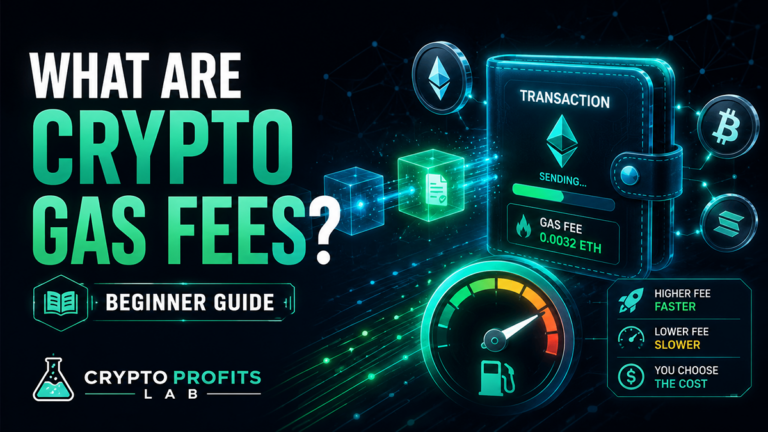
You can hold an Ethereum token but still be unable to send it if your wallet has no ETH for gas. This is one of the most practical crypto coin vs token lessons.
Learn more in the guide to crypto gas fees.
3. Coins May Help Secure the Blockchain
Native coins often support the network’s security and economic system.
Proof-of-work miners may earn coins and transaction fees. Proof-of-stake validators may lock native coins as stake while helping confirm transactions.
A token may have its own staking or reward program, but that does not necessarily mean it secures the host blockchain. Read about proof of work and proof of stake for more detail.
4. Tokens Can Represent Specialized Rights
Tokens can be designed for purposes such as:
- Application access
- Governance voting
- Loyalty rewards
- Stable-value payments
- Lending and liquidity systems
- Game items
- Digital collectibles
- Tokenized real-world assets
A token can act like a digital pass, voting unit, reward point, or ownership record. Its promised purpose does not prove that it has real demand or lasting value.
5. Tokens Use Standards and Smart Contracts
Many tokens follow technical standards so wallets and applications know how to interact with them.
ERC-20 is a common Ethereum standard for fungible tokens. Fungible means each unit is designed to be interchangeable with another unit of the same token.
Smart-contract flexibility also creates added risks. A contract can contain bugs, hidden permissions, transfer restrictions, or malicious code even when the host blockchain works correctly.
6. Many Tokens Share a Blockchain Address Format
One address can often hold a blockchain’s native coin and many tokens issued on that network. An Ethereum address, for example, may hold ETH and multiple Ethereum tokens.
However, a compatible-looking address does not prove that an exchange supports the exact token or network. Always verify the asset, contract address, network, and deposit instructions.
The guide to a crypto wallet address explains how addresses work.
7. Tokens Can Be Copied or Impersonated
Creating a basic token is easier than launching a new blockchain. That supports innovation, but it also lets scammers copy the name, ticker, and logo of a genuine asset.
The correct contract or mint address is usually the most reliable token identifier. Never buy or import a token based only on its branding.
This crypto coin vs token difference matters especially on decentralized exchanges, where fake assets may appear beside genuine ones.
Step-by-Step: How to Tell Whether an Asset Is a Coin or Token
Use this process before buying, transferring, or adding an unfamiliar asset to a wallet.
Step 1: Identify the Official Network
Visit the project’s official website and documentation. If the asset is native to an independent blockchain, it is generally a coin. If it is described as ERC-20, SPL, or another token standard, it is a token on a host network.
Do not rely on advertisements or unverified social media replies.
Step 2: Check a Blockchain Explorer
Search the asset using the correct blockchain explorer.
A token page commonly shows a contract or mint address, supply, holders, and transfer history. A native coin normally appears as the network’s base asset rather than an ordinary token contract.
Step 3: Verify the Contract or Mint Address
A contract or mint address is an important clue in the crypto coin vs token check.
Compare the identifier shown by the project’s official website, the explorer, and the receiving exchange. One incorrect character may point to a different asset.
Step 4: Identify the Fee Asset
Check what is needed to pay transaction fees.
A token normally requires the host blockchain’s native coin. An Ethereum token usually needs ETH for an on-chain transfer. This detail can help confirm which network the token uses.
Step 5: Confirm Wallet and Exchange Support
A wallet may support a blockchain without displaying every token. An exchange may list an asset on only certain networks.
Verify that the sender and recipient support the same asset version and network.
Step 6: Send a Small Test
Send a small test amount when using a new address or network. Wait until it is credited before sending the remaining funds.
The how to transfer crypto guide explains this safety process in more detail.
Crypto Coin vs Token Examples
Examples make the distinction easier to understand.
| Asset | Coin or Token? | Reason |
|---|---|---|
| Bitcoin (BTC) | Coin | Native asset of the Bitcoin blockchain |
| Ether (ETH) | Coin | Native asset of Ethereum |
| XRP | Coin | Native asset of the XRP Ledger |
| Solana (SOL) | Coin | Native asset of the Solana blockchain |
| Cardano (ADA) | Coin | Native asset of Cardano |
| An ERC-20 stablecoin | Token | Created through a token contract on Ethereum |
| A governance asset issued on Ethereum | Token | Uses Ethereum rather than its own blockchain |
| A game asset issued on Solana | Token | Uses Solana’s token system |
These examples are simplified. Some projects issue assets on multiple networks, migrate from a token to a native coin, or create tokenized versions of native coins.
Always verify the version you actually hold.
Can a Token Become a Coin?
Yes. A project may first issue a token on an existing blockchain and later launch its own network. It can then migrate the original token into a native coin through a mainnet migration or token swap.
Follow only official instructions. Fake migration websites may ask for seed phrases or private keys. A legitimate migration should never require you to reveal your recovery phrase to a stranger or enter it into an unknown form.
What Are Wrapped Tokens?
A wrapped token represents an asset from another blockchain on a host network.
For example, a native coin may be locked or otherwise accounted for while a tokenized representation is issued on a different blockchain. The wrapped version can then interact with applications on the host chain.
This creates an important crypto coin vs token detail:
- The original asset may be a coin.
- Its wrapped version is a token on another blockchain.
Wrapped assets introduce additional dependencies. Users may rely on smart contracts, custodians, bridges, or other systems that maintain the relationship between the original asset and its representation.
Read the crypto bridge guide before moving assets between networks.
How Stablecoins Fit the Crypto Coin vs Token Difference
Most well-known stablecoins are tokens issued on one or more existing blockchains.
A stablecoin may exist as separate token contracts across Ethereum, Solana, Polygon, Avalanche, and other networks. Each version can have a different contract address and fee requirement.
A stablecoin is not automatically safe because it aims to maintain a stable price. Risks may include reserve quality, issuer controls, smart-contract problems, depegging, network support, and exchange restrictions.
The stablecoins guide explains how these assets try to maintain their value.
When transferring a stablecoin, the network matters just as much as the asset name.
Are Altcoins Coins or Tokens?
“Altcoin” is a broad market term for crypto assets other than Bitcoin.
Despite the word “coin,” an altcoin may be either a native coin or a token. Ether, XRP, and SOL are commonly described as altcoins and are native coins. Many Ethereum-based assets are also called altcoins even though they are technically tokens.
This shows why crypto coin vs token and altcoin are different classifications.
- Coin versus token describes the asset’s technical relationship with a blockchain.
- Altcoin describes its place in the broader cryptocurrency market relative to Bitcoin.
Read what altcoins are for more detail.
Does Crypto Coin vs Token Status Affect Value?
Being a coin does not automatically make an asset more valuable. Being a token does not automatically make it less useful.
Price and long-term value can depend on factors such as:
- Real demand
- Network or application usage
- Supply and distribution
- Security
- Developer activity
- Governance
- Liquidity
- Competition
- Regulation
- Market sentiment
A token can support a widely used application. A native coin can belong to a network with little activity. The technical category alone does not provide an investment conclusion.
Research the asset’s purpose, supply rules, risks, and actual usage. The tokenomics guide explains how supply, distribution, incentives, and unlocks can affect a crypto asset.
Common Beginner Mistakes
Calling Every Asset a Coin
This is common in casual conversation, but it can hide important details about fees, contracts, and transfer compatibility. Use the crypto coin vs token distinction when accuracy matters.
Buying by Name or Ticker Alone
Scammers can copy a legitimate asset’s name, symbol, and logo. Verify the contract or mint address through official sources.
Sending a Token Without the Fee Coin
A wallet may hold a token but lack the native coin needed to send it. Keep a small amount of the correct fee asset in a self-custody wallet.
Choosing a Network the Recipient Does Not Support
A low fee does not help if the receiving wallet or exchange cannot credit that network version. Match the deposit network exactly.
Assuming a Secure Blockchain Makes Every Token Safe
The host network can work correctly while an individual token has flawed code, dangerous permissions, or dishonest creators.
Approving an Unknown Contract
A malicious token approval may let an application take assets later. Read the crypto token approval guide before connecting a wallet to unfamiliar applications.
Treating the Label as Investment Research
Coin or token status does not show whether a project is legitimate, valuable, decentralized, or suitable for you. It is one technical detail, not a buy signal.
Crypto Coin vs Token Safety and Risk Checklist
Use this checklist before buying or transferring a coin or token:
- Confirm the project’s official website.
- Identify the correct blockchain.
- Verify whether the asset is native or issued through a token contract.
- Compare the contract or mint address with multiple official sources.
- Check which native coin pays transaction fees.
- Confirm wallet and exchange network support.
- Review token permissions and contract risks.
- Send a small test amount first.
- Never share your seed phrase or private key.
- Avoid links sent through unsolicited messages.
- Be cautious of fake migrations, airdrops, and support accounts.
- Review the transaction on the correct explorer.
The broader crypto safety tips guide provides additional protection for beginners.
The biggest practical risk is often not misunderstanding the vocabulary. It is using the wrong contract, network, address, or website while moving real funds.
Final Thoughts
The crypto coin vs token difference becomes simple once you focus on the blockchain underneath the asset.
A coin is generally native to its own blockchain. A token is generally created on an existing blockchain through a smart contract or token system.
That distinction affects network fees, wallet compatibility, contract risk, token approvals, and how you verify the asset before transferring it.
The terms are sometimes used loosely, so do not rely on a label alone. Check the network, official documentation, explorer data, fee asset, and contract address.
Crypto Profits Lab is designed to make topics such as crypto coin vs token cleaner and easier to understand without hype. Learning these basic distinctions can help you ask better questions and avoid preventable mistakes before placing money at risk.
Frequently Asked Questions
What is the main crypto coin vs token difference?
The main crypto coin vs token difference is that a coin is normally native to its own blockchain, while a token is created on an existing blockchain. Bitcoin is native to Bitcoin, so BTC is a coin. An ERC-20 asset is built through a smart contract on Ethereum, so it is a token. This distinction affects fees, transfers, and wallet support.
Is Bitcoin a coin or a token?
Bitcoin is a coin because BTC is the native asset of the Bitcoin blockchain. It is built into the network’s protocol and is used for value transfer, transaction fees, and miner rewards. A tokenized version of Bitcoin issued on another blockchain would be a token, even though it represents BTC or tracks Bitcoin’s value.
Is Ethereum a coin or a token?
Ether, commonly called ETH, is a coin because it is the native asset of the Ethereum blockchain. ETH pays network gas fees and is used in Ethereum’s proof-of-stake system. Assets created through smart contracts on Ethereum, including ERC-20 assets, are tokens. People sometimes say “Ethereum token” casually, but ETH itself is the native coin.
Can a token exist on more than one blockchain?
Yes. A project can issue versions of a token on multiple blockchains. Each version may use a different contract address and require a different native coin for transaction fees. Bridges may also create representations of assets on additional networks. Users must verify the exact network and contract because same-name tokens are not automatically interchangeable.
Do I need a coin to send a token?
Usually, yes. A token transfer normally requires the native coin of the host blockchain to pay the network fee. For example, sending a typical Ethereum token requires ETH for gas. Some wallets or applications may sponsor fees or hide the process, but beginners should assume they need the correct native fee asset unless official instructions state otherwise.
Are crypto tokens riskier than coins?
Tokens can have extra smart-contract, issuer, permission, and liquidity risks, but coins are not automatically safe. A coin may still have weak security, centralized control, low adoption, or severe price volatility. The safer approach is to research the specific asset, network, team, code, supply, custody method, and use case rather than judging it only by its category.
How can I verify that a crypto token is real?
Find the official contract or mint address through the project’s verified website and compare it with a reputable blockchain explorer and the receiving exchange. Do not rely only on a token’s name, ticker, or logo because scammers can copy them. Also verify the network and avoid contract addresses supplied through unsolicited direct messages or advertisements.
Why does the crypto coin vs token distinction matter to beginners?
The crypto coin vs token distinction helps beginners understand which network an asset uses, which coin pays fees, whether a contract address must be checked, and whether a wallet or exchange supports the correct version. These details can prevent wrong-network deposits, fake-token purchases, failed transfers, and confusion when a visible token balance cannot be moved without a separate fee asset.