Crypto Rug Pulls for Beginners: A Simple Safety Guide
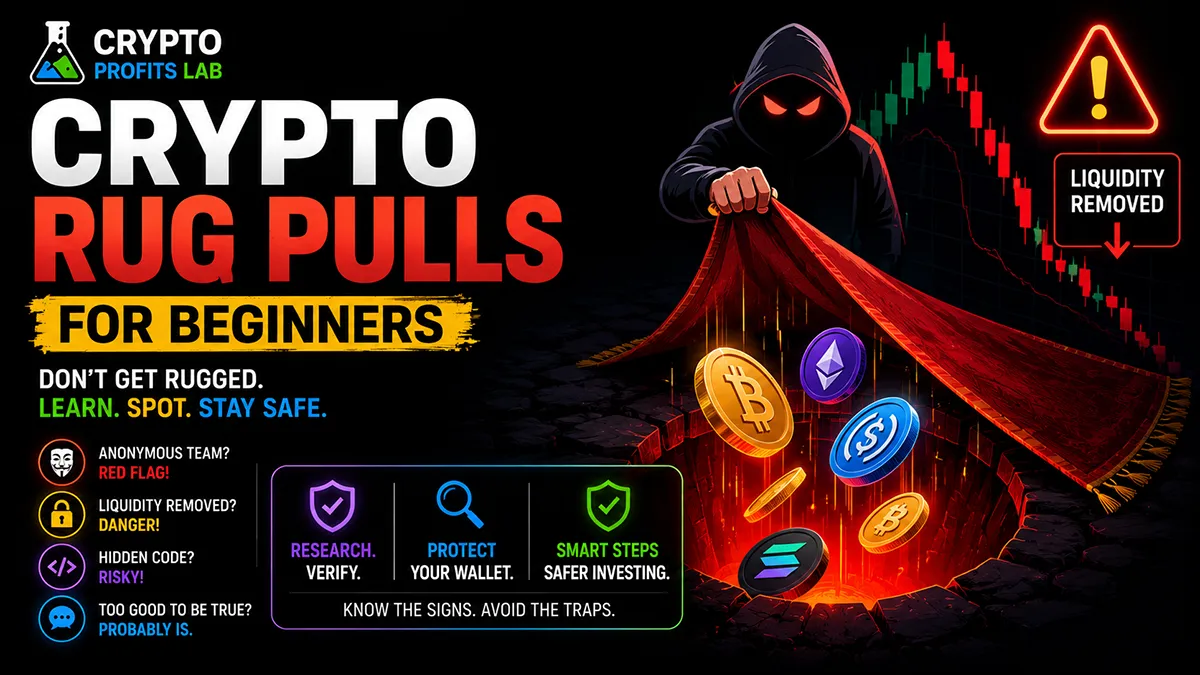
Crypto rug pulls are one of the most dangerous scams beginners can run into.
The name sounds strange, but the idea is simple. A rug pull occurs when the people behind a crypto project suddenly withdraw funds, remove liquidity, abandon the project, or use hidden code to harm buyers. Investors are left holding tokens that may become nearly worthless.
For beginners, crypto rug pulls are especially risky because they often look exciting at first. The project may have a flashy website, a fast-rising token price, social media hype, influencer posts, and promises of huge returns.
But behind the scenes, the project may be designed to fail from the beginning.
This guide explains crypto rug pulls in simple terms, how they work, warning signs to watch for, common beginner mistakes, and safer steps to protect your wallet before buying unknown tokens.
Quick Answer: What Are Crypto Rug Pulls?
Crypto rug pulls are scams in which a crypto project’s creators suddenly withdraw value from investors and leave the project, often causing the token’s price to crash.
A rug pull may occur when developers remove liquidity from a decentralized exchange, secretly mint additional tokens, block sales, abandon the project, or disappear after collecting funds from buyers.
Crypto rug pulls are most common with new tokens, meme coins, DeFi projects, and low-liquidity assets. They can happen quickly, sometimes within hours or days of a token launch.
The safest beginner rule is simple: if you do not understand who created the token, how it works, where the liquidity comes from, and whether the project has real trust signals, do not buy it.
Key Takeaways
- Crypto rug pulls are scams in which project creators take value from investors and then leave.
- Rug pulls often happen with new tokens, meme coins, DeFi apps, and low-liquidity projects.
- A project can look professional and still be unsafe.
- High hype, anonymous teams, unrealistic promises, and poor liquidity are major warning signs.
- Some rug pulls happen when developers remove liquidity from a trading pool.
- Others use hidden smart contract code that blocks selling or creates unfair control.
- Beginners should never buy a token only because it is trending on social media.
- Wallet safety, research, and patience are more important than chasing quick profits.
- No crypto investment can guarantee easy returns.
- If something feels rushed, secret, or too good to be true, slow down.
Crypto Rug Pulls Beginner Facts Table
| Topic | Beginner-Friendly Explanation |
|---|---|
| Main meaning | A scam where project creators take value and leave |
| Common targets | New tokens, meme coins, DeFi projects, and low-liquidity coins |
| Main warning sign | Huge promises with little real information |
| Common method | Removing liquidity from a pool |
| Other method | Hidden token code that blocks selling |
| Biggest beginner mistake | Buying because of hype |
| Can a project look real? | Yes, scams can have polished websites and branding |
| Best safety habit | Research before connecting a wallet or buying |
| Related risk | Fake airdrops, phishing, and wallet approvals |
| Guaranteed profit? | No, guaranteed crypto profit claims are a red flag |
Why Crypto Rug Pulls Matter for Beginners
Crypto rug pulls matter because beginners are often targeted by hype.
A new token may appear on social media with exciting promises. People may say it is “early,” “about to explode,” or “the next 100x coin.” The chart may show a fast price increase. The community may seem active. The website may look professional.
That does not mean the project is safe.
Many crypto rug pulls are designed to create urgency. Scammers want beginners to buy quickly before they ask hard questions.
This is why learning about Crypto Scams to Avoid is so important. Rug pulls are only one type of scam, but they are one of the most common risks in speculative token trading.
If you are new to crypto, it is better to miss a risky opportunity than to rush into a scam.
What Does “Rug Pull” Mean?
The phrase “rug pull” comes from the idea of someone pulling a rug out from under you.
In crypto, it means investors believe they are standing on something solid, but the support disappears suddenly.
That support may be:
- Liquidity
- Developer activity
- Project promises
- Token value
- Community trust
- The ability to sell
- A working product
When that support is removed, the price can collapse.
Crypto rug pulls are especially dangerous because blockchain transactions are usually final. If you send crypto, buy a scam token, or approve a bad contract, there may be no simple refund button.
This is different from many traditional financial systems, where banks or payment companies may sometimes reverse fraudulent transactions.
In crypto, personal responsibility matters more.
How Crypto Rug Pulls Work Step by Step
Crypto rug pulls can happen in different ways, but many follow a similar pattern.
Step 1: Scammers create a token or project
The creators make a new crypto token, website, logo, social media accounts, and marketing materials.
The project may claim to be connected to DeFi, gaming, artificial intelligence, meme coins, staking, airdrops, or passive income.
If you are still learning the basics of tokens, read Crypto Token.
Step 2: They create hype
The scammers try to attract buyers.
They may use:
- Influencer posts
- Telegram or Discord groups
- Fake testimonials
- Paid promotions
- Countdown timers
- “Limited-time” claims
- Big reward promises
- Fake partnerships
The goal is to make people feel they must buy quickly.
Step 3: Buyers add money
Beginners and speculators buy the token, often using a decentralized exchange.
A decentralized exchange, or DEX, lets users trade directly through blockchain-based tools. If this is new to you, read What Is a DEX?.
Step 4: The price rises
As more people buy, the chart may rise quickly.
This creates more excitement. New buyers may think the project is succeeding.
In reality, the price may be rising because of hype, low liquidity, or manipulation.
Step 5: The creators take value out
This is where crypto rug pulls happen.
The scammers may remove liquidity, sell large amounts of tokens, use hidden code, or disappear with project funds.
Step 6: Buyers are left with losses
The token price may crash. The project team may vanish. The website may stop working. Social media channels may be deleted or locked.
Many buyers are left holding tokens they cannot sell or tokens worth almost nothing.
Common Types of Crypto Rug Pulls
Crypto rug pulls can happen in several ways. Beginners should understand the main types.
Liquidity Rug Pull
A liquidity rug pull happens when project creators remove liquidity from a trading pool.
Liquidity refers to how easily an asset can be bought or sold without causing a significant price change. Read Crypto Liquidity for a simple explanation.
Many new tokens trade through liquidity pools on a DEX. If the developers control the liquidity and remove it suddenly, buyers may have no easy way to sell.
This can cause the token value to collapse.
Token Dump Rug Pull
A token dump happens when insiders hold a large supply of tokens and sell them quickly after the price rises.
The team may hype the project, wait for buyers to come in, and then dump their tokens into the market.
This can crush the price.
Token supply is one reason beginners should learn What Is Tokenomics?. Tokenomics explains how a token’s supply, distribution, and incentives work.
Hidden Smart Contract Rug Pull
A smart contract is blockchain code that runs automatically.
Some scam tokens use hidden or harmful smart contract functions. These functions may allow the creator to mint more tokens, change fees, block selling, or control transfers.
Read Smart Contracts before trusting a token with complicated rules.
Beginners do not need to become coders, but they should know that code can contain risks.
Honeypot Scam
A honeypot is a token that may allow users to buy but not sell.
The chart may rise because people can buy in. But when they try to exit, the transaction fails, or selling is heavily restricted.
This is one of the most frustrating types of crypto rug pulls because beginners may not realize the problem until after they buy.
Abandoned Project Rug Pull
Some projects do not use obvious malicious code. Instead, the team raises money, builds hype, and then quietly disappears.
They may stop posting updates, shut down communication, or delay promises until users lose confidence.
The token may slowly die rather than crash in a single moment.
Crypto Rug Pulls vs Normal Price Crashes
Not every crypto price crash is a rug pull.
Crypto is volatile, and prices can fall for normal market reasons. A legitimate token can drop due to bad news, weak demand, poor market conditions, regulatory pressures, or a broader bear market.
Read Crypto Volatility to understand why crypto prices move sharply.
The difference is intent.
A normal price crash may happen because the market changes.
A rug pull usually involves dishonest behavior by insiders, such as removing liquidity, hiding malicious code, dumping tokens, or disappearing after misleading investors.
Here is a simple comparison:
| Situation | Normal Price Crash | Rug Pull |
|---|---|---|
| Main cause | Market selling or weak demand | Insider abuse or scam behavior |
| Team activity | Team may still communicate | Team may vanish or block users |
| Liquidity | Usually still exists | May be removed or trapped |
| Selling | Usually still possible | May be blocked or difficult |
| Warning signs | Market weakness | Hype, secrecy, false promises, hidden control |
Crypto rug pulls are not just bad investments. They are often planned scams.
Why Meme Coins Can Be Riskier
Memecoins are crypto tokens often based on jokes, internet trends, animals, or online communities.
Some meme coins become popular, but many are extremely risky. They may have little real utility, weak liquidity, anonymous teams, and heavy social media hype.
Read Meme Coins before buying any token because of a viral post.
Crypto rug pulls often happen in the meme coin space because it is easy to create a token and market it quickly. Beginners may buy out of fear of missing out (FOMO).
A meme coin is not automatically a scam, but it should be treated as high risk unless proven otherwise.
If the only reason to buy is “everyone is talking about it,” slow down.
Why DeFi Can Attract Rug Pulls
DeFi stands for decentralized finance.
It includes crypto tools for trading, lending, borrowing, staking, yield farming, and liquidity pools. Read What Is DeFi? if you are new to the topic.
DeFi can be useful, but it also places more responsibility on users.
Anyone can create a token, launch a pool, and promote a project. That openness creates innovation, but it also creates room for scams.
Crypto rug pulls often use DeFi because scammers can launch quickly and reach buyers directly through wallets and DEXs.
If you are using DeFi, you should also understand What Are Crypto Gas Fees?, Crypto Slippage, and Impermanent Loss in Crypto.
These topics help beginners understand the risks around trading and liquidity.
Warning Signs of Crypto Rug Pulls
No warning sign is perfect, but several red flags should make beginners cautious.
Anonymous or unverifiable team
Some legitimate projects have anonymous teams, but beginners should be careful.
If the team cannot be verified and the project asks for trust, that is a risk.
Unrealistic promises
Promises like “guaranteed profits,” “risk-free income,” or “100x soon” are major red flags.
Crypto rewards and investments are never guaranteed.
No clear purpose
A project should be able to explain what it does in simple terms.
If the project uses buzzwords but cannot explain its value, be cautious.
Poor tokenomics
If insiders own a huge amount of the supply, they may be able to dump on buyers.
Read token distribution carefully when possible.
Low or unlocked liquidity
If liquidity is low or controlled by insiders, selling can become difficult.
Liquidity locks do not guarantee safety, but a lack of liquidity can be a warning sign.
Pressure to buy fast
Scammers use urgency.
They may say the opportunity will disappear, the price will explode, or only early buyers will win.
Fake partnerships
Some projects claim partnerships that do not exist.
Always verify partnerships from both sides.
Poor website and copied content
A rushed website, a copied whitepaper, a fake roadmap, or a grammar-heavy sales page can be a warning sign.
Read Crypto Whitepaper to understand what project documents should explain.
Common Beginner Mistakes
Crypto rug pulls often work because beginners make emotional decisions.
Mistake 1: Buying because of hype
Social media hype is not research.
A trending token can still be unsafe.
Mistake 2: Ignoring liquidity
If a token has weak liquidity, it may be hard to sell.
Beginners should understand liquidity before buying small tokens.
Mistake 3: Trusting influencers
Some influencers are paid to promote tokens.
A promotion does not mean a project is safe.
Mistake 4: Not checking tokenomics
If insiders control too much supply, they may be able to crash the price.
Mistake 5: Connecting wallets to unknown sites
Some rug pull campaigns are connected to phishing, fake airdrops, or bad wallet approvals.
Read Crypto Airdrops for Beginners before claiming free tokens.
Mistake 6: Using money they cannot afford to lose
High-risk tokens should never involve rent money, emergency savings, or borrowed funds.
Mistake 7: Believing “locked liquidity” means guaranteed safety
Locked liquidity can reduce one risk, but it does not remove all risks.
The project may still have bad tokenomics, hidden code, or dishonest insiders.
Safety and Risk Section
Crypto rug pulls are part of the broader crypto scam problem.
The FTC warns that cryptocurrency scams often use false promises, pressure, and claims of guaranteed returns. Read the official FTC cryptocurrency scam guidance before trusting any crypto investment offer.
Use these safety habits:
- Do not trust guaranteed profit claims.
- Do not buy because of social media pressure.
- Do not share your seed phrase.
- Do not send crypto to strangers.
- Use official websites only.
- Research the team and project history.
- Check tokenomics before buying.
- Be careful with new tokens.
- Avoid unknown wallet approvals.
- Start small if testing anything risky.
- Use two-factor authentication on Exchange accounts.
- Consider a separate wallet for high-risk DeFi testing.
- Keep your main long-term wallet away from unknown sites.
For more protection, read Crypto Safety Tips and Crypto Seed Phrase.
If you hold larger amounts, learn how a Hardware Wallet can help protect long-term storage.
How to Research a Token Before Buying
Here is a beginner-friendly research process.
Step 1: Understand the project
Can you explain what the token does in one sentence?
If not, keep researching.
Step 2: Check the team
Look for real names, history, previous work, and consistent communication.
Anonymous teams are not always scams, but they require extra caution.
Step 3: Read the whitepaper or documentation
A real project should explain its purpose, token supply, roadmap, risks, and how the system works.
Step 4: Review tokenomics
Check supply, insider allocations, vesting schedules, and whether large wallets control too much of the token.
Step 5: Check liquidity
Look at whether the token can be traded easily and whether liquidity appears reliable.
Step 6: Watch for selling restrictions
If people are reporting that they cannot sell, stop immediately.
Step 7: Search for warnings
Search the project name plus words like scam, rug pull, complaint, honeypot, or warning.
Step 8: Wait
Scammers want you to rush.
Waiting can protect you.
Crypto rug pulls often depend on speed and emotion. Patience is one of your best safety tools.
What to Do If You Suspect a Rug Pull
If you think a project may be a rug pull, slow down.
Do not connect more wallets. Do not send more money. Do not trust private messages from “support.” Scammers often target victims again after the first loss.
Here are safer steps:
- Stop interacting with the project.
- Do not approve new wallet transactions.
- Revoke suspicious approvals if you know how to do it safely.
- Save transaction records.
- Take screenshots of claims, websites, and messages.
- Report the scam where appropriate.
- Warn others carefully without sharing private wallet details.
- Review your wallet security.
If your seed phrase was exposed, the wallet should be considered unsafe.
Move remaining funds to a new secure wallet only if you understand how to do so safely.
Are All New Crypto Projects Dangerous?
No, not all new crypto projects are scams.
Some legitimate projects start small. Some have real teams, useful products, good documentation, honest communication, and transparent tokenomics.
The problem is that beginners often cannot easily tell the difference.
That is why new projects require extra caution.
If you are a beginner, it is usually safer to focus on education before buying small speculative tokens. Learn about wallets, exchanges, blockchains, tokenomics, DeFi, liquidity, and scams first.
Crypto rug pulls become easier to avoid when you understand the basics.
Final Thoughts
Crypto rug pulls are one of the biggest risks beginners should understand before buying unknown tokens.
A rug pull can happen when project creators remove liquidity, dump insider tokens, use hidden smart contract code, block selling, or abandon a project after attracting buyers.
These scams often rely on hype, urgency, and fear of missing out.
The best protection is education.
Do not buy because a token is trending. Do not trust guaranteed profit claims. Do not connect your wallet to unknown sites. Do not ignore tokenomics or liquidity. Do not risk money you cannot afford to lose.
Crypto Profits Lab is built to make crypto clearer, simpler, and safer for beginners. Learning about crypto rug pulls is not about becoming fearful. It is about becoming harder to fool.
When you understand the warning signs, you can avoid bad projects, protect your wallet, and make smarter crypto decisions.
FAQ
What are crypto rug pulls?
Crypto rug pulls are scams in which a project’s creators take value from investors and then leave the project. This may happen when developers remove liquidity, dump insider tokens, block selling, or abandon the project after creating hype. Beginners often encounter rug pulls in new tokens, meme coins, DeFi projects, and low-liquidity markets.
How do crypto rug pulls happen?
Crypto rug pulls often start with a new token and heavy promotion. Buyers enter because of hype or promised rewards. Then insiders remove liquidity, sell large token holdings, use hidden code, or disappear. The token price may crash quickly, leaving investors with assets that are difficult or impossible to sell.
Are rug pulls common in crypto?
Rug pulls are a common risk in speculative areas of crypto, especially with new tokens, meme coins, low-liquidity assets, and DeFi projects. Not every new project is a scam, but beginners should be cautious. A polished website, active chat group, or rising chart does not prove a project is safe.
Can a rug pull happen on a decentralized exchange?
Yes, rug pulls can happen on decentralized exchanges. A scammer can create a token, add liquidity, attract buyers, and then remove liquidity or use harmful contract rules. Because DEX trading often involves self-custody wallets and smart contracts, beginners must be extra careful before buying unknown tokens.
What are the warning signs of crypto rug pulls?
Warning signs include anonymous teams, unrealistic profit promises, poor tokenomics, low liquidity, fake partnerships, rushed marketing, pressure to buy quickly, and unclear project purpose. A token that only rises because of hype can still be dangerous. Beginners should research carefully before buying any new or unknown token.
Is a meme coin always a rug pull?
No, a meme coin is not automatically a rug pull. However, meme coins can be high risk because many have weak utility, low liquidity, anonymous teams, and heavy social media hype. Beginners should be cautious and avoid buying only because a meme coin is trending or promoted by influencers.
Can locked liquidity stop crypto rug pulls?
Locked liquidity can reduce one type of rug pull risk, but it does not guarantee safety. A project may still have hidden smart contract risks, insider token dumps, poor tokenomics, fake marketing, or an abandoned roadmap. Beginners should treat locked liquidity as one research point, not complete protection.
What should I do if I bought a rug pull token?
If you think you bought a rug-pull token, stop interacting with the project and do not send any more money. Avoid private messages claiming to help recover funds. Save records, review wallet approvals, and protect remaining assets. If your seed phrase was exposed, consider the wallet unsafe and proceed with caution.
How can beginners avoid crypto rug pulls?
Beginners can reduce risk by researching the team, reading the whitepaper, checking tokenomics, reviewing liquidity, avoiding guaranteed-return claims, and avoiding social media hype. Never share your seed phrase or connect your main wallet to unknown sites. Learning basic wallet and DeFi safety is essential.
What is the best rule for avoiding crypto rug pulls?
The best rule is to avoid buying anything you do not understand. If you cannot explain the project, tokenomics, liquidity, team, and risk in simple terms, wait. Crypto rug pulls often depend on urgency and emotion, so slowing down and researching carefully can prevent many beginner mistakes.