What Is a Crypto Bridge? A Beginner’s Guide
A crypto bridge is a tool that helps move cryptocurrency or blockchain information from one network to another. It can connect separate blockchains, such as Ethereum and another compatible network, or connect Ethereum Mainnet with a Layer 2 network.
Bridges are useful because blockchains normally operate as separate systems. An asset held on one network does not automatically appear on another. A bridge creates a controlled process for locking, releasing, minting, burning, or exchanging assets so that value can be represented on the destination network.
This guide explains how a crypto bridge works, why people use one, what fees to expect, and how beginners can reduce the risk of costly mistakes.
Quick Answer
A crypto bridge allows users to move supported assets or data between blockchain networks. In a common design, the original asset is locked on the source network, and a corresponding version is created or released on the destination network.
To use a bridge safely, confirm the source network, destination network, token, receiving wallet, fees, and estimated arrival time before approving the transaction. Use the official bridge recommended by the destination network when practical, and start with a small test amount.
A bridge transfer is not the same as a normal transfer within one blockchain. It can involve smart contracts, validators, liquidity providers, and multiple transactions.
Key Takeaways
- Blockchains are separate networks, so assets cannot move between them automatically.
- A crypto bridge connects supported networks and facilitates the transfer of value or information.
- Some bridges lock assets and create wrapped versions on another chain.
- Other bridges use liquidity pools to give users assets already available on the destination network.
- Bridge fees may include gas, service, liquidity, and price impact fees.
- Transfers can take seconds, minutes, or much longer, depending on the bridge and networks involved.
- Smart-contract bugs, fake websites, low liquidity, and incorrect network choices create real risks.
- Beginners should verify every detail and send a small test amount first.
Crypto Bridge Beginner Facts
| Beginner question | Simple answer |
|---|---|
| What does a bridge do? | It helps move supported assets or data between blockchain networks. |
| Does the coin physically travel? | No. The bridge changes how value is locked, released, or represented across networks. |
| Is bridging the same as swapping? | No. A swap changes one asset for another, while bridging changes the network on which an asset is available. |
| Do bridges charge fees? | Usually yes. You may pay gas and additional bridge or liquidity fees. |
| Do I need native gas coins? | Often yes, sometimes on both the source and destination networks. |
| Are bridge transfers reversible? | Usually not after the relevant blockchain transactions are confirmed. |
| Are all tokens supported? | No. Each bridge supports specific assets and network routes. |
| Is a bridge risk-free? | No. Bridges can have technical, operational, liquidity, and scam risks. |
Why Crypto Needs Bridges
Each blockchain maintains its own ledger, security system, transaction rules, and account balances. Bitcoin does not automatically know what happens on Ethereum. Ethereum does not automatically update when an asset moves on Solana or another network.
This separation creates a usability problem. People may want to access an application on another chain or move funds to a network with lower fees.
For example, a user holding ETH on Ethereum Mainnet may bridge supported ETH to a Layer 2 instead of selling it and buying it again elsewhere.
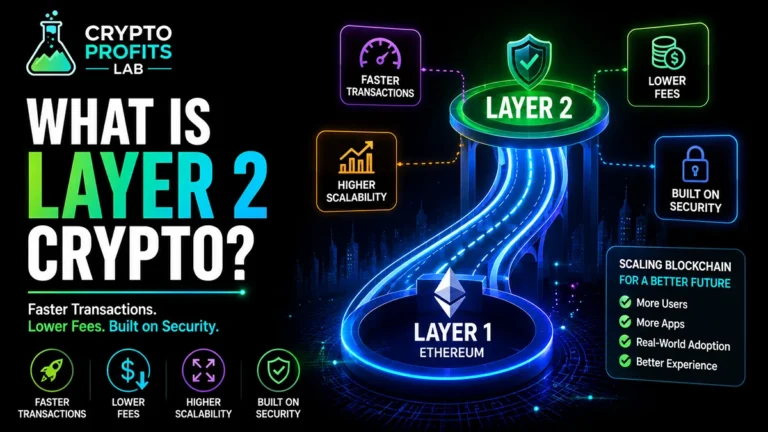
To understand why networks remain separate, read What Is a Crypto Network?. For an introduction to scaling networks, see What Is Layer 2 Crypto?.
How a Crypto Bridge Works
No single design is used by every bridge. However, most systems use one or a combination of the following methods.
Lock and Mint
The bridge locks the original asset in a smart contract or controlled address on the source blockchain. It then creates, or mints, a corresponding token on the destination blockchain.
The destination token represents a claim on the locked asset. It is often called a wrapped or bridged token.
When the user moves back, the bridged version is destroyed or burned, and the original asset is released.
A simplified example looks like this:
- You deposit 1 unit of a supported token on Network A.
- The bridge locks that token.
- The bridge creates 1 corresponding token on Network B.
- You use the represented token on Network B.
- When returning, the represented token is burned.
- The original token is released on Network A.
Its safety depends on the contracts and parties controlling the process.
Burn and Mint
Some assets are designed to exist natively on more than one supported network. Instead of locking a token and creating a wrapped copy, the system may burn the asset on the source chain and mint an equivalent amount on the destination chain.
The supply is intended to remain consistent because removed units are replaced elsewhere. Check the issuer’s official documentation before assuming a token uses this design.
Liquidity-Based Transfers
A liquidity bridge may use pools of assets on both networks.
You send assets into the bridge on the source chain. A liquidity provider or protocol then releases matching assets from a pool on the destination chain. Later transactions and settlement processes rebalance the pools.
This can be faster, but liquidity, fees, and price impact can affect the result.
Read What Is Crypto Liquidity? and Liquidity Pools in Crypto for related beginner explanations.
What Is a Wrapped Token?
A wrapped token is a blockchain token designed to represent another asset.
The original asset may be locked in one location while a corresponding version is issued on another network. The wrapped version can then follow the destination blockchain’s token standard and interact with its wallets and applications.
For example, a bridged asset on an Ethereum-compatible network may use the ERC-20 format. Learn more in What Is ERC-20?.
A wrapped token is not always identical in risk to the original asset. Its value may depend on the bridge correctly holding or accounting for the backing asset. If the bridge fails, becomes insolvent, or loses control of locked funds, the wrapped version could lose value or become difficult to redeem.
What Can You Use a Crypto Bridge For?
People commonly use bridges for several reasons.
Accessing Lower Fees
A user may move assets from a busy main network to a supported Layer 2 or alternative blockchain where transactions are less expensive.
Using Decentralized Applications
A lending platform, trading protocol, game, or marketplace may operate on a network different from the one holding your funds.
Moving Between Crypto Ecosystems
A bridge can connect assets and applications that would otherwise remain separated.
Taking Advantage of Network Features
Different networks may offer different speeds, applications, reward systems, or token markets.
Returning Funds to the Original Network
Users may bridge assets back after finishing an activity on another chain.
Before moving funds, evaluate the destination network, application, bridge security, and exit process.
Crypto Bridge vs. Crypto Transfer
A normal crypto transfer usually sends an asset from one address to another on the same blockchain.
A bridge transfer changes the network where the asset is available and may require transactions on both chains.
| Feature | Normal transfer | Bridge transfer |
|---|---|---|
| Networks involved | Usually one | Usually two |
| Main purpose | Change the receiving address | Change the network |
| Complexity | Lower | Higher |
| Smart contracts | Not always required | Commonly required |
| Fees | Usually, one network fee | May include several fees |
| Main risks | Wrong address or network | Wrong route, bridge failure, liquidity, contract, and address risks |
For ordinary sending instructions, read How to Transfer Crypto.
Crypto Bridge vs. Crypto Swap
A swap and a bridge solve different problems.
A swap changes one asset into another. For example, you might exchange ETH for a stablecoin on the same network.
A bridge changes where an asset is available. You might move ETH from Ethereum Mainnet to an Ethereum Layer 2 while still receiving ETH or a corresponding bridged version.
Some applications combine both actions, but this adds contracts, pricing, and potential failure points.
Always read the final wallet confirmation to understand both the asset and network changes.
How to Use a Crypto Bridge Step by Step
The exact screen will vary, but the following process applies to many bridge transactions.
Step 1: Choose the Destination Network
Decide where the funds need to go and why. Confirm that the wallet, exchange, and application you plan to use support that destination network.
Step 2: Find the Official Bridge
Use the destination network’s official website or documentation to locate its recommended bridge. Do not trust a sponsored search result, direct message, or unfamiliar link.
Ethereum provides an official beginner guide to bridging tokens to Layer 2 that explains the basic process and fee checks.
Step 3: Confirm the Supported Asset
Check whether the crypto bridge supports the exact token and route. A token with the same name can exist in several forms, including native, wrapped, or bridged versions.
Step 4: Connect the Correct Wallet
Open your wallet through the official application. Confirm that the wallet is set to the source network and that the displayed address is yours.
For wallet basics, read What Is a Crypto Wallet?.
Step 5: Enter a Small Test Amount
A test helps confirm the route and wallet setup. Keep enough native coin for all remaining gas.
Step 6: Review the Quote
Check:
- The asset being sent
- The asset is expected on arrival
- The source and destination networks
- The receiving wallet address
- The minimum amount expected
- The gas and service fees
- The estimated completion time
- Any required approval transaction
Step 7: Approve the Token If Required
Some tokens require separate smart contract approval before the bridge can move them. Read the approval amount carefully. Avoid unlimited permissions unless you understand and accept the risk.
Step 8: Confirm the Bridge Transaction
Your wallet should display the action and estimated network fee. Do not approve a transaction that shows an unexpected contract, amount, network, or permission.
Step 9: Track the Transaction
Save the transaction identification number. Follow the status through the bridge interface and the correct blockchain explorers.
See “What Is a Blockchain Explorer?” and “Crypto Confirmations Explained” for help reading transaction status.
Step 10: Confirm the Destination Balance
Switch the wallet to the destination network. You may need to add the token contract to make the balance visible.
Verify the destination transaction before assuming a missing display means failure.
What Fees Does a Crypto Bridge Charge?
Bridge costs vary by route and design. You may encounter several separate charges.
Source-Network Gas
You usually pay gas to approve a token and send the bridge deposit.
Destination-Network Gas
Some routes charge or require a fee to complete or claim the transfer on the destination chain.
Bridge Service Fee
The protocol may charge a percentage or a fixed amount for using the service.
Liquidity Fee
Liquidity-based bridges may charge for using available funds on the destination network.
Price Impact or Slippage
A bridge-and-swap transaction may deliver less than expected because of market conditions or limited liquidity.
Exchange Withdrawal Fees
If you use a centralized exchange as an alternative route, the exchange may charge its own withdrawal fee.
Review the total expected on arrival, not only the first charge. What Are Crypto Gas Fees? and Crypto Trading Fees for Beginners explain common costs.
How Long Does Bridging Take?
A crypto bridge transfer can take seconds, minutes, hours, or longer.
The timing depends on:
- Confirmation requirements on the source chain
- The bridge’s security design
- Network congestion
- Liquidity availability
- Whether the user must claim the funds
- The direction of the transfer
- Challenge or dispute periods used by some Layer 2 systems
A Layer 2 deposit may be quick, while a native withdrawal back can take longer. Read the estimate before approving.
Major Crypto Bridge Risks
Bridges can hold or control large amounts of cryptocurrency and may rely on complicated smart contracts. That makes them attractive targets.
Smart-Contract Risk
A coding error can allow funds to become stuck, misdirected, or stolen.
Validator or Operator Risk
Some bridges rely on a limited group of signers or operators. If enough of them are compromised or dishonest, the bridge may approve invalid transfers.
Wrapped-Asset Risk
A represented token depends on the backing and redemption system. If that system fails, the token may trade below the value of the original asset.
Liquidity Risk
A fast bridge may not have enough assets available on the destination network. This can increase fees, reduce the amount received, or delay completion.
Network Risk
The destination blockchain may experience outages, congestion, security problems, or limited exchange support.
Fake-Website Risk
Scammers copy bridge websites and use sponsored advertisements, fake support accounts, or direct messages to steal wallet approvals and funds.
Approval Risk
A malicious or overly broad token approval can allow a contract to spend more than the intended amount.
Transaction-Finality Risk
Some bridge designs wait for additional proof or dispute periods. A displayed balance may not mean the transfer is fully settled.
Treat bridging as more complex than a standard wallet transfer.
7 Essential Ways to Use a Crypto Bridge Safely
1. Start From Official Documentation
Locate the bridge on the destination network’s official website. Bookmark the correct page after verification.
2. Check Both Networks
Confirm the source and destination names in the bridge interface and wallet. Similar network names can be confusing.
3. Verify the Token Form
Make sure the destination application or exchange supports the version you will receive. Native and bridged tokens may use different contract addresses.
4. Send a Small Test Amount
A test can reveal an incorrect route, an unsupported token, or a wallet display problem before a larger transfer.
5. Keep Gas on Both Sides
You may need native coins to claim, move, swap, or return the assets after arrival.
6. Read Every Wallet Approval
Check the contract, amount, and permission. Reject unexplained or unexpected requests.
7. Plan the Return Route
Before entering a network, understand how you will leave it. Check bridge availability, withdrawal timing, exchange support, and expected fees.
A crypto bridge should solve a specific problem. Do not move funds simply because a social media post promises easy rewards.
Crypto Bridge Common Beginner Mistakes
Using a Search Advertisement Without Verification
Fake bridge pages can look almost identical to the real site. Start from the official network documentation instead.
Bridging the Entire Balance
Sending everything may leave no native coin for gas or recovery steps. Keep a reserve.
Confusing a Bridge With a Swap
You can arrive on the correct network with the wrong asset if you do not understand a combined bridge-and-swap route.
Ignoring the Destination Token
An exchange may support a network but not accept the exact bridged token version.
Skipping the Test Transfer
A small test adds a fee, but it can prevent a much bigger mistake.
Assuming the Return Trip Is Identical
Moving back may use a different route, fee, or waiting period.
Approving Unlimited Token Access
Broad approval may expose more funds than necessary if the contract is compromised.
Trusting Fake Support
Legitimate support will not ask for your seed phrase, private key, or wallet password.
Safety and Scam Warning
Scammers may claim that a bridge transfer is stuck and that you must deposit more crypto to release it. Others may direct you to a fake “recovery” website or ask you to validate your wallet with a seed phrase.
Never share:
- Your seed phrase
- Your private key
- Your wallet password
- Your two-factor authentication code
- A remote-access code for your computer
Do not sign a wallet message unless you understand what it authorizes. A signature can approve permissions even when no immediate payment appears on the screen.
Read Crypto Safety Tips and Crypto Scams to Avoid before connecting your wallet to an unfamiliar service.
Beginner Bridge Checklist
Before using a crypto bridge, confirm each item:
- I am using the official website.
- The source network is correct.
- The destination network is correct.
- The bridge supports the exact token.
- The receiving address belongs to me.
- The destination wallet or exchange supports the token version.
- I understand all displayed fees.
- I know how long the transfer may take.
- I have native gas coins where needed.
- I am starting with a small test amount.
- I understand any token approval.
- I saved the transaction identification number.
- I know how to return or withdraw the funds.
- Nobody has asked for my seed phrase or private key.
If one answer is unclear, pause before approving the transaction.
Final Thoughts
A crypto bridge connects blockchain networks that would otherwise operate separately. It can help users connect to lower-cost networks, access decentralized applications, and transfer supported assets across crypto ecosystems.
The convenience adds complexity because routes may rely on contracts, validators, liquidity pools, and wrapped tokens.
Beginners should use official sources, verify network and token formats, keep enough gas, review wallet permissions, and start with a small test amount. It is also important to understand the return route before moving a large balance.
Crypto Profits Lab focuses on explaining these tools without hiding the risks. A careful user does not need to understand every line of bridge code, but should understand what is being moved, where it is going, what it will become, and how it can be recovered or returned.
Crypto Bridge Frequently Asked Questions
What Is a Crypto Bridge in Simple Terms?
A crypto bridge is a tool that connects separate blockchain networks. It helps users move supported assets or information from one network to another. The bridge may lock the original asset and create a represented version elsewhere, or it may use liquidity already available on the destination chain. The exact process depends on the bridge’s design.
Is a Crypto Bridge the Same as an Exchange?
No. An exchange is mainly used to buy, sell, or trade assets. A crypto bridge is designed to move supported value between blockchain networks. A centralized exchange can sometimes provide an alternative route by accepting a deposit on one network and allowing a withdrawal on another, but that process depends on the exchange’s custody and withdrawal rules.
Is Using a Crypto Bridge Safe?
Bridging is not risk-free. Safety depends on the bridge’s code, security model, operators, liquidity, supported route, and website authenticity. Even a legitimate bridge can experience bugs or delays. Beginners can reduce risk by using official links, checking audits and documentation, sending a small test amount, reviewing wallet approvals, and avoiding unsupported tokens.
Why Do I Need Gas to Use a Bridge?
Bridge activity creates blockchain transactions. The source network usually charges gas for approvals and deposits, and the destination network may require gas for claiming or moving the received assets. Gas is commonly paid with each network’s native coin. Keep sufficient native currency on both sides so the funds remain easy to use.
How Long Does a Crypto Bridge Transfer Take?
Completion time varies by bridge, route, congestion, and security design. Some liquidity-based transfers complete within minutes, while certain native Layer 2 withdrawals can take much longer because of challenges or verification periods. The bridge interface should provide an estimate. Save the transaction identification number and avoid repeating the transaction until you understand its status.
Can I Lose Money Using a Crypto Bridge?
Yes. Losses can result from smart-contract failures, hacked operators, fake websites, incorrect networks, unsupported token versions, low liquidity, price impact, or malicious wallet approvals. A confirmed bridge transaction is usually difficult to reverse. Use a trusted route, verify every field, and test with an amount you can afford to lose before moving more.
What Is the Difference Between Bridging and Swapping Crypto?
Bridging changes the blockchain network where an asset is available. Swapping changes one asset into another. Some services combine both actions, allowing a user to send one token on one network and receive a different token on another. Combined transactions are convenient but may involve additional contracts, fees, slippage, and failure points.
Do I Need a Crypto Bridge to Use Layer 2?
You need a way to get assets onto the Layer 2, but a traditional bridge is not always the only option. Some centralized exchanges support direct withdrawals to Layer 2 networks, and some applications provide integrated transfer routes. Confirm the exact network before withdrawing. Using the wrong network or an unsupported token can make recovery difficult.