What Is a Crypto Airdrop? A Beginner’s Guide

A crypto airdrop is a distribution of digital tokens to cryptocurrency users. A project may send tokens directly to eligible wallet addresses or allow qualified users to claim them through an official website.
Some airdrops reward early users, promote a network, or distribute governance rights. Others are scams designed to attract dangerous wallet approvals or payments.
This guide explains how a crypto airdrop works, why projects use airdrops, how eligibility is decided, what costs and tax issues may apply, and how beginners can avoid common traps.
Quick Answer
A crypto airdrop distributes tokens to selected cryptocurrency wallet addresses. Eligibility may be based on holding a certain asset, using a blockchain application before a recorded date, joining a community, completing approved activities, or meeting other published rules.
A legitimate crypto airdrop should not require your seed phrase or private key. You may need to connect a wallet, sign a message, submit a claim transaction, or pay a normal blockchain gas fee. Every request should be verified through the project’s official website and announcements before you interact with it.
Free tokens do not guarantee profit. They can have little value, lose value quickly, create tax or recordkeeping obligations, or expose users to scams.
Key Takeaways
- A crypto airdrop distributes tokens to eligible users or wallet addresses.
- Projects may use airdrops for promotion, community ownership, rewards, or governance.
- Eligibility rules differ and may depend on the activity completed before a snapshot.
- Some tokens arrive automatically, while others must be claimed.
- Claiming may require a network fee even when the tokens are free.
- Airdropped tokens can be worthless, illiquid, highly volatile, or fraudulent.
- Never provide a seed phrase, private key, password, or two-factor authentication code.
- Verify the official contract address and website before connecting a wallet.
- Keep records because receiving or selling tokens may have tax consequences.
Crypto Airdrop Beginner Facts
| Beginner question | Simple answer |
|---|---|
| What is a crypto airdrop? | A distribution of cryptocurrency tokens to selected users or addresses. |
| Are airdrops always free? | The tokens may be free, but claiming can require gas or other costs. |
| Does everyone qualify? | No. Each project sets its own eligibility rules. |
| Do tokens arrive automatically? | Sometimes. Other airdrops require an official claim. |
| Is a crypto airdrop guaranteed to have value? | No. The token may have little or no market value. |
| Do I need to share my seed phrase? | Never. A legitimate project does not need it. |
| Can a crypto airdrop be a scam? | Yes. Fake claims and malicious tokens are common risks. |
| Can receiving tokens affect taxes? | Possibly. Rules depend on your country and circumstances. |
Why Crypto Projects Use Airdrops
A project may distribute part of its token supply to people who helped test, use, or support its network. A crypto airdrop can serve several purposes.
Rewarding Early Users
A project may reward people who used its application before it launched a token. The reward can recognize users who provided liquidity, traded, tested features, bridged assets, or participated in governance.
Distributing Governance Power
Some tokens let holders vote on protocol proposals. A crypto airdrop can distribute voting rights among people who have already used the product, rather than concentrating all tokens with founders or early investors.
Promoting a New Project
Free token distributions can attract attention and encourage people to try a network or application.
Expanding Token Ownership
Wider ownership can support participation, but it does not automatically make a token decentralized or valuable.
Encouraging a Specific Action
A project may offer rewards for testing a product, moving assets to a network, or joining a verified community program. Beginners should consider whether the activity is worth the fees and risks rather than participating only because a reward is possible.
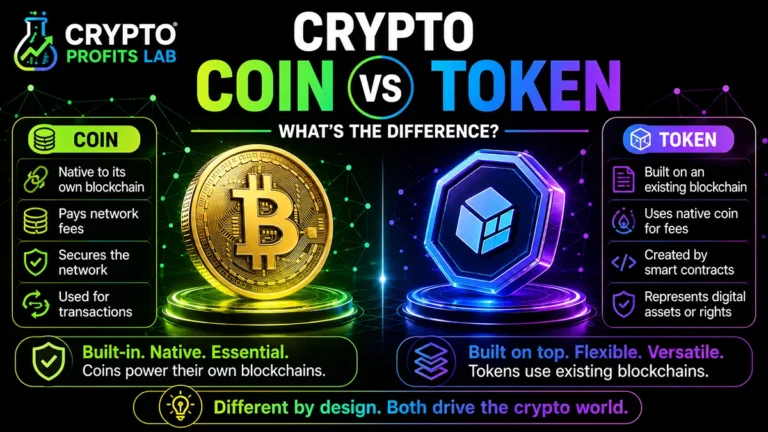
To understand what is being distributed, read “What Is a Crypto Token?” Token supply and distribution are also important parts of tokenomics.
How a Crypto Airdrop Works Step by Step
The exact process varies, but many airdrops follow a similar path.
Step 1: A Project Defines Its Goal
The team chooses the distribution goal, token allocation, and whether tokens unlock immediately or over time.
Step 2: Eligibility Rules Are Created
The project sets rules for who can participate. Possible requirements include:
- Holding a particular token
- Using a decentralized application
- Completing transactions on a network
- Providing liquidity
- Voting on proposals
- Testing a product
- Joining an approved community program
- Living outside restricted locations
Rules can be simple or complicated. Never assume that one transaction guarantees eligibility.
Step 3: The Project Takes a Snapshot
A snapshot is a record of blockchain balances or activity at a specific block or time. It enables the project to identify qualifying wallet addresses using information already recorded on the network.
A snapshot may be announced before it happens, announced afterward, or kept unannounced to discourage artificial activity.
Step 4: Eligibility Is Calculated
The project applies its rules. Allocations may vary by activity, balances, time, or other factors, and suspected bots or multi-wallet users may be excluded.
Step 5: Tokens Are Distributed or Made Claimable
In an automatic crypto airdrop, tokens are sent directly to eligible addresses. In a claim-based distribution, users visit the official claim page, connect the eligible wallet, and complete the required steps.
The claim may require a digital signature or an on-chain transaction. An on-chain claim normally requires the network’s native coin for gas.
Step 6: The Token Becomes Usable or Tradable
After distribution, the token may be transferable, usable inside an application, available for governance, or listed on exchanges. Some tokens remain locked until a later date.
Availability does not guarantee liquidity. A displayed price can be misleading when trading volume is low. Read “What Is Crypto Liquidity?” for a beginner’s explanation.
Common Types of Crypto Airdrops
Projects use several distribution methods.
Holder Airdrop
Tokens are distributed to wallets that held a qualifying cryptocurrency during a snapshot. The amount may depend on the wallet balance.
Holding a token on an exchange does not always qualify because the exchange may control the blockchain address. Support depends on the exchange and the distribution rules.
User or Retroactive Airdrop
A project rewards people who used its product before the token existed. Past swaps, deposits, votes, bridges, or other actions may count.
The word “retroactive” means the reward is based on earlier activity. Users may not know they qualify until the project announces the distribution.
Task-Based Airdrop
Participants complete stated activities, such as using a test network, joining a program, or submitting approved information.
Be cautious when tasks require social media promotion, identity documents, software downloads, or deposits. Consider the privacy and security costs before participating.
Governance Airdrop
Governance tokens are distributed to users who can vote on protocol decisions. Voting rights may be useful, but their practical influence depends on participation and how concentrated the supply is.
NFT Airdrop
A project may distribute a non-fungible token rather than a standard fungible token. Unexpected NFTs can also contain scam links or direct users to dangerous websites.
Exclusive Community Airdrop
A distribution may be limited to members of a specific community, holders of another asset, contributors, developers, or customers who meet documented conditions.
What Is a Crypto Airdrop Snapshot?
A snapshot is not a photograph of your wallet screen. It is a record of blockchain information at a chosen point.
For example, a project may check which addresses held a token at a particular block. Moving the asset after that block may not affect eligibility, as the relevant record has already been captured.
A snapshot can examine more than balances. It may include transaction history, smart contract use, governance votes, network activity, or the duration an address was active.
You can often review public activity with a blockchain explorer. However, the project’s private scoring method may not be completely visible.
Do not move funds repeatedly or create many wallets merely because people online predict a snapshot. Speculation can produce unnecessary fees and may violate the project’s anti-abuse rules.
Do You Need a Wallet for a Crypto Airdrop?
Most on-chain distributions require a compatible cryptocurrency wallet. The wallet address is used to measure eligibility and receive the token.
A self-custody wallet gives you control of the keys, but it also gives you responsibility for security. Review What Is a Crypto Wallet? and What Is a Crypto Wallet Address? before attempting a claim.
An exchange account may support certain distributions, but support is not guaranteed. The exchange controls the deposit addresses and decides whether it will credit customers.
Keep the wallet on the correct crypto network. A token on Ethereum is separate from a similarly named token on another blockchain.
How to Check Whether You Qualify
Follow a careful process instead of trusting a link in a comment or direct message.
1. Find the Project’s Official Website
Use the website listed in established project documentation or a verified account. Avoid sponsored advertisements when looking for a claim page.
2. Read the Official Announcement
Confirm the token name, eligibility period, supported network, claim date, deadline, and contract address.
3. Check the Eligibility Tool
Some projects provide a page where you enter or connect a public wallet address. Entering a public address is safer than connecting a wallet, but you must still verify the website.
4. Review the Wallet Request
A simple eligibility check should not require a transfer of assets or reveal recovery information. Reject unexpected approvals and signatures.
5. Confirm Through More Than One Official Source
Compare the website, documentation, and verified announcement. Scammers can copy one page or impersonate one account.
How to Claim a Crypto Airdrop Safely
The following steps can reduce risk, but they cannot eliminate it.
Step 1: Confirm the Exact Website Address
Type a verified address or use an official bookmarked page. Look for misspellings, extra characters, and unusual domain endings.
Step 2: Verify the Network
Confirm the wallet is connected to the network named in the official instructions. A claim on the wrong network may fail or interact with an unrelated contract.
Step 3: Check the Token Contract
Compare the contract address with the project’s official documentation. Token names and symbols can be copied, so the name alone does not prove authenticity.
For Ethereum tokens, What Is ERC-20? explains how token contracts work.
Step 4: Consider Using a Separate Wallet
A dedicated wallet can reduce the value exposed to an unfamiliar application. It does not make a malicious signature safe, but it can limit the assets at risk.
Never import your main seed phrase into a new or unfamiliar website. Learn why in What Is a Crypto Seed Phrase?.
Step 5: Read Every Signature and Approval
A signature may prove wallet ownership, accept terms, or authorize a blockchain action. A token approval can give a contract permission to spend assets.
Do not sign unreadable or unexplained requests. Cancel and investigate when the wallet displays warnings.
Step 6: Check the Gas Fee and Expected Result
The tokens may be free, but the claim transaction can require gas. Compare the cost with the possible reward and keep enough native coin for later transactions.
Read What Are Crypto Gas Fees? for a complete explanation.
Step 7: Save the Transaction Record
Keep the transaction ID, date, amount received, and estimated market value. These records can help with troubleshooting and taxes.
Are Crypto Airdrops Really Free?
A crypto airdrop may provide tokens without a purchase, but participating can still cost money.
Possible costs include:
- Blockchain gas fees
- Token approval fees
- Bridging fees
- Exchange or withdrawal fees
- Time spent completing activities
- Tax or accounting costs
- Privacy lost through identity checks
- Risk created by wallet connections
A project may also expect users to spend money on transactions before a future distribution is confirmed. That is speculation, not a free reward.
Before completing an activity for a possible crypto airdrop, calculate the total fees. Using a crypto bridge or making repeated transactions can cost more than the eventual token allocation.
How Much Can a Crypto Airdrop Be Worth?
There is no standard value. Some distributions become valuable, while others remain worth very little.
Value depends on:
- The number of tokens received
- Total and circulating supply
- Demand for the token
- Exchange availability
- Trading liquidity
- Vesting or lockup rules
- Project adoption
- Overall market conditions
A token price can change quickly after launch as early recipients sell. Low liquidity can make the displayed price difficult to achieve for a large order.
Treat every estimate as uncertain. Crypto Volatility Explained describes why prices can move sharply.
Tax and Recordkeeping Considerations
Receiving, claiming, selling, swapping, or spending airdropped tokens may create tax obligations. The result depends on your country, the type of distribution, when you gained control, and what you later did with the asset.
Keep records of:
- The wallet address
- The token and amount
- The date and time received or claimed
- The market value at that time
- Gas and related fees
- The date and value when sold or exchanged
- Transaction identification numbers
Tax rules can change, and individual situations differ. Read Crypto Taxes for Beginners and consult current official guidance or a qualified tax professional.
Major Crypto Airdrop Risks
Fake Claim Websites
A cloned website may ask you to connect a wallet and approve a transaction to transfer your assets.
Malicious Tokens
An unfamiliar token may appear in your wallet without permission. The token description or website may direct you to a scam page.
Dangerous Wallet Approvals
A claim can request permission to spend valuable tokens rather than merely distributing the advertised asset.
Impersonation
Scammers create fake social media accounts, support profiles, advertisements, and direct messages that resemble a real project.
Worthless Tokens
A token can have no useful market, no liquidity, or no real project behind it.
Pump-and-Dump Activity
Promoters may exaggerate demand and sell their holdings after attracting buyers.
Identity and Privacy Risk
Some programs request identity verification. Personal information can be exposed if the project or provider handles it poorly.
Legal and Geographic Restrictions
A distribution may exclude certain locations or require additional checks. Never provide false information to bypass restrictions.
Safety and Scam Warning
Treat every unexpected token and urgent claim message as suspicious until verified.
A legitimate crypto airdrop does not need your seed phrase, private key, wallet password, or two-factor authentication code. No support agent needs remote access to your computer to release tokens.
Ethereum.org’s guide to identifying scam tokens explains that token names, symbols, balances, and displayed transfers can be manipulated to appear legitimate. Verify the contract and the originating project rather than trusting what appears in a wallet.
Also, follow these rules:
- Do not send crypto to “unlock” a larger reward.
- Do not download unknown claim software.
- Do not approve a transaction because a countdown creates urgency.
- Do not trust unsolicited support messages.
- Do not interact with a random token merely to remove it.
- Do not post screenshots containing sensitive wallet information.
Review Crypto Scams to Avoid and Crypto Safety Tips before connecting to unfamiliar applications.
Common Beginner Mistakes
Chasing Every Rumored Crypto Airdrop
Completing dozens of transactions can incur fees and expose your wallet to risky contracts without yielding any rewards.
Connecting a Main Wallet Everywhere
A wallet holding valuable assets should not be connected casually to every new application.
Trusting the Token Name
Anyone can create a token with a familiar name or symbol. Verify the contract address.
Paying to “Verify” Eligibility
A normal gas fee may be required for an on-chain claim, but sending funds directly to a person or deposit address is a warning sign.
Ignoring Token Approvals
An approval can matter more than the advertised claim. Read what the contract is permitted to spend.
Assuming Free Tokens Are Risk-Free
Tokens can create security, tax, privacy, and market risks even when no purchase is required.
Forgetting the Deadline
Some legitimate claims have an end date. Confirm it through official sources and avoid last-minute decisions made under pressure.
Selling Without Checking Liquidity
A wallet can display a large estimated value even when buyers and trading volume are limited.
Beginner Crypto Airdrop Checklist
Before participating, confirm:
- I found the announcement through official sources.
- The website address is exact.
- The project and token contract are verified.
- I understand why I may qualify.
- The source and destination networks are correct.
- I know whether the distribution is automatic or claim-based.
- I understand every signature and token approval.
- The gas cost is reasonable.
- I am not sending crypto directly to unlock a reward.
- I am not sharing a seed phrase or private key.
- I have considered using a separate wallet.
- I saved the transaction and value records.
- I understand that the token may have little or no value.
- I have reviewed possible tax obligations.
Pause when any item is unclear. Missing a questionable distribution is better than losing the assets already in your wallet.
Final Thoughts
A crypto airdrop can distribute tokens, reward early users, and introduce people to a new blockchain project. It can also attract scammers because the promise of free cryptocurrency encourages quick decisions.
Slow down and verify the website, network, token contract, eligibility rules, wallet request, fees, and expected result. Never reveal recovery information or sign an unclear transaction.
Remember that free does not mean valuable, profitable, or safe. A token can see its price fall, lack liquidity, create recordkeeping obligations, or expose a wallet to malicious contracts.
Crypto Profits Lab explains opportunities and risks in simple terms so beginners can make informed decisions rather than act on hype. Education, careful verification, and strong wallet security are more valuable than any single giveaway.
Crypto Airdrop Frequently Asked Questions
What Is a Crypto Airdrop in Simple Terms?
A crypto airdrop is a distribution of digital tokens to selected wallet addresses or users. Projects may use it to reward early activity, promote a network, or distribute governance rights. Some tokens arrive automatically, while others require an official claim. Receiving tokens does not guarantee that they are valuable, legitimate, or safe to interact with.
How Do I Know Whether I Qualify for a Crypto Airdrop?
Eligibility depends on rules published by the project. A project may consider token holdings, past application use, transactions, votes, liquidity activity, or a recorded snapshot date. Check the official website and verified announcements rather than social media rumors. A legitimate eligibility check should never require your seed phrase, private key, password, or security code.
Are Crypto Airdrops Free?
The tokens may be distributed without a purchase, but claiming them can involve gas, bridging, exchange, or tax-related costs. Users may also spend time and money completing activities without any guarantee of qualifying. Calculate all likely costs before participating. An airdrop that requires you to send crypto directly to unlock a larger payment is a likely scam.
Can a Crypto Airdrop Empty My Wallet?
A token appearing in a wallet cannot normally empty it by itself. The danger begins when a user visits a malicious website, signs a harmful message, approves token spending, reveals a seed phrase, or installs unsafe software. Ignore unexpected tokens until you verify them. Read every wallet request and use official project sources before interacting.
Why Did a Random Token Appear in My Wallet?
Public blockchain addresses are visible, so anyone can send a token to your address or create a contract that displays your balance. Scammers use unexpected tokens to lead users toward fake claims or trading websites. Do not trust the name, symbol, or displayed value. Verify the official contract and project before taking any action.
Do I Have to Pay Gas to Claim a Crypto Airdrop?
A claim recorded on a blockchain commonly requires a gas fee paid in the network’s native coin. An automatic distribution may not require the recipient to pay. Review the transaction inside your wallet and confirm that the fee is a normal network charge. Do not send money directly to a person or a separate address to release tokens.
Are Crypto Airdrops Taxable?
They may be taxable depending on your country, when you gain control of the tokens, how they were received, and what you later do with them. Keep records of the amount, date, market value, fees, and later sale or exchange. Tax rules can change, so consult current official guidance or a qualified professional for your situation.
Can I Sell Airdropped Tokens Immediately?
Some tokens can be sold when trading opens, while others are locked, vested, restricted, or unsupported by major exchanges. Even when a market exists, low liquidity and heavy selling can cause large price changes. Verify the correct token contract, exchange, network, deposit support, and available liquidity before attempting to sell or transfer the asset.