What Is a Crypto Whale? A Beginner Guide
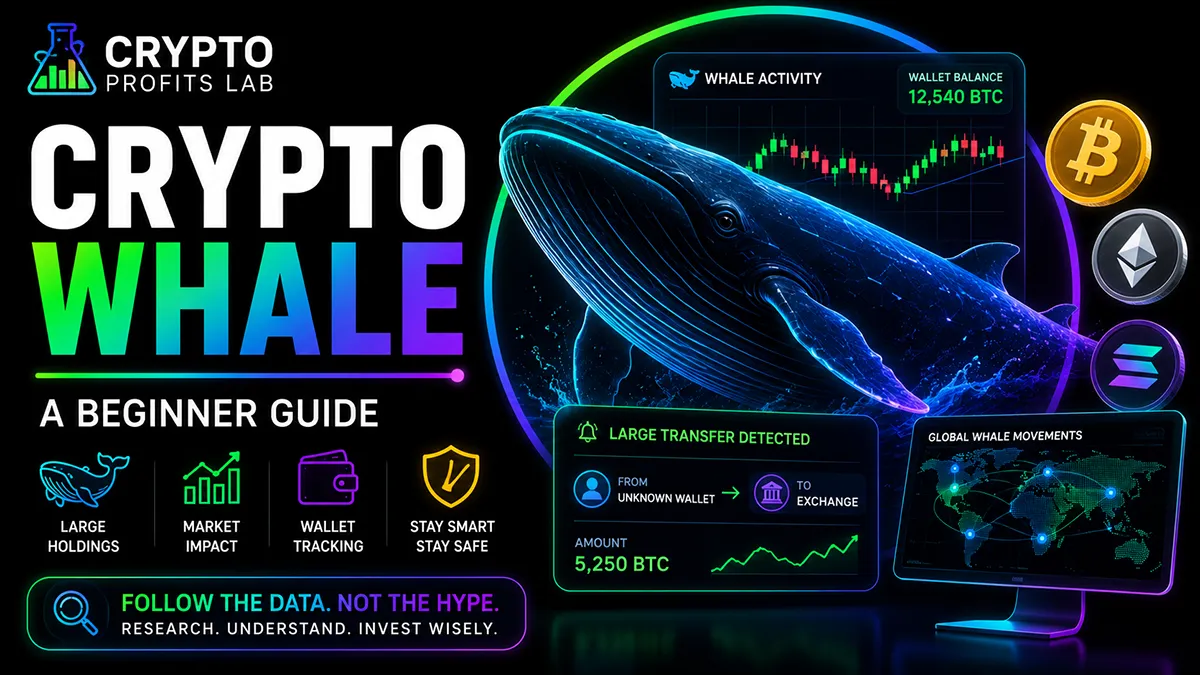
A crypto whale is one of those terms beginners hear often but may not fully understand.
You may see people online say, “A whale is buying,” “Whales are dumping,” or “Whales are moving coins to an exchange.” That can sound important, but it can also create confusion and fear.
The truth is simple.
A crypto whale is a person, company, fund, or wallet that controls a large amount of cryptocurrency.
Because whales hold so much crypto, their buying, selling, or moving activity may affect market prices, especially in smaller or less liquid coins.
This does not mean every large wallet is dangerous. It also does not mean every whale movement predicts the future. Beginners need to understand what whales are, what they can influence, and what they cannot tell you.
This guide explains the topic in plain English so you can understand crypto whale activity without panic, hype, or confusion.
Crypto Profits Lab is built to make crypto education cleaner, simpler, and more trustworthy for beginners. This article is educational only and is not financial advice.
Quick Answer: What Is a Crypto Whale?
A crypto whale is a wallet, person, institution, or group that owns a very large amount of a cryptocurrency.
For example, someone who owns a huge amount of Bitcoin, Ethereum, Dogecoin, or another token may be called a whale. The exact amount needed to be considered a whale depends on the asset, market size, and total supply.
A crypto whale matters because large holders can sometimes move markets. If a whale sells a big amount at once, the price may drop. If a whale buys heavily, the price may rise. If a whale moves coins to an exchange, traders may wonder whether selling is coming.
However, whale activity is not a guaranteed signal.
A large transfer does not always mean a whale is about to sell. It could be a wallet reorganization, exchange movement, custody change, security update, or internal transfer.
Beginners should treat whale activity as one piece of information, not as a trading plan by itself.
Key Takeaways
- A crypto whale is a large holder of a cryptocurrency.
- Whales can be individuals, companies, funds, exchanges, or project-related wallets.
- Whale activity may affect price, especially in smaller or low-liquidity markets.
- A large wallet transfer does not always mean buying or selling.
- Beginners can use a blockchain explorer to view public wallet and transaction activity.
- Whale watching can be useful, but it can also lead to fear and emotional decisions.
- Never buy or sell only because someone online says a whale is moving crypto.
Beginner Facts About Crypto Whales
| Beginner Question | Simple Answer |
|---|---|
| What is a crypto whale? | A person, wallet, or group that holds a very large amount of crypto. |
| Can whales move prices? | Sometimes, especially in smaller or less liquid markets. |
| Are all whales bad? | No. Some are long-term holders, exchanges, funds, or project wallets. |
| Can beginners track whales? | Yes, public blockchain activity can often be checked with explorers. |
| Does a whale transfer mean selling? | Not always. It may be an internal move or custody change. |
| Are whales only in Bitcoin? | No. Whales can exist in any cryptocurrency or token. |
| Should beginners trade based on whales? | Not by itself. Whale activity is only one research clue. |
Why the Term Crypto Whale Exists
The word “whale” is used because whales are large.
In crypto, a whale is a large market participant.
A small investor may own a tiny fraction of a coin’s supply. A whale may own enough to influence market behavior. This is especially true in smaller altcoins, meme coins, or tokens with low trading activity.
The term is not official.
There is no single global rule that says exactly how much crypto someone must own to become a whale. The meaning depends on the asset.
A person holding 100 Bitcoin may be considered very large by many people. But in a small token with a tiny market, even a much smaller dollar amount might create major price movement.
The main idea is influence.
A crypto whale matters because large holdings can affect supply, demand, market emotion, and short-term price moves.
How Crypto Whales Can Affect Prices
Crypto prices move because of supply and demand.
If many people want to buy and fewer people want to sell, price can rise.
If many people want to sell and fewer people want to buy, price can fall.
A crypto whale may affect this balance because the amount they buy or sell can be large compared with normal trading volume.
For example, imagine a small token has limited daily trading activity. If a whale sells a huge amount at once, there may not be enough buyers at the current price. The price may drop quickly as the market tries to find buyers.
The same can happen in reverse.
If a whale buys a large amount of a token, the price may rise because available supply gets purchased quickly.
This is why beginners should understand crypto liquidity. Liquidity means how easy it is to buy or sell without causing a big price change.
Low liquidity makes whale activity more powerful.
High liquidity can absorb larger trades more easily.
Crypto Whale Activity Does Not Always Mean What You Think
One of the biggest beginner mistakes is assuming every whale movement means something dramatic.
A large transfer can look scary.
You may see a social media post saying, “A whale moved millions to an exchange.” Many beginners assume that means the whale is about to sell.
Sometimes that may be true.
But many times, it is only a guess.
A large wallet transfer could happen because:
- A company is moving funds to a safer wallet.
- An exchange is reorganizing customer funds.
- A fund is changing custody providers.
- A project is unlocking or moving treasury tokens.
- A wallet owner is testing a transfer.
- A trader is preparing to sell, but has not sold yet.
- A whale is moving funds between their own wallets.
The public blockchain may show the movement, but it does not always show the reason.
That is why a crypto whale transfer should not be treated as proof of future price direction.
Step-by-Step: How Beginners Can Research Whale Activity
You do not need to become a professional trader to understand the basics.
Use this simple process.
Step 1: Identify the Asset
First, know which crypto asset you are looking at.
Is it Bitcoin, Ethereum, Shiba Inu, Dogecoin, Solana, Cardano, or a smaller token?
Whale activity matters more when you understand the size of the market.
A large transfer in Bitcoin may be normal compared with Bitcoin’s market size. A similar dollar amount in a small token may be much more important.
If you are still learning how crypto assets differ, start with what is cryptocurrency and what are altcoins.
Step 2: Check Market Cap
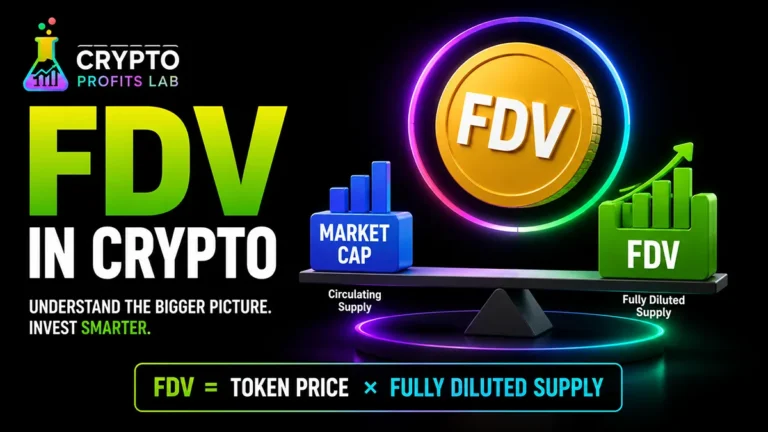
Market cap is the estimated total value of a crypto asset.
It helps beginners understand size.
A crypto whale holding $10 million worth of a very large asset may have less influence than a whale holding $10 million worth of a small, thinly traded token.
This is why market cap matters more than price per coin.
Read market cap crypto if you want a simple explanation.
A token with a tiny price can still have a large market cap if the supply is huge.
Step 3: Check Liquidity
Next, check liquidity.
Liquidity affects how much price may move when large trades happen.
A coin with deep liquidity can usually handle bigger trades without extreme price movement. A coin with weak liquidity may move sharply from one large order.
This is especially important with meme coins, smaller altcoins, and newly launched tokens.
If you are researching speculative tokens, also read what are meme coins.
Step 4: Use a Blockchain Explorer
A blockchain explorer is a search tool for public blockchain data.
It can help you view wallet addresses, transactions, token transfers, and other activity.
If someone posts about a whale transfer, beginners should avoid blindly trusting the headline. Instead, learn how to check the public data.
Start with blockchain explorer for a beginner-friendly guide.
A blockchain explorer can show that a transfer happened, but it cannot always explain why it happened.
Step 5: Look at Exchange Deposits and Withdrawals
A transfer to an exchange may get attention because exchanges are places where people can sell.
A transfer away from an exchange may be interpreted as someone moving crypto into storage.
But these interpretations are not guaranteed.
A crypto whale may move funds to an exchange for many reasons. They may plan to sell, trade, use a service, lend, borrow, or reorganize holdings.
A transfer away from an exchange may suggest long-term storage, but it could also be part of normal exchange operations.
Use exchange movement as a clue, not a conclusion.
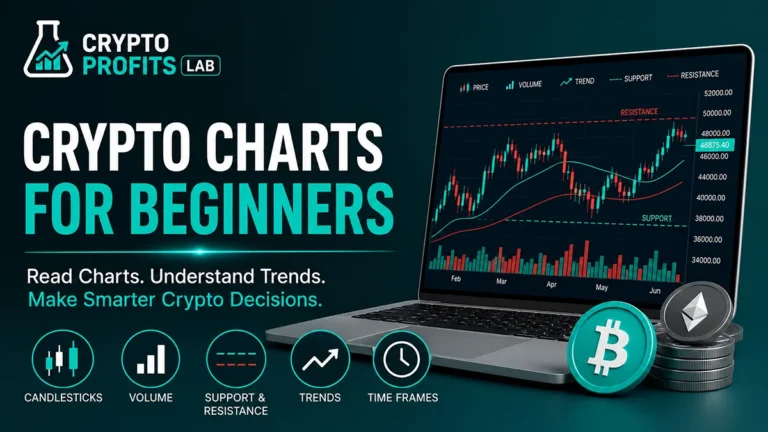
Step 6: Compare Whale Activity With Price and Volume
Price tells you where the market is trading.
Volume tells you how much trading activity is happening.
Whale activity becomes more meaningful when compared with price movement and trading volume.
For example, if a whale sells during high volume, the market may absorb the selling more easily. If a whale sells during low volume, price may move more sharply.
Beginners should understand crypto volatility before reacting to large price swings.
Step 7: Avoid Emotional Decisions
The final step is the most important.
Do not panic buy or panic sell because of one whale alert.
A crypto whale movement may be interesting, but it should not control your entire decision.
Ask:
- Do I understand the asset?
- Is the market liquid?
- Is the transfer confirmed?
- Is there a clear reason for the movement?
- Am I reacting emotionally?
- Does this fit my plan?
If you cannot answer those questions, slow down.
Crypto Whale vs Normal Investor
A normal investor may buy or sell small amounts that do not move the market.
A whale may buy or sell enough to influence price or market emotion.
Here is a simple comparison.
| Feature | Normal Investor | Crypto Whale |
|---|---|---|
| Typical holding size | Smaller compared with market | Very large compared with market |
| Price impact | Usually limited | Can be meaningful in some markets |
| Public attention | Usually low | Often watched by traders |
| Risk to beginners | Personal loss | Can influence crowd behavior |
| Common mistake | Following hype | Being overinterpreted by others |
A crypto whale is not automatically smarter than everyone else.
Large holders can make mistakes too.
Beginners should not assume that whale activity always means expert knowledge.
Why Crypto Whales Matter More in Smaller Coins
Whales can exist in every market, but they matter more in smaller markets.
A small token may have fewer buyers and sellers. It may have lower liquidity. It may trade on fewer exchanges. It may have a more concentrated supply.
In that environment, one large holder can create big movement.
This is why beginners should be extra careful with low-cap tokens and new projects.
A coin may look exciting because the price is moving quickly, but fast movement can also mean the market is easier to push around.
Before buying a smaller token, review what is tokenomics and crypto whitepaper.
Tokenomics can show how supply is distributed.
A whitepaper may explain the project’s plan, but it does not prove that the project is safe.
Whale Wallets and Public Blockchains
Many blockchains are public.
That means anyone can search certain wallet addresses and transactions.
This is why people can track some whale wallets.
However, public does not mean simple.
One person may control many wallets. One wallet may belong to an exchange and include funds from many customers. A project wallet may hold treasury tokens. A fund may use custody services.
This makes interpretation difficult.
A beginner may see a huge balance and assume it belongs to one rich person. In reality, it may belong to an exchange, a smart contract, or a company wallet.
If you are still learning wallet basics, read what is a crypto wallet and crypto wallet address.
Understanding wallet addresses makes whale tracking less confusing.
Crypto Whales and Exchanges
Exchanges often control large wallets.
That does not always mean the exchange owns all the crypto in those wallets. Much of it may belong to customers.
This matters because beginners may misunderstand exchange wallet movements.
If an exchange moves a large amount of Bitcoin or Ethereum, that may be normal internal activity. It may not mean one crypto whale is buying or selling.
Centralized exchanges manage many transactions, withdrawals, deposits, and security processes.
If you are new to exchanges, read crypto exchange and best crypto exchange for beginners.
Do not assume every large exchange transfer is a market signal.
Common Beginner Mistakes With Crypto Whales
Mistake 1: Treating Whale Alerts Like Guaranteed Signals
A whale alert may show that a large transaction happened.
It does not guarantee what happens next.
A transfer is not the same as a sale.
A deposit is not always a dump.
A withdrawal is not always long-term holding.
Beginners should avoid making decisions from one headline.
Mistake 2: Ignoring Liquidity
A large holder matters more when liquidity is low.
If you do not understand liquidity, you may overreact or underreact to whale activity.
Low-liquidity tokens can move sharply, but they can also trap buyers who cannot sell easily.
Mistake 3: Assuming Whales Always Know More
A crypto whale may have experience, but large holders are not always right.
Some whales buy too early. Some sell too late. Some get caught in market crashes. Some lose money from bad decisions.
Do not blindly copy a large wallet.
Mistake 4: Panic Selling During Normal Transfers
Large transfers can happen for normal reasons.
If you sell every time a big wallet moves funds, you may make emotional decisions.
A better approach is to check the context and avoid rushing.
Mistake 5: Chasing Pumps
Sometimes beginners see price rising and assume whales are buying.
They rush in late.
Then early buyers sell, the price falls, and beginners get stuck.
Before placing trades, understand market order vs limit order crypto.
Order type matters during fast-moving markets.
Mistake 6: Forgetting About Scams
Scammers may use whale language to create excitement.
They may say whales are accumulating, insiders are buying, or a huge move is coming.
These claims may be fake.
Always verify information and avoid pressure.
Safety and Risk Tips for Beginners
Whale activity can be useful, but it can also be used to manipulate emotions.
Beginners should be careful with social media posts that claim a crypto whale is about to cause a huge price move.
Some groups use whale stories to create fear of missing out. Others use whale selling rumors to create panic. Both can push beginners into bad decisions.
The CFTC warns customers not to buy virtual currencies, digital coins, or tokens based on social media tips or sudden price spikes. You can read the official CFTC pump-and-dump advisory for more safety guidance.
Here are simple safety rules:
- Do not trust random whale alerts without checking the source.
- Do not buy because someone says a whale is accumulating.
- Do not sell because someone says a whale is dumping.
- Check the blockchain data when possible.
- Compare whale activity with market cap, liquidity, and volume.
- Watch for fake screenshots and fake wallet claims.
- Use trusted exchanges and wallets.
- Keep your account and wallet security strong.
For more protection, read crypto scams to avoid and crypto safety tips.
Should Beginners Track Crypto Whales?
Beginners can learn from whale activity, but they should not become obsessed with it.
Tracking whales can help you understand how public blockchains work. It can show large transfers, exchange movements, and wallet concentration.
But too much whale watching can create stress.
It may make you feel like you need to react to every big transfer.
That is not a good beginner strategy.
A smarter approach is to use whale activity as one research tool.
Combine it with:
- Market cap
- Liquidity
- Volume
- Project research
- Tokenomics
- News
- Personal risk tolerance
- A clear plan
If you invest for the long term, you may also prefer strategies that reduce emotional timing decisions, such as dollar cost averaging crypto.
Crypto Whale Activity in Bull and Bear Markets
Whale activity can feel different depending on the market cycle.
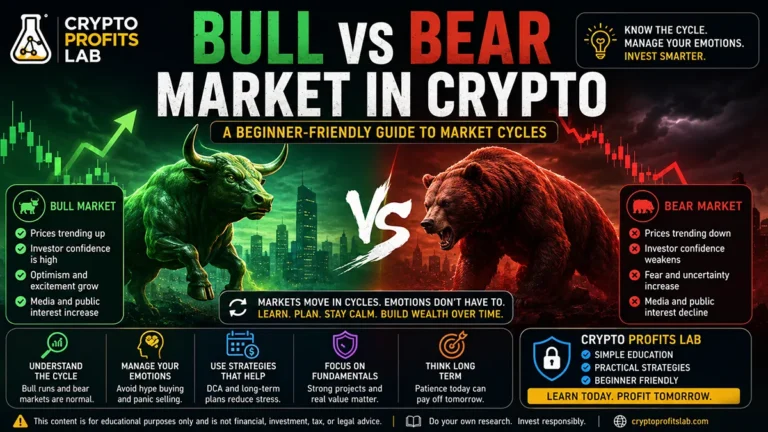
In a bull market, prices are rising and people are optimistic. If whales buy, beginners may see it as confirmation that prices will keep going up.
In a bear market, prices are falling and people are nervous. If whales sell or move coins to exchanges, beginners may panic.
Market cycle matters.
The same whale movement may be interpreted differently depending on market mood.
This is why beginners should understand bull vs bear market crypto.
A bull market can make people too confident.
A bear market can make people too fearful.
Whale activity can amplify both emotions.
Simple Beginner Checklist
Use this checklist before reacting to a whale alert.
| Question | Why It Matters |
|---|---|
| Is the transaction real? | Helps avoid fake screenshots or rumors. |
| Which asset is involved? | Different markets react differently. |
| Is the wallet an exchange? | Exchange wallets can represent many users. |
| Is liquidity strong or weak? | Low liquidity increases price impact. |
| Did the whale actually sell? | A transfer is not always a sale. |
| Is social media creating pressure? | Reduces emotional decisions. |
| Does this fit my plan? | Keeps you from reacting randomly. |
| Have I checked other research? | Whale activity alone is not enough. |
If you are unsure, wait.
Not every market event requires action.
Final Thoughts
A crypto whale is a large holder of cryptocurrency.
Whales matter because large holdings can influence price, liquidity, and market emotion. This is especially true in smaller or low-liquidity assets.
But beginners should be careful.
A large transfer does not always mean a sale. A whale alert does not guarantee the next price move. A social media post about whale activity may be incomplete, exaggerated, or misleading.
The best approach is calm research.
Learn market cap. Understand liquidity. Use blockchain explorers. Study wallet addresses. Watch for scams. Avoid emotional trading.
Crypto Profits Lab is here to make crypto education simple, clear, and trustworthy for beginners.
Understanding what a crypto whale is can help you read the market more intelligently, but it should never replace your own research, safety habits, or risk plan.
FAQs About Crypto Whales
What is a crypto whale?
A crypto whale is a person, wallet, company, fund, or group that owns a very large amount of a cryptocurrency. The exact amount depends on the asset and market size. Whales matter because large buying or selling activity can sometimes influence price, especially in smaller or low-liquidity crypto markets.
Can a crypto whale control the market?
A crypto whale may influence a market, but control depends on the asset, liquidity, supply, and trading volume. In large markets like Bitcoin or Ethereum, one whale may have less impact than in a small token. In low-liquidity markets, a large holder can sometimes create sharp price movement.
Does a whale transfer mean the price will crash?
No. A whale transfer does not automatically mean the price will crash. A large holder may be moving funds between wallets, changing custody, testing a transfer, or using an exchange for reasons unrelated to selling. Beginners should avoid assuming that every large transfer predicts the next price move.
How can beginners track crypto whale activity?
Beginners can track some whale activity using blockchain explorers, wallet address data, and public transaction records. A blockchain explorer can show large transfers and wallet activity, but it does not always explain the reason behind a transaction. Whale tracking should be used as one research tool, not a complete strategy.
Are crypto whales bad?
Crypto whales are not automatically bad. Some are long-term holders, institutions, exchanges, project treasuries, or early investors. The risk comes from the size of their holdings and how their actions may affect price or market emotion. Beginners should focus on context instead of assuming every whale is harmful.
Why do people watch crypto whale wallets?
People watch whale wallets because large transfers can provide clues about market behavior. A transfer to an exchange may suggest possible selling, while a withdrawal may suggest storage. However, these are only possible interpretations. Beginners should not trade only because of a wallet movement or social media whale alert.
What is the biggest risk of following crypto whales?
The biggest risk is making emotional decisions from incomplete information. A beginner may buy because a whale seems to be accumulating or sell because a whale moved funds. Those moves may be misunderstood. Whale activity should be compared with liquidity, market cap, volume, and broader research.
Should beginners worry about crypto whales?
Beginners should understand crypto whales, but they should not panic over every large transaction. Whale activity is part of crypto markets, especially in volatile assets. A calmer approach is to learn how wallets, exchanges, liquidity, and blockchain explorers work before reacting to whale-related posts or alerts.